
Docusign has spent over two decades making electronic signatures familiar to businesses and consumers. Its name became so closely associated with signing that explaining its broader ambition now presents an interesting communication problem. Electronic signatures solved one part of the agreement process, but Docusign believes the larger commercial opportunity sits before and after that signature.
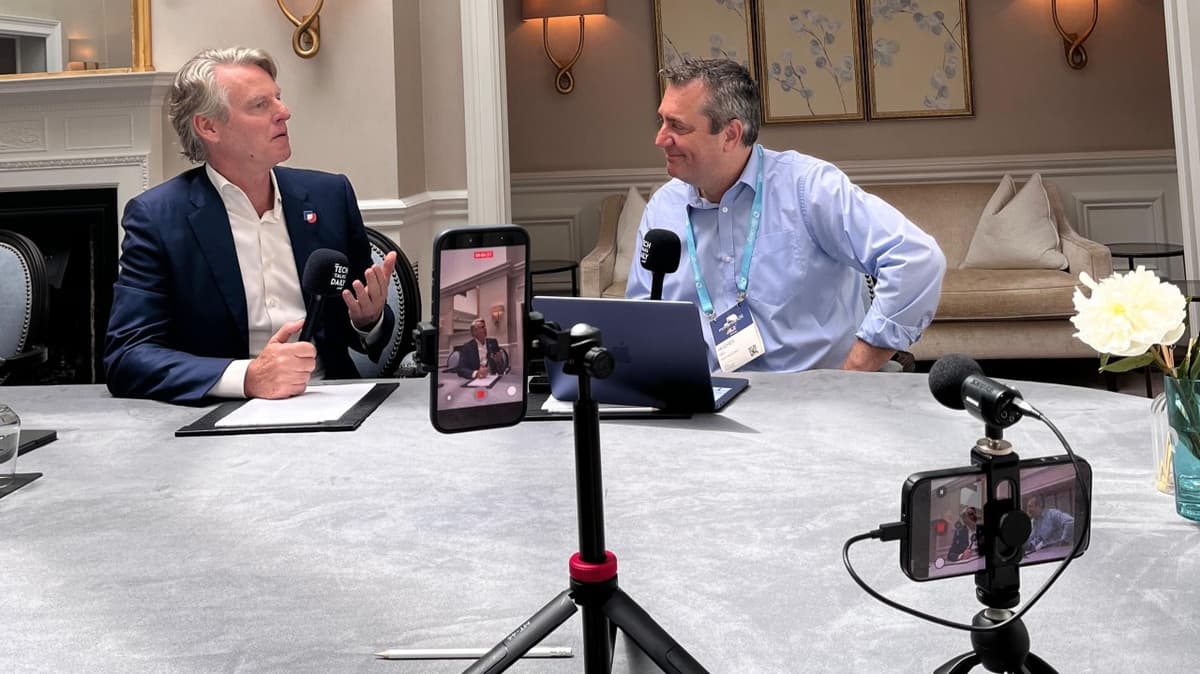
During my interview with CEO Allan Thygesen, he explained that many stages of the agreement journey still depend on manual work and older technology. He argued that saving processing time remains valuable, particularly for lawyers, salespeople, procurement teams, and HR. However, businesses can gain far greater value when they understand what they negotiated, whether those commitments were fulfilled, and how previous decisions should inform the next negotiation.
.
Historical agreements have value too. Customer and supplier relationships may stretch back decades, with current terms influenced by contracts written ten or twenty years ago. Thygesen described the importance of understanding both the terms and their context. Why was one supplier given different payment conditions? What concessions were made during an earlier negotiation? Which obligations still apply? Answering those questions gives businesses a better basis for renewals and commercial decisions.
Enterprise AI is becoming a practical business conversation.
One reason I attend technology conferences is to see how the discussion changes from one event to another. During the first wave of generative AI announcements, many presentations focused on what the technology might eventually do. At Momentum, the emphasis was much closer to operational reality. Customers wanted to know how AI could reduce contract review time, improve visibility, prevent missed renewals, shorten sales cycles, and lower risk.
The numbers presented during the event explain the interest. Deloitte research involving 1,100 senior leaders found that companies using AI-enabled, end-to-end agreement processes reported almost 30 percent higher returns than those that were not. Docusign also cited Deloitte's estimate that poor agreement management costs businesses close to $2 trillion globally each year. These are vendor-presented figures and should be viewed in that context, but they point to a familiar business problem. Fragmented processes lead to expenses, delays, and lost revenue long before anyone begins discussing AI.
At the event, Experian described reducing contract cycle times from an average of ten days to a matter of hours. Payworks reported recovering over 400,000 labor hours through agreement automation, allowing employees to spend that time on higher-value work.
Agreements need to connect with the systems people already use
Another theme running through Momentum was frustration with disconnected business software. Companies have invested heavily in CRM, ERP, HR, procurement, and collaboration platforms, yet agreement processes often move between these systems through email, attachments, spreadsheets, and manual data entry.
In my interview with Stéphane Barberet, Group Vice President and General Manager for EMEA at Docusign, we discussed agreements as a common thread running across departments.
Sales, procurement, HR, legal, and finance all depend on contracts, but each team may hold a different piece of the picture. Making agreement information searchable and available across existing systems could reduce duplicated work while giving decision-makers a clearer view of their commitments.
Docusign's approach is based on integrations rather than asking every employee to work inside one destination application. The company is connecting agreement information with platforms such as Microsoft, Salesforce, SAP, Coupa, and Slack. It is also working across AI services from OpenAI, Anthropic, and Google, as well as specialist legal technology providers, including Harvey, Legora, and Thomson Reuters.
The logic is sales should access agreement information from its CRM, while procurement sees supplier obligations within its own systems. Agreement intelligence becomes far more useful at the point where a decision is being made.
Trust will decide how quickly AI agents gain authority.
The conversation about agentic AI can easily outpace what businesses are ready to accept. Software may be capable of completing an action, but technical ability does not settle whether it should be permitted to do so.
Contracts are closely tied to revenue, legal exposure, personal information, and long-term commercial relationships. This raises the standard for AI deployment. Businesses will need clear approval thresholds, defined roles, reliable records, and controls that reflect the value and risk of each agreement. A routine document may be suitable for a high degree of automation. A complex supplier negotiation or major customer contract will require closer human judgment.
Trust has always been central to electronic signatures. But it also creates pressure. Customers will judge IAM on the accuracy of its data, the transparency of its recommendations, and the strength of its controls. Convenience may encourage adoption, but confidence will determine how much authority companies are prepared to give the technology.
Leadership and implementation still matter
Momentum also offered a useful reminder that buying software does not automatically improve a process. Martin Corry, Docusign's Vice President of Enterprise Sales for Northern Europe and a former England rugby captain, spoke about the leadership needed to introduce new technology without losing sight of the people expected to use it.
His advice was to begin with a clearly defined business outcome, align teams around it, and introduce change at a pace suited to the company's culture.
Some firms are comfortable experimenting quickly while others need smaller deployments that demonstrate value before wider adoption. Neither route guarantees success, but both are stronger than simply introducing AI because competitors appear to be doing so.
What should business leaders take from Momentum?
The lasting message from Docusign Momentum was that enterprise AI is becoming focused on execution. The discussion was less concerned with model comparisons and speculative promises and far more concerned with connecting trusted information, removing administrative friction, and producing measurable results.
Agreements are a strong test case because every business already has them. The data does not need to be invented or collected from scratch. It sits inside years of customer relationships, supplier negotiations, employment decisions, and commercial commitments. Making that information available could improve decisions across the company, but only if the data is reliable, the systems are connected, and people understand how automated decisions are governed.
Docusign has a credible position from which to pursue this opportunity. It already processes hundreds of millions of agreements annually for nearly 1.9 million customers, and over 40,000 companies have adopted IAM. Yet moving from a company known for electronic signatures to a broader agreement intelligence platform will require clear evidence that customers can convert contract data into financial and operational value.
Momentum supplied several signs that this is already happening. The next test is whether those results can be repeated across different industries, legacy systems, regulatory environments, and company cultures.
Business leaders may discover that one of their most useful sources of AI-ready information has been sitting inside their contracts all along. The question now is whether they are ready to put it to work.