
Veeam built a strong reputation by focusing heavily on VMware and Hyper-V environments, becoming a familiar name among enterprise infrastructure teams. But the virtualization market of 2026 looks very different from the one Veeam helped define.
After Broadcom's acquisition of VMware, many organizations found themselves evaluating alternative solutions. The options typically range from Proxmox and OpenStack to Nutanix, Huawei FusionCompute, OLVM, Sangfor, XCP-ng, and other platforms.
The problem is that as infrastructure becomes more diverse, backup vendors are forced to face new challenges, like supporting environments that no longer fit neatly into a single virtualization ecosystem. It's this changing market that is creating an opportunity for companies like Vinchin.
At the IT Press Tour in Boston, I attended a presentation by Vinchin that offered an interesting perspective on how backup and recovery vendors are adapting to an increasingly fragmented virtualization market.
Founded in 2015 and headquartered in Chengdu, China, Vinchin has quietly built a global presence with partners in more than 60 countries, customers in over 100 countries, more than 30,000 project implementations, and over six million protected workloads. The company positions itself as an enterprise-grade data protection provider, emphasizing simplicity, broad compatibility, and competitive pricing.
A different approach to backup
While Veeam is often associated with deep VMware integration, Vinchin has taken a broader approach.
Its platform supports VMware, Hyper-V, Proxmox, OpenStack, Citrix, Huawei FusionCompute, Sangfor HCI, and several other virtualization platforms. The company has also expanded into cloud, containers, SaaS applications, databases, and object storage environments.
This wide compatibility appears to be one of the company's primary differentiators. Rather than assuming customers operate a standardized infrastructure, Vinchin seems to be designing for organizations that may be running several virtualization stacks simultaneously or migrating between them. This distinction becomes particularly relevant as enterprises reassess long-standing VMware strategies.
Where Vinchin stands out
One capability repeatedly highlighted throughout Vinchin's materials is cross-platform recovery and migration.
Vinchin promotes "Any to Any" recovery capabilities that cover physical servers, virtual machines, and cloud environments. This also includes migrations between different virtualization platforms, automated driver adaptation, and support for physical-to-virtual, virtual-to-cloud, and cloud-to-cloud scenarios.
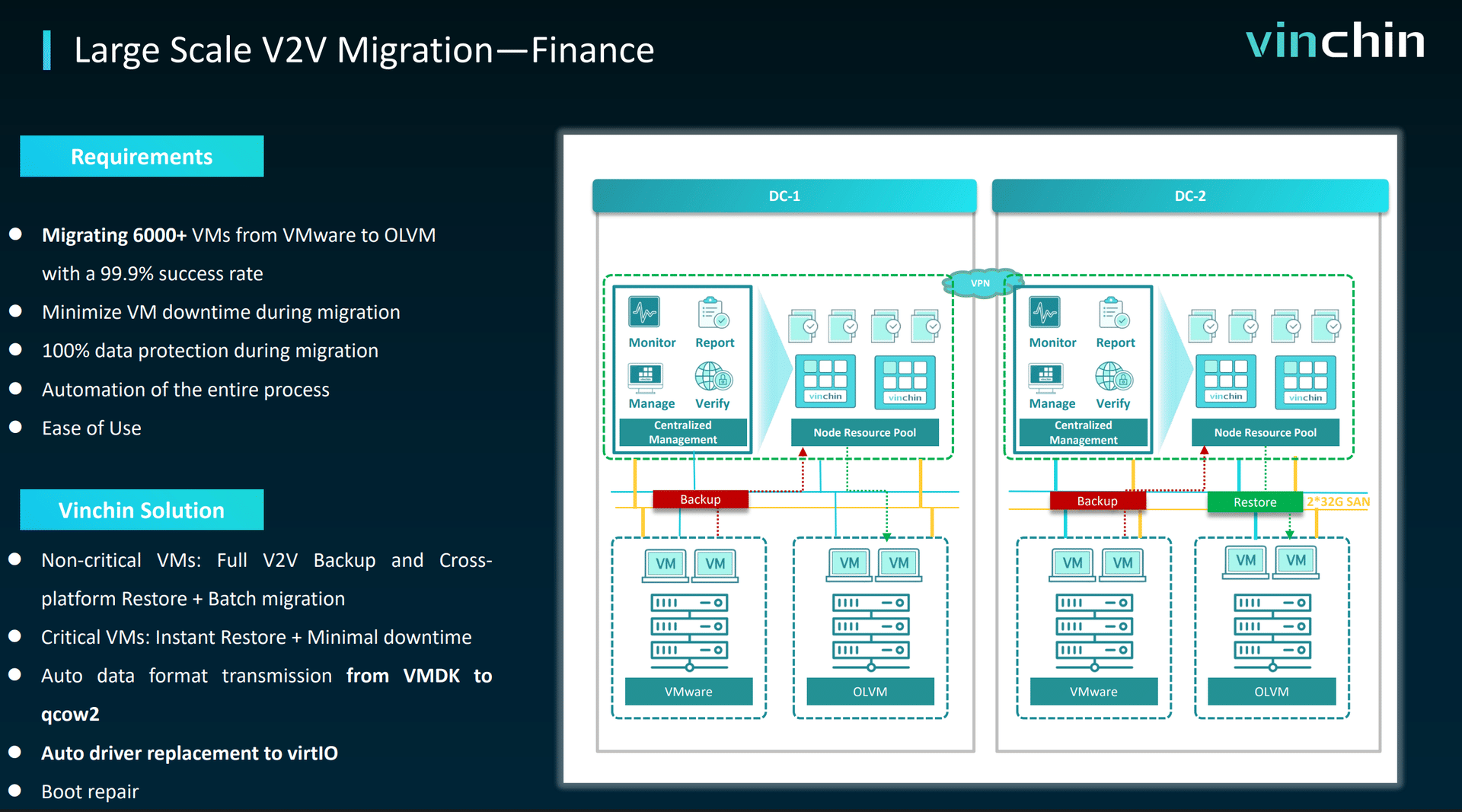
Several customer examples focus specifically on VMware migrations. One financial services deployment involved migrating more than 6,000 virtual machines from VMware to Oracle Linux Virtualization Manager while maintaining data protection throughout the process. Vinchin claims a 99.9% migration success rate in that project.
In another example, the team shared how another banking deployment used Vinchin to support a transition from VMware to Huawei FusionCompute while protecting more than 20,000 virtual machines.
Disaster recovery as a built-in capability
Another area where Vinchin is attempting to differentiate itself is disaster recovery testing.
The company's DR Lab functionality automatically verifies backups in an isolated environment and produces validation reports. Features include screenshot verification, heartbeat monitoring, ping testing, and malware scanning. According to Vinchin, this helps organizations validate recovery readiness without consuming production resources.
Backup verification remains one of the most overlooked areas of data protection. Although many organizations back up data successfully, few take the time to confirm that those backups can be restored under pressure when it really matters.
The inclusion of recovery testing as a core capability rather than an optional add-on may appeal to customers facing ransomware risks and regulatory requirements.
Security and ransomware resilience
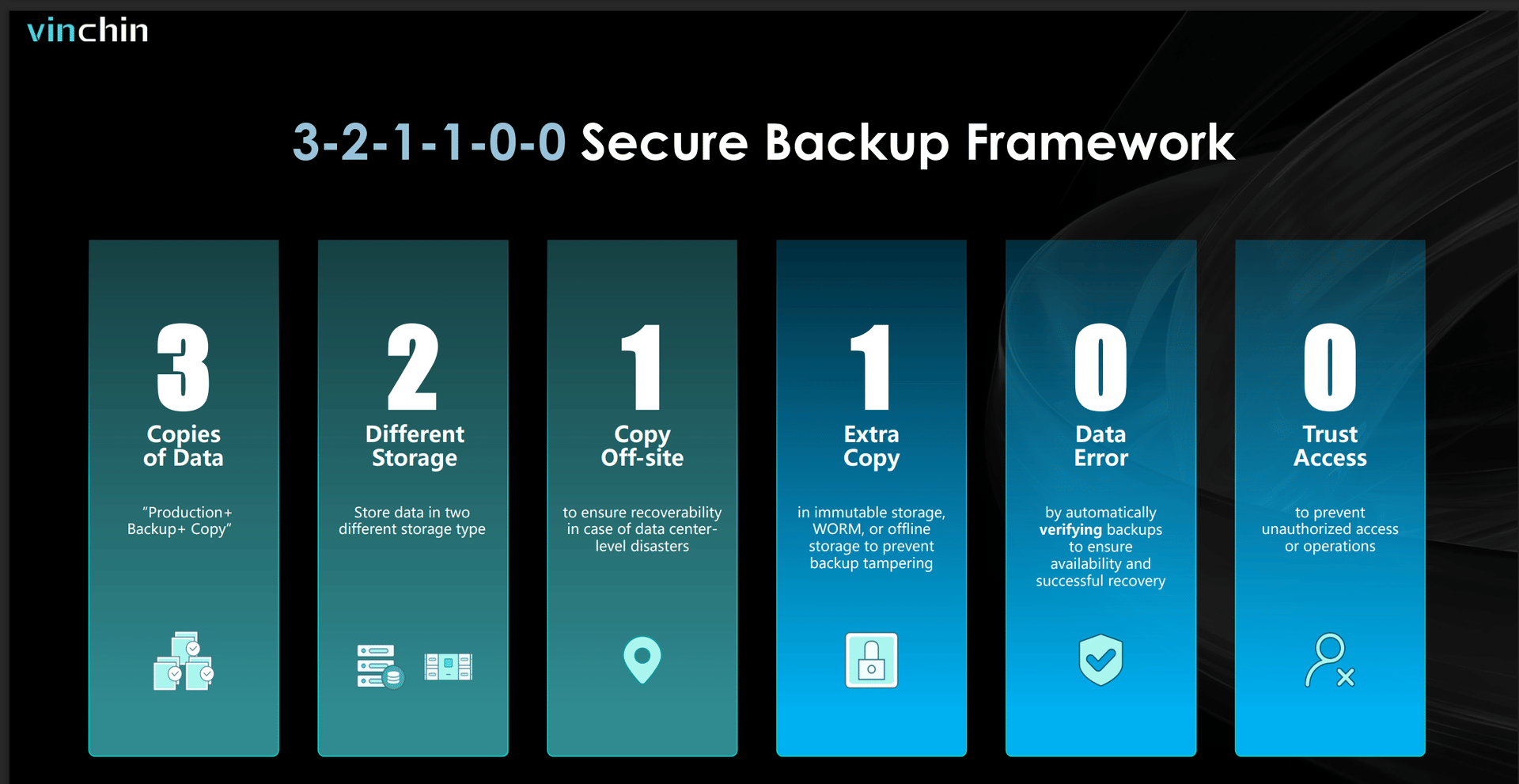
Vinchin's roadmap reflects many of the same concerns currently driving enterprise backup discussions. The platform incorporates immutable backups, WORM storage support, malware scanning, verification testing, and a 3-2-1-1-0-0 backup framework that is designed for recoverability and protection against tampering.
These capabilities mirror broader industry trends, as backup increasingly becomes part of a cyber resilience strategy rather than a mere storage function. Additionally, the company's emphasis on ransomware readiness aligns with one of the biggest concerns facing infrastructure teams today.
The Veeam comparison
The obvious question is whether Vinchin can realistically compete with Veeam by simply offering a cheaper alternative. The answer depends largely on the customer profile.
Veeam remains one of the most established backup vendors in the market. Its strengths include mature VMware integration, application-aware backup, continuous data protection, extensive ecosystem partnerships, and a large installed base.
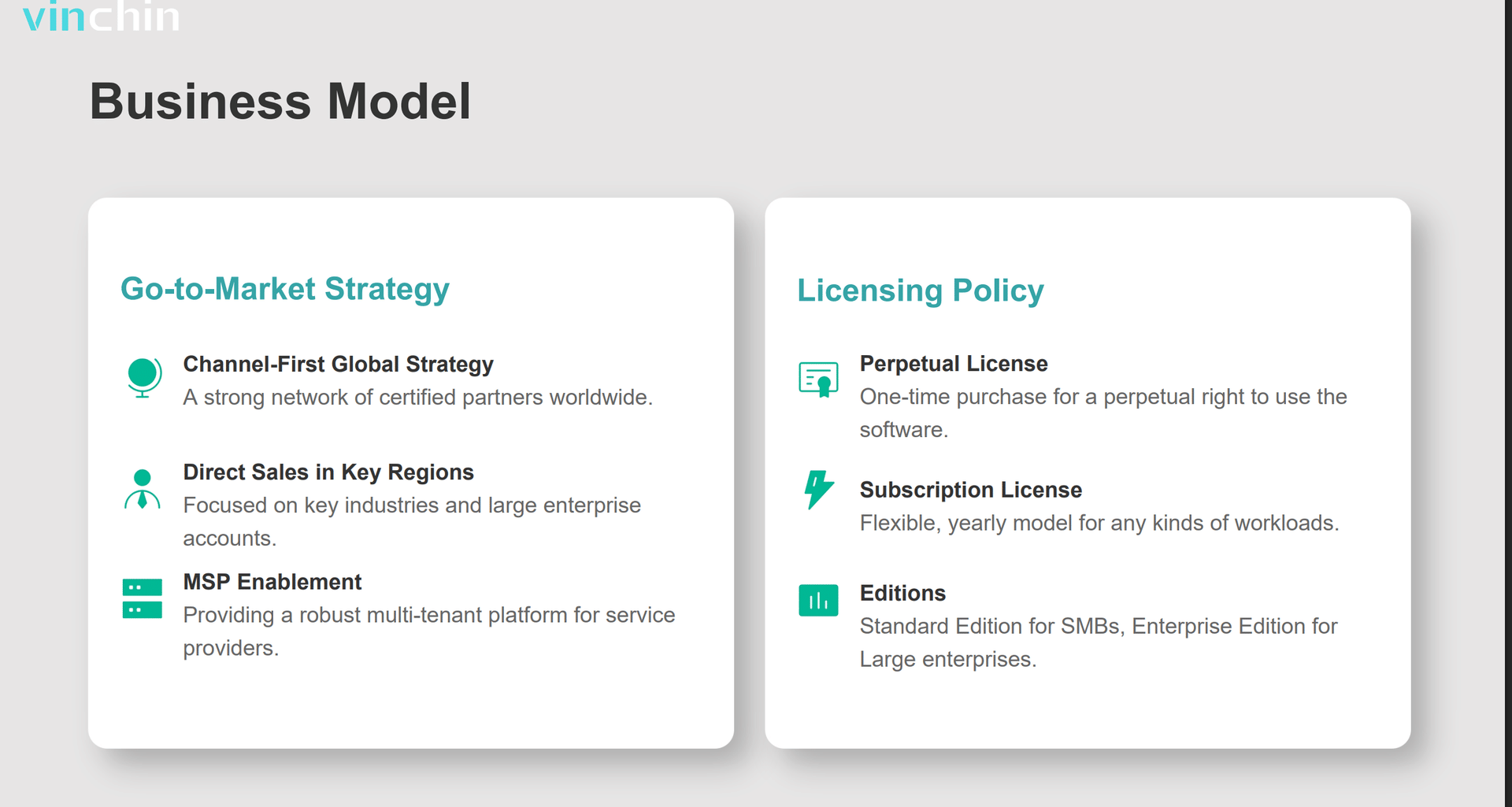
Vinchin's argument is different. Its focus is on flexibility, broad virtualization support, simpler deployment models, and lower total cost of ownership. The company also continues to offer both perpetual and subscription licensing, while many competitors increasingly push customers toward subscription-only models.
Interestingly, Gartner Peer Insights user reviews show strong customer satisfaction for both vendors. Veeam holds a 4.6 rating from nearly 2,000 reviews and a 4.8 rating from 186 reviews, with users highlighting ease of deployment and virtualization support. But the number of reviews matters here, and the results suggest that customers who choose Vinchin generally appear satisfied with the experience.
The bigger picture
Maybe the most important takeaway is that Vinchin is not trying to replace Veeam everywhere. Instead, it appears to target organizations whose infrastructure strategies are becoming more diverse.
In a VMware-only world, Veeam's deep specialization made perfect sense. In a multi-platform world where enterprises may simultaneously operate VMware, Proxmox, OpenStack, Huawei FusionCompute, and cloud-native workloads, compatibility becomes increasingly important.
This shift is creating opportunities for vendors that prioritize flexibility over platform specialization. Whether Vinchin becomes a major global challenger remains to be seen. But the company represents a broader trend emerging across enterprise infrastructure.
We are seeing a move toward heterogeneous environments where interoperability matters as much as individual product features. As virtualization choices expand, backup vendors may increasingly be judged not by how well they support a single platform, but by how effectively they protect all of them.
Thank you to Alex Zaharov-Reutt for sharing the iTWire TV Recording of the Vinchin presentation at the IT Press Tour in Boston.
I am hoping to get the team from Vinchin on the podcast in the next few weeks. If there are any questions you would like me to ask, please leave a voicemail below to be a part of the conversation.