
What evidence would persuade your board that a successful AI pilot is ready to become part of everyday business operations?
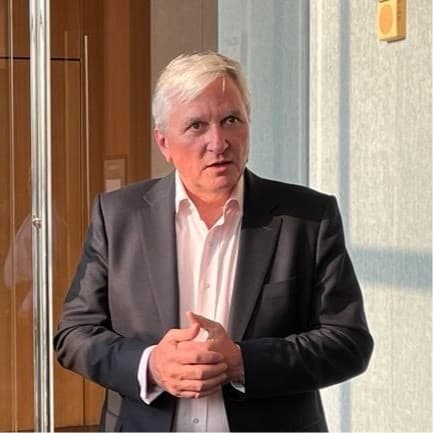
In this episode of Business Technology Perspectives, I speak with Andrew Duncan, CEO of QualityAI, formerly Qualitest. Andrew previously served as CEO of Infosys Consulting and has spent over 30 years advising global organizations across technology and business change.
Andrew believes the AI era differs from previous technology cycles because adoption is moving faster than many organizations can govern it. Fear of missing out is also creating pressure for companies to appear further along than they really are.
This creates a growing gap between AI activity and operational value. A company may have numerous pilots, prototypes, and employee experiments without possessing enough evidence to deploy any of them across the business.
Andrew describes the enterprise AI conversation as moving from “can we build it?” toward “can we trust it?” Answering that question requires companies to assess three areas. Does the technology work? Is it producing the expected business outcome? Will it continue behaving within agreed boundaries as its data, model, users, and environment change?
We discuss the questions boards should ask before approving AI at scale. What business result is the company pursuing? What level of risk is acceptable? Who becomes accountable when the system makes an unexpected decision? Has it been tested under real operating conditions? What evidence demonstrates that people can rely on it?
Andrew explains why a successful pilot should never be confused with production readiness. Controlled tests cannot fully represent real data, human behavior, connected applications, operational processes, or downstream consequences. A system that performs well in isolation may behave very differently once it reaches customers and employees.
This is why Andrew advocates continuous AI assurance. Testing cannot end when an application enters production. Organizations must monitor whether the system continues functioning technically, produces the intended result, and remains within defined guardrails.
Our conversation also addresses AI washing and the growing tendency to measure progress through the number of pilots or features launched. Andrew suggests asking a much simpler question: what has materially improved because AI is involved?
Useful measures could include productivity, revenue, operating costs, cycle times, customer experience, adoption, and the consistency of results. If those outcomes remain unchanged, a collection of impressive demonstrations may amount to activity without meaningful business progress.
Could continuous assurance give businesses the confidence to scale AI faster, or will many companies remain trapped between promising pilots and production risk? Listen to the episode and share your thoughts with me.
Useful Links
Visit the Partners of Tech Talks Network
[00:00:01] - [Speaker 0]
What evidence would convince you that an AI system is ready to leave the pilot lab and operate across real business? Well, my guest today is Andrew Duncan. He's the CEO of QualityAI, and he joins me today to explain why impressive demos are no substitute for reliable performance. Formerly known as QualityTest, quality AI works with organizations building and deploying AI, giving Andrew a view of the gap between adoption and assurance. So today, we're gonna discuss why fear of missing out encourages companies to exaggerate their progress and what boards should demand before approving AI at scale.
[00:00:50] - [Speaker 0]
We will tackle that one. And why successful pilot says very little about production readiness. And Andrew has got a few solutions for us as well. He will introduce us to a three part test covering technical performance, measurable business outcomes, and whether the system continues behaving within agreed boundaries. So if your AI strategy contains plenty of activity but very little proof, today's conversation will help you ask some much harder questions.
[00:01:20] - [Speaker 0]
But enough for me. Let me introduce you to Andrew right now. Thank you for joining me today, Andrew, on the show. Can you tell everyone listening a little about who you are and what you do?
[00:01:32] - [Speaker 1]
Yeah. So I'm the CEO of Quality AI. We used to be called a call a a test until probably a couple of months ago. I've been in position for just over a year. Prior to that, was the CEO of Infosys Consulting, a global organization, as many of you know.
[00:01:48] - [Speaker 1]
I spent a career essentially helping large enterprises through major technology transformation. And more recently, particularly at the end of my emphasis time, but also obviously with quality AI, I've been very focused on really taking AI from experimentation into real world operations and trying to figure out how do we actually enable that. It's very much a topic du jour, but where we're concluding is absolutely that transition requires trust, it requires quality and confidence, and that trust and quality is going to remain. And so we spend, as quality AI, we help a lot of organizations both engineer but also assure AI so they can deploy it with scale and with confidence, or at scale and with confidence. So that's really what we're all about.
[00:02:34] - [Speaker 1]
This whole world or this new world of continuous AI assurance, I think, is absolutely critical. I think it's very poorly understood. And you get a lot of people, as I'm sure we'll talk about in a minute, sort of staring in the headlights going, why can't we operationalize this? Why can't we scale it across our enterprise? Then there's some fairly fundamental things which need to be addressed before we can do that.
[00:02:53] - [Speaker 0]
Yeah. And I'm curious looking at your career here. I mean, you spent many, many years helping global organizations navigate major technology transformations, and there has been a lot of them, whether it be the shift to mobile, cloud. Now, of course, we've got AI today, which feels fundamentally different from previous waves digital transformation and automation, etcetera. But what do you see different here?
[00:03:20] - [Speaker 0]
I mean, they say that history, doesn't repeat itself, but it rhymes. It certainly feels that way, but also feels so much more significant. But what are your what's your take on this?
[00:03:31] - [Speaker 1]
Yeah. No. I think there's a there is a definite difference. I mean, I I was there at the sort of birth of the Internet and the whole sort of ecommerce stuff and cloud and digital tools and all that, as you said. And but this is different.
[00:03:41] - [Speaker 1]
And the the the two areas I think I see the biggest difference are the rates of adoption. It's basically like lemmings just jumping over the cliff. And the rate of acceptance, irrespective of whether the lemmings are having a nice landing or an ugly landing at the bottom of the cliff. And is probably the biggest difference. And it's driven to a point now where I'm seeing far greater FOMO because people are terrified of being seen to have not engaged with AI or not delivered something with AI.
[00:04:10] - [Speaker 1]
And so that in itself is feeding this accelerated sort of cycle of adoption and acceptance because no one wants to say, Look, we're in it, but we don't really understand what we're up to. We're having a few problems or we can't roll it out. No one wants to say that because everybody else is saying, Oh, it's great. We're doing all these savings and we're transforming this, that and the other. And so you've got this self sustaining cycle of, probably what you want, I would begin with the word with B.
[00:04:36] - [Speaker 1]
But anyway, AI basically introduces a very different level of uncertainty into the enterprise. These are not normal systems, I use normal in quotes. Traditional systems largely are following defined rules. AI doesn't do that. AI interprets.
[00:04:53] - [Speaker 1]
It generates. It adapts. It can, if you let it, make decisions and make some pretty big influential decisions. And you look at the accounting world at the moment, where a lot of AI has been introduced, AI can do a lot of the tasks associated, say, with an audit. Do you want AI to admit sort of making those decisions related to tasks and outcomes from an audit?
[00:05:16] - [Speaker 1]
I think that's a big question. I think as a result of what AI can and does do, I think quality has become a lot more complex as a topic. And I think it's now got to a point where organizations are not only asking, does this system work, AI enabled or otherwise, but is it doing what we expected it to do? Is it producing the business outcome that we thought it was going to produce? And that is an integral part of testing quality, just as making sure the technology is doing its job.
[00:05:46] - [Speaker 1]
Then the next and the third piece of it, which is a huge question, is, Okay, it's performing technically. It's producing the outcome we expected. Is it going to continue doing that in the future? Because of all that variability I just related to in terms of the ability to generate, adapt, and maybe make decisions on its own? So it's technology, tick business outcome, tick and then are we confident it's going to stay doing what we know it or what we asked it to do?
[00:06:12] - [Speaker 1]
And if you can answer that question, then it's a tick. But that question is, that's the trust factor, which we'll talk about, I'm sure, in a minute. So the whole world's moved from more of a sort of can we build it to can we trust it. And I think making AI or making assurance as part of the strategic capability is becoming really, really important. It's not just a testing activity anymore at the end of development or something you kick into the long grass until you've got most of the system built.
[00:06:40] - [Speaker 1]
You've actually got to figure out how you're going to test it and assure it and provide some level of assurance of quality right from the start so that when this thing goes into a live mode or into a scaled mode, it continues to test itself or baseline itself. So you remain confident that, yes, it's doing what you thought it was going to do. So I think the organizations that are going to succeed here are the ones which can move quickly, but they can't sacrifice or take for granted trust or confidence in what they're doing from a technology standpoint, a business outcome standpoint, and, I suppose, a drift standpoint or drifting, I think, part of it. But it will have to stay within guidelines. If they can be confident and comfortable with those three elements, then, yeah, they'll I think they'll scale.
[00:07:22] - [Speaker 1]
If they aren't or one of those elements is missing, not so easy.
[00:07:27] - [Speaker 0]
So many great points there, and I love that line of how we've shifted from can we build it to can we trust it. I think we all feel that now. And you also gave me a few flashbacks there from Lemmings, the computer game, for people of a certain it was a a cracker, wasn't it?
[00:07:41] - [Speaker 1]
Well, there was one I mean, I I was thinking about astronics. I was at a conference last week in Vegas, and someone else sort of say this FOMO thing, what is it? I said, well, cast your mind back twenty, twenty five years. No one pretended they'd put in SAP. You either had put in SAP or you hadn't put in SAP, and it was pretty black and white.
[00:07:58] - [Speaker 1]
There was interpretation of that. There's a lot of people pretending they're a lot further along with AI than they really are. And that's the slightly worrying thing. And I think we do need to, and part of what we do within Quality AI is sort of not smacking clients in the head and saying, look, you've got to sort of smell the coffee, but it's sort of how do we get you from where you are to something which is actually gonna work and then be and and scalable? And that's that's a big question.
[00:08:22] - [Speaker 0]
It really is. And as a result, AI has become a boardroom topic now, but the conversation just seemed to have shifted, as you said, from excitement to trust, risk, and accountability, especially as we're adding AI agents into the mix. So what questions should every board be asking before approving AI at scale? Because over the last few years, we've seen a lot of missteps, struggles to get ROI, and a a lot of just jumping on the bandwagon. But, thankfully, we've moved on from that.
[00:08:53] - [Speaker 0]
So what should they be asking?
[00:08:55] - [Speaker 1]
I think a huge one, probably the biggest one is, so what business outcome are we trying to achieve here? You've got a whole bunch of interesting pilots and proof of concepts and technology and models here and there running around. But what are we actually trying to achieve and in what context? I think that is a massive question. I think the next question is sort of what level of risk are we prepared to accept as we go on this journey?
[00:09:18] - [Speaker 1]
Sort of what is both from a not so much technology, from a business risk standpoint. If the technology doesn't work, how much risk can we introduce into our business model and be Okay with it rather than, I. E, make an incorrect decision? And where does it become very uncomfortable? Then the biggest one for me and this is a fun one who is accountable when the AI does something that you don't want to happen or does something unexpected or actually makes the wrong decision?
[00:09:45] - [Speaker 1]
Who's next on the line for that? And that's one which is a very interesting question, particularly as we morph from a standard IT organization into an AI or sort of enabled organization. But who are we blaming when this goes wrong or if it goes wrong? And not many people can answer that question. Another big one is, how do we know the system is accurate, it's reliable, and it's secure, and it's actually doing its intended job?
[00:10:12] - [Speaker 1]
How do we know that? What evidence have we got to be comfortable that that's actually happening? This is what sort of will build the trust at the end of the day. But a really, really big question. Has it been validated against real conditions that it's going to encounter in the real world?
[00:10:26] - [Speaker 1]
Forget your sort of isolated room in the back office in the IT organization. Put it in the real world. Has it really been tested, not just in terms of its function, but also the context of the far broader solutions that are out there as part of the overall real world? Really, really big question. What evidence have we seen or got to give us confidence to put this thing live and to actually turn up the volume and scale it?
[00:10:49] - [Speaker 1]
And that is a big question, and it is not a one off thing, Neil. This has become so in the old days, ACL C world, we used to basically build a system, test it. If it sort of went through all its testing parameters, fine. Put it into production, it works. And if something went wrong post live, and you go and fix it, put it in a patch, then fix it, so it'd still work.
[00:11:07] - [Speaker 1]
But in an AI solution, you need continuous assurance. It's not a one off test. It's not one off evidence. You've got to keep going and keep going. Think of Blade Runner.
[00:11:17] - [Speaker 1]
Do you remember the replicants? And so every morning, a replicant used to go into that box, and it would have questions fired at it that it needs to answer. It was basically what they call it baselining in a film in the film. That's what we need to do with AI. It's you've to keep continuously testing an AI solution to make sure that it hasn't drifted, it's still working technically, and it's still delivering the outcome you thought it was going to deliver from a business standpoint.
[00:11:40] - [Speaker 1]
Because any one of those three go off piste, and yeah, you're in trouble and the trust will go away. So I think ultimately, though, boards need to look at AI assurance really as part of enterprise governance. It's how they govern the overall business. It isn't just a technical thing anymore. I know thinking's moved on a bit in technology and a bit of business.
[00:12:02] - [Speaker 1]
No, it's a business issue, but it's a real business issue. AI assurance, is it working? Is it delivering what you thought it was going to do? Is it staying there doing what you thought? And here's another angle, I know this is going sort of a bit out of scope.
[00:12:14] - [Speaker 1]
But is it safe? Is it secure? Is it responsible? Is it is it has it got any buy any all these other things, but I digress.
[00:12:24] - [Speaker 0]
Just to complete your blade runner analogy there, if if you don't follow your advice, it will all be lost like tears in the rain.
[00:12:32] - [Speaker 1]
Yeah. Exactly. Exactly. Exactly right.
[00:12:35] - [Speaker 0]
We do hear a lot about organizations being stuck in pilot mode as well. So from your experience working with enterprises, what what are the biggest reasons that promising AI initiatives never become part of the day to day operations? What's holding them back?
[00:12:51] - [Speaker 1]
Biggest one, and this is not necessarily a self serving comment that's quite helpful to my business, is it's a lack of trust and a lack of evidence of why we should trust this thing. So had a lot of, up to now, we've had a lot of parts of organizations building things. And I'm not talking just technology people building things. I'm talking now business people building applications, wide coding things, sort of basically through prompt engineering and such. Really, really interesting.
[00:13:15] - [Speaker 1]
But ultimately, though, if you don't trust something, it doesn't matter how cool it looks and how snazzy it is in terms of operation. If you don't trust it and you don't have confidence that that trust is well founded, you're not going to put it anywhere, and you're certainly not going to scale it. And think that is the fundamental problem we have at the moment. We've got a lot of cool stuff out there, but the trust gap I talk about in other contexts is not only there. It's growing.
[00:13:40] - [Speaker 1]
There's more and more sort of developments of very cool applications, and our ability to test them and provide evidence that, yes, they are trustworthy, not just today but in the future, is still evolving. And so you've got this, the trust gap's actually increasing, which is further exacerbating the problem. But fundamentally, reason people are not or these things are not becoming part of day to day is a lack of trust and a lack of evidence for that trust. Another thing is, I mean, as I just alluded to, just because a pilot works in its controlled environment doesn't mean it's ready for production. Quite contrary.
[00:14:13] - [Speaker 1]
It needs to be sort of basically tested in a far greater context and continually assess that it, again, it's not moving around on itself. And I think, basically, a lot of AI based systems basically come down to data. And real data, real accurate data, edge cases, user behaviors, how things sit within existing systems, all of these elements, sort the data, all of it, introduce complexity and introduce complexity that isn't just a black or white complexity. It's black and it's a bit of gray, a bit more darker gray, and then maybe a bit of white. So you're dealing with all these different contexts across a variety of different surfaces.
[00:14:52] - [Speaker 1]
And yeah, it's become a lot harder to actually sort of give a sort of the big tick or a kite mark to something to say, yep, that works, and it's going to stay working. So I think it's a but fundamentally, you roll it back. It's a lack of trust. It's a lack of evidence for the trust. And that evidence has to be continually produced to make sure you continue to trust it.
[00:15:11] - [Speaker 1]
And the thing is it's still trustworthy. But ultimately, I mean, advise organizations that unlike in the old days where you could sort of kick off testing of quality into the long grass until the end of the transformation, Now you've got to engineer it into your thinking right from the beginning. If you're going to build this thing, how are we going to know it works, both technically, but how are we going to know it's doing what it is meant to do from a business standpoint, and not just in isolation, but in the broader context? Really important. And how do we build something from a quality standpoint, which is repeatable so we can provide that continuous assurance in the future so we can sort of stay trusting it and know that it's doing us then?
[00:15:51] - [Speaker 1]
But, yeah, trust and trust and a lack of evidence is the real reason why things aren't accelerating quite as fast as we thought they would be.
[00:15:59] - [Speaker 0]
And on the back of that, we're also seeing a growing gap between the pace of AI innovation and an organization's ability to govern it effectively. And I think at the moment, the talk around agentic AI and teams having hundreds, if not thousands of agents there is a company of concern, especially as an ex IT guy. It just make me wonder how they're gonna be matched to an identity, who's accountability, who's accountable, etcetera. But how can business leaders accelerate adoption without creating risks that they could end up regretting later?
[00:16:30] - [Speaker 1]
So I think, I mean, from our standpoint, I get asked a question a lot in terms of this whole AI thing in Europe, testing and assurance business. Surely, you're going put out of a job. And I go, well, actually, it's quite the opposite. You've got this huge wave of accelerated development, which has been enabled by AI, and it's created this tsunami of demand for testing and assurance. The problem is your legacy organization isn't set up to handle all that demand.
[00:16:56] - [Speaker 1]
So there are a couple of things we do. And as Quality AI, we provide bandwidth so you've got more bodies basically doing the testing and assurance. But we also and this is a critical item is is it's actually accepting that if you introduce AI or AI enablement into standard SDLC processes, you can actually get more efficient or get quicker at doing legacy type stuff with this modern wave of demand. So the first thing I think what we recommend is that don't be afraid, that you don't have to go for this all singing end to end AI solution to help you test and provide assurance on things. Just introduce AI to actually accelerate parts of the SDLC the way you feel comfortable and where there is minimal risk.
[00:17:38] - [Speaker 1]
And so you can do basically more with the same. And that's probably step one. I think other things leaders need to think about is governance and assurance are not barriers to speed. They're insurers of safety. So it's like if you ought to start scaling a flight schedule for an airline, you don't start removing checks of engines and airframes so you can get more aircraft through the airport and more airplanes in the air.
[00:18:05] - [Speaker 1]
It may work for a day, but it would be a fairly dodgy way to operate. The same way, I mean, the governance and assurance processes are there for a reason. And yes, they may slow things down a bit. But ultimately, if you mess something up downstream, the consequences and the delays and inefficiencies you introduce because of that are going be far greater than anything you may invest upfront. I think also if done properly, there's governance and assurance.
[00:18:27] - [Speaker 1]
They will create the confidence to actually move faster. So as you trust more and more, you take a lot more stuff for granted. It's just human nature. And you will start accelerating. But it's founded on governance and that assurance right up front.
[00:18:42] - [Speaker 1]
So let that build the confidence. I think another thing that we see a lot in the last certainly over the last year or two is that companies need to define what quality risk and performance expectations they have. What do I mean by that? Unlike the old days, where you used to say, yeah, well, here's what I need to see to see quality from a system. As I said earlier on, it's technology, the business outcome, and the monitoring drift.
[00:19:09] - [Speaker 1]
So what do I need to see, or what do I need to see evidence of, that a system is doing what it's meant to be doing, delivering the business outcome it's meant to be delivering, and actually staying there? What do I have to see as a leader to be comfortable with that? And that is not an easy question because we haven't answered that question before. So that's something which you actually need to think about and go, right, so what evidence do I have to see? Or what evidence do I have to be presented to go, yeah, I'll sign off on that?
[00:19:32] - [Speaker 1]
And we it is something which we can't be done by the technology people alone. It's got to be done in combination with the business and probably with the business leaders. Ultimately, it's the business leaders who are saying, yep, let's let this solution rip. We're hoping for the best. I hope we take the hope part out of it and we know it will work.
[00:19:50] - [Speaker 1]
But that is a big, big starting point is, so what do I have to see to be comfortable to, yes, sign off on this and say, yep, we're done. And it's not like the old days. It's not SVLC world. It's not even putting in an SAP and saying, is it basically posting these entries to my ledger correctly? It's far more complicated and far more nuanced than that.
[00:20:09] - [Speaker 1]
And understanding what that evidence is you need to see is from across the stakeholder group, I think, is really, really important. I think there's another one which is defining clear accountability for both development of solutions, but also the operation of solutions. It isn't just a sort of kick it into production and let it exist or let it run. That doesn't work anymore. It's got to be monitored.
[00:20:31] - [Speaker 1]
You've got to keep track of it, that it's doing what it's meant to be doing. Sound like a broken record, but you'll pick up the fee by the end of it. I think the main thing for us, and probably the thing I'd leave you with on this question, is more of you've got to create a continuous assurance loop so that once AI is alive, you could remain confident that it is doing what you thought it was going do on those three dimensions, Doing what tactically it's behaving, delivering the outcome you thought it was gonna deliver, and it's not varying. Or if it is varying, it's staying within guardrails. And that's really important because in the modern world, sort of models change, data changes, environments change, and as a result, the solution you put into production has got to accommodate those changes yet still stay within operating parameters.
[00:21:17] - [Speaker 1]
And that's something which isn't a one off binary thing. It's something you've got to provide assurance of continually, which is why we talk a lot about continuous AI assurance when it comes down to building trust and providing evidence for that base of trust.
[00:21:31] - [Speaker 0]
And if we take a scroll down our news feed, which quickly reveals that the market is full of AI announcements, and almost every company appears to be claiming to be AI powered now.
[00:21:42] - [Speaker 1]
That's old figure. Was talking about it. So
[00:21:44] - [Speaker 0]
Yeah. I mean, we saw it, what, ten years ago with block chain. Every any company that just put block chain on the end, their share price would go up, and it must be incredibly difficult for executives to separate genuine transformation from what you might call AI washing. So what are the kind of metrics that actually demonstrate business value, and how can you spot the the pretenders from the real deal, do you think?
[00:22:07] - [Speaker 1]
So I I think there's a there's a fundamental and very simple question you can ask up front, and that is what has materially improved in the business because AI is involved? Not what you broadcast, but and we would, as a service provider, we actually are cautioned to go behind the curtain and have a look. But ask the question, what has materially improved in this business because of And that's where you realize that there's a lot of claims which aren't necessarily backed up by reality. But also, I think another one we've seen is sort of and certainly over year ago, two years ago, everybody were piloting this and proof of concepting that, and look how wonderful we are. We're very busy doing all this.
[00:22:48] - [Speaker 1]
But the number of pilots or AI features you launch is not a meaningful measure of transformation. Someone's having a cool time building stuff, but not they're transporting anything at that point. So two really good things. The key is you've got to look for measurable outcomes. Is productivity improved?
[00:23:04] - [Speaker 1]
Revenue improved? Has costs come down? Has cycle time shortened? Has customer experience improved? Has operational performance improved?
[00:23:12] - [Speaker 1]
Hard measures, hard outcomes. Because those are the things which matter to companies and shareholders. The fact that Tim in the back room has actually devised this really cool app with incredible features and stuff is fantastic. And well done, Tim. But if it isn't moving the needle on main, main measurable outcomes, it doesn't mean anything to a business.
[00:23:32] - [Speaker 1]
I think you need to measure whether AI is sort of basically reliable enough for the business. Basically, it's depending on adoption, quality, and trust. And so what am I talking about? So adoption matters. So are employees and customers actually using it?
[00:23:47] - [Speaker 1]
Huge question. It could be out there, but are people really using it? And are you measuring that use? And in assuming that they are using it, are you going back and creating evidence of they're using it and getting what they expected from adopting that solution? So big question.
[00:24:03] - [Speaker 1]
Second, the quality thing. That matters. Is it consistently producing the intended outcome? Not sort of every so often, is it producing the intended outcome consistently, ideally all the time? Big question.
[00:24:17] - [Speaker 1]
And then the trust thing, are people confident enough in the system to act on what it produces? I. E, are they basically delegating more sort of authority or responsibility to that system? And here's the big question: are they doing it at scale? It's a question of dipping your toe in the water and going, oh, it's cold, or just jumping in.
[00:24:39] - [Speaker 1]
And I think you'll see a lot less people jumping in. Even though everybody's saying they're jumping in, I think there's a lot less people out there jumping in than is declared. But I think, I mean, genuine AI transformation, it combines business value measurable business value, as I just alluded to, with reliable operational performance, technical and sort of operating within gardeners.
[00:25:03] - [Speaker 0]
And I would imagine as CEO of Quality AI, you're in somewhat of a unique position because you're working with organizations that are deploying AI as well as companies building it. So I'm curious. What are the the main characteristics of organizations that are getting AI right today? What what do they all have in common? Do you see any similarities there or any trends?
[00:25:24] - [Speaker 1]
Yeah. Very definitely. I mean, the the ones who are, I think, leading are the ones who's instead of saying everybody else is doing AI, we need to do some of that, they're actually gonna write sort of what is the business problem we're trying to solve, or what is the business outcome we're trying to create, rather than looking for somewhere to apply or develop some AI? Very, very big difference. So it's sort of what is the problem we're trying to solve?
[00:25:45] - [Speaker 1]
And then working backwards to figure out, all right, now what do I need in order to provide that outcome? And I think that's the, from what we see, is a big difference in companies who are struggling to adapt and adopt and scale versus those which are truly transforming. I think another one, they recognize that AI quality depends on full environment, the end to end, all the contextual stuff going on outside of just the solution you may be deploying. So data, models, platforms, infrastructure, operational processes, etcetera. And understanding that it isn't just a solution isolation, it is a solution resident within a far broader context of the enterprise is really important.
[00:26:29] - [Speaker 1]
I think organizations that have strong engineering foundations, obviously, are going to do better than those that don't. I think there's, irrespective of what you read in the press in terms of the coolness of vibe coding, you do actually have to have some structure behind what you're doing and understand what you're trying to achieve. And so the free range stuff is great and it's wonderful, but there is an engineering component behind it. How are you going to test all this stuff that you just vibe coded? What does good look like?
[00:26:54] - [Speaker 1]
What do you need to see to go, yep, that's doing what I thought it would do? So pretty fundamentally important. They're building assurance into the whole life cycle as opposed to treating it as a final step, as I was talking about earlier. Instead of old SELC world just sort of builds and then you get through sort of design, build, test, a bit more testing, system testing, user testing, then push the Go Live button. They're building assurance right across that entire life cycle today.
[00:27:22] - [Speaker 1]
So even before something is created or developed, is what do we if we're going to do this or produce this thing, what do we need to see just to be assured that it's working technically from a business standpoint and staying doing? That's something we didn't used to do. The big one, it goes to that question of who's next on the line if this goes wrong. Where is the ownership and where is the accountability? And people start running for cover, we've seen in several organizations, when we start asking that question.
[00:27:47] - [Speaker 1]
It's no longer necessarily a good thing just to start creating something using Claude or whatever. If you're going to be held accountable for what you've created, if it gets into the wrong spot, you may be less keen to just throw something out there as an example of how cool you are or how technically proficient you are. And you may start thinking about, well, hang on a minute. What is this thing really going to do? And that goes back down to trust and reliability.
[00:28:12] - [Speaker 1]
So it's not just a question of ramming AI solutions out there. It's sort of how do we build an environment where you can trust them and therefore rely on them and therefore be able to scale them. I think having and we've heard a lot of organizations transitioning from legacy to a new modern AI updated organization. I think in the same way with transformation or AI transformation and businesses getting it right, they've got a defined route of how they've actually moved from this experimentation stage to more of a production or at scale or operational AI stage. And what is that fundamentally based on?
[00:28:45] - [Speaker 1]
Again, trust and confidence. They've understood what they need to see to be comfortable that, yes, we're prepared to hit the green go button on this and scale it. And if we don't see it, we're not going to do it. And having a clear understanding of that and acceptance of that across a multifaceted stakeholder group is a very common trait of people who are getting it right and those who are struggling. So I think the last point I'd probably make is that they're building organizational capability to look at AI being deployed repeatedly and with confidence.
[00:29:15] - [Speaker 1]
And it goes back to that, rather than running pilots or concepts, if they've got an overall strategy, they've an overall business problem they're trying to fix, they understand the context of the business problem, they understand what they need to see to be assured that it's actually working and it's doing its job, and then they they're moving forward. But it's a continuous process. It's a continuous test. It's a continuous assurance, which is is vital in this AI world.
[00:29:41] - [Speaker 0]
When I was doing a little research on you before you joined me today, I was reading how you often talk about trust and reliability becoming competitive advantages. I think this is such an important point at a time where many are taking shortcuts driven by FOMO. So can you tell the listeners a little bit more about why you believe organizations actually invest in some of the more unglamorous side of IT, like testing, validation, and governance out. They will, in the long term, ultimately outperform those that simply race to deploy AI first.
[00:30:12] - [Speaker 1]
100%. I mean, it's what we've been talking about in this call that the differentiator is not speed of coming up with these things. It's actually the ability to deploy AI reliably in real business environments. And that is as big a competitive advantage as you can get. If you, based on your assurance, can provide that or provide evidence of why we should trust these solutions and then deploy them going forward, that's the holy grail of all this.
[00:30:41] - [Speaker 1]
The putting pilots and proof of concepts and little micro solutions out there is not helpful the long term. It is increasing technical debt, if you want to get really cynical about it. But if you can basically build in a continuous assurance and a structure whereby you're providing evidence that trust yes, trust should be given to these solutions, to these situations, to these outcomes, then I think businesses will accelerate forward quicker. They will basically take on the efficiencies and all the good stuff I've heard about what AI can do for you. They will realize that quicker than others.
[00:31:14] - [Speaker 1]
And that is a competitive advantage. So there's direct competitive advantage. There's indirect competitive advantage. But I think the organization's only going to scale AI if leaders of those organizations, employees customers of the organizations, and in some industries, regulators of those organizations trust the outcomes that those organizations are talking about. And if they can't trust the outcome, you're not going to scale anything, and nor would you?
[00:31:41] - [Speaker 1]
You'd be in quite a lot of trouble. Put it the other way. Poor quality AI is going to introduce sort of significant operational risk. It's going to sort of rack up your remediation costs to a level which are probably further more eye watering than something you've ever seen. A big one, and probably asthma as significant, is reputational damage, because these things don't it's just not a binary thing.
[00:32:04] - [Speaker 1]
They could swarm and do a whole bunch of damage to you very, very quickly. So reputational damage is absolutely considered as well. And ultimately, you've got anything which is potentially going to increase operational risk, it's going to up your costs of actually remediation and damage your brand, you're not going to adopt that. In fact, you're going to slow it down quite dramatically. So you'd be foolish to ignore any of that.
[00:32:30] - [Speaker 1]
Strong assurance, however, allows organizations to deploy with greater confidence and actually turn up the volume and scale quicker and basically drive success and successful use cases faster than anybody else. But if you don't have that assurance, you can't do that. And you shouldn't do it, and you probably won't have the confidence to do it because it's scaling something which hasn't got your trust is dangerous in this environment. So trust is not just a risk issue. It's actually becoming a commercial advantage.
[00:33:02] - [Speaker 1]
It's the bedrock. It's the foundation which liberates what I call operational AI or what we call operational AI within quality AI. It provides the trust. And if you have that trust, then you have the ability to deploy and scale and really scale. And if you don't, so that is the commercial and and the and the com competitive advantage.
[00:33:21] - [Speaker 1]
But, ultimately, Neil, I mean, creates confidence, and confidence creates the ability to move quickly. And moving quickly is something that most organizations like to do.
[00:33:31] - [Speaker 0]
100% with you. And on a personal note, if we were to look back at your career, draw on your experiences leading emphasis consulting and quality AI now here in 2026, If you're advising a CEO listing at the beginning of their AI journey today, what what kind of practical road map would you recommend to move from experimentation to this utopia we've spoken about today of a measurable business outcomes while also bringing employees, customers, and stakeholders along with you and and showing nobody gets left behind. Any tips or advice on that?
[00:34:06] - [Speaker 1]
Yeah. I suppose the the Andrew Duncan potted history of his life learning. Yeah. I I think that it comes back to the point we spoke about earlier on was everything starts with a business problem, And you need to understand how you're you need to accept how you're expecting AI to create measurable value against that problem set, whether it's resolving the problem or driving efficiency or driving cost out, whatever. But you've got to put it in the context of a business problem, not a technical solution.
[00:34:32] - [Speaker 1]
I think step one. I think, as I mentioned, of course, earlier, defining success and what success looks like and quality and expectations around quality, and particularly where your risk appetite is, what you're prepared to sort of let go within guardrails and what the guardrails are, and then is something which would happen which would go over a guardrail and require an intervention. So understanding basically that risk appetite, not just in isolation, but as I said, across multiple stakeholders, business, technology, and indeed external stakeholders, really, really important, because that is basically you're defining what you need to see to feel comfortable. Building the right data and engineering foundations, I think, goes without saying. Experimenting and proving concepts, yes, I get that, and piloting, I totally get that.
[00:35:19] - [Speaker 1]
But please do not confuse a successful pilot with a readiness for production. They are violently different things, and they always were, but they're even more so today because AI doesn't stay in one place. It is moving around. It's adapting, as we spoke about earlier on. I would recommend engineering a solution for the real world operating environment, again, not for just some little microcosm which you're operating.
[00:35:42] - [Speaker 1]
Testing and validating that solution across the entire AI ecosystem. So it really is it's end to end testing. It's something we talk about a lot in in quality AI. It it's as you deploy solutions, you've gotta look at are there any sort of downstream consequences? And I'm not talking about adjacent systems or platforms or tech stacks.
[00:36:00] - [Speaker 1]
There could be things happening way down your chain, which are caused by what you've just put in. So it's proper end to end testing of AI enabled industry solutions. I think building governance and accountability and assurance into the life cycle right from the start, not doing the old school of letting testing and assurance happen at the end, build it in from the start. What am I going to have to see to say that, yes, this system I'm just about to build is going to do what I thought it was going to do? What is the evidence I'm going to have to see to trust that it's doing what I thought it was going do business wise, technically wise, and staying where I put it?
[00:36:36] - [Speaker 1]
What do I need to see? And if you can show me that, yes, then you can let it rip and turn the volume. I think creating confidence before go live is really, really important here. It's not something you just log into production, go, yeah, if it's a bug, it will come back, we'll patch it. Because if you do that and this thing swarms or whatever it's doing is swarming problems out there, it's gonna it's, as I said, the reputational damage, the cost remediation, all that will not be pleasant topics to discuss with your management or indeed your board.
[00:37:02] - [Speaker 1]
I think the continuous monitoring and continuous assurance for us is absolutely key here. And it may be a very dull mean, I've got a report I have this morning from a client, and it talks and it's, yeah, it's a bit dull reading. It's sort of same old, same old. I mean, our trust score has gone up 7% over the last month, which is good. It used to be 82.
[00:37:22] - [Speaker 1]
It's now a night. And you go, yeah, well, it's all green, and it was green last month. This is why we say, yep, that agent's still doing his job, and being able to look at it and have that confidence and have that trust. A couple of last points I made: bringing your employees and your stakeholders with you by being very, very clear about how AI is going to be used and how and where human judgment remains important and what controls are in place around the whole thing. And again, it goes back to whether it's scorecards like this or sort of human intervention or and I suppose it goes back to your risk appetite at the end of the day.
[00:37:58] - [Speaker 1]
If you've defined where you're comfortable and what you're not comfortable with, then if you're not comfortable with something, by definition, you probably want a human in that loop to get more comfortable. So what are those circumstances? So being very clear with the employees, but also the stakeholders around you in terms of where that intervention is necessary and what controls are in place to trigger it. And I think the last thing, as I mentioned before, is just you measure success by reliable AI operating in production and delivering outcomes. You don't measure success by just the volume of cool AI stuff you've got out there.
[00:38:31] - [Speaker 1]
I think probably my my passing shot.
[00:38:36] - [Speaker 0]
Love it. Sound advice. So we've covered a lot today and so many big talking points around why AI has become a boardroom conversation around trust, risk, and accountability. Also, that growing gap between the speed of AI adoption and organization's ability to governance to govern and oversee it. So for anyone listening, where's the best place to find you or your team online or find out more about anything we discuss?
[00:39:01] - [Speaker 0]
Where do you like me to send them?
[00:39:02] - [Speaker 1]
Yeah. Well, I mean, with me, I'm on LinkedIn. I'm fairly active there, and it's something I do monitor pretty regularly. So LinkedIn is probably the easiest. Obviously, the Quality AI website, qualityai.com, is out there.
[00:39:15] - [Speaker 1]
A lot of on that website, we've a lot of our thought leadership around assurance, quality engineering, and operational AI. I would strongly recommend people look at the operational AI stuff, which we are pushing hard at the moment, which address a lot of this confidence and trust issue. But yeah, I mean, if you wanna talk about it in a in a sort of non pressured environment, just please do give give me a shout, give one of the team a shout, and we'll and we'll talk or help you through sort of understanding how you move from this experimental AI mode into trusted mode if you're not already there and what basically reliable deployment looks like, and what confidence in go live looks like, and most importantly, what confidence post go live looks like, and how you stay post go live rather than back in in in development.
[00:39:59] - [Speaker 0]
For anyone listening that interested in how they, as leaders, can separate those genuine AI transformation initiatives from just AI washing and start proving business value or what their board and executive should be asking before scaling AI across the organization. And some of and also, of course, how trust and reliability are becoming competitive advantages as they invest more in AI. So many big talking points. I will put all the links that you mentioned there into the show notes. I urge anyone listening wanting to dig deeper on this, please go check that out.
[00:40:32] - [Speaker 0]
But more than anything, just thank you for starting the conversation today, Henry.
[00:40:36] - [Speaker 1]
No. You're more than welcome. I enjoyed it. I mean, it's it's such a such a pertinent topic, particularly at this point in our in in our evolution as a planet. We've gotta be able to figure out how to trust this stuff going forward in order to scale it.
[00:40:47] - [Speaker 1]
Enjoyed it. Thank you.
[00:40:49] - [Speaker 0]
I think Andrew's message today cut right through the AI noise. Count outcomes rather than announcements. Yes. A pilot can look impressive under those controlled conditions while failing when exposed to real data, users, systems, and edge cases. And I think leaders now more than ever need evidence that their technology is working.
[00:41:14] - [Speaker 0]
The intended business result is appearing, and the system remains within those agreed boundaries long after launch. And this is why continuous assurance might sound less exciting than another agent demo, but it gives boards the confidence they need to increase adoption without relying on just simply crossing their fingers and hoping for the best. And Andrew also offered a useful starting question for any initiative, which is what has materially improved because AI is involved? So much to think about there. So thank you to Andrew for joining me.
[00:41:49] - [Speaker 0]
You can find him on LinkedIn and learn more about Quality AI at qualityai.com. But what about you? What evidence does your board require before an AI pilot becomes part of daily operations? Lots to think and talk about there. Check out the links, and I'll be back again real soon.
[00:42:09] - [Speaker 0]
You can also find me at techtalksnetwork.com, but that is it for today, Sean. Speak to you again very soon. Bye for now.