
When does automating tasks stop being enough, and when does infrastructure itself need to become a shared conversation across teams?
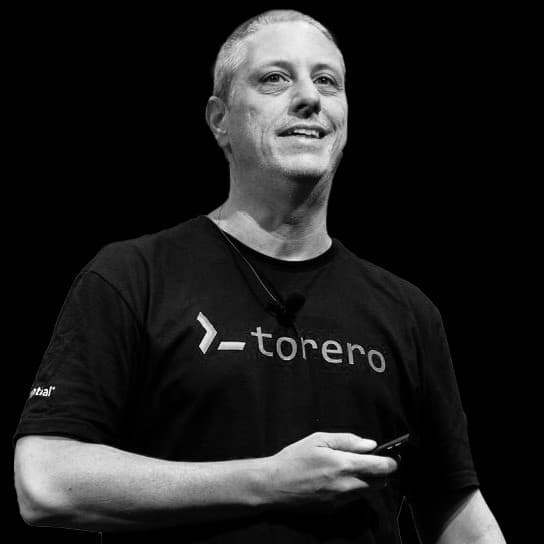
In this episode of IT Infrastructure as a Conversation, I’m joined by Peter Sprygada, Chief Architect at Itential, for a deep and refreshingly pragmatic discussion about how infrastructure operations have evolved from scripts and isolated automation into something far more complex and interconnected. Peter has spent more than a decade working across enterprise networks, cloud platforms, and automation tooling, and that experience shows in how he talks about what has genuinely changed, and what has not.
We trace the journey from early network automation, born out of engineers trying to escape repetitive CLI work, to the point where automation alone starts to break down. Peter explains why automation excels in domains but struggles across end-to-end systems, and why orchestration becomes essential once infrastructure has to align with real business intent. Instead of teams pointing fingers when something fails, orchestration creates a common language that allows network, cloud, application, and platform teams to work toward the same outcome, even when they use different tools and terminology.
We also tackle AI head-on, separating operational reality from conference stage promises. Peter shares his own initial skepticism, why treating AI as a tool rather than a silver bullet matters, and how the same lessons learned from automation apply again today. We talk about governance, guardrails, and what Peter calls the boring stuff, the logging, security, and controls that actually make innovation sustainable at scale. As infrastructure complexity continues to rise, he argues that many leaders still underestimate just how much engineering effort is required to keep modern platforms reliable.
Looking ahead, Peter outlines how the traditional boundaries between orchestration, automation, and observability are already starting to blur, and why investing in platforms that can evolve matters more than chasing the latest shiny technology. This conversation stays grounded in real operational challenges, real tradeoffs, and real lessons learned in the field, not abstract futures. As infrastructure stacks continue to grow more complex and AI becomes part of daily operations, are IT leaders ready to treat infrastructure less like a collection of tools and more like an ongoing conversation that never really stops?
Useful Links
Thanks to our sponsors, Alcor, for supporting the show.
[00:00:01] If you spend your days keeping complex infrastructure alive, you already know the gap between conference slides and real operations is incredibly wide, frustrating and often painful. And today's conversation is firmly on the practical side of that divide because I'm joined by Peter Sprygader and someone who has spent more than a decade deep in the weeds of enterprise networking, automation and multi-cloud environments.
[00:00:32] Yep, he's got a few war stories of his time out there in the field and lots of experience because he's worked across those traditional networks, cloud platforms and now modern automation stacks. So yeah, he has the scars and lessons that only come from running infrastructure at scale. So today it's not a discussion about shiny tools or overnight transformations. I wouldn't do that to you.
[00:00:56] It's more of a grounded look at how automation evolved from scripts to orchestration and where AI genuinely helps today. Yeah, we are going to talk a little bit about AI and where expectations are getting ahead of operational reality. And I'm sure you've got experience of that too. And we'll also dig into the hard parts most teams underestimate. Yep, complexity, governance and reliability. All that unglamorous work that actually keeps systems running.
[00:01:26] So if you're responsible for bridging legacy systems with newer platforms or if you're tired of companies promising miracles without acknowledging constraints, hopefully this conversation should feel refreshingly familiar but give you a few actionable takeaways and solutions too and lots to think about.
[00:01:44] Now before we begin today's interview and there's some great insights in that, I just want to give a special mention to my friends at Denodo who are passionate about the future and logical data management and agentic AI. Because everywhere you look, agentic AI is undoubtedly the next big shift. But here's the truth. It can't operate on messy, inconsistent or siloed information.
[00:02:08] With Denodo, you can create a unified govern layer that connects data across your lake house warehouses, across your apps and clouds instantly and without duplication. This means stronger AI governance, faster lake house acceleration and reusable data products that your teams can trust. So if you want AI that doesn't just automate but operates, start with logical data management at denodo.com. But enough from me. Let me officially introduce you to Peter now.
[00:02:37] So a massive warm welcome to the show. Can you tell everyone listening a little about who you are and what you do? Yeah, so first of all, thanks for having me. My name is Peter Spurgata. I currently serve as the chief architect at Itential, which is a fun and fancy title.
[00:02:56] That means I do all of the work in the weeds in terms of really just kind of looking at the product and trying to hypothesize where the product needs to go over the next three, five, seven months. Wow. You wear a lot of hats there.
[00:03:11] Before you came on the podcast today, I was doing a little research on you and I quickly learned that you've worked across enterprise networks, cloud environments and platform engineering from Red Hat to Pureport and obviously now in Itential. So when you look back, how has the conversation around network automation changed over the last decade and in particular the last couple of years, I would imagine? And what problems were organizations originally trying to solve?
[00:03:40] Has things changed that much in the last 10 years in your career? Yeah, wow. Yeah, they've changed a ton. You know, I trace my automation roots back to certainly in the networking space to 2011, 2012. So, you know, I've been doing this a long time. And, you know, when we first got started in this, it was really more about, you know, just trying to find a more efficient way to do your job.
[00:04:09] You know, I always love to tell the story as a network engineer. You know, you first get started in the networking industry and you get really excited for configuring your first switch or router and, you know, you turn up an interface or routing protocol, whatever it is that you end up doing. And you're like, this is really fun. This is cool. I enjoy this. Once you've done that, you know, 643 million times, you're like, okay, typing these CLI commands isn't as much fun as it used to be.
[00:04:35] And it's detracting from what I really enjoy about network engineering. And that's really where it created kind of that foundation of automation. And it was really to try and solve some of that repetitiveness that existed. From that point forward, you know, over the course of that next 10 to 15 years, it really evolved substantially from kind of being a way to optimize your job to really an industry all of its own.
[00:05:00] To the point where, you know, even in the last couple of years, as you mentioned, you know, it's changed substantially just in the last two years. You know, as we've really start to look at how organizations can leverage automation more as a strategic advantage versus just simply a way to, you know, optimize the infrastructure. And now with, and I'm sure we'll get into the dreaded AI conversation at some point.
[00:05:26] And now with AI, it's poised for an even more significant, you know, growth curve as we go forward. Yeah, I'm sure we will get to AI. It's a tech podcast. It's almost against the law not to mention AI now. But of course, many teams started with scripts and then task automation, often with the best intentions. But at what point does automation stop being enough?
[00:05:51] And what signals tell an organization that, hey, it now needs orchestration rather than just even more isolated workflows? Yeah, you know what? You just, you touched on the keyword, even in the question, and that is isolated. Yeah. You know, automation works in, you know, islands of expertise, right?
[00:06:11] The core networking team, the edge compute team, the security firewall team, whoever you are and however you do it, automation is really optimized to allow really smart people in a very specific domain, optimize how they do things. What automation is not good at, is it's not good at fundamentally understanding end-to-end systems and flows that are attempting to align with the actual needs of the business, right?
[00:06:40] And that's where that conversation, that's a signal that you kind of talked about saying, this is when we need to start thinking about orchestration is how do I take and leverage all of the automation that's happening in each of these isolated domains and now build something horizontally across all of that, that I can align with my, you know, companies and issues. I can align with my business processes and ultimately streamline just functionally how the organization works.
[00:07:08] And that's really, I think, what the big signal is. And I was recently reading that you often described infrastructure as something that should support conversations between teams, tools and systems, which is incredibly refreshing to hear.
[00:07:24] So how does an orchestration layer change the way that a network, cloud and application teams actually work together day to day and stop turning into one of those Spider-Man memes where they're all pointing at each other and blaming each other for when something goes down?
[00:07:39] Yeah. So, you know, it's interesting, you know, having had that, you know, and kind of we talked about it at the intro, you know, having had the opportunity in my career to kind of work across many of these different domains, you know, in cloud, in network, even to a little smaller extent, even in compute and application.
[00:07:59] One of the things that has always fascinated me is that, you know, if I look at what the network team is doing and I look at what the cloud team is doing and when it comes to, you know, how we interconnect these systems in a lot of cases, they're doing, if not the same thing, very similar things.
[00:08:18] What's different is the vernacular they use, right? The way that they talk about things, the names they give to things, the tools that they use, but generally they're all kind of doing the same thing.
[00:08:31] So, with the backdrop of that, we start to realize that an orchestration layer can start to become a way that these separate teams can really start to find a common way to communicate how they ultimately need to go about achieving, you know, whatever it is that they're trying to achieve.
[00:08:52] And that's really, you know, I think one of the big wins when we look at how the orchestration layer can ultimately help an organization because it finally allows the line of business owner to conversate with the cloud team, to be conversant with the network team and come to a common understanding about how the infrastructure ultimately needs to be provisioned, evolved, optimized, etc. to support the organization.
[00:09:22] And, of course, we did mention AI a moment ago. And before you came on the podcast, I was going through some of your blogs. I know there are numerous blogs out on AI and AIOps. So, I know you're reluctantly passionate about this too. So, AI has now entered the infrastructure stack, often wrapped in big promises. But from your perspective, where does AI genuinely help infrastructure operations today? And where do you see hype getting ahead of operational reality?
[00:09:50] There's probably quite a few myths and misconceptions that you've seen out there. But what are you seeing? There is. There is no question. You know, there's a few points in here. First and foremost, you know, I talk a lot about, you know, AI. You know, when we bring AI into this conversation, we always have to step back for just a moment. And, you know, as you said, right, the hype cycle is off the charts right now. And frightfully so. It's revolutionary technology. It's transformative technology.
[00:10:18] The likes that most of us, myself included, have never seen before in our careers. But at the end of the day, if we can detach from the hype for just a moment and understand that AI is just a technology tool. And we have lots of technology tools. It's a very powerful tool, but it is still a tool nonetheless. And we have to start by recognizing that is that AI is a tool and we need to apply it as such and we need to apply rigor around it as such.
[00:10:47] You know, AI is not something that is going to, you know, day one fundamentally change everything we do. Now, it may ultimately get there, but it's not, you know, we need to recognize it, you know, for what it is. The second thing about AI that I really find fascinating in my own personal journey was that when AI first burst onto the scene, I, like many other, you know, old school engineers, looked at the technology and said, uh-uh, no way. AI is not coming into this domain.
[00:11:17] I'm not leveraging AI. I don't understand this. I know how to do this. I do not need AI. You know, once I kind of got over some of those initial hurdles, some of those initial fears and really started to think about AI as a tool and what it could do for my infrastructure, that's when it really started to open the floodgates for me personally. And, you know, kind of going to the comment around, you know, leveraging it for infrastructure operations today.
[00:11:43] You know, what I see evolving is very similar to what we saw in the automation space, going all the way back to the beginning of this conversation. You know, when automation first started in the industry, we heard a lot of the same talking points being parroted by networking engineers and even infrastructure and operations teams as well. It's like, look, automation is here to take my job. It can't do things better. It doesn't understand things, you know, and the list just went on and on and on.
[00:12:11] And over time, as we got more comfortable with the technology and we got over a lot of those fear biases, we understood that, hey, it's a tool. It's a tool I can leverage. It's a tool that can actually help me in my day to day operations if I leverage it in that way. And I think that AI is going to take a very similar path. The trajectory is going to be very different, right?
[00:12:32] It's going to happen much faster, but it's going to take a very similar trajectory, meaning that, you know, we will initially leverage AI for a lot of operational stuff. But over time, it will evolve to take on other things like configuration management, you know, of the infrastructure. I just want to give a big thank you to my sponsor who is supporting every show, every episode across the Tech Talks network this month. And this month, I'm proud to be partnering with Alcor.
[00:13:00] And anyone who's tried to scale an engineering team across borders, they will know firsthand how messy it can get because they deal with endless providers. Then there's confusing rules to deal with in each and every region and fees that always seem to surface at the last minute. Now, Alcor, they solve that by acting as a partner rather than just an intermediary. And they focus on tech teams that expand in Eastern Europe and Latin America.
[00:13:28] And they bring employer of record services together with recruiting. So essentially, they help you pick the right country, source the right engineers and assess them properly and then get them active for you and your company within days. And one of the things that stands out for me is the financial transparency. Around 85% of what you pay goes directly to your engineers. Their fee goes down as your team grows.
[00:13:55] And if you ever wanted to bring your team in-house, you do so with no exit costs. And you can find out more by simply going to alcor.com slash podcast or follow the link in the show notes below. And inside any IT department, I think that constant battle with reliability and innovation are always framed as almost opposing forces, especially in infrastructure decisions.
[00:14:21] So based on what you've seen in the field, how can organizations better modernize their operational stack, do some of that cool stuff that they've been wanting to do without introducing that unnecessary risk or disruption? I mean, you mentioned a few moments ago when you first heard about AI, I'm not having this in here. So what are you seeing here? I think, yeah, I think that's right.
[00:14:42] And it kind of goes back, you know, goes to that concept of treating AI, you know, with the respect it needs and also in understanding that it is just a tool. You know, we wouldn't take, or at least we shouldn't take, right, a script that a junior engineer just wrote and put it into the critical path of how we operate the infrastructure, you know, without vetting it, without putting some type of governance around it, without making sure it's got logging, without making sure that it's secure, right?
[00:15:10] These are all things that we do today almost as second nature. At least we should be doing almost as second nature today as it relates to automation. And I think AI is very, very similar, right? We need to recognize that all the boring stuff, if you like, we always internally at Attention, we like to talk about this is the boring stuff, right? But the boring stuff is the critical stuff that allows you to go to sleep at night. It's the fact that it's, I know it's secure. I know it's got guardrails. I know that I've got governance wrapped around it.
[00:15:38] I know that I've got logging so that when things go off the rail, and they will, we all have been doing this long enough to know, I don't care what the technology is, it will go off the rails at some point for some set of use cases. We've got the right things in place that allow us to understand what happened, remediate it, get back to a normalized operational model, and then move forward by making changes so that it doesn't happen again. And I think that's really kind of the key to how we ultimately operationalize this type of technology.
[00:16:08] And if we look at the full operational stack here from intent to execution to assurance, what do you think most IT leaders are guilty of still underestimating about running modern infrastructure at scale? Again, you must see a lot of mistakes being made here, but what are the big things that people are still underestimating? I think, you know, if I could distill this down to one point, I mean, I could come up with many, many points, but if I were to distill it down to one point,
[00:16:35] is I think that IT leaders still underestimate the level of complexity that is dealt with on a day-to-day basis by engineering teams. The reality is, is that when you look at full, to your point, the full operational stack, right? Everything from network to cloud, to infrastructure, to platforms, to applications, to databases, to security, to firewalls, to low-bans, and on and on and on and we go.
[00:17:02] The complexity continues to rise almost on a daily basis, if not on an hourly basis. And that is probably the biggest area that so many people underestimate, because we tend to get into conversations where we talk about things in very microscopic views, right? We talk about a particular application or a particular deployment or a particular cloud infrastructure. And when we put those guardrails, again, there's that term guardrails, right?
[00:17:30] When we put those guardrails in place, it's very easy to look at it and say, through that lens and say, okay, I know how to operationalize this stack so that it is performant, it is optimized, it is secure, it runs in my infrastructure the way I need it to. Now, when I take that and I push that into the larger picture of the entire organization, now we've introduced tons of complexity because there were a lot of very domain-specific decisions made
[00:17:59] that maybe don't align with the full operational stack. And that's where I think we make some of the – that's where we underestimate significantly in terms of what it takes to run infrastructure today. And as we do look ahead, what does the future infrastructure operation stack actually look like to you? And what kind of mindset shift do leaders listening need to make right now if they want their platforms to stay relevant over the next five to ten years?
[00:18:24] And I realize you're saying that out loud, five to ten years away is just impossible to predict, but let's say in the next few years. Yeah. You know, so we've already kind of touched on AI, and I won't pound the AI drum, but certainly I think embracing AI as a technology and, more importantly, as a tool, for sure. No question about it. But beyond just simply AI, you know, I think there's two things that really IT leaders need to really think through
[00:18:53] to make sure that their platforms continue to stay relevant. One, first and foremost, is invest in the platform, right? That boring stuff I just talked about. And recognize that that boring stuff is what actually allows you to go to sleep at night. So continue to make investments in that boring stuff, that security and logging and governance and whatnot in that platform so that we take a platform-level approach to how we build and run infrastructure.
[00:19:20] I think the other thing that IT leaders really need to start to realize with the advent of, and this is a byproduct of AI, is that for a very long time, we've had a lot of rigidity in the operational stack. Meaning, if I thought about any particular operational deployment, I almost immediately, with, you know, 10, 15, 20, 25 years of experience, knew all the pieces of parts I needed. You know, I needed some monitoring, I needed some logging, I needed some automation, I needed some DNS,
[00:19:50] I needed some DHCP, I needed some, et cetera, right? The list goes on, and we understood that for each one of those categories, there was some subset of products, technologies, and tools that I would turn to, to help me build that operational stack. And we had very distinct lines between them. My service assurance platform is very different than my automation platform, which is very different than, you know, my orchestration platform, et cetera.
[00:20:17] We need to recognize, I think, especially as we continue to think about the complexity of modern infrastructure, that those lines are probably going to blur faster than they ever have. If we look back 12 months from now, 18 months from now, what I think we're going to start to see is that those lines are going to blur to the point of almost disappearing. The orchestration stack can do some automation. The automation stack can do some of our observability. The observability can act as a source of truth database. And the list goes on and on.
[00:20:46] So recognizing that, embracing that, and doing our best to manage our way through it, I think is how we can best set ourselves up for the future. And for people listening and hearing about Itential for the very first time, it is described as the infrastructure and network orchestration platform for the AI era that we all find ourselves. And most interesting, I think, especially for techies, is you do this through agentic orchestration via MCP and intelligent workflows.
[00:21:14] And in doing so, you also connect IT systems, CI slash CD pipelines, AI agents, and hybrid infrastructure. Now, we are living in an age where techies get triggered by high-level promises that don't offer as much value as business leaders who see solutions at tech conferences might think. But your description there seems clearly aimed at the techies. So for those techies listening that we may have just sparked their curiosity, tell them a little bit more about the company, how you're helping.
[00:21:43] Don't be afraid to get your geek on here and the kind of help that you guys offer. So, yeah, you know, Intentual is an interesting, as an organization, is in an interesting place in that, you know, we've been doing infrastructure and network automation now for 11 plus years. So we've got a deep-rooted understanding of that particular domain. And we've spent a fair bit of time, again, building out the boring stuff and doing some cool stuff on top of it.
[00:22:12] But, you know, one of the things that has always been important to me, and this actually extends beyond my time and attention. This extends even back to my roots in the open source domain, back when I was at Red Hat. And even prior to that, the way I got into Red Hat was through Ansible. And, you know, when we work in those types of communities, you start to recognize that, you know, you're absolutely right.
[00:22:33] I mean, you can't throw a stone without hitting 15 AI, you know, 15 AI products or vendors or companies that are promising big transformative changes. I get it. But when you're working in tight-knit technical communities, you stay much more focused on pragmatic solutions that address real problems.
[00:22:53] And I think that that's one thing we've tried to strike a real balance of, you know, as we continue to roll our stuff, our technology forward is that, yeah, of course, we're going to make big, bold claims. Of course we are. But when you start to dig into our technology, you start to realize that our technology has been designed really to focus on solving very specific problems and really layer things together so that we can evolve it over time as organizations need to evolve.
[00:23:23] And that's really what it's all about, you know, for me. It's staying focused on what is the problem I'm trying to solve today and let's have real conversations about pragmatic solutions and not talk about overarching, you know, big promises.
[00:23:39] The reality is, and I believe this to my very, very core, you know, no organization is going to upend their operational environment, you know, to bring in the latest and greatest, you know, platform that's going to solve, you know, everything from infrastructure operations to, you know, world hunger. That's just not living in reality.
[00:23:58] Everything has its place and we have to make sure that we're designing interfaces, touch points, user experiences, API interactions in ways that allow us to stitch tooling together so that organizations can ultimately bring people, process and tools all together to solve real problems. And that's really been our philosophy and what continues to be our philosophy moving forward. You had me at solving real problems there.
[00:24:25] And for everybody listening that would like to find out more information about you, your work, keep up to speed with some of those great blogs you're writing as well. Where would you like to point everyone listening? Yeah, absolutely. So all of my blogs are always published at itential.com. That's I-T-E-N-T-I-A-L.com. You can certainly find my writings there. I also cross post significantly to LinkedIn.com.
[00:24:49] And by all means, if you want to talk more, you know, I always tell folks, you know, I love getting into conversations about technology. I love to hear what we're doing right. But more importantly, I love to hear what we're doing wrong. What are we missing? What are we not doing right? Because that's how we grow. That's how we grow as an organization. That's how we grow as a community. That's how we grow as an industry. So you can always find me in the various ethers of the Internet. X.com and Mastodon at PrivateIP is my handle there. Spragata on LinkedIn.com.
[00:25:19] And reach out and let's have the conversation because that's where it all starts. Love it. Well, I will add links to everything that you mentioned there. So anyone listening, I've looked at the show notes. You'll be able to get there, get hold of you nice and easy. Keep up to speed with anything. I just cannot thank you enough for bringing your pragmatic insights today into bridging legacy systems with emerging tech and just offering real world value to listeners and focusing on solving real world problems while managing complex infrastructure.
[00:25:48] Sounds very easy on a podcast. It's much more difficult than that. So kudos to everyone listening in this world. And thank you for starting the conversation today. Absolutely. And I appreciate the time. It's been a fantastic conversation. And this is what it's all about, right? This is where it all starts in these conversations. One of the many things I appreciate about Peter's perspective today is that he never loses sight of the day two problem. Infrastructure does not fail because teams lack ambition.
[00:26:17] Typically, it fails when complexity outpaces visibility. Yeah. When tools don't talk to each other, when new technology is introduced without the guardrails needed to help it run safely. And I think Peter's experience across automation, orchestration and now AI brings that reality into much needed sharp focus. And for engineers and architects listening, there is a clear takeaway here.
[00:26:43] Modern infrastructure is not about replacing everything you have with new shiny tech. It's about creating systems that allow teams to communicate, evolve and recover when things go wrong. And yeah, that means investing in the boring parts, the governance, the logging security and platforms that can adapt over time. So if this episode resonated with you today, it probably reflects challenges that you're already dealing with inside your own environment.
[00:27:13] And that alone raises a simple but important question to leave you with. As your infrastructure grows more complex, are your tools and processes helping teams work together? Or are they quietly making the job harder than it needs to be? Please go over to techtalksnetwork.com. You'll find a blog post and information on how to connect with my guests there. There's 4,000 interviews, nine different podcasts, ways you can work with me. Contact me.
[00:27:42] Send me audio message. The list is endless. I won't bore you with it. Just go over to techtalksnetwork.com and let me know your thoughts on anything we talked about today. But that is it for now. So time for me to go. But I'll be back again real soon with another story for you. And hopefully I'll speak with you all then. Bye for now.