

What happens when AI intelligence becomes commoditized?
That is the question sitting at the heart of this episode recorded live at Team '26 in Anaheim, where I sat down with Sherif Mansour to unpack one of the biggest shifts happening in enterprise technology right now.
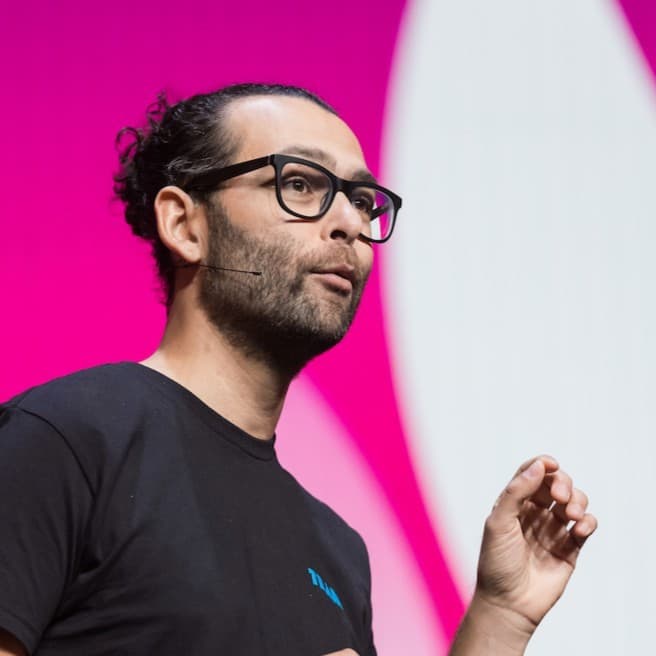
For years, the AI conversation has focused on models, prompts, and raw capability. But according to Sherif, the real competitive advantage may no longer come from the intelligence itself. It comes from context. The workflows, relationships, decisions, knowledge, and operational history that exist inside an organization.
In this conversation, Sherif takes me deep inside Atlassian's biggest AI announcements around Rovo, Teamwork Graph, AI-powered workflows, and the company's broader vision for what happens when AI moves beyond isolated copilots and starts operating across the flow of work itself.
We explore why Atlassian believes organizational context is becoming the defining moat in enterprise AI, why the company is opening Teamwork Graph through MCP and external integrations, and how the industry is rapidly shifting from AI experimentation toward real operational execution.
Sherif also myth busts some of the biggest misconceptions surrounding AI adoption today. We discuss the difference between automation and orchestration, why humans still remain central to decision-making, and how enterprises can avoid adding complexity while still moving quickly in the AI era.
Along the way, we discuss real-world examples ranging from Formula One race strategy and procurement workflows through to AI-powered onboarding, engineering productivity, and the growing role of agentic systems inside large organizations.
One of the most fascinating parts of the discussion centers around the evolution of enterprise software itself. Atlassian no longer sees AI as a standalone assistant sitting in a chat window. Instead, the vision is for AI to become deeply embedded into workflows, helping teams coordinate work, surface insights, and accelerate decision-making in real time.
Sherif also shares why he believes the next major platform battle will not be over who owns the smartest AI model, but over who owns the operational context surrounding that intelligence.
If you're trying to separate real enterprise AI progress from the hype cycle, this episode offers a thoughtful and refreshingly honest look at where things may actually be heading next.
As always, I'd love to hear your thoughts. Is organizational context becoming the real competitive advantage in AI? And how prepared is your business for a future where humans and AI agents increasingly work side by side?
Useful Links
Please check the partners of the Tech Tech Talks Network
Learn more about the NordLayer Browser
Visit Denodo.com
[00:00:00] - [Speaker 0]
If you are listening and you're responsible for security or IT, you will know the reality that most of your risk now sits inside SaaS apps and browser activity. That gap is exactly what NordLayer is addressing with its new business browser. So instead of bolting security on from the outside, it builds it directly into the browser itself. This means you can control access, monitor activity, enforce policies, and reduce shadow IT all from one single place. And most importantly, it does it without adding deployment headaches or complex onboarding.
[00:00:37] - [Speaker 0]
You get things like browser based data loss prevention, SaaS access control, and zero trust browsing, but delivered in a way that your team can actually use. So if you've been trying to simplify your stack while improving visibility, please check it out at nordlayer.com/browser. What happens when intelligence becomes commoditized? This is one of the many questions hanging over team twenty six here in Anaheim this week. Because if every company eventually has access to the same powerful AI models, then what actually becomes the competitive advantage?
[00:01:18] - [Speaker 0]
Well, according to my guest today, the answer is context. Because joining me live from team twenty six, my guests have spent this week unveiling some of Atlassian's biggest AI announcements around rovo, teamwork graph, AI powered workflows, demos that work in front of thousands of people, and sharing what the company believes the future of human and agent collaboration could look like inside modern organizations. And this conversation goes much, much deeper than product demos or feature launches. We actually unpack why organizational context may become the defining moat of sorts in enterprise AI and why Atlassian is opening its teamwork graph rather than locking customers into a closed ecosystem. But what happens when AI starts moving from isolated assistance into coordinated operational workflows?
[00:02:15] - [Speaker 0]
Well, my guest will share with me some of the lessons that he's learned from Atlassian's own transformation journey from on premise software to cloud and why he sees the rise of Agenetic AI as another major shift already underway. And we'll bust a few myths along the way around some of those big narratives surrounding AI right now from fears around replacement and automation through to the reality of human and agent collaboration, governance, trust, and why keeping humans in the loop. Yes. It is a buzzword, I know, but this does matter more than ever. So if you're trying to separate meaningful enterprise AI progress from all the noise out there, then I'm hoping this is a conversation you're gonna wanna hear.
[00:02:57] - [Speaker 0]
But enough from me. Let me introduce you to Sharif right now. So thank you for joining me here on the Tech Talks Daily podcast where we're recording live from Alassian team twenty six. Now you've been on stage today, Natural banter with the CEO there as well, but tell everyone we're missing a little about who you are and your role at Atlassian.
[00:03:18] - [Speaker 1]
Yeah, folks. My name is Sharif Mansour. I'm the head of AI and the product management craft at Atlassian. Yeah. And so I spend most of my day trying to work out how we're applying AI to our products, what our customers are seeing, and how we can make their AI experiences better.
[00:03:30] - [Speaker 1]
A fun role, never never a day in AI without some new news. So Yeah. You're always reading and learning, but it's exciting. Very exciting time.
[00:03:39] - [Speaker 0]
It was as I said, was a big day for you. A lot of big announcements there, and you were on stage. Tell me, anyone listening that weren't there, what you were announcing today, what you were talking about, what you were walking people through.
[00:03:50] - [Speaker 1]
Yeah. Maybe just zooming out for sec. The big question we're trying to answer is I think everyone is seeing intelligence get better and better. Those models are getting better and better all the time. And there's like a bit of a business existential question, like most businesses are like thinking about business leaders are like, what is my differentiator?
[00:04:08] - [Speaker 1]
Like, if I have the same power to intelligence and you have the same power to intelligence, like, what's gonna set my business apart and my teams apart? And so I'm I guess message to the community really is like your context matters and your knowledge, your organization, your learnings, your values, like your beliefs, your system. Yeah. All of that matters and that is gonna be probably the most sustainable thing in the long term for most businesses. So what is your context?
[00:04:34] - [Speaker 1]
Or your context is whatever is digitized in your world that you have in a secure and safe way given access to AI to use. And so we were then talked about, okay, well, if context is the biggest differentiator, how do we help you grow that context? Like, do we make sure that you have a a organization of learning and continuous learning, but also sharing? And how do you make sure that the data isn't locked off away? And then the second thing we talked about is how you can help use that context to actually accelerate your team's work and actually achieve a business outcome.
[00:05:05] - [Speaker 1]
And the third thing we talked about is how to make sure that you don't have vendor lock in and you can take the context with you. And so we made some announcements there. We can go through each chapter or whatever you wanna go through or
[00:05:14] - [Speaker 0]
I was gonna say for organizations listening, they're they're hearing the word context a lot at the moment. What should they be doing? Because it's easy to feel overwhelmed by being bombarded with with that particular word of what we're doing, everybody else is doing. What should they be doing? Where should they start?
[00:05:29] - [Speaker 1]
Well, I think the big question they need to ask themselves is, why is my organization's use of AI giving me a more unique advantage than someone else's? And to to do to answer that well, you'll need to decide which data you're happy for AI to use in a secure and a personalized way for AI to use. And typically, they'll connect data sources to do that. So we made a bunch of announcements today around new connectors for all the SaaS apps customers use, including a new one we made about code intelligence. So you can connect the code and where you're trying to connect the business context with the technology context in your organization.
[00:06:05] - [Speaker 1]
So the most practical thing organization leaders need to do is to think about what's my data strategy? How am I thinking about which data do I want to use? And how do I make sure that's the right data set up in the right way with the right security protocols to use it to enable my team to do that. Because that's really what's gonna give everyone a unique answer rather than everyone getting the same generic LLM response.
[00:06:27] - [Speaker 0]
And yourselves at Atlassian, you've been on quite a transformation yourself from on premise software to Yes. To the full to going all in on the cloud. Do you see the rise of AgenTiKi as another platform transition of a similar scale? And any particular lessons you learned from that journey that might be shaping your decisions now? And one of the reasons I asked that question, I was chatting with the CEO of Pendo a few weeks ago, and he said, because of the journey that Atlassian have been on, it wouldn't surprise me if they went fully agentic within a few years because they've already learned so many lessons from the previous transformation.
[00:07:01] - [Speaker 0]
But how do you see that that
[00:07:03] - [Speaker 1]
The cloud transformation was a fascinating one. I was in icing through all of it. And I can tell you for the very first few years, I would talk to customers and we were investing in the cloud back then saying, I am never coming to the cloud. Yeah. You like, and these are SaaS companies that run pretty big SaaS apps, know, like, you're already in the cloud as your product.
[00:07:23] - [Speaker 1]
Like, nope. My you know, name it. My code is the most important asset. My Jira work items are my same person. Like, whatever it is, that's never going to the cloud.
[00:07:32] - [Speaker 1]
Governments as well. Yeah. And we were still building the cloud. So I think one of the things we learned back then is that as a vendor for us to be relevant and continue to be relevant with our customers is to help them transition the next wave. And so we need to skate to where the puck's headed.
[00:07:45] - [Speaker 1]
So often we're building ahead of where customers are at. That requires making some bets, knowing the market really well, understanding the trends, and making sure we can be ahead of that. It's just a simple example. It's been nearly two years since we have had agents on the Revo platform. Yeah.
[00:08:00] - [Speaker 1]
Yeah. I actually, I don't have the exact things. Yeah. But we I'm confident we were one of the very first few vendors to actually have agents in our platform. I was there at the time and worked on it, and we had this idea of like, well, what if you could package an LLM call with specific tools and specific knowledge and put it together?
[00:08:17] - [Speaker 1]
We need you know, there needs to be a name for that, and we didn't create the word agents, you know, etcetera. But like, you know, and customers when we announced it, it was some customers were like, I don't know about this agent thing. I think it's gonna be a fad. As as they should, like everyone goes through different journeys and our job is to be a little bit ahead of customers. We went through this with agile as well back in for for older listeners such as myself.
[00:08:42] - [Speaker 1]
To be a little bit ahead to help customers during transition there as well. So spot on. I I think that the future of teamwork is gonna be humans and agents collaborating together. And so we have been making a ton of work to make sure agents are first class, to use a buzzword, it's probably a better word, like just you agents to be able to operate at the same level of humans in our platform, but ensuring that humans are in the loop. And so we've been putting agents throughout all our product experiences from assigning Jira work items.
[00:09:11] - [Speaker 1]
Today, you know, the classic example, everyone sees how developers work in their consoles and have and they can see all their agents, you know, you see the stories of like, I farmed off an agent to do here and I'll come back tomorrow to work on it and another agent here, another agent here. Why did developers get to have all the fun? Knowledge workers have this today in their Jiras and their Conferences. They can actually farm off multiple agents to go do stuff. Switch context to something else, come back and visualize it on their board and move move stuff around.
[00:09:38] - [Speaker 1]
And so, we are slowly helping our customers transition to a human agent collaboration world where humans are in the loop.
[00:09:45] - [Speaker 0]
Incredibly cool. And here this week, you described the teamwork graph as the connective layer between systems, people, and workflow. So for listeners who still see AI as maybe just a chatbot or or something like that, what what changes when AI gains access to relationships, to history, and operational context in instead of just isolated prompt?
[00:10:05] - [Speaker 1]
Yeah. It it gets a lot smarter and helps your teams become unique and differentiated, and it's what sets companies apart. So example, someone at the booth I was at the booth today answering some customers questions and one lady came up and she works at a company that runs data centers and she was responsible for a particular data center. And she's an IT department and her role was ensuring that when new procedures came into the data center about installing new racks and that kind of stuff, she had the standard operating procedures. She came to me telling me how amazing Revo is and how amazing it was And I, you know, had a big ego and my head was getting bigger.
[00:10:43] - [Speaker 1]
I'm like, oh, thank you. We'll take the credit. And you know, I think Revo is pretty good. I work on it all the time. And then she shared her laptop and the experience with me that she went through and she asked Revo to create some new operating procedures for a particular server mainframe that was changed, went beyond my head a bit.
[00:10:59] - [Speaker 1]
But she was like, these results were really specific to my company and it was amazing. And I just said to her, let's just check the sources or whatever. And why was that result amazing? It was because someone else in her organization had already created context that was in their teamwork graph Yeah. And she was blown away by it.
[00:11:18] - [Speaker 1]
And she didn't know who this person was. There are thousands of people in this organization. And so why is the Timo graph important? Is that because it helps accelerate actual teamwork in a unique and very specific to your organization way, not just generic LM responses. Right?
[00:11:32] - [Speaker 1]
And that's why we've opened up the Timo graph with timograph.com and customers can use that graph in any tool that they like as well as add more things to that graph.
[00:11:41] - [Speaker 0]
And I'd imagine when you when you create these things or when you use it in Atlassian, you you think of things a certain way. Is it a real big light bulb moment when you see a customer like that and they see how they use it in a completely different way that maybe you never imagined.
[00:11:53] - [Speaker 1]
Yeah. It's insane. I always find the physical world meets digital world stories the most wow because I'm I'm a computer nerd. I was in front of a computer. It's like, we don't produce physical products at Atlassian.
[00:12:03] - [Speaker 1]
Yeah. I mean stickers. We have stickers and t shirts. No. But like, you always the Williams f one stories there.
[00:12:09] - [Speaker 1]
I was at the Williams the f one race in Melbourne a few months ago, and I was fortunate enough to go into the is it the cockpit? Is that what it's called? The way they they park. I'm just car illiterate, by the way. Yeah.
[00:12:20] - [Speaker 1]
Always nice meet Yeah. But I learned so much that week. Yeah. And watching them manage the car parts, put the wheels on all that stuff, and when there's a faulty car part, they turn around and report it in service collections, your service management, and an agent our agent picks it up, runs through all the engineering context that was existed and all that stuff. So Williams have their car parts modeled as objects in our teamwork graph.
[00:12:47] - [Speaker 1]
So that means someone can say, hey, you know, what happened to this wheel in this race, etcetera? That that Rover understands what that is. And so when you hear these physical world stories, we have Ford that capture all their test car parts as well there, etcetera. So you always hear the like, not just IT assets, you know, is typical use of our graph like our laptops and we maintain all the computer systems. So we have each asset tracked, you know, the under your laptop is probably an asset number or that kind of thing.
[00:13:16] - [Speaker 1]
That's typically the hardware that, know, your average IT department would track. But when you hear the physical world products, you're like, oh, oh, that that's pretty cool, you know. So it was exciting to see, you know, them using an agentic workflow in in Jira Service Management that use the context of the graph to help them accelerate their their time to respond to faults on car parts, which is pretty cool. Yeah. They're always cool stories.
[00:13:39] - [Speaker 0]
It really is. And one of the things that stood out in your briefing was this idea that companies will use multiple AI ecosystems simultaneously. So why did Atlassian decide to open the graph through MCP and external integrations rather than trying to keep customers entirely locked inside the the ecosystem?
[00:13:56] - [Speaker 1]
The truthful answer is nobody likes vendor lock in. Yeah. We don't like it ourselves. And so we've had a long history of being open from day zero, like, we were probably one of the first few vendors to have full REST API with access control lists in our API from day zero of Jira and Confluence. And so our our just mental model and the philosophy I always tell our teams here, reminder, it's not our data, it's the customer's data.
[00:14:22] - [Speaker 1]
And that language is important, like I even talk to my teams about it because someone will say, blah blah blah, our data. I'm like, no, sorry, it's wrong language. It's not our data, it's our customer's data. They've trusted us with their data. And I think that's the right thing because that's the customer's IP.
[00:14:34] - [Speaker 1]
It's not our IP. Yeah. So customers can now go to timograph.com, take the rovo m c p or the CLI tool if they're a bit more advanced, connect the MCP to, you know, I gave a demo this morning, which worked thankfully with our friends at Figma, our partners there where I connected Rovo and the Timograph to Figma make, and I generated a prototype based on a requirement. And because I use the context of the graph, the prototype was way richer than order ever been with my specific requirements across like it was a Google Drive, a Confluence page, SharePoints content all in one place. Whereas if I just went to Figma Mac and say, create me a prototype for this thing, it would just create with only the access, you know, very basic prototype.
[00:15:19] - [Speaker 1]
But I could speed that up. But again, Pendo, you can connect, you know, RevoMCB to Pendo in your example, etcetera, and use that context in any app. And the CLI is really for anyone that's building agentic workflows with things like Cloak core code, OpenAI's codex, they can use a CLI there as well, or our very own rovo rovo CLI or rovo dev. So meet customers where they're at is a principle, and and we'll I'm sure we'll be fine as a business if we keep following where where customers are at.
[00:15:48] - [Speaker 0]
And there is I mean, you mentioned the demo and how well that worked today, and there's a growing gap between AI demos and real operational deployment inside enterprises. And I think that's why your demo really stood out today because it brought it to life in a real authentic way, and I think it resonated with everyone because you could just say, okay. And and it brought it to life instantly, so kudos there. But from what you're seeing across your customers, where are organizations getting that real measurable value today, and where is the hype still out running reality?
[00:16:16] - [Speaker 1]
Oh, that's a really good question. Measurable value easily is now happening more and more with I think people are now seeing the value of just general purpose AI tooling that every employee should have. You know, the calculator on the desk kind of thing. They're going, oh, no. Just writing assistance working together across the whole organization.
[00:16:35] - [Speaker 1]
I need that for every employee. I think that's now kind of proven and recognized. I think what is been high value of very specific and pointable to is specific agent deployments that are done where, for example, you may deploy an agent and this agent reviews sales contracts for a particular set of criteria to make sure that sales contracts meet some criteria. That is a very measurable outcome. So customers can say for this agent, every time it runs, it saves me ten minutes and therefore, you know, it ran a thousand times last month and that's that's many minutes, etcetera.
[00:17:05] - [Speaker 1]
My math is terrible. Don't ask me to calculate that math. But so they can do that on our platform and measure the value, and that's at a team level. So every single team can quantify the value of the agents that they built or the agents that have worked and haven't worked and identify what isn't returning the value it is. And it's not always, by the way, the easy thing to talk about here is, oh, yeah, agents are all about saving time and saving money and reducing that.
[00:17:28] - [Speaker 1]
Agents also create opportunities. So example, there was a customer the other day that has an agent that identifies new sales leads for the sales team to look after. So it's connected to external data sources to then say, hey, we should go reach out to these people as potential new opportunities. That's the agent that's creating new business or helping create new business for that organization. So that's a very quantifiable set of measures there.
[00:17:51] - [Speaker 1]
The last big category is our in our service collection, which are our collection for teams who provide service to other teams typically starts with IT teams, HR teams who provide an internal service for employee onboarding and that kind of stuff, employee experience platform. That is a very measurable set of agents that are available out of the box to help people deflect work or automate repetitive tasks. You know, no one wants to talk to a human for a password reset. The agent can do that for you. No one want you have VPN issues, it's likely possible these things, etcetera.
[00:18:22] - [Speaker 1]
So that that whole collection is largely designed around very measurable service. We call it service based work where someone asks something of one team and that team provides a service to another. Often they provide either knowledge to try to answer that question or they'll provide or they'll take action like, I'm gonna grant you access to the system that you requested access to. So they'll so that's often how we think about it. So there are multiple different ways to measure value in in those areas.
[00:18:50] - [Speaker 0]
Credibly grateful to the team at Denodo for backing the Tech Talks Network and helping us produce over 60 interviews a month. And if you are looking for better ROI from your lake house, this message is going to be worth hearing because Denodo helps reduce complexity, control costs, and accelerate time to insight. And it does that by connecting all of your data sources in real time. So make your lakehouse work harder with Denodo, and you can do that by simply visiting denodo.com. One of the things that really stood out as well from one of your presentations was when you outlined the maturity curve and how it moves from assistance to orchestration between multiple agents.
[00:19:35] - [Speaker 0]
So what does the final stage actually look like in practice? And how close are enterprises to running coordinated AI agents across departments. It seems like the utopia, but how close are we from that or are
[00:19:46] - [Speaker 1]
we there? I would actually argue we are there today for very simplistic use cases. So as a simple example, we had a team internally prove it out. So we had a team that's created a mini application just in a repository, and then had an agent give it feedback. So like, oh, you know, you should change this in this app.
[00:20:10] - [Speaker 1]
So imagine customer feedback for The other agent another agent reading the feedback and then suggesting a specification for what to build, another agent picking it up and building it, another agent building the code, deploying it, testing it, another agent checking that it works and publishing some market material. That whole loop today in Jira, Robo, Confluence, you can automate that whole loop. It's fascinating to watch. Yeah. You you could just do a very basic thing.
[00:20:35] - [Speaker 1]
After a few loops, it starts creating slop and going down the drain.
[00:20:39] - [Speaker 0]
Yeah.
[00:20:39] - [Speaker 1]
But why is that? Well, turns out, if there's no humans in the loop, and humans actually providing guidance and taste and making those decisions, you're just like, it's just AI feeding AI. Yeah. And so I I, you know, I I think philosophically, I think that's there to today. Like, you could seriously build a system that just loops agents in infinitely to do build something, listen for feedback, suggest the next proposal, build it again, listen for feedback.
[00:21:04] - [Speaker 1]
I think that's possible today. Is it all the hype that'll build, you know, you a million dollar business? Absolutely not. It's nowhere near there. It actually highlights more and more important why context and humans in the loop are key.
[00:21:16] - [Speaker 1]
So how far away from away from that? I would say we're here today for teams that have maybe smaller context that's manageable for agents to handle there. It does feel like it's gonna be a multi year journey before anyone deploys this at any scale that's a serious scale. You mean, if we're talking if your your specific context is like doing that at Crazy Loop. And who would wanna do that?
[00:21:40] - [Speaker 1]
We know our cloud migration journeys that customers went through to bring it back to the start of the podcast. Customers that did it well were the ones that's cherry picked small teams and tried it first with a few others, then migrate others, etcetera. And the same thing's happening with agents. I might I know this part of my loop, know, one example, one thing I'm trying to do with the product teams at Atlassian is I wanna go from project finished to generating draft release notes, that should be an automated agentic flow. And we have all the tools to do that and some teams are doing that, I've seen other teams are not doing that.
[00:22:08] - [Speaker 1]
So I'm like, okay, that part of the flow, you guys can speed that up like crazy, and you can actually put you'll get better results. You'll be able to actually write better release notes for our customers to understand what's changed. So we the best way for any customer to build that whole loop is piecemeal Yeah. Building confidence, you'll learn something. And then next one, you'll realize, oh, we shouldn't have done it that way.
[00:22:27] - [Speaker 1]
We should have done a different way and so forth. So so it's there today if you wanna build a very basic snake game or something like that. But to do it at scale, I think you're really gonna zoom in at one step of the loop at a time, and it'll take it'll take a while.
[00:22:41] - [Speaker 0]
And another one of the strongest moments in one of the briefings came during a security discussion because the concern wasn't whether controls exist, but whether humans will configure and govern them correctly. So how do you balance making AI systems powerful while also reducing the risk of maybe accidental exposure or over permissioning?
[00:23:00] - [Speaker 1]
It is it it is incredibly tough, and it the answer for us as a vendor cannot be, oh, we gave you the controls, so sorry. It was your fault if something went totally wrong. So we do have very sophisticated controls at multiple levels at both the data ingestion layer as well as the agent governance layer, like if you add two two broad buckets. But I think like everything, if you go through again the agile transformation, practices are actually, you know, they always say people people, processes, and tools. The thing that's hardest is the people Yeah.
[00:23:32] - [Speaker 1]
Then the processes, then the tools. And so everything we try to do as an organization, we're often sharing our practices as well on how we're trying to solve some of these problems around processes, governance, etcetera. So we're always sharing case studies internally at Atlassian because we're going through this journey too. Every vendor is going through this journey. What has worked for us?
[00:23:49] - [Speaker 1]
What isn't working work for us? What are the things we need to be aware of? But at multiple levels, we need to be doing this at the education of the people level, at the process and framework level, and at the tooling level. I don't have a silver bullet answer for you to say that, oh, we have sold it. But the reality is, yes, we need to make sure at the tool level, you have as many as much control and transparency as possible in multiple failover levels.
[00:24:11] - [Speaker 1]
So we have ways where you can ingest data, for example, and say, don't wanna ingest this kind of data. But even when the data is ingested, we have another solution that lets you redact data if it shows, you know, if you said, I don't wanna inject ingest customer addresses that don't get ingested with a license card coming soon. It's not available yet, but it's coming soon. And then even when it comes in, when the data is rendered, you can say, I'd if there's anything with a customer address, don't ever render it. So there's so what we can help with is a vendor is provide multiple layers of defense, if that makes sense.
[00:24:43] - [Speaker 1]
But really, the real thing we need to be able to help customers with is all the way up the stack with the frameworks and processes that we're learning and education at the people level. So don't have a syllable to answer. I think that's just something that every team and every company needs to be aware of, and we need get better at it as an industry. Yeah.
[00:25:02] - [Speaker 0]
And as we're talking today, one of the things that stands out is the importance of people, as you said, keeping humans in the loop. But there will be people listening in organizations that treat AI as almost a a cost cutting exercise while others are using it to augment teams and redesign workflows. From your perspective, what separates those those organizations use AI using AI strategically from those simply just chasing automation headlines and and, you know, saving some quick cash?
[00:25:29] - [Speaker 1]
At the end of the day, I think it the a business needs to decide, am I here to run a profitable business without growing? Yeah. Am I do I wanna grow? And like, I I think it really comes down to that. Honestly, I believe there'll be businesses, unfortunately, that that will be run purely for the purpose of minimizing cost and are happy to maintain their growth.
[00:25:47] - [Speaker 1]
The reality is if that's the business, the challenge of saying we're just happy to maintain the current pace of growth or whatever it is, the next player out there is probably gonna put you out of business. So the I think the smarter ones are always gonna be thinking about, hey, humans are my my bottleneck and they should be my bottleneck. Like, that's what makes me differentiated if I just got AI to run-in my business. I don't know how you do that. That's another my mind breaks in that territory.
[00:26:12] - [Speaker 1]
Like, what is the what is the business if there's no one deciding what that is, etcetera? It's just AI slop, like, you'll need to work that out. You know, the example you have is one developer is now doing 10 things, and the immediate assumption is, well, then I don't need any more developers. I mean, like, wait, hang a second. But if you had two developers, you can now do 20 things.
[00:26:32] - [Speaker 1]
Oh, wait. Yeah. Yeah. Yeah. I can.
[00:26:34] - [Speaker 1]
And so actually, the reality is it's as it's as ambitious as the organization wants to grow because your throughput's more? Yes. Could you do more with less? Yes. There's no doubt about that.
[00:26:45] - [Speaker 1]
But it hasn't just lifted the the floor for everyone, like if that makes sense. Let's just this has raised the bar of how how it's just harder to build a business now. I think I generally think it is. And so to do well as a business, you need to be making most of all the tools and services you have that will make you differentiated and sustainable, and part of that is working with AI to work out how to do that, also working out how your humans can help you accelerate use of AI as well. So, yeah, I don't know if I have a very specific thought there other than that, like it just feels like it's, if you're happy to remain where you are as a business, it'll probably be tough in a few years' time.
[00:27:25] - [Speaker 0]
And one of the things I love about what you've done here today is you brought everything to life with very real world examples. I mean, on stage, you've shared examples of Atlassian using it for AI using AI for onboarding, legal reviews, meeting summaries, and even voice and tone agents. But which internal use case maybe surprised you most in terms of adoption or business impact? And did it teach you anything about how people actually want to work with AI?
[00:27:52] - [Speaker 1]
That's a really good question. We have a lot of funny internal uses of AI too. What surprised me the most are our finance department and our legal department, specifically procurement. They are so far ahead. They have had custom agents built with no code and very advanced agents built with code because if you know your domain really well and your domain is very verifiable, so for them for procurement specifically, and I've heard this from many customers actually, it's a it's a department I never thought we'd be talking a lot about.
[00:28:29] - [Speaker 1]
It's a very if you understand the domain, understand what your cut your company's requirements are when you onboard a new vendor or what the contract requirements are. That is a very repeatable piece of work. And so being able to adopt and set standards for that across your organization, have agents review the first draft of these crazy long documents, it's insane, and tell you you should pay pass it back to the human and say, you know, these are the sections you called out as concerning. I have scanned this whole thing. You should work focus on these areas and here's what I can do next is incredibly powerful.
[00:29:00] - [Speaker 1]
I think that's been a a pretty amazing use of that as well. Oh, I actually got another use that is surprising us. If you had to guess what is the the we have a set of agents that always spike at a particular time of year. The the dreaded compliance training? Yeah.
[00:29:17] - [Speaker 1]
Or or close? And then not quite?
[00:29:20] - [Speaker 0]
Woah. Now you're gonna have Okay.
[00:29:22] - [Speaker 1]
Here's a fun fact for you. Internally, our biggest spike use of agents is when it impacts everyone's back pocket. So when it comes to performance reviews.
[00:29:31] - [Speaker 0]
Oh. Yeah.
[00:29:32] - [Speaker 1]
So we have agents that we've empowered employees and employees have changed them and made them amazing because you can copy other people's agents and change them to help you articulate what you've done during your performance review. And it's these are hilarious charts. You should see them and yeah. Because when you're personally you wanna make sure you put your best foot forward as as it's a good use of AI. Right?
[00:29:52] - [Speaker 1]
Like and so we have for our employees actually all their growth profiles. So like, hey, this is what it looks like to be this level product manager, designer, comms, analyst, etcetera. There's like a whole bunch of profiles. And so people love to use agents to be like, I worked on these things. It actually, Revo already knows that three teamograph.
[00:30:10] - [Speaker 1]
Help me write the language to frame it appropriately so that when my boss represents me, I'm fairly represented. Right? Like as in, I wanna feel confident that, you know, AI has helped me to do that. Yeah. It's a great use of AI because like your performance shouldn't be disadvantaged because you didn't get the right words down.
[00:30:26] - [Speaker 1]
Right? Like AI should help you do that. Right? That's a good use of AI to do that. And it, you know, you you you do it you you're improving that experience by knowing that, hey, you actually had a really good tool to help you put the best foot forward for a promotion as an example.
[00:30:40] - [Speaker 1]
So, yeah, fun fact, you know, but that's it. It's also indicative of when AI is used for personal reasons, people will want to use it more.
[00:30:50] - [Speaker 0]
100%.
[00:30:51] - [Speaker 1]
Yeah. Exactly. Which is great. Like, you know, I think I think it's a good thing. So, you know, trying to find ways that AIs can help every individual and every team is something we always think about.
[00:30:59] - [Speaker 1]
Like, how do we make the team the individual feel like a rock star? And if we could do that, that'll help the team feel like an amazing team. Right? So so, anyway, it's just a fun fact. They get performance reviews.
[00:31:09] - [Speaker 0]
Incredibly cool. And finally, as you prepare to take that long flight back home, and you if you were to you were to
[00:31:16] - [Speaker 1]
That's for reminding me about that.
[00:31:18] - [Speaker 0]
When you soak up all the conversations you've had, all the feedback from your keynotes and all those conversations you've had there, what are you gonna be reflecting about when you take that flight home, when you sit there and just reflect on it all?
[00:31:30] - [Speaker 1]
I have a note pad on my phone that is a list of customer asks for improvements, change of yeah. So I find these conferences incredibly valuable with customers because they give you really good feedback, hands on. Also, just very community building. Look at a at a personal as someone who runs our AI platform teams, one of my jobs is one of things I I wanna make sure I do a good job as is communicating the excitement, enthusiasm that that our customers have here back to our teams because it can only take so many 100 people to this conference and there's thousands of people that work on this. So like, if if if you're a team member working in a team on something that, know, got announced and was used whatever, you'll feel so much more engaged knowing how your things being used.
[00:32:11] - [Speaker 1]
People wanna build stuff that's used and excited and stuff. So that's probably like my first priority is just if I can enable them to feel more engaged and excited about their jobs, that helps us all feel feel better. The second thing I'll hit them up with is a bunch of asks and changes to our products. So, you know, give them some encouragement before giving them the next set of road maps. But, know, they they probably already know most of that stuff themselves.
[00:32:31] - [Speaker 1]
It's probably just me slow and catching up to the feedback that they've already heard from customers. So I'll probably do that as well. Probably the main things there, I usually lose my voice by the Friday. So maybe I'll also just just chill and relax for a few days.
[00:32:43] - [Speaker 0]
I'm not surprised because you've been incredibly busy here. I've seen you in press briefings and keynotes, talking to people on the show floor. Now you're on a podcast. Yeah. Sounds like you're be busy when you leave here as well, but thank you so much for spending a little time with me today.
[00:32:55] - [Speaker 1]
Thank you, Neil. I appreciate it.
[00:32:56] - [Speaker 0]
One of the things I loved about this conversation with Sharif today was that it brought the AI conversation back to something very practical. Yes. The models are improving rapidly. Yes. Agents are becoming more and more capable.
[00:33:09] - [Speaker 0]
But underneath all the hype, the real challenge for organizations might actually be something much more human, and that is how do you organize knowledge? How do teams collaborate? How do you create trusted context? How do you keep people aligned while the technology changes around them? And this idea of context as the long term differentiator, I think, is so important.
[00:33:33] - [Speaker 0]
Because as I said at the very beginning, if every company gains access to similar AI intelligence and they're all using the same tools, then perhaps the real advantage comes from how well organizations structure their structure, share, govern, and operationalize their own knowledge and workflows. And I especially appreciated Sharif's honesty around transformation itself. And some of the most fascinating moments from this conversation, I think, came from that some of those unexpected use cases, procurement teams becoming AI power users, employees using agents to help frame performance reviews, Formula one teams connecting physical car parts into teamwork graph workflows. These are just the kind of real world stories that make that shift feel incredibly tangible rather than theoretical. But as always, I'd love to hear your thoughts.
[00:34:27] - [Speaker 0]
Are we heading toward a future where context becomes a real competitive advantage in AI? And how prepared are you in your organization for a world where humans and agents increasingly work side by side? Let me know your thoughts as always. Techtalksnetwork.com. I thank you for your time today, and I invite you to join me again tomorrow.
[00:34:49] - [Speaker 0]
But that's it for today. Bye for now.