

How can marketers use AI to improve the customer experience without filling every channel with increasingly similar content?
Recorded at Braze Forge 2026 in Las Vegas, this episode of Tech Talks Daily features my conversation with Christy Poulos, VP of Product Marketing at Braze. We discuss the practical choices behind AI marketing, from deciding what a campaign should achieve to keeping creative work, compliance, and customer relationships under human direction.
Christy describes Forge as an opportunity for marketers to talk about their craft and the problems they face every day. Technology forms part of that conversation, but her starting point is the work itself. Teams are being asked to adopt AI while also demonstrating a useful return. Her advice is to connect the tools they choose with specific goals for the brand, the team, and the wider business. Producing additional content offers little reassurance if nobody has agreed what success looks like.
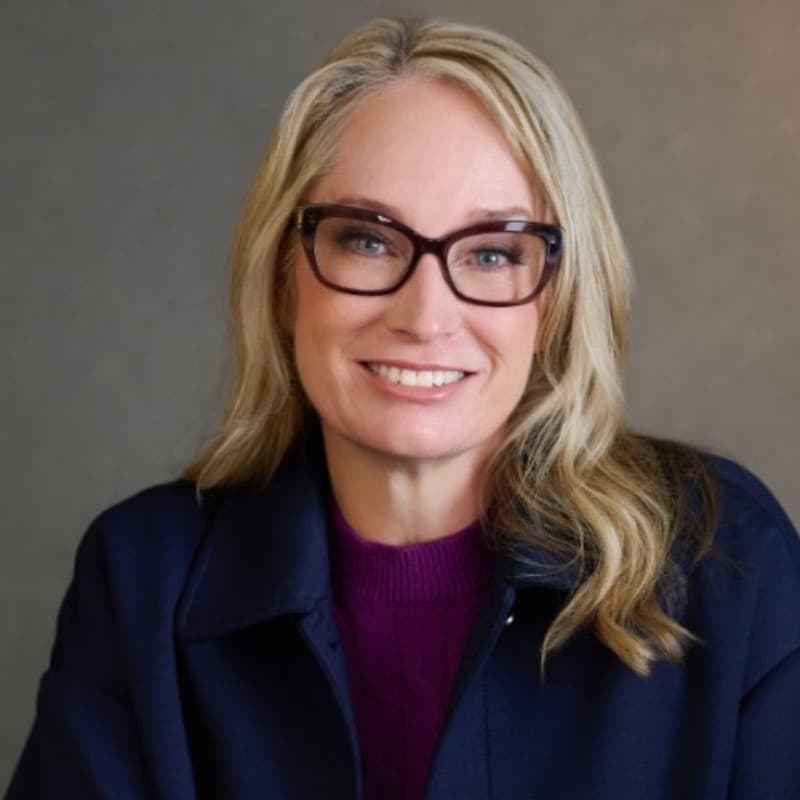
We discuss Agentic Standards and the less glamorous work of checking campaigns against rules. Drawing on her experience marketing a regulated product, Christy explains why automating repetitive checks could give teams greater confidence in their output. The marketer still sets the boundaries. Her argument is that campaigns should operate within those boundaries whether a human or an agent prepares them. The interview presents the intended value of these capabilities, rather than independent evidence that they remove compliance risk.
Another part of the conversation concerns where marketers actually want to work. Operator Connect introduces ways to connect AI assistants and other working environments with Braze. Christy discusses campaign briefs created in Claude and the growing interest in collaboration through Slack. She also makes a clear case for retaining the traditional product interface, where teams can review a campaign in context, check standards, and launch it. Some businesses are interested in these connections, while others are still developing their AI skills or learning what the tools can do.
The question of creative quality runs through the interview. Christy believes customers will recognize generic AI content and that this could weaken their relationship with a brand. Her view is that marketers who continue to bring their own creativity and work alongside AI will produce stronger results. We also discuss conversational agents and the possibility of customer interactions that allow people to respond and feel heard, rather than simply receive another broadcast message.
For teams wondering where to begin, Christy recommends Content Optimizer and email content testing as a first step. She describes the possibility of testing many variants, then progressing to Decisioning Studio Go to consider send times and channels. These are her recommendations for adoption, not measured results from a customer case study. Later, she discusses how insights from decisioning products could help marketers contribute to product strategy and business planning.
One of the most memorable examples arrives toward the end, when Christy describes a ride hailing platform in Venezuela using Braze to create an earthquake awareness system. The company is not named in the interview, but the story illustrates her broader point about customers finding applications that product teams had not anticipated.
Where could AI make your marketing more useful to customers, and which decisions should remain with the people who understand them? I'd love you to share your thoughts.
Useful Links
Connect with Christy Poulos

[00:00:00] Your agents aren't producing accurate answers because they don't have a complete semantic understanding of your data. And Denodo is solving this and solving it through semantic consistency. Through semantic consistency, your agents can start making accurate predictions in real time. So see what else Denodo can do by visiting denodo.com to learn more.
[00:00:26] But now let me introduce you to today's guest. What happens when every marketing team has access to the same AI tools, but their customers are already getting tired of receiving the same messages? Well, I'm at Forge26 this week in Las Vegas. I'm hosted by the company behind the event called
[00:00:51] Braze. And on the show floor here, that is the question that keeps coming back in conversations around creativity, automation, customer trust. And joining me to make sense of it all is the VP of product marketing at Braze. And together we will discuss what these new capabilities mean for the people using them. We'll talk about keeping campaigns within brand and capability rules,
[00:01:18] and how working between AI assistants and familiar software and choosing a sensible place to begin, how all these things are table stakes now. And for anyone whose inbox looks like mine, I'd appreciate the need for better marketing rather than 100 emails. So Christy will share some surprising examples of everything from a ride hailing business using its technology to support
[00:01:44] earthquake awareness and so much more. But enough from me. Let me beam your ears all the way to the show floor here in sunny Las Vegas, where you can hear all about this and much more. So today we're here recording at Forge26 and Christy's joining me today. Christy, can you tell everyone listening a little about who you are and what you do? Absolutely. So nice to meet you, Neil. I'm Christy Polis and I am the VP of product marketing here at
[00:02:12] Braze, which means I run all of the messaging and launches and bringing all these products to market, which is really an exciting place to be. And you've had an incredibly busy week. I've seen you on stage a couple of times as well. But for people listening, hearing about Braze for the first time, hearing about the Forge event for the first time, tell me a little bit more about what the event is, what the company's trying to help marketers do differently this year, especially in this age of AI that we're seeing.
[00:02:37] Yeah, absolutely. So Forge is our flagship event here at Braze. And it's really our opportunity to bring marketers together from around the world to not just talk about the technology, which obviously is a big piece of what we do here, but also really talk about the craft of marketing and the pieces that go into that. What's really front of mind for marketers? What are they dealing with every day? And how can they address that through technology as a supporting tool?
[00:03:05] You've shown a much broader AI portfolio here than simply just content generation or productivity, for example. But when you look across operator, agent console, decisioning studio, agentic standards and operator connect, what problems are you really trying to solve here at Braze for marketers? Yeah, we're really trying to solve the issues of marketers connecting even better with their customers, right? Over the years, I've been a marketer for a really long time and have really
[00:03:34] watched the shift in the role of the marketer and the things that we've been dealing with as technology changes. Marketers are constantly having to respond. We're seeing things shift in different areas and it's not really any different than when we saw the internet really become a thing or we started to see the mobile revolution. We're seeing it now with AI. So we've been building out these tools that allow the marketers to really reach their customers more effectively, more easily,
[00:04:02] and in a way that allows them time to be creative and think and bring to the craft that only like the true human marketer can bring to it while again creating those really meaningful connections with their customers. And one of the key themes I keep hearing at Forge is that marketers are under so much pressure to use AI now, but also prove that doing something useful, return on investment, measurable value, etc. So how do you stop AI becoming just another layer of activity and make sure it is really improving business outcomes?
[00:04:32] And I think the key behind it is to make sure that the AI that you're using is tied to driving those specific outcomes. So as a marketer, being aware of what are the most important things, not only for you as the marketer, but also for your larger business, and then being able to use those AI tools to help push toward those goals, whether it's larger goals for your brand, a larger goal for your team, whatever that happens to be. And agentic standards is also something that stood out to me, especially because this is a tech podcast,
[00:05:02] because you're tackling the less glamorous work around QA, and especially as an ex-IT guy, things like brand rules, accessibility, and compliance are so important. So why was it that important enough to build this? And where do you think automated governance becomes necessary as agents move more into autonomy? It's a big talking point this week, isn't it? It's a huge talking point. And I will tell you that as a marketer who used to run marketing for
[00:05:28] a regulated industry and for regulated product, having the ability to leverage a tool like agentic standards to run through all of those compliance rules that we had, would have made a massive difference for my team. And they think we're going to see that happening with our customers. So as we think about AI and the guardrails that need to be set on it, it has been a big point of conversation lately, right? And then the same thing, we think about guardrails around our marketing campaigns and why it is so important that we are
[00:05:58] sticking with not just our campaign briefs, which is for any marketing team, but if you start looking into compliance and standards and things like that, being able to leverage a tool like agentic standards to take away the drudgery piece of that job within the guardrails that the marketer has set is going to make a huge difference in helping everybody feel more confident that every one of those campaigns,
[00:06:22] whether it is deployed by an agent or deployed by a human is still activating within the guardrails that have been set. And I suspect if I was to ask everyone at this conference, what is their favorite AI tool? They're all going to give me five plus, including the usual suspects. And the reason I think that is so important is we all use different AI tools depending on what we want to complete and operator connect is letting marketers work through tools such as Claude, ChatGPT, and other MCP compatible
[00:06:50] environments rather than just always living inside that braise interface. Do you see enterprise software becoming increasingly headless or do you think that traditional UI still has an important role? We believe that the traditional UI definitely still has an important role. You know, things are evolving so quickly. We would not have used the word headless four years ago, right? It really just started to achieve some popularity over the last year or two. And we're hearing it more and more every day in the news, including today.
[00:07:20] Yes. Yes. So working within the way that we see it with from a braised perspective, we want to make sure that we're creating as smooth a flow as possible for the marketer. And so many of the marketers we work with today are doing things like building their campaign briefs in Claude. And having that capability to immediately see what that looks like in the output in Claude is, this is how it's going to show up in braise. It gives you that chance to give the first look.
[00:07:48] However, we do think it's important to have that easy connection into the actual UI of the product itself because that's where a lot of the work actually happens is inside there. And it's important that you're able to look at the canvas in context of the larger campaign. You're able to dig into it. You're able to run all your standards and make sure that everything is checking the box and then launch the campaign out of the UI itself. Yeah, makes perfect sense. And I know that one of the press briefings that we had,
[00:08:17] you mentioned that briefers deliberately not assume marketers want to live entirely inside an AI assistant. So I'm curious for all the beta users and customers you've spoke to, what have they actually told you about how they want to work between those conversational interfaces and traditional software? What kind of feedback have you had? You know, we're hearing that more teams are interested in pursuing that. They're interested in doing more. They're interested in that frictionless experience. And especially when
[00:08:44] you start looking at other tools like Slack. You know, we are living in Slack. I don't know about your team. My team lives in Slack every single day. And if we can continue connecting through Operator Connect directly into Braise through Slack, it just removes that kind of friction again in our marketing collaboration. As we are all working together, collaborating in a tool, we can just do it in one place. So we're hearing more and more interest, but many companies aren't there yet, frankly. You know, there's whether it is depending on where they are in their aim,
[00:09:13] their AI maturity, you know, or if it's just, you know, kind of lack of awareness of what they're even capable of doing, leveraging these tools. So, you know, what we're looking at here and what we've brought with Forge is really helping open their eyes about other ways that they could be working. And conversational agents, another big talking point, moving customer engagement from broadcast messaging and two-way interactions across channels such as WhatsApp, SMS, and RCS. We had set that
[00:09:41] same experience to continue where we left off. Do you think this eventually changes what marketers mean when they talk about a campaign? Are you seeing any big changes here? What we're seeing with marketers today that it's thinking about the larger customer experience, right? It's not just what are we optimizing for around clicks or what are we optimizing for around our performance marketing, but what is that larger customer experience? Because we know, you know, studies show that people that have a tighter relationship with a brand that they feel
[00:10:10] seen, that they feel heard are more likely to stay loyal to that brand. And by bringing something in like conversational agents, which creates that, you know, human level engagement that makes people feel like they're heard, that they can respond, that there's somebody they can talk to right away, is just going to bring them even closer to the brands that they're already loyal to. And your CEO made a great point in the opening keynote about everyone's using the same models, regurgitating the same ideas, and standing out from the crowd is more important than ever,
[00:10:39] isn't it? And one concern raised in one of the media briefings was whether faster AI-driven creation could simply produce more average work. So how do you ensure these tools help marketers improve quality and relevance rather than just increasing volume and increasing noise? You know, because for some brands who maybe are not as ambitious about how they're looking forward, maybe it's just easy, you know. But I think what comes out is that you're going to see
[00:11:07] the end consumer recognizes the AI, they recognize the slop, and that's going to cause erosion between their relationship with those brands. So the brands who don't settle for less, who are the ones who are still continuing to be creative and who are working in partnership with AI as opposed to allowing AI to do it all, I think they're the ones that we're never really going to see win. Yeah, 100% with you. And here at Forge, Braze is launching a large number of products here.
[00:11:32] They all complement each other. But of course, we're moving at such a fast pace with technological change, and no marketing team could just adopt everything at once. So if you were advising a customer or somebody listening on where to begin, how would you decide which AI capability should come first? My gosh, that's a hard one to pick because I have some favorites, right? I have some favorites as we look at it. But really, I think a great place to start is looking at Content Optimizer. Yeah.
[00:11:58] And just start with your email. Just start with that content within your email and see how that content is performing. We as marketers have been doing A-B testing forever, and it's a lift to do that, even if you're only testing two variants. But have this capability with this tool that will help you test potentially hundreds of variants is huge. And that's a great first start. And then later on, as you move, you could move into Decisioning Studio Go and start looking at things like your
[00:12:28] send time, looking at the different channels, looking at all of the different ways that you could be connecting with a customer in a more optimized way. But just start with Content Optimizer and see how that works for campaigns. Lovely. And when you do look at everything announced here, what do you think changes most about the marketer's job? Maybe over the next 12 months before next year's event, which is announced coming back here to Vegas next year as well. And what part of that role do you think becomes more valuable rather than less?
[00:12:55] You know, it's so interesting that what we're learning from watching our decisioning products, so Decisioning Studio Go, Decisioning Studio Pro, as they're out in the wild, what the marketers are learning from the behavior, what's actually coming out of those insights is giving them a better picture of the larger businesses that they're working for and even opening up opportunities for other products or other ways of engaging with their own customers. So I think what it does is by giving
[00:13:25] marketers more of a visibility to what's really happening with their customers, they're able to have a stronger seat at the table. You know, when they come in to start looking at longer term planning or product strategy. And I think this, I'm excited to see how these things come together for some of these teams. And there've been so many announcements this week and keynotes. You yourself have been talking with the press with analysts, customers, partners. When you look at all those conversations you had, are there any big trends? If we were to put all those conversations in an LLA, what are the big
[00:13:54] trends that people are talking about here? You know, everybody wants to know more, of course, about how to use AI, where to start, what are they thinking about? And what's really I've been hearing over and over again is teams are so excited to do more. And they just want to learn. So we feel our responsibility here is to meet these marketers where they are, and help them learn what they can do next. And it's that's been just really
[00:14:20] inspiring, because it's not nobody wants to keep doing the same thing. Right? Everybody's really looking at it and saying, What can I do next? What can I do better? How can I get this started? And as a marketer, marketing these products, and actually a marketer myself, it's really inspiring. And you do have only a short flight back to San Francisco. But on that journey, when you finally get home and, and just compress everything that you've taken in here, what are you taking away from the event and the whole experience?
[00:14:46] What I'm taking away is that our customers are doing really cool stuff. Yeah. You know, there's just, I'm so inspired by the creative ways that they're using our products to do things that I just never would have crossed my mind, even looking at the team that won the Torchy Award in Venezuela, for their use of Braze to create an earthquake awareness system. You know, that's, and they're, they're a ride hailing platform.
[00:15:13] Yeah, this isn't, it's not in there necessarily a core competency, but for them to use the tools that they had at hand to do something that is truly for the good of the larger community is incredibly inspiring. Yeah, it's incredibly cool. Because I would imagine when you create all these different products and different use cases, they almost develop a life of their own when you put them in the hands of enterprises, right? And maybe areas that you've never even considered. Absolutely. And we see that every day in our customer conversations. And again, this is that
[00:15:40] it's what's so inspiring is we build it thinking it's going to do one thing. And then the customers are the ones who are bringing in that creativity and saying, oh, we used it for this. Isn't it cool? And we're like, yes, this is amazing. You know, we want more and more of that. Beautiful. That's a great moment to end on. So I'll include links to absolutely everything, all the big announcements this week coming out of Forge 26. But more than anything, Christy, thank you for stopping by. Absolutely. It was my pleasure, Neil. There are so many things I'll be taking away from this conversation, especially around
[00:16:08] how much responsibility still belongs to the marketer. Choosing an outcome, setting campaign rules and deciding whether a message deserves someone's attention all require judgment. And Christy's suggestion to begin with email content testing gives teams a manageable starting point. And although the result will always need to be assessed against a business goal
[00:16:32] too. And I loved her point about keeping familiar software available while introducing AI assistance. People need to see the campaign in context before seeing it in the world. And maybe the biggest test of an AI marketing tool is actually whether it makes customers feel better understood. But share your thoughts on all things Martech and everything we talked about today. And here's a little question to get you started. Where would you use AI first?
[00:17:01] And what would you keep under human control? Let me know as always, techtalksnetwork.com. That's where you'll find me. But it's time for me to hit the show floor again now. So thanks for listening as always. Bye for now.