

Can technology and AI genuinely improve lives at scale, or are we still spending too much time talking about potential rather than outcomes?
In this episode of Tech Talks Daily, I sit down with Hala Hanna, Executive Director of MIT Solve, as the organization marks its tenth anniversary. Over the last decade, MIT Solve has supported more than 500 innovators, helped solutions reach hundreds of millions of people worldwide, and connected founders with the funding, partnerships, and mentorship needed to turn ideas into lasting impact.
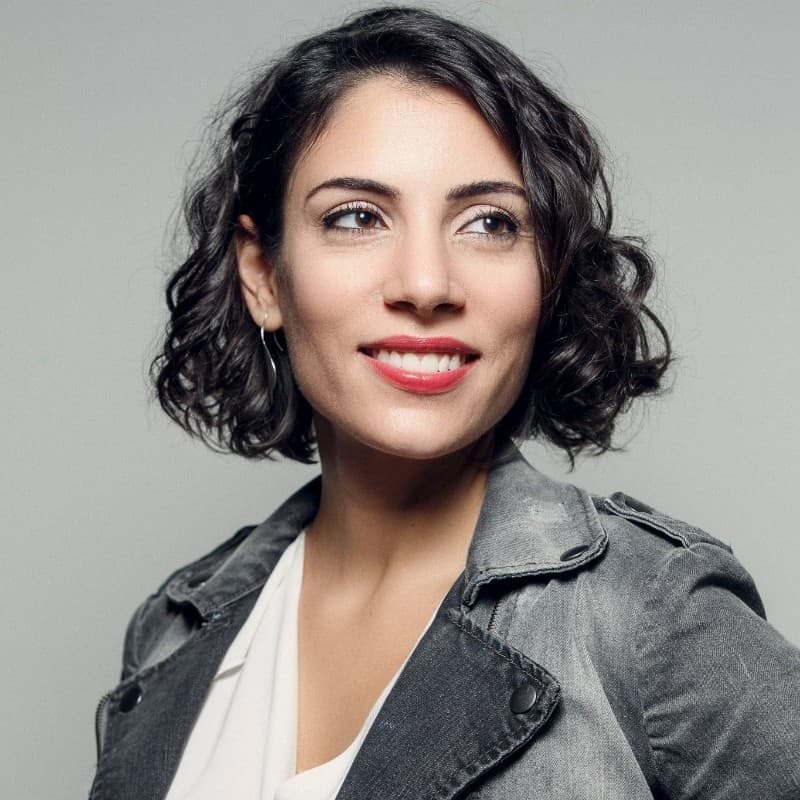
Hala shares why the world is not suffering from a shortage of innovation. Instead, she argues that the real challenge is connecting talented problem-solvers with the resources and relationships that help ideas grow beyond the pilot stage. Drawing on lessons from nearly 30,000 applications and 100 innovation challenges, she explains why proximity to a problem often leads to better solutions and why founders with lived experience frequently outperform expectations.
We also discuss the growing conversation around AI for good and how MIT Solve separates meaningful impact from marketing hype. Hala outlines the practical tests her team uses when evaluating AI-powered solutions and shares inspiring examples from healthcare, education, agriculture, and public services. From improving cancer diagnostics in underserved communities to digitizing centuries of public records and helping farmers access data through simple mobile devices, these stories show how technology can create tangible value when designed with people at the center.
Another fascinating part of our conversation focuses on women in technology. With 64% of MIT Solve's supported teams led by women, Hala explains why this outcome is less about special treatment and more about removing barriers that have traditionally limited access to opportunity. We explore how open innovation challenges, diverse judging panels, and recognizing lived experience as expertise can help surface talent that conventional funding models often miss.
Hala also offers a refreshing perspective on the future of AI, arguing that the next chapter should focus on inclusion, local relevance, and community ownership rather than simply building larger models and more infrastructure. Her examples of AI being used to preserve endangered languages and strengthen local sovereignty offer a powerful reminder that technology can support culture and identity as well as economic growth.
If you've ever wondered what happens when innovation, purpose, and practical action come together, this conversation provides plenty of reasons for optimism. What role do you think technology should play in creating a fairer and more inclusive future?
Useful Links
Connect with Hala Hanna
Learn more about MIT Solve
Visit the Sponsors of the Tech Talks Network
[00:00:00] - [Speaker 0]
So a huge thanks to Denodo for supporting the Tech Talks Network, helping us produce more than 60 interviews a month. And when it comes to trusted data products, it all starts with the right foundation. And trusted data products start with Denodo because they can help you create, manage, and deliver business ready data products faster with secure real time access across all of your data sources. And you can learn more by simply visiting donodo.com. Welcome back to the Tech Talks daily podcast.
[00:00:37] - [Speaker 0]
Today's conversation is a real corker as they used to say around these parts because it is a reminder that technology means very little if it only improves the life for the people that are already winning. And my guest is joining me from MIT Solve, which is an organization that has spent the last decade backing innovators using technology and AI, but using it in a way that solves real human problems across health care, climate, education, and economic opportunity. So from AI powered diagnostics in underserved communities around the world to women led startups changing millions of lives, this episode is a real breath of fresh air and a conversation about what happens when innovation meets purpose. And honestly, some of the stories that you'll hear today completely change the way I think about the future of AI and the opportunities available for the many, not the few. But enough for me.
[00:01:39] - [Speaker 0]
Let me introduce you to my guest right now. So thank you for joining me on the podcast today. For everyone listening, can you tell them a little about who you are and what you do?
[00:01:49] - [Speaker 1]
Absolutely. Thank you for having me, Neil. I'm I'm Hala Hannah. I'm a recovered economist. I currently run MIT Solve, which is an initiative of of MIT that I'll tell you more about in a minute because I came of age watching mobile phones redefine banking in Africa and Twitter shake governments in the Arab world.
[00:02:09] - [Speaker 1]
And I kept coming back to that question, can technology be the tide that lifts all boats? And I think that's particularly true in this moment where it seems like it's mostly lifting the yachts. And that is the question that MIT Solve was built on, that problem solvers exist everywhere, and technology can change the world when it's in the right hands. So our job is to find the right people and give them a real shot. We are MIT Solve is a marketplace for tech for good.
[00:02:37] - [Speaker 1]
We find early stage ventures using technology to close equity gaps in health, learning, climate, and economic opportunity, and we connect them with the funders, corporations, partners who can actually take them to scale. So ten years in, we have 460 solvers in our portfolio, and they reached 430,000,000 lives all over the world. And we facilitated 90,000,000 in direct funding to them, And then our solvers in hand in in turn have raised at least the for profit ones have raised 1,400,000,000 in total. So it's real economic value that's created in the communities where they serve.
[00:03:12] - [Speaker 0]
Wow. What an incredible back story. I love how you mentioned you were a recovering economist as well. And as you said, ten years in, I mean, when you look back over that past decade, are there any particular lessons that stand out about turning ambitious ideas into measurable impact at a global scale? And the reason I ask that is there's so much hype around things like AI at the moment, but they're not a lot of these tech projects are not delivering on ROI, and it's all about measurable impact, delivering business value.
[00:03:40] - [Speaker 0]
This is a big trend that I'm seeing this year at every tech conference I go to. But what lessons have you learned here?
[00:03:46] - [Speaker 1]
Yes. Let me let me start with with the lessons we because it is it is definitely a moment for introspection or retrospection. We've run a 100 open innovation challenges to date. We've got almost 30,000 applications. And the main lesson of that is that the world isn't short on innovation.
[00:04:00] - [Speaker 1]
It isn't short on people who say, the status quo sucks. I'm gonna do something about it. You know? And what's it's short on is the connective tissue that helps those kinds of innovation scale. So, you know, those twenty, thirty thousand applications come from every single country and territory in the world.
[00:04:17] - [Speaker 1]
Talent is everywhere, and the bottleneck is matching it to the right capital and the network at the right time. So we select founders that the market very often overlooks, and we surround them with the relationships that they might spend years, you know, if ever building. Right? So that's one. The second is we see proximity as a competitive advantage.
[00:04:36] - [Speaker 1]
What I mean is the founders that are closer to the pain build solutions that are better suited to solve the problem at hand. Most of our solvers have lived experience with the problem they're solving, and our five year survival rate is ninety two percent. And, you know, anyone who's worked in a startup world knows, I think, why combinators rate is around 70%, seventy, seventy five. So proximity can give you shorter feedback loops, fewer wrong assumptions, and skin in the game. You know?
[00:05:04] - [Speaker 1]
These are folks they're not gonna quit when it gets hard because it's their own people. So that's second. And then the third is the first check matters more than the bigger check sometimes. You know, as as I was saying, you know, we've we've facilitated, mobilized to our solvers 90,000,000, and the for profit ones have raised 1,400,000,000. So you get a sense of the multiplier there.
[00:05:27] - [Speaker 1]
I'll give you the example of Gary Cooper from Chicago. Gary's built Replay, which is an asset reuse platform that reduce reduces industrial waste. And Solve he was you know, it it's tough to raise your first round, and Solve invested a a small check, through our venture vehicle. But that check and the kind of the stamp of approval of MIT Solve unlocked a $2,000,000 climate innovation fund match from Microsoft. And he's since raised over $30,000,000, and he's doing incredibly well.
[00:05:57] - [Speaker 1]
So that first check was wasn't big, but it was timely.
[00:06:01] - [Speaker 0]
Wow. It's just incredible that it the work that you're doing here and such phenomenal results as well. And I've been, what, doing this podcast eleven years now, and I've often heard the phrase tech for good, and more recently, it's evolved into AI for good. It's a phrase I hear constantly at tech conferences around the world. But one of the things I've often found is this the gap between good intentions and very real outcomes.
[00:06:24] - [Speaker 0]
So how do you at MIT solve evaluate evaluate whether an AI solution is genuinely improving lives rather than simply creating another layer of hype? I suspect it's something that you're sensitive to as well. But how do you evaluate? I'm sure that doesn't happen.
[00:06:40] - [Speaker 1]
Yes. Very much so. I think our job is to cut through the hype. And we apply, you know, maybe to keep it to the rule of three because that's always how every question is answerable in the world with three three answers. But, you know, there are three simple tests and none of which involve the world AI.
[00:06:54] - [Speaker 1]
So the first one is, does it make something measurably more accessible, affordable, or effective? Those are lots of objectives, but that's what underserved communities have to reckon with. So let's say there's water in your neighborhood that's availability. Is it cleaner? Effectiveness.
[00:07:10] - [Speaker 1]
Is it for free? Affordability. And does it get delivered via your tap accessibility? So these are things that tech is really good at making possible. Test two is, is the data actually representative of the people that it claims to serve?
[00:07:23] - [Speaker 1]
Data the model learns from needs to include the the world it's being deployed in. Right? We know that AI trained on biased data just automates biases. And then the third is, is there a human accountable for the decisions that are made? I was recently speaking with Audrey Tong, who's the who's currently the cyber investor for Taiwan, and she has a line that I love.
[00:07:44] - [Speaker 1]
She says, you know, humans in the loop is the wrong metaphor. It's like makes us humans on the hamster of a wheel we don't control. And the right metaphor is AI in the loop of humanity. You know, humans set the destination and AI helps us navigate. So tech answers the how, the why still belongs to us humans.
[00:08:05] - [Speaker 0]
Before you joined me today, I was reading that you said that AI only matters if it creates value for the most in need. And that's another line that I absolutely love and and why I was excited that you're gonna join me today. But as you said, let's hear some examples of of MIT's solve backed innovators that are using AI in practical ways across areas from health care diagnostics, energy access, or customer experience in lower resource communities. There's so many examples I've read about, but tell me about some of the ones that you love.
[00:08:36] - [Speaker 1]
Well, thank you for reading. Thank you. I I appreciate it. And and, yes, we have hundreds of those. I think one of the data points that does cut through the hype is that just in our portfolio, AI enabled solutions reach five times as many lies as non AI solutions.
[00:08:50] - [Speaker 1]
And that's not to say that the the the solutions not using AI are, like, less good. Right? It's just to say that because different problems require different technology, but the tech is generally a multiplier when it's deployed right and the right safeguards. So just a few examples. Let's start with, you know, unsuspecting plates like Libya.
[00:09:09] - [Speaker 1]
So in in Libya, during the civil war, 3,000,000 Libyans lost access to medical care. And, Pitar, which literally means hospital in in a Libyan dialect, built a cloud based electronic medical record from scratch. Paper files, lab results, prescriptions, you know, there was nothing. They turned all of that into intelligently readable data. And they trained a small context aware model on this previously invisible datasets, right, in local dialect.
[00:09:39] - [Speaker 1]
And today, Spitar is the backbone of a lot of Libya's health care system. So so it is about, you know, sometimes the the model is the easy part. It's the the data that's the hard harder part. Another is in health care diagnostics, neurology out of Egypt. It creates AI enabled tel teleradiology connecting hospitals in low resource settings with remote radiologists, including from the diaspora in Egypt.
[00:10:06] - [Speaker 1]
And and it may it's really what it means is cancer caught earlier in places without or caught at all with places that don't even have clinics or for people that don't even have access to clinics. I think one that I particularly enjoy is around sovereign data infrastructure, and that's Amini out of Kenya. Kate Callet is founded Amini, and it's an AI stack for the global South. So it's paper records to machine readable conversion. It's AI first multimodal data platform.
[00:10:36] - [Speaker 1]
It's a connectivity solution and a portable decentralized microdata centers. And it's a lot of words, but it really gets at the forcing at the at the barriers that are in front of, you know, AI usage in a lot of these places, connectivity, compute access, data access. And so, actually, Barbados deployed an e n e, and they digitized 3,000,000 historical documents, some dating back to the sixteen hundreds. And they not deliver public services to citizens through a multilingual WhatsApp assistant. I got a 100 of those.
[00:11:11] - [Speaker 1]
I won't, you know, let you have you go through them. Don't worry. But but it's just to say that, again, just a proof of where the talent is coming from. How, you know, just the ingenuity that exists in people able to turn their circumstances and what they have access to into the solutions that their people need.
[00:11:32] - [Speaker 0]
Yeah. And there was just a handful of so many great examples there. And what I'll do for everybody listening, if you wanna dig a little bit deeper, I'll put a link to some of those stories as well because it really does bring to life what AI good can bring to the world. And I will say for people listening, whether they're in a startup or in an innovation program in a large enterprise, that the one thing that will unite them all is that struggle, that real struggle to move beyond pilot projects. And I'm curious, from your experience here supporting hundreds of global innovators, what are the the biggest reasons that even the most promising of solution can fail to scale?
[00:12:09] - [Speaker 1]
Well, I'll tell you what we see in in our world, and first one is that the market has a discovery problem. You know, the the the same narrow slice of founders that are get keep getting funded, they they come up from the same ZIP codes, the same credentials, the same network. The most innovative ones don't even, you know, survive that filter. Right? So intermediaries can play a role in that, and open innovation challenges in particular, I think, are are are particularly good at surfacing those kinds of things.
[00:12:35] - [Speaker 1]
The second is that the valley of death is real. It sounds very dramatic, but most social impact funding is either grants, small, restricted, or institutional investments, which arrives only after you've already proven the, you know, the imp the quasi impossible. And that missing middle, where patients first risk capital is needed is where the gap you know, where these solutions go to die, basically. And and that's even more acute in underserved communities because, you know, think about it. There's no friends and family around for a social entrepreneur in the outskirts of Nairobi trying to build something.
[00:13:10] - [Speaker 1]
Those founders run out of cash, know, before anything even catches up with them. And the third, would say, is the connectivity. They're they're the connective tissue. So surviving those early years is not so much about how good your idea is, you know, even how some of the how how much some of the cash you have or the ability to stick with it, but knowing the right people at the right time. So one of our innovators, Kitty, she's a chyrogenist science scientist in our portfolio.
[00:13:36] - [Speaker 1]
She built a vaccine cooler that keeps vaccine doses safe for four days instead of four hours. And, you know, still to this day, thousands of kids die just because they don't get vaccinated on time. These days in The US too, but let's keep that aside. We're talking about mostly Sub Saharan Africa and Southeast Asia. And she was about to quit because the producers would tell her, where are your you know, the investors would tell her, where are your buyers?
[00:14:03] - [Speaker 1]
Your buyers would tell her, where are your investors? And, you know, because it really takes capital to build that hardware. And she was about to quit, and then she got into Solve. We introduced her to one of the introductions that she got through the program was to the UPS foundation. They founded her field trials in Cameroon.
[00:14:21] - [Speaker 1]
And out of that field trial, which showed that indeed, you know, the her prototype did keep a vaccine safe for much, much longer. That two unit prototype that she had became a 3,000 unit government order from the government of Cameroon. So it's that it's like the, you know, being discovered, getting the capital, getting the right connection at the right time. And the common thread is these are, you know embedding in real systems is also of course, that's also the other unlock that we can talk about.
[00:14:50] - [Speaker 0]
And I think when it largely comes to innovation projects, there are so many myths, but I do think there is a a growing recognition that innovation alone is rarely enough. So from what you're seeing here and your experience over the last ten years, how important are patient capital, mentorship, ecosystem support, cross sector partnerships? All these things in in helping ensure that breakthrough ideas survive long enough to make a real difference because often, we only talk about that that I word, but not all the things that are needed to bring that to life. Right?
[00:15:23] - [Speaker 1]
Yes. Yes. Yes. Yes. The mythology of the lone genius founder is a nice storytelling, but, you know, in reality, of course, it takes a village.
[00:15:32] - [Speaker 1]
I mean, the reality is that almost, as you every breakthrough story has this network around it doing some of the heavy lifting. We talked about first risk capital that, you know, patient capital between bridging between the pilot and the viable business. It buys founders the one thing that they can't manufacture, which is time. And, you know, I think here, philanthropy and impact investing have a really important role to play. Mentorship is yes.
[00:15:58] - [Speaker 1]
It's how founders basically compress decades of pattern recognition into a few conversations. Our judges were the ones who make that decisions about who gets selected as a solver. You know, we work with General Motors and the engineers then mentor some of our climate solvers. We work with HP and their technologist embed, you know, founders building for digital equity. You know, another one is also it's just like kind of making the connection between mentorship and relationships.
[00:16:25] - [Speaker 1]
We have Tammy Guatubosun who built this life bank, is a way to get blood and oxygen to hospitals in Nairobi in less than forty five minutes. In in which if you know the the traffic there, you know, it is and say in Nigeria. Sorry. Not Nairobi. But so when Merck for Mothers met Tammy on the ground, that visit became a $5,000,000 partnership of grants and investments.
[00:16:48] - [Speaker 1]
And then the fourth thing I would say or third rather. The third thing I would say is that the superpower is to be embedded in existing distribution, whether it's a government or corporation, a system. So I'll give you an example of Kushi Baby out of India. They started as a simple pendant tracking children's medical histories. And today, it's the official health record system for three Indian provinces.
[00:17:12] - [Speaker 1]
So that covers 270,000,000 people. And they have the data now of 45,000,000 people in health data. And when they overlay it over climate sensing data, they can predict public health risks, like heat waves, etcetera. So it's really, really powerful. Now they, you know, they started with working on health, and now they work on climate related issues.
[00:17:34] - [Speaker 1]
Same with the rocket learning also out of India. There's something going on there. Where the where the rocket learning is now the early education curriculum for 5,000,000 children in India's government owned childcare centers. So, again, kind of getting into that existing distribution system. I think, you know, again, the math is striking when I look at the amount of money that we are able to mobilize versus what they what the solvers end up raising on their own in their lifetime.
[00:18:01] - [Speaker 1]
It's really about derisking that next larger, you know, investment. And I guess for the maybe to kind of take it up to the to, you know, folks listening, tech leaders listening, you know, don't just back the founder, you know, back the connected infrastructure around that founder because that's where, you know, impact will actually compound.
[00:18:23] - [Speaker 0]
And speaking of those tech leaders listening, when I was doing a little research on you, I came across a massive stat that I really wanted to shine a light on today, and that is since 2016, more than 64% of Solve supported teams have been led by women, which is an absolutely remarkable figure and refreshing to read as well in the tech world, which has a long history of problems there. But what structural or cultural changes do you think are helping unlock that level of participation and leadership? Because I suspect for many business leaders, they're gonna be wanting to follow in your footsteps here.
[00:18:59] - [Speaker 1]
I will. I would love that because I think the honest takeaway is that 64% isn't the diversity statistics. I think it's an indictment of how the rest of the market is doing its sourcing. And, of course, the context is, you know, in a conventional VC, all women teams receive roughly, I think, what, 2% of funding. Mhmm.
[00:19:17] - [Speaker 1]
So, yes, our portfolio is 64% women led. We do have majority founders of color because we're working globally, majority with lived experience, and that is the output of a very deliberate process. We're obsessive every step of the way about making things as meritocratic as possible. The first one is that it is open global challenges. You know?
[00:19:37] - [Speaker 1]
Most capital flows through warm introductions and people who know each other, networks that are already connected, which is a polite term for closed doors. And and when you run these open calls to anyone anywhere, you know, that already gets one barrier out. But we also we are obsessive over sending emails that both genders want to open, you know, from from the moment, from how the text is written to the way the, you know, promotion happens, already there is some thinking there about how we get more people and more women in the door. The second is that we treat experience as expertise, and I've already alluded to that throughout the our conversation. Women often build for problems there personally navigating, maternal health, education access, digital and financial exclusion.
[00:20:23] - [Speaker 1]
If you're screening for MBAs and prior exits, probably you're gonna miss them. And the the, you know, the other thing and I don't think it's the last thing, but it's, you know, I wanna end with is that our judges are diverse too. You know? They bring that richness of knowledge and perspective when they're making the selection. So these founders, it's not like they were underqualified and we gave them a leg up.
[00:20:48] - [Speaker 1]
They were just under discovered.
[00:20:50] - [Speaker 0]
And earlier this year, I was very fortunate to spend a little time in Egypt for an AI event, and it really opened my eyes to there were teams of female coders, hackathons, and that the entire region was embracing AI to transform their society. And I think as soon as I get home, I see AI conversations focusing heavily on productivity and automation in wealthy markets. But do you think we're in danger of overlooking how AI can solve problems in some underserved regions where access to health care, finance, education, or infrastructure remains limited? It feels like we're missing a trick here.
[00:21:26] - [Speaker 1]
Oh my gosh. Absolutely. I mean, you know, AI venture capital, which exceeded, I think, 290,000,000,000 last year, well, less than 1% of that went to to things that are explicitly social. But I think the deeper danger is what the writer Shimamanda Mgozi Adishi called the danger of a single story. Right now, at least in our circles, there's a single story of AI, bigger model, faster deployment, more data centers, more data centers.
[00:21:55] - [Speaker 1]
Let's cover the planet. Let's cover space. You know, let's summon a demagod that may or may not precipitate our extinction. You know? And how is that, like, an appealing story?
[00:22:06] - [Speaker 1]
You know? And how is that the dominating story? Because there's a whole frontier of frugal AI, small context specific models that are running locally, can run on, you know, even feature phones in local languages. I think that's where most of the world, just like you saw in Egypt, will actually meet AI. And, you know, and we talked about Amini delivering they also deliver soil data via SMS for farmers.
[00:22:31] - [Speaker 1]
They reach 1,200,000 farmers. We are we talked about SPITAR that's running on dialect specific medical records. These are adaptations. They're not compromises. It's not a less good solution.
[00:22:42] - [Speaker 1]
Right? And so the risk isn't just that AI will under overlook underserved regions, but it's also become another layer also of dependency. Right? Where if we're selling sovereignty as a service and we're local clouds by foreign machines, I mean, we we might just be repeating the same, you know, the same problematic digital kind of the promise will not be accomplished. Right?
[00:23:07] - [Speaker 1]
And that's what we want to avoid.
[00:23:11] - [Speaker 0]
And if we look ahead, what what gives you the most optimism about this next decade of innovation? And where do you think organizations, governments, and tech leaders still need to do far more work if we want AI and emerging technologies to benefit society more broadly and be more inclusive rather than just, as you said, just keep talking about adding more data centers.
[00:23:32] - [Speaker 1]
Well, I I feel very lucky to be sitting where I am sitting because I really get a, you know, a a front front seat view of what incredible talent there is out there. I think one of the recent kind of wow moments was I I saw AI used to preserve rather than extract. So over you know, I don't know if you know this, but over half the world's languages are in risk of extinction by '20 by February. And with obviously, with every language that disappears, it's a whole entire way of being and of knowing. And indigenous communities, in particular, I think 6,000 of those languages are indigenous languages.
[00:24:12] - [Speaker 1]
So communities are using AI for speech recognition, neural translation, and to revitalize those languages, including also deciding what is too sacred to be digitized, which I think is where real sovereignty comes in. One of the initiatives is called First Languages, AI reality, which is doing this work. They're protecting what could be lost forever, really. And I think what's particularly touching about this is that these are communities that are traditionally that have been traditionally harmed by extractive technologies and seeing them use those technologies as a shield. That's a his that is that's the story I wish was on every front page.
[00:24:50] - [Speaker 1]
You also asked me where more work is needed.
[00:24:53] - [Speaker 0]
Yeah.
[00:24:55] - [Speaker 1]
We have a lot on our plates. You know what I mean, Neil? But maybe the first thing I would call for is just more imagination. You know? Like, more imagination about what story we should be accepting as the story.
[00:25:07] - [Speaker 1]
You know? More imagination about our capital. You know? What return we expect on our capital? How we define return beyond quarterly earnings?
[00:25:14] - [Speaker 1]
You know? Who came up with that? The other is infrastructure access. We talked about this, but, you know, if the world is permanently renting capability from Silicon Valley and Shenzhen, that's, you know, a less exciting story. Right?
[00:25:27] - [Speaker 1]
And the third is a governance story. I'm sure you've talked about this so much with your guests, but a deli sandwich is more regulated than AI today as as it goes. So So setting outcome standards and accountability mechanisms, it's like being prosocial is not being anti innovation. We are smart enough to know the difference and to, you know, kind of navigate that that rope. Maybe one thing is a bigger ask for the industry is to stop treating AI impact as the soft part of the conversation.
[00:25:56] - [Speaker 1]
I think about I mean, I think the companies that are figuring out how to build for the next, what, 7,000,000,000 users, not just the wealthiest 1,000,000,000, those are the folks that are gonna define the next decade and decades to come, hopefully. So, yeah, I think hope is something we we make.
[00:26:16] - [Speaker 0]
And that is an inspiring and thought provoking moment to end on. But before I do let you go, I wanna capture that ins inspiration there, those light bulb moments that make a difference, be the change you wanna see in the world. For anybody listening that would like to carry this conversation on with you or just look into MIT Solve a little bit more deeply, read some of those use cases, etcetera, where would you like me to point everyone?
[00:26:39] - [Speaker 1]
Yes. Thank you for that generous question. You can go to solve.mit.edu. You'll meet every solver I've mentioned today and many more. You can listen to us on our podcast, the Solve Effect.
[00:26:50] - [Speaker 1]
The tagline is we've heard enough about what's not working in the world. Here's a podcast about what is. And you can find me personally on LinkedIn on Halahana, and follow MIT Solve as well on LinkedIn and Instagram. And if you're a founder, a corporate you know, a in corporation, a tech leader rethinking how to deploy resources more strategically and more impactfully, that's a conversation we always want to have.
[00:27:14] - [Speaker 0]
Fantastic.
[00:27:15] - [Speaker 1]
Thank you, Neil.
[00:27:16] - [Speaker 0]
Thank you. Well, I I I started first of all, I will add links to everything you mentioned there. And I was just gonna say, started this podcast June 2015, and one phrase I've said repeatedly throughout since day one is technology works best when it brings people together, and you are the epitome of that. And when you said AI has the potential to improve billions of people's lives, but only if it creates and delivers value directly to those most in need. That excited me and brought back that enthusiasm I had from episode one.
[00:27:47] - [Speaker 0]
And today, talking to you about how innovation isn't enough to drive change at scale and how you've accelerated women in tech since 2016. I think you've supported 500 plus innovators reaching more than 370,000,000 lives globally, and 64% of solvers are led by women. I'm so inspired by everything we've talked about today, but thank you for sharing your story.
[00:28:10] - [Speaker 1]
Neil, thank you for giving me the space to do so and to share it with your listeners. I really, really appreciate it.
[00:28:16] - [Speaker 0]
So many big takeaways from my guests. And one in particular is that hope is something that we make. And at a time when so much of the AI conversation revolves around bigger models, faster systems, and endless hype and shiny demos, MIT Solve is focused on something far more important, and that is whether technology genuinely improves human lives. We've all doomscrolled enough, but we can be the change we wanna see in the world. We can build the change we wanna see in the world.
[00:28:48] - [Speaker 0]
And today's episode reminded me that the future of AI is not going to be defined solely by Silicon Valley or billion dollar infrastructure projects. It's actually gonna be shaped by founders in places that many people overlook. People building solutions for communities they actually understand because they've lived those problems themselves. So if you enjoyed today's conversation, make sure you check out MIT Solve and some of the incredible innovators that she mentioned today. And as always, let me know your thoughts because conversations like this deserve to continue far beyond just a single podcast episode.
[00:29:26] - [Speaker 0]
And if you're walking away in any way inspired or it sparked a few ideas, a a light bulb moment in you, Please don't just put it to one side and head into the office and forget about it. Consider this the universe giving you a call to action. Contact myself. Contact my guest today. Let's see what difference we can make with technology.
[00:29:47] - [Speaker 0]
And as I always say, technology works best when it brings people together. So hopefully, this episode can do that. And on that note, it's time for me to go. So techtalksnetwork.com if you wanna find out more about myself. 4,000 interviews, eight podcasts, all that kind of stuff, head over there.
[00:30:04] - [Speaker 0]
You can leave me a message. Other than that, I'll return again tomorrow with another guest. Well, I'm gonna try and keep you smiling and inspired. If that sounds good to you, see you here tomorrow. Same time, same place.
[00:30:15] - [Speaker 0]
Bye for now.