

How do you turn complex regulatory data into something customers can actually use, trust, and act on?
Recording live from Qlik Connect, I sat down with Robin Astle, Head of Qlik Analytics at Reconomy Group, to explore how data is becoming far more than an internal reporting tool. In Robin's world, it has become a product in its own right, helping some of the world's largest retailers manage compliance, reduce costs, and make smarter sustainability decisions.
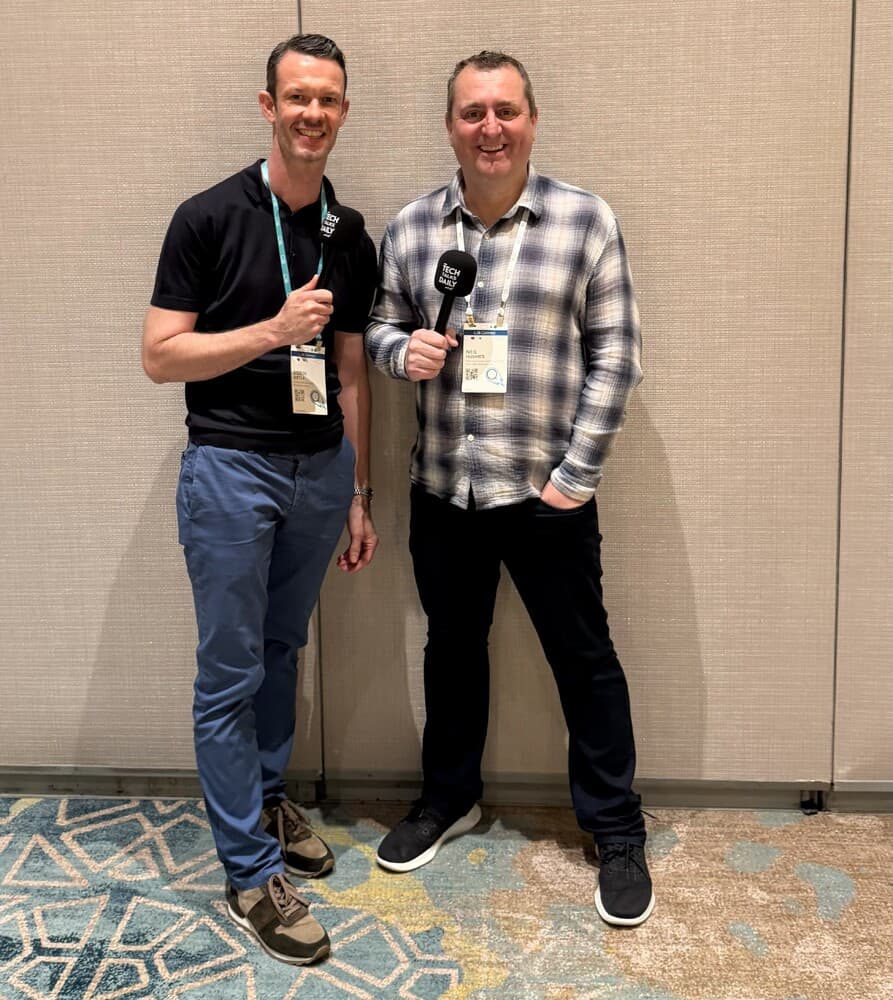
Robin works across Valpak, a business at the center of environmental compliance and packaging regulation, supporting over 100 enterprise customers across the UK, Europe, and the US. From packaging taxes and recycling targets to government submissions and sustainability reporting, the amount of data involved is enormous, and the stakes are high.
In our conversation, Robin shares how the Valpak Insight Platform evolved from manual SQL extracts and spreadsheets into a fully scaled cloud-based analytics platform ingesting millions of rows of data every day. We discuss how that transformation helped reduce onboarding from weeks to days, created up to 90% time savings on CSR and analytics requests, and helped customers reduce compliance costs by up to 15%.
We also explore the launch of PackChat, which uses natural language queries to help customers interact with compliance and packaging data without needing deep technical knowledge. Robin explains why context is everything when dealing with environmental regulations, and why building trust in the data model is essential before AI can deliver real value.
There is also a bigger conversation here around how businesses can use data to serve customers directly, not just support internal teams. From OEM partnerships and cloud automation to scaling AI-powered services across global markets, Robin shares what it takes to turn data into a revenue-generating service.
So as more organizations look to unlock value from the information they already hold, are we still thinking too narrowly about what data can do? And could your greatest untapped product actually be the data sitting inside your business today?
Join me for a fascinating conversation from Qlik Connect, and let me know your thoughts. Are you still using data for reporting, or are you starting to think about it as a product?
Useful Links
Connect with Robin Astle
Learn more about Reconomy Group and Valpak
Visit the Sponsors of Tech Talks Network and learn more about the NordLayer Browser.
[00:00:00] This podcast only exists because of partners like NordLayer. I'm incredibly grateful for the support that helps me deliver these conversations every single day. And one of the things I've learned in those many conversations is that hybrid work has changed everything about how teams operate. People are now working from different locations on different devices and often outside traditional networks. But the one constant here, no matter where people are working, is the browser.
[00:00:28] This is where collaboration happens. That's where the data moves. And increasingly, that's where the risk lives. Now, NordLayer's business browser is designed for this new reality. It allows teams to work securely from anywhere, even on personal devices. All while giving organizations better control over access, data movement and browser activity.
[00:00:54] And it even supports modern ways of working without forcing old security models onto them. And it is that balance between flexibility and control that is where a lot of companies are still struggling. So if anything that I mention there resonates with you, if it sounds familiar, please, I encourage you to take a closer look at nordlayer.com slash browser. But now, on with today's show.
[00:01:21] Welcome back to the Tech Talks Daily Podcast. Now, one of the most interesting shifts that we're seeing happening right now isn't just how companies are using data internally. It's how they're turning data into something they can deliver directly to customers.
[00:01:39] Because I think in many industries, especially those shaped by regulation and complexity, access to the right data at the right time can be the difference between staying compliant, reducing costs or missing opportunities entirely. But making that data usable is a very different challenge.
[00:02:00] And this is something I wanted to explore today with Robin Astell from Reconomy Group, where he leads analytics across Valpak, a business that sits at the center of environmental compliance and packaging regulation for some of the world's largest retailers.
[00:02:17] And in this conversation today, we will unpack, pun intended, exactly what it takes to transform raw, complex data into something that over 100 enterprise customers can actually use and rely on. Whether it be building out the Valpak Insight platform over more than a decade or scaling it across regions or introducing natural language access through tools like PackChat.
[00:02:44] Yet, we're going to talk about everything today and about the challenges of working with millions of rows of data and discuss why context becomes critical when you're dealing with regulatory complexity and how data platforms are evolving from just internal tools into revenue generating services. But enough from me. Let me introduce you to Robin now. So thank you for joining me here at Click Connect, Robin.
[00:03:12] Can you tell everyone listening a little about who you are and what you do? So my name's Robin. I'm the head of Click Analytics at a company called Reconomy Group, primarily working for a part of the group called Valpak Limited. We're a supplier of compliance services to most of the large UK supermarkets and large retailers. So high street retailers and also DIY chains.
[00:03:41] So the compliance services, it's mainly to do with packaging compliance. So the government taxation and regulations around the packaging that's either around a product, say the glass, paper, cork that's in a bottle, or the packaging that that product comes in when it goes to the store, say the box that it's delivered in.
[00:04:05] So each part of that packaging, the components of those packaging attract a certain amount of taxation from the government due to the regulations that they put in place. And the retailers or brand owners of those products have to pay that taxation and comply to those rules. And Valpak is a supplier of that data and does the submissions to the environment agency.
[00:04:29] So we're a key partner for our customers to both comply to legislation and try and improve their products so they're more recyclable and hence reduce the cost that they have to pay. Sure. When you talk to people, people don't think about the technology that makes all that possible. When you're outside of this business, it's an area that you've almost never heard of. But this is how your curbside recycling is funded.
[00:04:57] So the government raises the taxation. They fund local government. Local government fund the collections on curbside. Curbside gets collected and goes back into the recycling chain. So government set targets on the amount of recycling that's got to be done. And then the cost of that is passed back to the brand owners or the retailers because it has to come from somewhere. So when you put your bins out on a Tuesday morning, you don't realize everything that goes on behind it.
[00:05:27] You think it's just something that happens. But to actually know there's a whole industry involved in that, it's pretty crazy stuff. It really is incredibly cool. And you've been working across the Qlik ecosystem for over a decade now. When you look at the Valpak Insight platform today, what problems were you originally trying to solve? And how has that evolved over time? So when I first started at Valpak, the customer requests for data had come in and go to the account managers.
[00:05:55] And that would be extracts from the SQL source system and mainly just Excel exports and sending that out to customers. As the data got more complex, that kind of got unmanageable, both from a data volume point of view and a time point of view. So we had to look for a solution where we could almost cut out the middleman and supply the data straight back out to customers. So they could ask the questions they wanted rather than that coming back into the company.
[00:06:22] So 12 years ago, started to look at ClickView as a possible solution. We put together something for a couple of the big supermarkets in the UK. They loved it. And it's gone from there.
[00:06:35] So it's been a gradual evolution of both the product through ClickView, ClickSense Enterprise On-Prem, and then to ClickCloud, increasing almost the breadth of the product and the number of cuts that we supply of the data, and also increasing the number of clients that we've got. We're currently on about 110 enterprise clients that we supply the data out to, and current big pushes in the US to supply data out to some of the big supermarkets in the US.
[00:07:05] Incredible. You're ingesting millions of rows of data across multiple regions. So I've got to ask, what were the biggest challenges in building a data foundation that could actually support that kind of scale on a reliable basis? So one of the big things we're looking at at the moment, so we're in a kind of data modernization phase. So a lot of the systems that we use have been kind of static for the last dozen years. But we've recently done a purchase of ClickTalend.
[00:07:35] So we're adopting and trying to improve the whole data pipeline. So we're looking at ingestion from customers. So traditionally, that had been CSV exports on an FTP, a download, and then a bulk import into SQL. We're looking at really using Talend to ingest that data. And then the big picture is ingestion to Databricks, and then further on to ClickCloud Analytics.
[00:08:04] So really modernizing that whole chain so we can deal with the volumes and the speed of change that we need to. So that's kind of on my roadmap for the next 12, 24 months to try and put those pieces in place and really kind of set us up for both kind of company growth and agility. And this week at ClickConnect, we've heard a lot this week about moving from AI experimentation to operational reality.
[00:08:32] And at what point did this stop becoming a project and start becoming the thing that the business needed to depend on, really? So in terms of ClickAnswers, so we were on the early adoption program for ClickAnswers. So that was really important for us to see what their functionality was like and how that might apply to our situation. So we found one of the really interesting points was we could take unstructured data, such as the government regulations.
[00:09:01] So as you can imagine, that might be tens or hundreds of PDFs, detailed information that's quite hard to decipher. We could include that in answers and then allow customers to interrogate that data in natural language. So rather than coming back into our account managers, they could do that analysis themselves. And then on top of that, if you add the data model in to be able to pair the government regulations with the customer's data,
[00:09:28] you get the perfect situation where our kind of ultimate goal that we think might be able to happen in five, ten years is you can pair the two together and have AI look at the regulations, interpret the data and then put together the submission itself. So that's kind of something that we think maybe we might be able to do this.
[00:09:53] So I think thinking that kind of long-term goal and putting those small kind of stepping stones in place is what we're working on at the moment. And when I was doing a little research on you, one of the things that stood out was I think it was one of the standard outcomes was up to 90% time savings on CSR and analytics requests. I mean, what changed behind the scenes to make that level of efficiency possible? There'd be a lot of business leaders listening around the world dreaming of figures like that.
[00:10:22] I think it's the thing when you've got huge amounts of data and complex submissions to something like the Environment Agency, when you're dealing with spreadsheet traditional data, the time involved in manipulating that data, as you know yourself, if you've got an Excel spreadsheet that's got a million rows in, it becomes kind of virtually impossible to work with. When you've got tens of millions of rows to work with, the time involved in manipulating that data just expands and expands.
[00:10:49] Being able to interrogate the data, put that data together in click might take a two-week process down to a few hours. So those time savings are kind of multiplied across the board, especially with the new regulations where you're having to do multiple submissions per year. So kind of the time demands are ever increasing as government regulations get more stringent. And those savings are kind of real for companies being able to kind of, you know,
[00:11:19] see that in their kind of, you know, their workforce and how they're actually working. And you've also introduced PackChat, enabling natural language queries on compliance data. Anything surprise you most about how users are interacting with that data when you remove the technical barriers? I think for us, so we've done our testing internally and been really impressed with answers,
[00:11:44] but we're always kind of surprised with how our customers use our information and their requests. A USP for Valpak is almost to customize the app as our customers would want it. So we talk in their language. Some customers might call it a product code. Some customers might call it something different. So we're able to configure our app to work the way the customers want.
[00:12:12] And then on top of that, answers can talk in their language. So that's quite nice in terms of business speak. It's completely configurable as per our customers. But then through our adoption program, we're trying to roll out some initial clients and we'll really see how are they going to use it, feed that back in, almost like a beta testing for our customers, and then ramp up from there as we roll out to more customers.
[00:12:41] And this week, there's a strong message here at ClickConnect about context being critical for AI. In your experience, how important is context when dealing with something as complex as environmental compliance data? Really important, yes. So with answers, so our tradition of the data model that we use has been built up over a dozen years.
[00:13:03] So the data model is strong, structured, but its intention is to provide the visualizations that sit on top of it. So field naming, semantics around that field naming just weren't there, but answers can't really use that. They can't know how to interpret that without extra information. So during the adoption program, we did a huge amount of work manipulating the data model,
[00:13:33] adding that context in around field naming, dimensions, measures, kind of expanding that out. So when you ask a question, answers is not trying to guess. It's got the information to actually use, kind of structured into the actual app. So that's giving us more quality of the response. So that's something we've worked on, but I think that will continue to grow and we'll go from there.
[00:13:57] And you've helped retailers achieve millions in cost savings while also supporting more sustainable packaging solutions. How do you balance those commercial outcomes with sustainability goals in a platform like this? So I think because the level of detail that we supply out to customers is kind of the key to their savings. So a product, we supply the packaging information out on a component level.
[00:14:25] So if those components are either incorrectly labelled in terms of the material or the weights are incorrect, the impact on their bottom line in terms of the taxation might be incorrect. So it's almost in the favour of the government rather than the retailer. Being able to interrogate that data, see where inaccuracies might be, and get the most accurate data for the submissions is really important for the retailers.
[00:14:53] And their goal is almost reducing costs because we've seen with extended producer responsibility regulations, some of the retailers have seen their taxation go up tenfold. So really getting that quality into the data both helps customers and from a recyclability point of view, it's kind of good for the environment and good for everybody to get the quality into the data.
[00:15:21] And before you join me today, I was also reading that you've actually reduced onboarding from weeks to days, which is a huge shift too. I mean, what were the key architectural or process decisions that enable that level of speed? So we recently signed an OEM contract with Clip. So last September, we signed the OEM contract, and that's given us the ability to ramp up a Clip Cloud tenant per customer
[00:15:46] so we can quickly configure a tenant by the click of a button through click automation, publish a customer app to the tenant, configure their identity provider on the tenant automatically, and have the customer dial into it almost automatically. This is a matter of hours rather than something being an IT request internally, somebody having to configure something, it going through a process. This is almost seamless in terms of kind of customer onboarding.
[00:16:15] So having that ability within the click platform is really important for us. And we will have many business leaders listening and people from organizations that are struggling to scale AI beyond just a handful of use cases. What was it that allowed you to take this from a single solution to something that's serving, what, more than 100 enterprise customers? I think it's having kind of, for us, it's having a specific use case. I think ours is an interesting solution where we don't do any internal reporting with click.
[00:16:45] So it's purely an external tool and a revenue-generating tool as well. So having that stickiness and an ever-evolving feature set with click is important for us because it gives us the customer value to be able to sign those contracts. So everybody can see the value and everybody's wanting to work with AI. So even though it's early days with click answers, it does add value in.
[00:17:15] Even if it's only kind of the rag situation doing queries on government regulations, it's still valuable for our customers. And with the new agents that were announced, we'll look at adopting those in the longer-term roadmap. So for us, it's always been even from the click view day. If a new feature comes out, we'll try and roll that to customers as soon as possible because for us, it's always surprising how customers use the platform and what they want. So the earlier we can get something out,
[00:17:45] the quicker we can get their reactions back and really evolve with our customers. So rather than trying to almost develop something too much before we release it, we're kind of working in a partnership with our customers to try and give them the tools so they can feed back to us and it's a mutually beneficial situation. And for people listening to this who want to build something similar following your footsteps, anything that you'd advise for maybe their first steps that they should be focusing on
[00:18:14] and avoid the mistakes that maybe you've already learned from? Keep it relatively simple to start with. I think focusing on a specific use case is always handy. And for us, that is kind of focusing on a specific customer. So for, say, for Click Answers, we've been working with just one major supermarket to try and get the proof of concept together, which has been really helpful.
[00:18:40] But then I think don't get too ahead of yourself and don't expect to, especially with AI, don't expect too much. Almost accept that it's not going to be that great to start off with, but view that kind of longer term roadmap and think if this is kind of version 1.0, what's version 5 going to be like? So I think that it's, yeah, don't expect too much now,
[00:19:10] but in 24 months' time, just think what it's going to be like. So I think we're kind of happy to jump both feet in and kind of get those features out. I love it. And this week there's been so many different announcements, a lot of conversations you've probably had as well. When you've got to take that long flight home back to the UK, anything you're going to be reflecting on, on everything you've seen and heard here? I've got a lot on my plate in terms of, so there's the Valpak compliance side.
[00:19:38] So I've just recently been promoted to a role in Reconomy Group. So this is looking at an application of Click across the different companies in the group. So we're working on kind of bigger roadmap visions. So trying to see where we can apply Click into the other companies. And I think, again, it goes back to that, keeping it relatively simple. So there's a lot on my plate at the moment. So it's nice to see the announcement of different agents can do this, that and the other.
[00:20:07] But if you get too starry eyed about all the new technology, you never get anything done. So it's kind of focusing on what we can deliver, because my kind of key thing is always to deliver customer value rather than trying to gold plate or navel gaze too much from an IT point of view. It's always about the customers. So it's kind of how can we serve their needs and give them real value and maintain those relationships so they stick with Valpak.
[00:20:36] So I think, yeah, I'll try and forget some of it and review it kind of further down the line. No, I know you do have a lot on your plate, but I will include a link to your LinkedIn for anybody that wants to continue the conversation. But anywhere else you'd like me to point everyone listening if they want to find out more information about anything that you're doing there? I think, yeah. So LinkedIn and then obviously from a kind of a business point of view. So Valpak information, Reconomy.
[00:21:04] So lots of interesting stuff going on on the circular economy. There are three parts of Reconomy. So there's Comply, which is compliance. A number of companies in compliance. There's Recycle to do with material recycling, electronics recycling, textile recycling. And there's also Reuse, another part of the company. So all your returns from your online orders that goes through Reuse. So a really interesting company that's growing kind of worldwide.
[00:21:31] So if you're interested in anything circular economy wise, Reconomy is the place to be. Awesome. Well, I'll have links to everything that you mentioned. Everyone listening to check those out. But just a big thank you for stopping by. I know how busy you are. You've recently completed an hour long video as well. So thank you for your time today. Pleasure. Thank you. One of the things that stood out to me after talking with Robin today is just how this goes beyond analytics in the traditional sense.
[00:22:00] This is about turning data into something that customers can interact with, depend on and ultimately use to make better decisions, especially in highly complex environments. And that complexity really matters. Because as Robin explained there, when you're dealing with regulatory data, sustainability targets and financial implications that can run into millions, accuracy isn't optional. Context isn't optional.
[00:22:29] Getting the data right has a direct impact on both cost and compliance. And there was also a really interesting point around evolution. This wasn't built overnight. It's been a steady progression from manual data extracts and spreadsheets to a fully scaled platform serving over 100 enterprise customers. All with new layers of AI being added on top.
[00:22:55] And that idea of starting simple, focusing on specific use cases and then building from there. This is something that came through strongly today. Rather than trying to solve everything at once, it's about delivering value early. Learning from how customers actually use the platform and then evolving alongside them. So as you think about your own data strategy, the question might not just be how you use data internally.
[00:23:23] It's whether there's an opportunity to turn that data into something more. Something that creates value, not just inside your business, but for your customers as well. And I'd love to hear your thoughts on that. Are you still treating data as an internal asset? Or are you starting to see it as something that you can deliver as a product in its own right? As always, techtalksnetwork.com. Please let me know anything that you'd like to share or anything you're taking away.
[00:23:52] And I'll get straight back to you. But that is it for today. So I'll return again tomorrow with another guest. But thank you for joining me today. And I'll speak with you tomorrow. Bye for now.