

Has enterprise AI finally reached the point where impressive demonstrations are no longer enough?
In this episode of Tech Talks Daily, I speak with Bruce McMahon, Chief Product Officer at CallMiner, about what he describes as the industrialization of AI: the move from experimentation and excitement toward repeatable processes, measurable ROI, better customer experiences, and technology that can operate reliably at enterprise scale.
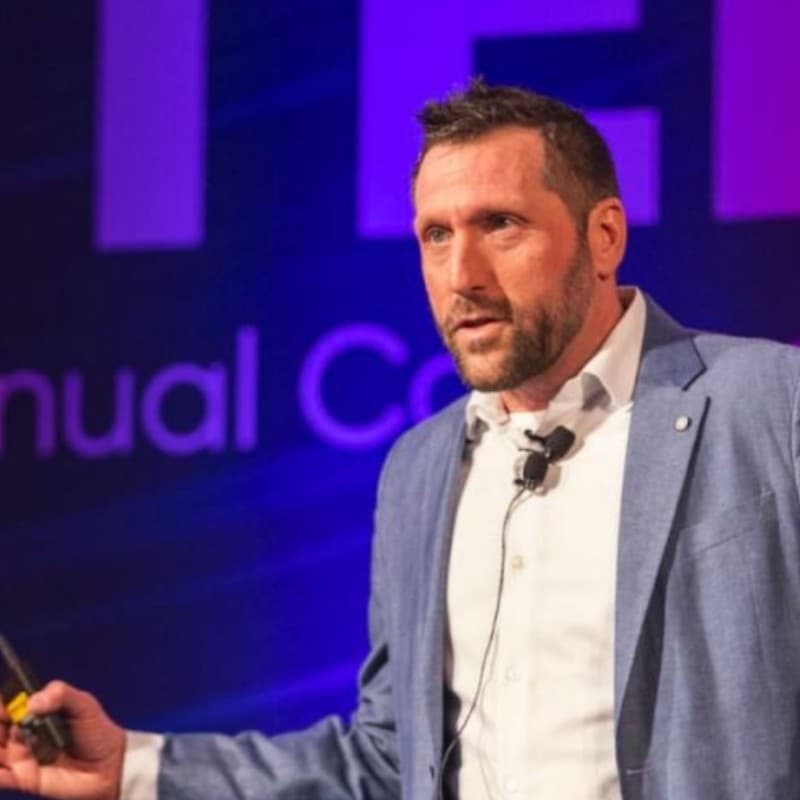
Bruce explains why business leaders are increasingly asking a much simpler question about AI: how is this going to create value?
Drawing on CallMiner's experience analyzing hundreds of thousands of hours of customer interactions every day, Bruce discusses how AI can surface operational inefficiencies and customer insights that were previously difficult to identify. The opportunity is not simply generating more data. Organizations need processes that get the right insight to the right person so something actually changes as a result.
We also discuss how AI is changing workforce expectations. Bruce sees curiosity and adaptability becoming increasingly valuable, particularly among technical teams. As AI takes on more routine work, employees who question outputs, experiment with new approaches, and apply human judgment can become more valuable than those who rely solely on established technical knowledge.
The economics of enterprise AI present another challenge. Foundation models, capabilities, and pricing continue to change rapidly, creating questions around vendor dependency and long-term costs. Bruce explains why companies may increasingly use a mixture of commercial, open-source, fine-tuned, self-hosted, and proprietary models rather than relying on one provider for everything.
Governance becomes even more important as AI agents begin interacting directly with customers. We discuss red teaming, bias testing, compliance, data protection, monitoring, and why organizations need to decide which actions can be fully automated and which decisions must remain accountable to a human.
Bruce also examines how AI is changing customer experience and the BPO industry. Rather than choosing between humans and AI agents, he sees value in designing systems where both can work together, with people handling interactions requiring judgment while AI manages high-volume and repetitive work.
For CIOs, CTOs, COOs, customer experience leaders, and anyone responsible for enterprise AI strategy, this conversation provides a practical look at moving beyond AI pilots and turning the technology into a dependable part of business operations.
[00:00:00] Are you still dealing with agentic AI semantic confusion? Well, Denodo keeps your business harmonized. And by positioning your data platform into a universal semantic layer, everybody can be on the same page. So get back to scaling your business and trusting your AI agents to create proper business decisions. And you can do that by visiting denodo.com to see how. But now, back to today's guest.
[00:00:33] Has enterprise AI finally reached the point where the demos are over and the hard work begins? Well, businesses have spent years experimenting with models, co-pilots and agents now. But the boards, well, they want measurable returns. Customers, they want better experiences. And tech leaders, they need to be making decisions while the models, cost and vendors keep changing.
[00:01:01] Well, my guest today is Jeffrey Mattson, his chief product officer at CallMiner. And he's going to explain why AI is entering a industrialization era. How analyzing millions of customer conversations can expose problems leaders couldn't see before.
[00:01:20] And ultimately, why curiosity, adaptability, governance and knowing when to stop analyzing and stop implementing so you don't fall into the analysis paralysis trap. How that could separate the companies creating real value from those that are still just waiting for the next big thing. And it is on that note, I'm going to officially introduce you to Bruce right now.
[00:01:46] So a massive warm welcome to the show, Bruce. Can you tell everyone listening a little about who you are and what you do? Bruce McMahon. I'm the chief product officer at CallMiner. I run essentially the product development, engineering and AI organization at CallMiner. CallMiner is a CX intelligence and automation platform. Well, thank you for joining me today on the podcast every day.
[00:02:15] I try and get people thinking differently about areas that are impacted by technology and often areas we don't associate with it. And for the last few years, we've heard endless stories about AI pilots, proof of concepts. I've got to ask from your side here and everything you're seeing. Are we now at a point where enterprises are asking maybe a simpler question, which is just show me the business value? And how has that changed the conversations that you're having with customers? Yeah. Okay.
[00:02:43] Look, I think AI has gone through a period of rapid adoption across the globe. I actually just put out a podcast if you're interested. I think we posted it already. Bella, I'm not sure. I had Brooke post it. But basically the concept of what the stage we're at right now with AI and the way I have referenced it is we were in the Renaissance where everyone's creating ideas and, you know, it's really driving a lot of excitement and creativity and that kind of thing.
[00:03:10] And then enterprises are moving more towards a industrialization of AI. So it's like, how are we going to make money by using this? How is this going to positively impact our business? And that requires a lot of process thought, a lot of planning and that kind of thing. Of course, if there's the thought that AI takes over people's jobs and you cut people and that kind of thing. But it's like, how are you actually going to utilize this to start affecting your bottom line in a positive way?
[00:03:39] And from our standpoint, from a AI company that delivers CX solutions, customer experience solutions, it's also about how are you positively impacting your end customer with the use of AI. And you're also someone that spends a lot of time helping organizations analyze conversations and doing so at scale.
[00:04:00] So when AI starts examining millions of customer interactions, what kind of operational problems or hidden inefficiencies as it or have you seen it on cover that leaders maybe couldn't see before any, any examples you can share there? Yeah, we've been doing this a long time. So AI, we are an AI company from before it was cool, if you will.
[00:04:22] It's a pre-generative AI. So we are big data and we process hundreds and hundreds of thousands of hours of transcribed audio contacts every single day and provide insights out to the organization. And those can be in the form of how an employee base, if you're in the contact center or your agents, how they can perform better. So we surface up the intelligence on how to improve automation.
[00:04:50] So like even the voice bots that which we have one as well, it's like, how do you use the AI to actually improve that experience for the end customer?
[00:04:59] And so setting up a process inside our customers enterprises and a lot of these larger enterprises that we deal with, they have experience rolling out types of solutions and they're constantly thinking about, you know, how to optimize their workforce, how to use AI to optimize their workforce, how to use AI to influence their customers to the next purchase.
[00:05:20] So they are fairly experienced at the enterprise side. What's changed is the tools that are available now over the last few years with generative AI and the agent, in particular, the agentic AI changes over the last couple of years.
[00:05:36] It's providing more insights than they've ever had before. So like creating processes internally to ensure that the insights that are being extracted through that massive amount of information are provided and funneled to the right people to make, actually make change. They're not paralyzed with just the sheer amount of data and opportunity that they have really.
[00:06:00] And a quick look down our LinkedIn news feeds and we often see a lot of fear that AI is going to replace jobs. But I would say another way of looking at it is it's changing the work that people do. And as you said a few moments ago, you've been involved in AI long before everyone jumped on board there. So what skills do you see as becoming more and more valuable as AI takes on more of those repetitive tasks? And what separates employees that thrive from those that struggle in the new environment?
[00:06:29] Yeah. And I look at this because I have a lot of employees myself that have quite a large team and we're building AI with AI. And so I think there has been some changes in the type of folks that I would look for. And while I've always admired these qualities, now it's like a deal breaker to not have them.
[00:06:53] And the qualities that I look for are curiosity, acceptance of change, because we are in a world that is changing so rapidly and the curiosity kind of goes with it. So they have an excitement to look around the corner, to dive in and that kind of thing.
[00:07:06] You have some traditional tech employees that are really solid technically, but if they're not accepting of change or they're not curious enough, they're having a harder time living in this world of AI, changing their job. So the folks that are being more successful are maybe today are maybe not the same folks that were as successful five years ago, for example.
[00:07:33] And I'm mostly thinking about the technical workforce, the engineers and that kind of thing. The engineers who are truly adopting AI, looking for the best solution, using their brain, their real world, their reasonable person rule is what I call it. When they think about things and make a decision, those are the ones who are being successful. Those are the employees that are moving the needle for us more now than folks who are a little bit more static with their technical thinking, I guess.
[00:08:02] Wow, such a great point there. And on the technical side of things, AI models are continually improving at a rapid pace as well. But of course, the cost of using them is also beginning to change. So when we think about tokenomics, for example, how should tech leaders think about foundation model pricing, vendor dependency and avoiding some of those appear to be inevitable expensive decisions that they could regret in a couple of years from now?
[00:08:32] Any advice on navigating that at the moment? Yeah, yeah. Well, I mean, it's something that I spend a lot of time thinking. Of course, anyone in the situation is tracking the amount of AI usage. What the sheer amount of change, even in the pricing over the last four years or so, has required flexibility in that regard.
[00:08:52] We've had pricing go down for some of the foundation models themselves are changing, which requires flexibility on folks who have included them in their solution. So being able to ensure that you've got an ability to control those models. What I am seeing is more gravitation towards some of the open source models as well. And so that's an interesting change.
[00:09:18] Although like, you know, Anthropic and Cloud and OpenAI and SpaceX, Grok, they're getting a lot of the attention. There are a lot of use cases for AI don't require Claude Fable, for example, right? They require a model that is tuned or fine-tuned for that specific use case. And you'll have a variety of different models in your solution.
[00:09:44] So what I think we are going towards in the software industry is the vendors of products like ours and other software solutions that either may not have the foundation model ourselves, or we may be using a more variety of self-hosted, fine-tuned models. And, you know, even for a company like us, building our own models, which we have released our own speech-to-text model, for example.
[00:10:11] So creating more of that foundation layer that we control, it also gives me the flexibility of controlling my margins, right? So if I'm beholden to OpenAI, for example, and they raise their price because they're spending more on a bigger model, that hits my margin. But if I can control the model layer myself, I can obviously pass the better costing on to my customers, be more competitive than that kind of thing. So that's where I think the world is going.
[00:10:41] That's certainly where we are going. But yeah. And another one of the big concerns for enterprise AI is, of course, governance, especially when we're talking about releasing thousands of AI agents into the wild.
[00:10:54] So if an organization is introducing or thinking about introducing AI into customer service contact centers or business operations, any advice you would offer around guardrails, what should be built in right from the beginning as the foundations rather than just bolted on at a later date? Yeah. And that's actually really topical because, as I mentioned earlier, we at CallMiner are an intelligence platform, but we also have automation capability.
[00:11:22] So AI agents to do customer service. And our core competency is the intelligence that evaluates the performance and non-conformance and compliance of those AI agents, right? And from a platform perspective and from what enterprises are looking for, they're looking for the checks and balances on how you include AI in your platform.
[00:11:43] So that could be red teaming, which is ensuring that models are tested for bias, exploits, and that kind of thing, and make sure you can provide those level of details. We have those features included in our product stack, even for our AI agents that folks deploy. So even as a customer thinks of deploying a voice customer service agent, they can use the intelligence that we automatically provide that saying this is the experience that your customer is getting with this virtual agent.
[00:12:13] And they can also see in the product that the AI that is being included is being tested for safety bias, any type of ongoing concern that you might have in putting that AI in front of your customer. So really, really important. It's part of the, one of the battlegrounds, if you will, of this type of technology right now is how well can you roll out AI in a secure fashion, a safe fashion.
[00:12:38] And this is kind of back to that thought I have around industrial AI, right? Anybody could vibe code a solution that has AI in it, but can you produce something that can be repeatably and used and have a repeatable, measurable performance that you have designed yourself across thousands of interactions.
[00:13:02] And that's where you start to get to this industrialization view instead of a craftsman type view where you have a vibe coded solution, for example. And elsewhere, business process outsourcing is also going through a big change right now. And I think it looks like rather than replacing people, AI seems to be redefining the role of BPO. So how are the most successful providers combining the human expertise with AI agents?
[00:13:29] It's something we hear a lot, but who are the ones that are winning here? How are they doing it and how are they ultimately creating more value for customers? Yeah, I think that's really important. It's the, because you're, you've got this period of change, you've managing the change with the end customers or the enterprises as well.
[00:13:50] So BPOs are either two camps, in my opinion, like there's the camp that is, you know, still butts in seats and, you know, we're going to all in on the human side. And then there's the side that is going the other way. They're all in on the agentic solution. In reality, the transformation is a blend of those.
[00:14:12] And so you have these, the capability to have end customer interactions go from, you know, a bot interaction to a human interaction. And they need to be able to put those solutions together so that the agents, the human agents are understanding what the virtual agents are doing and vice versa. So you have this kind of virtuous working together of those.
[00:14:39] So that who's winning is the folks that are using products to stitch together those types of interactions so that the actual experience becomes seamless so that the human agents can take over from a virtual agent so that the human agent can maybe manage virtual agents like a team lead type scenario. So that's where we're at. Who knows where it's going to be in a couple of years, but that's where we're at right now. And I think like at planning for these things, it's like you're planning in the what does 2026 look like?
[00:15:08] What does 2027 look like beyond who knows? Yeah. It's increasingly hard to try and work out where it's all heading. But right now here in 2026, we've reached that point where AI can, yes, generate summaries, recommendations, even make its own decisions. But where do you think that human judgment still delivers the greatest value and how do organizations avoid becoming overconfident in AI generated outputs?
[00:15:34] Because it feels like very often like a paradox of sorts where those that succeed will be the ones with critical thinking because that's the biggest skill. But the more you use AI, it can lessen your critical thinking skills. That is a conundrum. And I totally agree with that sentiment. And that's where I was saying when we're talking about the types of people, it's like curiosity, people who are driving, creativity.
[00:15:57] Yeah, I think human in the loop gets a little overused at this point in time because everybody is using AI for something in today's day and age. You're doing summaries with your note taker here today. I'm sure you're going to use some AI to do some editing of this podcast at some point. But you're provided, you're the driver of that, right? So you're basically outsourcing those things. So I think when you're thinking about it at scale, what we do is we provide a lot of intelligence.
[00:16:25] Like I was saying, like hundreds of thousands of hours of millions of interactions every single day are funneled to some organizations. They need to understand what those things are and they need to funnel the data to the right person to make a decision. Some, the reality, AI is taking on some level of decision making, but it's like a choice for the customer which part they use the AI to make a decision. And some companies don't want AI making any decisions.
[00:16:54] Some are allowing some agentic decisions. For example, we have analysis of that data is quite, can be quite undertaking when you're talking about the sheer volumes that we're talking about across these interactions. We have AI that some customers use the agentic AI to do the analysis for them and provide information. When it comes to the business, we always recommend that they make the, that a human is making the decision on what to change in the business.
[00:17:22] So that could be called human in the loop. It could be called human AI assisted work, that kind of thing. But I think, I think it's really setting that boundary on here are the things that we are okay with full automation. Here are the decisions that we, someone has to be made responsible for. I can't remember who, what was the author who said, or where was that? Who said that a computer should never make decisions? Do you remember that, that quote? But anyway, it was just like in the seventies.
[00:17:51] I can't remember the actual quote, but that's that we're right at that point right now. It's like, you can't hold the AI accountable for the bad decision. You can hold the human accountable. So you got to think about what decisions those are and make sure you have a process in place to make those decisions. And with our software, we build that in so that you have that check and balance, right? And our customers are demanding that check and balance before they sign the contract these days as well. Love it.
[00:18:18] And finally, if we do have a CI or a COO listening to our conversation who want to move beyond AI experimentation and make it part of their operational backbone, any practical first steps that you'd recommend that they take over the next 12 months and any mistakes that you might be able to help them avoid as well? I don't think there is a CIO or COO or CTO out there that is not considering making AI a backbone of their rollout.
[00:18:48] I think it's, I think if they're not, they're probably behind already. So I'm assuming right now that everybody is, but it's about putting your governance in place and making sure that you are asking the right questions of your vendors or understanding where the data is being processed, who has access to the data and, you know, what those human in the loop or checks and balances points are the guardrails, if you will. The term that gets used a lot are in place around the product that they're rolling out.
[00:19:18] I do see a lot of executives being challenged with the sheer volume of change. And because today, Anthropik's on top. Tomorrow, OpenAI is on top. There's this other vendor that's so cool and it's all changing. And it's like really gets to a point where it's hard to make a decision, I think.
[00:19:40] And so knowing when to put a pin in it, make your decision and start implementing because you could get stuck in this analysis paralysis kind of thing. And I think the companies that are winning are the ones that are industrializing the AI means they're picking their solution and then they're building processes on it. And they're reaping the gains of efficiency and improved customer experience because they've industrialized the process versus waiting. Because you can get stuck waiting for years because the change is going to keep coming.
[00:20:11] Yeah, you're bang on the money there. And I think it's a great moment to end on. And we've covered so much from how AI is surfacing hidden inefficiencies, but reshaping workforce expectations, especially around curiosity and adaptability. And for anyone listening that would like to carry on this conversation with you or find out more information about CallMiner and everything that you're doing there, where would you like me to point everyone? I think the best way to contest is go to our website.
[00:20:37] We have a blog there that, as I mentioned earlier, that you can follow along and we can reach out and engage us in that way. And, of course, folks can reach me on LinkedIn too. Awesome. Well, I'll include everything you mentioned there from the website, the LinkedIn pages for both you and the company and the blogs. Anyone listening to go check them out. Raised a lot of big points today, especially around the foundation model pricing volatility, what that means for long-term AI strategy, vendor dependency, etc.
[00:21:06] So, please let me know as well over at techtalksnetwork.com. Let's keep this conversation going. But more than anything, just thank you, Bruce, for joining me today, bringing it all to life. Really appreciate you, Tom. Thanks, all right. I think today's conversation showed why moving AI into the operational background of a business requires far more than just choosing the smartest model. As Bruce explained today, companies need the flexibility to avoid becoming dependent on any single AI provider.
[00:21:35] And also the governance to understand where data is processed and how decisions are made. And people, your teams, it's those with curiosity and adaptability to keep learning as technology changes. Because they're the ones that will be successful. But perhaps the biggest lesson today was knowing when to stop waiting. Because there's always going to be a better model, a new vendor, another breakthrough around the corner.
[00:22:05] But the company's making progress. They're the ones choosing where AI can create measurable value, then putting the right controls around it and getting to work. I'd love to hear your thoughts. Is that constant pace of AI innovation helping your business move faster? Or is the fear of making the wrong tech decision creating a new form of analysis paralysis? Let me know. techtalksnetwork.com Thank you for listening.
[00:22:34] I'll be back again tomorrow with another guest. And hopefully you'll join me. Bye for now.