

What happens when one of the world's largest enterprise software companies declares that it is no longer a software company, but an AI company?
At SAP Sapphire, I caught up with James Bates, Head of Customer Advisory at SAP UK & Ireland, to discuss the company's vision for what it calls the Autonomous Enterprise and why this year's event felt different from any SAP conference before it. From standing-room-only AI sessions to bold declarations from SAP leadership, there was a clear sense that the conversation around AI has moved beyond experimentation and into the world of measurable business outcomes.
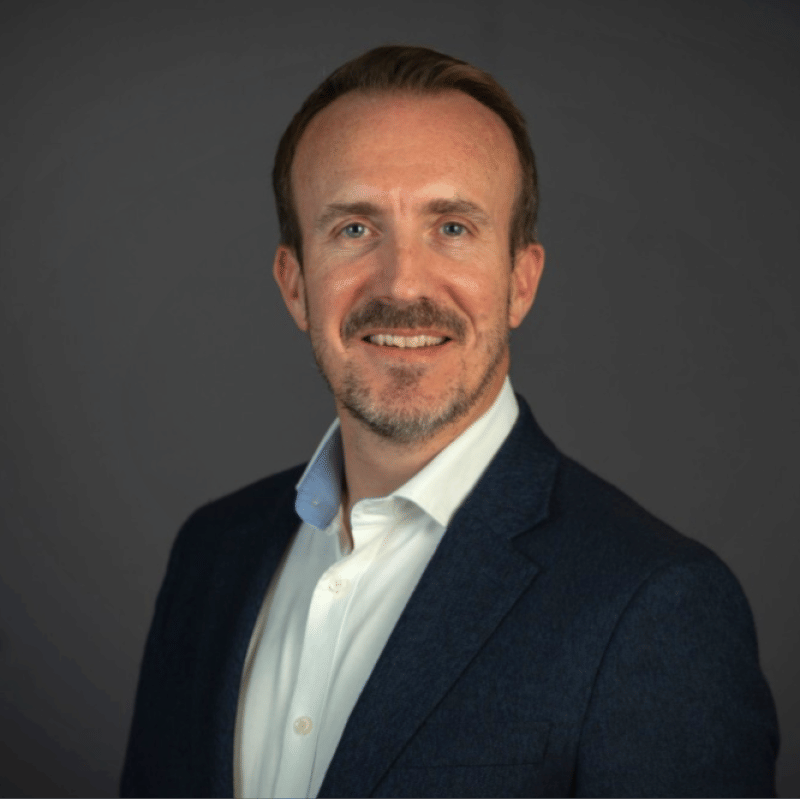
In our conversation, James explained why so many organizations remain stuck in what he described as the experimentation phase of AI, despite years of investment and countless pilot projects. We explored why successful AI initiatives begin with business outcomes rather than technology choices and why data, governance, and process context have become the foundations of enterprise AI success.
We also examined some of the standout announcements from Sapphire, including SAP's AI Agent Hub, the growing role of Joule as a new interface for work, and the company's expanding ecosystem of partnerships with organizations including Anthropic, NVIDIA, Microsoft, Google Cloud, Palantir, and Mistral. James shared why SAP believes the future lies in combining large language models with business context, process knowledge, and trusted enterprise data.
The discussion also touched on real-world examples that demonstrate how AI agents are beginning to transform customer experiences, automate complex workflows, and support employees across finance, supply chain, and customer-facing operations. Rather than replacing people, James sees AI assistants and agents working alongside employees, removing repetitive tasks and helping teams focus on higher-value activities.
We also explored the challenge many business leaders continue to wrestle with: how to balance autonomy with governance. As AI agents become more capable, maintaining visibility, accountability, and control becomes increasingly important. James shared why governance, trusted data, and strong business processes must remain at the center of every AI strategy.
If you've been wondering whether enterprise AI is finally moving beyond the hype cycle and into meaningful business transformation, this conversation offers a fascinating perspective from the heart of SAP's AI strategy and its vision for the future of work. What role do you think AI agents will play inside your organization over the next few years? Share your thoughts.
Useful Links
[00:00:00] A big thank you to Denodo for helping me make more than 60 monthly interviews possible across the Tech Talks network. And as businesses move from Gen AI to Agentic AI, trusted data becomes everything. Everything from Gen AI to Agentic AI, Denodo is helping organizations build intelligent, secure and scalable AI solutions with data access, governance and explainable results.
[00:00:28] So build AI that you can trust and do it with Denodo. And you can learn more by simply visiting denodo.com. What happens when one of the biggest enterprise software companies stops calling itself a software company? Stops calling itself an AI company? Well, my guest today is Ammar Maraqa from SAP.
[00:00:54] And he joins me fresh from Sapphire 2026, where SAP unveiled its vision for the autonomous enterprise. A future that's powered by AI agents, assistants, orchestration layers and business ready AI that's designed for real operational outcomes.
[00:01:13] So in my conversation today, I want to cut through the hype that surrounds enterprise AI and focus on what businesses actually need to move beyond experimentation and into measurable value. So from trusted AI governance and industry specific agents to customer examples, today's conversation will be a fascinating look into where enterprise technology is heading next. And you are cordially invited to join me.
[00:01:42] So buckle up and hold on tight as I beam your ears all the way to the UK, where you can sit down with myself and James and learn more about what the future could look like for your enterprise. Thank you for joining me on the podcast today, James. Can you tell everyone listening a little about who you are and what you do? Sure. So thanks, Neil. Absolutely fantastic to be here. Really looking forward to the conversation. So my name is James Bates.
[00:02:07] I lead what we call our customer advisory team here for SAP UK and Ireland. I've been with SAP about nine years, part of the senior leadership team here. And the customer advisory team, if you think about sort of customers that are embarking on transformation journeys with us, my team pretty simply sort of helps map out what that journey sort of looks like, helps the customer understand where they are now, where they want to go, what technology,
[00:02:37] how to kind of deploy that technology and so forth. So we're the, I guess, the sort of the Google sort of maps of that customer advisory world where we're providing that journey for our customers. Love it. And there's so much I want to talk with you about this today because there's a lot of big news coming out of SAP. At Sapphire, for example, this year, SAP introduced its vision for a autonomous enterprise, which feels like a major evolution for enterprise technology.
[00:03:06] But for listeners hearing that phrase for the first time, what does it actually mean in practice? And why is now the right moment for businesses to embrace it? Firstly, I just wanted to reflect on actually Madrid last week. I was there. I've been to a number of the SAPHIRE conferences over the years. And I don't think I've ever seen one where the buzz was so high. I mean, I stood there. I actually took some pictures in the end of it.
[00:03:31] Because on some of the breakouts, particularly sort of the AI, build an AI agent sort of breakout, they were five, six, seven deep at the back standing room only. It was just absolutely fantastic to see. So still sort of digesting some of that myself, trying to sort of understand the buzz. But in terms of the autonomous enterprise, the way in which I'm choosing to see it,
[00:03:54] if you think about the last 50 or so years with SAP, SAP has been that sort of de facto system of record, system of insight for our customers. And there's a tremendous amount of data in an SAP system for our customers. The autonomous enterprise is about our vision for how businesses are going to run in the future, but really how we turn that insight and that data into action.
[00:04:23] So think about sort of that as that big shift that you were talking about. So very much with humans still at the forefront of the decision-making process, but agents, assistants working together to drive sort of the action, if you will, sort of those autonomous tasks to allow then the humans to focus on more higher value-add activities.
[00:04:52] And one of the things that particularly stood out to me, I was following online at Sapphire, was SAP's focus on trusted, business-ready AI, not just another shiny demo. And in a market where many organizations are still experimenting with AI, how are you helping customers move from that pilot purgatory and into real operational value with confidence? Because it's a step that many have struggled with, but we're starting to see progress now.
[00:05:21] Yeah, this is a really important point. And actually, we did some research last year with the Oxford Economics, which showed that actually 70% of UK businesses were unsure on whether AI was actually delivering on its potential in terms of the value that they're expecting. We've seen similar research come out of MIT, which suggests that only 5% of AI projects
[00:05:49] are actually going from POC into production. So I think if I take a step back a little bit, what we're trying to do in terms of helping customers move from that pilot phase into real operational value with confidence, which I'm going to come back to, it's a really key point, is firstly, we're trying to encourage customers
[00:06:14] to start with the outcome rather than be technology-led. And a lot of, I think, what we've seen today has been technology-led. I'd sort of refer to it in my mind as the experimentation phase of AI, which I think we are definitely coming to the end of. So by starting with the outcome and then working backwards, I think customers will then be able to
[00:06:37] see more value quicker tied to a business outcome rather than being technology-led. The second aspect of it in terms of how we're helping is to work with customers on understanding existing processes and understanding where, therefore, there might be the biggest potential value on offer for where an existing process may benefit the most from AI.
[00:07:07] The third one, it's a big one, data. So last year, we launched the Business Data Cloud. We're now merging that into the newly launched Business AI platform that you may have heard about. And we're continuing to invest in this data layer, which is, I think we'll probably talk quite a bit about this on the podcast over the next sort of 30 minutes or so.
[00:07:30] Acquisitions like Relteo and Dremio are really helping customers to sort of get that data layer ready for AI. Christian spoke a lot about this. The leadership team spoke a lot about this on the stage, where without that context, without that data, AI is always going to really struggle, I think, in terms of the value delivered. The final one I'd really touch on is governance.
[00:07:59] So you mentioned confidence. From our perspective, to move forward with that confidence, there has to be strong governance in place. And that's where the newly announced SAP AI agent hub comes in, which we're really excited about. And there were so many announcements around a number of updates and embedded AI agents right across workflows. And you mentioned one area you were excited about there.
[00:08:26] Was there anything else that particularly excited you most about the potential of AI to remove friction from everyday business processes? Because you must be right in the heart of this. I'm curious what really excites you. Yeah, certainly as SAP, as Customer Zero, we've been, as you'd expect, deploying the technology ourselves internally a lot. So yeah, definitely really excited about some of the things that we're seeing.
[00:08:50] For me, I think what I'm most excited about reflecting on the announcements from last week is the impact on people's productivity and the customer experiences that this will create. So on stage last week, we had EssilorLuxottica. So the company behind the likes of Ray-Ban and Oakley.
[00:09:14] And the showcase that they did on stage was amazing. They had somebody coming into the store. They were both wearing the Ray-Ban meta glasses. And they were able to have an interaction and identification of the customer. They were able to do an ordering process. They were able to check what stock they had in the warehouse associated with a particular frame that this customer was interested in.
[00:09:44] All through voice, all through sort of video, all through sort of the glasses. But what that for me was really exciting was the fact that that was all through those sort of automated end-to-end AI agents acting sort of as one. If you think about that in the context of a retail experience for most of us today, the storage system, looking up on the system, giving you your details.
[00:10:11] Okay, putting your details, checking sort of another system for stock. And then you go through sort of the order. A very often feels like clunky experience. So I'm really excited as sort of about what the future of that looks like in terms of customer experience and what that means for people in sort of everyday lives. So I think it's, yeah, it's fantastic. And there will be people listening that have a lot of problems in their organization with technical debt, fragmented apps, data silos, et cetera.
[00:10:40] And one of the reasons I wanted to bring that up is that there was also a very strong message around bringing together applications, data, and AI into a more unified environment. It sounds simple, but it can be incredibly challenging. But the rewards would be great if you can pull this off. So from your perspective, how important is that level of integration for organizations trying to modernize at scale? Yeah, massive. For me, it's not just important. I think it's absolutely critical.
[00:11:10] It goes far as to say actually that it's a prerequisite to really see these things together as one. And for us, that's actually not new. Last year, we were talking about sort of the flywheel concept, which was, I think, evolved, if you will, with the autonomous enterprise. But apps, data, together with AI.
[00:11:39] If you remove one of those things, AI without the apps or AI without the data, and you see this, right? So large language models are incredibly powerful. And in some ways, that's not where the real challenges are anymore with really delivering outcomes with AI.
[00:12:02] But those large language models don't have the context of a customer's enterprise data and enterprise information. This concept now that we've announced around company and organizational memory, I think, is really interesting, where the agents themselves are going to be trained on the specific customer's data set, making it domain-specific, customer-specific.
[00:12:31] I think about it in terms of, you know, you could have a large language model is a bit like a friend that has read the entire internet. But that friend knows nothing about your business processes and your business context. So I think, yeah, absolutely really important, really critical to see these things together in terms of apps, data, and AI working as one.
[00:12:56] Now, that doesn't mean, because sometimes what customers and partners hear when they hear me talk about that is they think, oh, well, but everything's not going to exist in an SAP system. Absolutely, we understand that, which is why we're investing in the agent-to-agent protocol and our strategy and architecture and direction in this space is to be as open as we can be in terms of how we're approaching it.
[00:13:24] So we're not saying that everything needs to be in an SAP system to get this right. And a lot of the Sapphire conversations seem to focus on SAP's deep industry expertise and domain knowledge as a key differentiator there, especially around enterprise AI. So why do you think that matters so much for customers right now? Are they looking for that trust and that knowledge? Is that what you're finding? Yes. Yeah, for sure.
[00:13:51] Well, in many ways, like we're at SAP, we don't talk enough about this. I was actually really, particularly in the last few years, you look at Rise of SAP and the focus that we had with moving customers from on-premise to the cloud. I was delighted personally to see the focus again on industry and industry AI specifically.
[00:14:17] So this makes a lot of sense because I think it's where, you know, if you look back on the real value that SAP creates for our customers, it is in that industry process knowledge. I would go as far as to say it's a real sort of differentiator for us.
[00:14:35] So with the advent now of industry AI, what we're doing is we're building that process logic, that industry-specific data model kind of capability and the regulatory requirements directly into the agents. So we've launched initially a lot of industry. We're going to have a lot of flagship industry, which are the ones that we're doing. So we've launched flagship industry AI scenarios such as autonomous asset management.
[00:15:02] So we had RWE demonstrating that on stage with their wind turbines. We had Unified Commerce. H&M did a fantastic showcase around personalized recommendations and store management.
[00:15:19] So, yeah, I think the real message from SAP and the board is when you look at mission-critical business processes, you know, almost right. It's just not good enough. It needs to be when you're dealing with these processes for customers, it can't be just guessing. It can't be probabilistic.
[00:15:46] It has to be deterministic in terms of the approach, right? So when you ask the system a question, it has to – it can't just make it up. It has to get that right. And I've been to around 15 tech conferences around the world this year, and AI agents is predictably a constant theme at all of them. And maybe unsurprisingly, SAP is also clearly betting heavily on agents and automation.
[00:16:08] But from conversations I've had on the show floor, I know many business leaders and people listening still worry about that losing visibility or control when AI starts making those decisions autonomously. So how do you balance that promise of autonomy with the need for governance, accountability, and human oversight in enterprise environments? Because there is a certain element of fear of what could happen if these agents go wrong, go rogue or go wrong out there. You need to ease fears on that too, right?
[00:16:39] Yeah, absolutely. And indeed, the research, if you look at the work that Anthropic have done, for example, with their Project Vend research, which if you've not gone and taken a look at it or the audience hasn't seen it, I'd really encourage them to go and have a look. It's really interesting.
[00:17:24] They initially lost money in version one. But version two, when they plugged it into business processes and they plugged it into business systems, ironically, when they gave the system a boss, right? Literally, that's exactly what happened. Then the store transformed. It started making money. It was positive. So, yeah, I think it's really important.
[00:17:48] We're deeply embedding that governance in terms of the AI agent hub in everything that we're doing when it comes to AI.
[00:17:59] So, I think if you think about the three pillars with governance, data and process, that's very, very important, I think, for all of our customers to build that confidence that they have that these agents understand their corporate controls and understand the regulatory environment that they're operating in.
[00:18:20] And I think one of the most interesting announcements at Sapphire was around Juul becoming the new interface for work itself, almost acting as an orchestration layer across SAP and non-SAP systems. Do you think we're moving towards a future where employees interact with AI assistants more than traditional software dashboards and menus, et cetera? That's a good one.
[00:18:45] I think, from our perspective, the human, the people will always be at the center of decision-making. And that's something that we believe strongly in.
[00:18:58] But I think certainly Juul we're seeing is transforming, is evolving from that sort of productivity co-pilot, if I were to sort of coin a phrase, into absolutely that sort of more end-to-end orchestration layer where still the person at the end of the day is going to be the one that's driving it.
[00:19:21] But I think you will see a scenario in the future, whereas individuals working in a company, we will have teams of assistants and agents that we direct working for us within sort of the guardrails that are set by the organization, but therefore driving that productivity, driving those sort of repetitive tasks.
[00:19:48] If you think about sort of the closing process, for example, in an organization, a financial close. It's one of the things that we've demonstrated last week. Not necessarily the most exciting of examples in terms of AI agents and productivity, but a process in an organization that takes a lot of time and involves a lot of different tasks fragmented across different parts of the organizations to close the books in an organization on a monthly basis.
[00:20:15] That's a great example of how I see that working in the future with assistants and agents working with the people to automate and drive that from sometimes days and weeks down to hours. And I also wanted to highlight today that during the event, SAP announced partnerships with pretty big companies.
[00:20:40] I mean, a few that particularly stood out, Anthropic, Nvidia, Palantir, Microsoft and Google Cloud. So from your perspective, what do you think this tells us about the future of enterprise AI? Do you think success is now less about owning every single piece of the stack and more about building ecosystems that can work together more effectively? Is this where we're heading, do you think? I think we've kind of, I think about our strategy. I think we've been there for a while.
[00:21:08] We also announced the expanded partnership with Mistral in Europe, which I think is really exciting for our customers in Europe who are focused perhaps on sovereignty and data sort of sovereignty. But our approach for some time has always been one of leveraging the power of the ecosystem.
[00:21:30] So one of the things I was, I thought was the right decision at the time and still the right strategy is that we made the decision consciously to not develop our own large language model. Right. We could have, you see other players in the industry investing significant capital in trying to do that.
[00:21:50] We've made the decision to leverage the power of what's already there from likes of Anthropic, Google, Amazon, Microsoft, you name it. Taking the power of sort of the best that is out there and focusing on where I think our real value exists, which is in the data layer, in the process layer. And that business context, which drives, drives those outcomes for our customers.
[00:22:16] We will, of course, as we've demonstrated, make targeted acquisitions where we see it makes sense. T[00:23:16] And if I was to pull out a virtual crystal ball now, if we were to look ahead, when your customers reflect on Sapphire 2026, maybe a year from now, and that's a long time with the pace of technological change at the moment, what do you think will be remembered as the most impactful announcement? Or it may be even shifting direction from SAP. The opening comments from Christian and the leadership team were pretty bold, right?
[00:23:43] Saying about being pretty clear that they see SAP as no longer a software company. I mean, that's pretty bold, right? No longer a software company and now we are an AI company. That is a significant shift.
[00:23:59] I think if you zoom out and think about it from an industry perspective, I think this was the moment where the AI conversation evolved beyond the LLM, beyond the large language model, beyond sort of that magic that we've all been experiencing over the last sort of year, two years, been able to sort of interact with these services and them appearing kind of incredibly powerful.
[00:24:25] But when you actually try to deploy that in an enterprise context, yeah, the value is not there without the things that we've spoken about. So for me, this was the pivot point of going beyond sort of that LLM sort of dominated conversation when it comes to AI to really true business value and true business outcomes when it comes to AI.
[00:24:48] So for me, that sort of is that first step in terms of making AI grounded in business outcomes rather than let's call it productivity. Well, so many big takeaways from our conversation today. And I know how incredibly busy you are. So I'm going to see if there's something we can do for you now because some of the biggest names in business, VC funding and tech have either been guests or listened to this podcast. So is there a person you'd love to have a private breakfast or lunch with and why?
[00:25:16] Because he or she might just get to hear this, maybe through six degrees of separation. I don't know. But who would you choose and why? Oh, that's really exciting. So I'm a lifelong learner. I love learning. I love being on a sort of steep learning curve and always sort of looking for opportunities to learn from others.
[00:25:37] And at the moment, I'm actually studying for a master's degree in executive leadership and doing a lot of sort of reading from various different sort of authors. And the one I keep kind of coming back to in terms of their research and their approach is Simon Sinek. So, yeah, if I could have a breakfast or a lunch with Simon Sinek, I'd just be really excited about the amount that I could learn from that single conversation. Wow. Great choice. We will throw that out into the universe now.
[00:26:07] Let's see what we can make happen. And for anybody listening that wants to find out more information about SAP, some of the big news announcements, Sapphire 2026, for example, or connect with you or your team. Where would you like me to point everyone listening? Yeah, thanks. It's a challenge at the moment, isn't it, trying to keep up with everything. So first port of call, I would say, is the SAP website. We've got all of the announcements on there, all the events that we've got coming up. That's a great place to start.
[00:26:37] But by all means, connect with me on LinkedIn and I'd be happy to sort of make connections onward from there. Fantastic. Fantastic. Well, I will add links to everything you mentioned there. I also came across an SAP Sapphire Innovation News Guide. I'll include a link to that as well. That's a really good read. But more than anything, just thank you for taking the time to sit down with me today and bring all these announcements to life in a way that really does deliver value to both businesses and people listening. Thank you so much.
[00:27:06] Thanks, Neil. I really enjoyed it. We're moving well beyond chatbots and novelty demos and into a world where AI agents, assistants and orchestration layers are all becoming embedded into everyday business operations. And I thought James made an important point around trust, governance and data foundations, because I think without those right controls and business context, AI can quickly become chaos instead of value.
[00:27:34] And I also loved his answer about who he'd like to meet for breakfast or lunch with. And he chose Simon Sinek there. We've put it out in the universe together. If you do know anybody that knows him, let's see if we can make something happen there. Other than that, please drop by the links in the show notes. If you want to find out more information around anything we discussed today, go to techtalksnetwork.com. Go to the blog post associated with this episode and you'll find everything you need and more. Let me know your thoughts.
[00:28:03] Other than that, I'll return again very soon with another guest. Thanks for listening. Bye for now.