

What happens behind the scenes when you dial 911, and is the infrastructure ready for AI, satellite messaging, video, and precise location data?
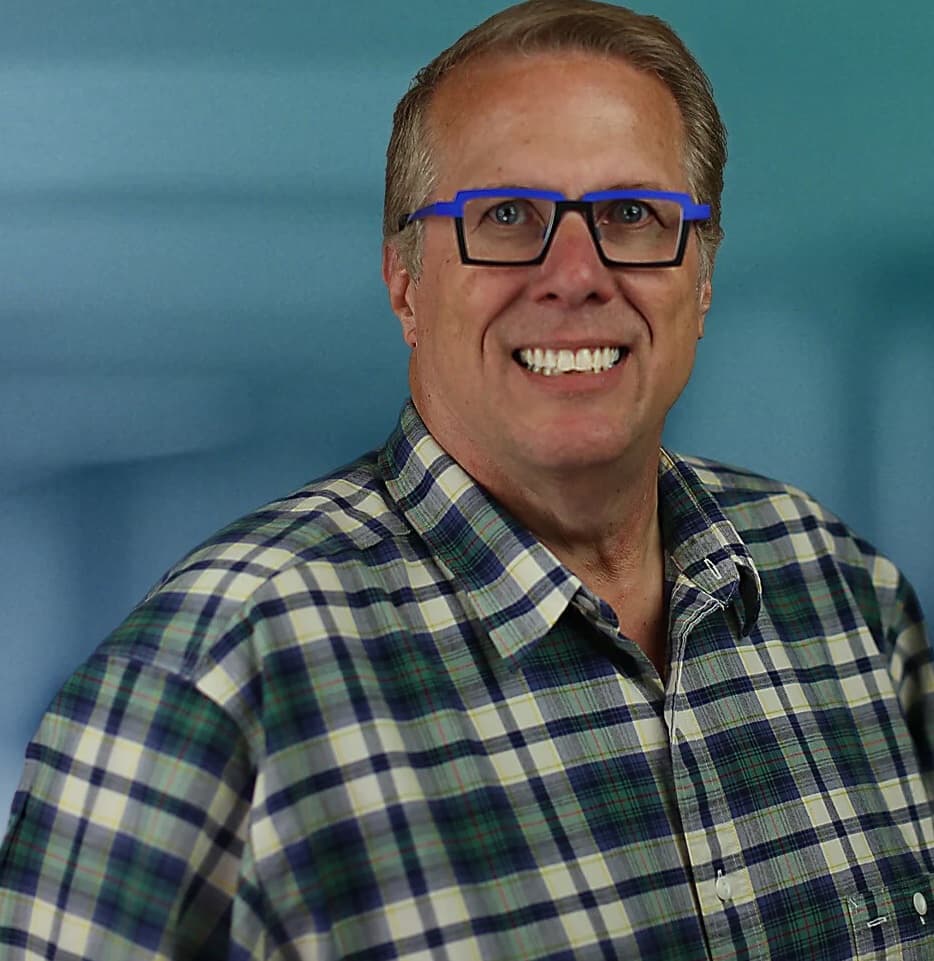
In this episode of Tech Talks Daily, I'm joined by John Snapp, VP of Technology at Intrado. John has spent around 23 years working with cellular, location, and 911 technologies. He explains how a mobile emergency call is located, routed through a dedicated network, and directed to the appropriate Public Safety Answering Point.
We discuss where AI can provide practical support inside emergency communications. Translation can help telecommunicators understand callers without waiting for an interpreter. Real-time transcription can capture details and suggest established procedures. AI voice agents can also handle suitable nonemergency inquiries, giving trained staff additional time for calls where lives may be at risk.
John is clear that emotional emergency calls still demand human understanding and authority. AI can supply information, identify possible synthetic voices, and reduce administrative work, but trained telecommunicators remain responsible for interpreting the situation and directing the response.
Our conversation also examines the infrastructure beneath these capabilities. Legacy 911 networks were designed largely for voice and limited amounts of data. Next Generation 911 introduces IP connectivity capable of carrying text, images, video, and richer location information. John explains how this foundation has made satellite texting possible and why similar capabilities were far slower to introduce using older networks.
Moving to NG911 creates its own problems. Different vendors can comply with the same technical standard while implementing it differently. Calls may also need to move between modern and legacy call centers, making interoperability testing between jurisdictions a major part of deployment.
We also consider cloud resilience, local survivability, connectivity diversity, telephony denial of service attacks, AI generated swatting calls, and the danger of adopting automation before establishing governance. John recommends starting with lower-risk areas such as quality assurance and nonemergency calls, communicating openly about AI use, and expanding only after teams understand the operational impact.
As emergency communications become richer and increasingly connected, how should public safety agencies balance faster innovation with the reliability and human judgment every caller depends on? Listen to the episode and share your thoughts with me.
Useful Links
Connect with John Snapp
Learn more about Intrado.
[00:00:04] Have you ever wondered what really happens after somebody dials 911? And if decades-old emergency infrastructure can support our new world where we have AI, satellite messaging, video and richer location data. A little bit more than a rotary dialing phone. Because I think most of us only think about emergency services during moments where every single second matters.
[00:00:29] And behind those three familiar digits, whether it's 911 in the US or 999 here in the UK, there is a remarkably complex network that connects mobile carriers, location services, call centres, dispatch teams and first responders. But my guest today will say that in the US, around 90% of US 911 calls pass through their Intrado infrastructure.
[00:00:57] And John Snap is our guest today. He's the VP of Technology at the company. And he will explain how the next generation 911 is bringing emergency communications into the IP era. So you will hear where AI can already support telecommunicators through translation, transcription, quality assurance,
[00:01:20] non-emergency call handling, while also keeping trained professionals responsible for emergency decisions. And I also want to learn more about how tech is changing the game here. Satellite texting, collision data, cyber security and cloud services will all depend on reliable new generation 911 foundations.
[00:01:44] So if your organisation operates any service where downtime carries serious consequences, today's conversation will offer a compelling lesson in how to modernise carefully, test interoperability and make sure that the tech supports the human at the centre of every call. But enough from me. You've not tuned in just to listen to me. Let me introduce you to my guest right now.
[00:02:12] So thank you for joining me on the podcast today. Can you tell everyone listening a little about who you are and what you do? Yeah, my name is John Snap. I'm VP of Technology at Intrado. Intrado is a company that does 911 services throughout the United States. About 90% of all 911 calls that are placed here go through our infrastructure. For me, I've been with the company for about 23 years.
[00:02:39] I originally came on the early days of cellular startup companies doing some of the early startup carriers of cellular and progressed on doing 911 services with film and then started doing 911 and location technologies and everything to do with 911 with inside of Intrado. Wow.
[00:03:00] And that's one of the reasons I invited you on to join me today because one of the things I love doing is getting people thinking differently about how technology impacts parts of their world, life and work that we don't associate with technology. And I would imagine that when most people think about 911, it's going to be during the worst moments of their lives.
[00:03:20] So tell me what happens behind the scenes when someone makes that call and where the legacy systems are making the telecommunicator's job even harder than it needs to be. There's been a lot of changes over the years. There's been a lot of changes in the 90s. It really hasn't changed.
[00:03:46] And what they had done as we originally had wireline phones and then we added mobile phones in the 90s, they had to sort of shoehorn in the mobile phones with portability of numbers. You could be anywhere, any type of phone call coming. You could be mobile. They had to make that work into a network that was designed for just wireline. And so we've kludged it together over the years, adding the technologies. More recently, it's been added that we've added.
[00:04:15] We're bringing it up into the modern times. We're adding IP technology to it, utilizing everything with voice, with VoIP to be able to bring it through. But with a 911 call, when you place a call, like particularly on a mobile phone, since that's probably 90% of our 911 calls, it's a pretty complicated system behind the scenes. At the wireless carrier side, we turn on. It's routed very differently than a regular voice call.
[00:04:43] It's handled by the local carrier where it might have gone back to the home carrier for a regular voice call when you're roaming. It goes out and it gets the location in multiple ways of the device. It turns off the – when you dial 911, you implicitly give up your right to privacy. So the phone goes out there and locates it. It uses GPS. It uses Wi-Fi. It uses Bluetooth beacons. It uses cell ID location.
[00:05:09] It uses network triangulation to determine the location of the phone. And it gets these locations at different times during the call. The call is then routed into a 911 network that is a totally dedicated network that's separate than the regular PSTN for regular voice calls. So it's routed into this network. And then based on your location, it routes that call to one of – possibly in the U.S. at least – one of 4,500 911 call centers.
[00:05:39] So we call a PSAP, public safety entering point. So these are the centers that actually answer the calls and can dispatch help. With that call, so we're routing it based on location. It may be down to your – the actual exact precise location. Or if we haven't received that in time, they'll use the cell location. So we always get some form of location. And we use that to actually get us to the right center.
[00:06:04] Because if you don't get to the right center, they may have to transfer it because every center has their police and fire agencies. They dispatch for. And not all of them use the same radio systems or all the same computer dispatch system. So we need to get into the right place. We give them the location. And it routes the call. Then they can update the location. And they can track where it is. And we get additional locations by working with Apple and Google to bring those locations in.
[00:06:31] And so that's the basis of sending – of getting a call to 911. Incredibly cool. We've got a peek behind the curtain there. And the phrase augmented intelligence is one that suggests AI should support rather than replace human judgment. So what tasks do you think AI could safely handle in, let's say, emergency communications? And which decisions must always remain with those trained professionals? Yeah.
[00:06:59] So what we've seen in 911, they're unique calls that are very – usually emotional. There's very emotional calls, not the standard type of calls you get. And so we found that as of today, the human call takers, the absolute best at understanding those and knowing how to handle the calls and respond to them. But they're only one person sitting there. And we see that AI is great to augment them and give them additional information or help them in their job.
[00:07:28] So we see it for helping in translating – doing translations where a caller may come in in Spanish or French and the call taker doesn't speak that language. In the past, they'd have to add on and interpret. That would take minutes, and it may take minutes just to determine the language they are. So now AI helping for translation of that call is great. Transcription, instead of having to type everything down or having a – or later typing what was said,
[00:07:54] using transcription real-time to keep that into the summary of the call is very helpful. Or it also would help pull out information about – they're saying they have a medical condition or a heart attack going on. It can automatically see that and pull up predefined procedures they have for how they help them deal with that emergency situation. We also see a great area is – to help out with – that we're seeing a lot now is a voice attendance.
[00:08:22] Not for handling a 911 call, but 911 centers take emergency calls and non-emergency calls. And many times those emergency calls are about 50% of their traffic. People calling about barking dogs or parking violations or so – or their car had been towed. And so those go to the same call takers in many cases, but they're getting overloaded. And many times the wait time for those are 10 or 15 minutes while you're waiting for a call taker.
[00:08:51] AI agents to take that information and create a ticket, a dispatch ticket, possibly for the barking dog or the parking violation, offloads the workload of the call taker to handle real emergency calls. Those are sort of some of the examples. And I would say one problem that we share here in the UK with the US is that staffing shortages and fatigue are incredibly serious problems in emergency call centers, and I suspect around the world too.
[00:09:20] So how can AI reduce pressure without overwhelming telecommunicators with more alerts, dashboards that could weaken their skills or introduce misplaced confidence in some of those automated recommendations? How do you get that balance right? It's a tough one. Staffing is a real problem here in the US and emergency calls in. Same thing. It's a very tough job. So it's hard to find the right people that can do it well.
[00:09:47] It's hard to keep and retain staff because the difficulties of workload and the types of calls they have. So for one thing, offloading it so they're not sitting there constantly taking the calls. So like that AI agent helps reduce their workload a little bit, helps. We don't want to have AI just be sitting there over their shoulder chatting at them all the time, giving suggestions.
[00:10:10] We look at AI to be there to really help out in the time where they need it, not to be chatty all the time for giving them assistance. They know how to do their job. They're highly trained. They know it well. But to help look up something, to help, I mean, for the idea, I mean, here's an idea. We may have an AI-generated voice call coming into 911.
[00:10:31] There's a problem we have in the US, what they call SWATing, where people are calling 911 to basically want to elicit an emergency response somewhere. It started off with gamers doing it to disrupt the person they were playing with by sending the SWAT team to their house. So this is a real problem with resources, and we see AI-generated voices may increase that. Well, the AI agent can help tell them that this is an AI-generated voice. There's technologies there to do that now.
[00:11:00] So we see those are the types of things to help them out and make their job easier to what they can do. And next-generation 911 is described as the foundation for satellite calling, collision notification, richer location data, drones and AI. And just reading those out there, it shows you just how much the world has changed and how we report incidents has changed too.
[00:11:30] So what can NG911 support that maybe that traditional infrastructure that we talked about earlier just cannot? Yeah, so that old infrastructure that I call kind of the Kludgy system starting to support it really only supported voice. So we could do a voice call across. It was analog, TDM, copper trunks coming into the PSAP, and its data was very ancient data.
[00:11:54] Typically, the data that would come into a PSAP was over a synchronous 9,600 baud modem. We would send 512 bytes, just bytes of data about the call coming across. Well, now we've got a broadband connection coming in. We do text to 911 that can come across the PSAP. We can send pictures. We can send videos. The whole architecture of NextGen, which is called, it's standardized by NENA, the National Emergency Number Association.
[00:12:23] And it's called I3 as the current standard, supports all types of data coming across. So we support voice. We support text. We can do video calls coming across. And so that allows us to do the satellite calls and bring them into the network natively down to the PSAP. So, I mean, that's an exciting thing because we've seen the carriers deploying satellite for satellite calling. Initially, it's just text where they're doing text.
[00:12:51] Well, we've integrated the first part of that to bring text to 911. So in the U.S., we support right now, and some people still don't know about this, but we support to about 80% of the population that if you text to the digits 911, that will go to a local PSAP and they can answer the calls. And it creates a dialogue between you and the texture, between that PSAP and the texture for the calls. They get location. They get precise location like a voice call.
[00:13:19] So we've added with the carriers doing this, we've added satellite calling. So before, it was great in rural areas because an SMS message can get through where a voice call may not. It doesn't need the same signal. Well, now with satellite, it fills that gap where now anywhere that the satellite has coverage, you can get a text message out and get help.
[00:13:45] We saw that being used dramatically here in the U.S. during the fires in California where the phone lines and the cell sites were taken down. The floods of North Carolina was launched to be able to get through where there were no phone lines. It now allows boaters in getting out there. That's a big change to be able to do that. But because we had done next-gen, it was a trivial addition to the network to make it work.
[00:14:11] Where if we'd done this on the legacy networks in the past, like I'll give an example, text to 911, we implemented that on the legacy networks. We did it by making a completely parallel network that effectively was next-generation 911 that only did text. That took us about seven years to get deployed. When we did text to 911 over satellite, it took us just a few months. And before you joined me on the podcast, I was doing a little research on what you're doing here
[00:14:41] and trying to understand the industry a little more. One of the things that stood out to me was phase two deployments require different jurisdictions and providers to work together. Makes perfect sense, but something I've not thought about. So why is interoperability proving harder than just installing the technology? And what happens to callers when one area modernizes maybe faster than its neighbors? Yeah, it's interoperability on the new technology and a standard. It's always a challenge.
[00:15:09] Years ago when I was involved in the standards, the original standards for 911 here on wireless. And I was also an operations guy along with designing the new systems. One of my most hated phrases in the standards group was leave that up to the implementation. That's not part of the standards. And so as we defined the NENA I3, it created what all the messages are, what all the flows are, but not exactly all the details of how they work together.
[00:15:38] So you may have one carrier that implements it slightly different than the other. They both are fully compliant with the standards, but they've done it differently. We've experienced that as SIP. VoIP calling has been rolled out in the U.S. Every vendor did it a little bit differently on their PBXs and their phones. And so they had to work out the interoperability of where it supports, of what it supports. And we're having to go through the same thing with 911.
[00:16:05] And it's not a, it's just a, it's a known entity. It's a known problem. It just means that as we do the first implementation between vendor A and vendor B, we need to work on interoperability. And both of us need to make changes and work together to get that out. And as we're doing so in 911, as we're implementing the next generation, there's the phase one and phase two. Phase one was really the first step. It's just saying, we want to put VoIP in place.
[00:16:34] It's just a standard VoIP that we've already implemented out there for the regular voice calls. And we're going to put that in place first and get, and just replace those legacy analog TDM circuits with IP circuits. Then the phase two says, we're going to take the full step and move to the I3. And that's where there's a lot more interoperability issues. Because with I3, it's not just a SIP call with an invite, with a destination is going to.
[00:17:04] There's a lot of other information about the caller, the location, as part of that message and other protocols. So we just have to work through those to make those work on how you do it. How do you transfer a call? How do you, I mean, it gets really complicated when a call comes in I3, but it has to be transferred to a PSAP that doesn't have I3. How do you go back to the legacy for one of those? So this, it's easy if we could jump, if we could just all jump to where we want to get to.
[00:17:32] But that transition makes it really hard. There's a lot more interoperability we have to do to make that transition work. Your agents aren't producing accurate answers because they don't have a complete semantic understanding of your data. And Denodo is solving this and solving it through semantic consistency. Through semantic consistency, your agents can start making accurate predictions in real time.
[00:17:59] So see what else Denodo can do by visiting denodo.com to learn more. And I was also reading how public safety agencies are predictably adopting cloud hybrid infrastructure, much like all big corporations across the world. But one thing that we don't think about, or many people won't think about, is that they cannot tolerate the disruption that is accepted inside many commercial technology projects.
[00:18:28] So on that side of things, how should they better assess resilience, redundancy, data ownership, and recovery before moving into mission-critical services like this? Yes, it's difficult because with PSAPs, we have a lot of, you know, I said 4,500 more PSAPs that are there. And in the past history, they'd always had their equipment in their backroom, their local data centers. But many times, these may be ones that don't have an IT department.
[00:18:55] And so for them, the idea of moving to cloud has been great because they could even, even if they don't have, they'll get better redundancy than they have when they had their backroom. But other centers had larger, had larger IT departments were able to manage things well. In general, PSAPs don't want to run that, that we see commercial sides where you may say, oh, we want four nines of availability or five nines. They want 100% availability. That's what they all strive to.
[00:19:23] So we know that with cloud, it can help a lot of the centers get more reliability than what they had before because it moves it out of their backroom. But now they have to rely on their IP connectivity, how they can access the cloud, how can they have multiple locations. So their redundancy now, instead of just the copper coming to their facility and the machine spinning in the backroom, is how can they reach a far destination of the cloud location to get access?
[00:19:53] Can they get redundant routes coming in so they can maintain that availability? What happens? I mean, we haven't had a system-wide outage of Amazon AWS network or Microsoft's Azure network being a total system-wide outage. We've had regions that have gone down, regions, but maybe one day we will. And if that cloud content was only in one cloud provider, that system could go down.
[00:20:21] So might you run across multiple cloud providers to give you redundancy on there? Many places we're looking at are as a hybrid approach. They still want systems in their backroom in case their cloud infrastructure goes down, that they still have local survivability and might have some local connectivity. And so what they're really needing to look at is what do they have? What is their infrastructure that they have now?
[00:20:47] What is their support on site that could be able to support some local infrastructure? What kind of connectivity do they have out of their center? I mean, nowadays, we used to be able to say, we're going to get path diversity on these copper paths coming into a PSAP. And so they can make sure that it ran on different cables over different facilities all the way into the PSAP and did diversity. So we'd have what I used to like to call a backhoe fate,
[00:21:16] where a backhoe would dig up the wire and it would go down, you would have two paths. With IP, we can't, even for many of our vendors, we can't guarantee that diversity because we don't really know, they don't always know what path it's going to take. It's more resilient because it can automatically adapt, but we don't know. So looking at what those options are to be able to see what the connectivity is, bringing satellite as part of it. Starlink type connectivity give you for satellite.
[00:21:45] Amazon's putting up their system to give connectivity. So we're starting to see multiple ways of getting past. So it's not just the cloud redundancy there. It's connectivity redundancy, backroom redundancy, all of that. But we've got more options now to make it better for them. And from a security point of view, AI can help detect cyber threats, but attackers can use the same technology against emergency or critical infrastructure too. So which attack scenarios concern you most?
[00:22:14] What keeps you awake at night? And what defenses should agencies be maybe putting into place right now? Yeah, so we see attacks on two fronts that concern me. The ones that we normally think about is just IP attacks coming in, normal cyber attacks. The bad actors are getting more sophisticated by being able to use AI to make the attacks. And we're using AI the same way to detect those attacks and make it more resilient on the edge, on the firewalls and such.
[00:22:42] The other part that we often don't think about that is a problem is on the voice side attacks, AI attacks. So we're pretty well protected with firewall IP, all the enterprises out there getting attacks. But we see two types of attacks that come in on the voice infrastructure. We see telephony denial of service attacks. And we've seen that many cases on PSAPs, both their non-win-run trunks that are coming in,
[00:23:09] where it may be accidental or it may be real from people coming in, making calls and basically utilizing, tying up all the call takers. Or on the non-emergency lines coming in, we've seen this with many of the bad actors, nation state actors out there hitting the admin lines, tying up a PSAP. So basically people can't call in to report maybe a diversion of another crime that's being committed. And then I'd mentioned earlier swatting. Swatting is another one.
[00:23:39] And we see the challenge now that AI is reducing the level of knowledge necessary of what you need to do to make these attacks. And so that's where we see the challenge. It's very difficult with how the U.S. has built their regular phone network, how it's very open to everybody. Anybody can get a phone. Anybody anywhere in the world can get a phone number in the U.S. and call anybody. We've done stuff for robocalling, but it's really hard to see the identity.
[00:24:08] So that network is wide open. It's where the regular IP network was on attacks maybe 10 or 15 years ago. So that's where we are on the voice side, where there aren't as many safeguards to protect us there. That's the one that keeps me up at night. And a lot of people have been rushing into AI projects over the last few years. But when I was looking at your report, that advocates a more evolve wisely approach.
[00:24:34] So how can an agency distinguish responsible caution from delay? And also, what practical sequence should leaders follow when assessing standards, funding, workforce readiness, security, and measurable public benefit? Again, massive balancing act. It's difficult to know what to do. But any advice here? And the thing that we've seen most with adopting AI is they need to look internally and start
[00:25:02] off just looking at policies and procedures, an AI governance model. How are they going to look at it? How are they going to use it? And being what we've seen particularly important is communicating to the people in their area what they're doing with AI and how they're using it, not letting it become coming out in the press about what happens with it. And then it's a good idea is using it as an augmented, looking at the solutions out there that may help them to help the call takers of what they're needing to do with it.
[00:25:31] Like we see the places that's been the most useful for them to start. They're the easiest to start is relating around QA, quality assurance to make sure they're called to. So for the call takers, they want to make sure their call takers are following policy and that they're answering the 911 calls the best they can. In the past, they used to do QA by auditing one or 2% of the calls having the human call taker.
[00:25:57] Using AI to see if they're adhering to policy and giving real-time feedback is one that doesn't cause a lot of problems if you do it wrong. And so it's a good way to get started in understanding what you're doing with AI. The administrative line is also a good use of it for using an agent to answer those non-emergency calls. And so that's what we see the most. Where it starts to become more challenging is when you're starting to give advice to
[00:26:26] a call taker how to handle the call. And you have to be a little more sort of precise on how that's being done and how that may be interpreted by the population out there of, oh, I'm using AI to tell me what to do. And so it's sort of take it slowly, see how it works, look at what all your other piece of what your neighboring piece apps are using, what they're happy with, how it's working for them, seeing how the case studies, but not jumping in, not jumping in too quickly, but
[00:26:56] really creating that background policy or governance model, how you're going to do it, how you're going to deal with privacy, how you're going to deal with communications of what you're using. And I think today's conversation is somewhat of a wake-up call of how we make 911 calls. Now, it's no longer just on a house phone and pushing those three numbers. We're now talking about next generation 911, advanced automatic collision notifications,
[00:27:23] satellite-based calling, AI integration, cybersecurity enhancements, drones as first responders, all require a different foundation. And for anybody listening who we've just set off those light bulb moments and want to find out more about everything we've talked about today, how they can work with you or carry this conversation on, where should they go? So our website is a great place to start and trotter.com. We have a lot of information there.
[00:27:50] We recently created a report, the state of the industry report that's available on our website to download. And that industry report is a lot of what I've talked about here. So it's a report that we used to do years ago that would talk about what's the technology, what's occurring out there in the industry, what's new. And so we've brought that back. This is the second year about it. In that report, we talk about things you talk about, drones as first responders, how
[00:28:17] that's helping the PSAPs be able to deal with officer safety and resources. And a lot of things like that, automatic collision notification, next-gen 911, satellite texting. We go into pretty good depth with that. That's a great place to find general information of what's happening in the 911 industry. And as we're recording this today, people will be listening. And I think you're attending the APCO 2026 over the next few days. Anything you can share about what you're doing there? Yeah.
[00:28:47] So we, at an APCO, we're introducing some of our new products that we have out there. We're talking about our products. We have a cloud-based call handling system for PSAPs to use. That's in addition to our backroom type system, that on-prem solution. Very similar. We're doing our, what we call Viper Answer, which is our AI agent for non-emergency calls. We also, there are typically talking about the AAC, and you touched on that, which is advanced automatic collision notification.
[00:29:16] This is the idea that when a car, when a crash occurs, detailed information about the crash will be able to transfer all the way to the PSAP, including orientation of the car, possible injury severities. And that data can then be sent all the way down to first responders, even down to the hospitals that's receiving the call. So those are some of the new services that we're, that we're starting to talk about. Well, I wish you best to look at the event this week.
[00:29:43] And we've covered so much today and so many big takeaways. And I also love that evolve wisely, balancing innovation with reliability, because in your world, getting modernization wrong is not a business problem. It's a life and death problem. So, so much to take away from that. And just thank you for sharing your story today. Thank you very much for the time. I enjoyed this. I think one of the many things I'm taking away today is, unlike many enterprises inside
[00:30:10] corporate America, a 911 center wants 100% availability. Because when it's a matter of life or death, callers cannot wait for maintenance windows or downtime to finish when they need help right there at that critical moment in their life. And maybe the same reality should shape how agencies approach AI.
[00:30:36] Translation, transcription, quality assurance, and non-emergency call handling can reduce pressure on telecommunicators. But emotional emergency calls still require trained people who understand context, fear, anger, uncertainty, and what needs to happen next. So, John's advice felt refreshingly practical. Establish AI governance. Communicate openly with staff and communities.
[00:31:06] And begin with lower risk applications. Learn from neighboring agencies. And expand only on what the evidence supports. So, a big thank you to John for showing us what is happening behind those three familiar digits. And why NextGeneration911 is providing the foundation for satellite texting, richer data, cloud services, and best of all, faster emergency response.
[00:31:33] But after hearing this conversation, where would you trust AI to assist you during an emergency? And which decisions do you think should always remain human? TechTalksNetwork.com. Please send over your experiences and thoughts and we'll keep this conversation going. But that's it for today. Thanks for listening. Bye for now.