

Who really controls your enterprise technology strategy: your organization or the vendors writing its software contracts?
In this episode of Tech Talks Daily, I speak with Tomás O'Leary, founder and CEO of Origina, about enterprise software vendor lock in, forced upgrades, subscription contracts, and the financial consequences of surrendering control over mission-critical systems.
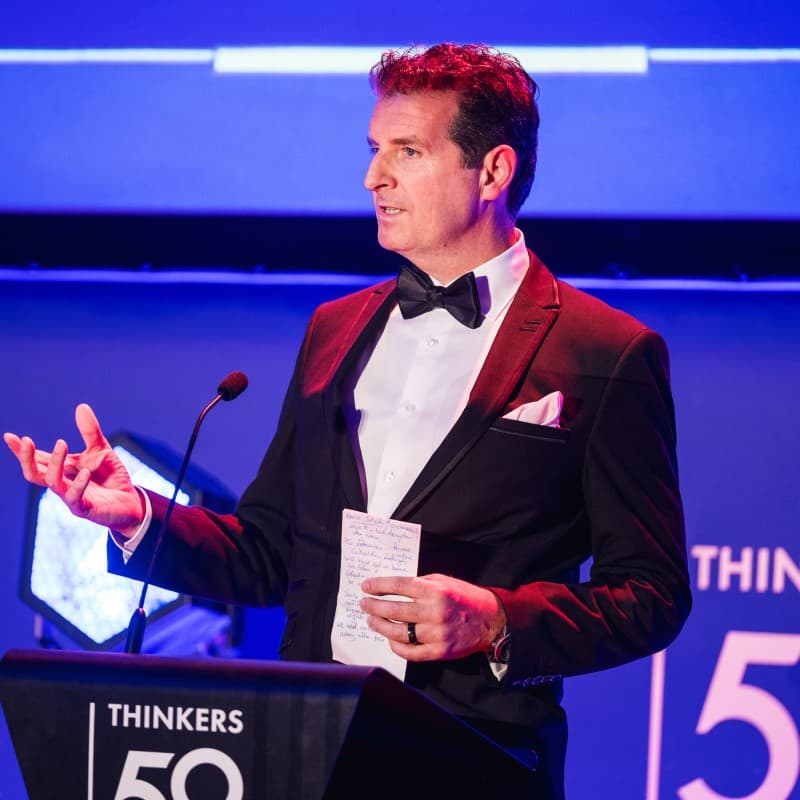
Tomás founded Origina in Dublin after working within the enterprise software supply chain and questioning the value customers received from traditional support contracts. He saw organizations paying substantial annual fees while experiencing poor response times, constant pressure to change versions, and upgrades that produced limited business value.
He argues that the balance of power between technology buyers and suppliers has moved heavily toward the vendor. Companies that previously purchased perpetual software rights are increasingly being encouraged or forced toward subscription models, while complex contract terms and audit risks can make customers feel trapped.
Some Origina customers have described this behavior as a "digital mafia," while one Fortune 50 organization, according to Tomás, uses AI to assess whether suppliers could be acquired by vendors it considers predatory. That business then considers longer contracts as protection against future licensing changes.
However, leaving a vendor does not always require replacing the software. Tomás explains why perpetual software rights and independent support can give companies another option. A system that continues to perform its required business function may not need to be replaced simply because the original vendor has ended support or introduced a new commercial model.
We discuss how leaders should distinguish between technology that genuinely requires modernization and dependable systems of record that could continue operating securely. Payroll platforms, general ledgers, claims systems, and other back-office applications may not require constant reinvention if the business requirement remains stable.
Tomás also describes a European organization spending approximately €1 million annually on a software product. The company estimated that a vendor-required version change would cost €30 million. By moving to an alternative support arrangement, it expects to defer that expenditure while keeping the existing system operational. These figures are the organization's estimates, shared by Tomás during our conversation.
We also discuss centralized technology dependency, outages, software patching, AI-assisted development, and why some companies are returning to internally developed applications for operations they consider particularly important.
Tomás recommends that CIOs create a small team combining technical, procurement, contractual, and legal knowledge. This group should remain close to senior leadership and challenge assumptions before renewals, migrations, or major software changes are approved.
Is your organization modernizing because the business needs to change, or because a vendor has decided that time is up? Listen to the conversation and share your thoughts with me.
Useful Links
Connect with Tomás O'Leary
Learn more about Origina
[00:00:00] The leading issue of agentic AI in businesses right now is ensuring agents act with compliance guidelines. And Denodo applies guardrails across your entire data estate. By aligning your company's data infrastructure under one system, these guardrails perform consistently across your platform. So start scaling your business and start with Denodo. Simply visit denodo.com to learn more.
[00:00:30] Welcome back to the Tech Talks Daily Podcast. Are you ready to bust a few myths and misconceptions today? Good, you came to the right place. Now, quick question for you. What if some of the biggest barriers to your digital transformation efforts are not legacy systems, but actually the very companies that are selling you the software? Well, my guest today is the founder and CEO of a company called Origina. And he described to me recently that enterprise technology are almost part of a digital mafia.
[00:01:00] And by that, he's heard from his customers why forced upgrades, complex contracts and audit threats and fear can all leave a business feeling trapped by the vendors that they depend on. It feels almost like a shakedown. So what is the alternative of locking into yet another expensive contract? Well, today we're going to discuss why old software isn't necessarily bad software
[00:01:24] and also talk about how CIOs can regain control of mission-critical systems without launching into risky migrations. There is so much to get through today. And my guest is also a listener to the show. And also, yes, he's been added to the cool guys I want to have a beer with. I could chat with him for ages, honestly. Great guy, but enough scene setting for me. Let me bring him on to the podcast now and you can join the conversation too. So thank you for joining me on the podcast today.
[00:01:54] Can you tell everyone listening a little about who you are and what you do? Thanks, Neil. Great to be here. My name is Tomas O'Leary. I'm a husband. I'm a father. I'm a friend. I'm an entrepreneur. And I have a company that's trying to change the software world. That's trying to democratize technology for the benefits of the many, not of the few. Well, thank you so much for joining me today. And I know you've listened to the podcast before and you know how I love a good origin story.
[00:02:23] And I was reading before you joined me on the podcast that you founded your company after seeing firsthand how enterprise software contacts were trapping businesses. And what happened that made you realize vendor lock-in was not an isolated procurement problem, but something systemic right across enterprise technology? There's got to be a story there, right? Yeah. Yeah. I mean, I was part of the problem, I guess. You know, I was part of the supply chain.
[00:02:52] I was selling these contracts on behalf of technology vendors and I could see very little value in them. You know, even 15, 20 years ago when I was part of the supply chain myself. So I had a business based in UK and Ireland at the time only. And I could see there was an issue. I would see organizations were cited these contracts, getting very little service on the one hand, getting poor response times.
[00:03:19] They were also being constantly made to change things. So some of that change at the beginning, of course, was good. Some of the change was necessary because actually the functionality that came with the change was really important. But then what happens over time, the changes are really impactful on the business, but don't really actually do anything. They don't see any value. I mean, there's a classic one we've all gone through recently.
[00:03:47] I mean, I can't understand how anyone could take any value necessarily. And I don't know disrespect to Microsoft. It's a great company. But Windows 10 to 11, really, I don't know. I don't see a value. Maybe there is. And if you're really technical, you'll see one. I don't see one. And that goes on. You bring it into enterprise software. So many of those things happen. So, I mean, it is. And it's actually only the tip of the iceberg. It really is only the tip of the iceberg.
[00:04:12] And a question I often ask is, why is it that, you know, software? I was with a founder earlier this morning here in London. And we were talking about this. Technology founders are almost lauded as being amazing. And what about, you know, people in retail or manufacturing or shipping or mining or banking or whatever? You know, really, are we really that much cleverer than them? That our businesses are valued so much more?
[00:04:41] And as a startup or even later on, we get multiples that are much higher. And the argument is that there's the fundamentals, that the growth opportunity is there. And that's true. But then if you dig deeper and you ask, why is that? That's a bit simplistic, I think. You look at what's going on below the surface. And it's really about power dynamics, that's how I see it. And what I mean by that is the power between the buyer. Most industries, there's a balance of power between a buyer and a seller.
[00:05:11] The supply chain and the ultimate, the person spending the money. And it shifts, you know, you can, but there's always choice. And what's happened over the last number of decades in the technology space, that dynamic has completely shifted. And the shift is almost exclusively towards the supply chain. And the supply chain are dictating the terms. It's why actually today you can't even buy software anymore. You're going to rent it.
[00:05:41] Think about it. You know, that's the only, or unless you go open source, you do it yourself. And that's what many companies are starting to realize, that the rental model only doesn't suit them. Because they're losing all their buying power even more. So, yeah, that's what I saw. I mean, obviously, that wasn't, you know, a single day and a single moment. But, you know, as part of it at the time. And then I figured I have to help fix this. I have to help fix this.
[00:06:08] And I am a contrarian, Neil. I'm the type of person that just wants to, you know, if you tell me I can't do that, I go, well, sorry, I think I can. So, that's what I'm trying to do. I absolutely love that. And kudos to you as well for not just sitting around complaining about it, but getting up and doing something about it. And you set off my tech spidey senses when I was reading that you described parts of the enterprise software industry as an almost digital mafia. I love that line.
[00:06:38] And you've got a point there, man. Have we got, what, forced upgrades, opaque contracts, audits, fear used to maintain control? There's so many examples that I know of out there that tick all those boxes. But what does that look like behind closed doors when a CIO is negotiating with a major software vendor? Yeah, actually, I'll come to that in a moment. But you're so right. So, the terminology that you've just referred to there actually didn't come from me. It comes from the customers.
[00:07:05] So, I can't take credit for those terms. I mean, I was with a company in the United States. They're only six weeks ago. And they label vendors as predatory. Not all of them, but many of them. They have predatory vendors. That's what they call them. That's the terminology. And they actually have teams in their organization who specialize identifying of all the companies that they work in their technology supply chain.
[00:07:33] They say, okay, which of these, here's an interesting thing, which of these are likely to be sold to the worst actors out there? I'm not going to name the actors because I don't want to go down that road. But if they're known, and there are known actors out there in the marketplace who companies are saying, huge organizations. This is a Fortune 50 organization.
[00:07:55] They have people in there, and they're using AI to try and predict how likely is anyone in their supply chain going to be sold to one of these vendors so that they can try and figure out, can they lock in a long-term contract so they don't get caught out? Like, this is the sort of stuff that they're doing. And even when we started the business at the very beginning, how we got traction in the company, when I started with literally nothing,
[00:08:23] I used to go to these events, these conferences, and Gartner used to have them, and there were smaller ones all over Europe. They were usually sourcing and procurement ones, but they'd have a vendor management element to it. And the vendor management element was advice and guidance from these experts about how to protect yourself from your supply chain. You know, so it's like being told, you know, I need to know, make sure I don't get poisoned by the coffee vendor down the road.
[00:08:52] Like, honestly, like this is the stuff that, and you go, hang on a second here, this sounds crazy. And people go to these conferences, they're taking notes, you know, writing down, I should be careful of this, I should be careful of that. And I'm going, how did the industry end up in this situation? This is the problem. We've allowed it to happen. And the companies feel, and that's what they feel when you ask the original question, how do the CIOs feel? How do they close doors?
[00:09:18] They're looking at these companies and they're saying, what do we do to protect ourselves from these organizations? And they're supposed to be partners. You know, they're supposed to be partners. It's such an important message and topic to shine a light on. And many tech leaders know they're heavily dependent on a small number of vendors, but they might believe the cost and risk of changing courses is too high, too complex, take too long, too much hassle.
[00:09:44] But how can CIOs regain negotiating power without committing to more expensive and disruptive migrations? Okay. And that's a really good question. I think it starts with a step back. Okay. Because even in your question, there's a fundamental, no disrespect, but a slight flaw. Okay. And what I mean by that is that the assumption is to get away from the vendor, you have to change. As in, you can't run a particular piece of software anymore.
[00:10:14] You've got to run something else. That's actually not true. Because remember, you own the right to use in most cases still, unless it's a cloud version, a rental version, a subscription version. But a lot of your software, you still own the right to use. And people don't go to that. They think, oh, no, but I only have a license to use. Yes, a license is a right to use.
[00:10:36] And it comes with some fundamental rights and obligations on the vendor who sold it to you to allow you to do that under certain conditions. And I think that's the starting point. Not necessarily switch. So, I think it's part of the picture. Of course, you still need to look, okay, what do we do if we stay on this platform? And I think if you start there, then you give yourself more options. Okay. And that is partly curiosity.
[00:11:05] It's partly digging a bit deeper. But also not being afraid to challenge leaders in businesses, CIOs and their colleagues. But also other leaders in businesses who may be listening to your podcast who are not necessarily that technology savvy or maybe work in finance or maybe operations. They need to be just a little bit more curious, you know. I mean, I have an observation of my own industry. I'm a Catholic.
[00:11:34] And I often think that there will be religion in there in a second. You're going to wonder where is this going to go? Yeah, where's it going with it? So, the Catholic Church, as a Catholic, I can say this. I know because I can criticise. You can always criticise your own to a certain extent. I can say we suffer. The hierarchy often over a year suffered from certainty. Yeah. And I think IT leaders often suffer from certainty. They're so sure that the option is to switch.
[00:12:02] And they don't look at other options. And they think, you know, even in our business, can you imagine coming along and saying, oh, you don't own the intellectual property of the software. How can you support it? It's a good question. Of course, it's a really fundamental question. But sometimes the question is framed in such a way is that they already don't believe it's possible. Yeah. That the curiosity to explore, is it possible? And how is it possible? Because if it wasn't possible, I wouldn't have a business.
[00:12:30] So, you know, I wouldn't be dealing with, you know, some of the biggest companies in the world. You know, I wouldn't even be talking to you. So, of course, it's possible. Well, how is it possible? And that's what we're looking for people to do. And I think another trick that we see often is playing on fear, especially with AI hype and people worried about being left behind or behind their competitors. So they tell companies that they must modernize their legacy tech if they're going to innovate and come along for the ride.
[00:12:58] But, of course, many mission critical systems continue to run the business reliably, safely. Don't want to touch it. It just works. So how should leaders decide what genuinely needs modernizing and what they should continue supporting and optimizing? Big balancing act. And it feels like many are caught between a rock and a hard place. But what are you seeing here? Yeah, it's similar to the previous question to a certain extent. But you're right. It does require that cure to understand why am I modernizing? What's the driver?
[00:13:27] All right. And to dig, again, as I said before, you really got to dig a little bit deeper. But yes, the software can run and continue to do what it's doing. But the issues that you're worried about, how real are they? OK, and often it's then to it can be thing of, well, the vendor is telling us there's no they're not going to support it anymore. That is often the reason. OK, and if that's the case, then what options do you have? Could you take it in house?
[00:13:55] Could you, you know, and then if you did that, what does that what's the impact of that? Well, the impact is, well, what happens if there's a security issue? How do we deal with a security issue or how do we make sure if we're regulated, we satisfy the regulator? All are very, very valid concerns. There are options now, not for every piece of software, but there are options. And obviously we are one of them for some of the software that's out there. And there are options for even to take it in house. And there's options even to look at.
[00:14:22] I mean, I spoke earlier today to an organization in the critical infrastructure space who runs one of the global exchanges. And today I see so they have these exact same approach that we use around security. They use what described a defense in depth approach to security where they don't just try and do a patching based approach, which is to fix the problem after the problem has happened.
[00:14:47] They have a shielding environment to shield the critical applications and prevent them from being impacted in the first place. OK. And then patching is a secondary order issue. And in fact, if you can patch the software as we do without touching the source code, it's even better because it has less impact. So it's about trying to figure out if you want to keep the software, why would you want to keep it?
[00:15:11] Is it a piece of software that, you know, I had a debate there only last year with a leader who had worked with Pixar. OK, she'd worked with Pixar, was on their board and we were talking about modernized. This is before they were bought by by I think it was Disney who bought them. And she was we were talking about just a general Pixar need to have the latest technology. And I said, yes, it's true. They would, of course, have needed the latest technology in their animation. But they they didn't necessarily need the tech, the latest technology in their there.
[00:15:41] You know, once they get the payroll system up and running, do they need the latest text? Once the general ledger, how often do we need a new general ledger? I mean, I know they're exciting things and they're really important things, but we don't need one all the time. Or, you know, or a claims platform in an insurance company. You know, you know, how often does that need to be changed? You know, once they're up and running, these systems of record in an enterprise technology stack. We we we love to apply one rule to everything.
[00:16:09] The idea that, oh, security is a big issue. Yes, it is. But you remember in a technology stack, you've got the stuff that's that we're using here. That's the front end. But then behind the scenes in the in the you know, in Scotty's data center of the Starship Enterprise down in the bowels. You know, some of that stuff is never going to see the light of day to any any real external threats necessarily. Of course, you've got to examine that. But it's the approach is different. The approach is and that's where we are. We operate in that world.
[00:16:38] We've where there are concerns, of course, there are different, more sophisticated concerns. But but there's ways of dealing with that. And so it is about realizing what you need to modernize and when and asking the questions. And you did mention bringing things in house there. So I'd love to mention here that AI is, of course, making it easier to bring things in house. And that sparked rumors of a so-called SaaS apocalypse causing share prices to drop at big SaaS companies, making investors nervous.
[00:17:07] But on the flip side, if you do bring it in house, apps can be neglected and not maintained, not kept secure because they're used to somebody else taking care of that. Where do you or how do you see this landscape at the moment and this stories of SaaS apocalypse, et cetera? Yeah, that's a good question. And you can see what some of the vendor software vendors are doing. They're repackaging their products or relicensing them with headless versions so that they can make sure that they continue to make the money.
[00:17:37] Personally, I can tell you what we're doing in our own business because I'm very close to the technology decisions in my own business. We see the underlying platforms like the enterprise technology that we would use in our business. So whether it's the CRM system or it's the financial system or the system that manages all our external resources or a call handling system, all of those are kind of they're already interconnected in certain ways and configured to run our business.
[00:18:07] But we're actually putting layers of technology, AI over them. And actually, I could see them being very stable. All right. So that's that stability is obviously creating a challenge for the companies who make the software because they're saying if we if they don't have something that's relevant in the world of their customers, which is hard for them because they're kind of siloed.
[00:18:29] If you're, you know, even some of the biggest companies in the world, they tend to operate in a certain area, whether in the CRM space or financial space or, you know, whatever the space is or HR. Or they run software and they're very good at that. But they don't. The biggest issue was always integrating these systems together so that you could get one pane at last to see everything really quickly. And some of these tools are allowing you actually see all that data really fast in which with a single view.
[00:18:59] Potentially haven't actually maybe we leave all those systems where they are. We leave them alone. Now, you could go so far as to say, well, maybe we could replace them with with I'm not so sure. Personally, I think that's trick easier said than done. And I know we were saying, oh, and we were ourselves writing. We're using AI to write code. Of course, everybody is. But you've still got to check is it is it is a there's a work because because even humans make mistakes.
[00:19:26] AI makes mistakes because AI fundamentally was was developed by humans. So it's going to make mistakes. All right. So we accept that we got to fix figure out. We have to have the same quality insurance processes or over the code. We just might write, might write, write more code. But will we replace all of these older systems? I don't think so. I think what will happen is we'll keep our have this layer of glass connecting everything. And we'll get what we've always wanted.
[00:19:53] Digital transformation, which is I want to be able to just give me what I need to know about my customers here and now quickly and contextualize it. I get all the data I need done. The back end systems stay. What does that mean, though, for the back end supply chain? Well, they've got an adapt. They should. What they really should do is extend the life of the product. So they continue to make some revenue. But what they're doing is they're doing the traditional playbook. They're looking to lock you in or force you to change it.
[00:20:20] So my advice to CIOs and leaders and procurement people is be really careful of any contract you're signing. Watch those terms and conditions because they'll catch you out. These guys are experts. They've got 25 years head start on you. And they are experts at putting in terms and conditions, knowing that Johnny and this company is going to be gone within the next 12 months. And he won't even know him, but even remember what he signed up. Watch out what you're signing up.
[00:20:49] I'm not saying that happens, but it can happen. You know, make sure you're clear that you don't get locked into a situation where you'd love to have that world. But actually, the back end system, the guys are charging me four times as much as they were two years ago for the same stuff. I'm going, how did you do that? Well, you signed the contract, you know, or you don't own it anymore. You have to rent it from me. And then suddenly, oh, what does that mean? And this happened. I mean, look, it's all over the newspapers and, you know, what Broadcom did when they purchased VMware.
[00:21:19] They literally got their customers and said, we're not going to sell you a perpetual license anymore. You're going to have to. If you want to keep on the journey with this, you're going to have to go to a subscription model. Like literally, it would have flipped like that. And it's caused consternation. And I mean, if it was us as citizens, that's a fundamental right. I want to own it. I could choose. I should have a choice. And we allow these things to happen. Yeah, I've spoke to many disgruntled VMware customers over the last few years.
[00:21:47] It's so true what you're saying there. And you've also worked with major global enterprises facing high-stakes software renewals. And just to bring to life some of what we're talking about here, you don't have to name any names, but can you share an example of how regaining control of existing software spending has helped a company reduce costs, improve resilience, or even fund other tech investments too?
[00:22:11] Yeah, I can give you just a live example of one that's going on right now, an organization here in Europe. And the spend isn't huge. It's below a million euros a year. They're spending with a vendor. We're about to flip them onto our contract. But they've told us that if they stayed on the journey, regardless of what the price was, a million, 1.2, 800 grand, it doesn't matter. It's in that zone. A million a year.
[00:22:40] Over three to five years, it's somewhere between three and five million spend, right? Yeah. But the change, they would have to change the version. It's obliged in the next two years to have it done within three and four years. Yeah. The cost, they've estimated the cost of the change at 30 million. Oof. Yeah, 30 million, right? So we come along, they avoid the 30 million.
[00:23:04] That doesn't mean potentially that in five years' time or seven years' time, they could still have to pay 30 million on something, okay? Yeah. But I don't like you. If the thing does exactly what it's supposed to do, and I don't have to spend the 30 million now, I took 30 million now or 30 million in five years' time, I'd much rather 30 million in five years' time every day. Yeah, 100%. So that's the story.
[00:23:28] And it can run for longer, but that's a real-life example that's happening right now. Wow. And there's many. I could give you hundreds of those. Wow. That's just incredible. There's your ROI right there, eh? This is it. Yeah. We call it the software tax. Yeah, yeah. So that's – we have a – if you're on a website, you'll see us talk about this. This is what we're talking about. It's a tax that people are paying.
[00:23:55] And, you know, they continue to pay the vendor, they'll get taxed because the vendor wants you to change. Because the whole ecosystem survives on change. Like, you've got to remember, we are highly, highly unusual. Like, I don't think you probably have had anybody on your show, listened to lots of your episodes, whose business is based on getting our customers to do less stuff. Yeah. So we figured out how to make money from people doing less, not changing.
[00:24:25] You know, it's bizarre. Love it. It makes it great fun, but it makes it hard for people to understand. I mean, sorry, you're not trying to tell me something new. No. You don't need – okay, go get something new, but don't – not in this area. Do it over there. Of course, we're not anti-investment in technology. We're not anti-growth in the industry. We're about efficient growth. We're about efficient innovation. We're about being smart. We're about being fair.
[00:24:53] We're about changing the – giving back independence to the customer. And another topic I wanted to bring up with you today is the amount of recent tech outages that we've seen that really highlight how dependent businesses and users have become on centralized platforms and from a very small number of tech providers, probably two or three. When one of those goes down, half the internet goes down with it.
[00:25:16] But what should CIOs be doing now to identify dangerous concentrations of dependency and maybe help reduce some of that operational risk? Yeah. Yeah. It's an issue for all of us. I mean, we all saw the crowd strike outage in 2024. There really is – I mean, how many hyperscalers of note are there left now in the marketplace? So there's a serious concentration of power, and it's happening with AI from the beginning.
[00:25:46] You know, usually early on there's lots of players and then three people win and get gobbled up. But we're seeing from the outset there's only a small number of players. So the challenge – you have this concentration of power and you've got to look at what your options are. So in some cases, we're seeing organizations taking some applications and writing them themselves. So they're critical ones. So they're making choices. Well, there's some commodities, I guess you could call it.
[00:26:13] So the commodities they'll buy from your vendors and they'll accept, okay, there's some downside of maybe the concentration there. But the critical stuff to their business. I mean, I spoke to the CEO of a large retailer, wait, six months ago. He's told me they run their entire – so one of the biggest retailers in Europe, they run their entire point-of-sale equipment system is actually their own software. You know, I was quite surprised. I didn't know that. So you're seeing that. I spoke to someone even earlier today who runs an exchange.
[00:26:41] The exchange software is their own software. So people are writing their own software. So that world, I think you're going to see more and more organizations go back to that because of the concentration. Because nobody likes that. That's not good for anybody. But there's also the other issue is you talk about outages. It's not just through concentration. There's the complexity of environments. And go back to what I said earlier, the patch-based approach to software protection is –
[00:27:11] we all saw the Microsoft outage with the cyber attack. I don't know the fundamentals of what happened there. But I know what I've seen in customers, or name any, who've had issues because they've applied patches. They haven't got – they've been able to do it quick enough because it takes a long time. And they have a risk associated with them anyway. There's an outage. Even by applying a patch, it can have a knock-on effect.
[00:27:35] So this – as I spoke about earlier, this defense in-depth approach, which is our approach, is a much more preferable one combined with maybe some homegrown development of your applications and being more strategic about it. So if we do have a CIO listening today, maybe we've delivered that aha moment where they finally realize their company has lost control of their software estate contracts or tech roadmap, for example.
[00:28:03] What practical steps would you advise they take before their next big vendor renewal and maybe have a better chance of regaining leverage to create more freedom and invest more in the business in more important areas? What would you advise those people listening? Yeah, I often think of these things as what would I do if I, in the morning, got a job as a CIO in a big organization?
[00:28:25] And knowing what I know, I mean, the first thing I would do is I would find the most – a small group of very curious, well-knowledgeable people within the organization who are curious. And I'd bring them close to me and start a program of challenging some of the decision-making we're making, particularly around change. Now, not in a confrontational way because we are – so it's about – but you have to have that close to the CIO.
[00:28:53] It's not something you farm out to somebody down below. It's not farm out to a specific group in technology or part of the business. It has to be really close to the CIO or even higher, potentially, but certainly. And I think that they will get huge benefits from that. There's an investment of time. There's an investment of people in this. But the upside is significant. Often I see this pushed down into procurement, and they just are not technically – very few have enough technical knowledge.
[00:29:22] So there's a combination of skills there. There's people who want – and you have to understand how contracts work. So you do need kind of contractual legal people in there. You have to have some technical people who understand the landscape. And you maybe need some people who understand the procurement world in there. So a small elite group who are kind of – with a lot of dose of curiosity and keep them close to the CIO. And I'd also add, you don't need to do any of this stuff on your own.
[00:29:51] And yet, as a global company helping Fortune 500 enterprises regain control of mission-critical IBM software environments, challenging the dominance of traditional vendor lock-in models, a lot of people are going to be listening, wanting to find out more information about what you do, how you might be able to help, et cetera. So for anyone listening, where can they find out more about you and your team? Where should I point everyone? Well, for me, come to – you'll find me on LinkedIn. That's where I guess I hang out.
[00:30:19] That's my social media platform of choice. I now have a sub stack. I've started about two months ago. I started a sub stack. So it's very new. But I've started writing because I think it's important to get my message out there. I love to be challenged. You know, I love to be told there's a different way. And of course, yeah. And we talked earlier about me being in the United States recently in Wyoming. I mean, I had a great debate with a guy who had a different view. And I kind of – I moved and he moved.
[00:30:49] And that's really good. You know, it's really good. So LinkedIn, sub stack or original.com is our website. There's a lot of content up there. You can find my details up there. And I'm always happy to talk to anybody who has a question on this. And anybody who comes through your show, Neil, I would love to chat to them. Awesome. I'll add links to everything you mentioned, plus a few other links as well that I think people will find useful.
[00:31:14] And I just love how you've talked about digital transformation today, not in buzzwords or acronyms and all the other speak that we often see in tech. So I just love this real human consequence of software dependency and things we take for granted and just keep hitting that renew button. So if anything comes out of today's podcast, hopefully businesses listening can stop doing that and start thinking about what they do before locking themselves in even longer. But thank you so much for shining a light on this. Really appreciate your time.
[00:31:44] Thank you. Thank you, Neil. I appreciate it. Enjoy your show. Big thank you to my guests for raising a fascinating question about who really controls your enterprise technology. And I love this argument that businesses shouldn't be forced into expensive upgrades just because the vendor decides that the clock is running out. Especially when mission critical software is still doing exactly what the business needs it to.
[00:32:10] And the good news here, of course, is regaining control of these systems could dramatically reduce costs. I mean, we heard a great example of reducing a cost of 30 million there. But not only that, also improve resilience and free up money for technologies that genuinely move the business forward. So maybe the smartest transformation strategy isn't always just ripping everything out and starting again.
[00:32:36] Sometimes I think it's about taking a step back, knowing what still works, what needs to change, and refusing to let some third party make that decision for you. But I'd love to hear your thoughts on this. Are your enterprise software vendors helping you transform? Or has your dependency on them become one of your biggest obstacles that's standing in your way? We've heard some great examples today and a few solutions around it. But I'd love to hear what's happening inside your organisation.
[00:33:07] And you can get hold of me by simply popping by techtalksnetwork.com. You will find over there 4,000 interviews across eight podcasts. There's also an event calendar. If you want to meet me with whether it be a hot coffee or a cold beer, have a look at it. See if I'm in a town near you and we can grab a few minutes on a show floor somewhere. But that is it for today. So thank you for listening as always. I'll be back in your podcast feed before you know it. So we'll meet here. Same time, same place tomorrow. Bye for now.