
Have you ever wondered whether the skills that build a company are the same skills needed to scale it?
In today's episode of Tech Talks Daily, I sit down with Hadi Moussa, the newly appointed CEO of Oyster, the global employment platform helping businesses hire, pay, and support talent in more than 180 countries. The conversation comes at a fascinating moment for the company, following founder Tony Jamous' decision to step into the Executive Chairman role and hand over the CEO position from a place of strength rather than necessity.
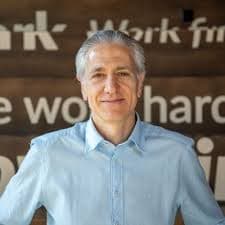
What makes this leadership transition particularly interesting is that it challenges many assumptions about founder succession. Rather than waiting for investor pressure, market turbulence, or burnout, Tony recognized that the next chapter of Oyster's growth required a different operational skill set. Hadi shares what he learned from a succession process that centered on mission alignment, alongside leadership assessments, case studies, and extensive feedback.
We also explore Hadi's own journey from Lebanon to leadership positions at Facebook, Airbnb, Deliveroo, Coursera, and now Oyster. His personal experience of leaving home to pursue opportunity has given him a deep connection to Oyster's mission of making global employment accessible regardless of geography.
The discussion moves beyond leadership transitions and into the future of work itself. As artificial intelligence reshapes hiring, productivity, and workforce structures, Hadi explains why he believes there is a real risk that AI could concentrate opportunity within a handful of established technology hubs. He shares Oyster's vision of using technology to more broadly distribute opportunity, enabling companies to access talent wherever it exists while maintaining trust, compliance, and human support.
We also discuss what businesses continue to underestimate about managing distributed teams at scale. From culture and communication to trust and compliance, Hadi argues that remote work success requires far more than technology alone. Companies must be intentional about how they build relationships, create alignment, and support employees across borders and time zones.
For founders and business leaders, this episode offers thoughtful lessons on self-awareness, leadership evolution, and knowing when a company's needs may outgrow the strengths that originally built it. It is a conversation about growth, opportunity, and the difficult decisions required to put mission ahead of personal attachment.
How should leaders know when it is time to pass the baton, and can AI help create a more globally distributed future of work rather than concentrating opportunity in a few select places? Share your thoughts and join the conversation.
Useful Links
Visit our Sponsors
Check out the Nordlayer Browser
[00:00:00] - [Speaker 0]
This month, I'm partnering with NordLayer. And if you are running a business right now, you may have noticed there's a quiet shift happening, and that is your company doesn't live inside your network anymore. It lives inside the browser. That's where your SaaS apps sit. That's where your data moves.
[00:00:19] - [Speaker 0]
And increasingly, that's where attackers are focusing their attention. So NordLayer has just launched its new business browser, and it's designed specifically for small and medium sized companies that need visibility and control without the overhead of enterprise security tools. What I like here is the balance. You get advanced protection, better compliance, and full visibility into how your team is working online, but without slowing anyone down or forcing them to learn anything new. So if you wanna see more about how it works, please head over to nordlayer.com/browser and check it out, and let me know your thoughts.
[00:01:00] - [Speaker 0]
But now on with today's show. What happens when the future of work collides with AI, global hiring, and the changing expectations of an entire workforce? Well, my guest today is the new CEO of Oyster. If that name sounds familiar, they've been on here many times before, and they are a global employee platform helping companies hire, pay, and support distributed teams in more than a 180 countries, all without needing local legal entities. My guest today brings leadership experience from companies far and wide from Meta, Airbnb, Deliveroo to Coursera.
[00:01:43] - [Speaker 0]
But what makes this conversation particularly interesting is how personal the mission is for him. He grew up in Lebanon, experienced firsthand the gap between where talent exists and where opportunity is often concentrated, and that very lived experience is now shaping how he thinks about distributed work, leadership, and the role AI could play in democratizing global opportunity or concentrating it further into a handful of privileged tech hubs. So we will cover everything from founder succession, mission driven leadership, remote work culture, AI enabled hiring, global payroll infrastructure, and why trust and compliance might become even more important as businesses race to automate everything around them. What I'm saying is we got a lot to get through today, but enough for me. Let me introduce you to my guest now.
[00:02:41] - [Speaker 0]
So thank you for joining me on the show today. Can you tell everyone listening a little about who you are and what you do?
[00:02:48] - [Speaker 1]
Yeah. I mean, first of all, thank you for having me on on the show. Let me start by kind of Oyster specifically and what we do at Oyster. So we are a a global employment platform, and what we do is we make it easy, make it seamless for companies to hire, to pay, to care for any distributed team members anywhere in the world, so in over 180 countries, without having to set up their own legal entities. I joined Oyster about four months ago as CEO.
[00:03:22] - [Speaker 1]
My past to Oyster is, you know, I would call it kind of very personal. So I grew up in Lebanon, and like the founder of Oyster, Tony, I eventually left the country because, you know, what I wanted in terms of opportunity, in terms of career, wasn't accessible there. And I left and I, you know, moved around to many different places. I spent the last kind of number of years helping companies scale, especially as they were looking to expand internationally. So I spent some time at Facebook, at Airbnb, Deliveroo, and Coursera, and most recently I was the CEO of another HR tech company called Kupol before coming here to Oyster.
[00:04:05] - [Speaker 1]
So look, I mean, when the opportunity came to join Oyster, it it did feel like the perfect kind of intersection between the experience that I've had scaling companies and where Oyster is at right now, but also kind of this, you know, this almost desire, this personal goal of making sure that people don't necessarily have to make the the same choice that I've had to make between, you know, their home, their community, and also opportunities and and carriers. And so that's why it felt, you know, that, this is the the right opportunity at this point in time.
[00:04:41] - [Speaker 0]
Well, huge congratulations there. And your founder, you mentioned Tony. He's a friend of the show. He's been on here Right. Several times over the years.
[00:04:49] - [Speaker 0]
And one of the things that stood out to me is most founder CEO transitions happen during a a period of pressure, investor tension, or burnout, but he chose to initiate this transition from a complete position of strength to Yeah. I'm curious. Did he I mean, you must have many conversations with him. Did did he find separate his identity as founder from the operational needs of a business? I know he's a very pragmatic guy, but Yeah.
[00:05:16] - [Speaker 0]
Tell me about that that decision that he made there bringing you in.
[00:05:19] - [Speaker 1]
I think, look, I I'm sure it was a really difficult decision. We spent a lot of time, you know, talking about the actual transition as we were going through the process. Once the decision was made, we also spent a lot of time making sure there was also full alignment in terms of how we think about the especially the mission of the company. That was really important. I think for him personally, he, you know, realized at one point that, you know, he had the self awareness in a way to realize that maybe his role as founder, as the person who's driving the mission, as also even the biggest shareholder, was different from necessarily his role as a CEO, right, and maybe the key skills that were needed at this specific point in time for Oyster to continue to scale.
[00:06:05] - [Speaker 1]
So I think it was kind of a a very rational decision that way, and he initiated it, to your point, from a place of strength. I'm sure emotionally, though, it would be a hard decision. I think he's I've heard I've heard him compare it to almost like his daughter, right? And at some point, he's, you know, passing his daughter over at the altar or something. And so emotionally, it can be quite difficult.
[00:06:29] - [Speaker 1]
But I think rationally, when he thinks of his role as not just being the CEO, but also as being, you know, the shareholder again, of being someone who cares very deeply about the mission and wants to prioritize the mission. That's where he felt like, you know, finding people or a person with the right skills to take Oyster to that next stage was the right thing to do.
[00:06:52] - [Speaker 0]
And as someone that's been following that journey from very early on, it's great to see how it's evolved an incredibly cool story. And as for yourself, you've held leadership roles at companies like Facebook, Airbnb, Deliveroo, Coursera to name but a few. But what was it that convinced you that Oyster was that right opportunity at this at the stage of your career now, especially as AI is reshaping global work and talent distribution, etcetera. What was it that that convinced you? What attracted you?
[00:07:22] - [Speaker 1]
I think look. Many things. I actually saw the need for Oyster long before I had heard about Oyster itself. Right? I I talked a little bit about kind of my background and, you know, where I come from.
[00:07:35] - [Speaker 1]
And, you know, this realization that I, you know, I could see that talent was everywhere, but, you know, opportunity is not. And what this company was trying to solve is to make sure that opportunity was more distributed. And then as I worked at many of the companies you mentioned, we were looking to scale internationally in many cases. And I saw the need for something like Oyster, a solution like Oyster, from, you know, give you some examples, Facebook, when we were thinking about expanding into The Middle East, we relied on a local agency, right? When Airbnb was managing Africa, we set up a team in South Africa, and again, we had to rely on local support there to be able to do that.
[00:08:19] - [Speaker 1]
Same with Coursera, you know, as we were expanding into France. But in all of these cases, the level of service, the level of support that was provided, for me, it felt like there was a gap. Also, level of the technology, the platforms that were being used, it felt that there was a real gap in the market. Right? And so that's kind of, obviously, as the industry started to evolve, Oyster was founded about six years ago or so, there was a clear gap in terms of companies that were scaling, how they could be better supported as they go, you know, international and, you know, build their their distributed teams.
[00:08:59] - [Speaker 1]
And when I started the conversation with Oyster, for me, again, what stood out was not just the product itself. It was they had a very strong point of view. Right? This is It wasn't just about how can we be the most efficient, it was about how can we expand opportunity, how can we provide that exceptional level of service while having strong technology. And for me, that was clear that that was, you know, lacking in my previous experiences at Facebook, at Airbnb, and at Coursera.
[00:09:28] - [Speaker 1]
And then I spent time, you know, getting to know the team, getting to know the board, Tony, and, you know, I realized that this is not just an interesting business. This I really wanted to be a part of this. And going back to the end of something you mentioned in terms of AI, like, what's really interesting about Oyster right now, it it is very much at the intersection of some really big trends, Whether it's remote work, whether it's cross border compliance, whether it's AI transformation, there is no doubt that AI is redefining the work that needs to be done. And I think for us, it's not just about automation. We want to be that trust layer, that compliance layer, where we can make sure that AI driven work is also creating global opportunity.
[00:10:17] - [Speaker 1]
One of the big risks potentially is that, you know, AI driven work actually gets more concentrated in traditional tech hubs. We see this as a really big opportunity to drive global opportunity. We believe the talent is there, and we want to help companies and customers to be able to hire that AI driven talent anywhere in the world.
[00:10:39] - [Speaker 0]
And Oyster is a company that has always positioned itself as a mission driven company focused on things like global employment equality. And as AI inevitably changes hiring, productivity, and workforce dynamics alike, how do you ensure that the tech expands opportunity globally rather than just focusing on a a handful of tech hubs? I would imagine it that could be quite a challenge in itself.
[00:11:03] - [Speaker 1]
Absolutely. And I think, look, it's I think it's a it's a critical risk, and it is a big risk that I don't think we talk enough about at this point. And if we are not very intentional about it, you know, I absolutely agree that AI can concentrate, like, wealth and opportunity even more in some very specific privileged geographies. Look, at Oyster, we see it, actually, we see AI as a tool to democratize access, and that's what we are here to do. You know, we see our role as this, almost think of it as the infrastructure of record, right?
[00:11:39] - [Speaker 1]
That makes it easy to hire a brilliant engineer in The Philippines or in India, an AI specialist in Colombia, right, as it is to hire someone in San Francisco right now. AI can be a true enabler for our own business, right? It can really help us streamline, you know, complex global payroll compliance, etcetera, and delivering a high level of service at the same time. And if we do that, then we think we can lower the barriers again for companies to be able to look internationally. If you look at where we are today, we have roughly about 42% of our team members on the platform who are located in emerging economies.
[00:12:21] - [Speaker 1]
And again, our goal is to continue to expand that. And our goal is to use AI to scale that impact, distribute that opportunity at a more global level.
[00:12:32] - [Speaker 0]
And your succession process there includes a 360 degree feedback, real operational case studies, and a very heavy focus on mission alignment. So looking back, what's that process teach you about leadership? Anything that surprised you most about this?
[00:12:51] - [Speaker 1]
So, I mean, look, I I think the the key thing as part of that process I don't know if it was surprising, but I think what was really important was that mission alignment. Right? That, you know, you could say a lot of the rest of the process is typical of what you do in this case. You kind of do the feedback, you go through a case study, you understand kind of what the person coming in, how they think about the strategy, etcetera. But the mission alignment piece was really important in this case, and it was really important because Oyster is a mission driven company.
[00:13:23] - [Speaker 1]
Tony was very mission driven, as well as as a founder. And I think his perspective, which I agree with, is that's something that's very hard to teach. Mission alignment is something that's very hard to teach, right? It's, you know, you need someone that kind of where the mission deeply resonates. And in this case, because it was a lived experience for myself as it was for Tony, the mission is not an abstract thing.
[00:13:51] - [Speaker 1]
It's not some sort of initiative that you launch. It's effectively fundamental to how you make decisions, right? So not for me, the way I treat it, it's more of a filter effectively. It shows up in the trade offs that you want to make, what you decide to build, what you decide not to build, where you invest, where you don't invest, you know, how you treat customers, how you treat team members. And I think having that personal experience keeps you really anchored, because you've seen what it's like almost to be on the wrong side of opportunity.
[00:14:27] - [Speaker 1]
And so, when you have to make tough choices and you inevitably have to make those tough choices, the mission helps you choose the path that makes the most sense. And again, the reason why this is really important and that mission alignment is really important is we're also in this lucky position as a company where if we drive the business, right, if we drive our metrics, if we drive our revenue, then we also are driving our mission, and the mission and the business kind of fully aligned in this case. But for me, that was the key thing that maybe was, I wouldn't say necessarily surprising, but the extent to which that was really important and a key part of the process was, I think, beyond maybe what I've seen in other similar roles.
[00:15:15] - [Speaker 0]
I'm glad you said that because one of the things that stood out in your announcements was this idea that, as you said, mission alignment is something that you cannot simply teach. And in a a world increasingly driven by metrics, growth targets, operational efficiency, how important are things like shared lived experience when when building leaderships teams for globally distributed companies? Again, a very nice problem and challenge to have.
[00:15:40] - [Speaker 1]
Yeah. I think it's it's fundamental because then you really understand the problem. You can really, you know, align with the the the solutions that you are trying to build. I think, you know, to your point, in a world where it's, you know, we are driven by metrics, we want to drive efficiency, having kind of a leadership team that also understands the human stakes, right, of what we are trying to do, of global employment specifically, how, you know, almost like the freedom that you can create when you are able to have a meaningful career at home, or at least the choice of having that career and that opportunity at home. I think that helps you make sure that any operational choices that you are making are also mission aligned.
[00:16:26] - [Speaker 1]
Right? And the way that you are building, you would have that empathy for the end user, for the person, for the team member on the other side of this. And it also kind of helps you understand from, you know, the customer perspective too. So I think that kind of empathy, that appreciation for the problem is something that's very hard to teach. And that's why, you know, again, we we talk about the fact that this mission alignment cannot be taught.
[00:16:54] - [Speaker 1]
It's something that needs to be lived. And if it's lived, then it's more likely to be really embedded in the choices, in the operational choices that we make as a business.
[00:17:04] - [Speaker 0]
Big thank you to Denodo for supporting the Tech Talks Network and making these conversations possible. Because when your lakehouse stores the data, the real challenge is getting that data where it needs to go and faster. And your lakehouse stores the data, but Denodo helps deliver it faster. So with real time access, built in governance, and a business ready data marketplace, Denodo can help your teams unlock insights without costly duplication. And you can learn more by simply visiting denodo.com.
[00:17:41] - [Speaker 0]
And I think something else that stands out about Oyster right now is that you operate at the center of several huge trends such as remote work, hybrid working, AI enabled hiring, cross border employment, distributed teams, compliance, global payroll infrastructure, etcetera. And I'm curious from everything that you're seeing and the conversations that you're having, what is it that you think businesses still underestimate about managing distributed teams at scale this year? Are you hearing are you seeing any trends there?
[00:18:12] - [Speaker 1]
No. I think look. I would say in general, they underestimate the kind of the the complexity of the the trust and the compliance that you need at scale. As you if you have a few remote hires and you're really trying to scale to a global workforce, to a globally distributed workforce, the stakes just grow kind of exponentially over time. And I think I see many companies, from conversations I've had, that are trying to solve this problem with pure automation.
[00:18:42] - [Speaker 1]
Right? Like, let's try to automate this process as much as we can, And that, you know, will make it very efficient for us, that will solve the problem. I think what they miss in this case is employment is actually deeply personal. It's one of like your key relationships during your life, right? And when there are complex cases, when there are sensitive issues that you need to deal with, you can't just leave it to automation or to a chatbot effectively.
[00:19:10] - [Speaker 1]
You need a partner that can deliver both, you know, an AI enabled platform technology is really important, but also on top of that, you need a, you know, you need the human expertise to help you, you know, to walk through it. But we think, you know, ultimately trust in this industry is really important. And, you know, if you want to build a distributed team, I think that element of trust is really key. And I think the I reflect a lot on how we operate at Oyster, right? We are a fully remote, fully distributed company.
[00:19:45] - [Speaker 1]
We have 500 people across 70 different countries. I think to be able to manage a globally distributed workforce like this, you also need a culture that's based on trust, a culture that also really cares. The people that you need to, you know, hire, again, we go back to the discussion we had earlier on mission alignment, they really need to care about the company, be really motivated. And in addition to the culture, I think the right infrastructure and tools also need to be in place to make it possible. In a way, you can't just decide to be remote.
[00:20:21] - [Speaker 1]
Right? Like, you need to be very intentional about it. How you build that culture, how you communicate, it's very different, you know, the communication, the tools, what you use from, you know, being in the office versus being fully remote. How you create connections between people, how you manage performance. This is, it's a very different approach than, you know, when you are operating in a single office.
[00:20:46] - [Speaker 1]
And if these are not in place, I think it's very hard to operate as a globally distributed team. That's where you start to see some companies maybe underestimating how intentional they need to be about this. And then you start to see some companies calling people back to the office. But I think if you put these key elements in place, if you are very intentional about the culture you are building, the infrastructure that you have to be, then that immediately opens up your access to talent at a global level, and it allows you to manage and drive a, you know, high performing, still fully distributed organization.
[00:21:24] - [Speaker 0]
And I'm curious, since stepping into the role, what is it that excites you about your role of the company, the technology available here, and everything you're working towards, your your grand mission, etcetera? What what excites you about everything now?
[00:21:39] - [Speaker 1]
Yeah. Look. I I think, I mean, what excites me is, like, the impact that we can have as a company. Right? We, you know, We are able to drive more opportunity, distribute more opportunity at a global level.
[00:21:52] - [Speaker 1]
I genuinely believe there is talent everywhere, and the infrastructure that we are building would enable that talent to access opportunity, would also help customers find that talent wherever it is in the world. I think the second thing which, you know, I guess is an obvious one as well is some of the trends we are seeing with AI are also exciting, right? There are big questions in terms of how AI is going to impact jobs and impact roles over time. But I think, you know, there are two things. One, I do believe that this is an opportunity to expand that, you know, AI opportunity at a global level.
[00:22:29] - [Speaker 1]
I do believe we can play a big role in terms of being that infrastructure that helps companies find that AI talent at a global level. I also think it can help really improve our service levels significantly, the way that we deliver our service, you know, the way that, you know, we can be more responsive to our customers, the way that we can service information to our customers to help them make those choices, while still having the human in the loop for these really important touch points where human level service is important. So for me, are kind of really critical elements and exciting opportunities to work on. And we're, you know, having come into this role three, four months in now, we're really thinking about, you know, the long term plan from here. So how do we build beyond kind of this basic layer of infrastructure that we have right now, to even go maybe further up the value chain and help companies find that talent.
[00:23:28] - [Speaker 1]
You know, if we are able to do that, then we are going to increase the availability of that opportunity at a global level. So I think what's really exciting is there are we do see a lot of opportunities to grow beyond kind of the very strong infrastructure that we have built right now. And a key part of, you know, my role coming into, and there's the CEO job at this point, is to help define that vision, help define that north star for the company.
[00:23:59] - [Speaker 0]
And we will have a lot of founders, leaders, CEOs, etcetera, listening to our conversation today. And if some of those people are listening and maybe nodding their head in agreement, and maybe they know or secretly know that their company is starting to outgrow their leadership style, what what advice would you offer to in everything from evolving roles, putting that long term mission ahead of personal attachment, and any everything in between to help the company grow. Any advice that you would you would offer there to those people listening? Because you you're further ahead. It's something that we see a lot in the business world, but you're further ahead.
[00:24:34] - [Speaker 0]
You've been through a lot of this. So any advice you'd offer during that transition?
[00:24:38] - [Speaker 1]
I think, look, it's we touched a little bit on it before when we talked about how, you know, Tony approached this transition. I think that self awareness piece is really important. Right? To realize that, you know, again, your role as a founder, your role as the person who really wants to push that mission might be different from your CEO role. And having that awareness to ask the question, like, is it are you still the right person with the right operational skills that are needed for that next phase of scale?
[00:25:10] - [Speaker 1]
I think these are important questions to continue to ask yourself, but not only ask yourself, ask the people around you. Think make sure that you are hearing the feedback from your team, hearing, you know, the feedback in terms of what are maybe additional skills or things that you need to build. You might still decide that you're absolutely the right person, but at least you know where the gaps are, right? And what are those things that you need to build to take the company through that next phase of scale. The other piece is, you know, if you want to kind of initiate that transition, there is a lot of value in initiating it from a place of strength, right?
[00:25:48] - [Speaker 1]
Not of pressure. And I think for founders listening, does provide a really big advantage to also the person that's coming after you, right? When you hand over the keys and the engine is still working, right, your successor can, you know, immediately come and think about that future, build that longer term plan. They're not spending their first year, eighteen months, to fix maybe some of the constraints or trying to navigate the crisis. And doing that transition from a place of strength, knowing that, you know, maybe there are other skills that are needed at this point, can really enable that next person and enable the company longer term.
[00:26:29] - [Speaker 1]
So in a way, it's more about viewing maybe leadership as not kind of necessarily a permanent state. It's more like, who is the right person for this specific chapter? And ultimately, if you genuinely believe that the mission is bigger than yourself, then you need to make sure the company has the right leader for this current stage, for the current complexity, to really drive the success long term. Again, you might still be absolutely the right person and you need to develop some specific areas. But I think that's kind of the the kind of self awareness, maybe deep reflection that you need to do at different stages of the company.
[00:27:13] - [Speaker 0]
Well, that's a powerful moment to end on, and I wish you the best of luck for the future. It'd be great to get you back on next year, see how things have grown and some of the things that you've implemented there and see how the company continues to evolve. But more than anything, for anyone listening that would like to continue this conversation, connect with you or your team, or just learn more about Oyster and the journey you've been on, anywhere in particular you'd like me to point everyone?
[00:27:38] - [Speaker 1]
Yeah. I think LinkedIn. Please connect on LinkedIn, and we'd love to continue the conversations.
[00:27:44] - [Speaker 0]
Perfect. I will add links to the website, your LinkedIn, and the company's LinkedIn. I urge people to check that out. But more than anything, thank you for sharing your inspiring story today. It's something that so it will resonate with so many people listening, but thank you for sharing your journey.
[00:27:58] - [Speaker 1]
Thank you. Thank you for having me on the show.
[00:28:01] - [Speaker 0]
So a big thank you to my guest for sharing such an honest and thoughtful perspective on leadership, opportunity, and the future of distributed work. And one of the many things that stayed with me after the recording was this reminder that technology alone doesn't automatically create equality. AI can absolutely expand access to opportunity, but only if companies intentionally build the infrastructure, the culture, and trust systems need to support people wherever they are in the world. And I also thought this discussion around founder transitions were fans fascinating too. And something quite refreshing about hearing leadership framed as stewardship, especially for a particular chapter of growth rather than something tied permanently to identity or ego.
[00:28:52] - [Speaker 0]
And perhaps most importantly, this conversation reinforced something that I'm hearing more and more often on this podcast, and that is technology is everywhere, but opportunity still isn't. And the companies that figure out how to close that gap responsibly, they could be the one shaping the next era of global business. So if you'd like to learn more about Oyster or connect with my guest, I'll leave links to everything in the show notes over at techtalksnetwork.com. Let me know your thoughts after listening. And have a think, is AI creating more a more distributed future of work, or are we at risk of concentrating opportunities even further?
[00:29:33] - [Speaker 0]
One to think about. But that is it for today. So thank you for listening as always, and until next time. Don't be a stranger.