

What does it actually take to move AI from experimentation into something a business can depend on every single day?
Recording live from the show floor at Qlik Connect in Florida, I sat down with Qlik CEO Mike Capone to cut through the noise and get to the reality behind enterprise AI in 2026. Because while the headlines are still dominated by rapid innovation and new capabilities, many organizations are quietly facing a different challenge. They are struggling to turn AI ambition into measurable outcomes.
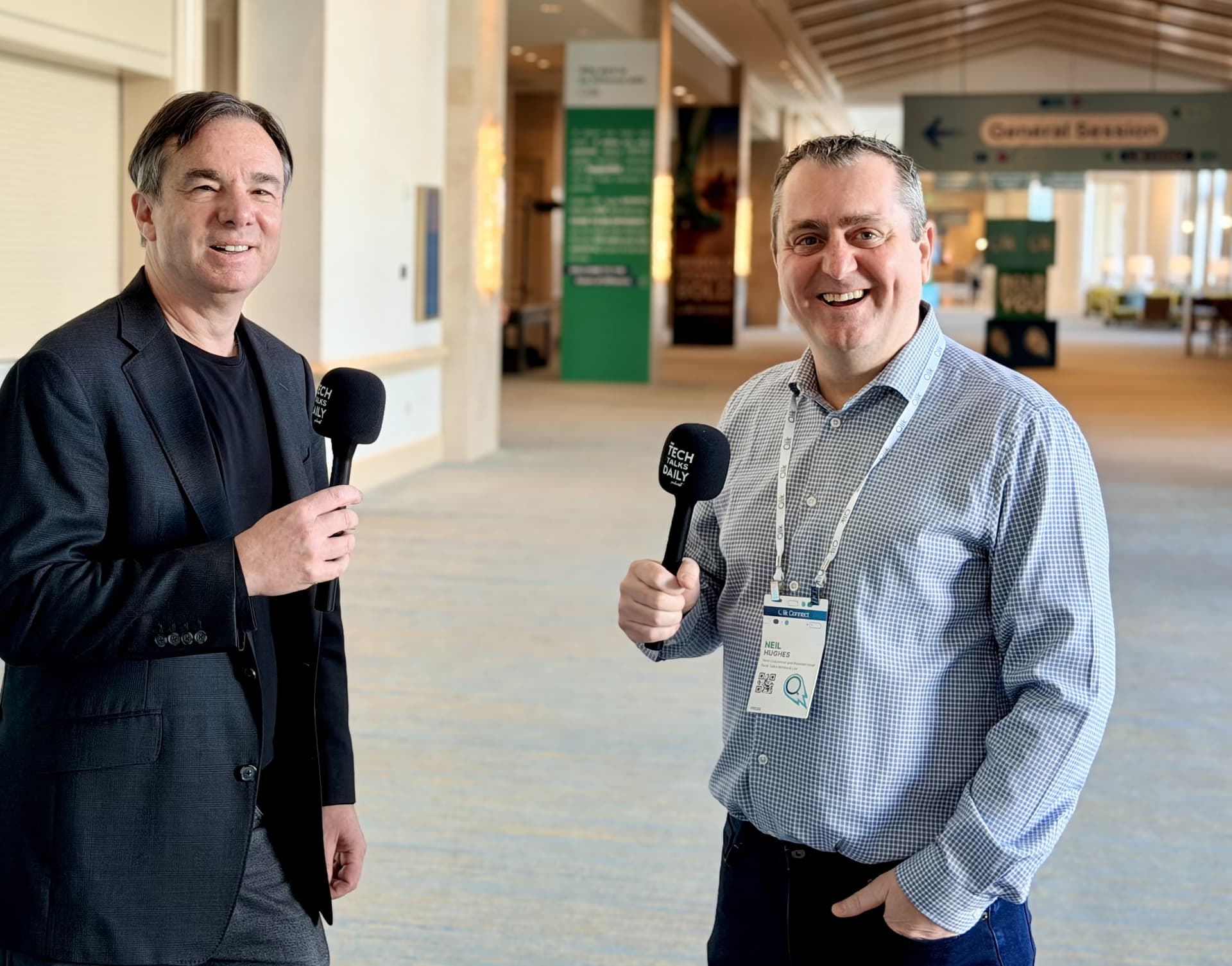
In our conversation, Mike shares what he is hearing from customers around the world and why so many companies remain stuck in cycles of pilots and proof of concepts. We talk about the growing pressure from boards and leadership teams to move faster, and why that urgency is often leading to what he calls a "ready, fire, aim" approach that fails to deliver real business value.
We also explore one of the biggest themes emerging at Qlik Connect this year. The shift toward agentic AI. But rather than focusing on the hype, Mike breaks down what this actually means inside a real enterprise workflow, where insights are not just generated but turned into decisions and actions. He also explains why getting the data foundation right is no longer optional, and how poor data quality can quickly turn AI from an opportunity into a risk.
From data trust and governance to the challenges of operating across increasingly complex regulatory environments, this episode offers a clear view of what it takes to build AI systems that are reliable, scalable, and grounded in real business context.
So as organizations look ahead to the next 12 to 24 months, what will separate those that successfully operationalize AI from those that remain stuck in pilot mode? And are we focusing too much on building more AI, rather than building better AI?
Join me for a candid conversation from the heart of Qlik Connect, and let me know where you stand on this shift. Are you seeing real progress, or are the same challenges holding things back?
Useful Links
Visit the May Sponsors of Tech Talks Network and learn more about the NordLayer Browser.
[00:00:05] - [Speaker 0]
Welcome back to the Tech Talks daily podcast where today I'm recording at the Click Connect event in Florida. And I can feel a shift happening in real time over here. Because this isn't just another event focused on what AI might become. For me, this is where the conversation is turning into what it actually takes to make it work for organizations. Because if you've spent any time speaking with business leaders over the past year, you'll know the story.
[00:00:34] - [Speaker 0]
Yep. There's plenty of pilots, plenty of proof of concepts, but very few examples of AI delivering consistent, measurable value and at scale. So what I wanna explore here this week is what is it that's holding organizations back? Is it the technology? Is it the models?
[00:00:52] - [Speaker 0]
Or is it something more fundamental going on beneath the surface? And today, I'm joined on the show floor by Click CEO Mike Capone. He's a leader who spent decades working at the intersection of data analytics and enterprise transformation. And in this conversation, we're gonna get into the reality behind the headlines. We'll explore why so many companies are still stuck in what he calls ready, fire, aim approach to AI and why the real bottleneck has nothing to do with models and why getting the data foundation right is now the difference between progress and failure.
[00:01:31] - [Speaker 0]
And I also wanna explore AgenTik AI. What does it actually mean in a very real business context? Not as the buzzword, but as something that can drive business decisions and most importantly, actions across an organization and the very real risks that come with getting it wrong. And perhaps most importantly, we'll look at what separates companies that will successfully operationalize AI over the next twelve to twenty five months from those that remain stuck in pilot mode. So if you or your organization is trying to cut through the noise and just understand what it takes to move from AI ambition to operational reality, then I'm sure you'll get some value from our conversation today.
[00:02:09] - [Speaker 0]
But enough from me. Let me beam your ears directly to the show floor at ClickConnect here in Florida where you can sit down with myself and Mike Capone, CEO at Click. I'm here on the show floor at ClickConnect in Florida with Click CEO Mike Capone. Mike, what excites you most about this event every year?
[00:02:32] - [Speaker 1]
This is my favorite event every year. What excites me the most is the energy and the excitement we get from our customers and our partners. This year in particular, you know, travel hasn't been easy. It hasn't been just an easy time with all the things going on in the world for people to make the effort to get here, and yet so many customers came. And it's because they really wanna understand what we're doing and how we can partner with them on this the AI journey they're all going through.
[00:02:56] - [Speaker 0]
And I think one of the big themes is this year is about moving from AI ambition to operational reality. So when when you look at your customers today and take all those conversations that you must be having with people all around the world, is the single biggest reason that they're struggling to to make that leap that they all want to do?
[00:03:14] - [Speaker 1]
Yeah. Well, look, everybody's experimenting. So there's a lot of pilots. There's a lot of proof of concepts. People are struggling to create value to really operationalize AI into every aspect of their business and drive business success.
[00:03:27] - [Speaker 1]
I hear it over and over and over again. And the reason is that everybody wants to start at the end. You know, they wanna plug in a large language model. They just wanna press the easy button. And that's not how this all works.
[00:03:38] - [Speaker 1]
There's foundational work that needs to get built before you can embark on a really successful at scale AI journey. And that foundation has to be built on data. Data governance, data trust, data quality, and those are obviously things that we can help our customers with. So I think that's why you see so much excitement here at the conference.
[00:03:56] - [Speaker 0]
Of course. And another big theme is agentic. It's clearly the unifying theme across the announcements from analytics to data engineering. But what does agentic actually mean in real enterprise workflow beyond the just the label and the the words everyone's talking about this year?
[00:04:13] - [Speaker 1]
Yeah. You know, it's like AI. AI's been around for a long time. We've had sort of a revolution around generative AI, and that's really exploded. But this I was doing AI programming in college forty years ago.
[00:04:25] - [Speaker 1]
Right? So and look, AgenTic's been around for a while too. It just wasn't called that. It was called automation. Right?
[00:04:30] - [Speaker 1]
The ability we've had the ability to get insights and automate them for quite some time now for for years. But you're right. AgenTik has now become a hot topic. And look, it's it's the same concept. It's the exact same thing, which is generating insights from from data across the enterprise, getting that insight, making decision, and automatically doing something with it is very powerful.
[00:04:53] - [Speaker 1]
It can generate a lot of productivity, it can generate a lot of business value if you get it right. But you can also create a lot of problems if you get it wrong because the foundation is wrong. So think about agents making decisions based on data that's incorrect or hasn't been governed or curated. That's a huge mistake. So, yes, AgenTic is coming.
[00:05:12] - [Speaker 1]
Yes, it's gonna be great value, but you have to get the foundation right.
[00:05:15] - [Speaker 0]
100%. And there's also a strong message here that the real bottleneck is not the AI models, but the data that sits underneath them. And one of the things I've heard at lot of tech conferences is no data, no AI. But where do you see most organizations breaking down today when it comes to delivering data that AI can actually rely on?
[00:05:35] - [Speaker 1]
Yeah. Well, there's a couple of things. First of all, agents, agentic AI doesn't like walled gardens. Right? So I think the big problem right now is that data is locked up in operational systems.
[00:05:46] - [Speaker 1]
And worse, to compound that issue, you've got some some vendors, some really large vendors who are actually pushing that agenda of give us put all your data into this one system or this one platform, lock it in, and we'll help you get there. And that that's contradictory to the nature of agents. Agents wanna run them free. They wanna access data from across your entire enterprise. I always tell customers, look, if you if you give all your data to somebody, you're not, you know, you're not a customer, you're a hostage at that point.
[00:06:17] - [Speaker 1]
So the reality is what what we encourage is freedom. And by freedom, I mean, your data has to be accessible across the enterprise. Platforms have to be open. Your operational systems are gonna do their thing. They're gonna run your business for you, but they have to be able to let their data be open to AI and agentic.
[00:06:36] - [Speaker 1]
And that's at click what we do. You know, we harness data from across a disparate set of systems everywhere from on premise to the main frames to the cloud. Basically any source anywhere and we curate that, we govern it, we we move it, we integrate it, and we catalog it. And then we get it ready so customers can then have faith that the data that they're putting into AI models is gonna be accurate and they can trust it.
[00:07:01] - [Speaker 0]
And you're also introducing new concepts this year like trust score, data contracts, and service levels. How do you convince a business leader that might be listening trust in data should be treated like any other operational metric, not just a technical concern? Would imagine it's quite a tricky balance sometimes.
[00:07:18] - [Speaker 1]
Yeah. Well, again, if you're gonna make the leap to Agentic, the data going into that those models that then feed Agentic has to be good. I used a example with our partner organization today. It's a funny one, but you know, I went before I left for this conference, was home in New Jersey and I asked Alexa, what is the weather today? And she came back and she said it's 36 degrees.
[00:07:37] - [Speaker 1]
Today will be partly sunny with a high of 58 and a low of 48, but it was 36 degrees. So it was not so it was wrong. Right? And that just got data from somewhere. There was no context.
[00:07:49] - [Speaker 1]
It was some weather weather report somewhere, and it spit that out, and it didn't even have the wherewithal to come back and say, yeah. Just gave you a contradictory answer. Right? Do you want that to be the thing that feeds your system? By the way, lots of businesses, the daily temperature is actually a really important metric.
[00:08:04] - [Speaker 1]
They make decisions on holding events. Right? You know, they make decisions on, you know, running certain machinery because under a certain temperature, certain machinery can can fail based on, you know, the the the fluids that they run on getting too thick. So these are important questions. So, yes, like having that trust in the data.
[00:08:21] - [Speaker 1]
And then this other word that is used a lot, but is really really important is context. Right? Data in and of itself without context is not meaningful in a world of AI. And so what Click has been doing for thirty years, our analytics platform, I know you've been coming to our conferences for a while now, is is that context. We help customers not only harness data, not only analyze data, but provide context around that data.
[00:08:45] - [Speaker 1]
It is critical for AI to have that context.
[00:08:48] - [Speaker 0]
It really is. And a lot of vendors are still focused on generating better answers. But you're I what love about what you're doing here is you're pushing towards connecting insight directly into action. So how hard is it in reality to move from insights to execution inside some of the largest organizations in the world?
[00:09:05] - [Speaker 1]
There's work to be done. You know, this is not something you snap your fingers and do, but it can be done. You have to wire it correctly from the start. Right? You have to build your foundation understanding where you're taking it, which is ultimately to decision making authority by autonomous agents.
[00:09:19] - [Speaker 1]
Right? So now businesses do this today. Right? So businesses, you know, they they have supply chain systems that automatically order things. But what they do is they make sure that the data and under underlying transactions that are feeding it are audited.
[00:09:32] - [Speaker 1]
They're they're in shape for this type of this type of work. Right? Now just take that to the whole new level. Right? And what we help our customers do both with our technology, but also, you know, we have advisory services where we can help customers kinda map out their AI journey.
[00:09:45] - [Speaker 1]
Where are you today? Where do you wanna be? And you start with the answer. You don't start with the technology. You start with what business outcome are you trying to drive?
[00:09:53] - [Speaker 1]
And very often it is, yeah, faster decision making, autonomous decision making, taking humans out of the loop so that we can respond to customers faster. Excellent. Okay. What data do you rely on to do that? How reliable is that data?
[00:10:03] - [Speaker 1]
How can we make that data more reliable? How can we merge it with other sources of data to to improve the context of it? That's what we do. But if you map it out correctly and you think about it right from the start, the rest of your life is gonna be a
[00:10:16] - [Speaker 0]
lot easier. And you've also launched an AI sovereignty initiative at a time when regulation and data residency is becoming harder constraints. So are we heading towards a fragmented AI landscape, and how should global organizations prepare for what's unraveling at the moment?
[00:10:32] - [Speaker 1]
Yeah. Look, it's a conundrum. Right? Because we're saying contradictory things. We're saying, you know, in order for agents to be successful, you have to be able to harness data from anywhere anyhow, yet all these all these countries are putting up, you know, kind of regulations about data sovereignty.
[00:10:47] - [Speaker 1]
And we we understand why it is. I mean, you know, it's a it's a so some countries are privacy thing, it's an intellectual property thing. There there there are reasons for it. So what we help our customers do is we help them navigate that landscape. So, you know, we we actually have sovereignty built in to our platform.
[00:11:04] - [Speaker 1]
We partner with the likes of AWS, which is our our our primary technology provider. We're opening more and more kind of regional data centers to be able to accommodate customers who say, look my data has to stay in Germany, my data has to stay in in in The UAE for example. But then we also help them map out a strategy where they're able to harness that data. Maybe they have to anonymize it. Maybe they just have to be mindful of which data they move from one place to another.
[00:11:29] - [Speaker 1]
But we help them do that so they can get the best of both worlds. They can stay compliant with data sovereignty issues, but then they can also harness the data that they're able to to get better AI outcomes.
[00:11:38] - [Speaker 0]
So you're putting a big emphasis on advisory and helping customers prioritize use cases before they build anything, and we've seen a lot over the that over the last few years. But does this suggest the industry maybe underestimated just how difficult it was to choose the right problems for AI to solve? Yeah.
[00:11:54] - [Speaker 1]
So this is a phenomenon I like to call ready, fire, aim. Right? So and look. Customers are and and businesses are in general anxious to make progress with AI. Boards and, you know, CEOs like me are saying, hey.
[00:12:07] - [Speaker 1]
Like, what are we doing about AI? We need to go faster. That's all well and good, but but you gotta get value. Like, at the end of the day, it's all about value value capture. And so I think what people are doing now is they're taking a step back.
[00:12:19] - [Speaker 1]
There's a reckoning going on. People have spun up lots and lots of projects, and, you know, they're implementing AI technology. They're harnessing a lot of data, but they're going back and saying, wow. I really didn't get the value that I wanted to get out of this. So we're going back to basics.
[00:12:33] - [Speaker 1]
Okay. What problem are you trying to solve? And again, working backwards, building the the foundation correctly. And if you do that, not only would you be able to solve the problem at hand that you initially identified, but chances are you're be able to solve a lot more because again, you've built this trusted AI data pipeline that will enable you to actually get accurate information that you can base your kind of your AI decision making on. And when we look ahead to the next, what, twelve to twenty four months,
[00:12:58] - [Speaker 0]
I know we we we haven't got a virtual crystal ball here, but what do you think will separate the companies that successfully operationalize AI and those that are still stuck in pilot mode or pilot purgatory?
[00:13:08] - [Speaker 1]
Yeah. What we like to say is that at Click, we help we help customers succeed with AI. We help them operationalize it. But what we don't do is just help them only talk about it. Right?
[00:13:17] - [Speaker 1]
So that's really it's a really important part of it. And and look, it's it's exactly that. The success is gonna be driven by the companies that can actually build the foundation correctly, but then more importantly, operationalize it. What I mean by that is it has to permeate every part of your business. It has to appear in the natural workflows of operations or or people.
[00:13:38] - [Speaker 1]
It can't be this thing over here, you know, that that only the the select few get to use, the data scientists, everybody else. And so really building that operational foundation around AI is what's gonna separate them. And pretty soon, this is gonna be automatic. Know, we're not gonna be talking about AI as this thing over here. AI is just gonna be assumed capability of kinda your your workflows and your decision making inside of your inside of your company.
[00:14:02] - [Speaker 0]
And I noticed a few days ago that you shared something on LinkedIn about Sam Peterson's latest blog. The agent era has a data problem. Click solves it. Great post. I will include a link for everyone listening so they can check that out.
[00:14:14] - [Speaker 0]
But for anyone that's not seen it, could you just say a few words on that?
[00:14:17] - [Speaker 1]
Yeah. No. I mean, it's it's exactly that. I mean, I think it's it's the same with generative AI. Now it's with agents.
[00:14:24] - [Speaker 1]
Like, people are off to the races. We had about 700 people in our partner session today, so we do a separate session for partners. And you know, we're just we're just talking about this, and you know, people are measuring themselves based on how many agents they created. It's nonsense. It's absolute nonsense.
[00:14:39] - [Speaker 1]
More more a more is not better. More has never been better. Better is better. Right? Like, and it's just in in when it comes to technology, better technology.
[00:14:47] - [Speaker 1]
And so building a few agents that are incredibly well thought out and deliver high yield and high value is what people need to do. And the way that you do that is you go back and you say, okay. How do I know this agent is gonna make reliable decisions? What data do I need, and what context does that data have to have around it to be able to make these smart decisions? Right now we have a data problem because you know, an agent without without good data, without highly curated data is is bound to fail.
[00:15:12] - [Speaker 0]
And finally, we're recording this on the first day of Click Connect. For people that can't attend, or people that are attending as well, what is that one message, or maybe a few messages that you want people to leave this event and think about?
[00:15:24] - [Speaker 1]
Yeah. I think the message that you're gonna hear over and over again throughout the conference is you're closer to AgenTic than you think. Alright? Because think of our click customers who rely heavily on our technology already, our data our data products, you know, data governance, data integration, data quality, as well as our analytics platform, which is as you know incredibly unique in the market. Right?
[00:15:43] - [Speaker 1]
We we've been doing this for a really long time being able to see patterns in data that nobody else can see, very different than a traditional SQL platform or even a Gen AI tool. You can leverage those those capabilities and build AgenTeq on top of them, and actually start achieving value right away. And that's the exciting kind of vibe that we're giving out at this conference is that you're closer than you think, and we can help you get started.
[00:16:06] - [Speaker 0]
Thank you. And I cannot begin to appreciate just how busy you are. You've got keynotes, customer meetings, back to back interviews. Just thank you for taking the time to sit down with me tonight.
[00:16:15] - [Speaker 1]
Oh, no. It's a real pleasure. Thank you so much. You you always make these conversations so enjoyable.
[00:16:21] - [Speaker 0]
One of the many things that stood out to me in this conversation today is just how consistent the message is with everything that we're hearing across ClickConnect. And it's that AI is no longer the experiment. It's moving into the core of how decisions are getting made, how workflows operate, and how organizations can respond in real time. But that shift comes with a very different level of responsibility. And as Mike highlighted today, when AI starts making or influencing decisions, weak data stops being a reporting problem and then becomes an execution problem.
[00:16:56] - [Speaker 0]
And this is where the real work begins. So we're not talking about building more models or creating more agents. We're talking about making sure the foundation underneath it, all of that stuff is reliable, governed, and connected to the full context of the business. And there was also a moment in there that really stayed with me, that's when he talked about companies measuring their success by the number of agents that they've built. Ludicrous.
[00:17:20] - [Speaker 0]
And has he put it? More is not better. Better is better. And I thought that feels like a timely reminder in a market that is still chasing speed over substance. So the question I'll leave you all with is, are you building AI that looks impressive in a demo or AI that your business can actually depend on?
[00:17:40] - [Speaker 0]
As always, I'd love to hear your thoughts. Are you seeing the same challenges around data, trust, and and operationalizing AI in your own organization? Let me know. I wanna hear your story and ensure that the real conversation is only just getting started. So you can reach me over at tech talks network.
[00:17:58] - [Speaker 0]
You'll find 4,000 interviews, ways of leaving me an audio message, and I'll also include links to everything at the click event, including Sam Pearson's latest blog, the agent era has a data problem. Qlik solves it. So everything you need, I'll have all the links in the show notes. Go over to Tech Talks Network. Browse to the blog post that accompanies this episode, and you should find everything that you need.
[00:18:19] - [Speaker 0]
But that is it for today. Time for me to hit the show floor once again. I'll be back again tomorrow with another guest. Speak with you then. Bye for now.