

What separates the founders who build category-defining companies from the thousands of startups that never make it through the venture capital funnel?
In this episode of Tech Talks Daily, I speak with Keval Desai, founder and General Partner of Shakti, an early-stage venture capital firm investing in AI and space technology companies from inception. Drawing on his experience backing companies including Canva, The RealReal, and Gatik, Keval shares how he evaluates founders before the rest of the market recognizes their potential and why the venture capital industry needs to confront some uncomfortable truths about startup funding and successful exits.
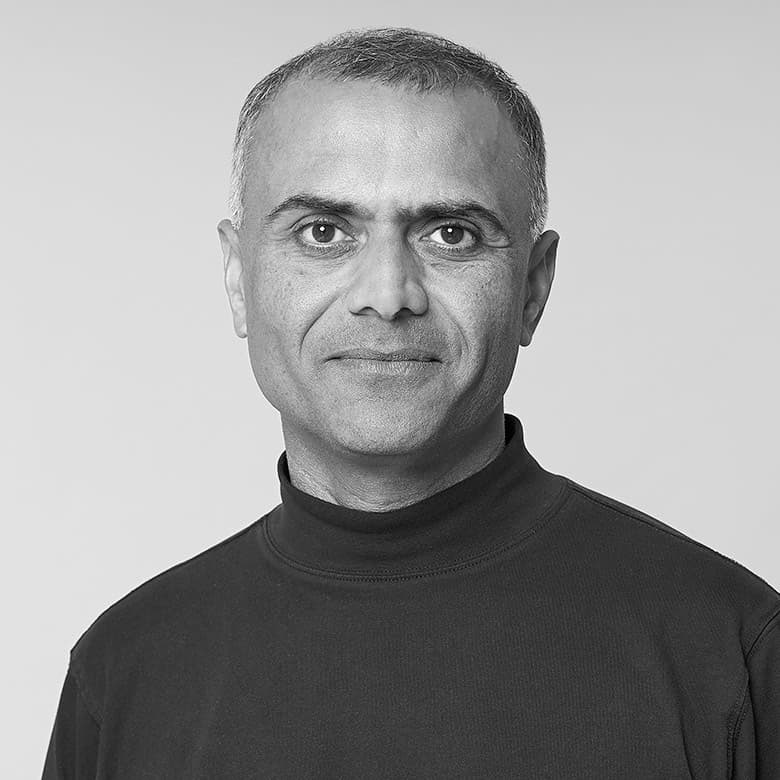
Keval introduces Shakti's "toothbrush" investment philosophy, an idea he first encountered through Larry Page at Google. The principle is simple: can a product or service become something used frequently by millions or even billions of people? He explains why this question helps investors distinguish impressive technology from businesses capable of creating lasting value, particularly at a time when thousands of AI startups are competing for capital and attention.
But identifying a large market is only part of the equation. Keval shares three characteristics he has observed in exceptional founders. They can describe a future that others cannot yet see, attract talented people before they have money or resources, and execute at a speed that continually surprises those around them. His stories from meeting Canva co-founder Melanie Perkins and The RealReal founder Julie Wainwright offer a rare look at what investors can learn from founders at the earliest stages of company building.
We also discuss Keval's thesis that AI is taking the economy into a new Imagination Era. As AI becomes increasingly capable of handling specialized tasks such as coding, analysis, and production, he believes human value will move toward imagination, judgment, taste, and the ability to combine technologies into products and services people actually want. For founders, employees, and business leaders, this raises important questions about education, careers, and what it means to build a company as access to technical capabilities becomes dramatically cheaper.
Keval also compares the arrival of open-source AI models such as DeepSeek to the role Linux played in the development of the commercial internet. He explains why falling inference costs could lower barriers to building AI companies and create opportunities for a new generation of startups, while also examining what this could mean for today's dominant AI companies and the industry's economics.
The conversation then turns to one of the biggest problems facing venture capital. The number of startups receiving funding has grown dramatically, yet the number of technology companies reaching public markets has remained relatively static. Keval explains why venture capital can scale dollars but cannot simply manufacture more category leaders, and why founders need to decide early whether venture capital is actually the right source of funding for the business they want to build.
We also examine the commercial opportunities emerging from space technology. Keval believes the SpaceX IPO could play a similar role for space commerce to Amazon's IPO for e-commerce, by demonstrating viable business models and encouraging entrepreneurs to build new companies in communications, energy, manufacturing, infrastructure, robotics, and services beyond Earth.
Finally, Keval offers an optimistic counterargument to fears that AI will leave younger workers without meaningful careers. He explains why he believes Gen Z's status as the first AI-native generation could become an advantage, why technical careers are changing rather than disappearing, and why the ability to apply AI to problems across healthcare, manufacturing, agriculture, finance, and other industries could create opportunities far beyond Silicon Valley.
This conversation offers founders a practical framework for evaluating ideas, choosing investors, understanding venture economics, and building companies in the age of AI. It also provides investors and technology leaders with a broader perspective on open-source AI, space commerce, the future of work, and where the next generation of category-defining companies could come from.
Useful Links
Connect with Keval Desai
Learn more about Shakti
[00:00:04] - [Speaker 0]
Quick question for you all today. What if the most valuable skill in this age of AI isn't coding, fundraising, or even technical expertise, but simply seeing what's coming before everybody else does. Well, my guest today has built a career around that very idea. He's a founder and general partner at Shakti, an early stage venture fund that backs founders from day one, often long before the wider market understands what they're building or what they're trying to achieve or the relevance in the future market. And along the way, he's invested in some pretty big companies including Canva, The RealReal, Gattic, and Glacier, helping identify businesses that would go on to define entirely new categories.
[00:00:52] - [Speaker 0]
So today, we will explore what my guest calls the imagination era, a future where AI increasingly handles specialized tasks and human value slowly shifts towards creativity, judgment, taste, and vision. And if we've got time, I also wanna venture far beyond Earth itself and examine the commercialization of space as one of the biggest investment opportunities and why it has certain parallels with the early days of the Internet that are impossible to ignore. So if you've ever wondered how investors identify category defining companies before the rest of the world sees that opportunity or wonder what separates founders who change industries from those who simply participate in them. You're gonna get a lot from this one. So enough from me.
[00:01:39] - [Speaker 0]
Let me introduce you to my guest and join us both in a conversation as we enter this period where imagination could become your most valuable asset of all. So thank you for joining me on the show today. Can you tell everyone listening a little about who you are and what you do?
[00:01:58] - [Speaker 1]
Neil, great to be with you. I'm Keval Dassai. I'm the founder of Shakti Capital. Shakti is a early stage technology venture firm based in Silicon Valley. I'm based in San Francisco, and two of my partners are based in New York.
[00:02:15] - [Speaker 1]
We invest at inception stage in tech startups. So inception literally means when founders are just getting started. The name Shakti comes from Sanskrit. It means primordial energy. So it's the energy that's present at the beginning, and that's what we do.
[00:02:32] - [Speaker 1]
We help founders get going, and then are there with them from the path from zero to IPO and beyond. So we are early stage technology firm. Our focus is on what we call AI three .o and space tech. AI three .o is autonomous agentic AI. And space tech, specifically area that we are focused on is what we call s commerce or space commerce, which I think is what lies ahead after the SpaceX IPO, and we can talk about some of those things.
[00:03:02] - [Speaker 1]
But in a nutshell, we are there right at the beginning to help founders get going.
[00:03:09] - [Speaker 0]
Incredibly cool. And you're also one that has the Midas touch, you might say, because you built a reputation for backing founders before the rest of the market catches on. I mean, looking back at investments like Canva, The RealReal, and Gattic, to name but a few, What signals do you see that others miss? I bet I'm sure this is a question you get asked all the time, but what is it that you look for? What signals do you see?
[00:03:32] - [Speaker 1]
Well, it's really a, you know, it's a fun, profession and we're lucky to be in it. I mean, we think of ourselves as sort of, you know, the admissions director in a kindergarten school. When, you know, when companies are just getting started, they're just like young pupils who are entering their first grade. And our role is to identify really, you know, Michael Jordan's in kindergarten, if you will. And when we think about companies like Canva or The RealReal or Gathic, and I recall in 2012, I was lucky to meet with Melanie and Cliff who are who are the cofounders of Canva.
[00:04:11] - [Speaker 1]
We're just starting, and I met them here in a coffee shop in San Francisco. And they had a vision to reimagine design. And, you know, one of the things we look for is when we first meet with the founder, we ask this question, is this a toothbrush? And that's a question that helps us figure out if whatever this company is building, a product or a service, could it be something that can be used, that can be ubiquitous and frequent at some point down the road? Just like a toothbrush.
[00:04:44] - [Speaker 1]
Toothbrush is a metaphor that I learned from Larry Page at Google where every time you'd go to Larry and ask him for some sort of a resource, you know, money, capital, or or people, he would say, it's a toothbrush. And it took me a while to figure out what he meant by it. But what he really meant is if you think about the world, there are 7,000,000,000 people on the planet twenty four hours in a day. We wanna build something that is ubiquitous and frequent that eventually touches lots and lots of people, lots and lots of time. So I think the first question we ask when we meet founders is is it a toothbrush?
[00:05:20] - [Speaker 1]
In the case of Canva, Melanie very clearly articulated this notion that design, should be democratized. You know, at the time, the early twenty tens, design was a purview of the professional. You know, you have to be sitting behind a expensive computer with a keyboard and a mouse and be using something like, you know, Adobe Photoshop or professional design software, which cost thousands of dollars. And her vision was that, you know, 7,000,000,000 people twenty four hours in a day, we should be able to design just by using our mobile phones and using our fingers and would not need to spend a lot of money to design something. And so she wanted design to become a toothbrush.
[00:06:01] - [Speaker 1]
And over the next decade or so, she and her team obviously did that. So I think that's the first question we ask. The second question we look for the thing we look for is, you know, is this a founder who can take it all the way? I think this idea that if you're starting at inception and you wanna build a company that's eventually a toothbrush, what that really entails is not only having a vision, but actually building the team and getting the product developed and then finding a way to take the product to market and making eventually hundreds and millions of people use that product as customers. So there are a lot of things involved in not just building the product, but building a company.
[00:06:41] - [Speaker 1]
And what we ask ourselves is, is this a founder who can do all of those things over the coming years? And when we look at that at the inception, you know, when you meet somebody on day one, how could you tell that a founder would be able to do all of those things over the coming decade? What signs do we look for? And there are a few things that that we have learned over years that are generally very helpful in in helping us figure out if this is a founder who can go all the way. And so I'll just, you know, briefly mention three of those.
[00:07:07] - [Speaker 1]
The first thing is, you know, these founders are time travelers. If you think about Melanie in 2012 when I when when we talked about her vision for design, Neil, it was very interesting. Last month, a couple of months ago in April 2026, just two months ago, I was, at SoFi Stadium in Los Angeles, which is a big NFL stadium, in California. And Melanie was speaking in front of thousands of people. Canva now does an annual annual customer event in in LA.
[00:07:41] - [Speaker 1]
And she talked about her vision for design in the age of AI, you know, now that Canva is an AI platform for design and productivity. And the way she described the future of design and how she envisioned those people using design was almost identical to what she had said in 2,012. And so here is a founder who really was a time traveler. She had seen the future. The camera today has all of the features and benefits that she had articulated almost fifteen years ago.
[00:08:17] - [Speaker 1]
And so that's an that's the quality of a founder. They are able to articulate a future state of the world with very simple language. By the way, that's the other interesting thing. They don't use jargons or buzzwords or acronyms. You know?
[00:08:30] - [Speaker 1]
They're just able to articulate using simple words how they see the world. And when you when you hear that, it's almost as if they've lived that future and now they've come back to the present time travelers to be able to articulate it visually. So that's the first thing. Julie Wainwright, who founded The RealReal was very similar. In 2013 when I first met her, the small garage here right across the Golden Gate Bridge in Sausalito, she was describing a world where commerce would be circular.
[00:08:59] - [Speaker 1]
The economy would be a, you know, a circular economy because people who bought something of value would be able to put it online again for other people to buy that, and The RealReal will be in the middle creating a marketplace for authenticated luxury items. And, again, the world she described, the world of circularity and resale and, you know, lessening the impact on the climate. The luxury fashion industry, as you know, is one of the largest polluters in the world, and her vision was how can you reduce the impact of luxury fashion and climate by making it making resell a a common, you know, toothbrush use case. And she did that over the next decade by taking the company public. So I think these are time traveler founders.
[00:09:37] - [Speaker 1]
The second thing you look for is and what's evident in them is that, you know, in day one, they have no resources. They don't even have any money. They have no no, you know, not that many financial, or other resources. And despite that, they're huge talent magnet. They're able to attract other amazing people to join forces with them on day one without without commit without having anything to give in return except a vision and a mission to build a game changing company.
[00:10:08] - [Speaker 1]
And so they're able to attract other great people. You usually see these founders being surrounded by other great talent even on day one. And then the last thing is they're execution machines. You meet with them one day and you you have a discussion, and then you meet with them again a week later, and a lot would have happened in those in those seven days. You know, you would say you'd be surprised that, really?
[00:10:28] - [Speaker 1]
You did all of that? And and since we last spoke, and they're like, yeah. It's all done. And so they're just, you know, execution machines twenty four seven. They're able to execute, not just talk talk, but walk the walk.
[00:10:40] - [Speaker 1]
And so I think those are three attributes. Time, you know, time travelers, talent magnet, and execution machine. So sort of combine those two things, you know, we ask this question, is it a toothbrush? Is this something that can be ubiquitous and frequent? Is this a founder who can go all the way from zero to IPO?
[00:10:55] - [Speaker 1]
And then the last question we ask for is why now? You know, what is it that's changed? Either a technology inflection point in today's, obviously, day and age, it's AI, whether it's physical AI with robotics or digital AI with large language models, AI infrastructure, or maybe, you know, now we're able to land rockets back on on on Earth and lowering the cost of launching something in space. So there are these technological inflection points that allow startups to do something that wasn't possible before. For example, for Canva, the introduction of the iPhone, the mobile smartphone allowed Canva to do something on a small device with just using your fingers that you previously acquired large computers and software.
[00:11:36] - [Speaker 1]
For The RealReal, it could be a societal change. It was for them, it was this idea that the younger generation in particular wanted to focus on the climate and sustainable planet and a sustainable way of of buying. And so that meant that resell became a more popular trend among the younger demographics. So so they wanted to buy luxury products, but they were comfortable buying it pre owned by by from somebody else who had bought it before and still get a great value on it. So it could be a technological inflection point.
[00:12:04] - [Speaker 1]
It could be a societal change. It could be a a demographic shift. You know, younger generation have different preferences. So it could be it could be governmental or political shift. You know, there could be new regulation that forces certain things.
[00:12:19] - [Speaker 1]
So there are a variety of things that might have happened in the environment to allow a start up an entry point in a large industry, and succeed against incumbents. So those are the three things we look for. Is it a toothbrush? Is it a founder who can go all the way? And why now?
[00:12:34] - [Speaker 1]
Is there some inflection point?
[00:12:36] - [Speaker 0]
Wow. So many cool stories there. So many great great points as well and takeaways. And go back to the Canva example. I was at a Canva briefing recently, and they were saying that they've been officially recognized as the third most used AI platform in the world, trailing only ChatGPT and Google Gemini, which is just phenomenal, that journey they've been on.
[00:12:57] - [Speaker 0]
And I know another topic that you're passionate about is this imagination era that we find ourselves, the idea that AI increasingly handles specialized knowledge. So how does that change? What makes a successful founder, employee, or or company in the years ahead? How do you see this evolving?
[00:13:16] - [Speaker 1]
Yeah. I think we are entering, the Renaissance era. If you think about you know, if you go to Italy, Neil, and you see the statue of David and you see Saint Peter's Basilica and you see the Sistine Chapel and the the painting on the ceiling, and and you wonder, you know, who did all that? I mean, those are all amazing work of art or or architecture or, you know, design and and sculpting. And you say, who did all that?
[00:13:45] - [Speaker 1]
It turns out the same person did all of those things. You know, Michelangelo was a multifaceted individual, and he wasn't the only one of his era. You know, Leonardo and Rafael and many of the the Renaissance folks that we we now know were multifaceted. You know, they had multiple skills. It's only the last 150, if you think about it, where with the industrialization of the economy, you know, we were given a hammer and told that all we can do is hit a nail.
[00:14:16] - [Speaker 1]
Mhmm. So I think that specialization of human labor is actually a very recent phenomenon in the history of civilization. Because for most part, us humans, we are we were generalist, and it's only recent that we've been been told to be specialist. And I think with AI, we're going back. We're going back to being the generalist.
[00:14:35] - [Speaker 1]
Well, AI will do all the specialized task, whether it's, you know, designing a piece of software, coding, whether it's building an assembly line, whether it's driving a car, whether it's, you know, even folding your laundry. All of those specialized task will be increasingly done by AI. And what will be left for us humans to do is the imagination part, which I think still is a very central core and, you know, only a human trait. So I think we're all gonna be required to focus a lot more on what is it that we wanna build, what product or service you wanna bring to the world to serve other humans, and not a whole lot on how that gets done. All the how is gonna get done by the AI, so all the specialized.
[00:15:23] - [Speaker 1]
So think of it I think of it as like a piece, you know, Lego set. We're we as humans are gonna have access to any kind of a Lego piece that we want because AI will do that. And then the challenge for us will be how do we assemble those individual pieces to create something that's that's bigger and a and a whole that that that serves the rest of humanity. So I think what that means practically is that each of us is gonna have to be an entrepreneur. I think if you think about at the at the essence of what an entrepreneur is, an entrepreneur is somebody who imagines.
[00:15:57] - [Speaker 1]
If they they've imagined a future state of the world, they're able to marshal resources and then able to execute on their idea to bring it to fruition. So I think that is the core skill, and I think that that's gonna have a you know, it's gonna have a a rippling effect on on our education system, the way we teach, the way we train people to enter the job market. Because I think for the most part of the last, you know, few centuries, we've been told and taught specialized stuff. And I think now we're gonna have to go and change that and and teach generalized stuff. We're teach how to imagine, teach taste, teach curation as opposed to just, you know, coding or building individual level pieces.
[00:16:42] - [Speaker 1]
So I think we're entering the renaissance era in the age of AI.
[00:16:45] - [Speaker 0]
Oh, exciting. And going back to what you said a few moments ago, I mean, your fund focuses on what you call toothbrushes, products and services that people use frequently and rely on every single day. And there are a lot of question marks around AI and the ROI in that and the the business outcomes and value that it might offer. So do you think this lens of of toothbrushes that we're talking about here, is that particularly valuable when evaluating AI startups too, you think?
[00:17:13] - [Speaker 1]
I think so. Because I think, you know, in Silicon Valley, as you know, there is a tendency to get focused on technology for the sake of technology. I mean, you've seen this with every era where you you know, whether it was crypto or virtual reality or augmented reality, We can we can even go back to the era of the early mobile phones. And I think that we, as technologists in the Valley, sometimes get carried away by the by the new new thing, the the technical innovation or the pizzazz, if you will, that come out of research universities and and just the the the supply chain of innovation that's baked into Silicon Valley. And sometimes we forget to ask the question, well, this is phenomenal technology, but what's the benefit of this technology, and who does it benefit?
[00:18:03] - [Speaker 1]
And how many people eventually will use this will this thing? You know? Again, is it gonna be ubiquitous and frequent like a toothbrush? And I think in the age of AI, you see you know, we see things like that happening again where, you know, on a on a weekly, maybe even on daily basis, there's innovations in large language models or some capabilities in robotics or maybe quantum computing. And most of the discussion ends up around being how cool is this technology and and, you know, isn't it amazing?
[00:18:34] - [Speaker 1]
It's gonna sort of, you know, replace all the all the jobs and, you know, everybody's gonna be will be in universal basic income. And all of these things that are that are, I think, sometimes too far fetched because the focus is entirely on the technology and not enough on, is it a toothbrush? Is it something that can be built for the benefit of lots and lots of people, lots and lots of the times? And so I think asking that question allows us as investors to separate the technology innovation from the potential benefit of that innovation. Because, ultimately, our views that as venture capital is, look.
[00:19:13] - [Speaker 1]
We have investors who give us capital, and the reason why they give us capital versus putting in the stock market is because they expect a higher return from our investments, from our funds than they can get in the stock market. And so for us to be able to do that, to provide that return, we ultimately have to focus on the business impact of technology, not just on technology itself. So I do think that the lens is actually quite helpful and increasingly so because the pace of innovation, the pace of technological innovation is at an all time high. And on any given day, you know, we're meeting with founders who are doing all kinds of really cool stuff. But we have to ask ourselves, is this cool stuff gonna translate into a great business?
[00:19:54] - [Speaker 1]
And will that business eventually, again, have, you know, millions of users and a business model that's eventually gonna be profitable? Can this company go public some then have an exit that adds up to delivering returns that our investors expect? So I think it's been quite useful to us.
[00:20:13] - [Speaker 0]
Yeah. Completely agree. And there's so much talk on our news feeds right now around big AI giants and foundation models. But you've compared open source AI projects like DeepSeek to Linux. I'm curious.
[00:20:27] - [Speaker 0]
What does the rise of open source AI? What does this mean for the the competitive dynamics of the industry? What do you see happening here?
[00:20:36] - [Speaker 1]
Yeah. I think that the the DeepSeek and OpenCLaw and lot of this open source AI innovations that have come to four recently is the Linux moment for this AI cycle. And what I mean by that is that if you look at what's happened in the last four years, you know, since November 2022 and ChatGPT launch, if you look at the evolution of the AI industry, the technology and business over the last four years, to me, it seems very similar to what happened thirty years ago between 1994 and 1999, sort of that four to five year time frame. When '94, Netscape went public and was really the way that the masses, all of us heard about the this thing called the Internet. You know, before Netscape IPO, you know, World Wide Web, CERN, and, you know, Tim Berners Lee invented the protocol and, you know, people sort of had heard about this thing called the web, but it wasn't really accessible.
[00:21:37] - [Speaker 1]
And Netscape comes along and makes makes the Internet accessible to the masses. And then, you know, still a couple of years after that, the Internet was just, you know, a media and a publishing entity. Right? You could read your weather, your news, your sports course, you know, maybe you can send an email to mom or to your colleagues, but it really really did not have a business model. And then Amazon comes along, and Amazon's IPO in 1997 gives the Internet a business model, which is ecommerce.
[00:22:04] - [Speaker 1]
Right? Now you can start doing business on the Internet. And as at that point, the Internet becomes a commercially viable entity. But I remember I had a I was a cofounder of a online payment startup, HX back in in the late nineties, and we raised, you know, $25,000,000 from venture capitalists. And 24,000,000 of that went to, Exodus to, you know, rent a data center cage, to Cisco to buy the networking router, to Sun Microsystems, to buy the Spark workstations and the Solaris operating system, and then to Oracle to put a database on top of it.
[00:22:38] - [Speaker 1]
So we most of the money we got from VCs went to three or four providers of this the Internet tech stack back then. And the the point being that it was actually very expensive to launch an Internet business even in that ninety five to ninety nine era. Things were expensive. But then what happens? In '99, a company called Red Hat goes public.
[00:23:00] - [Speaker 1]
Red Hat is the company that commercialized Linux, and Linux was the open source version of Unix. And as soon as that happened, now we have this era of cloud computing that begins. And with cloud computing, anybody can launch a business on the Internet for just a couple of thousand dollars, not millions of dollars. So open source lowered the cost of doing business on the Internet. And I think the combination of Netscape going public, making the Internet accessible to the masses, Amazon going public and giving the Internet a business model, and then Red Hat going public and lowering the cost of launching a bit a business on the Internet.
[00:23:38] - [Speaker 1]
All of those three things in my mind were the necessary and sufficient conditions to then lay the groundwork for the next twenty years when we have all these amazing Internet companies that we think of today, Google, Salesforce, LinkedIn, Facebook. Right? All these companies that we think of as Internet giant companies, they did not exist, Neil, until after '99, until after Netscape and Amazon and Red Hat Linux and all had already happened. Right? Now fast forward thirty years today, what happened?
[00:24:07] - [Speaker 1]
ChadGPT comes along. That's the Netscape movement for AI. Everybody starts accessing AI for the first time. I mean, know, Google had done the transformers paper almost a decade before that, but, you know, people hadn't most people hadn't heard about it. ChatGPT comes along.
[00:24:20] - [Speaker 1]
Everybody now mom knows about AI. And then what happens? Coding agents come along, and coding agents give AI a business model. If you look at most of the revenue in AI today, it's coming from coding agents. Right?
[00:24:31] - [Speaker 1]
So that's the business model for AI. And then what happens? Well, despite the fact that ChatGPD and then Anthropic and then Gemini and coding agents, well, if you wanna launch a business on in AI business today, it is still very expensive because of tokenomics as we all know. Inference computing is expensive. We're still paying everybody's paying, you know, high rent to to NVIDIA for the GPUs and then to the hyperscalers for the compute and then, obviously, to the LLMs for the tokens.
[00:25:01] - [Speaker 1]
And so the so the idea of launching an AI business, if you're an entrepreneur today, you wanna leverage all the powers of AI, it's still an expensive endeavor. But now we have, or just recently, n three of open source. Right? You have these open source models. Most of them are outside The US, but The US is also now building open source and models.
[00:25:21] - [Speaker 1]
And I think that that is the Linux moment. So that is this is 1999 in in almost in almost every sense, in the sense that, you know, there's a lot of excitement about the technology. There's a lot of new ideas coming to the market. Most of those ideas are expensive to execute. But now, finally, you see that the token costs are falling by 100 x.
[00:25:43] - [Speaker 1]
If you just look at the last year or so, inference costs have plummeted by 100 x. They're still expensive, but, you know, on on a unit basis, they're falling precipitously. And think that's likely to continue as see as we see more and more open source models enter the AI landscape. Now when that happens, we now again have the necessary and the sufficient conditions. AI has become mass adopted as a business model, and open source is lowering the cost of launching AI business.
[00:26:09] - [Speaker 1]
So I think if you put those things together, we can imagine that the next decade or two in AI are gonna be similar to the couple of decades after '99. And we might have some bumps along the way just like we had a, you know, a bump and a correction after '99, but then you see that the next two decades were the were the best decades in history for technology, entrepreneurship, and venture capital in terms of value creation. We think that something similar is about to happen over the coming decades.
[00:26:39] - [Speaker 0]
Your agents aren't producing accurate answers because they don't have a complete semantic understanding of your data, and Denodo is solving this and solving it through semantic consistency. Through semantic consistency, your agents can start making accurate predictions in real time. So see what else Denodo can do by visiting denodo.com to learn more. But now let me introduce you to today's guest. And venture capital is something that has traditionally been about identifying the outliers, there.
[00:27:16] - [Speaker 0]
And and, yeah, you've highlighted a growing mismatch between the number of startups we're seeing being created and the number number of successful exits. So I'm curious. What do you see as broken in today's venture ecosystem? And for any founders listening, how should they be responding to this?
[00:27:33] - [Speaker 1]
Yeah. I mean, I think that if you look at the last forty, fifty years of data, and I'm speaking at this point about The US venture capital industry, which is really the only place that I've had profession in. The data is pretty clear, which is that in the venture started ecosystem, we can scale dollars, but we cannot scale companies. And we have tried many, many ways to scale the number of companies that can be backed by venture capitalists and and could have a fruitful productive exit at the other end. If you look at the start up funnel, the top of the funnel, you know, we forty years ago, we used to fund 2,000 companies a year in venture capital.
[00:28:16] - [Speaker 1]
Now we fund 20,000 companies per year in The US venture capital. So we have grown this top of the funnel by 10 x. But if you look at the bottom of the funnel in terms of the number of independent standalone category leading companies that come out at the at the bottom of the funnel, and, you know, the number of IPOs is a good proxy for that. Right? Because the IPO typically stands for a company that's it's come out and is now a standalone company.
[00:28:42] - [Speaker 1]
Well, the number of IPOs over the years in tech, the median IPOs is about about fifty, five zero. And so the idea that we have grown the top of the funnel by 10 x and yet the bottom of the funnel is generally static. I mean, you can take some outlier years like the SPAC IPO craze. But, essentially, it's a, you know, 50 IPOs. And by the this data, for our audience who is interested in studying the IPO market, professor Jay Ritter at the University of Florida, who has been an IPO expert for decades, he keeps this open database of IPOs in The US, which I encourage our audience to go look it up and so you can find this information.
[00:29:20] - [Speaker 1]
But the point is, we've we've tried to grow the top of the funnel and the bottom of the funnel has remained the same. And the reason why the bottom of the funnel is the same, by the way, is if you need this common sense, if you think about how many independent companies do do you and I, you know, as consumers or enterprises, how how many different vendors do we need for the same service? You know, if you how many vendors for email do we need? How many people do we need to get our rideshare? You know, how many people how many airlines are we gonna need to to buy our tickets?
[00:29:51] - [Speaker 1]
How many grocery delivery companies? Right? How many people do we buy our enterprise, you know, CRM software from? So all of these use cases, whether it's a consumer enterprise use case, a need that we have, ultimately, we need two or three providers, not 20 or 30 providers. Right?
[00:30:10] - [Speaker 1]
And so what that means is that the number of stand alone companies can only be finite. And so the implication for of that to entrepreneurs and venture capitalists is actually pretty stark, which is that, ultimately, whether you're investing at inception or at the growth stage, we have to be mindful that most of the companies are not gonna make it. They're not gonna make it in terms of the stand alone category leading position. And so our job as investors is to pick one that might make it all the way to the funnel. It is really a venture capital is a not a passive investment category.
[00:30:49] - [Speaker 1]
It is an active investment category. What that means is that manager selection does matter. You have to pick a manager or venture capitalist who has shown some skills at picking, you know, Michael Jordan's in kindergarten, if you will. And so I think there are a few companies. And, again, our job is to pick one that can that can be one of those companies.
[00:31:12] - [Speaker 1]
And I think for entrepreneurs, what that means is that when you're starting out, you have to make a couple of choices, you know, both in terms of the the use case that you're gonna focus on. Is it a toothbrush use case? Is this something that you think eventually will have impact in billions of people all the time? Or is it an niche use case? And both of those are fine.
[00:31:31] - [Speaker 1]
I mean, look, entrepreneurs, are motivated by a variety of different things, and they're all they're all great motivations to each their own. But I think what it does mean in terms of how you raise capital, I think there is a significant, fork in the road in terms of how you raise capital. Because if it's a toothbrush use case, if it is gonna be if it's likely that this company will end up being one of those stand alone category rating companies, then I would say, by all means, go ahead and seek venture capital. Go ahead and talk to people like us who are in the business of funding companies that can eventually go big. But if you think that that use case is a niche use case, it's it's very important, but it's not a toothbrush.
[00:32:14] - [Speaker 1]
Maybe it's a it's a vertical that is only a specialized vertical. Right? A a great category of this, for example, is, you know, medical devices. Medical devices are great products, lifesaving products, But not every human being is going to need a medical device of a particular kind. Some medical devices, for example, think about a pacemaker.
[00:32:35] - [Speaker 1]
I mean, that's a very important medical device that saves people lives. That's a pretty ubiquitous and and a large a lot of people have heart issues and the pacemaker is actually a a large toothbrush use case. Well, that actually is a venture funded category. If you look at many medical device companies that are in the business of making those devices have been funded by venture capitalists. But then you might have other devices that are very limited in application, lifesaving but limited, and maybe there's a different way of funding those, maybe through research grants or corporate venture capital or other sources of funding.
[00:33:06] - [Speaker 1]
So I think the the the point being that entrepreneurs have to be judicious in their early decisions about what kind of a what kind of a journey are they embarking on, how do they wanna spend the next decade of their life, what product or service they wanna build. And depending on how ubiquitous and frequent that might be, the choice of capital could be different. And they have to entrepreneurs have to make make that distinction upfront so they don't end up wasting their time chasing capital that isn't available for them.
[00:33:36] - [Speaker 0]
And I think there's one area in particular that is attracting growing investor attention right now, and that is space technology. I mean, I was reading that you suggested that the SpaceX IPO could almost become the the Amazon like moment for the sector. So what opportunities do you see emerging around all things space commerce that that many people are are overlooking right now? Maybe unable to see the the bigger picture, the art of the possible. What excites you about this space?
[00:34:05] - [Speaker 1]
Everything. And and I think and and, you know, the the valuation aside, I mean, SpaceX, as we as we speak now, just had this very successful IPO in The US. And I think SpaceX is, to in our mind, similar to the Amazon IPO. If you if you think about what happened before and after. So before the Amazon IPO, there were three ecommerce IPOs.
[00:34:29] - [Speaker 1]
After the Amazon IPO, there were 300 ecommerce IPOs. So you can see a different scale. Amazon really opened the floodgates and to to launching a business on the Internet. And as we spoke earlier, it really gave the Internet a business model. I think if you look at space today, the SpaceX IPO has really, for the first time, given space a business model.
[00:34:50] - [Speaker 1]
Until now, space has been you know, so we think of space in the 1.o, 2.o, and 3.o. Space1.o was launching a man on the moon. You know, it was a it was a purview of governments and, frankly, a geopolitical arena where there was a there was a space race. And for for a lot of strategic reasons, countries wanted to be out there. And so so that was the first wave of space technology.
[00:35:14] - [Speaker 1]
And then space two dot o was launching these, you know, long, you know, intergalactic probes. Right? So we sent out Voyager and all of these probes to to figure out our cosmos and understand, you know, what our pale blue dot as we as Carl Sagan calls it, where where do we sit in this massive galaxy in the universe. So that was the ex the science exploration phase of space, and that was two dot o. And then space three dot o, I think now for the for the first time is now the commercialization of space.
[00:35:45] - [Speaker 1]
You know, SpaceX is is the proxy for that. And but what it's doing as as space is getting commercialized, it is opening up the aperture for all kinds of businesses. So for example, the obvious one is communications as we know now with Starlink, is a, you know, profitable business model for SpaceX. The idea that we can get connectivity in the remorse parts of the world, anybody, even even, you know, underdeveloped countries, poor countries, or remote areas of rich countries where you don't have traditional broadband. You can now get broadband.
[00:36:19] - [Speaker 1]
We've seen the implications of that and the benefits of that during natural disasters or at times of war and peace, you know, in access connectivity and access to you know, there's a very essential, you know, need now. And so doing that from space actually makes a lot of sense. Why dig up a cell tower or lay dig up ground to lay fiber if you can just provide bandwidth from space? So I think that's the most obvious one. Weather and sort of agriculture and, you know, defense oriented use cases have always been around.
[00:36:51] - [Speaker 1]
But I think now there are secondary and tertiary effects of launching a lot of stuff in space. So for example, we have an investment in a company called Cosmoserve that is building a robot to collect debris in space. If you think about the low Earth orbit, you know, today, there are 10,000 satellites. Just Starlink has 10,000 satellites in the low Earth orbit. Their goal is to get that to up to a million.
[00:37:14] - [Speaker 1]
Many other companies are gonna do that to provide, you know, all these use cases. We talked about telecommunications, you know, ground sensing, weather, agriculture, defense. Well, as as a lot of stuff goes up there because the cost of launching a kilogram in space, so again, plummeted. Moore's Law has arrived in space, if you will. We know what happens with Moore's Law.
[00:37:33] - [Speaker 1]
When cost and when cost falls and and computing power increases, the number of applications and the number of use cases explode. And so same thing is, like, what happen in space. But as stuff goes up there, there is gonna be a, you know, secondary implication of collisions and debris, and we now need to go and collect all that stuff. So who's gonna do that? So there's gonna be an industry just like we have garbage collection on planet Earth.
[00:37:57] - [Speaker 1]
There's gonna be garbage collection in space. And then, you know, the most exciting and some of the most recent conversations around energy in space, you know, data centers. How do we solve this energy crisis that is now obviously a big part of our conversation here on planet Earth? AI is really an energy business. You know, AI is converting energy into intelligence.
[00:38:17] - [Speaker 1]
I mean, at the heart of it, that's what it is. And to do that, we need lots of energy to produce lots of intelligence. Well, we also need energy for our homes and and offices. And so there's a competition for energy at at an affordable cost. And, you know, a lot of arguments say that both both the physics of it and the business model of it, one could argue is better to put energy in space.
[00:38:40] - [Speaker 1]
You know, technically, it's it's plausible. It's not possible yet, but it's certainly plausible. And I think one thing we know about technology is that it only moves in one direction, which is it gets faster, better, cheaper. So I think the idea of putting energy and harnessing the the sun's energy, which is almost infinite, and channeling it for for terrestrial benefits, would be very exciting. And that if that can happen, then again, can imagine when there is energy, there are applications of energy all around.
[00:39:08] - [Speaker 1]
So whether it's establishing a base on moon and then doing manufacturing there or, you know, providing environments to develop new drugs in vacuum or low gravity. All of these applications that we're doing today on Earth, we could reimagine those things getting done in space. I think that the SpaceX IPO really is just like laying the groundwork. You know, people describe it as kinda like the railroads where once you once you lay down the tracks, then you can discover the West and, you know, you can, you know, you can discover gold in California, but you needed the railroads to happen. So so I think that that is likely to happen with space as well.
[00:39:47] - [Speaker 1]
And it's a it's really a remarkable event, not just in terms of the IPO itself, but in terms of how far technology has come, how we can now launch a kilogram of anything in space at a lower cost, and all of the things that it enables as a result of that.
[00:40:05] - [Speaker 0]
And when it comes to AI, I also wanted to highlight today that there are many younger professionals in the work place or entering the workplace that are either worried about AI limiting some of those, entry level roles that are disappearing. And also for people in the workplace, access to career opportunities further on down the line. And one of the reasons I bring this up is I know you have a much, much more optimistic view than everything that we've seen when we're doom scrolling. So tell me, why do you believe Gen Z is actually they're gonna be fine, and what skills should they be focusing on right now to to make sure that they thrive?
[00:40:41] - [Speaker 1]
Look. I'm very optimistic about the future and and and not for no reason. I mean, we have a 17 year old in our household, and, you know, he's now preparing for college. So it's a daily discussion for us to figure out what does the world look like for someone like him who's who's gonna be entering the workforce a few years from now, and what college should he go to, and what skills should he learn. And and here's the good news, Neil.
[00:41:03] - [Speaker 1]
I mean, it turns out that, you know, we have a on our team, we have a Gen z partner, Sydney, who's I would say is the most AI proficient person on our team. I mean, the reason why Gen z, I think, is is very confident about AI. Every Gen z person I've talked to, we've done a lot of college tours recently with our son. And, you know, I I we go and talk to these people and say, do you feel about entering the job market, and are you ready for the age of AI? And across the board, people are enthusiastic.
[00:41:31] - [Speaker 1]
They're optimistic. And the reason is simply they're already using AI. They're AI native. It's the first AI native generation. Right?
[00:41:37] - [Speaker 1]
They don't have any prior baggage. They don't have to unlearn how they use software or technology in their in the in the daily consumer or or professional lives. It's a clean slate. And as we know, it's much harder to build something on a clean slate than to sort of unwire and unwind prior habits. So I think Gen z is an AI native generation.
[00:41:59] - [Speaker 1]
They're already comfortable using these AI tools on a regular basis, and they're they're actually seeing the the the actual productivity increase and the ability to do anything. The idea that, you know, a noncoding person if you think about the last twenty years, thirty years in in our industry, the technology industry, If you couldn't code something, you are at the mercy of some other human being. Right? You if you wanted to build a website, if you wanted to launch a an email marketing product, if you wanted to sell something, on Amazon or eBay, To do any of these things, you needed to rely on a coder. You needed to rely on somebody who could code your application, code something for you.
[00:42:45] - [Speaker 1]
Right? So coding was a very scarce resource. And all over the world, people needed, you know, it was it was their employee, a colleague at work, or your your friend or family, you know, you relied on coding. What turns out, Neil, anybody can code now. Right?
[00:43:00] - [Speaker 1]
I mean, coding used to be the purview of the the elite. But now if you can speak English or any other language, you can code. And that is a liberating experience. And Gen z is the first generation to actually viscerally feel that. Right?
[00:43:14] - [Speaker 1]
Because they have all of a sudden found this superhuman power where coding is just available. It's just like electricity. You it's just there. You don't have to go ask your friend, pick pay somebody lots of money. So I think that liberating aspect of AI that unleashes unleashes the productivity, unleashes your dreams is really first and foremost felt by Gen z.
[00:43:38] - [Speaker 1]
So I think I'm optimistic about that. The second thing is that, you know, all this doomers about, oh, AI is taking away jobs. If you look at data in The US and even look at data across our own portfolio, every single one of our portfolio companies is hiring. Can go to our website, and you can go to the those companies, and you can check them out. And they are hiring engineers, and they are hiring salespeople, and they are hiring marketing people.
[00:44:01] - [Speaker 1]
And you know why they're doing that? Because AI is actually making everybody more productive. Right? Yes. We are writing more code.
[00:44:07] - [Speaker 1]
And because we can write more code, we can build more products and services. So the same company that was only a single product company, well, guess what? Now it'll they'll they can launch two or three more products. And because they provide more features and benefits, they can charge a higher price for their to their customers and get more revenue, and that revenue allows them to reinvest back into their business and the virtuous cycle goes on. So I think the idea that jobs are being taken away.
[00:44:33] - [Speaker 1]
I think it is absolutely true that the large companies that have frankly, that have had a lot of people over the years that have been, you know, in administrative or sort of middle management roles. Those roles are definitely disappearing. AI is a flattening phenomenon. It definitely a lot it definitely forces everyone, as we discussed earlier, to be an entrepreneur. There's no there's no role in the world of in the age of AI where you're just passing information from one person to another.
[00:45:02] - [Speaker 1]
Those days are gone. You are either producing something or selling something. Right? There those are the only two roles, just like in the Renaissance, by the way. Everybody was either making something or selling something.
[00:45:11] - [Speaker 1]
Right? The idea of a modern corporation is is is a very modern idea, by the way. So the same thing is coming to to the corporations of the world where, like, everybody has to produce something or sell something. Right? And so if you're that person, then I think the the world is your oyster.
[00:45:26] - [Speaker 1]
You can do whatever you want because AI can allow you to do whatever you want. And the number one thing I'll say to you, I mean, I look at data. So the University of California, which is a large public university system, here, multiple campuses. And one of the data points that people have talked about recently is, oh, the enrollment in computer science is is going down, meaning that, you know, young kids going to the UC system are not opting for computer science and they're doing that because they don't believe that getting a degree in computer science will be a good career move for them when they graduate. Well, that is that is true.
[00:46:00] - [Speaker 1]
The the enrollment has has started going down. But guess what? There is another major that has been offered in the last four or five years across many of these campuses. And when you see that enrollment line for computer science that was going up for the last forty years now for the first time going down, What they're not showing you, Neil, is there's another line for a different program that's been offered that has gone straight up. It's almost vertical.
[00:46:26] - [Speaker 1]
And you know what is the name of that or what what the the name of that major program that's being offered? No. It's AI and data science.
[00:46:35] - [Speaker 0]
Oh, okay.
[00:46:36] - [Speaker 1]
That line is straight up. And the kids are smart. Right? Gen z is a smart generation. They know where the puck is going, and they're already skating towards it.
[00:46:45] - [Speaker 1]
Yes. Of course, there's no point going to learn just coding because coding is gonna be done by AI. You still have to learn know how AI works and so you might wanna learn computer science as a as just a as a fundamental course. But the kids know that the jobs of the future are not in coding, but in applying AI to different industries and different use cases. Right?
[00:47:09] - [Speaker 1]
So the application of AI is gonna be profoundly important. And as we already see, if you look go outside of Silicon Valley, what's interesting again is Silicon Valley, if you think of it, mostly we are the ones who are producing AI, but the rest of the world is consuming that AI that we produce. Right? And the consumption of AI is increasing at an exponential pace, right, because AI is permeating all industries. If you think about the Internet, the Internet was mostly a digital phenomenon.
[00:47:37] - [Speaker 1]
It only changed the online world or created the online world. But AI is changing the entire world because you have the physical AI component, robotics. Right? So that intersection of the physical world and the digital world and the transformation of all of the world is only happening for the first time in the age of AI. And so the implication of that is whether you're a manufacturing company, whether you're an agricultural company, whether you're a cosmetics company, whether you're a health care company, whether you are a nonprofit organization that's doing public policy, industry or business you are in, you're getting transformed by AI.
[00:48:15] - [Speaker 1]
And what that means is for you to adopt AI and transform your business, you need people who are AI proficient. You need people who know how to use that AI and transform your business. So those companies, those those industries are for the first time hiring a lot many more engineers because these engineers are the ones who are taking that AI and implementing it inside the organization to reimagine how business is done. So I think that the what's the two big trends that are happening that are not getting as much visibility as the doomerism is, which is, one, everybody is an engineer now. Right?
[00:48:56] - [Speaker 1]
So the the definition of an engineer is changing. Who is a coder? Well, everybody anybody if you can speak English or write English or any language, you're a coder. And so that is changing. Second is that outside of Silicon Valley, there's a lot more engineering hiring.
[00:49:08] - [Speaker 1]
And that's why if you look at the overall US labor market, it's actually pretty good. We have had the lowest unemployment rate, I think, about 4% for several years now. And if if AI was seeking jobs, it would eventually show up there. It hasn't shown up yet. I don't think it's gonna show up there.
[00:49:23] - [Speaker 1]
And then the last thing is that Gen Zs and AI native generation is a clean slate, and they are the most enabled. And they're the most you can see it. They're the most enthusiastic. They're confident. You know?
[00:49:32] - [Speaker 1]
If it were up to me, I would hand the keys to Gen Z and get out of the way as soon as we can. I think the the future is really bright with those guys.
[00:49:40] - [Speaker 0]
And as we come full circle since we started, you are a man, as I said at the very beginning of the podcast today, with a golden touch who has this reputation for backing founders before the rest of the market catches on. So if we were having this conversation in another three to five years from now, what what do you think will have the biggest surprise of the AI era? It's something that few investors, founders, or business leaders fully appreciate today. You always have your finger on the pulse. Is there anything that you're looking at on the horizon that excites you?
[00:50:12] - [Speaker 1]
I think the biggest opportunity, and I think what would be a very likely future scenario, is that AI is gonna be finally the force that addresses inequality in our world. I think you go back to the Renaissance discussion. You know, the hard skills, the the skills of building something, maintaining it, a lot of the blue collar skills. I mean, if you look at the tech industry over the last thirty, forty years, it really did shifted wealth from the masses to a few. Right?
[00:50:53] - [Speaker 1]
In the sense that, again, because coding was such a rare skill and not everybody knew how to code, if you could code in the age of technology, you you accrued the wealth and the resources. Right? But I think AI is flattening that because everybody's a coder. I mean, again, everybody is a coder. When everybody can code, everybody has the tools of creation.
[00:51:16] - [Speaker 1]
And if you can have the tools of creation and have access to the world as your customer base, then I think that anybody can create wealth. And again, in the Renaissance, everybody was an entrepreneur. And so I think this idea of only a few can code, only a few can be entrepreneurs, and as a result, a few can accrue the wealth is hopefully going to go away because in the age of AI, anybody can code, anybody can be an entrepreneur, and anybody can accrue wealth. And I think for the first time, the blue collar sections of the society and the people who didn't go to professional colleges or universities, people did not have degrees, but who are just really great proficient in AI people, they're gonna all benefit. And so I'm very optimistic that as we look at the unleashing of AI across the world and we have to be we have to make sure through policy and through, you know, through a public private partnership that AI is actually accessible.
[00:52:16] - [Speaker 1]
I mean, that's why to me, you know, going to space and offering bandwidth to everybody to remote parts of the world. Open source entry into AI so that we can lower the cost of tokens. All of these things are essential ingredients. But as they happen, and they will happen, AI is gonna be a democratizing force, and it's gonna be an equalizing force. And I think that a lot of the tensions we see today about that are mostly caused by relative equality, I think will slowly start to dissipate, and I think we're gonna really see a golden era for all of us in the age of AI.
[00:52:50] - [Speaker 0]
And I think that is a powerful moment to end on. And for anybody listening wanting to find out more information about you, anything we talked about today, some of your articles and ideas, where would you like me to point everyone listening?
[00:53:03] - [Speaker 1]
Well, your podcast is a great place to start, and then our website, shaktivc.com. That has all of our portfolio companies. We have our YouTube channel there, and you can read some of our thoughts on on innovation and entrepreneurship on our blog, which is all linked to our website. So shaktivc.com would be the place to start.
[00:53:26] - [Speaker 0]
Awesome. Well, I would link, to everything that you mentioned. And we covered a lot in a short amount of time today from the imagination era that we find ourselves, the open source moment, space is the next frontier for VCs, and backing founders that nobody believes in. I love what you're doing here, and also having so much optimism for Gen Z and the future of tech careers, a lot to be excited about. But thank you for shining a light on this today.
[00:53:51] - [Speaker 0]
Really appreciate your time.
[00:53:52] - [Speaker 1]
Thank you, Neil. Good to be here.
[00:53:54] - [Speaker 0]
What I loved about this conversation was it wasn't actually about venture capital. It was about pattern recognition, that thought provoking framework for evaluating ideas, founders, and market timing. Whether you are building a startup, leading a business unit, or launching a side gig, or even trying to understand where AI could take us next. I think there is a lesson about spotting inflection points before they become obvious. And I was especially encouraged by his optimism around Gen Z and the way AI could broaden access to entrepreneurship and wealth creation for a much wider group of people.
[00:54:31] - [Speaker 0]
That has to be worth celebrating. But if this episode sparked an idea, challenged an assumption, or just made you look or think about the future a little differently, Love to hear your thoughts. Any other predictions or thoughts raised today resonate with you? And, also from everything you're seeing and hearing, what signals are you seeing today that that maybe others are overlooking? Yep.
[00:54:56] - [Speaker 0]
You know the drill. Techtalksnetwork.com. 4,000 interviews. You can meet me on the road. You can work with me or just hit record and send me a voice message.
[00:55:05] - [Speaker 0]
Whatever is easiest for you, but I'm afraid we're out of time today. I've taken up more than enough of your time today, so I'll prepare for tomorrow's guest. But remember, meet me here, same time, same place tomorrow. Bye for now.