

Have you ever stopped to think about what really powers the AI revolution? While the conversation often focuses on the latest models, chips, and applications, the real story may lie in something far less visible: the energy systems and digital architecture that make it all possible.
In this episode of Tech Talks Daily, I welcome Sadiq Syed, Senior Vice President of Digital Energy Software at Schneider Electric, to discuss why the future of electrification depends as much on software as it does on hardware. As demand for AI continues to grow at an extraordinary pace, data centers are consuming increasing amounts of electricity, putting pressure on aging grids and exposing the limitations of traditional approaches to energy management.
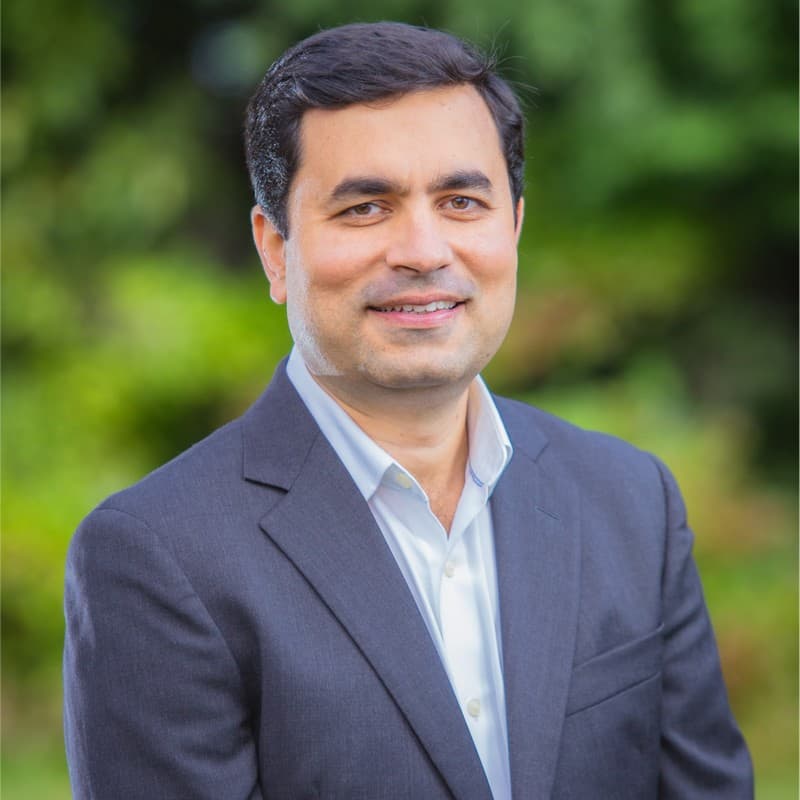
During our conversation, Sadiq explains why electrification alone cannot deliver global decarbonization goals. Without intelligent software capable of monitoring, predicting, and optimizing energy usage, businesses risk wasting valuable resources while struggling to meet rising demand. We discuss why AI may ultimately become the technology that helps solve the energy challenges it has helped create, using continuous analytics and predictive intelligence to improve efficiency across complex environments.
We also examine the growing regulatory pressure. With more than a thousand energy-related regulations introduced around the world in recent years, compliance has become part of everyday operations rather than an occasional reporting exercise. Sadiq explains why organizations should stop viewing compliance as an administrative burden and instead see it as an opportunity to build trust, strengthen resilience, and improve operational performance.
Another area we explore is digital resilience. Whether supporting hospitals, pharmaceutical manufacturers, or mission-critical data centers, modern infrastructure depends on uninterrupted operations. Sadiq shares why cybersecurity, predictive maintenance, unified operational visibility, and connected digital platforms are becoming central to maintaining uptime while helping organizations make better use of limited energy resources.
The conversation also turns to people. As experienced engineers retire and younger generations enter the workforce with very different expectations, organizations face an urgent challenge: modernizing the tools they provide. We discuss how intuitive digital platforms can reduce complexity, shorten training time, attract the next generation of technical talent, and make daily operations easier to manage.
Throughout our discussion, one message remains consistent. The future of sustainable infrastructure is built on the combination of electrification, automation, and intelligent software. From AI-enabled operational insights to connected energy management platforms, technology is becoming the foundation that allows businesses to balance performance, sustainability, regulatory requirements, and resilience in an increasingly unpredictable world.
Is the biggest challenge facing AI actually an energy challenge? And if software is becoming the foundation for modern electrification, how prepared is your organization for what comes next? I'd love to hear your thoughts after listening.
Useful Links
Connect with Sadiq Syed
[00:00:00] - [Speaker 0]
Do you struggle to keep your AI agents from acting outside of compliance? Well, Denodo provides an AI data layer connecting your data systems, keeping guardrails consistent across all of your data platforms. So start scaling your business carefree with Denodo, and you can do that by visiting denodo.com to learn more. But now on with today's show. Welcome back to the Tech Talks Daily podcast.
[00:00:32] - [Speaker 0]
And today, I'm joined by the SVP, digital energy software at Schneider Electric. We got a lot to cover today about AI data centers, electrification, and sustainability. But one question keeps coming back, and that is how do we really power the next chapter reliably, efficiently, and responsibly? My guess will argue today there is no electrification without digital architecture, and decarbonization cannot be treated as a hardware problem alone. It needs software, data, automation and digital resilience built into that foundation.
[00:01:14] - [Speaker 0]
Now as AI workloads grow, energy demand is predictably rising fast and data centers are also placing new pressure on grids. Not to mention the fact that there is more than a thousand energy regulations that have emerged in recent years and climate volatility is exposing weakness in traditional infrastructure. So today I want to learn about how Schneider Electric's is helping infrastructure operators unify power and energy systems to improve efficiency, meet compliance demands and build for a new generation of workers who expect digital tools to be intuitive, connected and ready for the real world. And on that note, let me introduce you to my guest. So thank you for joining me on the podcast today.
[00:02:03] - [Speaker 0]
Can you tell everyone listening a little about who you are and what you do?
[00:02:07] - [Speaker 1]
Thank you for having me, Neil. I'm Salik Syed. I'm the senior vice president of our software division for digital energy. Primarily, my team is responsible for innovation in building and power automation and controls, and it's a global business serving thousands of customers in the built environment.
[00:02:26] - [Speaker 0]
Well, it's a pleasure to have you join me today. There's so much I wanna talk with you about. Be before you join me on the podcast today, was doing a little research on you, and I was reading how you argue that there is no electrification without digital architecture. So tell me a little bit more about why decarbonization falls short when energy transformation is treated as a hardware problem rather than a software led one. Seems to be a lot going on here, but tell me more about that.
[00:02:52] - [Speaker 1]
Yeah. Look. From a from a decarbonization perspective, electrification is is front and center. That's how we're gonna achieve the the the goals we have set forth globally to drive a a net carbon reduction, and electrification is is front and center. And electrification without the digitalization of the of the environments is also not efficient.
[00:03:16] - [Speaker 1]
Right? So there's so much of demand from a from a electricity perspective, and especially with with data centers now taking a bulk of that demand supply from the from the grids. The the only way to manage this is through tools that enable the demand and supply equation, tools that drive efficient use of the the limited supply of electricity today. We can only get so much from the grid today. And and if only the demand is continuing to increase.
[00:03:48] - [Speaker 1]
So the grid is not able to supply as fast as the demand is increasing exponentially. So the the electrification is available. It's just that how do we now make efficient use of what we have while the the infrastructure is still scaling up.
[00:04:06] - [Speaker 0]
Such an important point because AI is often positioned as the engine of a of a cleaner future. But then also, at the moment, in the current state, there are a few sustainability issues around where we are, and many are saying that nuclear could be the way forward, but then that takes time. But and also for organizations, many are struggling to use their energy data So where do you see the biggest gaps between AI's potential and and that real world execution that we find ourselves today?
[00:04:36] - [Speaker 1]
I mean, look, the the explosive growth of AI workloads is reshaping, for example, the data center landscape. So the the problem AI is creating and putting pressure on the on the grid can only be solved by AI itself. Okay? So so we AI needs energy, but the the energy usage and efficient management of that can only be solved by AI. Okay?
[00:05:07] - [Speaker 1]
So for example, like, AI can be leveraged today to provide continuous insights, continuous learnings that can prevent challenges from happening even before they they arise. Another example is data centers are grappling with soaring energy consumption. The need for intelligent and unified control across mechanical and electrical assets has never been greater. But the need for bringing the domains of power, energy, and building management is central to enabling AI infrastructure with with without simply building more data centers. Right?
[00:05:42] - [Speaker 1]
How the the environments customers operate in, whether it's data centers, health care, life sciences, mission critical environments, they have siloed domains they operate in, electrical, mechanical, building management, electrical power management. We are unifying that, and we're solving for that by by our solution, infrastructure foresight operation. By unifying electrical and mechanical systems with predictive analytics, operators can anticipate failures, prevent downtime, maximize efficiency, and and really effectively extracting more performance from the same. And this is the approach to really making our facilities future ready while avoiding cost of constant expansion. So AI is being like I said, AI is being used to solve the challenge it has created.
[00:06:36] - [Speaker 0]
And if we also look over the last five years, I think there's something like more than a thousand energy regulations that have emerged all around the world. So how are compliance pressures reshaping some of those infrastructure decisions for operators that are desperately trying to balance resilience, cost, and sustainability? Because it could be quite a balancing act, Garnet.
[00:06:57] - [Speaker 1]
Yes. Absolutely. I mean, look. The the the compliance aspect of to to to like you said, the data point you gave, just to give you an example, 12% of The US electricity today is consumed by or will be consumed by data centers by 2030. So by 2030, 12% of the current electricity generated will be consumed by data centers.
[00:07:20] - [Speaker 1]
Right? And and and they're set to double up globally. Okay? That's just The US estimate. And the compliance aspect of it is everyone has pressure to report their ESG metrics.
[00:07:35] - [Speaker 1]
There there is pressure to to manage that and to effectively to report around that. Right? While it is putting pressure on the grid, it is putting pressure on the consumers outside of data centers. Ultimately, it's a balancing act that these massive data centers have to play because they also are serving the communities around them. And and everyone has to go and exist.
[00:07:59] - [Speaker 1]
The consumers like you and me on a daily basis, and then the data center is now literally living next to us. Right? So so that balancing act of having the responsibility to to make sure that we are being efficient in our consumption so that everyone can thrive, everyone can coexist. And the only way to manage that is technology. Technology has to be front and center in helping us manage the demand and supply equation and efficient use of that across consumers and across corporations that are that are establishing these data centers.
[00:08:37] - [Speaker 1]
And and technology has a key role to do that, and and I totally believe Schneider Electric has the tools to enable our customers and consumers to to manage through this transition. And it is fast evolving very quickly at a very fast pace. And we have the toolkits and the capabilities to serve that end to end for our customers from design phase to the build phase to the operate phase to the maintain phase. So all aspects of that life cycle, we have the capabilities to help our customer manage that transition and the life cycle.
[00:09:16] - [Speaker 0]
And if we zoom out for a moment, what we're talking about here is the climate volatility and grid instability are all altogether are exposing weaknesses in traditional energy systems. As you said, the technology holds the keys to in proving that. But anything else you can share around how digital resilience can can better help organizations respond to disruption while also still meeting some of them regulatory demands we were talking about.
[00:09:42] - [Speaker 1]
Yeah. Yeah. Look. Again, digital resilience is key to key to making sure that the critical facilities like pharma, health care, data centers, etcetera, are operating at its fullest potential without with minimal downtime or no downtime ideally. Right?
[00:10:03] - [Speaker 1]
The the SLAs that they have to adhere to meet expectations of their end customers is very high, whether it's patients or whether it's critical facilities that that make manufacture critical medications or or data centers that serve critical environments across the world. So digital resonances is key to to the to this. And, again, you you cannot achieve digital resonance without, I mean, just technology enabling a lot of that. Right? Redundancies are built in cybersecurity, making sure it's 100% bulletproof when it comes to our technology and the customer environments to be cyber resilient.
[00:10:45] - [Speaker 1]
So they these are these are aspects that technology can solve. And, again, we have capabilities. I'll come back to EcoStruxure foresight, which we launched which we announced in in November of last year, and then we're working through the the release cycle for general availability. Foresight infrastructure Foresight really meets those outcomes that our customers are expecting on resiliency, on operational efficiency, and and and really efficiently managing their resources, their limited resources, whether it's labor that is less and less available now to manage their operations or the availability of energy from the grid. How do they efficiently manage that?
[00:11:32] - [Speaker 1]
Right? So it is addressing multiple needs in a three sixty way to help our customer achieve their outcomes.
[00:11:42] - [Speaker 0]
And I was also reading. You you've suggested that compliance pressure can become a strategic asset rather than a burden, which is very important to highlight, I think. So what does the transformation look like in practice for energy and infrastructure leaders that might be listening?
[00:11:58] - [Speaker 1]
It's a strategic advantage in the sense people and customers who are able to to meet those standards, very high standards that the regulatory authorities have placed or or in some countries or at at a country level or at a region level, when customers meet those standards and we as technology providers enable our customers to meet those standards, the the the end users have a trust in that. You you you you they trust in in what you are enabling, and they they will treat you as a trusted partner to achieve their goals and and outcomes. To draw a parallel, think of med medications that a lot of us, at some point in life, will end up using for critical ailments or general ailments. Would you trust an a medication that is not approved by the regulatory authorities? In the case of US, it's the FDA.
[00:13:02] - [Speaker 1]
FDA is the pinnacle the authority that approves medications for general general use by patients. If it is not approved by FDA, I'm not taking it. Right? And and it's it sets a very stringent standard, but it is for the safety of the patients. I'm sure there are similar regulatory authorities across the globe.
[00:13:28] - [Speaker 1]
You want to trust that the medication that's going in your body is approved, tested by the highest possible regulatory authority. Same stands for technology. You want to leverage and use the technology that is that has been approved, tested, battle tested, and it meets all standards, regulatory standards. It keeps your operations safe. It keeps your operations at the highest level of performance.
[00:13:55] - [Speaker 1]
And that is a that is a differentiator if you if you meet those standards.
[00:14:02] - [Speaker 0]
And the workforce managing energy systems, this is something that's changing it too, especially with younger generations bringing different level of expectations and digital habits into the workplace. So how are you seeing that shift influencing how energy should be monitored, optimized, and governed? This is this generation bringing a breath of fresh air in in there as well?
[00:14:25] - [Speaker 1]
Yeah. It'll look right now, from one statistic, 60 per 63% of employees globally, they are citing skills gap as a top barrier for driving this transformation. Okay? So our technical workforce today is aging. There aren't enough skilled engineers to replace them.
[00:14:45] - [Speaker 1]
And and and siloed systems make it make that onboarding harder for new generation of of talent. Right? So you want and the new generation talent is very digitally oriented. They're digital first, and and we need to enable them platforms and systems that are very intuitive, that are easy to use, that are easy to train. Only then you can attract that talent and that workforce to your operations.
[00:15:12] - [Speaker 1]
Otherwise, they have they have choices out there in the industry. Right? So so why why should they come and work in a data center or in a health care facility if they don't have the right tools to be successful? And that's what they expect. That's stable stakes.
[00:15:27] - [Speaker 1]
And this is where back to, look, we need to give them future ready technology. We need to enable this so that we can attract the talent and retain them and and keep them excited about where they work and and and how they manage the operations. Plain and simple. And that's again, technology is the only way to handle this. I mean, think of this.
[00:15:49] - [Speaker 1]
Right? Smartphones, how easy that it has enabled our lives to be. I pretty much manage my entire life, personal life through one device. Right? My financial transactions, my quickly checking my medical records, taking appointments, handling my kids' activities, anything, ordering food, groceries.
[00:16:13] - [Speaker 1]
Anything I can think of, technology has just made my life so easy. And that's how we need to think of operations, critical critical facilities and operations. And why can't life be easy for the labor, the workforce to operate in those environments? Why it doesn't have to be painful. It doesn't have to be siloed.
[00:16:36] - [Speaker 1]
The data should flow across domains. They should be able to make faster decisions without frustrating a process of stitching the data or manual reconciliations and and hours and hours of root causing. So and that time to action is critical, and and we it's a delighter. It's a it's a proactive way of managing facilities without downtime. So we have to keep the operator, the the end users, and the workforce in the center of this also when we design our systems and tools.
[00:17:10] - [Speaker 0]
100% with you there, and I can hear people around the world nodding in agreement too. And, of course, as power systems and digital platforms all become more interconnected, I'm I'm curious. What kind of risks do organize face if they modernize electrification but without that unified digital foundation that I know you're passionate about?
[00:17:31] - [Speaker 1]
What are the risks for organizations? I mean, look. They'll be left behind. Sorry to say that.
[00:17:36] - [Speaker 0]
But Yeah.
[00:17:38] - [Speaker 1]
If we don't adopt as technology providers like Schneider Electric or the peer group in the industry, and we don't enable and innovate in solutions that enable that, or the organizations deploying those technologies if they don't adapt fast enough. It's a differentiator. People who can enable resilience, organizations that can enable resilient operations with highest level of uptime with a very efficient way of managing this at a very cost at a very reasonable cost profile, they they are the ones who will attract the most business and demand in the in the market. And and and people who don't adapt technology will struggle, unfortunately. And we have seen multiple examples of that, right, in various industries and various domains.
[00:18:31] - [Speaker 1]
So, again, adoption of that is is critical. Adoption and key and leveraging AI to our to its fullest potential and to our advantage. So that that is a key thing in in terms of making sure end users and technology providers like us quickly re quickly adapt to that changing environment and keep evolving. By the way, it's not a static thing. Right?
[00:18:57] - [Speaker 1]
It it will evolve very fast. It is evolving very quickly. The pace of change is is just mind blowing, and we need to change and adapt.
[00:19:07] - [Speaker 0]
And I know you guys have been incredibly busy this year. I'm not sure how much you are able to share with me, but Schneider Electric's innovation is continuously aiming to help infrastructure operators better unify power and their energy systems, improve efficiency, meet regulatory requirements. Is there anything you can share about about some of those innovations and and what you're working on this year?
[00:19:31] - [Speaker 1]
Yeah. I mean, quite a bit. Look. We our mission is to be your energy technology partner Yeah. Okay, for our customers.
[00:19:40] - [Speaker 1]
We electrify, automate, digitize every industry, business, home. We are driving efficiency and sustainability for all. We are leading the convergence of electrification, automation, and digital intelligence into what we define as energy technology. We have amazing examples of those innovations. EcoStruxure foresight is the leading example.
[00:20:01] - [Speaker 1]
I'll keep coming back to that. That is truly unifying domains, truly enabling outcomes. And and and our and our purpose is to ultimately drive those outcomes for our customers and and really simplifying complexity, enabling smarter, more efficient operations across every sector, whether it's utilities, grids, buildings, data centers, life sciences, health care, etcetera. And and we are creating ecosystems where AI, data, and people work together seamlessly. And and and that that intersection of making sure technology, data, and people who are in those ecosystems are thriving.
[00:20:45] - [Speaker 1]
And and we our innovations are are addressing those, and we continue to have a very strong pipeline of innovations. We'll continue to reveal them, as we go along, and and and more to come, I would say, beyond the infrastructure for site.
[00:21:05] - [Speaker 0]
Love it. You've left us with a couple of teasers there. I'll be staying in touch with you to find out more on that. And for everybody listening, if they wanna find out any more information or keep up to speed with some of those announcements as they drop, where would you like me to point everyone listening?
[00:21:18] - [Speaker 1]
Well, the best resource is schneiderelectric.com, And this the the that's where you can find a lot about our our mission, our vision, our innovations, how we're serving customers across different industries. But we'll keep announcing our our innovations and and showcasing the outcomes we're enabling for our customers. And you can also follow us on LinkedIn, on any other social media handles that are out there. So I'm looking forward to engage with the with the with the customers and end users globally through those forums.
[00:21:53] - [Speaker 0]
Awesome. And I would urge anyone in listening interested in how you're helping infrastructure operators unify power and energy systems, helping improve efficiency and enable regulatory compliance and all the tech that makes that possible. I urge, to check out the links in the show notes. I'll put links in there so everyone can get straight to that information you just mentioned. But Morne, Ethan, thank you for sitting down with me today and talking about this and sharing what you're working on.
[00:22:20] - [Speaker 0]
Really appreciate your time today.
[00:22:21] - [Speaker 1]
Thank you, Neil. Thanks for having me, and it was a pleasure.
[00:22:25] - [Speaker 0]
What I loved about the conversation today is that energy transformation is now a software conversation as much as a infrastructure one. Yes. Electrification matters. But without digital systems that can monitor, optimize, predict, and respond, organizations do risk adding complexity without solving the bigger challenges. And as he explained, AI is creating new pressure on energy systems, but it can also help manage that pressure through better visibility, predictive analytics, and smarter use of existing capacity.
[00:22:58] - [Speaker 0]
And remember, you can find out more information at Schneider Electric and follow them on LinkedIn and and find out more about their latest digital energy innovations. But as for today, that is it. We're at the end already, I'm afraid. Thank you for listening, and and I'll be back nice and early tomorrow with another guest. Thanks for listening.
[00:23:16] - [Speaker 0]
Bye for now.