

What will the enterprise of the future actually look like, and which technologies deserve attention beyond the hype cycle?
In today's episode, I sit down with Yaad Oren, Global Head of SAP Research & Innovation and Managing Director of SAP Labs US, for a fascinating conversation about the technologies that could shape business over the next decade.
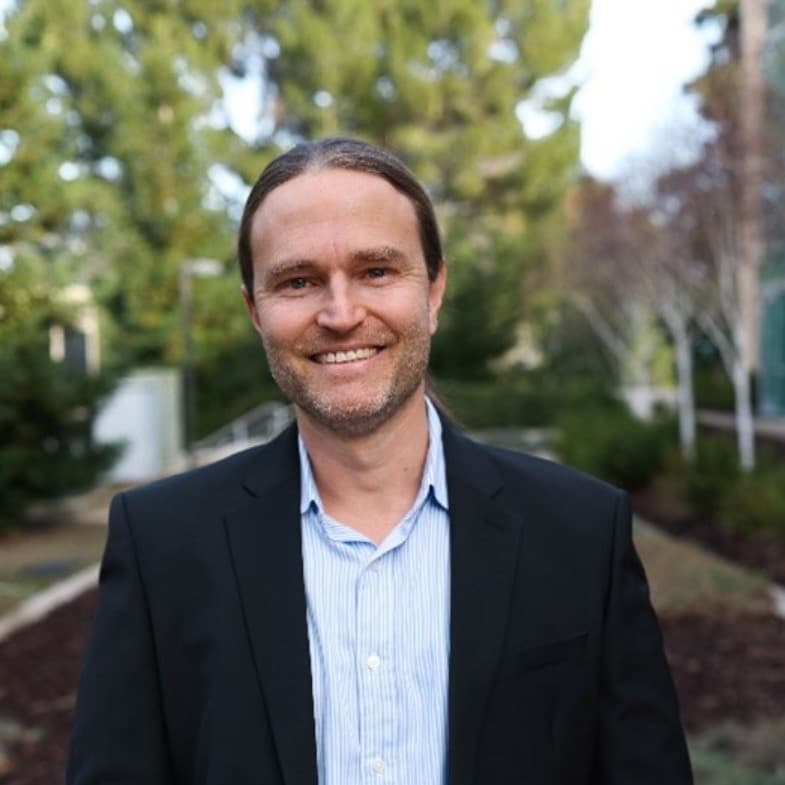
Leading SAP's global research and innovation efforts, Yaad works at the intersection of academia, startups, venture capital, and enterprise technology, identifying emerging technologies before they reach the mainstream. His team explores everything from next-generation AI and voice interfaces to quantum computing, robotics, future data platforms, and new cloud architectures.
We discuss why voice AI could become the primary interface for enterprise software, allowing employees to interact with business systems as naturally as they would with a colleague. Yaad also explains how quantum computing is already showing promise in complex supply chain optimization challenges and why robotics is moving beyond manufacturing floors into logistics, inspection, hospitality, and customer-facing environments.
The conversation also explores one of the less talked about drivers of innovation: the role universities play in shaping the technologies businesses will eventually depend on. Yaad shares how SAP works closely with academic institutions around the world to identify breakthroughs while they are still emerging from research labs, long before they become commercial products.
We also discuss SAP's vision for the autonomous enterprise, where AI assistants orchestrate teams of specialized agents across finance, supply chain, sales, and operations. Rather than replacing decision-makers, these systems are designed to automate routine work and allow people to focus on higher-value activities.
Perhaps most importantly, Yaad offers practical advice for business leaders trying to prepare for the next wave of innovation without chasing every trend. His message is clear: build a strong data foundation, stay informed about emerging technologies, and create a culture that is willing to experiment.
If you've ever wondered what technologies might shape enterprise software five to ten years from now, this episode offers a rare glimpse into the research, partnerships, and ideas that are already influencing that future. What emerging technology do you believe will have the biggest impact on your industry over the next decade? Share your thoughts and join the conversation.
Useful Links
Please check the partners of the Tech Tech Talks Network
Learn more about the NordLayer Browser
[00:00:00] - [Speaker 0]
If you are running a business right now, you may have noticed there's a quiet shift happening, one that most people are still underestimating. And that is your company doesn't live inside your network anymore. It lives inside the browser. That's where your SaaS apps sit. That's where your data moves.
[00:00:19] - [Speaker 0]
And increasingly, that's where attackers are focusing their attention. So NordLayer has just launched its new business browser, and it's designed specifically for small and medium sized companies that need visibility and control without the overhead of enterprise security tools. What I like here is the balance. You get advanced protection, better compliance, and full visibility into how your team is working online, but without slowing anyone down or forcing them to learn anything new. Please head over to nordlayer.com/browser and check it out, and let me know your thoughts.
[00:00:58] - [Speaker 0]
But now, on with today's show. What happens when the company that helps define enterprise software starts preparing for a world driven by AI agents, robotics, voice interfaces, blockchain, and even quantum computing. Well, my guest today has got one of the most fascinating and coolest jobs in tech. He is the global head of research and innovation at SAP, and he works with universities, startups, and research labs to help identify the technologies that could reshape business over the next decade. So from autonomous enterprises and AI orchestration to robotics in hospitality and quantum powered supply chains, today, we're gonna have a rare look at what's coming next, and most importantly, what you and your business should actually be paying attention to right now and not get too distracted by the shiny shiny.
[00:01:59] - [Speaker 0]
I think you'll really enjoy this one. So enough from me. Let me introduce you to my guest right now. So thank you for joining me on the show today. Can you tell everyone listening a little about who you are and what you do?
[00:02:12] - [Speaker 1]
Yeah. Thank you for having me. So my name is Yad Oren. I work for SAP. I have two roles in the company.
[00:02:16] - [Speaker 1]
First of all, I'm the managing director of SAP Development Labs in The US. We have around 20 location in The US, around 6,000 individual building product around AI, cloud. And I was also have another role. I report to SAP CTO. I'm leading the global research and innovation unit where we're looking to emerging technologies together with universities and tech partner and startups and applying them to find new solution and build product that can be the future IT and business reality in five to ten years horizon from now.
[00:02:47] - [Speaker 0]
Wow. I mean, listening to you today, it sounds like you got the coolest job in the world. But for people listening, hearing about a role like this for the first time, tell me a bit more about what SAP research and innovation actually does and how your team is helping shape some of the technologies that businesses might rely on in five or even ten years from now. When I say five to ten years, that's like fifty years in old money, isn't it? It's probably more like eighteen months, two, three years.
[00:03:12] - [Speaker 0]
But tell me more about that.
[00:03:14] - [Speaker 1]
Yeah. How with pleasure. And the way we work, we have three steps in research innovation. The first one, we explore new technologies. Just like you say, Neil, there's so much trends going on there.
[00:03:24] - [Speaker 1]
And, of course, not all of them are relevant for enterprise business that SAP is proud to lead for the for the last fifty four years. So we are working together with universities, venture capital, start up, really to find what kind of technologies, whether it is AI, quantum, and so forth, we can really apply. This is the second step after we explore technologies and find very interesting technologies. We, as technologists, come to the line of business of SAP, the head of finance, the head of supply chain, the head of HR, try to apply those technologies to find new business problem which is unsolved. Yeah.
[00:03:57] - [Speaker 1]
Whether new optimization problem with quantum for supply chain management, all the way to new advanced AI to even make further autonomous enterprise and automation in process. We create new products just like start up, just like incubation unit. And after we explore and we apply, we build those beta product. We build those new incubation. We test them with customers.
[00:04:16] - [Speaker 1]
And if those getting what we say in the start up board, PLG, product led growth, a lot of adoption, then we go to the last step, which is scale. We actually spin out from my incubation unit, from my kindergarten, if you will. We're spinning out the project and build a full PNL product. So we are working in three steps. We're exploring technologies, then we apply the relevant ones to new business problem, which are more relevant for the future of the business we are seeing in finance, other line of business domains.
[00:04:40] - [Speaker 1]
And if there is successes, then we are exiting it into a new p and l unit, and we have a new product line in SAP.
[00:04:48] - [Speaker 0]
Wow. I absolutely love what you're doing here. And I think for myself and possibly for people listening, we all hear a lot around the the hype that surrounds the emerging technologies that we're seeing in our news feeds right now. So I'm curious from your perspective, which technologies genuinely have the potential to reshape enterprise operations over the next decade? And and why do you think areas like maybe voice AI, quantum computing, and robotics, do they stand out to you too?
[00:05:18] - [Speaker 1]
Yeah. Well, first of all, how much time do you have? Oh, I got it. So we are focusing on six areas. You are right.
[00:05:24] - [Speaker 1]
There are so many technologies there, and there are many hypes, and some technologies are still not mature yet. Some of them might not be relevant for our business. They can be great for our consumer, for gaming, but we, of course, focus on b to b and enterprise. So we have six first order priorities of areas when we're looking to explore appliance scale. The first one, not surprisingly, is AI.
[00:05:43] - [Speaker 1]
My team is I would wouldn't say is the AI army of SAP building the current AI solution. We are like the SWAT team that's looking even for the future of AI. And this is very important because as you know, and anyone who is dealing with AI or research know that AI comes in waves. Like, I was a developer in AI twelve years ago when it was the narrow AI era. Currently, in the generative AI era.
[00:06:03] - [Speaker 1]
If you're going to research conference like Neural IPS, ICLR, you see a new generation bubbling. And and we are looking into areas like post transformer architecture, and I can geek out all day. But, definitely, in five years, we're going to see new disruption coming, and we're exploring what those kind of new reasoning models and other behavior can mean for analytics, enterprise performance, and so forth. So AI is a big part of what we are doing, and we try to look how AI will evolve even farther to five and ten years from now with university like Stanford and other and so forth. The second part is the future of data.
[00:06:32] - [Speaker 1]
I think the most important part in any enterprise is the data platform. Here as well, we see a lot of transformation. I can talk all day on this, but if I keep it really short, new emerging technologies around synthetic data generation of moly modality, new tools for data quality, metadata intelligence, many trends that could shape the future data platform. Pretty safe to say that everything you see today from SAP Data Platform, Databricks, Snowflakes will evolve and become different in three to five years. The third one is very simple.
[00:06:59] - [Speaker 1]
It's the future of user experience, how, you know, I'm really occupied, how my kids are generation alpha, and, hopefully, one day, they will leave the house and go to work. And this is the first generation born AI native, and how they will interact with enterprise software is a fascinating human computer interface, discipline. We are working a lot with university like the FKI, Hassel Plattner Institute. Just keep it very, short. Of course, quantum is a big thing, just putting out their new optimization solution for supply chain logistic.
[00:07:28] - [Speaker 1]
Robotic is a huge thing moving very fast forward. We are investing in this, definitely something that we believe going to shape the future workforce and plant and manufacturing. And the last one, we're also looking for the future of cloud architecture. I know there are many discussion if SaaS is dead and so forth, but we believe it's evolving. So how are going to orchestrate and how are you going to architect the future SaaS application and all those crazy agents with run there and how you do, the right operating system for us and and so forth.
[00:07:55] - [Speaker 1]
So if I summarize, we're looking into six areas, the future of AI, future of data, future of user experience, quantum robotics, and the future of cloud architecture as the first order priority for us to explore.
[00:08:07] - [Speaker 0]
And just to dig a little bit deeper on some of those, man. I mean, if we look at voice AI, for example, that's evolved incredibly quickly over the last couple of years. But just to to bring that to life for business leaders listening, if we look beyond customer service chatbots and assistance, where do you see voice becoming genuinely transformative inside enterprise environments?
[00:08:27] - [Speaker 1]
Yes. So voice is actually the Venn diagram between the the first and third point we discussed earlier. There is a lot of innovation with the AI and new methodologies, and, of course, is a big part of what we believe will be the new interface for any enterprise system in in the future of user experience. So voice has long way to go. I can talk about two things.
[00:08:47] - [Speaker 1]
First of all, from technology perspective, I think we're only starting to see the tip of the iceberg here. Yes. Today, you can talk to maybe customer support agent and so forth, but the level of understanding of voice just getting better and better. If you see how we are talking to each other right now, there is a lot of other thing that currently being researched how you can apply to voice like FedEx. Right?
[00:09:08] - [Speaker 1]
All these small mhmm and others, the understanding of semantic, the understanding of mood as well. And if you apply this, you can get much more for existing application, whether it's customer service and so forth that you get from that will come in in in in the future from voice based solution. But the second point is exactly what you said, Neil. We believe voice will become the interface for any enterprise application, a big big one of the main one in the last week in our annual customer conference, Sapphire Madrid, we show on stage how we can talk as a CFO, as a COO to your enterprise system, do analytics, get back some great result. So both as an employee, you can start talking to your enterprise system to get any information from finance, from HR.
[00:09:55] - [Speaker 1]
And also as a customer, you can do much more in interacting with those agents that you will understand you better. I can end up with a very interesting example with presented in the Mobile World Congress where you can use voice with understanding of moods and semantics. You are now a truck driver. You want you are now stuck, let's say, somewhere in Spain, and you want to find a solution to reroute your supply chain management. You call to your supply chain management agent to find new ways and a a to route and make sure all the SLA delays will beat the system and the voice.
[00:10:26] - [Speaker 1]
And this is the point. Understand if you are a little bit on stress, you're more relaxed, and it can communicate with you. The system can communicate with you in the right notion and base your mood. So if I summarize, it's really about, it's a key it's a key components of interacting with enterprise software. We're seeing more and more progress, but also it's going to run the gamut across all line of business from finance, HR, all the way to very advanced customer support.
[00:10:50] - [Speaker 0]
And also on your list there, quantum computing, that's something that's been discussed for years now. And I think, though, many business leaders still struggle to understand what it could realistically change. There's been a few scary stories in cybersecurity about if it broke cryptography or or the bad guys harvesting data now and gonna decrypt it later. But on a more optimistic note, what are some practical enterprise problems that you see quantum potentially solving or delivering capabilities that traditional computing simply cannot?
[00:11:22] - [Speaker 1]
Yeah. You're right. So so in quantum, of course, without doing massive introduction to to quantum computing, of course, as you as you imply, is very bad in arithmetic. One plus one, you know, the computer can can can can collapse. But for anything which involve exponential growth of of complexity or, like, logistic optimization, this kind of travel assessment problem, quantum show order of magnitude improvement.
[00:11:48] - [Speaker 1]
So the first point is and where SAP is focused on is about optimization problem when it comes to supply chain management, logistic, and and thing like that that involve mega planning and many different variables. Here, we have a great partnership already with IBM when the quantum is kind of a coprocessor where we identify a quantum problem in supply chain management that necessitate this big quantum computing computation. We fork it into the IBM, in this case, a computer, and then you can solve it there and go back to the main code. So it's kind of a copilot for for application, in supply chain management, logistic. This is our main focus because this is a great b to b enterprise use case, and we heavily invest in this with research in in Munich and and and so forth.
[00:12:39] - [Speaker 1]
With our other thing you can do with Quantum, you said, Neil, we are not focusing on that, but I can just name two of them that we observe. One of them is, of course, the cybersecurity, the post crypto encryption. Definitely a big, challenge. Go back to a different stage in my career that involved more in cybersecurity, but this is where we are not actively involved, but definitely many interesting progress from standardization point and other. And the last point, also quantum is very helpful to accelerate AI development, especially, as we mentioned before, generating new type of data sets and others.
[00:13:09] - [Speaker 1]
Quantum is can be also a catalyst for AI development. So many application for quantum, are focusing on the optimization for supply chain, logistic, and and other thing that necessitate this kind of computation paradigm.
[00:13:22] - [Speaker 0]
And robotics is also entering a very different chapter now as AI systems become more adaptive, more autonomous. How do you see robotics evolving beyond manufacturing flaws into broader business workflows and decision making environments? Again, feels like there's some big moments ahead here.
[00:13:40] - [Speaker 1]
Yeah. So first of all, to to of course, to to clarify, SAP is a software company. So in robotics, we don't build a robot. Also in quantum, we're building the not the computer, but the the the software algorithm. But robotic, actually well, quantum is definitely progressing, but I would say it's pretty slow, and I could just quote our our CEO that, you know, 2030 will be the decade of quantum, like 2030 of the AI, my point is robotic actually move much faster than I expected.
[00:14:06] - [Speaker 1]
I need to be very honest. And everything, You know, NVIDIA also coined physical AI, and and and and there are a lot of backwind for that. And what we are doing in robotic, it's very important to understand that today, the name of the game, the one word, the holy grail, everyone looking for robotic is scale. Because you can do many proof of concept and robotic has been there for forty years. I don't think there are many you know, you can see robot today already walks through the racks in men manufacturing in in warehouse, but things has changed.
[00:14:37] - [Speaker 1]
Three things are now making a new era for robotic, if you will. The LLM, of course, and AI enable robotic to do much more and learn much more, do many more capabilities, which are intelligence. The second point, they can learn better. I mean, there is a great YouTube demo from Figure AI that understand how to sort fruit without even knowing what fruit means. And the third thing that that that is, less spoken but very important, they can coordinate better.
[00:15:00] - [Speaker 1]
Robotic can now delegate just like software agent from one test to another. So let's say Neil, you and I are now robot, and we get a request from our operator. Hey. Please move this crate from here to there. You can identify, Neil, that I'm closer to this crate and ask me to do this.
[00:15:13] - [Speaker 1]
So those kind of thing create a paradigm shift, and we are enabling the software layer that know how to business task is a very hard problem to do. Hey. For different robots from different vendors, take this crate out out of a truck, sort which kind of items are malfunctioned or functioned, put it there, move to the manufacturing line, and, also, we know how to report back that you completed the task because it's very important for audibility and so forth. So this is a little bit what we are doing on top of the using many hardware vendors. And, yes, currently, most of the use case, just like you said, Neil, around enterprise warehouse management, around inspection.
[00:15:48] - [Speaker 1]
At Sapphire, we also showed a great use case with our good partner, Boston Dynamics, how those spot robots, these dog look like robots, can have inspection of pipes, and they can identify leakage in manufacturing before they're happening. And all of us, you know, know that it's better to identify a leakage in your house or property before it happened rather after it happened. So the inspection use case, enterprise warehouse management inspection are the most common one. But I will end up by saying we're seeing huge demands. While we have many customers already for robotics from from Bosch to Pizza and other for the enterprise risk management, we see now more requests from the customer experience award for hospitality, for managing different, you know, customer interaction.
[00:16:35] - [Speaker 1]
You know, if you go to China, for example, you see the different hotels and hospitality areas already have robots welcoming you, and, of course, you need to have the right customer data. So it's growing to new line of business era. I think it's going to be faster than slower. I do encourage all the audience at least to have an opinion on that because it's created a lot of value and reduction of cost and increase the productivity. So many line of business to come, I believe.
[00:17:03] - [Speaker 0]
So a special thank you to Denodo for supporting the Tech Talks Network and helping us keep these conversations going because moving beyond AI pilots all starts with connecting your models to trusted enterprise data. So if you're ready to move beyond AI pilots, Denodo can help you connect your AI models to trusted enterprise data in real time. So you can scale faster and reduce risk. So if you're interested in turning AI into business value, simply visit denodo.com. We will have people listening in side organizations that are still wrestling with the more traditional digital transformation from the last decade, and at the same time, we're facing another wave of innovation.
[00:17:50] - [Speaker 0]
That's what's approaching us now. So for to give people valuable takeaways here, what practical steps should business leaders be taking today to future proof their organizations without chasing every emerging trend at once, every new shiny new technology? Tell me tell me more about that. Any any advice that you would offer? Actually, it's very it's very easy to get distracted by shiny object syndrome, isn't it?
[00:18:14] - [Speaker 1]
Yeah. I definitely agree with you, Neil. And, of course, you can also ask me, this six area of of of investment. You know, there are so many else, where is blockchain, many other thing we are hearing. So there are only many other things that, of course, we believe are important, but it's all a matter of focus.
[00:18:28] - [Speaker 1]
And and also, as you said, Neil, I can definitely understand. Now we are talking and fantasizing about the future, and customer can says, hey. You know, Neil and Yad, you're you know, we are now building the 1st And 2nd Floor of the building. You guys talking on the penthouse. Let's just just build the foundation first.
[00:18:44] - [Speaker 1]
But I think the the first action the act too actionable and and too call to action. I think it's important, as I said earlier, at least to have opinion, an opinion on those six areas. It doesn't mean you need to buy or engage. You can try, but we know we thought with AI, the pace of innovation is so high. I'm a technologist, and I've been to this industry for for for more than twenty years.
[00:19:06] - [Speaker 1]
You know? We need to know what's going on. So I I encourage people just to think about it. It doesn't mean they need to now move all the investment or all effort there. You just don't wanna be blindsided.
[00:19:16] - [Speaker 1]
And we have an opinion around six areas. You can find, definitely, more information in SAP website around innovation and others, but this is one thing I I recommend. The second point and the last point from my side is the most tangible request I can give everyone is the data foundation. Back to this house analogy, you wanna build a penthouse eventually, the most important thing for any one of the trend, whether it's, you know, AI, immersive robotics, is to have the right data foundation. I think there, we need to make sure that things are as high as quality as possible, whether having the right data, the standardization, the most up to date tooling, knowing how to bring data from different resource.
[00:19:58] - [Speaker 1]
This is a very safe investment because this is kind of the, you know, the flower bed when you can seed so many different innovation later on, and I'm sure any nobody will regret investing in very good data layer for their organizations.
[00:20:11] - [Speaker 0]
And another area I personally find particularly interesting is SAP's collaboration with universities and academic institutions. What why are these partnerships becoming increasingly important, do you think, especially in shaping enterprise innovation? And what can businesses possibly learn from the way academia approaches experimentation and and long term thinking?
[00:20:34] - [Speaker 1]
Yeah. I think it's a great question because I don't need to to to emphasize the importance of academia and the history of university for all the break breakthrough in the world. But what people realize, I think, and I feel this was a paradigm shift, people now understand that after Chekipiti was introduced to the world in the version two point zero in 2022, Now it's clear for everyone, not only us geeks in research who went to all these conferences, neural IPS and ICLR, that this came from research. Because if if you know the story, Neil, of course, the transformer architecture that gave birth to JGPT was there since 2018 since Google released this attention only newspaper. So now people understand that this research even, let's say, people who are farther away from the university and academia, they will understand the power of research can if it's properly properly applied to a business problem, it can really make a miracle.
[00:21:32] - [Speaker 1]
And I also can give credit to, you know, to Berkeley when Skylab that we work with, how, you know, Databricks and Sparks and other great thing came from there. So we see more and more in the recent years the fruits of good applied research to solve problem and provide value. So this helped to create kind of backwind why we need to invest in this for, I would say, the larger population. But the last point is definitely it's very important to deploy what we call, Neil, the sensor network. We are very engaged with university around the world, and we always have a good grip of what's going on in these universities according to the six pillar you want to invest, future of AI, data user experience, robotic quantum, and the future of cloud architecture.
[00:22:14] - [Speaker 1]
So you need to have always a connection with universities, and, of course, my organization help to to drive help to drive this for SAP. And when you can identify, those technologies, those future Chekipiti disruption while they're still embryonic in research, and then you can collaborate. We release papers. You can apply it. You give early access, and this can be the next Goldman for everyone.
[00:22:38] - [Speaker 1]
So research becoming cool again, which is great, but connecting with the sense and network to the right universities. But you need to have a good strategy. You need to know what kind of domains you wanna come. You cannot just come for, you know, for a dean and tell him, hey. What do you got for me, mister professor Frei?
[00:22:52] - [Speaker 1]
Yeah. You need to come. What do you have for multi agent orchestration or voice enabled interaction for enterprise system? And then you can really find new technologies to explore, apply them to new business problem, and hopefully scale to a new portable profitable product line.
[00:23:08] - [Speaker 0]
And earlier in our conversation, you mentioned the Sapphire twenty twenty six event there. And I was following that remotely, and one of the big announcements there that caught my attention was the the CEO saying SAP is no longer a software company. It's an AI company and unveiled a vision of the autonomous enterprise as the the vision there. What did you take away from the event? What excited you there?
[00:23:30] - [Speaker 1]
So I got a lot of excitement from customers and analysts. I was there in Orlando. And I think is, again, as a technologist, is definitely the right message because we know that now AI capabilities are enabling new level of automation. And customers can be now the decision makers while AI can execute many of the tasks according to their will. For me, the most important thing among all the autonomous enterprise that provide now full automations of of process across the finance, supply chain management, and so forth.
[00:24:06] - [Speaker 1]
One of the most important thing is the concept of assistance that SAP recently brought to life because the main point now AI is so advanced that you not only have those agents, those AI functionalities that can reason, can take decision, but, of course, you can orchestrate them, as we all know, as multi agents. They can do things together. Assistants can really be the the orchestrator, the kind of, you know, entity that manage all of them to bring the full functionality like finance or marketing into be fully autonomous. Yeah? I would give, like, would explain it to my six years old that assistants can be, you know, like the puppeteer.
[00:24:46] - [Speaker 1]
Right? Having this agent barionette and orchestrating them to make make one great show. But this is very important because we're reaching to a level where AI is so advanced, and you cannot only do multi agent process, which are very complex. You can orchestrate them across entire, you know, role based support of, let's say, finance from accounts receivable to park document to invoice reconciliation or actually having entire sales pipeline from leads conversion to opportunity to a deal done by one assistant, which is role based, like assistant for CMO, for COO, or cross training agent. So this is kind of, for me, the essence of the autonomous enterprise, that agent execute the task.
[00:25:23] - [Speaker 1]
You have assistants organizing all of them to create the automation of a business process to the maximum extent, which really become, like Christian Klein, our CEO says, an AI driven company and hopefully provide a great value for our customer. We have, like, over 34,000 reference customer already, which is amazing, and and I think it's only the beginning.
[00:25:44] - [Speaker 0]
Exciting times ahead. And listening to you today, it's clear that you've got a front row seat to both cutting edge research and real world enterprise challenges. And if I was to ask you to look into a virtual crystal ball, looking ahead, maybe we can leave people listening on an inspiring note. What do you think will begin to separate organizations that successfully adapt to this next era of innovation from those that that struggle to keep pace? Do you see a gap developing here?
[00:26:12] - [Speaker 1]
I think that we're already seeing two type of organizations. And for me, the main barrier is the one that are making experiments and try those new technologies. For example, another big announcement we made at Sephyr, which is, of course, now very known for audience, all the Vibe coding support. We can support Cloud Code and other. We actually had Daniela Modi as part of the keynote as well from Anthropic.
[00:26:41] - [Speaker 1]
So experiment and try those kind of thing is very important. Based on a great data platform, I go back to the to the question you asked. You will need to have the great data. Otherwise, everything you cook is based on junk ingredient, junk data. But we see customer users, you know, not afraid to do a little bit more on, you know, the token signs token usage signs at least for a defined period of time.
[00:27:05] - [Speaker 1]
I'm a little bit concerned when I see customers or enterprise who are not trying or doesn't have an opinion on those kind of thing and kind of, you know, go with the flow and see what's going to happen because the pace of innovation, as I said, is so so so early. So I do believe that we're gonna see much more of the autonomous enterprise as a reality coming in the next years. I do encourage customers, and this this is where I see customer are more successful, see more value. If so many customers see 30% uptake in their productivity, 25% reduction of cost in processes, if they can try and they start engaging with this multi agent based automation we discussed. So this is my three recommendation, invest in a big data platform.
[00:27:44] - [Speaker 1]
This is the important thing. You do many experiments to try many things and see what fits for you. And this and this and the third point was definitely start to engage with everything regarding autonomous process based on the multi agent and the system orchestration. I'm sure a customer will be surprised how much value it can bring in relatively short amount of time.
[00:28:06] - [Speaker 0]
Wow. Lots to take away there and think about. And for people listening that wanna keep up to speed with some of the big announcements coming out of SAP, some of the work that you're doing as well, connect with you or your team, anywhere in particular you'd like me to point everyone listening?
[00:28:22] - [Speaker 1]
Yeah. First of all, happy if people connect me directly with any questions or any ideas they have on the future of enterprise software, but too late too kind of more structured way to learn about what we are doing. Of course, sap.com have a great innovation tab there, and you can follow-up on many great innovation that we are doing. Very proud on one of the list, like, new models we released recently in SAP RPT 1.5 and so forth. So this is one point you can definitely learn more about.
[00:28:55] - [Speaker 1]
And, yes, there is also SAP, a lot of learning material. I would actually go go back to your last question, Neil, about what customer can take away. SAP, I think, have the best learning material for innovation in AI, what you can actually do today, and experiment. So if customer would like to start testing thing and and do these experiments, also SAP learning website offer really spoon feeding materials to start with a very low barrier and hopefully set customers up for success.
[00:29:26] - [Speaker 0]
Well, there's so much I've loved from our conversation today, especially around SAP's partnerships with universities and how they're fueling the company's R and D efforts. Such important work there, as important as those emerging technologies like voice AI, quantum, and robotics, and blockchain, etcetera, that will continue to transform the enterprise. And most importantly, possibly, the steps that companies can take in the near term to future proof their organization for that net for that next wave of innovation that is heading their way. So I will include links to everything that you mentioned now. I urge people listening to go check that out, find out more information, maybe reach out to you on LinkedIn as well, and we'll keep this conversation going.
[00:30:10] - [Speaker 0]
But more than anything, just thank you for starting it today, Jorg. Really appreciate you.
[00:30:14] - [Speaker 1]
My pleasure, Nilan. Thank you for having me.
[00:30:16] - [Speaker 0]
What I loved about our conversation today was hearing how SAP is balancing long term experimentation with real world business value. Because, yes, there is a lot of noise around emerging technology right now. But my guest bought a refreshingly practical perspective to where AI, robotics, voice, and quantum computing can genuinely make a difference. So my big takeaway was his point really that that companies don't have to trace every shiny new trend, but they do need an opinion on where technology is heading, especially around AI and data foundations. So if today's conversation sparked a few ideas, I'd love to hear your thoughts.
[00:31:01] - [Speaker 0]
Have a think around which emerging technology you think you could have the biggest impact on enterprise business over the next three to five years. So please go to techtalksnetwork.com. There'll be a blog post associated with this episode with all the links you need and more. And feedback to me. Let me know.
[00:31:20] - [Speaker 0]
But that's it. I've taken up far too much of your time today. I'm going now, but I'll be back in your podcast feed tomorrow morning. Thanks for listening as always. Bye for now.