
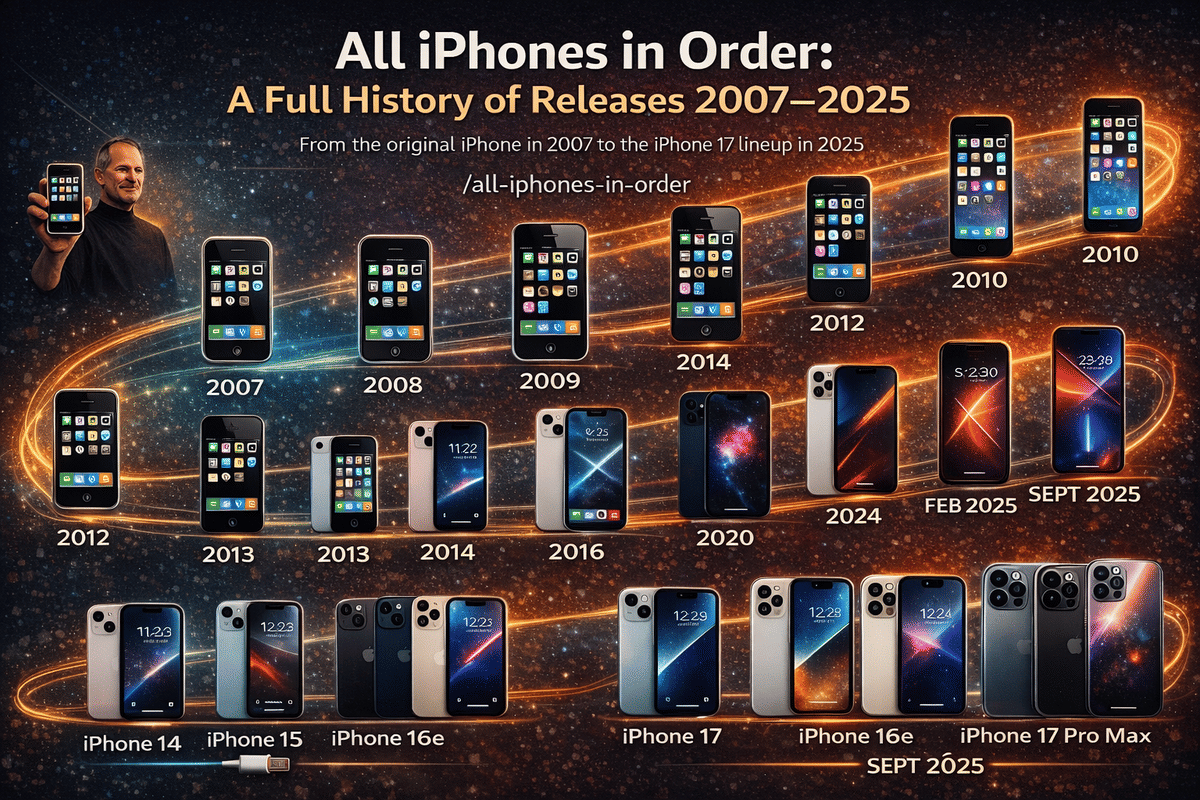
On January 9, 2007, Steve Jobs unveiled “a revolutionary mobile phone.” What we now remember as the “iPhone moment” lit a spark that would kickstart how we communicate, entertain, and work.
The journey from that first iPhone to the technologically advanced versions we have today encapsulates the rise of one of the most influential tech phenomena of the 21st century.
This guide will take you through all iPhones in order while highlighting key milestones, from 3G to 5G, replacing the lightning charging cable with USB-C in the iPhone 15, and the iPhone 16 Apple Intelligence AI features.
Key Takeaways
Steve Jobs skipped his iconic "one more thing" catchphrase in 2007, despite Apple's name change and the launch of the first iPhone.
2008 was the year of 3G and the App Store.
iPhone 7 killed the headphone jack.
iPhone X removed the home button in 2017.
iPhone 12 provided 5G support.
iPhone 15 replaces the lightning charging cable with USB-C.
iPhone 16 becomes the first truly AI-enhanced smartphone.
All iPhone Models in Order of Release & Their Key Specs
“You cannot connect the dots looking forward. You can only connect them by looking backward. You must trust that the dots will somehow connect in your future.” - Steve Jobs
We look back at all iPhones in release order to see how they align with the vision for future Apple iPhone models.
iPhone Model | Release Date | Price | Display | Camera | RAM |
iPhone | June 29, 2007 | $499 (4GB) $599 (8GB) | 3.5-inch | 2-MP | 128MB |
iPhone 3G | July 11, 2008 | $699 (16GB) | 3.5-inch | 2-MP | 128MB |
iPhone 3GS | June 19, 2009 | $699 (32GB) | 3.5-inch | 3-MP | 256MB |
iPhone 4 | June 24, 2010 | $699 (32GB) | 3.5-inch | 5-MP | 512MB |
iPhone 4S | October 14, 2011 | $849 (64GB) | 3.5-inch | 8-MP | 512MB |
iPhone 5 | September 21, 2012 | $849 (64GB) | 4-inch | 8-MP | 512MB |
iPhone 5S | September 20, 2013 | $849 (64GB) | 4-inch | 8-MP | 1GB |
iPhone 6 and 6 Plus | September 19, 2014 | $849 (128GB) $949 (128GB) | 4.7-inch 5.5-inch
| 8-MP | 1GB |
iPhone 6S and 6S Plus | March 31, 2016 | $849 (128GB) $949 (128GB) | 4.7-inch 5.5-inch
| 12-MP | 2GB |
iPhone SE | March 31, 2016 | $399 (16GB) $499 (64GB) | 4-inch | 12MP | 2GB |
iPhone 7 and 7 Plus | September 16, 2016 | $849 (256GB) $969 (256GB) | 4.7-inch 5.5-inch
| 12MP | 2GB 3GB |
iPhone 8 and 8 Plus | September 22, 2017 | $849 (256GB) $949 (256GB) | 4.7-inch 5.5-inch | 12MP | 2GB 3GB |
iPhone X | November 3, 2017 | $1,149 (256GB)
| 5.8-inch
| 12MP | 3GB
|
iPhone XS / XS Max | September 21, 2018 | XS $999 XS Max $1,099
| 5.8-inch 6.5-inch
| 12MP 12MP | 4GB 4GB |
iPhone XR | October 26, 2018 | XR $749
| 6.1-inch
| 12MP
| 4GB
|
iPhone 11 | September 20, 2019 | 11 $699 11 Pro $999 11 Pro Max $1,099 | 6.1-inch 5.8-inch 6.5-inch | 12MP 12MP 12MP | 4GB 4GB 4GB |
iPhone SE 2 | April 24, 2020 | $549 (256GB) | 4.7-inch | 12MP | 3GB |
iPhone 12 | October 23, 2020 | iPhone 12 $799 12 Mini $699 12 Pro $999 12 Max $1099 | 6.1-inch 5.4-inch 6.1-inch 6.7-inch
| 12MP 12MP 12MP 12MP | 4GB 4GB 6GB 6GB |
iPhone 13 | September 24, 2021 | iPhone 13 $799 13 Mini $699 13 Pro $999 13 Max $1099 | 6.1-inch 5.4-inch 6.1-inch 6.7-inch
| 12MP 12MP 12MP 12MP | 4GB 4GB 6GB 6GB |
iPhone SE 3 | March 18, 2022 | $429 | 4.7-inch | 12MP | 4GB |
iPhone 14 | September 16, 2022 | iPhone 14 $799 Plus $899 Pro $999 Pro Max $1,099 | 6.1-inch 6.7-inch 6.1-inch 6.7-inch | 12MP 12MP 48MP 48MP | 6GB 6GB 6GB 6GB |
iPhone 15 | September 22, 2023 | iPhone 15 $799 Plus $899 Pro $999 Pro Max $1,199 | 6.1-inch 6.7-inch 6.1-inch 6.7-inch | 48MP 48MP 48MP 48MP | 6GB 6GB 8GB 8GB |
iPhone 16 | September 2024 | iPhone 16 $799 Plus $899 Pro $999 Pro Max $1,199 | 6.1-inch 6.7-inch 6.3-inch 6.9-inch | 48MP 48MP 48MP 48MP | 6GB 6GB 8GB 8GB |
All iPhone Generations 2007-2024
iPhone – June 2007
When Was the First iPhone Released?
On June 29, 2007, the mobile industry witnessed a transformative event as Apple released the first iPhone, priced at $499 for the 4GB model and $599 for the 8GB model.
This device combined a widescreen iPod with touch controls, a revolutionary mobile phone, and an internet communications device all rolled into one.
Despite its limited tech specifications by today's standards, including a 3.5-inch display, a 2-megapixel camera, and a maximum of 16GB of storage, the iPhone dramatically shifted user expectations for mobile devices.
Initially, industry veterans like Microsoft's Steve Ballmer famously mocked the iPhone's prospects, citing its high cost and lack of a physical keyboard as barriers to mass adoption. The rest is history.
iPhone 3G – July 2008
When is the next iPhone release date? Many excitedly asked this question in 2008 because big announcements were on the horizon. The iPhone 3G built significantly upon the foundation laid by its predecessor by introducing 3G connectivity and the revolutionary App Store, marking a pivotal shift in the smartphone industry.
While maintaining the original's 3.5-inch display, 2MP camera, and 128MB of RAM, the iPhone 3G enhanced user experience by enabling faster internet access and many applications through its new app ecosystem.
This model addressed the first iPhone's connectivity limitations and catalyzed the "there's an app for that" era, profoundly changing how users interacted with their devices.
The introduction of the App Store alone transformed the iPhone from a mere communication tool into a versatile gaming, business, and entertainment platform, setting a new standard for what smartphones offer.
iPhone 3GS – June 2009
The iPhone 3GS represented a substantial upgrade within Apple's smartphone lineup. It addressed the escalating demands of mobile app users by doubling its storage capacity to 32GB and its RAM to 256MB.
This enhancement accommodated the growing app ecosystem fostered by the App Store and improved the device's overall performance and multitasking capabilities.
Apple also introduced a more capable 3MP autofocus camera, significantly enhancing photo quality compared to its predecessors.
Additional innovations included a built-in digital compass and accessibility features like VoiceOver, which marked significant strides in making smartphones more valuable and accessible to a broader audience.
iPhone 4 – June 2010
The iPhone 4, unveiled on June 24, 2010, marked a significant leap in Apple's design and technology, setting a new smartphone benchmark worldwide. It introduced the first Retina display, boasting an impressive 326 pixels per inch, making it nearly impossible for the human eye to discern individual pixels, thus offering an unprecedented sharpness in visual display.
This model was also the first to feature a sleek glass and stainless steel body, a departure from the plastic backs of its predecessors. It also added a front-facing camera, revolutionizing mobile communication with the introduction of FaceTime, which allows video calls over Wi-Fi.
Despite facing criticism for its antenna design, which affected signal reception and led to the "Antennagate" controversy, the iPhone 4's innovative features, like the improved 5MP rear camera with LED flash and its aesthetic overhaul, solidified its legacy as a pivotal model in the evolution through the iPhone generations.
iPhone 4S – October 2011
In October 2011, Apple shifted its iPhone release schedule to the fall to introduce the iPhone 4S. This model was a significant upgrade, featuring an 8MP camera that set a new standard for mobile photography and could record video in 1080p, a notable advancement at the time.
Perhaps most revolutionary was the introduction of Siri, Apple's digital assistant. This represented a significant leap forward in voice-activated technology, allowing users to perform tasks through voice commands.
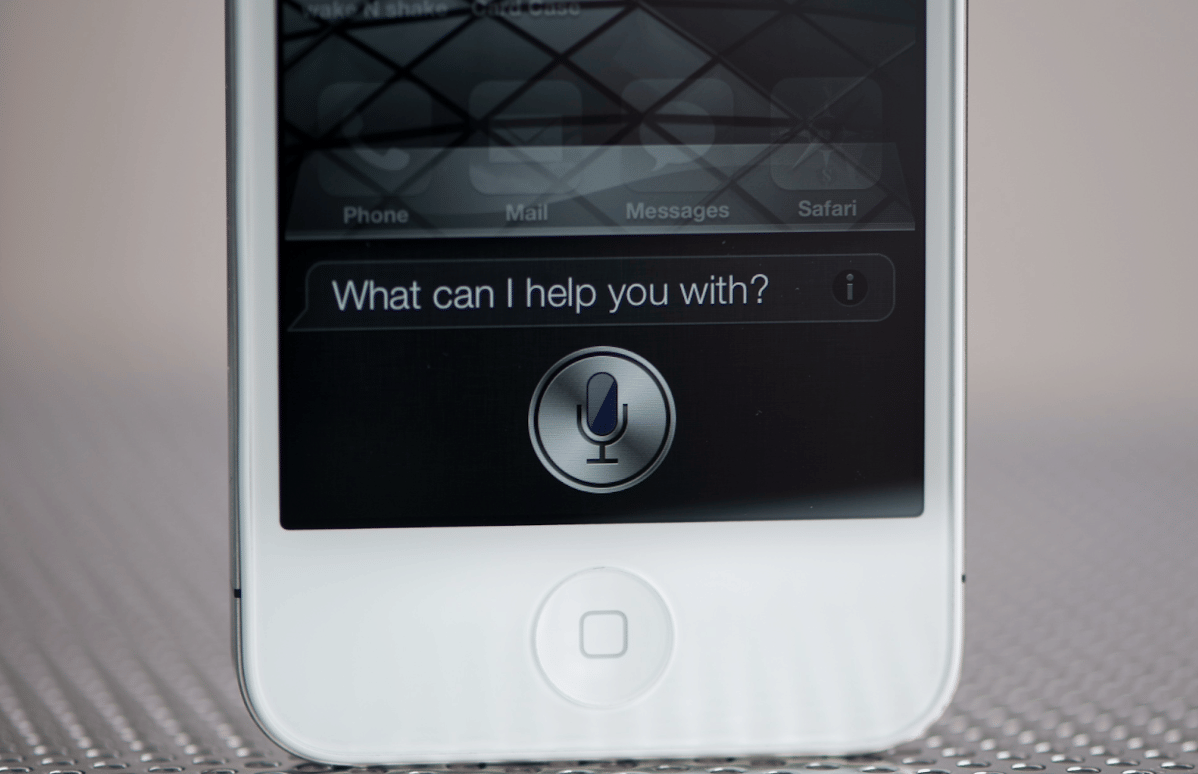
Additionally, the iPhone 4S coincided with the launch of iCloud, which enhanced user experience by providing integrated cloud storage for photos, videos, and other data.
Sadly, Apple's co-founder Steve Jobs passed away the day after the announcement of the iPhone 4S. But, he did oversee the development of the iPhone 5, which would eventually hit stores in September 2012.
iPhone 5 – September 2012
The iPhone 5, launched in September 2012, has a larger 4-inch screen, providing a more expansive display for multimedia and apps while maintaining the crisp visuals of the Retina display. It was the first iPhone to support faster LTE networks, dramatically improving internet speeds and connectivity.
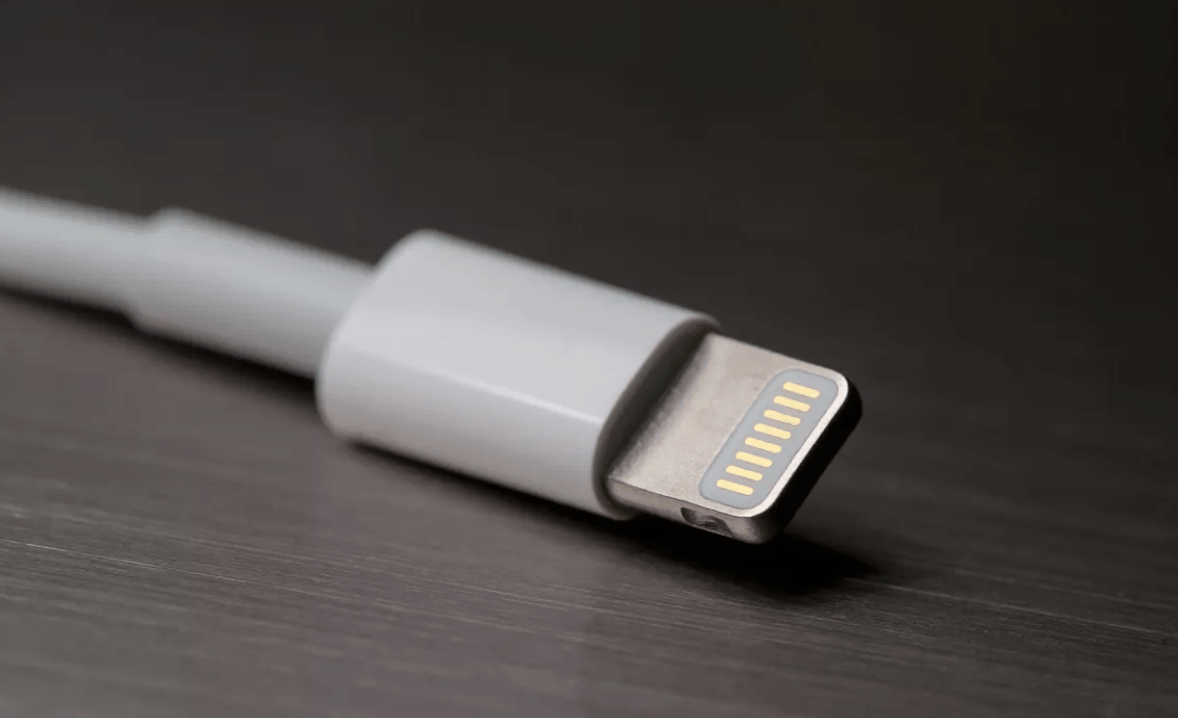
Apple also transitioned from the traditional 30-pin connector to the more compact and versatile Lightning connector, setting a new standard for device charging and data transfer for over a decade.
iPhone 5S and 5C – September 2013
Apple broke new ground in 2013 by unveiling two distinct iPhone models simultaneously, the iPhone 5S and the iPhone 5C, catering to different market segments.
The iPhone 5S emerged as a technological frontrunner, introducing Touch ID, which integrated a fingerprint sensor for enhanced security and ease of access, marking a significant advancement in biometric technology on mobile devices.
It also boasted improvements in camera technology, including an 8MP sensor with True Tone flash for superior photo quality and new capabilities like burst mode and slow-motion video recording.
On the other hand, the iPhone 5C was designed to appeal to a more cost-conscious audience. It features a durable and colorful plastic body but foregoes advanced features like Touch ID.
This strategic diversification broadened Apple's market reach and reinforced its innovation prowess by enhancing functionality while expanding its aesthetic offerings.
iPhone 6 & 6 Plus – September 2014
On September 9, 2014, Apple introduced the iPhone 6 and iPhone 6 Plus, significantly increasing screen sizes to 4.7 inches and 5.5 inches, respectively, and featuring a new unibody aluminum design.
These models also marked the debut of live photos, adding motion and sound to still images and creating vivid memories. Notably, the camera capabilities were enhanced to a 12MP rear sensor capable of recording 4K video.
However, the launch had controversy. To coincide with the iPhone 6 launch, Apple partnered with U2 to release "Songs of Innocence" free on iTunes to all users, sparking the largest album release ever and significant backlash from those who didn't appreciate the unsolicited gift.
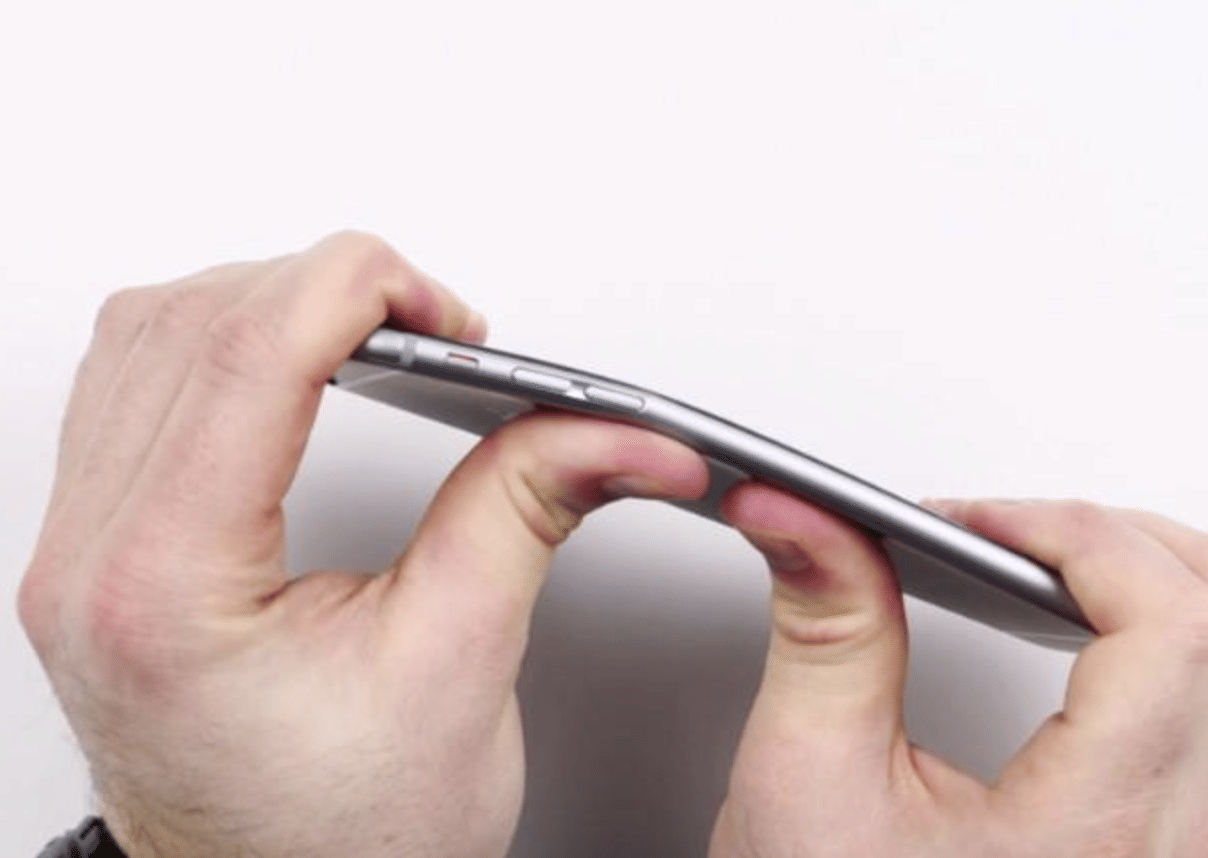
The iPhone 6 series also became the subject of "Bendgate," a term coined by the media when users reported that the thinner, larger models could bend under pressure.
iPhone SE – March 2016
In March 2016, Apple's iPhone SE marked a strategic shift. It offered a powerful yet budget-friendly alternative that condensed the advanced features of the iPhone 6s into the beloved compact frame of the iPhone 5. This model catered to users longing for smaller, more manageable devices without sacrificing performance or capabilities.
It boasted a 4-inch display, making one-handed use effortless. It included top-of-the-line features such as a 12MP camera, 4K video recording, Live Photos, and voice-activated "Hey Siri" functionality independent of charging.
While it omitted the 3D Touch feature, the iPhone SE did not compromise on speed or user experience, sporting the robust A9 processor and 2GB of RAM.
The iPhone SE represented a significant nod to practicality and comfort, combining nostalgia with contemporary technology, and was embraced as a "Special Edition" iPhone that perfectly balanced functionality and size.
iPhone 7 & 7 Plus – September 2016
The iPhone 7 and 7 Plus release in September 2016 marked a pivotal moment in Apple's design and technology trajectory. Notably, these models introduced the removal of the headphone jack, a controversial move that paved the way for the debut of the first-generation AirPods, shifting users towards wireless audio solutions.
The iPhone 7 line was distinguished by its enhanced durability with an IP67 water-resistance rating and the elegant introduction of a jet-black finish.
Technologically, the iPhone 7 Plus stood out with its dual-camera system, incorporating a telephoto lens that enabled the now-popular Portrait mode, allowing users to capture DSLR-quality portraits.
A brave decision!
— Brighter Side (@brighterside__) September 9, 2023
7th September, 2016: Apple removes the headphone jack with the iPhone 7 📱 pic.twitter.com/GakU4lVUHV
Despite initial backlash over the headphone jack, these models underscored Apple's commitment to innovation, setting new standards for future smartphones.
iPhone 8 & 8 Plus – September 2017
The iPhone 8 and 8 Plus would mark a refined iteration within Apple's lineup. They featured an elegant new glass and aluminum design that enhanced aesthetic appeal and enabled wireless charging — a first for iPhones. These models retained the familiar form factor but introduced significant technological advancements.
The iPhone 8 series was also the first to support augmented reality (AR) applications, transforming user interaction with games and apps by offering immersive experiences directly from their devices.
The iPhone 8 Plus also boasted Portrait Lighting in its camera settings, allowing users to manipulate lighting effects professionally in real time, greatly enhancing photographic outcomes.
These new features and the introduction of Apple's A11 Bionic chip positioned the iPhone 8 and 8 Plus as powerful successors in the evolving smartphone saga, bridging the gap between traditional mobile phone functions and next-generation technology applications.
iPhone X – November 2017
As we continue this journey of iPhones in order of their releases, 2017 marked a decade of innovation. Apple released the iPhone X in November and unveiled a significant redesign that eliminated the Home button.
The giant also introduced Face ID as a secure biometric authentication method. This model pioneered the full-screen design and was the first iPhone to feature an OLED Super Retina display, enhancing visual clarity and color accuracy.
Alongside this significant shift, the iPhone X also introduced Animoji, leveraging facial recognition to create animated emojis that mirrored user expressions, adding a fun, interactive element to messaging.
iPhone XS & XS Max – September 2018
Building on the iPhone X's foundational changes, Apple subsequently released the iPhone XS and XS Max in 2018, which offered larger Super Retina displays, faster Face ID, and enhanced processing power with the new A12 Bionic chip.
The iPhone XR also debuted as part of this lineup, featuring an all-new Liquid Retina display, which extended color accuracy across a more affordable LCD screen.
The XS Max introduced a 6.5-inch display, making it the most enormous iPhone, while the iPhone XS maintained the 5.8-inch display of its predecessor.
Both models featured enhanced Face ID technology that operated faster, improved water resistance with an IP68 rating, and dual SIM capability, combining a nano-SIM and an eSIM.
iPhone XR – October 2018
In October 2018, the iPhone XR was introduced as a more affordable alternative. It captures the essence of its higher-priced siblings while making some compromises to keep costs down.
Sporting a 6.1-inch Liquid Retina LCD, the iPhone XR offered a larger screen than the XS but lacked the OLED technology of the flagship models. It featured a single rear camera compared to the dual-camera systems on the XS and XS Max and had a slightly lower water-resistance rating of IP67.
Despite these differences, the iPhone XR was available in six vibrant colors and was equipped with the same powerful A12 Bionic chipset, making it a highly attractive option for consumers seeking Apple quality at a lower price point.
iPhone 11 series – September 2019
When did the iPhone 11 come out? Even iPhone owners get this pub quiz question wrong due to Apple changing its numbering system. However, the answer is September 20, 2019.
The iPhone 11 series introduced a trio of models. Consumers had the choice of the iPhone 11, iPhone 11 Pro, and iPhone 11 Pro Max.
This series marked the first implementation of the ultrawide lens across all three models and introduced the innovative U1 chip with ultra-wideband technology.
The Pro models showcased a triple camera system consisting of a primary, ultrawide, and telephoto lens, setting a new standard for mobile photography.
The iPhone 11 Pro and Pro Max also featured Super Retina XDR OLED displays for stunning visual clarity. They boasted improved battery life, making them competent successors in Apple's evolving smartphone range.
Furthermore, the iPhone 11 series embraced the future of mobile tech with dual SIM support and gigabit LTE, accommodating faster data speeds.
iPhone SE 2 – April 2020
Four years after the original model, Apple introduced the iPhone SE 2 in April 2020, revisiting the concept of a more affordable, compact iPhone.
This second-generation SE retained the beloved design of the iPhone 8, featuring a 4.7-inch display and a physical Home button with Touch ID, which provided a familiar user experience when most new models had moved to Face ID.
Despite its classic design, the iPhone SE 2 was powered by the modern A13 Bionic chip, the same processor used in the iPhone 11 series, ensuring contemporary performance. This model also supported advanced photography capabilities and wireless charging and was water-resistant with an IP67 rating.
While it did not include some of the latest innovations like 5G or an edge-to-edge screen, the iPhone SE 2 offered a compelling combination of updated internal specs and a tried-and-true design at a more accessible price point, making it an attractive option for users seeking practicality over cutting-edge features.
iPhone 12 Series – October 2020
The iPhone 12 series, launched on October 13, 2020, represented a significant evolution in Apple's smartphone lineup, introducing four models: the iPhone 12, iPhone 12 mini, iPhone 12 Pro, and iPhone 12 Pro Max.
This series was Apple's first to offer 5G support, ushering in a new era of superfast download speeds and enhanced connectivity.
i have this saved since 2021 btw pic.twitter.com/WDfHOP6exj
— Alia Jannah⸆⸉ (@TechyJannah) April 20, 2024
The iPhone 12 Pro and Pro Max also featured a new LiDAR scanner for better depth sensing and augmented reality experiences. At the same time, the entire series benefited from the A14 Bionic chip with its 16-core Neural Engine, ensuring top-notch efficiency and performance.
Elsewhere, the iPhone 12 mini offered the same advanced features in a compact 5.4-inch design, catering to users looking for smaller devices without compromising capability.
By removing the in-box charger, Apple also nudged consumers towards more sustainable practices. At the same time, the MagSafe technology introduced a new ecosystem of magnetic accessories, further enhancing the iPhone's versatility and user experience.
iPhone 13 Series – September 2021
The iPhone 13 series built on its predecessor's foundation while introducing several enhancements. Mirroring the iPhone 12's design, the iPhone 13 maintained the flat-edge display and aluminum frame but brought notable improvements.
It featured an extended battery life, with the iPhone 13 lasting about 2.5 hours longer than the iPhone 12, thanks to an optimized processor and better hardware-software integration. Camera technology also saw significant upgrades, with a new arrangement allowing the device to capture 47% more light and providing enhanced image stabilization.
A standout feature, the "Cinematic mode," allowed for cinema-quality video recording, making professional-level video production accessible to more users. Additionally, introducing the A15 processor and iOS 15 ensured the iPhone 13 was the fastest model, supporting advanced applications from augmented reality to portrait-mode FaceTime calls.
iPhone SE 3 – March 2022
In 2022, Apple unveiled the iPhone SE 3, retaining the familiar iPhone 8 chassis with its 4.7-inch display and Home button featuring Touch ID.
Despite its dated design, the SE 3 was significantly upgraded internally, incorporating the powerful A15 Bionic chip from the iPhone 13 series and introducing 5G connectivity, ensuring its relevance in the evolving tech landscape. These enhancements, coupled with improved battery life, offered users a more capable device in a compact form.
However, the lack of significant design changes left some users anticipating a more refreshed look, sparking discussions about the potential for an innovative iPhone SE 4.
iPhone 14 Series – September 2022
Predictably, Apple unveiled the iPhone 14 series in September 2022 with significant enhancements and a new model lineup, including the iPhone 14, iPhone 14 Plus, iPhone 14 Pro, and iPhone 14 Pro Max.
The launch marked the end of the iPhone mini due to its underwhelming sales, replacing it with the iPhone 14 Plus, which features a larger screen size akin to the Pro Max. Both the iPhone 14 and 14 Plus continued to utilize the robust A15 Bionic chip from the previous year, but the real advancements were seen in the Pro models.
The iPhone 14 Pro and Pro Max introduced the innovative Dynamic Island, a novel approach to maximizing screen space while minimizing the intrusion of the camera notch. Apple also upgraded the camera system to 48MP, significantly enhancing photo and video capabilities.
The entire series also embraced safety innovations with new features like Crash Detection and Emergency SOS via satellite, alongside the shift to exclusive eSIM usage in the U.S., setting a new standard for smartphone capabilities and connectivity.
iPhone 15 Series – September 2023
In 2023, Apple introduced the iPhone 15 series. The lineup consisted of the iPhone 15, iPhone 15 Plus, iPhone 15 Pro, and iPhone 15 Pro Max, eliminating the classic notch for the innovative Dynamic Island and providing a more interactive and aesthetically pleasing interface.
But this series also shifted from the proprietary Lightning connector to a universal USB-C port.
The Pro models boasted a robust titanium frame and a new 5x telephoto lens on the Pro Max for superior optical zoom.
Ligtning replaced with USB - C.
— Annointed ✝️ (@qwibbern) September 12, 2023
RIP to Lightning#apple #iPhone15 #iPhone15Pro #AppleEvent #USBC pic.twitter.com/oifUdNkuCG
iPhone 16 Series – September 2024
The highly anticipated iPhone 16 series was announced on September 9, 2024, and will be available in stores on September 20, 2024. Apple’s iPhone 16 features a faster A18 chip, an ‘Action’ button, and a ‘Camera Control’ button on all models, improved cameras, and the beginning of Apple’s AI features rollout.
Key Features & Specifications of the 16 Lineup
Pricing
Pricing for the base model iPhone 16 starts at $799, with no price increase from the previous year.
The base price of the iPhone 16 Pro starts at $999.99.
iPhone 16 Pro Max, offering the best battery life on iPhone ever, costs starts at $1,199.
Colors
The iPhone 16 Pro models come in five colors: black, white, pink, green, and ultramarine blue.
Display
The iPhone 16 has the same screen size as previous models: a 6.1-inch display. It also has 8GB of RAM (up from 6GB on the iPhone 15) and storage ranging between 128 GB and 512 GB.
The iPhone 16 Pro has a 6.3-inch Super Retina XDR display with ProMotion and Always-On technologies.
Performance Enhancements
All models feature the new A18 chip, built on the latest N3E 3-nanometer node, promising efficiency and processing power improvements.
Camera Enhancements
The iPhone 16’s 48MP primary camera (which can function as a 12MP, 2X digital telephoto) is joined by upgraded ultrawide cameras that add macro photography and a 12MP front camera.
The iPhone 16 Pro has a standout camera feature over the standard iPhone 16. It allows you to capture 4K video at 120FPS with Dolby Vision HDR and adjust the framerate from your typical 24FPS to slow-motion.
Battery Life
Apple hasn’t specified battery sizes, but the new A18 processor, increased RAM, and graphene thermal system for better cooling all add up to what Apple claims is “a big boost in battery life.“
Apple offers 22 hours of video playback from one charge, up from 20 hours on the iPhone 16.
Action Button & Usability
The Action Button is available across all iPhone 16 models, providing customizable shortcuts for tasks like activating the camera or flashlight. This uniform feature aims to enhance user efficiency and ease of use.
Along with the Action button, the iPhone 16 and iPhone 16 Pro come with the new touch-sensitive Camera Control, which allows you to capture photos and videos with a click of a button.
AI Integration & iOS 18
A significant highlight of the iPhone 16 series will be the integration of AI features powered by iOS 18, which was announced at WWDC 2024.
These enhancements will make the iPhone more intuitive and user-friendly, with advanced AI-driven functionalities such as improved Siri interactions and other core application upgrades.
The Bottom Line: Should You Upgrade to a New iPhone?
When browsing through the list of iPhones in order, a retrospective glance reveals a story of evolution rather than the mobile revolution that started in 2007. Before the hype around iPhone 16 fades, remember the last 16 years show a slow and steady release of consistent enhancements each year rather than the next big thing sold to you in a keynote speech.
However, the latest iteration stands out for its specifications and as a landmark for AI integration. However, only sales numbers will tell, whether the iPhone 16’s advanced AI capabilities are enough to upgrade to the newest model.
Marketers try to convince you that these new smartphones will further enhance your daily life and how you interact with friends and family. However, iPhone rivals do not sit idle, with top-tier Samsung smartphones presenting fierce competition.
Ultimately, your choice between the latest devices depends on your preferences, needs, and budget.
FAQs
What is the order of all the iPhones?
iPhone (2007), iPhone 3G (2008), iPhone 3GS (2009), iPhone 4 (2010), iPhone 5 (2012), iPhone 5S & 5C (2013), iPhone 6 and 6 Plus (2014), iPhone 6S & 6S Plus (2015), iPhone SE (2016), iPhone 7 and 7 Plus (2016), iPhone 8 and 8 Plus (2017), iPhone X (2017), iPhone XS & XS Max (2018), iPhone XR (2018), iPhone 11 (2019), iPhone SE 2 (2020), iPhone 12 (2020), iPhone 13 (2021), iPhone SE 3 (2022), iPhone 14 (2022), iPhone 15 (2023), iPhone 16 (2024).
What are the iPhone models?
The iPhone is currently available in four models: the standard iPhone, iPhone Plus, iPhone Pro, and iPhone Pro Max.
What comes after the iPhone XR?
After the iPhone XR, Apple released the iPhone 11 series, which included the iPhone 11, iPhone 11 Pro, and iPhone 11 Pro Max.
What are the 5 latest iPhones?
The five latest devices are the standard 15, iPhone 15 Plus, iPhone Pro, iPhone 15 Pro Max and the new iPhone 16 Lineup..
When will iPhone 16 come out?
The iPhone 16 series was announced on September 9, 2024, and will be available in stores on September 20, 2024.