
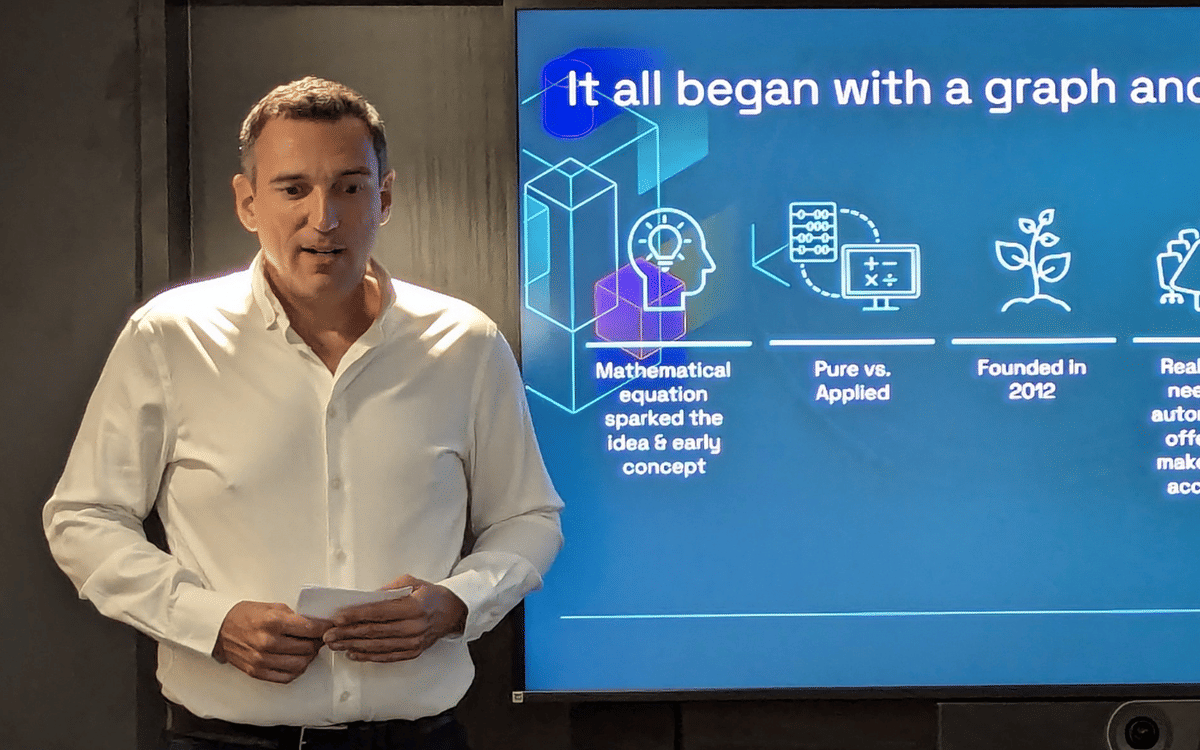
What if the simplest way to combat rising data costs and mounting carbon emissions wasn't more hardware, more cloud, or more cooling, but rather more innovative software? That was the message from CompressionX at the IT Press Tour in Amsterdam, where the founders walked tech journalists through the company's origins, technology, and ambitions.
It wasn't a typical corporate pitch. It was the kind of story where maths paradoxes, family projects, and sheer persistence turn into a business that suddenly feels perfectly timed for a market shift.
Data compression isn't new. WinZip, 7z, and gzip have been around for decades. But the scale of the data challenge has changed.
"AI is an incredible invention, it's going to change everything. But so many resources are going into new infrastructure, these numbers are just going to grow."
The energy footprint of data centers already accounts for around 3% of global electricity use and 2.5% of carbon emissions, with storage alone on track to contribute up to 8% of emissions by 2030.
The team's pitch was simple: instead of just building more, store and transfer less. Shrink the files before they even hit storage, networking, or backup.
Smarter, Adaptive Compression
Traditional tools apply the same algorithm to everything. CompressionX adapts to the structure of each file.
Structured data, such as CSV logs or sensor records, can achieve compression ratios of up to 90%. Unstructured data — think video or audio — averages around 65%. The process is lossless. "Lossless compression is really data encoding," Marlowe explained. "It's writing as small as we can get it down."
The algorithm is also designed for real-time use. In Amsterdam, they described the process of compressing and decompressing live data streams from LIDAR and radar sensors in autonomous vehicles. That ability to work at speed opens up use cases far beyond archiving.
One of the reasons compression faded from conversation is that the tools often felt clunky. CompressionX has deliberately gone in the other direction.
The software integrates into familiar file explorers. One click to compress, one click to decompress. Encryption is included by default, but as Marlowe joked, "If you lose the password, not even we can get it back."
It matches the speed of WinZip while achieving 7z-level ratios, without 7z's notorious slowness. It's cross-platform, built in C with wrappers for Windows, macOS, Android, and iOS. The philosophy is straightforward: make compression feel invisible.
The Real-World Use Cases
CompressionX is not pitching itself as a niche utility. The range of scenarios they shared in Amsterdam made that obvious:
AI and ML training data: logs and sensor streams are shrunk before storage.
Aerospace: live compression of aircraft telemetry.
Autonomous vehicles: handling camera and radar data in real time.
IoT: millions of small records batched and compressed to cut bandwidth.
Media: audio archives and recordings shrunk without losing fidelity. Stuart even hinted at a project involving Elton John's masters.
Each example pointed back to the same theme: compression isn't just about disk space, it's about time, performance, and cost.
Roadmap: From Desktop to Embedded
The company has an ambitious roadmap:
Multi-threading for even higher ratios.
Auto-scan features that suggest compressing cold data.
Pro-level controls for power users who want to balance speed versus size.
Mobile and web decompression apps that allow files to be shared with non-subscribers.
An SDK to let enterprises and OEMs embed the algorithm into hardware, storage appliances, or cloud stacks.
They also mentioned long-term ambitions around cloud integration. However, resources are currently focused on expanding desktop and enterprise adoption.
Business Model and Traction
Unlike the shareware model of old, CompressionX uses a transparent subscription approach:
Basic (free) – up to 25 GB per month.
Standard (£3.99/month) – unlimited compression.
Pro (enterprise) – multi-seat, user management, and customisable ratios.
Early verticals include IT, media, finance, legal, and retail. In just two months of marketing campaigns, they achieved nearly 90,000 sessions, four times their original KPI. The numbers suggest a product finding its audience.
Compression as a Sustainability Story
Beyond storage bills, CompressionX is making a strong commitment to sustainability. Marlowe highlighted how data growth is becoming a hidden environmental cost. "Why build and build to store and transfer data when software can make it smaller?" he asked.
The company has partnered with Pinwheel to fund projects like capping methane leaks, seagrass conservation, and rainwater harvesting. However, the core claim is that reducing the size of data also reduces the power, water, and emissions associated with storage and transfer. That framing matters.
In a world where ESG commitments are under scrutiny, a piece of software that reduces emissions by compressing data could appeal equally to sustainability teams as it does to IT departments.
Despite the momentum, CompressionX is entering a challenging market. Many platforms already have some level of built-in compression. Cloud giants could see this as a feature to replicate. And the wow factor of 65% compression may be harder to sustain if competitors close the gap.
Marlowe acknowledged that adoption often starts with scepticism. The challenge is proving value in real workflows and scaling support as the user base grows. However, he argued that what sets them apart is their execution: faster than 7z, easier than Proxmox-style open-source stacks, and focused on both everyday users and specialists.
My Takeaway From Amsterdam
What I heard in Amsterdam wasn't just another utility tool. It was a reminder that sometimes the simplest shifts, such as shrinking files before they balloon into infrastructure costs, can have the most significant impact.
CompressionX isn't trying to replace storage or cloud. It's trying to make them smarter. And with data growth driving up costs and emissions, the timing feels right.
The story also reminded me how much innovation starts small. A paradox in a maths class, a father-son project, years of scepticism, and now a product that could end up embedded in the very systems we rely on.
Over to You
I'll be hosting Stuart Marlowe, CTO of CompressionX, on an upcoming podcast to continue this conversation. What would you like me to ask him? Should I delve into how the algorithm adapts to structured versus unstructured data, or whether compression will ever become transparent within cloud platforms?
Share your questions, and I'll put them directly to him in the interview.