
What if data pipelines aren't just inefficient, but the wrong model altogether? That's the provocation I encountered during a compelling session with Tabsdata at the IT Press Tour in California. And by the time I left, I wasn't just nodding along. Why did no one challenge this earlier?
For decades, we've accepted a model of data integration built around brittle pipelines, duct-taped tooling, and last-minute fixes to problems that should never have occurred in the first place. Tabsdata's co-founders, Arvind Prabhakar and Alejandro Abdelnur, have lived through that world. They helped shape it, first at Cloudera and later at StreamSets. Now, they're setting out to replace it.
From Pipelines to Products
Tabsdata isn't another observability layer or a metadata patch. It's a reimagining of the data prep and integration problem from the ground up. Their idea is deceptively simple. What if we treated tables the way developers treat messages in a pub/sub system?
The concept of "Pub/Sub for Tables" sounds abstract at first, but as it was unpacked, it began to feel inevitable. Instead of defining upstream and downstream flows with hardcoded logic, Tabsdata lets you publish tables, subscribe to them, and automatically derive new data products with full traceability, versioning, and ownership. Data contracts and governance aren't bolted on; they are integral to the process. They're baked into the core.
In short, they're replacing the pipeline model with something closer to a product architecture. It's modular, self-service, and designed for the way modern teams work.
Why This Model Matters Now
AI has made data freshness, provenance, and trust more urgent than ever. But today's pipelines are struggling to keep up. Constant schema changes, shifting data semantics, and unclear data ownership all create friction. Tabsdata's model shifts the paradigm from "build it, monitor it, fix it later" to "publish it, trust it, consume it." It also reclaims control.
With traditional tooling, any change upstream can trigger expensive reprocessing or silent breakages downstream. With Tabsdata, the lineage is clear. Data products can evolve with full context. Teams can move faster, and engineering doesn't become the bottleneck.
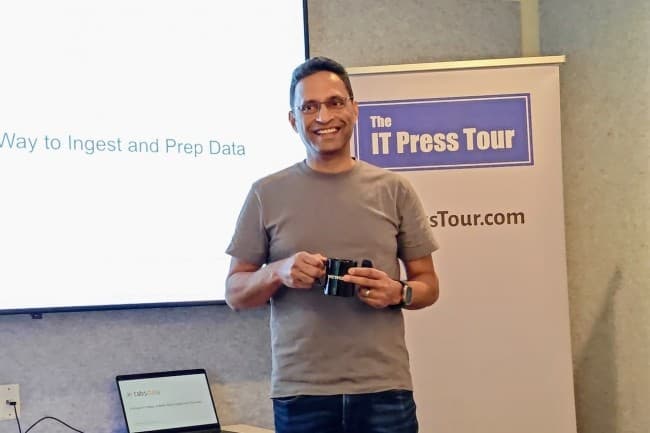
During the presentation, Arvind made an interesting observation. He noted that most data teams today spend more time fixing pipelines than delivering value. If we believe data is a strategic asset, that's a massive misallocation of effort.
Built by People Who've Done This Before
One of the things that stood out in the meeting was the significant amount of lived experience embedded in the platform. Both co-founders were core engineers during the early days of Hadoop and Cloudera. They were also instrumental in shaping StreamSets, which eventually exited at a valuation of around $600 million. In other words, they are aware of the current generation of tools' limitations.
Tabsdata isn't trying to be a general-purpose data platform. It's opinionated, focused, and designed specifically for those in the trenches who are trying to make data useful across fast-moving teams.
It's also refreshingly accessible. It runs on any infrastructure, targets Python data engineers directly, and is already available on PyPI with an open-core model. No bloated enterprise lock-in or mystical platform orchestration required.
Final Thought
As I walked away from the session, I kept thinking about how much of enterprise data work still feels like plumbing. Tabsdata is asking what would happen if we stopped accepting that as usual. What if data engineering could be less about duct tape and more about velocity?
We've seen the pub/sub model revolutionize messaging, decouple services, and simplify architectures across the stack. Applying that same thinking to tables might be the next logical step.
Do you think the pipeline is finally due for retirement? And could a pub/sub model deliver better outcomes across the enterprise? I'd love to hear your take.
I will be speaking with the team at Tabsdata on the Tech Talks Daily Podcast in the next few weeks. If you have any questions you would like me to ask, please let me know.