
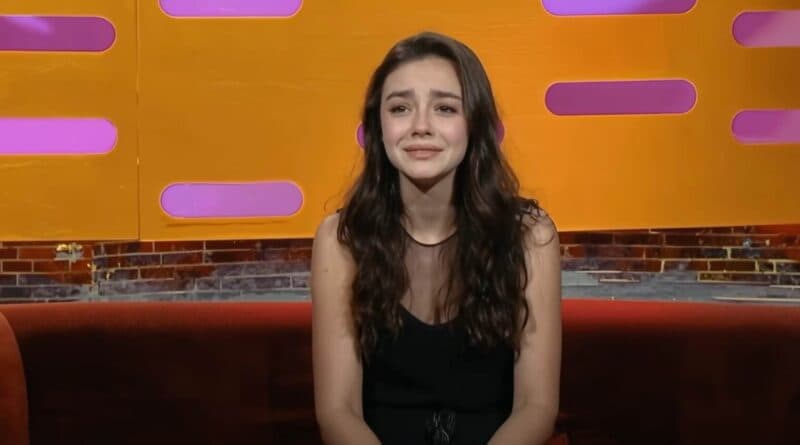
Tilly Norwood, a digital performer, has sparked considerable controversy in Hollywood and become the center of a global debate about art, technology, and ethics.
Tilly was recently introduced by Dutch actor and comedian Eline Van der Velden through her production company, Particle6, and its AI studio, Xicoia. However, you won't see her on the red carpet because she doesn't exist.
Techopedia takes a look behind the spotlight to learn more about the technology that has brought the world's first AI actress to life.
Key Takeaways
Tilly Norwood is an AI Actress raising questions about creative authenticity in Hollywood.
AI actors promise to expand storytelling possibilities rather than replacing human actors.
Consent and compensation remain unresolved in AI-driven casting and film production.
Audience acceptance will determine whether synthetic actors become mainstream or remain a niche market.
Tilly Norwood: Art, Innovation, or Exploitation?
Marketed as the world's first AI actress, Tilly is presented not as a digital extra or visual effect but as a leading performer.
On Instagram and TikTok, she introduces herself as a genuine aspiring celebrity, complete with headshots, sketches, such as AI Commissioner, and captions written in a conversational tone. Yet every detail, from her smile to her performances, is the output of algorithms.
Van der Velden describes Tilly as a creative project, not a replacement for human actors. In her view, she belongs to a lineage of innovation that includes animation, puppetry, and CGI.
"She is a piece of art," Van der Velden has written, "a new paintbrush for storytelling."
Multiple talent agents are reportedly interested in signing AI actress #TillyNorwood, created by actress, comedian and technologist Eline Van der Velden through her AI company Xicoiais.
— Cinemania World (@Cinemania_World) September 28, 2025
In response to growing criticism, Eline shared a statement that read: “Tilly is not a… pic.twitter.com/gRl4SFydlY
SAG-AFTRA, the actors' union, insists that Tilly was trained on the work of countless performers without permission or pay. Emily Blunt called the development "terrifying," while Melissa Barrera dismissed it as "gross."
The standoff between creator and critics raises broader questions about AI in the film industry.
Can a digital persona built by a machine be considered art? Or does Tilly represent the first wave of exploitation that could turn AI filmmaking from innovation into a threat?
How Was Tilly Created?
The technical details remain tightly held, but the general process is well understood in the world of artificial intelligence (AI) in film production. Tilly was generated using machine learning (ML) systems that create photoreal images and videos.
These models, likely diffusion-based, are trained on enormous libraries of human faces, movements, and voices. By learning patterns from that data, the AI can generate a "new" face, voice, and personality that feels real but has no human origin.
Particle6 claims that Tilly is not based on any single individual and does not exhibit a specific resemblance to any celebrity. But critics argue that such models are only possible because they ingest thousands of human performances.
SAG-AFTRA contends that this makes Tilly the product of "stolen performances." Mara Wilson, best known for Matilda, questioned why hundreds of real young women could be used as data sources while none were offered acting jobs.
This debate cuts to the heart of the dangers of AI in the film industry. Even if no single person's likeness is copied, the digital performer could embody the work of countless people who never gave their consent.
Mara Wilson reacts to AI "actress" Tilly Norwood being considered by talent agencies: “And what about the hundreds of living young women whose faces were composited together to make her? You couldn’t hire any of them?”
— Deadline (@DEADLINE) September 29, 2025
See more reactions here: https://t.co/lT128XfCwj pic.twitter.com/NgOBVWn2iO
Hollywood Pushback
For SAG-AFTRA, the debut of Tilly confirms what members feared during the 2023 strikes, with the union declaring: "Tilly Norwood is not an actor."
Its statement emphasized that creativity must remain human-centered and warned that digital replicas have "no life experience, no emotion, and no authenticity."
Talent agencies have responded cautiously. Leaders at WME bluntly declared: "We represent humans." The Gersh Agency also said it would not sign a digital star.
Yet Van der Velden maintains that some agencies have privately expressed interest, suggesting that business considerations may eventually outweigh moral objections.
Van der Velden, herself a working actor, rejects the notion that Tilly poses a threat to careers. She frames the character as a form of art.
Just as animation or CGI expanded storytelling without eliminating actors, she argues, an artificial intelligence movie character like Tilly can coexist with human performers on Graham Norton's couch.
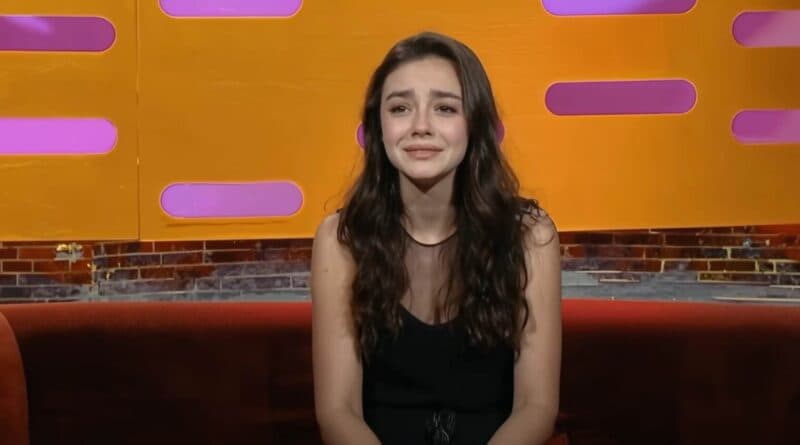
Her analogy resonates in part. Audiences have accepted CGI characters, from Gollum in The Lord of the Rings to Thanos in The Avengers. Motion capture has turned actors into apes and aliens. Animation has long been celebrated alongside live-action cinema. Van der Velden suggests that the AI movie is the next chapter in this lineage.
Experts in both technology and entertainment remain divided.
Yves Bergquist, director of USC's AI and Media Project, told Reuters that serious executives show "zero interest" in fully synthetic stars. In his view, AI Hollywood will not abandon human actors because celebrities bring fan bases and cultural cachet that algorithms cannot replicate.
Steve Roop, a creative director specializing in AI content, framed Tilly's appearance as an evolution of special effects. Film has always featured non-human performers, he noted, from cartoons to CGI creatures. The difference today is that AI can create both the appearance and the performance without the need for a voice actor or animator. Yet even he stressed that "actors' humanity is still the irreplaceable ingredient audiences connect with."
The Ethical Questions
Legal scholars note that biometric likeness rights could become increasingly central as more AI-generated characters emerge.
There is also the question of authenticity. Acting is more than mimicry. It draws on memory, lived experience, and emotional truth. Critics argue that a synthetic face cannot capture this. As SAG-AFTRA put it, Tilly has "no life experience to draw from."
Hollywood is already a highly competitive industry where thousands of trained actors struggle to find work.
If studios begin producing AI cast members who never age, never demand pay, and never rest, that could eliminate opportunities for human talent.
Finally, there is language. Should Tilly even be described as an "actress"? For many performers, that word represents years of dedication and hard work. To apply it to a digital construct feels like diminishing the meaning of practicing the art of acting.
AI is not only generating new stars like Tilly Norwood, but it is also reviving performers who are long gone. Projects such as Digital Marilyn, created by Soul Machines in partnership with Authentic Brands Group, demonstrate how machine learning, natural language processing (NLP), and voice synthesis can recreate Marilyn Monroe's voice, expressions, and presence for interactive experiences.
Similar techniques have already brought Peter Cushing and Carrie Fisher back into the Star Wars universe and allowed Elvis Presley to "perform" on America's Got Talent.
Beyond Hollywood: The Bigger Picture
The rise of Tilly Norwood is part of a broader trend. The music industry is already grappling with AI singers charting on Billboard. In advertising, AI models are now featured in campaigns that once relied solely on human talent. Even video games now feature AI-driven characters that can improvise in real time.
For Hollywood, the stakes are high. On one hand, AI offers the ability to reduce costs, generate crowd scenes, or create spectacular visual effects. On the other hand, it raises the specter of exploitation and loss of human connection.
The Bottom Line
Tilly Norwood has become more than a digital character. She is a symbol of the collision between creativity and computation. To her creator, she is a masterpiece. To unions and many actors, she is a thief. To industry experts, she is either a novelty or the first step in a larger transformation, highlighting the dangers of AI in the film industry.
The truth will be decided not only in studios and boardrooms, but in the hearts of the audience. Will viewers embrace a fully synthetic performer in an artificial intelligence movie? Or will they continue to demand the subtle imperfections and emotional truth that only humans bring?
Whether she becomes a footnote in the history of AI in the film industry or a pioneer of a new genre, Tilly Norwood has already ensured that the debate over AI Hollywood is here to stay. However, one thing that we can all agree on is that her performances so far are a vast improvement over Jar Jar Binks.
FAQs
Who is Tilly Norwood?
Tilly Norwood is an AI-generated actress created by Particle6 and Xicoia in 2025.
Were Tilly Norwood’s features based on real actresses?
Her creators deny direct copying, but critics argue she composites features from thousands of performers.
What ethical concerns does AI casting raise in the film industry?
Key issues include consent, compensation, authenticity, job loss, and exploitation of actors’ likenesses without permission.