
For over 20 years, the Adobe Summit has been the event of the year for creatives, as the company lays out its vision for the future of marketing, creativity, and customer experience. But this year felt a little different.
Sure, there was the usual round of AI announcements. Most of the big buzzwords were routinely crossed off my tech conference bingo card. But this year, I felt Adobe was defending the foundations of the software subscription model that had made it so successful.
Adobe has looked a little vulnerable since it was forced to abandon its $20 billion acquisition of Figma. It's also facing increasing pressure from Canva, which has quietly become the third-most-used AI product.
Last month, Adobe CEO Shantanu Narayen announced he would be stepping aside after nearly two decades leading the company. It was interesting timing considering the rise of AI disruption and the so-called SaaSpocalypse on the horizon, which is increasingly making investors nervous.
If AI tools and agents continue to promise faster, cheaper, and simpler ways to create everything from campaigns to customer journeys, Adobe needs to bring something different to the table.
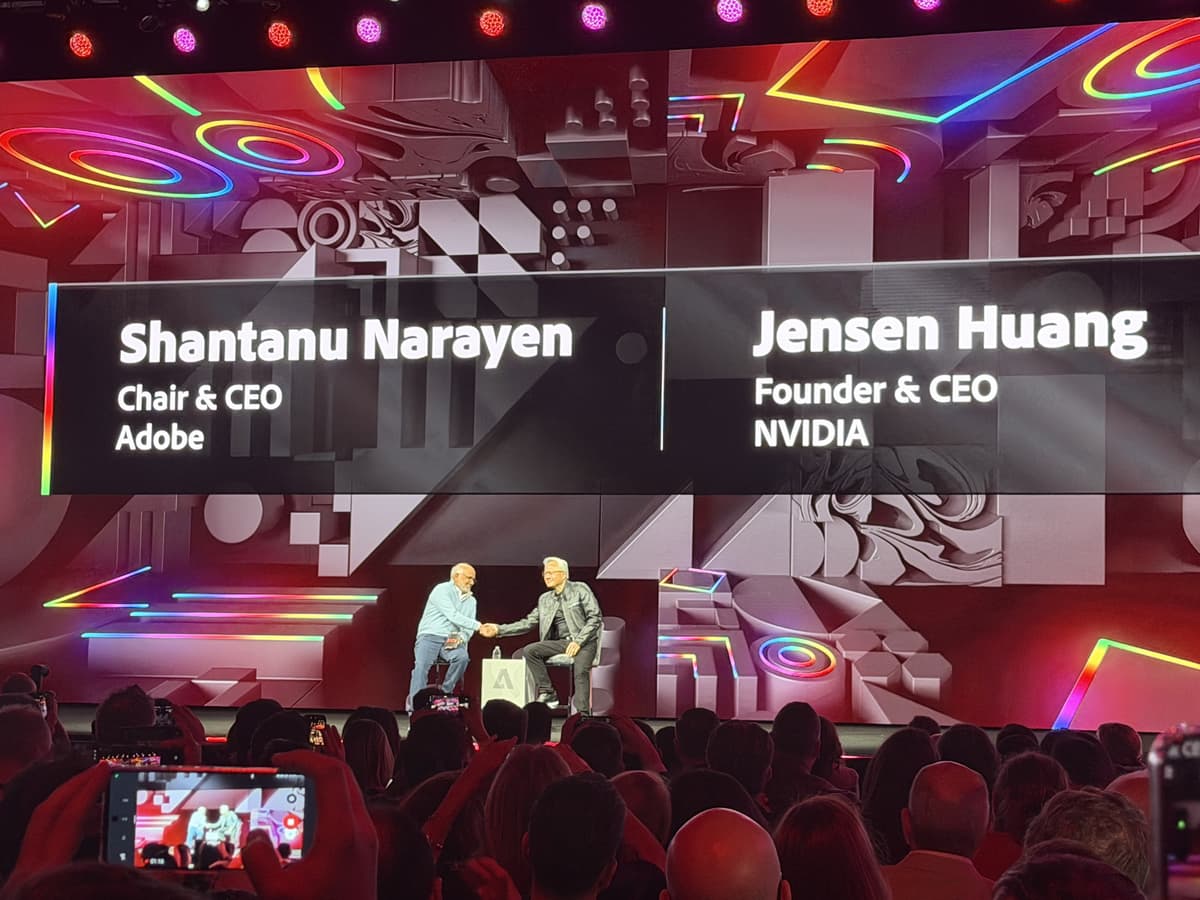
On stage, Adobe CEO Shantanu Narayen, backed by his friend and Nvidia CEO Jensen Huang, laid out a vision for how Adobe's role is set to evolve. Reading between the lines, Adobe is slowly distancing itself from being seen as just a software vendor selling a creative suite of applications. It wants to be seen as the infrastructure that helps enterprises create, govern, personalize, and deliver customer experiences at scale.
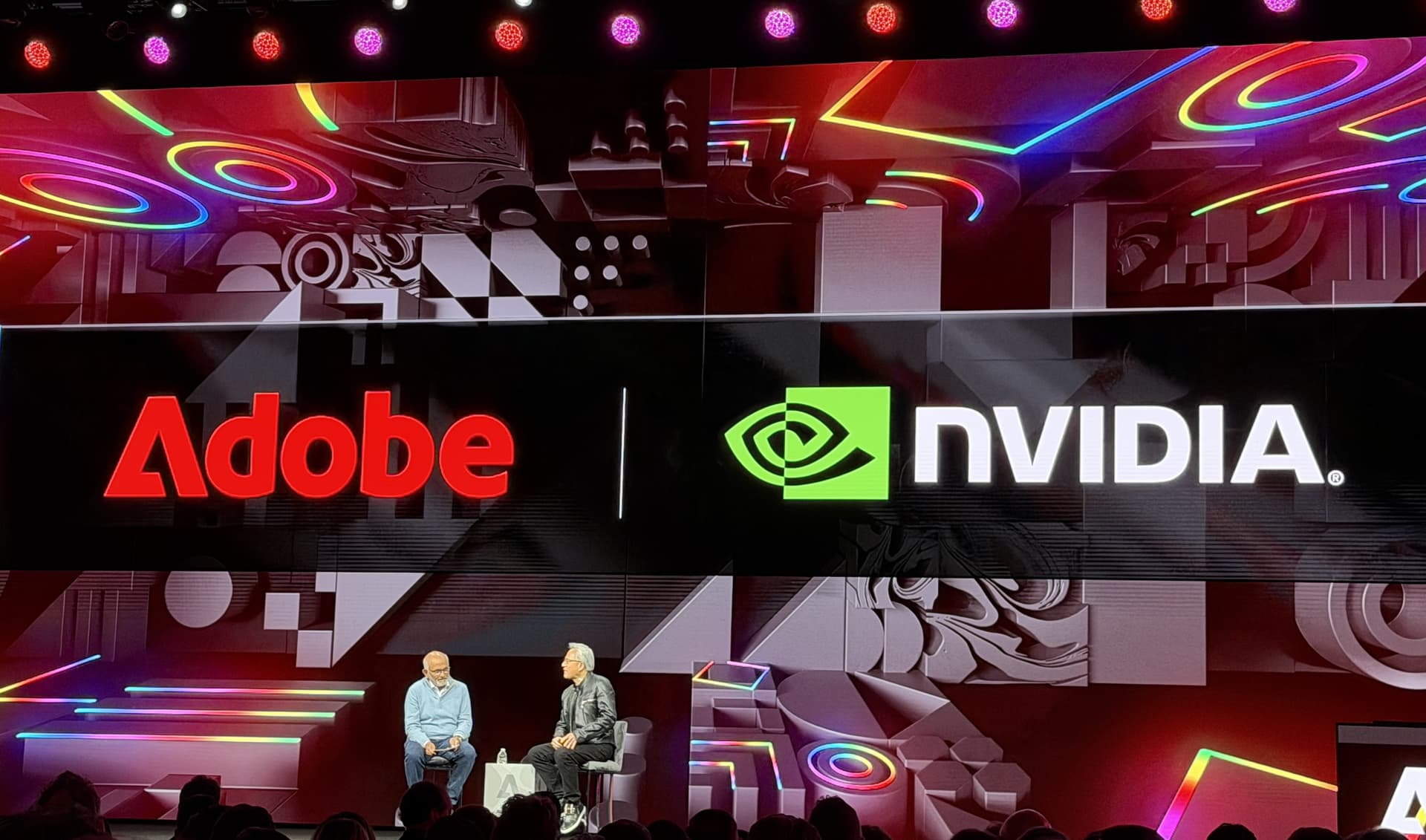
Adobe's focus has shifted from creation to orchestration.
One of the strongest lines from Narayen came when he said:
"Winning isn't just about producing the most content. It's actually about producing the right content for the brand at scale and delivering it in a way that feels personal and connected at every single touchpoint."
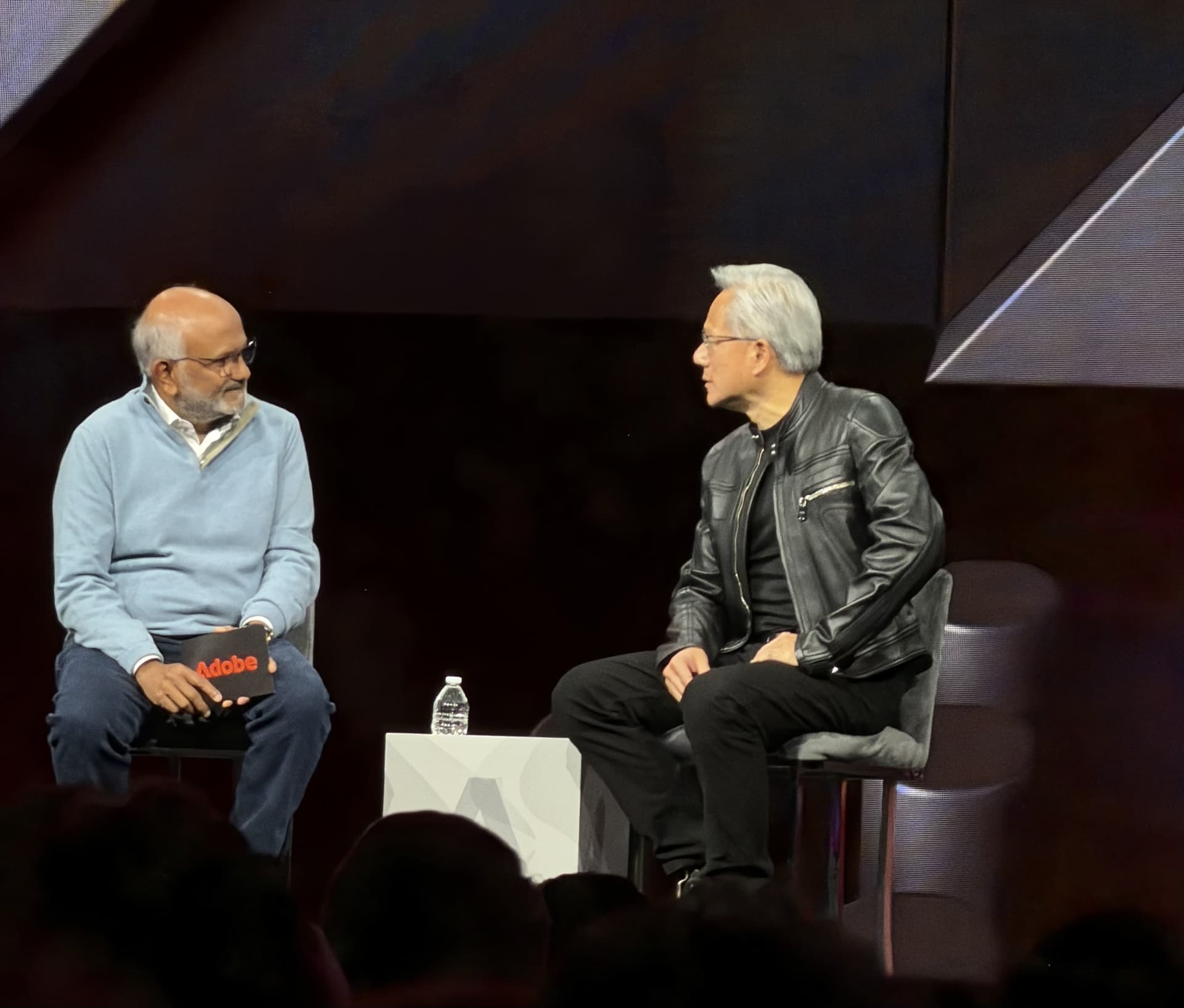
In a tag team fireside chat, Huang followed Narayen's lead by talking about the need to unify creativity, marketing, and AI across the entire content lifecycle, from ideation to creation to personalization, orchestration, and finally, measurement. The man who builds business by "supporting everyone" was spelling out the importance of Adobe's new strategy.
For years, the conversation around creative software has focused on speed and productivity. AI has only accelerated that. Businesses want more content, more campaigns, and more personalization, delivered faster than ever before. The temptation is to believe that whoever creates the most content the fastest wins. But Adobe is now arguing the opposite.
For large organizations, the challenge is not volume but consistency. It is making sure the message is right, the brand is protected, the content is compliant, and every customer touchpoint feels connected rather than fragmented.
A campaign is only valuable if it strengthens trust and loyalty.
This is why Adobe keeps talking about governance, IP protection, and connected asset management. These have become central to how the company plans to defend its premium position in a market where content generation is becoming easier for everyone.
Jensen Huang brought a wider perspective because Nvidia is now sitting at the center of almost every major AI conversation in business. His comments helped explain why Adobe is making this strategic move now.
"The front end of SaaS is now agentic," he said. That may have been the most important sentence of the session. For decades, enterprise software has been built around dashboards, menus, and complex workflows. Users learned the tool and adapted their work around it. Jensen's point is that the next interface is no longer the software itself. It is the AI agent sitting in front of it.
Instead of opening five systems and clicking through multiple processes, users will increasingly describe what they want and let the system handle the execution. The interface becomes conversational, and the work becomes outcome-focused. This is changing how software companies compete.
If the agent becomes the experience, users care less about the complexity underneath and more about whether the outcome is accurate, fast, and useful. That creates pressure on every software company, as the traditional product moat becomes less visible.
Maybe this is why Adobe's focus has shifted from applications to orchestration. It wants to be the trusted engine behind those agents rather than simply another tool in the stack.
Introducing the modern marketing factory
Huang also described Adobe as building "the modern marketing factory." That phrase captured the real story of Adobe Summit. Adobe is no longer positioning itself as a collection of products like Photoshop, Acrobat, or Experience Manager. It is presenting itself as the system through which enterprise marketing operates.
Creative assets serve as the starting point, customer data provides context, and AI agents help with execution. Personalization, testing, customer journeys, and performance measurement all happen continuously rather than in isolated campaigns. This is a factory model rather than a software model.
Factories are difficult to replace because they become part of how a business runs. If Adobe succeeds in becoming that operational layer, it moves far beyond competing with design tools. It becomes part of the customer experience infrastructure.
That is also why Adobe is investing so heavily in Experience Platform, Journey Optimizer, Firefly Foundry, and customer experience orchestration. These are not product launches for their own sake. They are pieces of a much larger enterprise system.
Why precision still matters in the age of generative AI
Another important moment came when Huang talked about digital twins and precision. He made the point that generative AI is useful, but there are many situations where "close enough" is not good enough. A luxury product cannot be approximately right. A healthcare form cannot rely on interpretation.
A customer-facing brand experience cannot drift from the product's truth. The product itself must be exact. That is where digital twins become strategically important. Before AI can personalize and scale customer experiences across channels, there must be a precise digital representation of the product or service at the center of that experience.
This is another area where Adobe can differentiate itself. It is not simply helping companies create content. It helps them protect the accuracy and integrity of the content, for enterprises in industries like travel, healthcare, finance, and retail, which matters far more than the ability to generate another marketing asset quickly.
Huang also addressed one of the biggest misconceptions about AI replacing jobs, using the example of how technological change has impacted radiologists.
When AI became highly effective at reading medical scans, many predicted radiology would disappear. Instead, radiologists became busier because it allowed them to work faster, process more patients, and focus on diagnosis rather than repetitive reviews.
The conversation felt like nudging business leaders away from fear and toward operational value. AI becomes useful when it produces work, not when it simply demonstrates intelligence. As Huang put it, "AI is finally valuable" because it can now perform work rather than generate information. That is where enterprise adoption becomes real.
What this means for Adobe
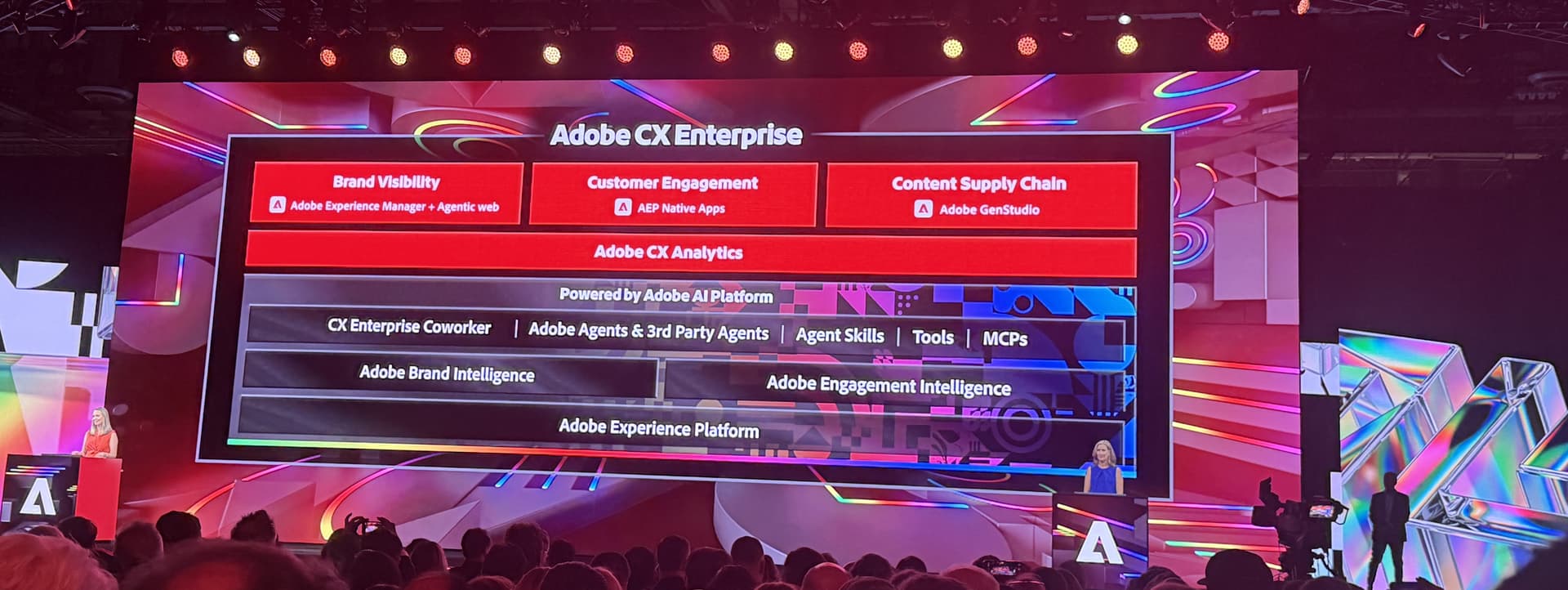
The broader takeaway from this keynote is that Adobe is trying to move the market's perception of what it is. Canva is becoming a threat, and the rise of prompt-first creation is changing everything. But Adobe is making a slight pivot to providing trust, governance, orchestration, and measurable business outcomes. Ultimately, it's thinking bigger than who offers the fastest content generation.
Narayen notably spent little time defending traditional creative tools and focused instead on enterprise models, customer experience orchestration, and brand-safe AI. Adobe is betting that enterprises will pay for control.
After listening to the conversation with Jensen Huang, it is clear that Adobe believes the next decade will belong to the companies that can combine creativity, AI, and customer experience into one connected system. This is a much bigger challenge than building better design software, and it's also a much bigger opportunity.