
What happens when your cloud, identity, and zero-trust strategy are sound, but the endpoint itself becomes the weakest link?
In this episode of Across the Tech Pond, David Marshall, Anthony Savvas, and Neil C Hughes sit down with IGEL CEO Klaus Oestermann to examine a blind spot that many organizations still underestimate. Endpoint resilience. Recorded after the hosts attended IGEL’s major end-user computing events in Miami and Frankfurt, the conversation cuts through conference noise to focus on what actually fails when ransomware strikes and why recovery often stalls at the device level rather than in the data center.
Klaus explains how cloud-first strategies have quietly shifted workloads from traditional endpoints to VDI, DaaS, and SaaS environments, often accessed via secure browsers. Yet despite this shift, most security strategies still assume the endpoint will cope.
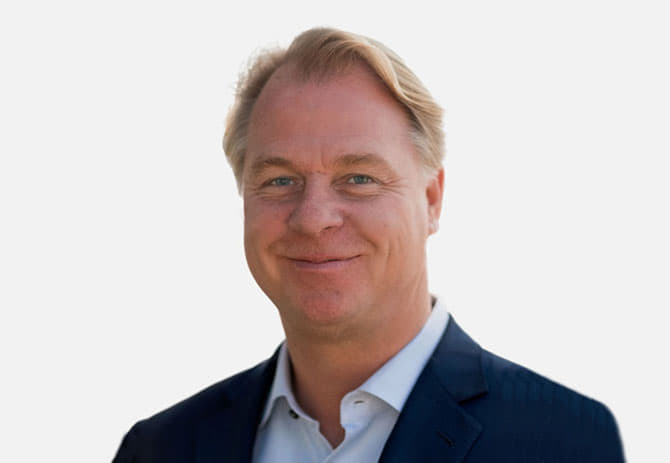
Drawing on real-world examples and customer data, he outlines IGEL’s preventive security model. He explains why locking down the operating system changes the economics, risk profile, and operational reality of end-user computing. The discussion also covers IGEL’s latest announcements, from adaptive secure desktops and business continuity options for Windows environments, to AI Armor and the growing role of endpoints in securing decentralized AI workloads.
The episode also explores the broader ecosystem behind IGEL’s approach. With a rapidly expanding network of technology alliance partners, Klaus describes why IGEL positions itself as a neutral platform that brings together application delivery, identity, security, and hardware vendors rather than trying to own the entire stack. The hosts challenge him on cost savings, analyst blind spots, and why endpoint resilience still receives so little attention relative to cloud and zero-trust narratives.
As organizations face the end of support for Windows 10, rising compliance pressures, and increasingly targeted attacks, this conversation offers a grounded look at what actually keeps people working when things go wrong. If endpoint security has been an afterthought in your strategy, is it time to rethink where resilience really begins, and what happens when the endpoint fails?
Useful Links
[00:00:03] - [Speaker 0]
Hi there. Welcome to Across the Tech Fund, The US European webcast and podcast covering the main technology conference and events hosted by David Marshall, Neil Hughes, and myself, Anthony Sabas. We are all Avid Technology Conference attendees, visiting the shows big and small that help set the agenda across the industry. In this show, we have a very special guest. This year, we attended the major end user computing events staged by industry leader, IGEL, in both Miami and Frankfurt, Germany.
[00:00:33] - [Speaker 0]
IGEL is a secure endpoint operating system provider based around its preventative security model, and that model is growing greatly. The cloud first approach taken by many organizations has actually resulted in a shift of endpoint data workloads away from the endpoint no less and into VDI, which stands for the virtual desktop infrastructure. DAS, which stands as stands for desktop as a service, and SAS, of course, software as a service infrastructure, usually accessed through secure browsers. Before we move forward, let's introduce ourselves. David.
[00:01:08] - [Speaker 1]
Hi, everyone. I'm David Marshall. I'm here in Austin, Texas in The US. And in addition to being a cohost of Across the Tech Pond, I'm also the owner of the technology news site, vmblog.com.
[00:01:21] - [Speaker 2]
Neil. And I'm Neil Hughes. I host the Tech Talks Daily podcast and a number of other podcasts over at the Tech Talks Network. I also write for CyberNews, and I've had the privilege of interviewing Klaus a few times at the events there. Even saw, you're listening to Shaggy in Miami and Snap in Frankfurt.
[00:01:43] - [Speaker 2]
So we kinda know each other, Claus.
[00:01:44] - [Speaker 0]
Absolutely. I'm Anthony Savas, of course. I write for IT Europa, which is a pan European channel title covering system integrators, VARs, managed service providers, cloud service providers, etcetera. I also write for IoT now and Summit called Techled, which is a new communications portable covering the, communications and unified communications industry. Like I said, as mentioned, we have a very special guest, and they're from iGeul, the chief executive of that company, no letter, CEO.
[00:02:14] - [Speaker 0]
And they will outline the strategic importance of secure endpoint user computing and the essential partnerships that are needed to make that happen. So there we go. Please introduce yourself, CEO of iDrill Technologies.
[00:02:29] - [Speaker 3]
Thank you, Anthony, Neil, and and David. Great to be here. I'm I'm Klaus Osterman. I'm the CEO of iGel. I've been CEO of iGel for for a little over two and a half years, and it's been great to have you guys at our at our conferences in in Miami where we and in Frankfurt where we're basically bringing the endpoint security EUC community, both customers, partners, as well as technology partners in this space together.
[00:02:58] - [Speaker 3]
And, as as you've seen live, big events, with very active participation of of the community, both from partners, but also from customers themselves.
[00:03:10] - [Speaker 0]
That's great. So I'll ask the first question. Some obvious pieces here. Where does IGEL fit in to the current end user computing market? What exactly do you do?
[00:03:22] - [Speaker 0]
And, what is end user computing, otherwise known as EUC? Claus?
[00:03:28] - [Speaker 3]
Yeah. So basically, IGEL, we are kind of operating like Switzerland in the middle of of everything that's going on. I I normally refer to it as a three ring circus. Right? So you have how do you deploy your applications on one side?
[00:03:42] - [Speaker 3]
So that's, you know, are you using VDI DAS? Are you using browser? Are you using progressive web app methodologies? We're seeing a big shift now towards browser, but also container based architectures and so forth. And most customers are living in the middle of a shift from being heavily VDI focused on to more browser and container based infrastructure.
[00:04:07] - [Speaker 3]
So we're seeing that shift on the deployment side. Then, on the other side, you have how do you secure this, how do you integrate identity, and so forth, and that's where, you know, Microsoft, whoever you use for security, secure services, SASE, with players like Zscaler, Palo Alto, Cisco, Netskope, and so forth fits in. And then on top of that, the third ring is really what are you deploying this on? So, is this on thin clients, on PCs, on tablets, or is it more OT oriented architectures? So, this kind of encompasses what we call the preventative security model, right?
[00:04:51] - [Speaker 3]
So, we have 130 partners that fits into one or more of these three rings and integrates with IGEL that basically enables us to put up a whole different security posture than what has been possible in the past and really go out and replace Windows as the operating system on PCs, Windows IoT on thin clients and so forth, and basically delivers not just that overall new security model. That's basically the opposite of what most people do today, which is it's based on a Windows model with ten, fifteen secondurity monitoring products on top, and you know it's gonna go wrong, right? So, you plan for things going wrong, so you monitor, detect, you mitigate, and you remediate when it goes wrong. But we think there's a whole different way of doing this, and we call that the preventative security model. Once customers have moved to IGL, then they realize 65% to 75 savings on their endpoint budget.
[00:05:56] - [Speaker 3]
So, if you're spending 10,000,000 today, you might just be spending 3 or 4,000,000 tomorrow after you've IGL ed your infrastructure. And when you look at how how does that come together, well, it's basically half of that comes from hardware savings. You can run your hardware longer. You don't have to shift a third of your PCs to run Windows 11. 25% comes from software savings.
[00:06:18] - [Speaker 3]
So it's a much smaller stack you have on top of our operating system. You don't need 15 products to secure and monitor because, basically, it's a lockdown operating system, and you cannot get in there. You don't need a lot of, you know, the security need on top of Windows. And then the last 25% comes from operational savings, where basically customers realize after three months their help desk calls go down by 90%. And that's a very simple explanation, is because typically when you call the desk, the answer is reboot your computer.
[00:06:55] - [Speaker 3]
And once you've done that 3.2 times, you don't call a third time. You just reboot your computer. So, that's a simple explanation why we cut down help desk. It's you update your endpoints in less than five minutes versus hours that you typically experience in a Windows environment. So it's just much simpler to run.
[00:07:15] - [Speaker 3]
It's it's much easier to operate, and that's why you get 50% savings on hardware, 25 on software, 25% on operational savings. And then and then say the the last thing is really what we've introduced with our IGEL Adaptive Secure Desktop, which enables you to manage this kind of shift and transition you're seeing from VDI to browser, to native apps, including leveraging progressive web apps. So we're seeing a lot of our customers take Teams, Zoom, and so forth out of VEI and running that directly on the Agile managed desktop. So kinda as you look to the future and how you shape the desktop for your end users, Agile is the perfect endpoint to do that on.
[00:08:03] - [Speaker 0]
Big potential savings there.
[00:08:04] - [Speaker 3]
Absolutely. Absolutely. We just released a survey or actually a report across 140 of our customers that shows on average they've saved 62% across industries. So so that report is available and downloadable. So it doesn't matter if it's government or health care, financial services, manufacturing, retail, transportation, across these sectors, customers are seeing on average 62% savings.
[00:08:36] - [Speaker 3]
I've seen the most extreme one I've seen is 91% savings over a three year period, but on average, very often we see things come out in in in more than 70% savings move into IGEL.
[00:08:48] - [Speaker 0]
Okay, well if people should have a look at that report, people get sometimes a bit wary when these claims are made, but IGEL's obviously putting it out there, so grab a copy of that report and look for yourselves. David, you have the next question.
[00:09:01] - [Speaker 1]
Yeah. Klaus, thanks again for being here. I, love, the IGEL events. I've I've been going to I've been to every one of them in The US going back to the IGEL disrupt here in Austin, Texas, which was the very first one. So, and I look forward to seeing you in a few months at the Miami event.
[00:09:22] - [Speaker 3]
Yeah. Great great to have you at these events and and we have a lot in store for you March 30 to April 2 at the Fontainebleau Hotel Miami Beach Best Conference Hotel there. So, happy you guys are coming.
[00:09:35] - [Speaker 1]
Yeah. Always a great venue, so I'm looking forward to it. Speaking of Miami well, actually, Miami and Frankfurt. You just, recently completed the Now and Next events. It's, you know, for customers and partners where your company made a number of key announcements around endpoint security and how iGeo is delivering it through an extended ecosystem that would serve end customers.
[00:09:59] - [Speaker 1]
Could you maybe give our viewers and listeners a broad outline of some of the key announcements that were made?
[00:10:06] - [Speaker 3]
Yeah. So so in Miami, we made 20 announcements, and in Frankfurt that just ended in in November, mid November, we made 15 or 18 announcements, actually. So so some of the key highlights was we we released the ROI report that I just mentioned. We made great announcements with key partners like Microsoft, Zscaler and Privada, Omnissa. So, basically, when you take our 130 agile ready partners, we always have a lot of joint announcements with them that we spare for those events.
[00:10:41] - [Speaker 3]
We we announced a whole new initiative around contact centers. So basically, you know, whether you call it call center, contact centers, so all the major players, whether that's Genesis, NICE, Avaya, RingCentral, you take all of these, they are now available in the Agile App Store, and you can basically deploy those directly on your Agile Adaptive Secure Desktop. So whether you do it over VDI or directly on the Agile Desktop, we now have support, very extended support for that setup. We also had Sanus on stage. So Sanus is a noise and an accent reduction product, which is very interesting for everybody, not just for call center contact centers.
[00:11:28] - [Speaker 3]
But, basically, if you have a a trading floor with a lot of noise or so forth, they have some amazing technology that's being being leveraged, including reducing accents. So if you have a call center in Philippines or India or so forth, they basically can make everybody sound like an an an American or an English person, whatever you want. So I'm I'm still waiting for their their, Danish, accent filter so I can sound like an American or or a fully. So so some really great new innovations that we've come out with. We also announced our support future upcoming support for containers.
[00:12:08] - [Speaker 3]
So so last year in in this year, actually, in Miami, we announced the agile managed hypervisor where you can take any version of Windows and run that as a managed Hypervisor on your Agile Adaptive Secure Desktop. And then we now lifted kind of the news around container support. So, if you're doing containerized development, you can next year deploy that on IGEL as well. So, when you kind of look to the future on whether how much you use VDI DES, how you integrate with managed hypervisors, progressive web apps, all of these things can now run on the Agile Adaptive Desktop. Other key things was like UMS, our management system.
[00:12:53] - [Speaker 3]
We announced Comply to Connect support, which is very critical for government sector, but also for other critical industries. We announced ARM support. So basically, IGL has been on x86 forever, and now we announced that we are coming out on ARM as well. And that means for a lot of tablets, a lot of handheld devices, whether they're coming from Zebra, Honeywell, or whatever, they are now you can now, in the New Year, support IGL on that as well. So that basically more than doubles the footprint of where you can deploy IGL.
[00:13:29] - [Speaker 3]
Also important for our OT IoT initiative that we are on ARM because a lot of OT IoT devices are running ARM. And then finally, there was many more announcements, but we announced Agile AI Armor, and that's really if you have, especially your researchers in R and D on AI devices and so forth, how do you secure that from from the outside world? Nation state attacks and so forth. So there's securing the device, and then there's what do we do specifically for AI workloads. So so we kinda unveiled what's coming out from Agile in that space.
[00:14:10] - [Speaker 3]
So those are just some of the highlights. There were many more announcements, but too many too many to mention.
[00:14:16] - [Speaker 0]
Excellent. We like to go to events when something's actually announced. It makes our job slightly, easy, and it keep Yeah. It keeps us off the beach, I suppose. Yeah.
[00:14:27] - [Speaker 0]
Neil, you have the, the next question.
[00:14:30] - [Speaker 2]
Yeah. And talking of announcements, so I think there was something like 18 at one, twenty at another. You guys really deliver on the announcements at those big events. So, no, I think there were several big moments from the events this year. And as a music and tech guy, I think outside of IGEL, Mark Templeton's keynote bringing tech and AI back to the moody blues is a a big highlight to me.
[00:14:52] - [Speaker 2]
But one of the the key themes that stood out in both Frankfurt and Miami was endpoint resilience, how it's often seen as the missing piece in cybersecurity strategies. And we heard about many IGL's preventative security models and how it's being expanded with key technologies. But, again, for people listening that are possibly new to this and maybe even unaware of their vulnerabilities in their current endpoint strategy, how are you doing this? Is it through an expanded ecosystem of tech alliance partners? And for those that don't know, what is that IGEL preventative security model for people just tuning in and hear about it for the first time?
[00:15:29] - [Speaker 2]
Because it's there is a lot to cover here, but can you give us a little rundown?
[00:15:33] - [Speaker 3]
Yeah. So so I I kinda tried to describe a little bit before. So I kinda referred it as a three ring circus. Right? Where where most customers, they they have three different parts of the organization that are responsible for different things and don't always coordinate very well.
[00:15:49] - [Speaker 3]
So one is responsible for how to deploy apps and app methodologies, the other one for identity security, and then the third one for endpoints. Right? And so we're basically bringing these three elements together in our preventative security model and doing things like how do you establish trust between the endpoint, your identity management solution, and the applications that you want to get to? How do you isolate one application from another? How do you so this is some of the new things that we've announced is how can you basically publish personas?
[00:16:28] - [Speaker 3]
So, if you're an organization, you might have 20 or or the most extreme you work with has 250 different personas. So you can basically say persona number one gets these 15 applications in scenario one, this in scenario two. And then stuff that we're working on with our security partners is how can we basically ensure that based on the access scenario you have, that you only get access to whatever is secure at that point in time. So this is us working with our 130 agile ready partners, basically locking down the endpoints, ensuring it's take healthcare. If you're in the emergency room, you know, you have the following things.
[00:17:11] - [Speaker 3]
You have 10 different nurses and five different doctors badging into one desktop within a two hour period. How do you make that happen? Right? Now those same people go to Starbucks. And then what do you get what do they get access to when they're at Starbucks at a different device?
[00:17:28] - [Speaker 3]
So this is pretty complicated from a security standpoint, and we kinda sit like Switzerland in the middle of all of this and work with these security identity partners on clear basically being a clearinghouse for what's gonna happen. So that's the crux of PSM or preventative security model and how it works in in real time. And then, if we look at at all of the alliance partners that we have, it's basically who's who in every one of these different areas that are partnering with IGL, and you're seeing them make announcements based on what we do together, and many of them as their next gen endpoint security strategy. So this is very, very core to how we do things. It's not like IDEAL is doing everything by itself.
[00:18:14] - [Speaker 3]
If we take Zero Trust architecture, we deliver on all the requirements in Zero Trust architecture, not just by IDEAL but with our partners. So if you look at Zero Trust Architecture, it's just not for US government. This is being adopted by governments around the world. This is being adopted by what I call critical industries. So the 16 different industries running a country, everything from banking to transportation to health care, oil and gas, every single critical sector that can be hit by nation state attacks need to be protected.
[00:18:53] - [Speaker 3]
And what we're seeing now is that these different sectors are starting to adopt zero trust architecture within their architecture as well.
[00:19:02] - [Speaker 0]
Neil, did you wanna come back there at all?
[00:19:03] - [Speaker 2]
The only thing I was going to mention as well is one of the big takeaways for me from the interviews that I had was that that endpoint resiliency and how it's often forgotten about. I just wanted to make a a quick point about that, and maybe you can hammer that home, Claus.
[00:19:18] - [Speaker 3]
So if you look at it today, the standard endpoints are pretty vulnerable. Right? And we see that with cyber attacks predominantly, you know, in health care, in state and local you see in local governments, you see it in every single industry is being attacked. Right? So how do you shore up the endpoints?
[00:19:38] - [Speaker 3]
And that that's basically where by we call it IGELing it, right? You're securing that endpoint in a whole different security model, and where it's no longer possible to penetrate it, you can't write to the OS, it's all locked down. Each workload is running independently of other ones and so forth. So you're also securing the blast radius. So if something is attacked, how do you lock it down?
[00:20:07] - [Speaker 3]
How do you secure it? And so forth. So really, a survivability so we we've basically created a universe if you're running IGEL. The second thing that we've done now is and we reemphasize. We we announced earlier in September our business continuity and disaster recovery concept.
[00:20:28] - [Speaker 3]
Brief, we call that BC and Doctor, and that's basically for the environments that have not moved on to Agile. It's still running Windows OS. How do you secure that? Right? And so we've implemented something where it's nondisruptive.
[00:20:44] - [Speaker 3]
You can keep running Windows, but you basically dual boot IGEL next to Windows. And then you put your take your f nine key, and then you make that your IGEL nine one one, IGEL999, IGEL one one two, depending on where in the world you are. So if you get ransomware attack, you simply reboot, hold down that key, and then you reboot to IGL in in sixty, ninety seconds. So so that's how we can implement resiliency for Windows endpoint without basically changing the operating system that you're running on a daily basis. So if you get hacked, it's kind of an insurance policy you have.
[00:21:27] - [Speaker 3]
You can then go to a much better place called IGEL and then live there. You can live there forever, or you can once you fix Windows, you can move back to that. But that's a a new concept we launched in September. It was so it was an announcement in Frankfurt last month, but basically, we reiterated it quite a bit quite a bit. And and that's how do we help a 100% of the endpoints is really what we ought to do.
[00:21:53] - [Speaker 2]
Yeah. And one of the reasons I wanted to bring that up, because I've obviously, I think we've all seen the events with Jaguar Land Rover there, a billion dollars or a billion pounds losses caused by an attack. And that when any company is hit by an attack, it's not really realistic to reimage 5,000 machines, is it? Almost overnight, that stuff takes weeks, if not months.
[00:22:13] - [Speaker 3]
Yeah. So so that's what we're seeing. It takes forever to get back in production. And, when you look at at, disaster real business going to disaster recovery strategy, a lot of it goes into how do I secure my data? How do I secure the data center?
[00:22:28] - [Speaker 3]
How can I get my data center shift to a second data center? Very, very few of the reports and the research, and this is actually going into what I think is the most important thing is the endpoint. Because if you can't operate the endpoint, you're gonna have all your data ready in the data center. But if your users can't get to it because the endpoints don't work, then what's the point? So we're basically now advocating that we think endpoint is the most important thing to secure.
[00:22:54] - [Speaker 3]
And there's actually hardly no research from Gartner or any other research company out there on the endpoint what to do. They have sometimes a little, oh, move to VDI. But again, a dais in in the cloud. But if your endpoint doesn't work, you can't move anywhere. Right?
[00:23:09] - [Speaker 3]
You have nothing to operate on. So that's why we're big advocates now of securing the endpoint from ransomware attacks and and by, you know, going into IGEL on a daily production. And then if you don't wanna do that, then have it as a backup strategy.
[00:23:25] - [Speaker 0]
Yeah. Of the IGEL claim is that IGEL has never been hacked. You must be doing something right.
[00:23:31] - [Speaker 3]
Yeah. So so I think starting with not making it possible to get to the operating system is is kind of rule number one. Right? And then so it's just a a whole set of it's a framework we created of how we shut things down, how we basically, triangulate with other elements to ensure that, you know, you don't get in and you can't do anything.
[00:23:54] - [Speaker 0]
Yeah. So next question for me, Claus. The technology alliance, partner initiative, IDEEL Ready initiative, I think at the last count, correct me if I'm wrong, there was about a 150, partners in that. Is is that correct? Maybe you could name a few others.
[00:24:09] - [Speaker 3]
It's growing very fast. So so, it's it's it's in that vicinity. And and what we've, started onboarding is a lot of ISVs. Right? So independent software vendors.
[00:24:20] - [Speaker 3]
So you saw in Frankfurt, we announced all the contact center partners. We're working now in other areas of basically different ISVs that are that are having different application sets. We keep onboarding security, networking, SASE partners, and so forth. And then customers keep coming to us and saying, can you support these devices? Can you support these USB scanners?
[00:24:47] - [Speaker 3]
You know, whatever they have. So over a twenty five year period, we've added all these different partners on the hardware side. We keep adding there as well. So it keeps growing and we have eight different parts of the IGEL ready system, and each part keeps growing pretty fast. As more and more, sometimes it's the partners themselves that approach us, sometimes it's customers saying, hey, I have these, you know, devices or these applications I need running.
[00:25:14] - [Speaker 3]
I need it in the in the iGeul app store. Can you help us get it there? So this is growing very fast, the ecosystem.
[00:25:21] - [Speaker 0]
Yeah. I mean, correct me if I'm wrong, but I think iGeul's, you know, slightly unusual in the way it goes to market. The main the main part of its business is is going through its technology alliance partners. It's not a case. Give me we're gonna keep it all.
[00:25:36] - [Speaker 0]
We're gonna control it all. You are very much like, a partnership organization, and sometimes that's quite unusual in technology, isn't it?
[00:25:44] - [Speaker 3]
Yeah. So I think I think a lot of vendors are trying to to build what I call a walled garden where, you know, Apple is a good example, you know, of building where you use all of their and it's all theirs, and they don't really share a lot. Our approach is very different, right, where we have we think we have an amazing garden, but it's open to technology partnerships where you can come in and, you know, plant your stuff here and plant your stuff there and so forth. So that we basically invite people into our garden and and and basically create a universe where everybody can collaborate with everybody. So it's not just iGel and them.
[00:26:19] - [Speaker 3]
It's oftentimes a triangulation between hardware, software, and iGel. So so this is, truly unique in the industry, and and that's why I oftentimes refer to us as Switzerland, right, where we work pretty much with everybody, even partners that we, you know, some days we we collaborate, other days we compete with on different components. Right?
[00:26:42] - [Speaker 0]
So Thank you. David, do you want me to come in now?
[00:26:46] - [Speaker 1]
Yeah. Klaus, I know we've kinda talked about, you know, the cybersecurity thing, the ransomware thing. One of the other topics that's come up even at at at, you know, the IGEL events themselves, everybody's talking about AI. I mean, you can't get away from it. Thinking you you even mentioned it just, I guess, briefly earlier in this conversation, you touched on IGEL AI armor.
[00:27:12] - [Speaker 1]
Kinda dig into, you know, what IGEL's doing to address these areas, you know, of ransomware AI and talk about that and and maybe give a little deeper into what AI Armor is. I know one of the questions that often comes up is, you know, the data is going into AI models. But is the AI armor product, is it designed to help protect the data going into those models, or is it more about managing the massive compute requirements that AI heavy applications are placing even at the endpoint today?
[00:27:48] - [Speaker 3]
Yeah. So I think first off, there's a very interesting trend going on, which is that more and more, we see more and more of the kind of large language models being deployed at the endpoint rather than at the data center, right? So we're seeing a decentralization of AI to be executed on local endpoints. And as you do that, it's more and more important to secure these endpoints. And and and that's what we're doing with AI Armor.
[00:28:15] - [Speaker 3]
So first off, getting on an endpoint running ideal OS versus another OS is important. Right? Then second off, we're looking at what are you trying to protect, and and how do we put up a posture against this. Right? So so part of this is what are we working on with our hardware partners and chief vendor partnerships.
[00:28:37] - [Speaker 3]
So, basically, you can think about, the AI endpoint as a secure enclave. How do we secure that enclave? How do we trust that enclave? And even if it goes into cloud and works in and around with cloud. Right?
[00:28:54] - [Speaker 3]
So you create a trusted enclave from endpoint to cloud as well. So all of this is encompassed by our vision for what we're gonna do with AI Armor. So it's it's protecting the assets. It's protecting what are you running. It's doing specific security for AI elements or AI applications of that.
[00:29:18] - [Speaker 3]
So so it's a very all encompassing concept that basically takes into perspective not only what are we but also as we start looking back to the personas I talked about before, as you define your personas, you will have very critical personas in your organization where you say, well, our researchers, we gotta protect. Our management team, we gotta protect. And because those are more prone to be really targeted for nation state attacks because they're trying to get to very, very secret IP and so forth. So what we are working on as well is tying all these things together so that you might have 75% of your personas, you wanna protect them, but there's 25% you wanna protect even more. You wanna have a more critical alert system around them and so forth.
[00:30:12] - [Speaker 3]
Right? So how do we triangulate what we do with players like CrowdStrike and others? You know? So we start putting ecosystem vendors in there that are doing other things beyond what we are doing, and then feeding them through our insight, ideal insight system. This looks like suspicious behavior.
[00:30:31] - [Speaker 3]
What do you think? Right? So so, basically, you wanna put an extra ring of security around certain people, and then you wanna put an alert system based on how critical the workloads are, how critical the people are, and how critical the different apps. So you might wanna have a different level of protection around Teams than you have on on specific AI applications and so forth. So this is still early days.
[00:30:58] - [Speaker 3]
It's a lot of this is extended collaboration with our key partners on hardware chipset side, but also on the security and on the application side. There's more news around this in Miami
[00:31:13] - [Speaker 0]
in the
[00:31:14] - [Speaker 3]
March 30 to April 2.
[00:31:16] - [Speaker 0]
Thank you. Neil, you want me to come in?
[00:31:19] - [Speaker 2]
Yeah. We're at that time of year where futurists and technologists are filling our feeds with prediction pieces at the moment. And, obviously, I think it was last year Gartner mismentioning endpoint security as you mentioned, but they did predict Agenda Ki as a big trend for 2025. Now at that time of year where we're all trying to work out what's gonna dominate next year, what does it mean for me, what does it mean for my business, etcetera, I'm gonna ask you to look into your virtual crystal ball now, Klaus. What big tech trends do you, predict next year, or are you keeping an eye on?
[00:31:51] - [Speaker 3]
Yeah. So we work a lot three, five years out. So, that's kinda where my lens is. So let me try and hone it in a little bit, but I might I might be looking a little bit into 2728 as well as I as I predict these things. And and I think as we talk to our customers and and and prospects and and partners, this is very critical.
[00:32:12] - [Speaker 3]
Right? And Nigel is a 100% indirect, so we work through key partners in the market, and and part of what we do is we work with them on what should they be focused on in the future. So with partners, I mean, like resellers and Lars and and system integrators and so forth. So I think one thing we're starting to see now, and I think that will really come in in '26 into '27, is Zero Trust architecture. Right?
[00:32:39] - [Speaker 3]
So that's kind of been very core, very well defined by by basically Pentagon in The US. Right? So so they have a group that we've been working closely with on what what is this for IT and what is Zero Trust for OT and IoT as well. So you gotta actually look at your entire environment now, And that's basically a seven pillar model where you define the endpoint, the data, the end user, and so forth. So so we are firm believers in that this is the foundation of how to, basically define and deliver secure computing in the future.
[00:33:19] - [Speaker 3]
And we are now starting to see health care, financial services in particular, adopting that. So it's not no longer just US government. We see this adopted in the European theater where European governments are adopting this framework as well. We're seeing kind of five eyes. So so, from an intelligence standpoint, five eyes starting to adopt it as well.
[00:33:43] - [Speaker 3]
So I believe that this is gonna roll out and become a global theme in 2026, and really be become the crux of how not just governments, but critical industries running a country are defining their IT and OT in the future. So so we believe this is super fundamental. I think number two is endpoint resilience, and and how, basically that can be redefined by, if you don't want to move on to a super secure operating system, business continuity, disaster recovery, endpoint resilience, right? And that's where we've launched our initiative BC and Doctor, for Windows endpoints. I think we can see that now.
[00:34:30] - [Speaker 3]
That's a major trend that that, like, 75% of the inbound interest we have right now is on on that. So a lot of customers, a lot of prospects are looking at how do we secure the endpoints, and it seems like what we have out there resonates. I think that's becoming a major theme for next year, and hopefully, we'll see the analysts start writing about this as well as customers, they start bombarding them with, you know, what do I do on the endpoints? Then I think another is this shift of my how do I deploy my applications, right, where a lot of critical industries have been very reliant on VDI. Some are moving towards DaaS now, but I'm seeing more of a picture of mixing things.
[00:35:13] - [Speaker 3]
So how do you mix VDI DaaS with browser based deployments with progressive web apps deployment, with container containerized app deployment. And oftentimes, people think, oh, I gotta move a 100% to browser, a 100% to containers. I don't think that's what customers will do. They'll still have 5,100 apps running over VDI or DaaS. They might be moving some of their main applications to a different paradigm.
[00:35:42] - [Speaker 3]
They might be moving the new applications to a different paradigm. And that's where, again, we believe that our Agile Adaptive Secure Desktop is the perfect target, the perfect way of setting up that future architecture. Then we see customers both spend a lot of time. So Microsoft just announced the end basically end of support for for Windows 10. And with forty years of Windows, you see that shift, like, every eighteen, twenty four months, new version out, go buy new hardware, whatever.
[00:36:17] - [Speaker 3]
So that's gonna drive a lot of customers. So either they gotta pay 60 plus dollars a year to Microsoft for extended support, the following year is a 120 something, or they find a way to get to Windows 11, and and and you can go out and change a third of your PCs or or half how many you have left that that don't have the TPM chips that needed to run Windows 11, or you can simply iGel it, right, where you move it onto iGel, and then we can deploy Windows 11 apps via three or four different mechanisms. It can be as a managed type advisor via VDI or DaaS or in a containerized setup. So we think that's going to be a key driver. And then compliance.
[00:37:00] - [Speaker 3]
So all of the verticals, whether it's government, healthcare, financial services, transportation, manufacturing regulated by FDA or other regulatory frameworks, that's going to really set the agenda for how you think about endpoints, how you modernize endpoints with that compliance framework in mind. And then AI might be number one, given how much time it takes up in the media and so forth. But really, AI powered security is expected. Right? And that's where where we're working not only by IGEL, but with all our partners around, the IGEL AI armor concept.
[00:37:46] - [Speaker 3]
We believe that that is now we were rolling out. Well, how do you secure it? You become a lot more vulnerable. So so we expect that to be front and center as well. So I I I mentioned six things.
[00:37:59] - [Speaker 3]
I I the sequence of that might differ customer from customer or or vertical to vertical. But I think these are gonna be some of the main drivers for customers out there.
[00:38:09] - [Speaker 0]
K. Before we come back to Neil, David, is there anything you'd like to say in response to that very, very, busy crystal ball of Klaus is there?
[00:38:18] - [Speaker 1]
No. I I don't have anything to add other than, I appreciate, it's I know it's a difficult thing to talk about predictions that far out. So, to for you to do so and not only do so, but give us six really important predictions as far as where things are headed, I think, is, is commendable.
[00:38:37] - [Speaker 2]
Neil? Yeah. I'm just gonna say there's so much detailed information there that if analysts watching and listening are not writing about this stuff next year, I wanna know why. There's just so much gold in that for me.
[00:38:48] - [Speaker 0]
Well, I mean, they say AI is putting analysts out of business. It looks like Claus is trying to put the analysts out of business as well.
[00:38:55] - [Speaker 3]
No. We're trying to help them on what we think is important for their customers to to read about. And I think endpoint security and endpoint resilience is a big miss point by most analysts at this point in time.
[00:39:08] - [Speaker 0]
Okay. Last thing, I mean, at this time of year, I mean, people have got some predictions there. They'll also be look looking towards how they're gonna secure their systems over the next twelve month twelve months. Using a a very broad brush, Claus, I mean, could you give us an idea of what free element you would say to the the users, the end customers out there, the the elements they should be addressing to secure their systems against, ransomware, against the wider threats created by AI in widening the security footprint? What three elements do you think they should be looking to address to make sure their end users can get hold of their apps and, data at all times across all environments?
[00:39:49] - [Speaker 3]
Yes. So so I'd say really consider the operating system of your endpoint and make sure that that what you base yourself on in the future is something that is super secure. Right? And that would oftentimes involve moving to something like IGEL OS. So I think that's recommendation number one.
[00:40:14] - [Speaker 3]
Recommendation number two is if you don't wanna do that, then what do you do when typically we say when shit hits the fan. Right? So when you get attacked, you know, are you down for and and, Neil, you mentioned Land Rover before. I mean, we have auto manufacturers running their entire manufacturing on IGEL, that they have not been compromised. Right?
[00:40:33] - [Speaker 3]
So so our recommendation number one is put it on a secure OS. If you, for some reason, don't wanna do it or cannot do that, well, then, have a strategy for how do you recover, right, and fast. And that's where we think IGEL, BC and Doctor, business continuity, disaster recovery, where you basically hold down f nine, and then in seventy five seconds, you boot to IGEL and get to a good place with the endpoint, and you're back in production. We think that is is definitely something people should look at. And if not for Christmas this year, then for Christmas next year.
[00:41:07] - [Speaker 3]
Right? So so that that's very key. And then your entirety of the security around your how apps are being deployed, how you deploy OT and IoT. So I think really looking at at the future of Secure Service at SASE and tying that in with what is what do you deploy in your endpoint? I think that's very, very important.
[00:41:31] - [Speaker 3]
So we're seeing a lot of companies now reengineering, rethinking that whole element of it. So I think those are probably three of the key things I would say people should look at.
[00:41:41] - [Speaker 0]
Excellent. Well, I hope all the viewers and listeners are gonna be suitably, informed. It just remains for us to say goodbye now. It's goodbye from me, and to Eastside until the very next, across the tech pond, package coming very soon. Klaus?
[00:41:57] - [Speaker 3]
Yeah. Just wanna wanna say, holidays are coming on pretty soon. So happy holidays to everybody no matter how you celebrate it. It's for IGL, it's been an an amazing year with, you know, 38 announcements of our two events. We are knee knee deep now in prepping for the next Miami event, which is March 30 to April 2 at the Fontainebleau Hotel Miami Beach.
[00:42:23] - [Speaker 3]
We spent a lot of time on that now. A lot of new things will come out there. Go online, sign up for it, and book the hotel room. And and, hopefully, we'll we'll see you in, in Miami, if not before.
[00:42:35] - [Speaker 0]
David?
[00:42:35] - [Speaker 1]
Yeah. I just wanna say, you know, a special thank you to Claus for joining us today on the, ATP and, for sharing all that great information with us and our audience. And like you said, I wanna reiterate as a person who's been to every IGEL event in The US, make sure you check out igel.com and find out more information about the upcoming event in Miami. It's a great venue, and, it's a great event. Like, we all talked about earlier, there's no shortage of, great announcements that get made on the technology front.
[00:43:09] - [Speaker 1]
So, I, yeah, I invite everybody to if you haven't been before, check out the iGelNow and Next event.
[00:43:16] - [Speaker 0]
There you go. And David's gonna pay your barbell if you attend. Moving quickly to, Neil.
[00:43:21] - [Speaker 2]
Yeah. I would just say anyone watching or listening, attending, or planning on attending, if you see us there, please come over and say hello. And it's outside of the announcements. You always have great music acts on. This year, we've seen Shaggy and Snap.
[00:43:33] - [Speaker 2]
I've been doing a little research for you, Claus. S Express, they're no longer in business, but Scooter two Unlimited Technotronic, I'll leave it up to you, Matteo.
[00:43:41] - [Speaker 3]
Yeah. We'll we'll soon be announcing the main act at you know, I think we had a great party last year at the Live Nightclub at the Fontenblue Hotel, jam packed, and Shaggy did an amazing amazing performance and followed by by DJ, Mills. So, make sure you come here. That's an epic party every year.
[00:44:04] - [Speaker 0]
So people that did didn't know that that's an ideal exec who actually gets on the, the turntables there and does his bit. So there you go. Brilliant. Okay. Well, thanks very much all all listeners and viewers.
[00:44:17] - [Speaker 0]
Until the next time. Thanks very much from across the tech pond. Bye bye. Cheers. Bye.
[00:44:22] - [Speaker 0]
Thank you.
[00:44:22] - [Speaker 3]
Bye, everybody. Happy holidays.