
What happens when AI stops being a tool that sits alongside a business and starts becoming part of the delivery model itself?
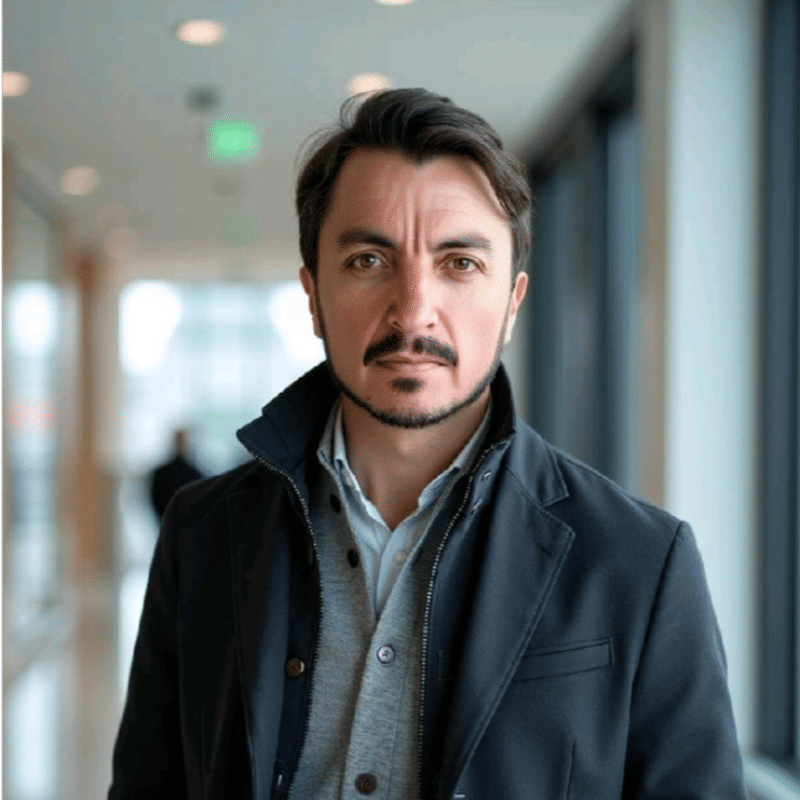
In this episode of Consulting the Future, I sit down with Esteban Sancho, CTO for North America at Globant, to explore how AI is changing the economics, structure, and expectations of modern consulting. Esteban shares how Globant's AI Pods combine agentic AI, automation, and experienced engineering talent into what he describes as a delivery system rather than a traditional project team.
We discuss why so many organizations remain stuck in AI pilot mode despite enormous investment and executive pressure to demonstrate results. Esteban explains the gap between what AI is capable of and what most businesses are operationally prepared to support. From rethinking workflows and team structures to creating governance models that build trust, he offers a practical view of what it takes to move from experimentation to production.
The conversation also examines the future role of consultants in an AI-powered world. Will AI replace consulting teams, or simply change what expertise looks like? Esteban argues that human judgment, systems thinking, and the ability to design reliable AI delivery models are becoming more valuable, not less.
We also explore why outcome-based delivery is gaining momentum, how financial institutions are adopting AI faster than many expected, and what business leaders should consider when balancing innovation with oversight and accountability.
If you're trying to understand where consulting, software development, and enterprise AI are heading next, this episode offers a thoughtful look at how some organizations are already adapting to a very different future.
What role do you think human expertise will play as AI becomes embedded in every business process? I'd love to hear your thoughts.
Useful Links
Connect with Esteban Sancho
Learn more about Globant
[00:00:00] Big thank you to Denodo for supporting the Tech Talks network and making these conversations possible. Because when your lake house stores the data, the real challenge is getting that data where it needs to go and faster. And your lake house stores the data, but Denodo helps deliver it faster.
[00:00:20] So with real-time access, built-in governance and a business-ready data marketplace, Denodo can help your teams unlock insights without costly duplication. And you can learn more by simply visiting denodo.com. Welcome back to the Consulting the Future podcast. Today I'm joined by Esteban Sancho from Globant.
[00:00:46] We're going to talk about a shift that could reshape consulting as we know it. Instead of billing purely by time and headcount, Globant is combining Agentic AI with senior engineering talent to create delivery systems that are focused on outcomes, speed and measurable value. So for businesses stuck in AI pilot mode, this conversation gets right into the heart of what needs to change.
[00:01:13] Because the future of consulting may belong to those who deliver better results faster with humans and AI working together in a smarter operating model. So with the stage perfectly set there, let me introduce you to Esteban right now. So thank you for joining me on the podcast today. Can you tell me a little about who you are and what you do? Yes, Neil. Thanks for having me here.
[00:01:40] I'm Esteban Sancho, CTO for North America at Globant. I've been with the company for many years. Originally in Argentina, moved to the States. I have a very technical background. I was an architect before getting into leading large operations. And I'm currently leading our AI pods, which is basically our AI native services. And it's a very exciting time. Basically, I get to talk with all our big clients who are really interested in how the space is moving.
[00:02:10] I'm with analysts, with journalists like you. So it's a very fun time. Awesome. And I've got to ask, I mean, you said that you've got a very technical background. And there's a background in architecture as well. Is there a story there that put you on this path to what you're doing now? I think it's I started as an architect at IBM. I joined Globant in 2005. So, of course, highly technical. Then I led the Magic Band program for Disney.
[00:02:38] So that's why I moved to the States in 2012, basically. Right. And once you move here, you are way closer to your clients. So you have a tendency to start working a little bit more closer to the client as well. And developing those relationships, helping them make decisions. And I think one thing takes to the other. And yeah, that's how they end up here. At this point, I'm a very clear hybrid between technical and commercial client relationships. So it's fun.
[00:03:07] You need to be well-rounded. So, yeah, it's fun. Love it. What a great story. And of course, fast forward to present day, many consulting firms out there still billing by time and by headcount. So why do you think AI pods signal a move towards a more outcome-based consulting? And what's driving that change right now? And maybe we should tell everyone listening what these AI pods are as well. Sorry, I've thrown about three questions your way there. Yeah, that's perfect.
[00:03:36] Yeah, I think we can cover all of them together. So AI pods is basically our AI native services. So for all the services that we provide, we have an AI native. And what that means is basically that when we typically used to deploy a team, a traditional team to work with a client, to help them build something, to help them fix something. And now we can deploy an AI pod. And what that basically is, is a combination of people.
[00:03:59] Still, we have, we need to, we can talk about people later if you want a little deeper, but there is a little bit of a change there in what you need. But also we combine that with technology, with agents, right? And the hardness, which these days is growing in importance. More and more people are realizing that you need to surround the models and the agents pretty well in order to get the results that you want to have. So it's basically, we like to say that it's a delivery system. It's not a team anymore.
[00:04:29] It's a delivery system. So we have, it feels a little bit more like a machine that you are fine tuning and you are operating compared to before where we were crafting your work yourself. And I would say that the big reason why we had so much traction is clients never wanted to pay by the hour. That's the truth. You don't want to pay by the hour. When you're hiring a service at your home, you don't want to pay by the hour.
[00:04:54] You want to, you want to get something fixed, something built, and you want to know how much you're going to pay for that. The typical challenge they have is that they, so the other option traditionally was to go into a fixed price project, right? So, but for that, you need some requirements. You need to understand very well what you want to build, which most clients, in the type of work that we are very well known for with this product engineering, our clients are discovering along the way what they're building, right?
[00:05:21] So it's not that we are, it's not like you have a very clear definition and then a two years build and you end up exactly what we wanted to have at the beginning. It's like you're building things over time. So, and then if you don't have that, you have the, you don't have flexibility at all. You need to pay for every change. Those changes come in very expensive, typically with most companies that focus on delivering fixed price.
[00:05:44] So I think that now we arrive at the point where we can finally align the incentives for clients and vendors. If you ask me, I've been in services my whole life and that's something I didn't like at all. Like I have drive. I like my teams to perform, to exceed expectations because I believe that that's a way to grow a business. But not everybody thinks that. So, so a client, yeah.
[00:06:11] I mean, if you look at the basics, if you are a vendor, you want to keep your client happy, but you don't need to be extremely efficient, right? You just want to keep them happy that they feel like they're getting enough value for the money that they're paying. But there's no clear incentive to get faster, more efficient and all that because the client is paying by the hour. So, so clients never liked that.
[00:06:34] And when you think about now where we always, the big cost was the, the, and the input was the effort of a human sitting at the desk, grinding, typing and doing the work. Now that has shifted. So, um, most of the work can be done by agents and you need to shift that into how can you improve the way that those agents operate? And how can you supervise the work that is being created?
[00:07:02] So, so that effort is not the same. Like the effort is not the driver for the creation of the work. It's an, it's the first time where if you think about it, a client wants to pay less for the same outcome and they actually want to pay for the outcomes, right? So we as vendors, we can commit to better unit economics for our clients.
[00:07:29] And at the same time, we have all the incentives to be as efficient as we can. So we get a better business. We can reinvest in more technology. We can get more efficient. So I think this is a virtual cycle. The opposite would be, okay, now you're paying by the hours. So those hours are shrinking and shrinking. Vendors are extremely affected by that because it's impossible to grow when you're just reducing the hours that are being spent doing the work. And the incentives are all wrong on that side.
[00:07:58] So, and I think the story is evolving. I started, I would say, very early compared to others. I'm talking with all the analysts and all that. And we were the first company to put something out in the market last year. We made it public in June, 2025. But I started working on this in February, 2025. I'm putting this in front of clients, friends and family.
[00:08:22] And the story has been evolving, both in maturity of the technology, but also in the receptivity of clients and the pressure they have in order to do something with AI. Because they have mandates to improve the numbers. They have mandates to reduce spend. And that's coming from, you have these two worlds happening at the same time. You have a little bit of hype on one hand. You know what? Everybody is talking about, yeah, okay, how you can do things.
[00:08:51] And then you have disappointment. In most of our clients, there is disappointment that they have deployed the tools and they haven't found the value that they expected to get out of those tools. So, I think that to have a partner who comes to them and are willing to take the risk to reduce the unit economics and deliver more for the same money or the same for less. They were super welcome to that.
[00:09:19] And now I think that maturity is evolving. And even when clients are still not seeing that internally, they are receiving even more and more pressure. So, there is a little bit of even more pressure about, okay, this country is not enough. I need more. Because, yeah, it's an interesting dynamic. But I think we went from last year where people were mostly skeptic and afraid and how everybody needs to jump on it.
[00:09:46] They might not know how, but they need to jump on it and do something about it. Yeah, completely with you. And we do hear a lot, though, about companies and possibly people listening to this podcast today that they still find themselves struggling to move beyond AI pilots. So, from what you're seeing out there, why are so many projects still stalling? And how can AI help organizations scale these projects into real operational impacts? Because we hear a lot of talk around ROI, et cetera.
[00:10:15] And there just seems to be a big change this year and a real big drive towards operational impact and business value, et cetera. Yeah. I think there are a couple of gaps that are significant. Yeah. One of them is the gap between capability of the technology and adoption. Right? That gap is very large. So, having said that, I mentioned before that there are two kind of universes. Both are real.
[00:10:44] The right companies are killing it. They are moving at an extremely fast pace. Right? They had to change how they operate completely. Right? They had to rethink. If you think about capability, you typically talk about the process, people, technology, or tools. I think until now, most people have been focusing a lot on the tools part only.
[00:11:09] And not rethinking the processes and the people that you need in order to run those processes. What skills do you have? I think that's challenging in many dimensions. The skill that you need in people, it basically redefines jobs, basically. Right? It changes. You go from creator to more like editor, system thinker, how to improve the system.
[00:11:36] And for many folks, they're not welcoming that. They don't like that. They like what they did before. Right? But times change, and you need to adapt. So we have to change our operating model. But if I go wider and I look at what is happening, I think that today is very easy to do a demo, a prototype.
[00:12:03] Putting that in production, it's a completely different story. And that happens even for us. Like, we learned a lot of lessons in this year and a little bit over a year. At the beginning, we just deployed tools to the teams to start adopting, learning. What can we do? What are the... Then we had to evolve that into something more meaningful because as we were getting more traction from the market, we had to scale. So we are scaling the business, and that requires us to scale the delivery of that business. Right?
[00:12:33] So for that, we had to focus a lot on this concept of the hardness, how we orchestrate the agents, how we validate the work. And it is very easy to push the bottleneck somewhere else in the system if you don't build the right validations in time.
[00:12:56] So you really need to shift things quite a bit, and you need to really change how you think about many things. I think that sometimes we are realizing over and over time that certain things that we were giving for granted, like testing, is expensive. And so you probably know that probably the target for AI was 80% coverage for unit testing, let's say. Because the last...
[00:13:25] And that's applying the Pareto, right? So with that, you were planning to capture most things. But that last 20%, it was super hard to do. Now there is no reason to not have a 100% coverage in testing because you are not creating the test. You just need to drive that. So there are many things that need to change. And I start to see that companies are changing how they are approaching the problem solving. But it is still a little scary.
[00:13:54] One thing is to have a demo for the board, for shareholders or stakeholders. And another thing is to put something in production, especially if you put something in front of your customers, right? Things can go wrong if you don't have the right things in place. And you typically hear about the horror stories. You don't hear about the good stories, right? Those make the headlines. Yeah, it's so true.
[00:14:18] And I think it's also fair to say that some of the traditional consulting models have a bit of a reputation for feeling slow, expensive and difficult to measure. So how does combining agentic AI with senior engineering talent, how is this changing the economics and speed of delivery here? What are you seeing? I would say that clients typically come for one of two things.
[00:14:43] Speed, like we have, for example, a bank in Europe that they had to meet a regulatory deadline. And traditionally, it would have taken twice the time to meet that deadline. So we estimated the work and it took 15 months. That was our original estimation. And this was like at the very beginning, I would say.
[00:15:08] And then that's why we realized the value in bringing AI bots in that for that particular client. You wouldn't think that finance would be one of the first industries to adopt this. Typically, finance is more conservative. I think there are interesting dynamics here into there are incentives for everybody in this technology. Retail, for example, wants to go for the growth. They want to do more. They want to really put more products in for their customers and trying to go for growth.
[00:15:38] So I can see that they are typically not trying to spend less. They're trying to get more out because they have big backlogs. For finance, the incentives are typically around financials. So efficiencies are very important. In this case, it was a case of speed. So we were able to deliver that. We had a deadline of eight months and we were able to deliver in seven months. So the other one is, of course, efficiencies. Right. So those are two things that the typical client looks at first.
[00:16:08] Speed and efficiency. You get better in economics. You want to pay less for what you're getting or you're moving faster. And typically, those two go together. Right. Typically. There are a few things that emerge by working on this with clients. One is quality. We actually improve quality. Like we have another bank, which is interesting. I'm talking about banks. Again, if you ask me when we started, I would have thought that it would have taken way more
[00:16:37] time for banks to adopt this, but they jumped in very quickly. I think we have a few reasons for that. But besides that, how we typically start, clients do not understand what an AI pod is. They don't know what to expect from the delivery. They don't know how it feels. So we start with a pilot, typically in a client. Right. We start with, OK, give me a piece of scope. I will put that in production. But with this delivery system that we have in place, which is an AI pod.
[00:17:03] And this bank in particular, before scaling our operation with AI pods, they wanted to compare the product of the work of our AI pod with what they typically receive from other vendors and even their internal teams, which are expensive things that they use for mission critical things. And the AI pod scored the highest in most of those quality attributes, especially around testing coverage and documentation.
[00:17:33] And that's the other thing. So you look at speed, efficiency, quality. And the fourth one is knowledge. The agents need to have all this context in order to operate well. And that context basically is knowledge about what you are working on, which was historically in people's head. And if you have to bring someone else to someone new to do work on a given project, you have to ramp them up and all that.
[00:18:03] And that's something that we have to formalize from day zero when we deploy an AI pod. We need to put that context for the agents. And it's the same knowledge that people need. So that's the other benefit that you get. You end up with not only the financial benefits and the quality, but also with more reliability in the sense that you have formalized the knowledge that was in the code, in people's head
[00:18:32] and all that. Because if you don't have that for an agent, it will struggle. It will not know what to do. And that was originally the challenge, like deploying a vanilla agent into a code base that they have never seen before. And there are internal libraries, SDKs, APIs that are only for that company. So I think that that's another of the benefits that you can get. And those are the things that typically clients look at, if it makes sense.
[00:19:02] Yeah. Yeah. And I think we should also highlight this growing heated debate that we're seeing around whether AI will replace consultants. There's a lot of fear around that, or it will simply change the way that consulting works. And from your perspective, what happens to the role of human expertise in this next chapter? Because I would imagine you've got an optimistic viewpoint working in this industry. But tell me how you see things evolving here. Yeah. Yeah. Yeah. So I'm optimistic.
[00:19:30] I think that the role changes definitely, as I was telling you before. And there are some dynamics that are going to be more challenged than others, especially when you have very large pyramids delivering, doing the grinding to create the work, and then the supervision of that. And that's going to be a little bit more challenged, because now what you need is basically judgment. You need to understand what good looks like. You need to...
[00:19:58] What is emerging, I believe, is that this concept that we think of this as a machine that we're creating. So engineering is shifting from engineering the product, the end product. Let's say you were creating a mobile app. That was engineering, creating the mobile app. Now the engineering shifted to the harness, to the machine that creates that mobile app, if it makes sense.
[00:20:22] So the two big roles that we see is the harness engineer who focuses on improving that machine, because you really want to have a flywheel in the sense that if something doesn't go the way you expect it to go, you have two options. You can fix that manually, or you can think, okay, what are the capabilities we are missing in the system so we can get the output that we want to have?
[00:20:50] And if you focus on that, and that's system thinking, like, okay, what are we missing here that will take us to where we want to be? And so next time that a similar work item comes, you get the right result. So that's a flywheel where you really start seeing the efficiencies. And you have people who like both. You have people who like the grinding, and you have people like the crafting, the grinding, because there is. For engineers, it was always, it was something that gave you joy.
[00:21:17] Like you solve the problem, you make it work, you pass the test, and that gives you joy. Now you really need to shift how you think, and maybe realizing that the problem is somewhere else, and you need to learn about how to solve that other problem. So I believe that consulting is still going to be required. If you look at this gap, massive gap between capability of technology and adoption, that's where the space is, right?
[00:21:44] So, and there are some that are still not seeing the change, or they're struggling with the change because they have incentives that align with other type of business. In our case, we thought that there's nothing, we cannot change, you know, we cannot change the environment. We cannot change where things are moving. We needed to adapt to that.
[00:22:09] So we are happy to change how we, for all the big clients we have, those are the first clients I visited. And I proposed to them, okay, let me give you more for the same money. So, and that's where what they welcome. Again, not everybody is set up like that. Not everybody is thinking about it that way. I think that companies who really can think about this, they will thrive.
[00:22:36] If you look at the latest dynamics, you have even the labs trying to get into services. You have Anthropic, you have OpenAI, that they acquired companies, they created joint ventures to get into services. So they finally, there is value to be created with consulting. It's just changing the shape dramatically in some cases. I love it. And obviously, from the outside, looking in, you work across CPG and automotive industries,
[00:23:05] for example, at Globin. I'm curious, from everything that you're seeing out there, are you seeing different levels of AI maturity between sectors? And if you are, which industries are adapting fastest to this new model? Any clear winners here? Yeah. And in this role leading AI pods, which is, so technically I'm CTO for North America, but this is a global role, not only in geography, but also in industries. I get exposure to all of them.
[00:23:34] I think that what we see is the technology adoption curve, basically, at play here. And you have the AVI adopters, you have the majority, and then the laggards. There are some companies that are intrinsically have different pace in terms of that. And sometimes the industry reflects that as well. Some industries are typically more conservative. So they wait for things to unfold, and then they jump on the wagon, maybe a little bit late.
[00:24:02] In this case, what I was telling you before, I think it's very clear to me. You have the fast-moving retail. It's a fast-moving industry in terms of technology. They are kind of the first to adopt, typically. And they have incentives to that. And these incentives are typically trying to go after growth, in my case. In some cases, there is pressure on them, so they need to go for efficiency as well.
[00:24:30] But I think we can say that it's fair to say that they're going after growth. But there are also incentives for the others, as I was telling you. Many of the clients surprise me. They come from the financing sector, banks, insurers. So it's very interesting. I don't even know how many clients I talk with already. Most of our big clients, we have a very nice and large portfolio, very interesting, not only logos, interesting people in those clients, very sharp.
[00:25:00] I get to work with private equity as well. So they find value in this as a lever for the portfolio companies they have. Very sophisticated people. And they all find value in someone. And leaving us aside, just a job we are trying to do. So basically, we are going after the adoption of this.
[00:25:26] So we are basically looking at the frontier, what is working for those companies that are really moving super fast, and how can we adapt those methods, techniques to the enterprise, which is a completely different scenario. Because the hype that you hear is startups, AI-native startups, Y Combinator, they move extremely fast. It's crazy how they move. But they don't have the constraints that our clients have, enterprise clients.
[00:25:52] So that's the gap that we are filling. And I think we landed on a point where we can give enough confidence to our more conservative clients, but also we bring the speed for others. So everybody's welcoming us. Everybody's. Maybe after, I typically have the first conversations with the senior executives, and they all typically go well. We end up saying, OK, let's try this. Let's pilot this.
[00:26:22] I want to see how it feels, right? And then it might take a little bit longer, depending on you. Because when you use AI, you have to go through compliance, security, procurement. And even the way that we contract and we change into outcomes and all that is different for many companies in procurement as well. It's not only technology disruption, it's also a commercial disruption. So in some companies, that takes a little bit longer. When you start with a pilot, it's a little simpler because you can kind of express lane, a little pilot, a little bit of scope there.
[00:26:50] But I see that everybody is interested in doing something here. And one concern that many leaders listening will have is trust. And to give everyone listening that valuable takeaway, if AI agents are helping drive delivery decisions, how should them and their companies maintain oversight, governance, accountability, and indeed confidence in the outcomes. Any advice there? Yeah.
[00:27:16] And yeah, that's basically what we did when I was telling you that we adopted those methods. So if you look at what things have really worked today, you look at spec-driven development, right? You look at certain techniques to break down the process in multiple steps. And that's what has been working for many. What we did, basically, is we added traceability to all those decisions.
[00:27:44] So if we split the process into multiple steps, we leave an artifact for each step. So we formalize all the decisions that were made. And then we have validations for each of those artifacts. And those validations are not only human. If we were doing only human validation, we would just be moving the bottleneck downstream, which is... And that's what happens to many companies. They're just creating PRs with AI very fast. They are accumulating PRs.
[00:28:12] And then you have people who receive those PRs, need to make sense of something that they haven't built, that maybe they are very large PRs, 2,000 lines of code that they need to go out together. We are breaking that down. And validations, we have deterministic validations. We have adversarial validation. So you basically use a different family of models to evaluate the work that has been done. And then we have the human in the loop. So that's how we...
[00:28:39] And we do that because that's what I believe everybody should be doing. It's very hard to trust in this technology when you know it is probabilistic by nature. And also the process can be probabilistic as well. So we try to combine deterministic workflows. That's what we do. So we know for sure what are all the steps that are going to happen. What are all the validations that are going to happen?
[00:29:08] And we have traceability for each of those, right? And then the creative work. So actually the creation of the product, that's probabilistic. And that's where the agents shine. So that has been our approach. And I think that everybody, we need to look at, okay, how do we combine deterministic processes with some more discrete steps as our probabilistics? And then how you build those validations into the process, right?
[00:29:37] Because if not, you're just shifting things from one way to the other. And as an engineer, one thing is to tell an engineer, okay, you're a harness engineer. You need to improve how this works. That's a challenge. That's system thinking. That's okay. This is fun, right? Another thing is to create a lot of PRs with AI and throw them to some human that needs to only review, which code review is what everybody hated doing before. So that's it, right? So that's even from a social point of view, it's going to be very hard to get people.
[00:30:07] And people are burned out because of that in many places. So I think that, yeah, when it comes to, and this applies to software-runnerly cycle, that's what we do with AirPods. We also do some operations. But I think in general, that's what people, we need to start building. And GARPers are not enough in many cases. You need to have the GARPers, but you also need to have determinism as much as you can. If you can do the same thing in a deterministic way or a probabilistic way, probably deterministic is better.
[00:30:37] We use probabilistic in cases where you need to deal with the unknown, the unexpected, and that's where agents really shine. But there are things that if you can solve something with a business rule, deterministic business rule. So if Y, then B, why don't solve it with that? Instead of, you think that there is a push to do everything agentic and everything probabilistic. And there are reasons for some companies to be pushing for that because there are incentives around doing that.
[00:31:07] And that's very unreliable. I was reading the other day a paper and basically the gap. So accuracy improves seven times faster than reliability in the process with AI. So, you know, it's, yeah. So you can get a model that gets more accurate, but doesn't get more reliable. So I think that you need to build that harness and you meet. And that harness means the process, the validations, the guardrails, all that.
[00:31:32] So really build something that puts the human in as a first class citizen in that process, not as an afterthought. Yeah, completely agree. And I think that is a thoughtful moment to end on. And for anybody listening who wants to find out more information, I know you've got a lot of big announcements coming on the horizon. I want to be able to point people in the direction of everything there. So where should they go if they want to carry on this conversation and then get access to some of that information? It's going to be dropping in the next few weeks.
[00:32:02] I'm going to leave a few teasers there. But where should they be going? You can find us at global.com, G-L-O-B-A-N-T.com. Exciting times ahead. I'll include links to everything. And once everything is launched, maybe I'd love to get you back on later in the summer so we can talk more about that and focus just on some of those things as well. But more than anything, just thank you for starting this conversation today. Really enjoyed talking with you. Oh, it was a pleasure. Thank you very much for having me here, Neil.
[00:32:29] It's actually a new way of thinking about delivery. Where human judgment, engineering experience, governance and agentic systems, where they all come together to solve problems faster and with clearer accountability. So I'm glad we talked about why so many AI pilots stall, but why enterprises need more than oppressive and why enterprises need more than just an impressive shiny demo.
[00:32:55] And why trust, traceability, human oversight, how these things matter when AI agents start shaping real business outcomes. So for me, today's conversation was a turning point for consulting. The old model of hours and headcount, all that stuff is under pressure right now. But the next model will be judged by outcomes, speed, quality,
[00:33:20] and the ability to turn AI ambition into working systems. Food for thought indeed. And as always, please head over to techtalksnetwork.com. We've got eight different podcasts there, 4,000 episodes, and a variety of ways of how you can contact me, leave me a voicemail, or meet me on the road at an upcoming tech event. Whatever it is, please pop by, let me know your thoughts, and I'll return again very soon with another guest. Thanks for listening.
[00:33:49] Bye for now.