

What role does cybersecurity play when the battlefield extends beyond Earth’s atmosphere? In this special episode of Conversations From The Showfloor, recorded live in Tallinn for the fifth anniversary of the Software Defined Space Conference, I sit down with Kalev Koidumäe, CEO of the Estonian Defence and Aerospace Industry Association.
We explore how a nation of just 1.3 million people has built global credibility in cyber resilience, defense technology, and space innovation. Estonia’s journey, shaped in part by the 2007 state-level cyberattack, has forged a culture where digital readiness is embedded across government, industry, and education. Cyber hygiene is taught in schools. Reserve officers bring operational insight into business. Public and private sectors collaborate with shared purpose.
Kalev explains how space has become a core defense domain within NATO, alongside land, sea, air, and cyber. Satellites now underpin operational planning, navigation, weather intelligence, targeting systems, and communications. In modern conflict, space infrastructure and cybersecurity are inseparable. Protecting software-defined systems has become as important as defending physical territory.
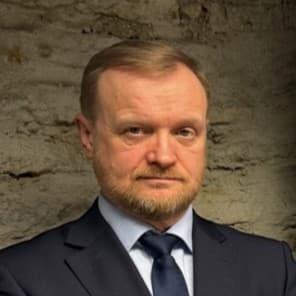
Our conversation also examines how lessons from the war in Ukraine are accelerating innovation across Europe. From AI-enabled battlefield analytics to autonomous systems and advanced sensor technologies, Estonia’s companies are carving out specialist roles within global supply chains. Smaller nations may not build the largest platforms, but they can provide highly specialized subsystems, software, and cyber capabilities that strengthen collective defense.
We also discuss the balance between sovereignty and collaboration. Estonia’s reserve army model, growing defense investments, and expanding industrial ecosystem reflect a society that sees innovation as a civic responsibility. Domestic resilience strengthens international partnerships. And as defense budgets rise across Europe, Estonia is positioning its ecosystem to contribute both locally and globally.
This episode offers a grounded, strategic look at how software, cyber readiness, and space technologies are reshaping modern defense. It also raises bigger questions about education, automation, AI, and the next generation of digital-native citizens who will inherit this rapidly evolving landscape.
So what can larger nations learn from Estonia’s approach to readiness, innovation, and collective security? And as space becomes increasingly software-defined, how should leaders rethink the relationship between cyber resilience and national defense?
Conversations From The Showfloor is your front-row pass to the most important conversations happening in enterprise technology today. Recorded live at global conferences, each episode captures candid discussions with leaders shaping the future of business, infrastructure, security, and innovation.
Search “Tech Talks Network” to discover other shows in the series and follow to hear new episodes as they drop from events around the world.
Useful Links
[00:00:04] - [Speaker 0]
What does cybersecurity look like when the battlefield stretches far beyond Earth's atmosphere? Well, today, I'm helping celebrate the fifth anniversary of the software defined space conference, and that's taking place here in Tallinn, Estonia. And this event brings together experts at the intersection of software, space, and security. And today, I wanna explore how digital innovation is transforming our ability to protect and leverage space assets. Yep.
[00:00:40] - [Speaker 0]
I want you to think a little bit bigger than space tourism today. Because today, I'm gonna be joined by the CEO of the Estonian Defense and Aerospace Industry Association to talk about how Estonia, a nation of just 1,300,000 people, has built a globally respected reputation in cyber defense and space innovation. And from the lessons they learned from the two thousand seven cyber attack to the country's growing ecosystem of aerospace and defense startups, I think it's fair to say that Estonia has become a fascinating case study in how a small but agile and adaptable nation can take the lead in the most advanced technological domains. So I invite you to join me today as I explore what makes Estonia's defense and aerospace industry so unique, and also how space and cyber technologies are increasingly intertwined and how a new generation of engineers and entrepreneurs are already redefining what's possible for Europe's security and resilience. But enough scene setting for me.
[00:01:54] - [Speaker 0]
Let me beam your ears all the way to Estonia where you can join me directly on the show floor here. So thank you for joining me on the Tech Talks Daily podcast here in Tallinn. But for everyone listening, can you tell everyone a little about who you are and what you do?
[00:02:13] - [Speaker 1]
My name is Kaleb Goydemann, and I'm the CEO of Hasturian Defense and Aerospace Industry Association.
[00:02:20] - [Speaker 0]
And we're talking today as we celebrate the fifth anniversary of the Software Defined Space Conference or the SDSC series, which is dedicated to the critical realm of cybersecurity and software development in space, which is incredibly exciting. But how would you describe the event to international listeners?
[00:02:40] - [Speaker 1]
I would say that's a good event that we'll explore more about the student technologies, what our companies can provide for worldwide. If we were talking about the Estonian defense and the aerospace industry, so Estonia is a relevant small country, 1,300,000 population. So if you would like to be successful in international markets, we have to create something very unique. So in this regard, I would say that the uniqueness in Estonian defense and the airspace industry, it's one component, of course, is cyber. And when we talk about the cyber, we have certain references as well.
[00:03:18] - [Speaker 1]
In 2007 was first, I would say, the cyber attack in this scale from one state to other. It's Russian cyber attack towards Estonian IT infrastructure, governmental one. That's meant that the Estonian infrastructure was designed right way. He didn't fall down. He got some damages.
[00:03:42] - [Speaker 1]
It's still operational. And I think this reference works even even today very well. Just few weeks ago, I asked from one of our member companies, IT companies, is it true or is just some gospits? Everyone talking about it. But they said none of that actually works pretty well even today.
[00:04:04] - [Speaker 1]
And as we talk about today and
[00:04:06] - [Speaker 0]
the state of cybersecurity today, especially in a period of enhanced global conflict, how do you describe the current state of Europe's defense and aerospace industry? And where do you see Estonia fitting within that shifting landscape? Because you're obviously, you've got the you're your troublesome neighbors, shall we say, but where do you see yourselves?
[00:04:27] - [Speaker 1]
Let's let's maybe first explain about that our our space activities, what our company is doing in Estonia, around 100 companies who are somehow linked with the space sector. It was also surprising for me. In our association we have, let's say, 50 or 20 pretty active ones. Among these 100 companies, what was the statistics, 50 of them have contracts with other partners, organizations. And the main focus for the export markets as well as, of course, because our own domestic markets in space field, it's pretty limited.
[00:05:08] - [Speaker 1]
But we have the historical roots. Let's say Tartu University, Tartu Observatory, they have quite long, back in time, some some experience in this with the space science. And that's, I would say, the the basis for Estonian space companies, many ways. What our companies are doing in space, of course, related with software. The company is also building different camera solutions for satellites.
[00:05:38] - [Speaker 1]
The main market is to Europe and The US. And different type of the material developments and of course all the satellite services. So the space sector, it's very important. And when we're talking about with the with the defense, the space is one of the fifth one of the domain out of five in NATO as well. That's the land, air, navy, cyber, and space.
[00:06:09] - [Speaker 1]
So with the or guarding or the space is space technology is also organic part of of the defense today. And as we see what's going on in the Ukrainian battlefield, so at all the operational planning phases, will need information about the weather conditions, which is coming from where? From satellites. If you start to plan the operations, targeting where is opposing forces, where to send the rockets, you need that information is coming from the space. So the linkages, it's pretty big one if you compare with the space.
[00:06:45] - [Speaker 1]
And of course, the cyber part of it because it in modern battlefield, the means and counter means competition. It's it's the constant fight. And let's say the the cyber domain or protect the systems, protect the weaponry. That's pretty valid part. When we talk about the cyber in Estonia, to that our references, our maybe knowledge about the cyber, I would say it's pretty high.
[00:07:15] - [Speaker 1]
And the basic education it's giving even the pupils in school about the cyber we call it cyber hygiene. Do not push every link and be aware of it in the institute, let's say, in the businesses. The companies also put a lot of effort into the cybersecurity. And in governmental officials, as myself, I'm a reserve officer from I did thirty one years service in the Estonian army. Basically, every year we had cyber tests.
[00:07:49] - [Speaker 1]
So you have to be aware, and of course, all the threats, they are also changing in the time. So that's maybe a bit explaining about background, are in the cyber, let's say, domain in Estonia as a society, and what our space companies are doing in space market and how they linked with with the defense today.
[00:08:20] - [Speaker 0]
And I'm so glad you've raised this because there will be people listening all around the world. And when they hear about space, they think moon landings, space tourism. But we take so much for granted of the role of those satellites in space, don't we? Whether it be in conflict or even in our everyday life.
[00:08:35] - [Speaker 1]
How you came here? You used navigation, for example. So and it's of course, all the space technologies has become more affordable. It's not only the monopoly of the of the governments anymore. SpaceX and other companies, they're much more affordable for the companies.
[00:08:56] - [Speaker 1]
And I think in this regard more and more businesses also can see it's affordable. It's not, let's say, unreachable area what was before very limited access for the private companies, only those who've been contracted with the governments. So in this regard, I see that all these technologies will rapidly develop because or is it technological, how to say, development spin moving faster and faster. Compare with your own your parents, for example, when they went to labor market, basically they used the same skills and tools to the retirement. But in our generation you start with the typewriter and now you have all the world in your pocket as with the mobile phone.
[00:09:44] - [Speaker 1]
And we can't even imagine how our kids will what what they they are digital generation. We came from the analog generation. Yeah. So and they maybe will have to move to the quantum generations, I would say.
[00:09:56] - [Speaker 0]
Wow. There is an exciting
[00:09:58] - [Speaker 1]
future right there. But but the same going on in the battlefield. If you look the Ukrainian battlefield, one hand, have in one arc, you have the first World War artillery 12. Mhmm. Other hand, you will lead this or or do the fire control with IE using IE.
[00:10:17] - [Speaker 1]
And in the middle you have a lot of unmanned systems and then all the new technology. During the last four years we see through our company experience in Ukraine how fast the technological spin has been developed and then going further and further.
[00:10:32] - [Speaker 0]
You have a unique perspective here as both a reserve colonel and now an industry leader. So how do you see that relationship between national defence priorities and technological innovation? How do you see the two of them colliding and evolving together?
[00:10:47] - [Speaker 1]
It's pretty pretty normal in Estonia, I would say, because we have a reserve army, and many, let's say, business owners, engineers, scientists, governmental officials are somehow linked with this. They've been part of the reserve wars or they're members of the Volunteer Defense League, for example. So and that's somehow how the society also are aware about the situation. And at the same time it can reduce, let's say, the scare also what's going on because we knew what we do. And in this regard, I would say reserve military personnel, they also can bring technology from from defense forces to the industry because government has been invested so much to them anyway.
[00:11:45] - [Speaker 1]
And, of course, they they absorb turning the thirty years all the resources from them, but they're still left of the resources and knowledge of those people. And we have also quite nice number of reserve officers, generals who right now pretty active on the defense industry.
[00:12:04] - [Speaker 0]
And, of course, the war in Ukraine has changed how many countries think about the readiness and innovation and indeed technology. So what lessons from that conflict are shaping your approach in Estonia to defense and and industrial strategy too?
[00:12:20] - [Speaker 1]
When we're looking about the old political security political situation in the Eastern flank of of the Europe, we we have our neighbors. Russia have been 100 of Sears. But, of course, we know from our past that you have to be ready for the worst case of scenario. And to be ready, you have to prepare yourself. And if you prepared, then you know how to act and how to face.
[00:12:49] - [Speaker 1]
And that's what what our military, our government, our society doing in daily basis. So we have a reserve army. We can't afford for us fully professional. But we have the wartime structure, 50,000 people who've been drained and equipped and the constant training going on, people who are in reserve. Also society, local communities, they have some risk plans.
[00:13:16] - [Speaker 1]
It's not only to talk it, we are doing it right now, that, but of course it pushed somehow to do certain projects faster than what was it planned before. When we talk about the state defense side, the Estonian defense budget will be increased next year up to 5.4% of the GDP, which is huge of, let's say, effort from the governmental side. And there will be also quite a number of defense investments. And, of course, Estonian defense and space industry will be also part of of the investments because it what's possible to make in Estonia that we will provide for for our armed forces is some systems, products, or or services. And, of course, the localization.
[00:14:05] - [Speaker 1]
There will be also definitely weapon systems. What we are not making in Estonia, what government will buy, but there is a localization we see also possibility to be part of of supply chain of the bigger primes. And also to that, we will have some technological transfer to Estonia. So it's a win win for both sides.
[00:14:26] - [Speaker 0]
And of course, smaller nations often face the challenge of maintaining sovereignty while participating in wider European and NATO collaboration. So how do you navigate a balance like that in Estonia?
[00:14:39] - [Speaker 1]
Yeah. We are we are the member of the NATO and but you you can't rely only only your partners. Yeah. You have to be ready to take the first fight by yourself. So when you can take care for yourself, then your partners will much more keenly to help you.
[00:15:02] - [Speaker 0]
And I'm curious from what you're seeing, what kinds of technological breakthroughs or innovations are are currently being developed in Estonia's defense and aerospace sector that that you think could have a a lasting global impact? Anything in particular excite you there?
[00:15:17] - [Speaker 1]
I wouldn't say the global impact when the Estonian companies would like to be successful on international markets. And it's very tough competition on the export markets. What we see now in Europe, we see the market fragmentation. And from the other hand as well, market protectionism are increasing. So of course all countries who will, let's say, increase the defense budget, they aim as well to leave as much as possible taxpayers' money in their own economy.
[00:15:54] - [Speaker 1]
And to be successful in this tough competition, have to provide something very unique. And I usually bring the example that, okay, the big primes, they provide the big stones, but between the big stones, have a place for small stones. We try to fulfill this. And not maybe the full set of systems, but let's say subsystems related with the cyber solutions, IT solution, but also different sensor technologies. The student companies providing to market right now on the all three domains unmanned platforms.
[00:16:32] - [Speaker 1]
And many of them operating in Ukraine, for example. Different sensor solutions or situation awareness solutions, which are also operating in Ukraine, we got the references back and developing constantly those solutions. We're also making our defense industry ecosystem now developing, I would say, that consists of the legal frame. We are also adapting our laws and regulations in Estonia that our companies can be applying much easily the different licenses to provide munition or weapon systems, provide for our own armed forces, but also focus to export markets. It's the same with the conditions, the governmental decision to establish a defense industrial park that will also provide the location for the companies safely, produce ammunition and explosive materials, for example, And of course, export support.
[00:17:35] - [Speaker 1]
And all these combinations that we creating the condition has been started, filled already and then improving on a daily basis to get better opportunities for our companies to reach export markets with their systems, what they are offering, and also different optical solutions and observation devices. And also in the era of supply chain uncertainty, how are Estonian companies continuing to stay resilient and competitive while integrating into larger defense ecosystems right across Europe? Anything you can share around that? Yeah. I would say that's a very vital problem about the supply chain.
[00:18:18] - [Speaker 1]
And for example, during the COVID was worst impact when the supply chain's been cut off in many ways. Today, the other challenge, the many end users would like to have the systems without the Chinese components. You have to find the new sub suppliers and supply chain. And of course, to build strong and resilient supply chain, you have to pay attention about all this information security. Nobody can cut off something.
[00:18:49] - [Speaker 0]
And from your experience, both in command and now in industry, what what gaps do you still see in Europe's defence innovation pipeline, whether it's policy, mindset, funding, overregulation? What what what where are the biggest gaps do you think?
[00:19:05] - [Speaker 1]
When we're talking about the defence industry part, it's our main goal is to to create affiliate affiliate the conditions for our our companies to reach the export markets. And in this regard, yes, we would like to see maybe the biggest steps from our armed forces side to have the local contracts, bigger scale, because domestic reference is very important for us. We see also progress in this regard. We have a lot of solutions and initiatives. Maybe sometimes the industry would like to see the governmental steps much faster, but of course understandable from the governmental side when you're using public money, you'd have to be very transparent, all these procurement regulations taking time.
[00:19:52] - [Speaker 1]
So we used to have in Estonia all the processes are happening very fast. Therefore, all these government state procurements seems to us that that's happening in ages. So that's maybe, I would say, the challenge right now what we are working with. And of course regulations from the other markets as well, the access to the other markets. But in this regard, we are in this year already conducting 14 different events with to the export markets, different countries.
[00:20:32] - [Speaker 1]
We've been hosting the different partner countries, defense industry delegations in Estonia. So when you're a country, very specific sector, you have to do it a lot of, let's say, this kind of activities. I would say the marketing to create the bigger visibility of this sector and of your company.
[00:20:55] - [Speaker 0]
And you mentioned earlier in our conversation the journey we've both been on with our parents and the the analog generation digital, maybe quantum in the future. If you were to look further ahead, where how do you see emerging technologies like AI, autonomy, space systems, maybe quantum? How do you see all these things reshaping Estonia's future defence and aerospace space competitiveness?
[00:21:18] - [Speaker 1]
Yep. Definitely. And when you're a small society, in some ways we are like guinea pigs as well. If you look at all the digital solutions what we used to have in Estonia at e elections, and you can do basically most of your services over the Internet, for example. You don't need to go any offices.
[00:21:44] - [Speaker 1]
So we use that. That's the reason as well, the number of the people, how many we have the people in Estonia, therefore, all this kind of governmental, let's say, services. The logic was that we will use as much as possible self-service solutions that will reduce the number of governmental authorities, institutions, and that's also, let's say, you can cut off the, how it's called? Some kind of illegal activities. It's pretty transparent ways.
[00:22:25] - [Speaker 1]
So corruption, can reduce easily. And I will see, we will move further into building different layers, maybe services for the future society as well. And the companies who are operating in this environment with their home services, with all the innovative solutions, then that will also inspire for the younger generation, new generation to develop these kind of solutions. Therefore it's quite complicated to say today that when we could be with our technology after twenty years, even hard to say where it's after ten years because the technological spin moving faster and faster. Definitely there will be a lot of automatization when we talk about the industry, digitalization.
[00:23:25] - [Speaker 1]
So maybe you will not need to have large scale factories, you can somehow do it in the different parts, in different parts, different production, just assembly in one place. So I would say it from industry point of view. Unmanned systems on the military wise, that's definitely will be number the game on the battlefield, and they will stay and will develop. And all all for that, you will need the space, all the space technologies more and more because it then cyber to protect your supplies lines, so your communication, and that's also, let's say, that someone could be manipulated as the systems. And of course, everything starts with technology and train the population and inform what could be the with the new technologies, also the threats.
[00:24:24] - [Speaker 0]
I think that is a powerful moment to end on. I love the point you made about bringing the next generation along for this as well. And for anyone listening, maybe they wanna dig a little bit deeper, explore anything we talked about. Is there any way in particular you'd like to point everyone listening?
[00:24:39] - [Speaker 1]
Yeah. You can find about the information about Estonian Defense and the Airspace Industry Association. It's wwwdefense.e.
[00:24:50] - [Speaker 0]
And our website. And I would urge everyone listening to check that out. I think for too long, we've kinda dumbed down space and talked about space tourism and things like that. But thank you so much for shining a light on this. Really appreciate your time.
[00:25:02] - [Speaker 1]
Thank you.
[00:25:03] - [Speaker 0]
And as my conversation here in Tallinn, Estonia draws to a close, I find myself struck by how Estonia's story illustrates the future of defense and innovation. Because my guest painted a vivid picture today of how software defined space, cyber resilience, and industrial agility can all coexist. And I'm seeing firsthand evidence of that here in this small but incredibly forward thinking nation. And whether through its digital governance, reserve army model, or collaboration with NATO allies, Estonia is continuing to show that scale is less important than strategy. That's refreshing to hear.
[00:25:50] - [Speaker 0]
And the challenges facing Europe's defense and aerospace sector, they are incredibly complex, far too complex to cover in a thirty minute podcast. But so are the opportunities from AI driven operations to the integration of cyber protection across every domain. My guest reflection today reminded me of the the next frontier of security and how it will depend as much on digital literacy and collaboration as it will on hardware and funding. So as we wrap up this special edition of the Tech Talks Daily podcast from the Software Defined Space Conference in Tallinnas, Estonia. I'd love to hear your thoughts.
[00:26:34] - [Speaker 0]
Maybe you're listening in a small nation just like Estonia, and maybe you're helping set a a new standard for innovation too, whether it be in defense, space, or anywhere. Let me know what you're thinking after listening. I'd love to hear from you. Techtalksnetwork.com is our website. You can also connect with me on LinkedIn, x, Instagram, just at Neil C Hughes.
[00:26:58] - [Speaker 0]
Let me know. But that's it for today. I'm gonna try and grab another guest here on the show floor to have a little chat with, and I'll meet you here same time, same place tomorrow. Bye for now.