
How prepared are businesses for a world where AI agents are quietly becoming some of the most powerful users inside their systems?
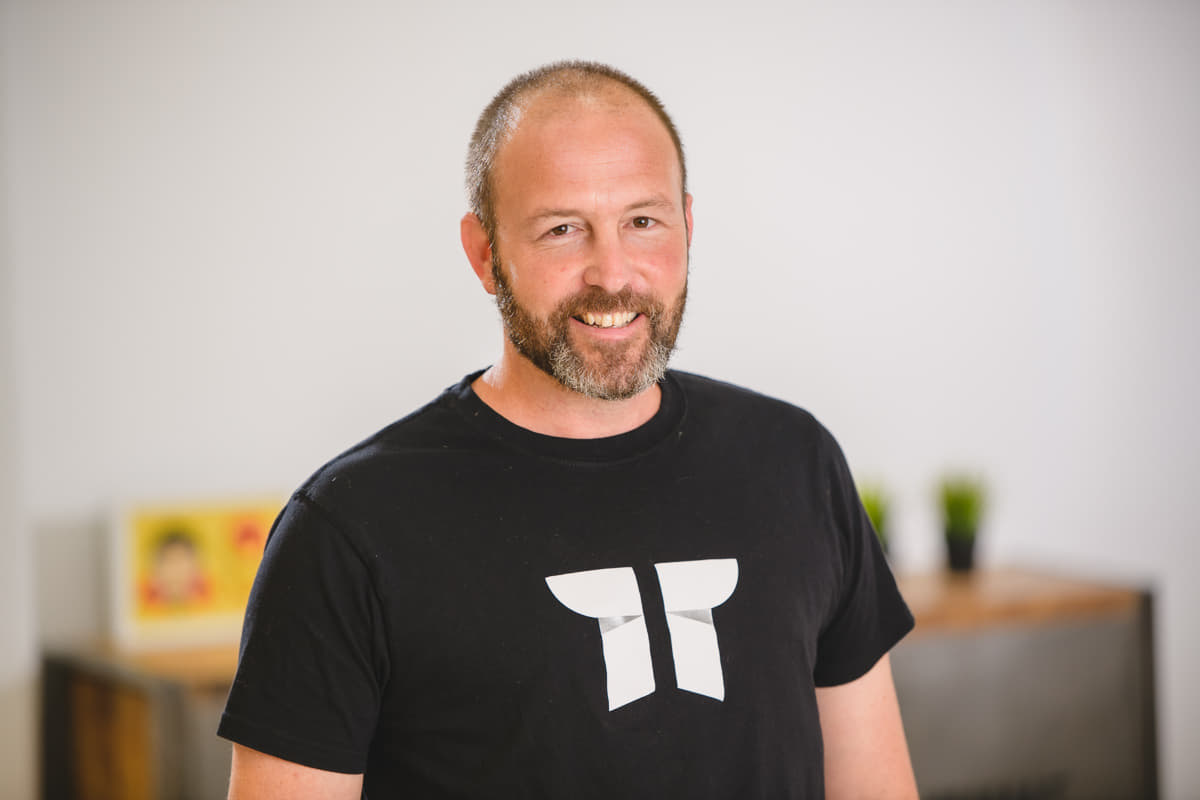
In this episode of Business of Cybersecurity, I sit down with Uri Haramati, CEO and co-founder of Torii, to unpack a shift that is happening faster than most organizations can keep up with. AI is no longer sitting on the sidelines as a productivity tool. It is now deeply embedded across platforms like Slack, Google Workspace, and CRM systems, often operating with levels of access that rival or even exceed human users. As Uri explains, that changes the entire security conversation, especially when many of these agents are effectively invisible to traditional identity and governance models.
What stood out to me in this conversation is how quickly AI adoption has moved from experimentation to something far more operational. Uri shares insights from Torii’s 2026 SaaS Benchmark Report, which reveals that enterprises added nearly 700 new AI applications in just one year, with 61 percent of all apps operating outside of IT oversight. That creates a growing blind spot, where non-human identities, API tokens, and automated workflows are interacting with sensitive data without clear ownership or lifecycle management. It is a shift that feels familiar, echoing past waves like BYOD, but this time the scale and speed are on another level.
We also explore why this is not simply a story about risk. There is a clear business driver behind this surge in AI adoption. Organizations are under pressure to control costs, reduce manual work, and get more value from their software stack. AI is stepping into that role, but it introduces new challenges around usage-based pricing, unexpected spend, and governance models that were designed for a much slower era of IT. Uri makes the case that the real issue is not adopting AI too quickly, but failing to evolve governance at the same pace.
By the end of the conversation, one idea really stayed with me. Within the next couple of years, non-human identities could outnumber human ones inside most enterprises. That raises a simple but uncomfortable question. If every actor in your system needs to be treated as an identity, how many do you actually have, and how many are you truly managing?
If this is a topic you are grappling with, I highly recommend checking out Torii’s 2026 SaaS Benchmark Report and connecting with Uri to continue the conversation. But for now, I would love to hear your perspective. Are we building the right guardrails for this new era of AI-driven access, or are we already further behind than we think?
Useful Links
Visit the May Sponsors of Tech Talks Network and learn more about the NordLayer Browser.
[00:00:05] Are we opening the door to a smarter enterprise or quietly creating hundreds of new ways for things to go wrong? Well, on today's episode of the Business of Cybersecurity podcast, I'm joined by the CEO and co-founder of a company called Torii. And together, we will step right into one of the fastest moving and slightly uncomfortable shifts happening in enterprise.
[00:00:33] It's tech right now because AI agents, they're no longer just tools sitting on the sidelines. They're becoming active participants inside systems from Slack and Google Workspace to your CRM platforms, often with broad access and very little oversight on what they're doing. So here's where things get interesting.
[00:00:55] While the headlines tend to focus on productivity gains and innovation, the data is beginning to tell a different story behind the scenes because enterprises are adding AI tools at a pace that few security teams can realistically track and keep up with.
[00:01:13] So my guest today will share some insights from Torii's 2026 SaaS benchmark report, which reveals that nearly 700 new AI applications entered enterprise environments in the past year alone. And the majority of those applications in use today are operating outside of formal IT visibility. So let's sink in for a moment.
[00:01:39] Most of what is running inside a business today might not yet be fully understood by the teams that are responsible for securing it. Scary thought, right? Well, my guest today will break down what he calls the identity gap in AI adoption.
[00:01:56] This idea that we now have a growing population of human identities, AI agents, automations, integrations, all interacting with sensitive systems, but they're not being managed in the same way as they manage their human users. There's no onboarding, offboarding, consistent governance, just persistent access, quietly sitting quietly in the background.
[00:02:24] But it's not all doom and gloom. There's a lot of opportunities here. So we'll talk about what that shift means for the leaders listening and how AI is moving from experimentation to something much more operational. And what happens when the stakes change? Visibility, governance and accountability all suddenly get transported into the spotlight. They become front and center of everything.
[00:02:48] And as regular listeners will know, it is one of the my and as regular listeners will know, I love trying to give all of you listening a valuable takeaway or hopefully more than one valuable takeaway. So if you are a security leader, a CIO or anyone just trying to balance innovation with control without slowing the business down and you don't need to either. So this episode should give you plenty to think about.
[00:03:15] So the big question here is, are you and your organization ready for a world where non-human identities outnumber the human inside your organization? Lots to think about. But enough for me. Let me introduce you to my guest right now. So thank you for joining me on the podcast today. Can you tell everyone listening a little about who you are and what you do? All right. Thanks, Neil. Happy to be here. I'm Uri.
[00:03:44] I'm the co-founder of Tori. Tori actually came from a very personal frustration. In my previous company, which I also founded, I was always the early adopter. I encourage everyone to use the best tools, try latest technologies and move fast. And as we start growing, it became a pain. And the more people we hired, the more tools showed up.
[00:04:10] And suddenly I realized that we had no idea what's actually running across the company. And I was the one who encouraged that. And that experience stuck with me. I started looking for solutions back then. And there was nothing out there. So we built Tori. Tori gave enterprise real visibility and control over the entire software ecosystem.
[00:04:34] And it tells you what we've been using, how much we are paying for that, who's using what, the risk, the spend, the operational efficiency around it. And tell you we've been seeing the data lately, especially around us, even surprised what we thought going on.
[00:04:59] Well, kudos to you for not coming across a pain point of frustration and not just complaining about it to your friends, going out there and building a solution. So big kudos to you there. And I'm so excited to get you on today because I was reading before you joined me that Anthropics latest Claude integrations.
[00:05:17] Many think of another sign that AI agents are becoming privileged actors inside systems and everything from Slack to Google Workspace, CRM platforms and everything in between. And I've been to a lot of tech conferences in the last 12 months, probably 2030, and everyone's excited about unleashing thousands of agents into the wild. And often I feel like I'm the only guy because I'm an ex-IT guy sat there thinking, well, this is making me a little bit nervous here.
[00:05:45] But what do you think it changes about that security conversation for enterprises right now? Because there is a lot of excitement, a lot of people building agents. But what does it mean from a security conversation? Yeah, totally. And first, let me say this is a generally exciting technology. I'm a huge fan. And tools like Claude, Claude Code, these integrations, when you use them properly, they can make us 10 times more productive, right?
[00:06:12] The ability to have an AI that can multitask across your systems, pull information, rough work, take actions. This is incredibly powerful. So I'm a huge believer. And the question isn't whether companies should adopt it. They absolutely should. But here's where security conversation gets really interesting. So there are two challenges I see that come with these latest changes.
[00:06:38] And I think most organizations are only thinking about one of them if they think about it at all, right? So the first one is non-human identity problem. When you connect Claude Code to Slack or Google Workspace, the agent gets a set of keys, all of tokens, API key that give it persistent access to your systems, right? It can read messages, it can read messages, pull files, interact with CRM. It's function like an employee.
[00:07:06] But it doesn't show up on your HR system. It doesn't go through onboarding like a regular employee. Nobody is managing its lifecycle. And there's an entire class of identities that sits outside traditional governance. And so that's one huge problem. The second challenge is more subtle. And I think it's the one that's going to catch a lot of companies off guard.
[00:07:34] And I saw it first when we, I think it was last year, when we started connecting tools to ChatGPT. And that's about data access. In the old world, a user might technically have access to a folder they don't need to see, right? But in practice, they'd probably never open it. They would even not know it's there, right? It was access in theory, not in practice.
[00:08:02] But now, when that same user asks AI agent a question, the AI doesn't just look at the place the user normally go to. It pulls data from everywhere it has access to, including that folder. So permission that used to be sloppy but harmless are now actively being exercised by AI.
[00:08:28] So managing access policies just became 10 times more important because AI can actually use every permission it's given. Well, man, scary thought there. And just adding to that, I think it was your 2026 SaaS benchmark report. That also shows that enterprise has added nearly 700 new AI apps over the last year alone.
[00:08:55] And 61% of all applications are typically unmanaged shadow IT or shadow AI. And we've kind of been on this path before with BYOD. We know how that story ended. But this is a whole other level that we're seeing now. So what do you think it tells us about AI adoption and what's really happening inside organizations? Yeah. Yeah, that's fascinating. It tells us something that goes against the narrative we keep hearing on conferences.
[00:09:24] And that goes back to the conference you were mentioning or what we hear again and again. The story that everyone tells us AI is going to consolidate the enterprise, reduce tools, sprawl, simplify everything. But the data shows the exact opposite. AI isn't consolidating SaaS. It's expanding shadow IT, right? So here's actually what's happening. Employees are adopting AI tools from the bottom up.
[00:09:50] They find an AI writing tool, an AI scheduling assistant, an AI data analysis tool. They just sign up. No procurement process. No security review. They click allow, connect it to their work accounts, and they're off. And this is happening hundreds of times across the department. Every department, every industry, every company, you can get out of it. So when you look at the average enterprise, we see 830 applications.
[00:10:18] 61% of them, 61, the majority are completely invisible to IT and security teams. And of the fastest growing shadow applications, the category, more than half are now AI tools. So let's let it sing. The fastest growing blind spot in your enterprise is AI.
[00:10:43] And only about 15% of the applications are sanctioned by IT. That means that IT and security are governing a fraction of what's actually running in the business. And it's really a wake-up call. It really is. And again, in your report, the other big thing that we've already mentioned slightly is this rise of non-human identities.
[00:11:10] So bear in mind everything we've talked about over the last few minutes. How should security leaders be thinking about AI agents, integrations, and automations that now have access to sensitive systems, but don't fit traditional identity models? What should they be thinking about? What should they be doing at? Yeah. I think security leaders need to make a fundamental mental shift. So every actor that touch your system is an identity, period.
[00:11:40] Whether it's a person, a bot, an AI agent, or an automation, it has access. It needs to be governed like an identity. Today, most identity governance is built around humans. So you have an IAM system, you have SSO, you have onboarding and off-boarding people, but AI agents and automations doesn't fit that model.
[00:12:03] So they get created in the background, they get broad permissions, and nobody really managing their lifecycle. So when you think about it like when the last time that someone did access review on Zapier automations, or when someone audited AI tools on OAuth tokens to Google Workspace, right? So the principles aren't new, right?
[00:12:31] You have least privilege access, wall-based permissions, lifecycle management, anomaly detection, all of these things. They exist for a long time. But what's new is that we need to apply them to a whole new class of actors that most organizations don't even have an inventory of. So step one is knowing what exists.
[00:12:55] You'd be amazed how many companies can't answer these basic questions of how many non-human identities are operating in your environment right now. So it starts with visibility and understanding, then audit and optimization, and then you have automation to make sure that everything works properly. And I'm curious, do you think the real problem is that companies have been adopting AI too quickly?
[00:13:22] Or are governance models to blame for being built for a slower era that simply can't keep up with how software is in the businesses today? Or is it something else or a mixture of everything? What are you seeing here? I'd push back on the framing that companies are adopting AI too quickly. Yeah. Since it's such an amazing technology for a lot of things, I actually think that adoption is healthy. People should be using these tools. They make people more productive.
[00:13:52] And trying to block AI adoption is a losing game anyway. You'll just push it farther underground, right? So I don't think this is the approach. The real problem is that our governance models were designed for a completely different era, right? They were built when IT controlled the entire software stack. When you had, when you wanted a new tool, you file a ticket, procurement review it, IT set it up. And that was a natural checkpoint.
[00:14:21] And this world or that world is gone. Today's software enters the organization through browser signups, like we talked before. Mobile apps, marketplace integrations, it bypass every traditional checkpoint. So most governance still runs on annual review cycles. When you do an audit once a year, you review your vendors list quarterly.
[00:14:48] But when 700 new AI apps show in the last 12 months, an annual review isn't like checking your review, like your rearview mirror once an hour on the highway. The speed of adoption has outpaced the speed of governance. And that's a structural problem, not a people problem.
[00:15:11] So the answer isn't to slow down adoption, it's to speed up governance and make it continuous, automated, and real-time. These are the things that are critical. Yeah, I completely agree with you. When we're talking about this growing identity gap in AI adoption, just to give people listening that valuable takeaway, what does that gap actually look like in practice?
[00:15:37] Because I suspect we've got people listening all over the world in organizations of all sizes where they might be exposed without realizing it. So what should they be thinking about? What does it look like? How can they identify it, et cetera? Yeah. In practice, the identity gap looks like this. A company has strong security controls on the front door, SSO, MFA, networks, but they have hundreds of side doors they don't even know about.
[00:16:07] So let me give you a concrete example. A marketing member sign up for an AI content tool using their work email. They click Allow Access to Google Drive because the tool needs to pull reference docs. Now that AI tool has persistent connection to your Google Workspace, it can read files and nobody in security knows it exists.
[00:16:29] And multiply that example to every department, every employee, that's 40 apps per person on average, and you start to see the scale of that problem. The biggest exposure are usually in three places. So apps that never went through single sign-on,
[00:16:55] so there is no centralized control or onboarding. The other one is orphaned accounts. Someone leaves the company, but their AI tool integrations keep running. And the other one is grant access, AI tools with broad permissions that were granted once and never reviewed. So what makes this dangerous is that most organizations think they have it under control.
[00:17:24] When they look at their sanctioned app list, they feel good, but that list present 15% of what's actually there. So the other 85% is where the risks lead. And I'm also reading how many businesses are beginning to shift from AI experimentation to also using it as a practical cost control tool.
[00:17:49] Are you seeing or hearing anything in the market that explains how and why this change is taking place and how maybe budget pressure is influencing SaaS and AI decisions? What are you seeing and hearing here? Yeah. I mean, this shift is one of the most important things happening right now, and it actually makes the governance problem more urgent, not less.
[00:18:15] So during experimentation phase, companies were tolerant to AI sprawl, right? Let people try things. We'll figure it out later. But now AI is moving into corporations. So companies are using it to automate workflows, reduce headcount, or anything on repetitive tasks and optimize spend.
[00:18:41] And when AI is a science experiment, the stakes are low. When it's running on your operations and tie to your cost structure and everything is very deeply integrated, the stakes go way, way up. And here's the piece that I think will resonate with a lot of CISOs and CFOs that are listening. AI apps often come with usage-based pricing, right?
[00:19:12] Unlike traditional SaaS, where you buy seats and the cost is predictable, AI tools charge by usage. So by API calls, by token process, by volume, they're still experimenting all over the place. But that means that you can have a team adopt an AI tool, use it heavily, and suddenly you're looking at a contract overage that nobody budgeted for.
[00:19:41] And we're seeing this become a real driver of unexpected cost. So budget pressure is doing two things at once. It's pushing companies to adopt AI more aggressively for efficiency, and it's increasing and it's creating new category of cost risk that barely existed two years ago.
[00:20:05] So the companies that are handling this well are the ones that have visibility into both the adoption and the usage, not just what tools exist, but how they're actually being used and what they are costing. And if we have any cybersecurity and IT leaders listening today are caught right in the middle of that balance of trying to balance innovation with control,
[00:20:32] I'm curious, what are you seeing that's actually working today when it comes to managing shadow IT, AI app sprawl, the risky paths and other risky paths without slowing the business down? Because as you said, you're not against AI. You're one of its biggest fans here. So what are you seeing that actually works? Because it's a very tricky balance, isn't it? Yeah, totally. And the thing I keep seeing in the most effective organization is this.
[00:21:03] They've stopped trying to be the gatekeeper and start being the enabler, right? And that's a mindset shift, not just a technology shift, right? It's a change management. And what's actually working are three things. First, continuous discovery, right? Not a quarterly audit that we mentioned before, not annual review. Continuous automated visibility into everything, every app, every integration,
[00:21:33] every agent in the environment. You can't govern what you cannot see. So the environment is changing so fast and you need this continuously. The second is distributed ownership. The old model was IT owns all the apps. And that doesn't scale when you have 830 apps. The companies doing this well are pushing apps ownership to the business teams.
[00:22:00] So the marketing team owns their marketing tools. Finance owns theirs. IT provides the framework, the guardrails, and the oversight. But the people closest to the tools are accountable for them. They will know them much better than the IT. They will understand them more. They will know the alternatives. It's no longer that you have 20 or 50 systems in the company. And the third is automation.
[00:22:26] When you're dealing with this volume and this velocity, you can't manually review every new app, every new integration. You need automated workflows. When a new shadow app appears, automatically flag it, route it to the right owner, apply the right policy, enable it fast and safe, and not fast and reckless, right?
[00:22:51] So the companies that try to block and control everything, their employees just find workarounds. And the ones that enable it safely, they actually get better security outcomes because they have this ability and people want to work within the system. And as we look ahead, not only for the rest of 2026,
[00:23:19] but even go beyond that, and the speed of change is only going to accelerate, and we're going to see AI become even more embedded across every layer of the enterprise stack. Is there anything else that you think organizations should be thinking about now, adjusting now in their governance, identity, SaaS management strategies to avoid losing visibility altogether? Because it is a challenge at the moment, but also there's a big opportunity here too, right? Yeah, yeah. It is an opportunity.
[00:23:48] And I'll give you a bold prediction. Within two years, non-human identities, AI agents, automations, integrations will outnumber human identities in most enterprise. And I don't think we're remotely ready for that. So what should organizations do right now? I think there are three things. First, start reading SaaS governance and AI as an identity problem, not an IT management problem.
[00:24:17] This is a fundamental reference. The question isn't how many apps do I have or how many actors, human and non-human, have access to your system. And how are we governing all of them? Second, invest in continuous discovery today, not next year, today. The gap between what you think your environment look like
[00:24:46] and what it actually looks like is growing every month. Every month you wait, you're failing farther behind, and you have more and more tools and more and more accesses and more and more agents. The third, and this is the one most people miss, build your governance for the speed of adoption, not the speed of your review cycle. So if your governance can't keep up
[00:25:13] with how fast software and AI enter your organization, it doesn't matter how good your policies are on paper. They're just shelfware. And the organization that makes these shifts now are going to be in the future fundamentally stronger position. The one that wait for a breach or a compliance finding to force the change,
[00:25:44] that's a much harder conversation. Yeah, completely agree with you. And I think that is a powerful moment to end on. And I will be including a link to the 2026 SAS benchmark report that you released there. Is there anywhere else you'd like me to point, everyone listening? Come to torihq.com. That's where you can find everything about what we do. And we published the full 2026 SAS benchmark report.
[00:26:13] There it's also free, and it's the largest research we've done so far based on our hundreds of customers. And it's based entirely on real enterprise data, no surveys, no questions, a real application, real usage patterns, and thousands of them. And I think anyone in IT security leadership will find something in there that surprised them.
[00:26:43] And feel free to connect with me on LinkedIn. I'm always sharing what we've learned from the data and what we see out there. I generally love the space and how we are trying to figure it out. And yeah, enjoy the conversation. Thank you, Neil. No, thank you for joining me today and highlighting the new reality that AI agents are now privileged actors inside enterprise systems,
[00:27:12] in everything from Slack, Google Workspace, and CRM platforms, and how enterprises out there are rapidly adding AI tools. Nearly 700 new AI apps entered environments over the past year. 61% of those applications operate as unmanaged shadow IT. As you mentioned there with the report again, I'm going to add a link to that. I would urge everybody listening to go and check that out. There is so many big takeaways in there. I'm curious,
[00:27:40] when you very first read the report, you live and breathe this space, and I would imagine you've been around the block of time or two, and there's not too much that surprises you. But was there anything in that report that surprised you? I think the amount of shadow AI inside shadow IT that was pretty surprising. I knew it's growing fast, but it's more than 50%
[00:28:11] of the shadow IT is shadow AI, and it's growing faster and faster. Well, as you said there, I mean, each new app and integration will create additional non-human identities and risky access paths. But this is not about scaremongering. It is a great opportunity here. AI is a fantastic and amazing technology, as is Agentic, and so many different opportunities there. But there's also an opportunity to bring the governance
[00:28:39] back into the 21st century and prepare it for the future because it's a very different landscape now. So there's a lot to be thinking about, a lot to be doing. So please, everybody listening, check out the links in the show notes. But more than anything, thank you for bringing all this to life today. Really appreciate you. Thank you. Having listened to my guest there, I was left with this realization that AI adoption isn't slowing down anytime soon. There's no point in trying to swim against the tide here. And let's face it, the benefits are real,
[00:29:09] and the momentum is already there inside most organizations. But it's the way that these tools are introduced, often bottom up, often outside traditional processes, these are a few of the things that's creating a level of complexity that many businesses are only just beginning to understand. And my guest, I think, made a compelling case here that it's not about people making bad decisions. It's about systems and governance models that were just designed for a very different era.
[00:29:38] An era where IT were the gatekeepers. They had visibility to everything. Where procurement acted as a checkpoint and where identities were mostly human. But we all need to wake up. That world has changed. So the guardrails might not have kept up, but there is an opportunity to change that now. And that idea that AI agents and automations are now acting as fully privileged participants inside enterprise systems, I think should give you
[00:30:07] a lot to think about, especially when identities are not being tracked, reviewed, or even counted in many cases. That's where the risk sits. Not in the tech itself, but the blind spots that have been unwittingly created here. But, again, at the same time, there is a clear opportunity. The organisations that move early to build continuous visibility, rethink identity beyond just human users, bring governance into real-time operations, these are the companies
[00:30:37] that are likely to be in a much, much stronger position over the next few years. So I really hope that today's conversation made you reflect on just how much visibility you really have across your own environment at the moment. And I'd strongly recommend you check out their 2026 SAS benchmark report and continue this conversation. Today was just a starting point. And I'd love to hear your perspective too, whether you think you're moving too fast
[00:31:05] or your guardrails and governance are not keeping pace. Pop over the Tech Talks network, leave me a message over there too. But that's it for today. So thank you to my guests and a big thank you to each and every one of you for listening. We'll be back again real soon with another episode and hopefully I'll get to speak with you all again then. Speak soon. Bye for now.