

Did you know that when many people hear "Orange," they still ask if it involves SIM cards? That was the perfect place to begin my conversation with Sahem Azzam, President for IMEA and Inner Asia at Orange Business.
Once we cleared that up, it opened the door to a much richer story about what enterprise innovation looks like across one of the fastest-moving regions on the planet.
Sahem joined me from Dubai, a city that has become a living case study for what happens when a region refuses to think small. As we compared notes from Gitex Global, it became clear that what is happening across the Middle East is not a short burst of enthusiasm.
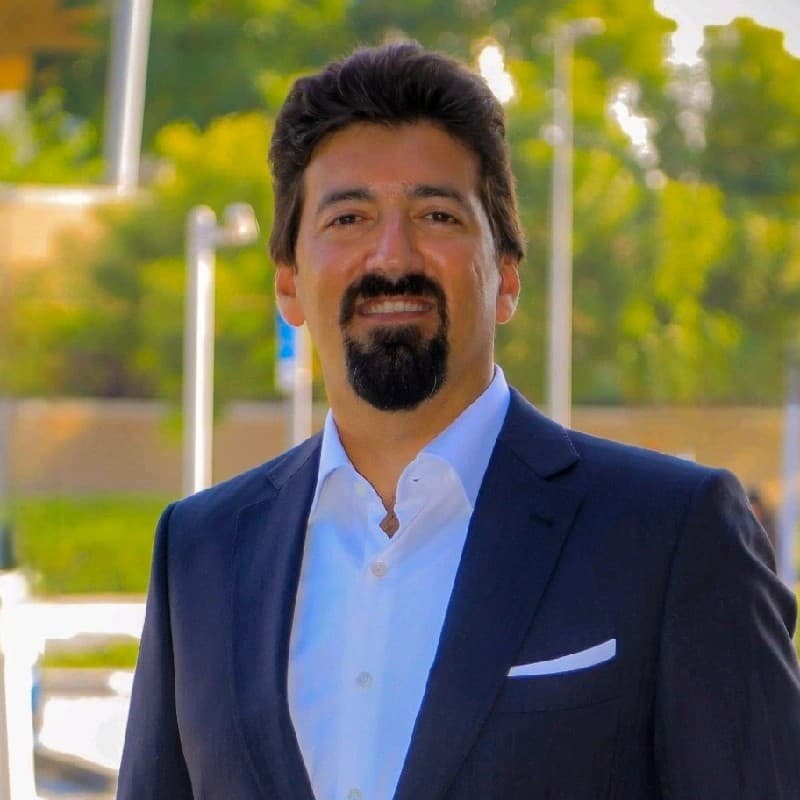
It is a deliberate long-term shift driven by young populations, bold government ambition, and a willingness to adopt new technologies before anyone else. Sahem explained how this appetite for speed is shaping the region's digital transformation and how Orange Business is supporting it through cloud, connectivity, cybersecurity, digital integration, and large-scale smart city programmes.
He shared practical stories that peeled back the curtain on cognitive city design, energy optimisation, and the pressure on enterprises to simplify sprawling hybrid IT environments. What stood out was how often the conversation returned to value. Better user experiences, lower costs, and new revenue paths.
Everything Orange Business builds must deliver one of those outcomes. Sahem talked through platformization, why unified infrastructure matters, and how enterprises can reduce complexity in an age where cloud, security, networking, and AI all collide at once.
We also discussed the growing focus on responsible AI and the shared need for transparency. Sahem spoke about data ownership, trusted models, and the careful guardrails that must sit behind every AI deployment.
The rise in cyber threats is making this more important than ever, and he offered a candid look at how Orange Cyberdefense approaches modern security through an integrated view of infrastructure, operations, and risk.
What gave this conversation a personal edge was Sahem's final reflection on learning. After years at Stanford, London Business School, and Harvard, he still sees human experience as the most valuable teacher.
Listening to people, sharing problems, comparing perspectives. Events like Gitex remind him that optimism is contagious and that the future of the region will be shaped by collaboration as much as technology.
If you want a grounded view of digital transformation from someone living it every day, this conversation is a rare window into both the opportunities and the tension behind innovation at scale. Have you seen the same momentum in your own region, and how do you stay ahead of the pace of change? I would love to hear your thoughts.
Useful Links
Learn more about Orange Business
[00:00:04] What does it take for a region in the world to go from ambition to impact in the digital economy? Well, that was a question on my mind as I sat down with a guest who spends his days shaping what innovation looks like across the Middle East and Africa. His name's Saham Azam and someone who has a front row view of how countries across the Gulf, North Africa and beyond are moving at a pace that often surprises those watching from the outside.
[00:00:32] And our conversation will flow through the rapid rise of smart and cognitive cities, the pressures on enterprises to simplify sprawling hybrid environments, and the growing expectation for secure, responsible AI that's woven into every single workflow.
[00:00:51] And along the way, he will also give us a grounded look at what customers are asking for, what they are worried about, and how Orange Business steps in as the enterprise arm of the Orange Group. And in doing so, he's helping organisations build architectures that actually work rather than just adding technology for the sake of it.
[00:01:12] And we will also talk about life on the ground at events like Jitex Global, where we narrowly missed each other this year, and why face-to-face contact still matters, despite the advances in digital collaboration. And if we have time, I also want to learn a little bit more about a phrase I'm hearing more and more about lately, and that is platformisation, and how it's becoming central to long-term strategies in the region.
[00:01:38] But more than anything, I think my guest blend of optimism and practical insights are what will paint a very real picture of what is happening outside the usual tech hotspots. So as we look ahead to 2026 and beyond, what can we learn from one of the fastest-moving digital regions in the world?
[00:01:59] But before I get my guest on today, I want to give a quick thank you to my friends at Denodo, who are playing a big part in supporting this show, because one of the questions I hear more and more from listeners on this podcast is, why does AI succeed, or why does it fail? Because let's be honest, AI is moving fast, but success is often still elusive.
[00:02:22] Now, most projects fail not because of the AI, but because the data foundation isn't ready. This is why organisations are increasingly turning to Denodo. Denodo delivers trustworthy and AI-ready data without the need to copy it everywhere. Essentially, you can optimise your lake house, accelerate agentic AI, and build data products that finally make self-service real and achievable.
[00:02:51] And with a powerful partner ecosystem, teams get to value even faster. So if you're ready to understand why your AI projects fail and how to succeed with AI, simply visit denodo.com and take control of your data world. And it is at that moment that I'm going to pause and officially introduce you to my guest today. So a massive warm welcome to the show.
[00:03:21] Kelly to everyone listening a little about who you are and what you do. Thank you, Neil. And just a bit of introduction. My name is Sahem Azam. And currently the president for Orange Business Middle East and Africa and Inner Asia. And this is from a regional perspective. And also I manage the ATI Vertical, which is the airline business that we do in collaboration with CTAB.
[00:03:48] I've been with Orange for the last six years in the industry for 20 plus. And it has been an exciting journey. That's what I can say. Well, it's a pleasure to have you join me today. Our meeting is slightly delayed. We nearly met at the JITECS Global Event in Dubai a few months ago, where there was a footfall of something like 250,000 people. And I felt inspired attending the event.
[00:04:15] And one of the things that I always try and do every day on this tech podcast is, is get people thinking differently about technology, its impact, and shine a light on every part of the world outside of Silicon Valley, just to allow people to see its impacts. But there's a real momentum there at the moment, isn't there, in Dubai and across the Middle East regarding tech? Yes, indeed. And one of the unique things about the region is being emerging for many years, and even the future is still promising for such a region because it's young.
[00:04:45] And one of the unique characteristics as well is their ability to embrace new technologies and being from the first adapters to these kinds of technologies, enhancements, and use cases. And it's been really phenomenal for the past years. Have you seen the leapfrog that they have done over the past years? Yeah. So that's really amazing when they went with the smart cities,
[00:05:12] the user experience that they have created, the way that they have sent. I remember a few years ago when they said, we want everything on the mobile. And it's today a reality. You can perform all kinds of government transactions, services, and so on, all from your mobile with a touchpoint. That's really amazing. And I think when people think of Orange Business, they may have a preconception already.
[00:05:42] And I love busting myths on here. And you've probably heard the question many, many times. But what is Orange Business? What do you do? Who do you help? Yes, of course, I hear this question. And the funny part, a lot of people, they ask me, do we have offers on SIM cards? You know, that's the first thing that comes to their mind. But, you know, I have to explain to them what is Orange Business. So Orange Business is the B2B arm of Orange Group.
[00:06:09] And we are responsible for the enterprise solution in the market. And this is actually whether it be in the networking space, in the digital space like cloud solutions, cybersecurity, digital integration, and, of course, all the tools needed to manage these kind of solutions. And we help customers in operations. So we are very strong in engineering and operation and building up a solution in the digital infrastructure as well.
[00:06:39] And working very closely, by the way, with the Orange Group telco providers, because they are the brothers and sister relationship, kind of, to deliver these solutions to their customers. And for anybody listening anywhere in the world, we've both seen that the Middle East see this rapid acceleration in digital transformation. So I'm from the outside looking in over here in the UK. But from what you're seeing, what's driving this momentum? And how are you at Orange Business helping organizations
[00:07:07] better harness this massive shift that we're seeing? The interesting part that each transformation journey with customers is unique. And there is no one-size-fits-all kind of solution because they have a start point, and they have an end point, and you have kind of what we call a trans in between to make sure they achieve their goals. And the most important thing is whatever you do in this transformation, what we call the digital transformation,
[00:07:36] you need to achieve three important things, or one of them or two of them and so on. It's either improve the user experience, reduce cost, or increase your revenue. And this is where Orange Business comes to build up your solution based on these kinds of criteria, because you need to achieve a goal at the end to sustain your business case that you are trying to create. And we come with the experience, we come with the knowledge that we have done, and if you look around the region, we have been everywhere.
[00:08:05] So this is the value added at the end we bring to our customers in this digital transformation journey that we tailor it to the specifics to meet that objectives. And as you mentioned a few moments ago, one of the big things that we're seeing across the Middle East is the heavy investment into smart cities and connected infrastructure, arguably leading the way in this field. So what role are you playing at Orange Business in helping shaping these next generation urban experiences
[00:08:33] that I keep seeing in my newsfeed? It feels incredibly exciting, but tell me more about that and what you're doing there. Well, we play a very vital role because we are the digital system integrator for smart cities or cognitive cities, as they call it at the moment, because we are even shifting from a smart city to a cognitive city, and I will explain the difference shortly. The first thing that we do is, as we said, building the right business case for the customer.
[00:09:01] If you want to build up a smart city, it has to be bankable, which means I deliver the value to my customer, which is the right customer experience, but also I balance my business case. The failed one that we have seen, which went too far into customer experience without how I can generate revenue to sustain it, because one month of the time, you need to make sure that this business case is self-funding, which means it's improved the user experience,
[00:09:30] but then it keeps funding itself to sustain it for the future. And the second, of course, how efficient you can really implement this business case. And if you look at the investment that has been done with King Abdullah Financial District and the role that we are playing there, how they actually saved energy by applying the right tools to manage their energy efficiencies, had the Hindu interview for the entire district that they are operating, this is actually a role example
[00:10:00] in the region that we have played a vital role in doing that. And soon you will hear some of the good news about the announcement and the achievement that we are doing with them. So very proud of that. And at the same time of building and designing smart cities and critical infrastructure, of course, many enterprises and business leaders listening, they're also wrestling with complex hybrid IT environments
[00:10:29] and hybrid working and an expectation to work on any device, any network, anywhere, at any time. So how are you helping them regain visibility and control those IT leaders? Well, it's not an easy question to answer, as you can imagine. So it's usually start with the architecture. And we want to make sure that any architecture being built is fit the purpose, not actually throwing technology just to, you know,
[00:10:59] the fear of missing out of applying a technology, right? I just want to make sure that the technology I'm applying is the right fit for my purpose, right? And here we have seen different cloud technologies and, you know, different solutions in the security space, networking, and so on. And what we do is to make sure that they are really compatible with each other and delivering the value expected from them. And that would not happen
[00:11:27] if I created them in silo, but I have also the end-to-end visibility and this is where the orange observability, the checkpoints, comes into play to make sure that as a customer you have the end-to-end view about your infrastructure, about your operation, application that you deliver services through. And I think in the last three years in particular, AI has clearly been a huge focus, but I think as the technology matures
[00:11:56] and we've moved beyond the hype cycle, we're starting to see trust and transparency becoming major concerns too. So how are you at Orange Business ensuring that AI is developed and deployed responsibly as well? Because it is a big topic right now, isn't it? Indeed. And there is no conversation as we say today that happened without the AI. Even at home, you can imagine you're talking to your wife or partner and start talking about chat GPT
[00:12:25] and she consulted them for something at home or whatever. So today, it's really an important thing, but you have touched on a very important point, which is ethical and trusted AI. And this is where the severance solution that we are coming up with, Orange Business, making sure that the data is contained, there is no data leakages. We also make sure that the LLMs that feed into the AI models are fed
[00:12:54] with ethical information and data, right, with the security surrounding it and the environment is fully secure so there is no breaches or, you know, wrong fit to these AI models. And finally, we also design these AI models with the right use case. And we have done that, of course, in Tenerys. So we are, as they say, the experience of our own, you know, home, how to do it. And as AI and automation
[00:13:24] become more embedded in our operations, cybersecurity becomes more critical. In the last few months here in the UK, we've seen attacks on M&S and Land Rover resulting in something like a billion in lost revenue. So how are you helping customers strengthen their defenses in this new landscape, not just with the embedding of AI but also the rise in cyber attacks? Because again, top of mind for a lot of businesses right now. Yes,
[00:13:53] because in security in specific, we integrated in each and every layer in the IT environment. Right? Starting by the infrastructure, the networks, to the AI models, the OT capabilities as well. So security is in every step that we do. And of course, that's powered by our Orange Cyber Defense and their capabilities, which is one of the leading organization in cybersecurity. And security space.
[00:14:22] And before you came on the podcast today, I was doing a little research on you and I was reading that you often talk about platformization as a key part of your strategy. So for anyone that's heard that word and unsure exactly what it means, what does it mean in practice and why is it so central to enterprise transformation today, do you think? Well, platformization is the future and because it's unifying the infrastructure. You touched earlier about the complex IP. So how I can
[00:14:52] really simplify it by platformization. And this is where we're going to bring cloud, connectivity, security into one platform and in Orange Business we call it the evolution platform because it's a digital infrastructure that give you these capabilities from day one and also you can add as much services as you want right? As we develop this integration with different ecosystem. So at the end as a customer you are looking
[00:15:21] for a place where you can go and have these capabilities with an organization as well that can scale from a skill perspective to deliver these services to you. The complexity of IT today is not only about whether I have the technology or not. Do I have the people to run that technology? And deliver the services to me. And this is where platformization and organizations like Orange Business come into play with the right skills and capabilities and the ecosystem to support what we want
[00:15:50] to achieve. And of course that will help them to innovate faster. That will help them to reduce the complexity and take off that headache from them. Accelerate their time to market which is very key. In few clicks you are able to provision services and infrastructure to achieve your business goals. So all that is happening with the platformization concept. Exciting times ahead and we did
[00:16:20] originally plan to meet at Jitex Global in Dubai. We were both incredibly busy and that didn't happen. But if I did meet you there one of the questions I would have asked you is from all those back-to-back meetings that you had and all the conversations you had with not just customers but attendees and everything you saw at keynotes did you walk away from that excited about anything were there any trends in the kind of conversations the kind of questions that people were asking when you took that plane ride home and you're looking at
[00:16:49] now towards 2026 and your strategies anything you're going to be taking away and looking at next year and anything you can share there around what you've seen and what excites you about the road ahead. Well of course the excitement was about the energy that you have seen in such events and the people ideas that they come to you with the kind of projects in the region and you feel that there's a promising future for the region improvement of course from a business perspective
[00:17:19] which means really good deals that you're going to create in 2026 and beyond and that of course is really important. Now on the other side which is another way to the business which is after the COVID and you have seen how it limited us you have seen how humanity came back to the norms because I always say whatever restriction you try to impose or different ways of dealing with each other we love
[00:17:49] meeting each other face to face that's the reality and this will always be the case in the human race. Yeah well one of the things that I particularly know excited me when I was there in Dubai was I had a quick look around and talking to different people and instantly I noticed that I'd spoken to people in 10-15 different countries all excited about the same things wanting to learn about the same things it really did feel like a beautiful moment and I would say that the
[00:18:18] one thing that unites each and every one of us right now is that pressure that's placed on us to continuously learn evolve and adapt and keep up to speed with the pace of technological change so for you personally someone that is leading the way you must feel this pressure more than most so how do you continuously learn and stay ahead of the game anything you can share around that around there well actually there are two you know ways of how I educate myself and
[00:18:48] one is the short one and some kind of the monthly or regular ones and there's also the big ones that I usually do so the monthly and the regular ones which are you know attend certain courses whether online or you know listening to podcasts and so on that's really important to keep up with the different views listening to some technological improvements and a deep dive on one of the topics and despite of course I can't tell you I cannot be
[00:19:18] technical to team about their capabilities but I make sure that I understand what we are talking about and what we position the second thing which is heavy and I started many years ago going to business schools because this is I believe very critical so I did Stanford business school I did my MBA at London business school and just recently I finished the two years the management excellent at Harvard business school and for future of course
[00:19:48] I do another one but not yet planned because I just finished Harvard but this is how I keep the pace in terms of educating and learning and one of the most valuable insights is people experience this is what I love whether being in a class whether being in a customer meeting or in a partner meeting or so on absolutely love it so much gold there in your answer and for anyone listening that wants to carry on this conversation that we started today
[00:20:18] maybe they saw you at Jitex Global or maybe they've been following your work and just want to chat with you or your team where would you like to point everyone listening and also for keeping up to speed with the latest announcements at Orange Business too yes our of course website is full rich of information and details about what we do and the latest and the greatest of technology our social websites like Linden where you have all the announcements events
[00:20:47] and you know interactions happening so I would recommend these two because this is where majority of information is there and live activities excellent well I will have links to absolutely everything make it easy for people just to check by and have a look at that good we did get to meet in person at Jitex Global but I it's great while it was still fresh in all our minds that we can sit down and talk around digital innovation not only in the region
[00:21:17] but the impacts of technology and what it's having around the world and also for digging into that momentum that you're seeing from Orange Business perspective how you're helping but more than anything just thank you for joining the session today really enjoyed speaking with you thank you it's really my pleasure too and I believe it was good points about what's happening in the region I think you covered a lot of topics which is really relevant these days so how often do we really stop and consider the
[00:21:47] scale of change hopefully underestimating and his reflections on smart cities moving towards cognitive cities the pressure to simplify complex architectures and the role of trusted AI I think gives a clear
[00:22:17] sense of where the Middle East and Africa are heading next and I was also struck by my guest view today on education and continuous learning both the everyday habits and some of break neck speed around them I think it's also a reminder that none of us can afford to stand still and the kind of curiosity that my guest showed today remains one of the most reliable tools that we all have
[00:22:47] so if today's conversations sparked new thoughts or raised fresh questions I'd love to hear what you took away from me what stood out most and how does it shape the way you think about global digital change as always techtalksnetwork.com you'll find thousands of interviews there and you can also send me a DM on LinkedIn x Instagram just at Neil C Hughes but I'm afraid we're out of time right now so thank you to each and every one of