

What if your website could spot its own problems, fix them, and quietly make more money while you focus on building your business?
That question sat at the heart of my conversation with Aviv Frenkel, co-founder and CEO of Moonshot AI, and it speaks to a frustration almost every founder and digital leader recognizes. Traffic is expensive, attention is fragile, and even small issues in design or flow can quietly drain revenue for months before anyone notices. Traditional optimization often means long cycles, internal debates, and teams juggling analytics, design tools, and testing platforms while hoping the next experiment moves the needle.
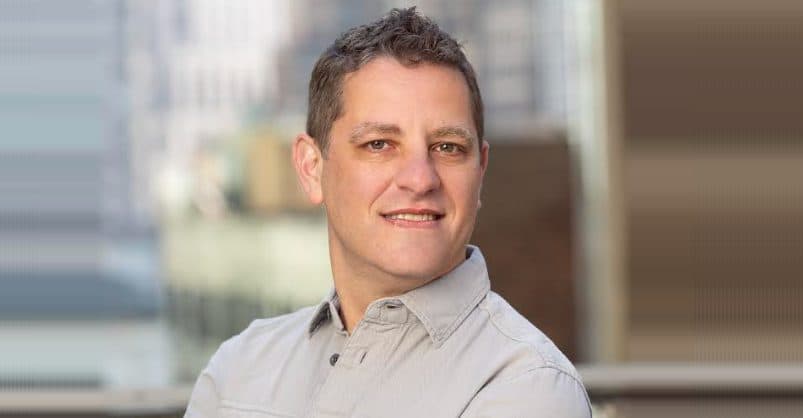
Aviv's perspective is shaped by lived experience. Before building Moonshot AI, he ran an e-commerce company that had plenty of visitors but disappointing conversion rates. Like many founders, he watched teams guess at fixes, wait weeks for tests to run, then struggle to link effort to outcome. Moonshot AI was born from that frustration, with a simple ambition. Let the website diagnose the issue, generate solutions, test them, and automatically deploy the winner, without a dedicated growth team.
In our discussion, Aviv explained that Moonshot focuses on the front-end experience and site performance, identifying issues such as unclear value propositions, poorly placed calls to action, and confusing mobile navigation. The platform generates its own design, copy, and code variants, runs live tests, and then rolls out what actually works. The results are hard to ignore. Brands across beauty, fashion, jewelry, and consumer electronics are seeing revenue per visitor lift by thirty to fifty percent within months. One small change to a mobile navigation menu at Hugh Jewelry led to a 57% increase in revenue per visitor, the kind of outcome that gets leadership teams paying attention.
We also discussed the momentum behind the company. A recently announced $10 million seed round has given Moonshot AI the resources to scale its engineering and go-to-market teams at a time when demand is accelerating rapidly. But beyond funding and growth charts, what stood out most was Aviv's longer-term view. As more people turn to AI assistants and agents instead of traditional search, websites need to be structured so machines can understand them as clearly as humans. Moonshot is already optimizing for that future, preparing sites for an agent-driven web where the customer might be an algorithm as much as a person.
Aviv also shared his personal journey, moving from a successful career as a tech journalist and TV host into the far more humbling world of building companies. Rejection, uncertainty, and hard lessons came with the territory, but so did clarity. His guiding idea, inspired by Jeff Bezos, is a minimum-regrets mindset: choose the harder path now to avoid looking back later and wondering what might have been.
As AI moves from tools that assist to systems that act, and as websites become active participants in growth rather than static assets, the big question becomes: Are you still relying on slow, manual optimization cycles, or are you ready to let your website start improving itself, and what does that shift mean for how you build and scale in the years ahead?
Useful Links
Thanks to our sponsors, Alcor, for supporting the show.
[00:00:04] - [Speaker 0]
Welcome back to the Tech Talks Daily podcast. Today's conversation is with someone who made the leap from telling people's tech stories to building one of his own. I'm joined by Aviv Frankel. He's founder and CEO of Moonshot AI, and he's someone that started his career as a tech journalist before stepping into the arena as a startup founder. He's driven by a simple frustration that so many ecommerce leaders know well.
[00:00:35] - [Speaker 0]
Plenty of traffic, but conversions that never quite live up to the expectations. Because Moonshot AI takes a very different approach to website optimization. They're using generative AI to spot issues, test fixes, and roll out improvements automatically. So we're gonna talk about the real ROI, the rise of agent driven browsing, and what it's like to swap the observer seat and reporting on tech for the builder's chair. It's a great one, this one.
[00:01:07] - [Speaker 0]
Now before we begin today's interview and there's some great insights in that, I just wanna give a special mention to my friends at Denodo who are passionate about the future and logical data management and AgenciKi. Because everywhere you look, AgenciKi is undoubtedly the next big shift. But here's the truth. It can't operate on messy, inconsistent, or siloed information. Enter Denodo and their logical data management.
[00:01:34] - [Speaker 0]
So if you want AI that doesn't just automate but operates, start with logicaldatamanagement at denodo.com. So enough from me. Let me introduce you to today's guest. So thank you for joining me on the podcast today. Can you tell everyone listening a little about who you are and what you do?
[00:01:55] - [Speaker 1]
First of all, thanks a lot for, inviting me. It's a pleasure being here. I'm Aviv. I'm the cofounder and the CEO of Moonshot AI. Moonshot is a generative AI company.
[00:02:05] - [Speaker 1]
We're essentially using GenAI to turn web websites into living organisms that optimize themselves autonomously, and it all started with my first company, which was in the ecommerce space. And and one of my biggest pains was, the fact that we got tons of traffic and wanted to convert people to actual sales. Because in ecommerce, the most important metric is conversion conversion rate. Right? Brands spend a lot of money on Google, Facebook, TikTok to bring visitors, and they want to make the most out of this investment.
[00:02:35] - [Speaker 1]
And so successful brands usually build a team of developers, designers, UX people, analysts that go over the analytics and maybe heat maps and check what the competitors are doing and and basically guess. They guess what's not working and what might work, and then they come up with an idea for an a b test to tackle a gap they found. They they they need to design the a b test, build it, run it, and then two months later, you forgot what you wanted to, test. And that's why we started Moonshot. Essentially, a tool that does three things that seem very simple, tells you what's not working on the website, how to fix it, and fix it for you, all with a few clicks of a button so you don't need a team and you don't need to guess.
[00:03:19] - [Speaker 0]
Wow. I'm looking forward to digging a little bit deeper on all things Moonshot AI. It's something that I myself would have used for. But before I do, one of the things I always try and do, honey, is dig a little bit deeper on my guest's origin story. And Mhmm.
[00:03:33] - [Speaker 0]
One of the things that I learned about you when I was doing a little research is you're very similar to myself. You host your own podcast. You used to be a journalist and reporter on tech, but you decided to go beyond that and actually start building it rather than just reporting it. So tell me more about that story and the moment that that powered that decision, that pivot, because it feels like there's a big story here.
[00:03:56] - [Speaker 1]
Well, I was a tech journalist. I was covering tech for one of the two biggest television channels in Israel, and I met all of these amazing entrepreneurs. And in Israel, building a startup is like a national sport, So I decided, about eight years ago, I don't want to cover tech anymore. I want to build tech because there were these amazing, revolutions, technological revolutions that I wanted to be part of. And that's how I started my first company, which was in the ecommerce space.
[00:04:25] - [Speaker 1]
And from, the pain that I had as a founder of a company in the ecommerce space, we got to the idea, of Moonshot, and that's how I started my second company.
[00:04:37] - [Speaker 0]
Absolutely. Love it. What a great story. And I'm curious. Any more you can share on the where the idea came from and how your founders came together and how it all all evolved over the last few years?
[00:04:52] - [Speaker 1]
Yeah. So so I started the company with Evjatar Seger. Evjatar is my dear cofounder in the CTO of the company, the technological brain behind, what we've built. And this is a pain that is relevant whenever you build a digital experience. It doesn't matter what kind of experience, is that.
[00:05:11] - [Speaker 1]
It can be relevant for, people who are building a game or an app or a website or sending an email. They want to optimize it, you know, for for a certain KPI. And we started with ecommerce because in ecommerce, this is a very immediate problem and a very big pain, and there are budgets to solve this pain of optimizing the the website for conversion rate. But, you know, essentially, what we're building is relevant for any digital experience.
[00:05:44] - [Speaker 0]
And we are at that time of the year. You know? It's 2026. It's right at the beginning of the year. People are looking at how can we improve things?
[00:05:51] - [Speaker 0]
How can we do things differently? And how can we improve our website? And Moonshot AI's core product is an autonomous optimization engine for websites and digital experiences. So it ticks all the boxes. So for any business leader listening, and maybe that a few of these things that we're talking about are on their radar right now as they listen to this, tell me a little bit more about some of the features there.
[00:06:15] - [Speaker 1]
Yeah. So, I mean, it's we're simple people. Right?
[00:06:19] - [Speaker 0]
Yeah.
[00:06:19] - [Speaker 1]
And I think the best ideas and the best solutions are the most simple ones. And, you know, there are so many complex tools out there that you need to know a lot to be able to, operate them. You need to be a real pro. And we wanted to build a tool that you don't need to be a pro. You just plug it into your website, and seamlessly, it tells you, hey, Neil.
[00:06:44] - [Speaker 1]
You have an issue. Not enough people are clicking add to cart on your mobile product page. This might be the reason why. Okay? Let's say, I don't know, people don't understand what is the value proposition, or there's a problem with, you know, where the button is, or you need to show them that, you know, shipping is free or returns is are free.
[00:07:11] - [Speaker 1]
So once we have this hypothesis, our AI comes up with an idea for a test, generates the actual variance. So the design, the copy, and the code of these variants runs an AB test and changes the website with a winning variant. So you don't need to hypothesize. You don't need to design. You don't need to build, and you don't need to write the test run the test.
[00:07:36] - [Speaker 1]
The AI does everything for you. And, our clients, and we have clients in, you know, fashion, beauty, cosmetic beauty is cosmetic. So fashion, beauty, mattresses, consumer electronics, jewelry, you name it, are seeing a huge increase in revenue per visitor, anywhere between thirty, forty, 50% increase in revenue after, the first few months of working with Moonshot, and it all only starts.
[00:08:07] - [Speaker 0]
And I'm curious from a selfish point of view here.
[00:08:10] - [Speaker 1]
If if
[00:08:11] - [Speaker 0]
if there's a website owner out there that's had one of those dreaded emails from Google saying, oh, Google has found this problem when scraping your site, and for this reason, it cannot it won't be indexing this page? Or does it fix errors like that as well, or is it more design elements that it fixes?
[00:08:27] - [Speaker 1]
It's mostly UI, so everything front end. But another thing which, you know, really affects is site speeds. So we also, you know, wave red flags around site speed Yeah. And site load. So these are also things that our system can fix, but especially everything around.
[00:08:50] - [Speaker 1]
Whatever you can imagine front end, our system can do.
[00:08:54] - [Speaker 0]
And you mentioned a moment ago about ROI. Tell me more about, areas like ecommerce, for example, how you can evolve to increase conversions, sales, and revenue. Because, again, these are big numbers that you can turn around by fixing a few mistakes. Right?
[00:09:10] - [Speaker 1]
Yeah. It can be the the the most obvious thing. Right? The the add to cart button is below the fold. Right?
[00:09:15] - [Speaker 1]
That's the simplest thing that our system fixes, but it can fix the, perception of your brand. How do you communicate, things which are important for your clients? And, essentially, what our system does is really learn together with the business owner what ticks for your customers, what will make them connect with your products better, make them buy these products, and help your business thrive. And this is and and we talked a bit about my origin story. I have extreme off for people who start their own businesses, because of my my my personal story, my grandparents came to Israel after the Holocaust and started their grocery store, in Northern Israel without nothing.
[00:10:03] - [Speaker 1]
They came here with nothing. And that business, that small business provided for this young company, sent my father to university. And since then, I really had off for people who who were starting businesses. And when we're meeting our clients, they're not passionate about, you know, the color of the add to cart button, or should it say add to cart or add to bag, or should it have, you know, a free shipping badge or whatever. These are really simple examples.
[00:10:36] - [Speaker 1]
They are passionate about the piece of jewelry that they're creating or the piece of fashion or whatever they're producing, and we wanna help them thrive. That's the reason why we started our business.
[00:10:50] - [Speaker 0]
And I think one of the biggest challenges this year is how we obtain information. We're it's completely changing. Instead of searching in Google, more and more people might be using an AI assistant or an AI agent even, and and we're not going to instead of going to websites and searching and all those kind of things, we're just asking an agent. And I think one of the big themes of the year is ensuring that all the website's information will appear on those digital agents and be suggested, etcetera. So how do you see your company's technologies evolving in the future to to meet these changing experiences and expectations?
[00:11:27] - [Speaker 1]
Yeah. We're already doing that because we're optimizing for clients love, customers love, and these customers might not be human. Yeah. It might be agents. It might be LLMs that are, you know, scraping and and crawling over your website and extracting the right data.
[00:11:45] - [Speaker 1]
So we optimize websites of our clients to really, be structured in in a way that LLMs understand, can categorize, and can extract the right, data to the LLMs. There's a question. Will agent ecommerce be a thing? Would it be huge the same way people forecast? I don't know.
[00:12:09] - [Speaker 1]
But I don't care. Even if it's, like, you know, fraction of of the the end users, we wanna help the businesses that work with Moonshot optimize the websites not only for humans, but also for agents or LLMs.
[00:12:25] - [Speaker 0]
Quick thank you to the sponsor supporting all of the shows on the Tech Talks Network. Their support helps me bring you over 60 interviews each month with leaders building global teams. And this month, I've partnered with Alcor. And if expanding engineering operations beyond your home market can be overwhelming, you're not alone. Because if you've ever wrestled with local laws, slow response times, and and partners who treat each country as separate rather than part of a wider strategy, you might wanna check out Alcor.
[00:12:58] - [Speaker 0]
They approach expansion completely different. They specialize in building tech teams across Eastern Europe and Latin America, and they combine employer of record services with recruiting so you get one singular coordinated process. They help you choose the right jurisdiction based on your needs, run proper evaluation of candidates, and onboard teams quickly. And their model is also refreshingly transparent. Most of your contribution will go straight to your engineers, and their fee shrinks as your team grows.
[00:13:31] - [Speaker 0]
And there is no cost to exit if you move the team in house at a later date. And I think that kind of clarity is why so many high growth companies in Silicon Valley are working with them right now. So you can find out more details at alcor.com/podcast or simply use the link in the show note. And one of the things I've gotta highlight here when doing a research, I was reading you got a $10,000,000 seed funding announcement. Feels like a big milestone.
[00:13:59] - [Speaker 0]
But tell me more about that and what it means for you and the company.
[00:14:02] - [Speaker 1]
Well, what it means is is a few things. First of all, that, you know, investors, really understand, the this pain and that the market needs our product. And that's a huge vote of content of confidence from our new investors, Mighty Capital and uncorrelated, but also from our existing customer, investors from our, Preseed Round, Oceans Ventures, Almas Capital, and Garuda Ventures, and a few angel investors and family offices, which were also part of, of these rounds. So that's one thing. The other thing is for us to now double down, bring the right talent, the right people to build a huge company that helps businesses thrive and be able, because we get a lot of demand from the market, be able to to to attend to to the needs of of businesses.
[00:14:56] - [Speaker 0]
And what would you say makes you stand out in from the in the market, from all the other businesses out there? Because this space can feel quite crowded sometimes. What makes you guys a little bit different, do you think?
[00:15:08] - [Speaker 1]
I think simplicity. I think simplicity and the fact that there's no other tool that is and I'm happy that I'm talking with a with a Brit. An a to zed, I don't need to say a to z. So it's an a to zed simple tool that essentially you don't need to work for the tool. The tool works for you.
[00:15:27] - [Speaker 1]
Our platform suggests how to fix and fix your website for you. And, you know, the problem we're solving is is an ancient problem. I guess it started with first, online store or the first website if we're talking about, you know, digital experiences, in general. And over the years, you had amazing companies that were trying to help growth teams, increase conversion. They were all point solutions.
[00:15:53] - [Speaker 1]
Right? You had analytics companies and design tools and AB testing platforms and personalization, but none of them could be this a to platform that does everything for you, and that's what Moonshot is.
[00:16:09] - [Speaker 0]
And, of course, every new tech project is now under close scrutiny for the kind of ROI, measurable value, and difference that it can deliver now. And just to bring to life what we're talking about, are there any customer stories or successes that you can, share with me today that will just help bring to life the the kind of value that we're talking about here? It's not just to show any tool. There's a measurable difference involved, isn't there, as well?
[00:16:34] - [Speaker 1]
Yeah. Absolutely. I mean, we we help dozens of of brands, you know, around the world increase increase their conversion rate. And I would say there's a there's a great beauty company from California, Definage. Right?
[00:16:51] - [Speaker 1]
And you can actually find the case study video we've made with with Annette, the director of customer experience there. We're able to increase their revenue per visitor by more than 30%. Right? So that was that was one company. I can highlight another company.
[00:17:10] - [Speaker 1]
Let's talk about Huw Jewelry. Okay?
[00:17:13] - [Speaker 0]
Yeah.
[00:17:14] - [Speaker 1]
Huw Jewelry is a company that sells bracelets and rings in The US, and they had a challenge. Right? The the they noticed that visitors were spending time browsing, but often they struggle to find that what they were looking for in the mobile navigation menu, right, leading to drop off before reaching key product pages. So what Moonshot did, first of all, the hypothesis was that a cleaner, more intuitive mobile navigation would make customers feel more comfortable exploring and and help them reach the product listing page, right, the PLP faster. So our system launched a test that recognized the hamburger menu to simplify categories and improve flow.
[00:18:01] - [Speaker 1]
And this small change in the hamburger menu streamlined the navigation and drove 57% increase in revenue per visitor. And that's one story out of many, many dozens of of stories of our clients.
[00:18:18] - [Speaker 0]
Wow. That is incredibly cool. And on top of that, from your own point of view, I was reading that your ARR has grown 10 x over the last twelve months alone, which is just incredible. But looking forward to in 2026, what are some of the company's future goals? What are you chasing this year?
[00:18:38] - [Speaker 1]
Growing. Right? Scaling. So first of all, we're looking for for the right talent. So we're hiring now engineers and and people in the go to market team.
[00:18:48] - [Speaker 1]
And going forward, we we have a lot of demand, so we need the right people to to attend to that demand and to help more businesses thrive in 2026.
[00:19:01] - [Speaker 0]
And what about yourself? Are there any tech trends or anything excites you about this year? Anything you're keeping an eye on there? Anything you can share there?
[00:19:10] - [Speaker 1]
Yeah. I mean, I'm toying a lot with with AI agents to help me with, you know, with the stuff that is relevant for me. So for instance, finding out the right clients with the right pain, increasing our top of the funnel, helping our team members build faster, work in a more efficient way. So that's something that I'm very passionate about.
[00:19:39] - [Speaker 0]
Love it. And as we come full circle, we're talking about how you started your career and tech journalists, TV host, etcetera, to leaving that behind and building tech. If when you look back at the journey that you've been on, what any any big lessons that you've learned and and how you think that might shape the future as well?
[00:20:01] - [Speaker 1]
I mean, the first big learning is, you know, no fear. Okay? It's it's it was a leap of faith. And but I remember I told my father that I'm leaving TV. I had a really good career on TV.
[00:20:16] - [Speaker 1]
I hosted TV shows. I people recognized me on the street, whatever. And my father was like, Aviv, why are you doing it? You're living you know, you've built this really successful career. And and I told my my father, listen.
[00:20:33] - [Speaker 1]
I would I I couldn't forgive my I wouldn't forgive myself if I didn't give it a try. I mean, you only live once. And and, you know, Jeff Bezos, which is an incredible entrepreneur, talks about the fact that he has this minimum regret mechanism. So he's doing stuff, so he'll have the least amount of regret in life. And I was talking with, you know, 80 year old Aviv.
[00:21:05] - [Speaker 1]
Right? Yeah. And I don't want this 80 year old Aviv looking back and, you know, you could have done this. You could have done why didn't you do that? So that's something which is, I think, a big learning.
[00:21:20] - [Speaker 1]
This is my my my second company. We we sold my first company, but it wasn't a huge success story. And I was struggling. And, Neil, I I know you are you know, you have a podcast, and people want to be on the podcast. And I was a journalist.
[00:21:35] - [Speaker 1]
People wanted me to interview them and tell their stories. And then you go to the other side, and it's a very humbling experience getting know after know after know from clients, from investors, from people you want to work with. And that's something that I had to go through. And, you know, it's not for the faint hearted. I needed to to go through this to be able to get to the point where we are, but it's only the beginning.
[00:22:07] - [Speaker 1]
Right? You talked about the fact that we just raised a round. We announced $10,000,000 seed funding. It's only the beginning. Someone told me the other day, okay.
[00:22:17] - [Speaker 1]
Congrats on the round. This is so exciting. Now you just need to do everything. So we now need to do everything.
[00:22:27] - [Speaker 0]
Inspiring words. And I know that there'll be founders listening all around the world. Your words will resonate with them, and I hope as well inspire them listening if they're at an earlier stage within their career. And finally, obviously, you've you've left the world of reporting and TV behind, but like that scene in godfather three, just when I think I'm out, they pull me back in. There's still there's still a a side of you that still loves doing that and giving back, etcetera.
[00:22:53] - [Speaker 0]
So tell me a little bit more about your podcast too.
[00:22:56] - [Speaker 1]
Yeah. It's it's a podcast in Hebrew. Most of the episodes are in Hebrew. We have a few episodes in English where I host other entrepreneurs, other tech entrepreneurs, investors, CEOs, managers, etcetera, and hearing about their their stories, how they built the the companies, how they built their sometimes empires, sometimes they are huge empires, sometimes they are, you know, more more modest empires. And I think listening, hearing their stories helped me a lot to to understand how to do things better.
[00:23:33] - [Speaker 1]
Sometimes, you know, when I have something on my plate, a challenge, I ask the person who's coming to the to the episode, hey. How do you deal with, you know, x, y, zed, whatever? And it's you know, for for my sake, it's it's very helpful. Also, it helps me with my network. Some of the people that came to the podcast invested in in my two companies after, you know, after we met during the show.
[00:24:02] - [Speaker 1]
So that was also helpful and also spreading the word, you know, helping other entrepreneurs hear the stories of people that were in their shoes before.
[00:24:15] - [Speaker 0]
Wow. And for anyone listening that would like to check out that podcast or indeed find out more information about Moonshot AI, who you're helping, how you might be able to help them, etcetera, anywhere in particular you'd like to point everyone listening?
[00:24:29] - [Speaker 1]
Yeah. So first of all, check us out on the web. It's moonshot-ai.com. That's our our website or just, you know, ask Jet GPT or Google us or whatever. However you get informed, we'd love to to connect with you.
[00:24:47] - [Speaker 1]
You can find me personally on on LinkedIn if you want to reach out personally. And my podcast, it's thirty minutes or less. That's the name of the podcast. In Hebrew, it's. That's the translation.
[00:25:04] - [Speaker 1]
You can find us on Spotify and YouTube and Apple and Google Podcasts or anywhere you listen to to podcasts. Yeah. I think these days are also you know, if you listen to us on on YouTube, you you'll get this automatic translation. So that might be another way to to check out. I would say we have maybe 500 episodes already
[00:25:32] - [Speaker 0]
Oh, wow.
[00:25:32] - [Speaker 1]
Podcast over the past eight plus years.
[00:25:36] - [Speaker 0]
Well, I will add links to everything you mentioned there, the podcast. Most importantly of all, Moonshot AI, how you're helping people. And so much, judge so much stood out on how you're helping businesses today. But I think more than anything, I think it's your your story, the tech journalist, TV show host that took that leap of faith. So instead of just talk about tech and reporting on it, going out there and building it, inspiring words, and just thank you so much for sharing your story with everyone today.
[00:26:06] - [Speaker 1]
Neil, thank you so much for having me. It's it was a pleasure.
[00:26:10] - [Speaker 0]
I really enjoyed this conversation with my guest today, especially his honesty about how humbling the founder journey can be and why he believes that taking the leap beats living with regret. That story really hit home for me. The results Moonshot AI is seeing are impressive, but what stood out most was the clarity around the problems that they're solving and who they're solving it for. So if you're thinking about website performance, conversion, or how AI will change the way people and agents interact with the web, I think there's just so much to take away here. So I'll have links to the show notes so you can explore Moonshot AI and connect with my guest, and maybe check out his podcast too.
[00:26:55] - [Speaker 0]
And as always, love to hear your thoughts. How prepared do you think most websites really are for that AI driven future? As always, techblogger@outlook.com or techtalksnetwork.com. Send me a message. Let me know.
[00:27:11] - [Speaker 0]
But that's it for today. So I will speak with you all again bright and early tomorrow. Bye for now.