

What happens when an industry that has barely changed for generations suddenly finds itself at the center of one of the biggest shifts in modern work?
In this episode of Tech Talks Daily, I'm joined by Kate Hayward, UK Managing Director at Xero, for a conversation about how accounting is being reshaped by technology, education, regulation, and changing expectations from clients and talent alike.
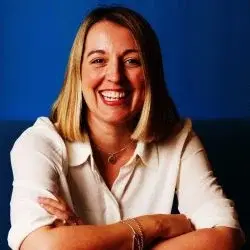
Kate describes this moment as the largest reorganization of human capital in the history of the profession, and as we talk, it becomes clear why that claim is gaining traction.
We explore how AI is shifting accountants away from pure number processing and toward higher-value advisory work, without stripping away the deep financial understanding the role still demands.
Kate shares why so many practices are reporting higher revenues and profits, and how technology is acting as a catalyst for rethinking long-standing workflows rather than simply speeding up broken ones.
We also dig into research showing that pairing AI with financial education strengthens analytical thinking while leaving core calculation skills intact, a useful counterpoint to the more dramatic headlines about machines replacing people.
Our conversation moves into the practical reality of how firms are using tools like ChatGPT today, from scenario planning to preparing for difficult client conversations, while also discussing where caution still matters, particularly around data security and core financial workflows.
Kate also explains how government initiatives such as Making Tax Digital and the digitization of HMRC are changing client expectations and deepening the relationship between accountants and the businesses they support.
We also spend time on the future of the profession, including how hiring strategies are evolving, why problem-solving and communication skills are becoming just as valuable as technical knowledge, and why private equity interest in accounting is accelerating digital adoption across the sector.
Kate rounds things out by sharing how Xero is thinking about product design in 2026, what users can expect next, and why keeping the human side of the profession front and center still matters.
So as accounting moves further into an AI-assisted, digitally native future, how do firms balance efficiency, trust, identity, and long-term relevance, and what lessons can other industries take from this moment of change?
Useful Links
Follow Kate Hayward on LinkedIn
Thanks to our sponsors, Alcor, for supporting the show.
[00:00:04] What happens when one of the world's oldest professions quietly goes through its biggest rethink in modern history? And I'm talking about the world of accounting. It's a world that has been associated with spreadsheets, year-end panic, month-end panic, number crunching. But behind the scenes, technology has quietly been reshaping how work gets done, how talent is developed, and how accountants show up for their clients in far more strategic ways.
[00:00:32] And my guest today is Kate Hayward. She's the UK Managing Director at Xero. And Kate describes this moment that we're all seeing as the greatest reorganization of human capital in modern accounting history. It's a big claim, but once you hear the evidence, it's not hard to disagree. So in this conversation today, we're going to explore how AI is enhancing accounting workflows, but doing so in a way without replacing human judgment.
[00:01:01] And we'll also expand on why governments and initiatives like making tax digital are also reshaping client expectations, and how the role of an accountant is shifting from just reporting on the past to helping businesses make better decisions in the future. And yet, we'll also talk about changing talent requirements, private equity interest in the sector, and what all this means for firms that just want to grow without losing their identity.
[00:01:29] So whether you are an accountant, a small business owner, or someone fascinated by how technology is changing professions from the inside out, I hope that today's interview will offer a clear, practical look at where the world of accounting is heading, and the technology involved in doing that. Here at the Tech Talks Network, we now have nine podcasts and approaching 4,000 interviews. And that is only possible with some of the great friendships that I've developed over 10 years of podcasting.
[00:01:58] And a company I'm proud to call friends of the show is Denodo, because not only have they been on this podcast multiple times, they also help make sense of the AI data chaos that we're seeing now. Because the data world is louder than ever. AI hype, lake house complexity, and pressure to deliver more with less. These are things that I talk about every day on this show. But Denodo is helping businesses make sense of it all, because they provide a unified data foundation for trustworthy AI,
[00:02:27] lake house optimization, and data products that finally bring service to life. So if you're ready to unlock real outcomes, simply visit denodo.com today. But now, it's time for today's interview. Let me introduce you to today's guest. So a massive warm welcome to the show. Can you tell everyone listening a little about who you are and what you do? Hello there. Great to be here. So I am Kate Hayward. I'm the managing director for Xero here in the UK.
[00:02:57] It's a pleasure to have you join me. Before you came on here, I was doing a little research on you, and you described this moment that we're in at the moment as the biggest reorganization of human capital in modern accounting history. Massive claim there. But what do you think have finally tipped the industry from that traditional number work towards a more advisory-led services? Tell me more about that and what you're seeing. Well, so it's interesting.
[00:03:24] I don't think we are tipped, so to speak, into the advisory world. Yeah, I think we are tipping. And I think part of the trends that we're seeing in the accounting industry are shaping that. Technology is obviously one part of them. Interestingly, some of our research, 98% of accountants and bookkeepers have started to use AI in some way, which I found very interesting. I don't think we're in the full use cases yet to make it into an advisory world.
[00:03:52] But I think what I mean by the change in human capital, who is working in the industry, what they are doing, what's important to their customers, and what's important to them is what's changing. So I think it's that shake-up that's really, really interesting. It's fueled by technology. It's fueled by other trends. But I think that's what's shaping and changing the accounting industry as we know it today. Yeah, I have an interesting conversation with my own account because I'm a zero user. I was talking about the AI features that you're putting in there.
[00:04:21] Does it make his life easy, difficult? Is he concerned about his future? But no, he was quite excited about the different things that they were using, how it was making their lives easier. Yeah, we are seeing strong performance across the sector as well, especially with many practices reporting higher revenues and profits than ever before. So in your view here, how much of that improvement is tied directly to technology, changing how accountants spend their time? Are there big changes there? Is it the technology that's playing the big role?
[00:04:52] I always see technology as an enabler. Yeah. At the end of the day, if you have an inefficient process or a broken process, layering technology over the top isn't really going to give you the full benefit. So I think what technology is doing is it's given people the impetus or the, let me take a step back. Should I be rethinking this? Should I be rethinking the way I've always done it? I think it always scares me when you speak to someone, well, I've always done it this way. I'm going to do it this way. And it's like, well, that means that there would be a lot of changes in life
[00:05:21] that we would never have changed. So I think what technology is doing is it's given people that pause. They can then actually evaluate those tasks, those workflows, those processes. That's where the real efficiency is coming from. Then layering technology over the top that can maybe automate some more of the very important, but maybe more repetitive tasks is where we're really, really starting to see those efficient due drives in accountants and bookkeepers. So they can choose to either make more profit with less time or actually they can start to grow.
[00:05:48] And I think that's where we're really seeing from that industry report that both revenue and profits have really been improving in accountancy and bookkeeping firms. And I was also reading at the Institute of Chartered Accountants in Wales and England. Their pilots show that combining AI with financial education actually improves analytical capability, while core calculation, they still stay the same. So what does this tell us about how AI is actually supporting human expertise rather than replacing it in,
[00:06:17] which is something we see in some of those lazy headlines in our news feeds? Completely great. So I trained, I'm an accountant. I trained with ICAS, which is a Scottish one. Don't ask me why random story we can do maybe over a beer or glass of wine. But what's interesting is I am old school in that regard. I had my big lever arch files. I trained in pen and paper, and then I grafted to make sure that I understood all the processes. So I was always fearful actually how are the future generations going to learn?
[00:06:45] And they're not going to do what I have to do and really getting to that grunt work is what I would say. So this really surprised me. And I think what is interesting is you have to think about how you train them differently. So, yes, some of that automation might be done for them. But how do you actually teach them the critical skills, the problem solving skills to be able to sense check areas of accounts or areas of bookkeeping that maybe you would have spotted by doing it yourself?
[00:07:13] And I think it's just, it makes us all realize that it's just a change in learning and development. It doesn't mean that it's worse or better. And so I think what we're seeing is accountants and bookkeepers and the future generation. Future generations are not going to sit there and retype information. They are born in a digital world and in the motivated world. So how can we actually leverage their skill set about being more AI forward, being more digital with actually more traditional skill sets and actually deep knowledge of the accountants and industries and bring them together?
[00:07:42] So I think it was a stark reminder for me, this research, that it's actually reframing the problem rather than thinking there's a worse problem. Yeah, 100% with you. And I think there will be many accountants listening that are already experimenting with tools like ChatGPT for scenario planning or even preparing for some of those difficult client conversations.
[00:08:03] But where do you see these use cases adding real value and where do firms need to be maybe a little bit more cautious and step back before going all in on AI? I think there's how I frame it in my mind is there's three types of layers. There's kind of industry agnostic use cases.
[00:08:22] So think about onboarding staff and your user guide that you can actually use to actually automate to bring staff online for your generic elements of onboarding or there's email workflow automation or how many people are using a recording for their meetings now to summarize notes. They're all industry agnostic that I see the use of accountants and bookkeepers using, which are fantastic. I'm using myself, I have to say it's saving me some time. And there's then those the one that I'm finding really interesting with accountants and bookkeepers.
[00:08:49] I term in my own mind kind of that workflow automation or most accountants and bookkeepers are probably working at a desktop. They've probably got 10 different tabs open. One is their email. One is maybe their bookkeeping. One is another software. One is maybe checking the government website about a new piece. And actually, AI bringing all those together into one surface. So their brains not scattergun, their tabs on scattergun. So I think that's an interesting use case. Open AI being surfaced in zero, for example, is a really, really good example of that.
[00:09:17] And the third one is the one I think people need to be cautious of. And it's the pure financial workflows that are deep, deeply rooted in the profession and the job to be done of accountant and bookkeeper using specific data in specific ways to give specific answers, which they're trained in. So I think about bank reconciliation. Bank reconciliation actually needs to be done in the correct way. It's using logic. It's using rules.
[00:09:43] It's using accounting and bookkeeping information, doing that out of the top, over the top of something like a zero. And actually, you have to pull data in and pull data out. So I think about the security, the workflow. All of that is actually something where I'd caution people to make sure that they're using data security and the right workflow in the right place. But the last thing I'll always add over all of the top of this, there's one thing that I just can't do. And it's the human bit. Every client is unique.
[00:10:11] I love going out and speaking to my accountants of bookkeepers because I speak to a farmer in the Lake District, a farmer in Devon, and they'll have different clients that are so different. And maybe I'll be wrong. Maybe AI will get so brilliant in time that they'll be able to understand those nuances. But Bob and Dave are probably very different. And how they want to be spoken to, I'm not sure AI is going to learn. Yeah, I would agree with you there. And I hope it continues.
[00:10:36] And I also think, doing my own returns, that government initiatives like making tax digital and the digitization of HMRC, these things are all suddenly changing client expectations as well. So I'm curious from what you're seeing there, is it reshaping the relationship between accountants and the businesses that they support too, with those expectations from our personal lives as well as these two worlds begin to blur somewhat? 100%.
[00:11:04] I think one of the things we see the difference between a number, many small businesses don't go into small businesses to do their taxes or to do any kind of financial, what they would say is admin or burden. And actually, it's a real stigma in the UK about I don't know any of my numbers. I just don't understand numbers.
[00:11:22] And I think things like HMRC's digitization, things about making financial literacy more available to small business means we are in the nation will become more financially literate, which means the relationship between a small business and their accountant and bookkeeper can be stronger. It's less time spent on can you give me this information? Can you give me this information and explain I'm doing this and I'm doing that and so much more time on actually your business. Did you know this is a great part of your business?
[00:11:50] Did you know that this happened in your business? So actually, imagine a world where those conversations that relationship becomes so much deeper and actually the benefit on both sides, it grows. And I think that's what making tax digital part of it all about. You don't just look at your business once a year when you're scared. Oh, my goodness. What's my tax bill going to be this January? I'm doing myself a testament tax retirement. It's actually I'm going to have a point every quarter I think about my business and actually you step back and you can delve deeper into your business.
[00:12:20] And as I just continue to take on some of the more routine tasks and routine work there, the talent profile for accounting might shift as well. I'm curious from every industry seeing this, but what new skills and new ways of thinking do you think will define maybe the next generation of successful account of accountants that are maybe leaving university soon? Well, it's interesting. 76% of practices have changed their hiring strategy because of AI. And I think that talks to exactly what you're saying.
[00:12:50] And there's always been a struggle with access to talent and the war on talent in this industry. There's just not been enough. The numbers have been declining. So actually, maybe this is a pivotal point where the industry becomes more interesting because it's not just a numbers game. It's a digital game. It's a technology game. It's actually a client relationship game. So all of those skill sets about problem solving, persuasive communication, critical thinking, and then AI machine learning, they all become a huge part of this profession.
[00:13:17] So I think entry level people coming in, those uses and those skill sets will be really, really valuable to the profession. Quick thank you to the sponsor supporting all of the shows on the Tech Talks network. And this month, I've partnered with Alcor. And if expanding engineering operations beyond your home market can be overwhelming, you're not alone.
[00:13:38] Because if you've ever wrestled with local laws, slow response times, and partners who treat each country as separate rather than part of a wider strategy, you might want to check out Alcor. They approach expansion completely different. They specialize in building tech teams across Eastern Europe and Latin America, and they combine employer of record services with recruiting. So you get one singular coordinated process.
[00:14:05] They help you choose the right jurisdiction based on your needs, run proper evaluation of candidates and onboard teams quickly. And their model is also refreshingly transparent. Most of your contribution will go straight to your engineers and their fee shrinks as your team grows. And there is no cost to exit if you move the team in-house at a later date.
[00:14:29] And I think that kind of clarity is why so many high growth companies in Silicon Valley are working with them right now. So you can find out more details at Alcor.com slash podcast or simply use the link in the show notes. And something else I wanted to bring up today, I noticed that private equity interest in accounting practices is increasing and technology adoption is also accelerating. So why is capital flowing through to this sector now?
[00:14:58] How is that influencing the digital adoption and consolidation that we're seeing here? It feels like there's a bigger story going on behind the scenes. Well, I think it's interesting. Accounting has never been seen as sexy, I would say. It's always pretty negative in the media. But there's one thing that I'd say private equity are good at. They're good at working out where the value pools are. And the accounting professional profession is a great profession. It's a great sector. And why?
[00:15:25] Because it's a great business and actually there's some great tailwinds behind it. So PE go for growth and they also go for efficiency. I think with the use of technology, that efficiency play comes in. Being able to, as I go, it's not just technology, but the processes, being able to automate those processes, being able to streamline them, put technology over the top. There's huge waves for either profitability or growth. And that's why earlier up we spoke about the profession, how last year it was increases in revenue and profitability.
[00:15:55] So I think the advice I always have, there's an influx in PE because it's a great sector to be in. And how are you thinking about that, even if you're not PE backed, that you're thinking about driving your growth and efficiency in your firm? And before talking to you today, I recently spoke with the team at Getty Images and they were talking about firms that want to benefit from AI, but they're also scared of losing their identity, their brand voice, their client trust and all these different things.
[00:16:22] And I think this is also the exact same problem in accounting too. So what practical steps would you advise anyone listening to today take to better balance efficiency, expertise, long-term relevance without sacrificing so much of who they are, their identity and trust? It's a great question. I think it actually requires quite a structured approach. So bear with me.
[00:16:48] But I think it's like, I think about building a house and you've got multiple layers to it. You have your foundations of your house. If you think of that as your firm, it's your purpose. Why did you get into business? Many accountants and bookkeepers are in business because they want to help small business. What are their principles? What are their goals? Why are they doing it? That is regardless of AI, that should always remain constant. Being really strong on that is important. They've probably always had a principle or a foundation of how they use technology. AI is just one of those technologies.
[00:17:18] I then go up. Okay, so we've done our foundations. Your floor plan of your house. You think of your processes. So we're going back to that driving efficiency. It's essentially finding where you spend too much time, where are your efficiencies, where are you slowing down and what could be automated? That is your floor plan of your firm. That stays the same regardless of AI, and that can have continuous improvement. You've then got your fixtures and fittings, your systems and your software. Are your, is your tech stack AI ready? And I think that's where this really becomes important because it is just an enabler.
[00:17:47] Is it robust? Is it secure? What does it give you or help you build the house against those frames, those floor plans that you had? And then this is the important thing. Those furnishings. I might be an uber modern person or I might be a nice cozy person with a fire and a rug. Those elements that make you distinctive, that make your house distinctive, which AI can never replace. Your brand, your culture, where you interact with your customers, your service level agreements, the way you train your staff, the way you speak.
[00:18:16] AI shouldn't take that away. And I think that's the bit that actually makes it the right balance between AI and human in your firm. What a great analogy. I absolutely love that. And I must admit from a selfish point of view, I am a zero user and I love getting you guys on here. I've spoke to several members of the team. I think the last one was about 18 months ago, about when I think it was when you introduced Jack's AI into zero. But here we are in 2026. Are there any teasers that you can offer?
[00:18:45] What we can expect this year as zero users or the zero community? What can we expect? Well, I won't give too much away because I'm probably getting in trouble from my product team. But I think if I go back to the core principles of who we are and what we do, you might have heard of our three by three. But it's essentially the three core product areas or jobs to be done for small businesses and accountants and bookkeepers will always be bookkeeping and accounting.
[00:19:07] It will be payments because it's so cash flow is key for every small business and making sure that you're getting that money in and out is really important. And then the last one is payroll. So that's the broad sense of where you'll see some of the great things coming. I think the recent updates, what I can speak to more. You might have seen, I don't know if you've got it yet, your new zero homepage that's a lot smoother, a lot slicker. Everything in our design will be to make sure that less clicks, more intuitive.
[00:19:34] SIFT analytics has now been re is being put into zero. And so you'll have a lot more of that capability native in zero, which is coming and a lot of good feedback. And then the last one I talk about, which is one of my favorites, is automatic bank reconciliation, which is powered by Jaxx. And I think that is the one where we're seeing great accuracy, saving a lot of people time, but full transparency of when we reconcile and when we don't. Because we know it's better not to reconcile when we don't know than to try and reconcile and get it wrong.
[00:20:03] So they're just some of the elements. But one thing that many people don't know about, and I don't know why, is we have something called the long and the short bit. It has all of our product updates in categories for now and the next 90 days and what's coming. So that's a great place to go and find everything that's going on. Oh, wow. I will be checking that out. And I must admit, I don't want to be the guy that fears change and fears all the moving stuff around. Everything's changing again.
[00:20:29] So when I think the the new system that you're talking about on the dashboard there, it gives you an opportunity to go back to the old way. I've not gone back to the old way. I thought, let's just jump in. Let's just dive in. It's my ears. And I've changed everything around and it is so much better. I've got everything that I want to see as soon as I get on that dashboard and the figures that I want to see, what I'm interested in, what I'm not. I'll have it all in one place. Yeah. Great. Great move. Those widgets being able to be customizable to say what you're important on.
[00:20:58] As we know, every small business is so unique and you're a different point. You're a different sector industry, different point of your journey. So, yeah, thank you for the feedback. I'll pass it on to the product. No problem at all. And for everyone listening wanting to find out more information, I'll include a link to the place you mentioned a few moments ago. Anywhere else you'd like me to point everyone? I think there's lots of guides on Xero about AI if you're particularly interested in that, especially in the accounting and bookkeeping industry. But reach out to someone at Xero. Many people will probably have an account manager.
[00:21:27] But if not, we have real humans sat in Milton Keynes and Manchester that are always willing to have a phone call. You just have to book a call with them. So, website, there's lots of great material. The long and the short of it for product. And then reach out to someone at Xero if you want to chat. Awesome. I'll have links to everything. And not only all things Xero, we covered a lot today from how AI is enhancing accounting processes. Governments may be leading the digital charge in some ways without realising it. Talent requirements are there shifting.
[00:21:57] Industry consolidation and all those Xero updates. We covered a lot there. I'd love to get you back on later in the year when you are able to talk a little bit more about some of those new features. But more than anything, thanks for joining me today. Thank you so much. So, if today's conversation challenged a few assumptions about accounting, that's probably because the profession is evolving so much faster than people realise. And Kate shared today how AI is freeing accountants from that repetitive work so they can focus on deeper analysis.
[00:22:26] And that analysis will help them develop stronger client relationships and more meaningful advisory roles. And we talked today about why financial literacy is improving, how education is shifting toward a higher order thinking. And why technology really does work best when it supports human expertise, not just trying to replace it. It's a message that I keep banging on on this podcast and I will continue to do so.
[00:22:53] Because I think today's conversation is another powerful reminder. Tools alone do not create better outcomes. But purpose, process, culture and trust, these things matter more than ever. And I think firms that get that balance right with technology, they're the ones that will thrive as those expectations from their clients continue to rise and the industry continues to consolidate. So much food for thought around this. So, a question I'd love to leave you with.
[00:23:20] As accounting moves from just number crunching to strategic guidance, how will you make sure technology helps you think better and helps your clients think better, be more proactive than reactive and not just work faster? TechTalksNetwork.com, TechBlogRiderOutlook.com and socials just at Neil C. Hughes. Nice and easy to find. But that is it for today. So, thank you for listening as always. And I'll speak with you all again tomorrow. Bye for now.