

What happens when AI stops being a feature and starts reshaping the very craft of design itself?
I sat down with Charlie Sutton for a conversation that went far beyond product interfaces and pixels. As Atlassian unveiled its latest AI ambitions around agents, context, and the Teamwork Graph, Charlie offered a fascinating look at the human side of that transformation and why design may become even more important as AI becomes embedded into the way we work.
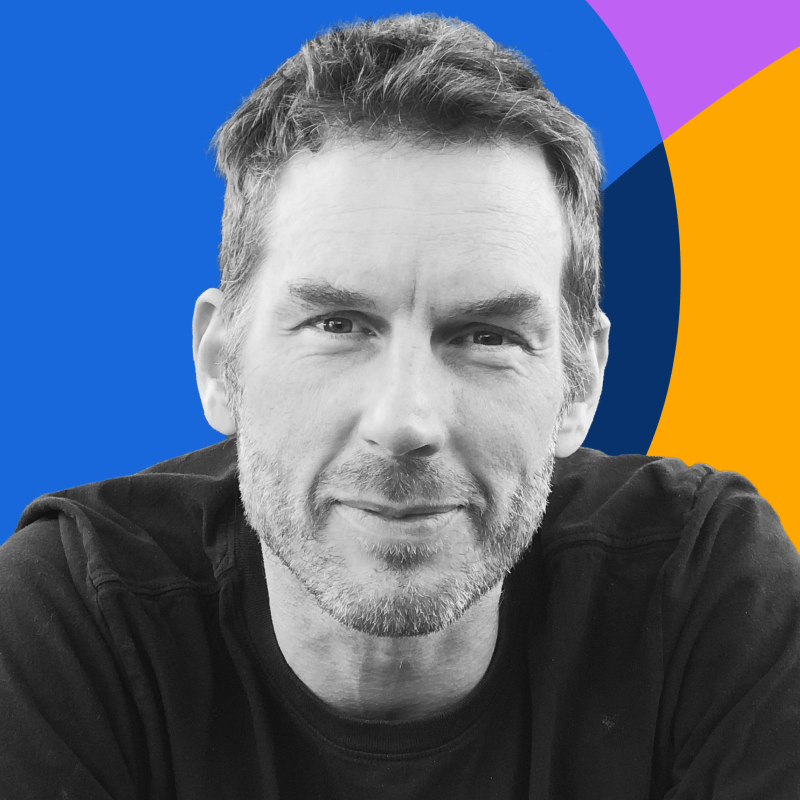
Charlie shared how Atlassian approaches design at scale across products like Jira, Confluence, Loom, and Rovo, explaining why every interaction should feel intentional and cohesive, even when built by hundreds of people across dozens of teams. But this conversation quickly moved into much bigger territory. We explored how AI is changing the relationship between designers, developers, and business teams, and why the traditional barriers between idea and execution are rapidly disappearing.
One of the most thought-provoking parts of the discussion centered around democratization. Charlie argued that while AI tools have dramatically lowered the floor for creativity, they have also raised the ceiling for what users now expect from software experiences. Anyone can prototype an app today, but expectations around quality, coherence, trust, and usability are climbing just as quickly.
We also unpacked the growing shift from prompting AI to delegating work to AI agents. Charlie explained why assigning work to agents increasingly resembles managing human teammates, from defining goals and success criteria to understanding strengths, limitations, and context. That naturally led us into a deeper conversation about trust, transparency, and why users must always feel they can "pop the bonnet" and understand what AI systems are doing on their behalf.
Another major theme throughout the episode was context. Charlie shared why Atlassian sees organizational context as one of the defining challenges of the AI era and how the Teamwork Graph is helping connect people, projects, conversations, and knowledge across the company. He compared this moment to the first time many of us used Google search and suddenly realized the scale of what was possible.
We also discussed how AI adoption is unfolding differently from previous technology waves. Instead of adoption trickling down from hardcore technical users, Charlie is seeing rapid experimentation from marketing, HR, and design teams looking to reduce repetitive work and communicate ideas more effectively. Even his own mother, he joked, has become an AI power user before he has.
From AltaVista nostalgia and Ask Jeeves memories to serious conversations about the future of human creativity, this episode captures a rare and honest perspective on where design, collaboration, and AI may be heading next.
How will organizations balance personalization with shared experiences as AI becomes embedded into every workflow, and what role will human creativity play when everyone suddenly has access to the same powerful tools?
Useful Links
Please check the partners of the Tech Tech Talks Network
Learn more about the NordLayer Browser
[00:00:00] - [Speaker 0]
So a big thank you to for supporting the Tech Talks Network and helping us share these conversations because AI is only ever as powerful as the data behind it. And Denodo gives your business trusted real time AI ready data from across the enterprise. And they do that securely and without duplication. So power smarter AI with Denodo, and you can find out more by simply visiting denodo.com. How do you design software experiences for a world where AI is no longer just answering questions but actively working alongside us?
[00:00:44] - [Speaker 0]
Well, this week I'm recording at team twenty six in Anaheim, and that question seems to be hanging over almost every conversation. There's been a lot of updates from the team at Atlassian in everything from Agenetic AI, teamwork graphs, context layers, and AI native organizations. But beneath all those big tech announcements sits a deeper challenge. How do you make all of this feel intuitive, trustworthy, and genuinely human? Well, my guest today sits right at the center of that conversation because I'm joined by Charlie Sutton, one of the people responsible for shaping how millions of people experience products like Jira, Confluence, Loom, Rovo, and beyond.
[00:01:28] - [Speaker 0]
And our conversation today will go far beyond shiny demos and buzzwords. Because I wanna learn more about why design matters more, not less, in this AI era that we all find ourselves and explore why organizational context may become the defining advantage for many companies and why he believes the future of AI interaction looks surprisingly similar to how humans already collaborate with each other. So, yeah, we'll talk about the rise of multi model AI, the balance between personality and cohesion, and why trust and transparency really begin to matter when AI starts acting on your behalf. And also, most importantly, how Atlassian is thinking about designing both for power users and complete beginners at the same time. And along the way, hopefully, will manage to squeeze in a little nostalgia about AltaVista, AskJeeves, and the strange beauty of those early days of the Internet.
[00:02:25] - [Speaker 0]
So buckle up for a fascinating conversation about the future of design, teamwork, AI agents, and what happens when software starts understanding not just information, but context. Well, thank you for joining me here at Team twenty six. So many big announcements, but I wanted to talk with you a little bit about how AI is changing design as a practice. But before we do, can you tell everyone listening a little about who you are and what you do?
[00:02:53] - [Speaker 1]
So my name's Charlie. I am Atlassian's chief design officer. I get questions from my friends and relatives on what on earth does it actually mean? And I look. I think every pixel that I guess a a customer could experience in our apps, in our platform, our documentation, it all has to be intentionally designed.
[00:03:12] - [Speaker 1]
And I think it's important that also all feels like one person designed it, even though there's a big team behind it. We're trying to have this ethos that it should feel like it comes from one person, even though there's dozens of apps and very different types of teams are using it. So my role is to try and bring that sense of cohesion, so it feels like one hand, but also to bring that sense of ambition. Like, maybe you saw this morning in the keynote, like, we're trying to have a conversation that is, you know, a little bit inspirational, that people feel they're part of something, that they feel like what they're doing matters. So a lot of my role in design as well is to bring the feeling of the experience of Atlassian, not just the the function of how it works.
[00:03:59] - [Speaker 1]
So that's my job, as listeners might know, by my accent. Actually, my accent's very confusing. I spent ten years in London, some time in Helsinki, in the West Coast, and my vowels are messed up. So I'm I don't know. I'm mid Pacific, I guess.
[00:04:13] - [Speaker 1]
But I live in Australia. I'm an Australian by birth, passionate surfer, and, yeah, I enjoy talking about design.
[00:04:19] - [Speaker 0]
Citizen of the world. Absolutely love it. And we we do hear a lot about AI in the creative industry, and there's some good and some some bad, but why do you think design design matters more, not less, as AI becomes central to how people work? Because it's such a hot topic right now, isn't it? And you you work with a team of creatives, and you probably hear these kind of conversations a lot.
[00:04:41] - [Speaker 1]
I think that the promise of AI is a lot to do with a sense of being made just for me. Yeah. You know, like, for so long, software was what have you got? Yeah. And now you can go to Rovo or you can to any AI product and you can say, okay.
[00:04:56] - [Speaker 1]
This is how I see the world. This is how I like to think. I think you saw on stage with Mike is that idea of personalizing it. And I think that brings a a big role and a big question for design is how do you create experiences that are personal but also cohesive? Because, you know, you and I working within one company, if we saw and experienced the whole company completely differently, we wouldn't be able to work effectively together.
[00:05:23] - [Speaker 1]
So there's this this opportunity or challenge with designing for AI that we need to provide a lot of cohesion and consistency, but also a lot of personalization, and it's a nondeterministic tool. So I feel like that's a very interesting design challenge. You gotta sit on that balance point between familiar and novel, And, you know, that dial moves back and forth, but that's ultimately where I think design will spend a lot of its energy is trying to find that balance.
[00:05:51] - [Speaker 0]
And it also lowers the barrier to entry, doesn't it? I mean, traditionally, only certain individuals who might have been deemed creative can go and design or create something where is that anybody with an idea can literally bring it to life for these tools. Right?
[00:06:02] - [Speaker 1]
Yeah. I the analogy I often use is, if you imagine a room, the floor has come up. Making something has been democratized. So you and I, we could both go to Figma Make or any generative AI tool and say, make me a enterprise SaaS app for managing maritime shipping. And we'd both get something pretty decent, but I think what it what has happened maybe less obviously is the ceiling has also moved up dramatically.
[00:06:33] - [Speaker 1]
And what that means is to make something good now that we both see as being valuable, high quality, and good, I think our expectations move up. There's no way if the floor moves up that the ceiling doesn't also move up. And the best analogy I would give was from the mobile era. Do you remember the first, like, iOS mobile apps and you're like, I can order, like, a car on the Internet? But very quickly, we expected everything to work that way.
[00:06:59] - [Speaker 1]
We took it for granted, and then we were like, okay. What else can I do? And that's where experience and design often is showing where the ceiling is. So the the great democratization that's occurring, I think, is great because then you and I have a shared language. Like, rather than you try you sketching it out on a whiteboard, you can go, Charlie, here's a proto I made.
[00:07:18] - [Speaker 1]
It uses the design system, so it has the right buttons and colors. My idea is this. I'm like, awesome. We have a shared language, but I think there's always a role for design to find that ceiling for the experience. So I'm unbothered by the great democratization.
[00:07:35] - [Speaker 1]
I think it's a good thing.
[00:07:36] - [Speaker 0]
I completely agree with you with the mobile phone analogy as well. I mean, when those apps first came out, you could turn your phone into a pint of beer.
[00:07:43] - [Speaker 1]
Cheese beer. The most successful app on the among the app store. I remember that one.
[00:07:48] - [Speaker 0]
And it wasn't I think that was just everyone experimenting and see what they could create, and it wasn't till later that we okay. What real problems can we solve? And it feels very similar right now, doesn't it? And I also think we're moving from prompting to delegation. So when we talk about that shift towards assigning work to AI agents the way you would a teammate, what does that interaction model look like in practice in in teams from what you're seeing?
[00:08:11] - [Speaker 1]
I think it it is in many ways remarkably similar to how it works with humans. So a really simple example is if I delegate a task to someone without a goal, they're unlikely to do exactly what I wanted. Very true with agents. If you do not provide them with clear success criteria, they don't do well. So there's a great there's a great moment already that we have an app called the Goals app, and then we have a focus app for company strategy.
[00:08:40] - [Speaker 1]
Agents and humans equally need and benefit from the object and the information in it. So in some ways, the problem is the same. Yeah. A similar thing would be actually, you saw in the demo, it was almost like an Easter egg. We had a Canva agent and a Gamma agent.
[00:08:58] - [Speaker 1]
They can both create presentations. Which one do I give it to? That's a very human problem of what is Canva best at? What is Gamma best at? So I I I think in some ways, the dynamic of delegating to agents shares a lot in common with the dynamic of delegating to people.
[00:09:14] - [Speaker 1]
The right size of work has to be given. You have to give it enough time. Like a lot of the agents now, if you stop it after an hour, it won't give you a good result. You need to let it run overnight. So then you and I ironically have to do t shirt sizing.
[00:09:28] - [Speaker 1]
We have to think about how long will the agent take. This is a very human thing that we do every day. So I think the interaction modalities are likely to be very simple, which is why similar, which is why we actually kept the Kanban board drag interaction is you wanna get an agent started on a list of things to do, just do what you would normally do rather than trying to invent a totally new interaction model because I think the underlying problem to solve is actually quite similar.
[00:09:59] - [Speaker 0]
And we were talking you talked about the live demos there today. How relieved were you all that there were just zero problems there? I was talking with someone earlier about the resilience and the different things in the background should anything go wrong, but everything went smoothly, which is unusual at a tech conference. Right?
[00:10:14] - [Speaker 1]
Yeah. I won't lie. I it was pretty stressful. But you know what? And in some ways, I think the where the idea that with AI, we're all getting much more comfortable with building in public, that there's it's just when everyone's trying to understand where the future is going, keeping everything in a big locked up moment with a big ta da is actually not really in the spirit of the age.
[00:10:39] - [Speaker 1]
And I think what even if demos had gone wrong today, I think there would have been a lot of generosity for that because guess what? We all experience those moments ourselves. And I think in some ways, As Atlassian is is a pretty authentic down to earth company, and I I think, we know demos go wrong. Yeah. We had a lot of backups.
[00:11:02] - [Speaker 1]
But, yeah, I I just felt like it it felt very authentic. And and when I looked at the people up on stage who are my mates who I work with, that's how they are. So I thought that was a really nice moment in the AI era that let's all be in the mess together. Yeah. Mike and Sharif were in the mess, bantering their way through a few reasoning times that took slightly longer.
[00:11:26] - [Speaker 1]
But you and I, when we use these apps and products, we that's a shared experience. Right? So I thought it was really good.
[00:11:33] - [Speaker 0]
Yeah. Me too. I think you hit the nail on head there. That authenticity really shined through. And another big word that we're hearing this week is context.
[00:11:40] - [Speaker 0]
So tell me a little bit more about how this rich layer of organizational context, which could be people, projects, relationships, how that changes what AI can do and the cost when context is missing, which I think we've all experienced. Yeah.
[00:11:53] - [Speaker 1]
Oh, look. It it's one of the most exciting things I've seen since I've been Atlassian is the teamwork graph getting to this level of maturity. And if I think of my own experience inside Atlassian, when I've gone into Figma or another tool to make something, and then you're like, oh, I'm gonna have to alt tab out to Loom, rewatch the Loom because I can't quite like, Mike sends me a lot of looms. Even on two x speed, I I could literally have forty minutes of Mike looms to watch a day. And all that context is vital for the creative direction that I might be giving to the teams.
[00:12:35] - [Speaker 1]
I think the wonderful thing about the teamwork graph is it's no longer reliant on Charlie's fragile memory and interpretation. That information is in the graph. So another designer could be inside Figma Make and ask a question, and we're sharing context. And I think, actually, someone wiser than me said that the greatest challenge of the AI era for companies is organizational coherence. What you don't want is 10,000 CEOs because everyone will inevitably be tripping over each other, have different ideas about what success is.
[00:13:14] - [Speaker 1]
So I think the teamwork graph in context is trying to say, we need teams when they're flowing to understand each other and to have that shared sense of goals and boundaries and norms for how they interact, and the teamwork graph is instantiating that and making that available everywhere rather than me having to always go and run a search or like, the number of searches I do in messaging tools to say, what did what did they say? That is actually now explicitly and implicitly linked to everything else. So you know what it almost feels like to me? If you remember doing your first Google search Yeah. And you're like, that's like the whole Internet.
[00:13:56] - [Speaker 1]
And you remember you saw the number of o's in the Google? The Timo graph feels a bit like that for me. It's like, oh, that's the whole company's knowledge and understanding. And it has that a little bit of that Google search of, oh, and all I have to do is, you know, paste a smart link. So it it really does feel like it will change how design works.
[00:14:17] - [Speaker 1]
So I feel I'm really excited by that.
[00:14:18] - [Speaker 0]
And you mentioned the Google example. It was also that moment where you went from maybe using Yahoo or or AltaVista. It was a huge Oh, jeez. An old I've known these
[00:14:28] - [Speaker 1]
names for so long. I love it. But
[00:14:31] - [Speaker 0]
of course, when you're handing over so many connections, whether it be your email and calendars and everything, transparency and trust are also gonna come up there. So what's the design challenge of keeping humans in the loop when AI goes out there and acts on their behalf? And and tell me a little bit more about why visibility into what AI is doing so we don't just have a a kind of black box AI here.
[00:14:52] - [Speaker 1]
There's a there's a technical dimension which is really important, which is Atlassian has an incredibly robust permissions environment. Yeah. And as a designer, sometimes I shake my fist. I'm like, why are there permissions? I just it makes my life difficult.
[00:15:08] - [Speaker 1]
But a great example is you send a Loom to someone about a problem. You how many times you and I you and I, like, both check, okay, the distribution yes. This is only going only going to Mike. It's only going to Mike. So I think that one of the things that on the trust level is you have to have trust in the permissions layer from a technical point of view because all that data is being ingested and and related to itself.
[00:15:34] - [Speaker 1]
So that's one thing. But from a day to day experience perspective, there are three things that we always think about from a trust perspective. The first one is how does the machine work? Like, I think humans don't trust completely opaque processes, and that's why we actually show reasoning. Like, there's a strong temptation to actually hide all of that.
[00:15:55] - [Speaker 1]
You know, you would say, oh, why does someone wanna see it? But we have a design principle which is actually, you'll get me on this because it's a it's an Australianism and a Britishism. Yeah. You should always be able to pop the bonnet and see what that's the principle. You should always be able to go, what on earth did it just do?
[00:16:13] - [Speaker 1]
And so that I think so from our American listeners, like, open the trunk. Yeah. Look under the hood. That's how so I feel like that's principle number one. Should always understand the state of the machine and why it's doing what it's doing.
[00:16:26] - [Speaker 1]
I think the second one is you should always feel like you have agency and control. Like, memories is a good example that Mike showed is you should be able to go and delete a memory. Like, you must feel a sense of agency. And the final thing is all the usual good trust things apply in AI as well. So recoverability, nothing should be totally destructive without a lot of firewalls that equally applies to AI.
[00:16:50] - [Speaker 1]
So I think the first two are very important. The third area I think is as old as software is good trust principles are equally true here.
[00:17:00] - [Speaker 0]
This podcast only exists because of partners like NordLayer. I'm incredibly grateful for the support that helps me deliver these conversations every single day. And one of the things I've learned in those many conversations is that hybrid work has changed everything about how teams operate. People are now working from different locations on different devices and often outside traditional networks. But the one constant here, no matter where people are working, is the browser.
[00:17:30] - [Speaker 0]
This is where collaboration happens. That's where the data moves, and increasingly, that's where the risk lives. Now NordLayers, a business browser, is designed for this new reality. It allows teams to work securely from anywhere, even on personal devices, all while giving organizations better control over access, data movement, and browser activity. And it even supports modern ways of working without forcing old security models onto them.
[00:18:01] - [Speaker 0]
And it is that balance between flexibility and control that is where a lot of companies are still struggling. So if anything that I mentioned there resonates with you, if it sounds familiar, please, I encourage you to take a closer look at nordlayer.com/browser. But now, on with today's show. And when you're looking at designing across a system of work, how do you create that coherent AI experience that you mentioned there that spans so many different products from Jira, Confluence, Loom, etcetera? So it all feels like just one intelligent teammate, not just a feature bolted onto each app.
[00:18:38] - [Speaker 1]
I mean, I have to be a a royal pain to many people because I think there is a temptation to build something different for every single app. And I think part of our job in design is to understand what is universal. So let's take strategy collection. In Talend, you are definitely asking a different type of question. But underneath it, really, it is a very similar UI design problem, which is you need to know that Rovo is thinking.
[00:19:06] - [Speaker 1]
Yep. You need to choose between a couple of options. So I I guess what we're trying to do to keep it coherent is make sure that things that should be universal are universal. But then by the same token, things that should be different in context, they can be different. So a great example to me would be Loom.
[00:19:25] - [Speaker 1]
You know, nonlinear video editing is a fundamentally different thing, so I think the way that Loom deals with transcripts and AI suggestions is very appropriate to the thing it is trying to do. Yeah. Ideas is another great example. Browser tabs and dealing with browser history is just a different need, so the the experience can be different. So I guess we're just trying to balance all those things.
[00:19:50] - [Speaker 1]
It's never perfect, which is why one of my unfortunate jobs as CDO is to be the person to say, like, why are you different over here to over there? But I think, we're always trying to find that balance. Yeah.
[00:20:02] - [Speaker 0]
Yeah. And speaking of balance, I would imagine if you look across an entire organization, there's gonna be so many different comfort levels on what they use tools for, what they feel comfortable with, you can have power users and people that are just toying with it a little bit. So how do you build one product that works for those power users, building their own AI agents, and also the people that are just starting to dip their toes in the world of AI.
[00:20:23] - [Speaker 1]
There's a feature that's come out recently, which I think embodies an approach, which is Confluence Remix. So I am not so much a written person. I find writing quite laborious, and so much of Atlassian is about reading and watching docs. And and so Remix came from a place of I just wanna see this information in the form that it is appropriate to me. So an infographic version of that argument on the page is very helpful.
[00:20:52] - [Speaker 1]
So I think when you by opening Rovo up to lots of different modalities, I can consume something as text or something as video. I can turn the video back into text if I'm a text person. I think that provides an on ramp for everyone at different levels. I think the early chat focus era of AI, while pragmatic and it it was helpful, it's there's a lot of people who that's just not how they think and how they work. And so I think the more that we can support different modalities and, bring familiar interactions, the more you'll find that people will experiment.
[00:21:32] - [Speaker 1]
What's very interesting, though, from talking to customers is that, you know, the trickle down economics theory of technology, which is first, the most hardcore engineer uses it, and then the medium hardcore engineers. And then finally, after five years, it makes its way down to HR and marketing. That is not what we're seeing with h with AI. I think you're seeing, you know, marketing design, HR teams, they are so much drudgery and processing their jobs and a desire to come up with solutions that are very specific to their needs, that there's actually very rapid nonpower user adoption of AI tools because it solves such a clear problem in their world. So in in some ways, I think AI is fascinating because it it's got almost like an asymmetric adoption curve compared to traditional ways of technology.
[00:22:25] - [Speaker 1]
To give a personal anecdote, my mom messaged me the other day and said that she prefers using anonymized DuckDuckGo's chat client. And I was like, I didn't even know DuckDuckGo had a a chat client. And because the utility for her of being able to ask questions privately where it might be, you know, like, you sometimes you feel a bit silly asking a question about things. The utility is so high, her adoption has gone past her son who literally works in technology. So I just think something is happening that is not a traditional adoption wave.
[00:23:01] - [Speaker 1]
And I think that multimodality side of AI will cause that to happen just as quickly in many different respects. So
[00:23:10] - [Speaker 0]
Yeah. Such a great example. And if we were to zoom right out here, how do you see AI reshaping what it means to be a designer at Atlassian? And what does that signal for the broader design industry, do you think?
[00:23:21] - [Speaker 1]
I think in many ways, it the what is changing dramatically is having a shared language with everyone you work for. Like, it used to be, Charlie, could you go visualize that concept, and I'll come back in two days? And then people would try and critique it using their best language. Like we said before, you can just send me a prototype of an idea, and I can send engineering a pull request, say, look. This is how I think this should work in code.
[00:23:46] - [Speaker 1]
That is an amazing democratization. That changes design because we're not so much in a linear process. A lot of things don't change. I think people always gonna come to design and say, alright. I've got the basic idea, but I really don't feel like this is engaging enough for it.
[00:24:03] - [Speaker 1]
I still can't make it feel seamless, and it's not coherent with the other thing, which is exactly our job today. So I think, in some ways, even though the technical and the tooling side of design is changing dramatically, and there is more blurring and democratization happening between technology teams and business teams, I just wonder whether what we're actually seeing is more specialization. Because in the end, like, I feel like everyone has a a real specialist nerd trapped inside them that the the weight of their job stops. You know, like, I I'm very interested in particular things in design and particular interaction models. I've never had the time, I never had the engineering resources ever to go explore them.
[00:24:52] - [Speaker 1]
Some of those constraints are going away. So in some ways, we're able to be more of a designer. Like, I'm really interested in canvas interactions, you know, laying everything out on a visual canvas. I was able to prototype that over the Christmas break in Figma Make to a level of fidelity that would mean I could actually go send it to someone who's not a designer and then not say, what do you what do you mean? You know, those translation losses.
[00:25:17] - [Speaker 1]
So it's changing design a great deal, but and yet it is not changing it.
[00:25:23] - [Speaker 0]
And you mentioned Figma there, and I was talking your LinkedIn. I'm gonna and I I know it's like you're you are due on stage. You're gonna talk with Figma, of course. I know you were a bit nervous about finishing those slides. It was a clue the status was about a week ago, I think.
[00:25:38] - [Speaker 0]
But, obviously, you're now fully prepared. Tell everyone listening what you're gonna be talking about then.
[00:25:44] - [Speaker 1]
Yeah. I think the the spirit of tomorrow's talk is there's a new stack emerging in design, like a a shape of how we do things. I think data is becoming a lot more important. The tooling is changing. Designers are working differently.
[00:25:58] - [Speaker 1]
So I think we're just trying to look zoom out a little bit and say it's a little bit to your question. Like, what is the shape of that stack now? Because I think it's very challenging inside the field and outside the field. Like, I went on to LinkedIn the other day, and this is not comic exaggeration. I scrolled, and there were seven completely opposed opinions about the future of design.
[00:26:23] - [Speaker 1]
It was like, oh, design is dead because everyone can do it. Then the next one was taste is the new differentiator. I was like, okay. That's good. Good to know.
[00:26:32] - [Speaker 1]
And then the next one was taste will just turn into taste slop as all the models generate an average of taste, and designs will be fully protected. And then the next person said, well, I've invented a model which takes the average design dot m d files from a thousand companies, so now your agent has the taste of Dita RAMs. I'm like, okay. Maybe maybe it's not good. And I just think that it's so hard to know.
[00:26:57] - [Speaker 1]
I I just want tomorrow's session to be a little bit let's just take a breath. Yeah. Just be calm. Laura Donnerer and I are old old silverbacks in the design. We've been around for a long time.
[00:27:08] - [Speaker 1]
See a lot of stuff. I just think it would be good to maybe take a breath and look at that changing shape of design. So that's what we're gonna try and get into.
[00:27:15] - [Speaker 0]
Well, I do believe it's gonna be on YouTube and various places. So I would urge everyone listening to check it out. I'll put an embed link on the blog post associated with this, but I appreciate how busy you are, and thank you for sitting down with me today. And not just talking about the future of technology. We've got a few retro tech in there today.
[00:27:31] - [Speaker 0]
I think the only thing missing was a 56 k robotics moment.
[00:27:34] - [Speaker 1]
But Yeah. I think anytime we have a we have a podcast where you get to mention, like, ask Jeeves and and ultimate suit, it's a good day.
[00:27:43] - [Speaker 0]
I appreciate it. Well, best of luck for tomorrow, and thanks for joining mate. One of the things I enjoyed most about this conversation with Charlie today was just how grounded he was. I mean, in an industry where AI discussions can quickly spiral into extremes, whether they be utopian promises of or existential panic, Charlie brought the conversation straight back down to something refreshingly practical. Humans still need trust.
[00:28:09] - [Speaker 0]
Teams still need shared understanding. And great design still matters because technology can only succeed when people can actually work with it naturally. And I think there's also a fascinating thread running throughout our conversation around context. Not just data, but shared organizational understanding. That idea that AI can become dramatically more useful when it understands relationships, goals, history, and intent rather than just responding to isolated prompts.
[00:28:39] - [Speaker 0]
I think sometimes we forget just how quickly we've moved from those days. And his point about the great democratization really stayed with me too because the floor is rising because more people can now build, prototype, and create. But at the same time, expectations are rising equally as fast. But I'd love to hear your thoughts on this one. Are we heading towards a future where AI becomes a genuine collaborative teamwork?
[00:29:06] - [Speaker 0]
Maybe we're already there. Or are we still underestimating the importance of human judgment, creativity, and trust? Or is it a balance of all those things? I suspect it is. And most importantly, what does great design even look like in a world where software starts adapting itself to every individual user?
[00:29:25] - [Speaker 0]
Love to hear your thoughts. Techtalksnetwork.com. You can leave me an audio message, send me a DM, or browse through 4,000 other interviews. But that is it for today. So thank you for listening.
[00:29:38] - [Speaker 0]
Hope you enjoyed this one. This one was a real treat for me, and I will be back again tomorrow with another guest. Bye for now.