

Did you know a single Formula 1 car produces 1.1 million data points every second from hundreds of sensors? That number alone sets the tone for this conversation with Ruth Buscombe, an F1 strategist, analyst, and F1TV presenter whose work sits at the meeting point of engineering precision and real-time storytelling.
We met at AWS re:Invent in Las Vegas, and her insights into how much pressure, judgment, and creativity are wrapped inside each decision brought the sport to life in a fresh way for anyone who has ever stared at a dashboard of metrics and wondered what really matters.
This discussion goes far deeper than split times and tyre choices. Ruth explains how AWS and F1 are rethinking race strategy through real-time insights and cloud computing, from TrackPulse and root-cause analysis to predictive graphics that let commentary teams spot a race-defining moment before it happens.
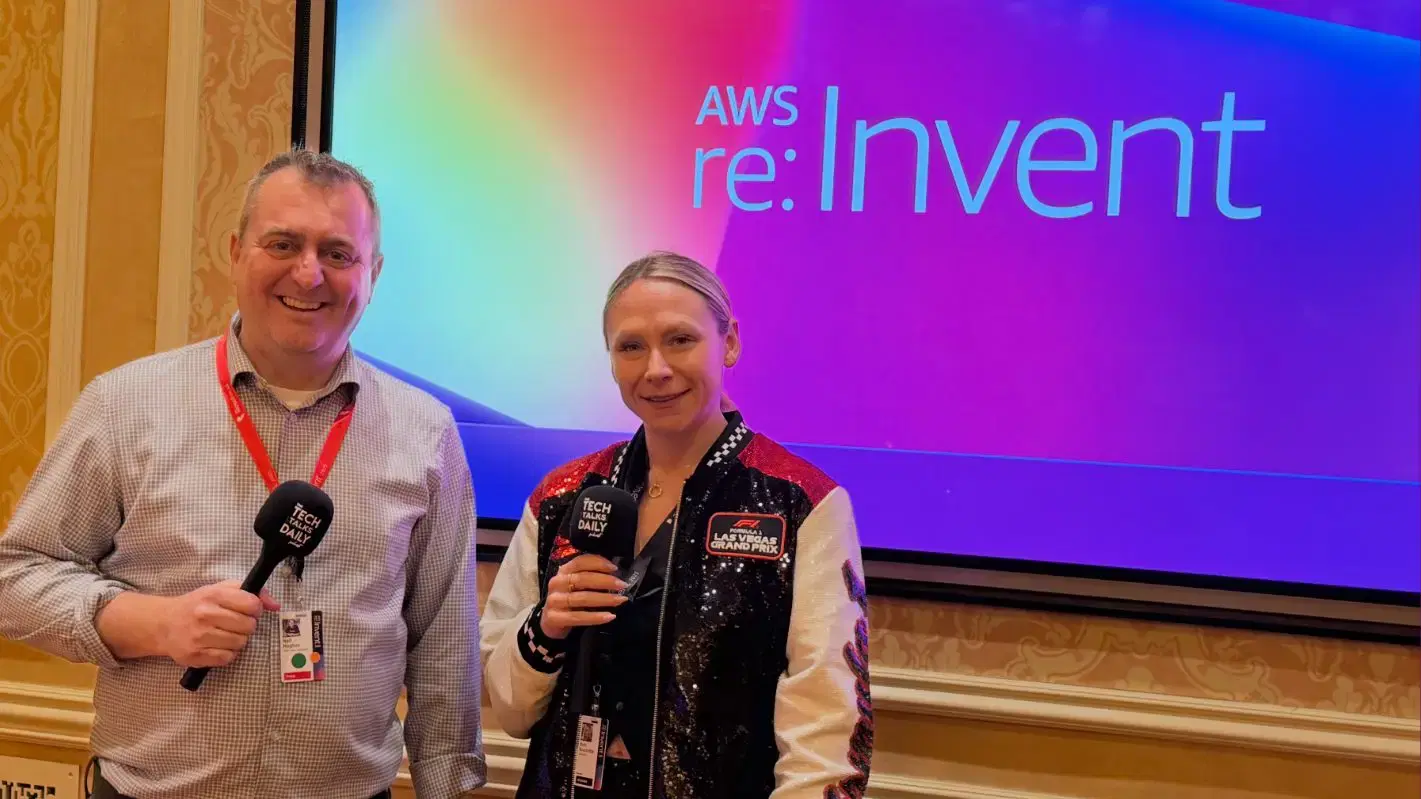
She also reflects on the sport's evolving culture, the growth of new fan communities, and the shift from legacy telemetry to modern systems that process millions of data points per second. Her stories from the paddock at Ferrari, Alfa Romeo, and F1TV help frame just how intense the job can be when 12,000ths of a second separates pole from second place.
There are moments in this conversation that remind us that F1 strategy is as much about human pattern recognition as it is about machine intelligence, and that the strongest engineers find ways to absorb pressure without losing their instinct.
What stood out most was how clearly Ruth links F1 to decision-making across industries. Whether she is talking about marginal gains, pattern detection, or the discipline needed to separate noise from signal, her examples make perfect sense to both race fans and tech leaders.
She explains how AWS tools enable broadcasters and engineers to interpret scenarios instantly, why the sport needed to move past manual diagnosis, and how new tools help verify whether a driver's mistake resulted from a small steering slide or a split-second shift error.
Her passion is infectious and her explanations cut straight to the heart of what makes the blend of live racing and cloud computing work so well. As you listen, consider how your team makes decisions under pressure, and ask yourself one final question. If you were in the garage making a call with the whole world watching, which signals would you trust and how fast could you act?
Useful Links:
[00:00:04] - [Speaker 0]
Welcome back to the Tech Talks Daily podcast where today I find myself at AWS Reinvent in Las Vegas. And today, I'm joined by someone whose work sits right at the point where engineering, storytelling, and high pressure decision making all meet. Her name's Ruth Bushcomb. She's a motorsport engineer and a presenter for f one TV. But more than anything, she's one of the voices helping billions of f one fans understand what really happens behind the scenes.
[00:00:40] - [Speaker 0]
And if you've ever wondered what it takes to interpret more than a million live data points every single second while a car is traveling at 200 miles an hour, this conversation, I hope, will help bring that all to life. And one of the many reasons I wanted to sit down with Ruth today is because Vegas has become a place where two extremes collide. On one side, you have the strip circuit with its compression zones, planckware debates, and marginal gains measured into fractions of a second. And on the other, you have AWS re:Invent, an event where cloud analytics and machine learning are all shaping how these insights reach engineers, strategists, broadcasters, and everything in between. But Ruth, she's one quite special.
[00:01:30] - [Speaker 0]
She stands right in the middle of this blend and is able to translate all of it into something that fans can not only believe but also understand. So the question for all of us, I think, is quite simple. What can leaders outside of motorsport learn from a world where decisions happen at speed? The data never stops, and the consequences can be felt immediately. This episode is packed with so much gold.
[00:01:57] - [Speaker 0]
And it has to be said, Ruth, one of my favorite guests to to have on here. Her passion, enthusiasm, and knowledge around everything she does really does bring this topic to life. But enough scene setting for me. Let me introduce you to her right now. Well, thank you for joining me here at AWS.
[00:02:16] - [Speaker 0]
The Las Vegas Grand Prix is over. Now we're at AWS re:Invent taking over the city. How long have you actually been in town? Have you had a chance to wander away from the circuit and the conference halls yet, or are you simply Vegased out? Where are you?
[00:02:29] - [Speaker 0]
What are you doing?
[00:02:30] - [Speaker 1]
So first off, I can never be Vegased out. It's one of my favorite races. I love playing I love playing poker. You know, so it's one of my favorite races. We'll always get great racing here.
[00:02:41] - [Speaker 1]
Back in 2013, I I were part of the kind of very junior group that was advising on the strategy working group. And I told Stefano DiMinacalli that it would be great to have a race here in Vegas, we have one in '86 and '87. Caesars Palace Car Park is not quite as good as the strip itself but yeah if you ask anybody, as you can tell from my, it's audio only but I am wearing a significant number of Formula one themed sequins. Unfortunately I have not had much time off because we're in the middle of a triple header at the end of the season. So I've actually been to the other side of the world and back since the Grand Prix, I landed back here last night and moved house.
[00:03:19] - [Speaker 1]
So it's all been rather busy. And then yes, I will be here today, tomorrow speaking in, over in sports forum, talking all things F1 and AWS. Then tomorrow night flying back over to Abu Dhabi for our season finale with Formula One. It's the only the first three way decider we've had in fifteen years.
[00:03:38] - [Speaker 0]
So much travel there. Do you do you really enjoy the travel still as well?
[00:03:42] - [Speaker 1]
You know, I think I've always said, like, I've never really had a real job because I've always worked in in Formula One. You know, I I did my master's thesis with Formula One. I like started, you know, straight out of university as a graduate working with Ferrari. So I don't think I would do well in a nine to five office environment. And, you know, I love racing and, you know, I love the geek side of racing.
[00:04:05] - [Speaker 1]
So working with AWS as their their global brand ambassador for motorsport and technical adviser has been, like, you know, geek squared. So I'm in my happy place.
[00:04:14] - [Speaker 0]
Certainly in the right place for that because, obviously, Vegas now hosts a street race and a huge tech conference in the same month. So from your perspective, does that mix of motorsport, cloud computing, and neon madness feel as wild from your side of the paddock as it does from the outside? Tell me more about how you see it.
[00:04:32] - [Speaker 1]
You know what? I I think it's such a great fit. You know, you was a head of race strategy for ten seasons, and I had a a team of engineers, you know, kind of making the magic happen. So, you know, when you have an idea in your head, your team has an idea in your head, know, they're going hard at work and making it happen. Now I work for Formula One and instead of having two demanding drivers of which, you know, lovely, but demanding.
[00:04:54] - [Speaker 1]
You know, so I used to work with drivers like Sebastian Patel, Charles Leclerc, Kim Reichenin, you know, Fernando Alonso and, you know, Valtteri Bottas. And now I've got one in eight people on earth to get the strategy right for. So, we've got, you know, eight fifty seven million people watch formula one. So that is about one in eight people watching. And we're a technical sport, right?
[00:05:14] - [Speaker 1]
Formula one started seventy five years ago with a single data point, a stopwatch in a muddy field in Silverstone. The muddy part of the field hasn't changed, but it couldn't be more different. Know, when each formula one car now makes 1,100,000 data points per second and data is at the heart of every formula one story. And actually working with AWS to help bring those data stories to life, to help explain what's going on. You know, not to adjust to the fans that have been watching it for thirty five, fifty years, but to our new fans, that have joined, you know, if we look at our growth year on year, 11% year on year growth in The States alone this year, our demographic has gone from being a 52 year old white male in Coventry.
[00:05:54] - [Speaker 1]
If haven't you been to Coventry you're not missing out. And it's not that we don't want that fan base, we wanna be a full quadrant sport, we wanna sell our tickets to mom, dad, son and daughter, we want groups of young girls to be able to go to Formula One and enjoy it and feel welcomed in it to be a safe space. And we still want, you know, we want groups of, you know, men, women, children. We want to sell as many tickets as possible basically, which means we want to be an inclusive sport and we want it to know when you switch on the TV screen for you to understand what's going on on track. We're not sport like football or soccer or NBA where you can see the whole pitch.
[00:06:29] - [Speaker 1]
Our track is literally most of Las Vegas, know, or it's a 5.3 kilometer track or a seven kilometer track where we go to spa. So having a data story is really important, not just for giving the insights of fancy at home, but actually AWS works with Formula One not only to help improve our reliability because we're responsible for broadcasting all the data around the entire world. But with the root cause analysis that AWS has brought in, we've managed to reduce, it was 86% in terms of latency of fixing it. So we have a reliable stream, but also that we're able to tell the story, know, we, by using tools such as track pulse, we're able to predict what's going on that means that our cameramen, our commentary teams are able to find the stories before they happen and follow, the data stories and actually, you know, whether that's getting a helicopter into position or making sure we've got a cameraman, running, they're so impressive, running down the pits in order to get, you know, a, you know, race deciding pit stop captured live. Every single part of it is a data story, and we wouldn't be able to do it without AWS.
[00:07:31] - [Speaker 0]
And everything that you mentioned now, I think for most people, they take that stuff for granted. And you sit at the intersection of engineering, analysis, and broadcast, which is an eclectic mix too. But for people who only see that finished TV product, what does the role actually involve when you're supporting f one TV and and the world feed that literally reaches billions of people.
[00:07:51] - [Speaker 1]
Yeah. It's, you know, it's it's an absolute honor to get to work for for Formula one. You know, whenever you go back to work for the same CEO twice in a different company, you know it's a good company. So Stephanie Domingagali, CEO of f y, was my first team principal back when I was at Scuderia Ferrari. And, you know, it's all about making sure that we're able to tell those data stories and there's lots of different layers to it.
[00:08:12] - [Speaker 1]
So I work as a presenter with F1 TV, there with a microphone in my hand, actually explaining what's going on. You know, giving my like engineer's opinion. We like to have a couple of arguments with drivers. You know, we're like family. We like to, to have differing views.
[00:08:25] - [Speaker 1]
So, you know, saying this is how the, I would approach the race from an engineering perspective. This is what I would do as a strategist. They always make me call the race, before. So most of the time I don't look like an idiot, often I do. But then, you know, helping advise AWS in terms of the development of new graphics, got the biggest regulation change in, you know, over two decades coming in 2026.
[00:08:48] - [Speaker 1]
So working closely and again, being that kind of straddle between a broadcaster, we've got a lot of very smart people, but they're not Formula One team and AWS that have got massive amounts of power. And being part of the team of people that sits between the two to make sure that we can maximize these two absolute talented powerhouses to get the most out of the partnership, you know, at every layer, whether that's, you know, designing new graphics to tell the data story. So next year, we're gonna have 50% of the energy from a Formula one car is gonna be renewable. So based on the power unit based on the energy deployment, making sure we're able to tell those stories. You know, we just had a grand prix, in Qatar that was very heavily strategically driven.
[00:09:29] - [Speaker 1]
And, you know, there was a potentially championship defining moment where, Kimmy Antonelli went off and immediately, you know, skeptics might say, did he let him through? Well, no, because with the AWS time loss insight produced in approximately one second round trip from Qatar, Then put back, I can tell you with a 100% certainty that he had a oversteer moment in turn 10 and lost one point zero seven seconds. So, you know, data stories, they're cool, but they're also informative. And they help us tell, tell the story, whether that's, you know, explaining when a driver made an error, predicting a strategy. And really, we're still working it out.
[00:10:04] - [Speaker 1]
We're really evolving this partnership. And that's one of the great things about having AWS as our global partner is, you know, you kind of go backwards from the customer as AWS do the same thing in F1, you know, what's the story we need to tell. What do we get wrong? You know, that time loss graphic I just mentioned, we created that because there was a moment in the Singapore grand prix last year when Lando went off and. You know, we didn't have a tool.
[00:10:29] - [Speaker 1]
We didn't have a widget that was able to explain that story quickly and effectively. We sat down after the race and said, how would you do it as an engineer? And I said, oh, I'd overlay the data and I'd work out whether the speed trace deviates from the norm. And then you go over to AWS and within one race. So for the next race in Austin, we have this time loss widget.
[00:10:47] - [Speaker 1]
This is automatically programmatically based on the telemetry signals that we have available and the diagnosis of, you know, the key areas that it is. And after the first session trained it on the FP1, we go to the sprint qualifying and I'm having dinner on the Friday night and I get a notification that says up Lando Norris lost a load time in the straights. Like every skeptical engineer, I think it's just a training bug because drivers don't lose time on the straights. We look into the data and actually the AWS insight had isolated that Lanto had in fact lost sprint pole on the straights because he'd had momentarily kind of, you know, Ralph, for one of a better word, fat fingered shifted down the gear accidentally and the momentum loss had cost him pole position. And I think that's such a great data story because, you know, it's not that we couldn't have found that, but the manpower to go through every single lap of every single moment, you know, manually is just not efficient.
[00:11:36] - [Speaker 1]
But having something that programmatically detects it and gives you a much higher accuracy. So, you know, now I can tell you that the reason why Lando went off in Singapore was he lost three point five one seconds with a front lock in turn 14 on lap 54. Wouldn't be able to do that before. Would take me a load of effort, but now we can do it. But it's so cool to be able to explain those stories.
[00:11:53] - [Speaker 1]
We actually went over to to Red Bull who have a different cloud partner. I can say that. And and and they had not found it. So just, you know, I'm still competitive as you can tell.
[00:12:06] - [Speaker 0]
And you dropped a great stat a few moments ago. A single f one car produces 1,100,000 data points per second from hundreds of sensors there. So when you try and explain that, when you try to explain that scale to audiences, what tends to surprise the most about the way that teams work and especially with that volume of information that you're dealing with every single second?
[00:12:27] - [Speaker 1]
Yeah. This is one of the great ones that we get often, which is, you know, we've gone from not really having enough data to having data that's been a bit delayed. So first time we've got data from of a racing car was 1974. It was a McLaren, it had 14 channels, was actually an Indy car and you could only get it in the garage after the race. So not particularly useful for making live decisions.
[00:12:46] - [Speaker 1]
And then, you know, we've gone from having, you know, several channels coming off of a car live, maybe not that particularly reliable, like classic grand prix, like Adelaide '86, Alan Prost, like every good Aussie says, nah, I'm not running that fuel goes on to win the race. Sometimes drivers still are right, they're still the most important sensor in the car. And now we have, you know, almost too much data, which is, you know, we use the word insights. What is important is which of those 1,100,000 data points is the one that's going to give me the marginal gain over my competitor. Racing is a relative sport.
[00:13:19] - [Speaker 1]
The difference between first and last on average, take every event last season, 1.3%. If I was 1.3% slower than Usain Bolt, I would be having two golds, two silver medals, and I'd be running my world record of like 9.7. The only person in the world that would have ever been faster than me been Usain Bolt. You're 1.3 off of fastest in formula one. You are deadpan last.
[00:13:41] - [Speaker 1]
There's no bad racing cars. And in a sport that is defined by such margins, it's that extraction of data slightly faster, slightly better, slightly more efficiently than your competitor that makes a difference. If you take the Japanese grand prix for this year, for example, poll was decided by 12 thousandths of a second, which is 76 centimeters on a track that's over three miles long. So if you equate that to a 100 meter sprint, that's the equivalent of less than a centimeter. So it's not about, we need an AI per cloud partner to be able to do as a team or as a broadcaster, have to make an all singing, all dancing answer, but we're an efficiency sport.
[00:14:19] - [Speaker 1]
So all 10 teams, they operate under the same cost cap, which means it's all about doing more with less or doing something more efficiently. So if you can find a way to understand that, you know, in terms of a feedback loop, rather than having to have, you know, manual transcription of competitor radio, you can do that with an AI system. If you can then actually use your AI system rather than just having to manually transcript something that can detect patterns in the intonation between codes, you can get a slight small edge over your competitor, which is in formula one the difference between winning and losing. It's all just marginal gains and teamwork and trying to find that extra little, you know, 76 centimeters.
[00:14:59] - [Speaker 0]
You've spoken before about the the sport moving from not enough data to too much data almost overnight in the nineties. But how did that shift change the culture inside teams? And I'm curious, are there any parallels that you see with companies outside of motorsport that maybe face a similar overload? I mean, you may you said you'd never wanna work that nine to five job, but do you see any parallels that might work in there?
[00:15:20] - [Speaker 1]
In every single industry. You know, if you go to any any world where there's high performance, you know, whether that's that's one of the many teams that AWS provide infrastructure. If you go to the London Stock Exchange, you speak in Bloomberg, if you go, you know, to the IOC Olympic forum, you know, every single time you go into these rooms, you're meeting exceptional human beings at the top of their game, working together to achieve something in a highly competitive environment. Formula one is a pressure cooker for that. You know, the exact same AWS services that we use to generate an insight and give it from a formula one car that's traveling at 200 miles an hour in Melbourne, 10,000 miles generate an insight back.
[00:16:01] - [Speaker 1]
AWS Lambda do the exact same on the stock exchanges doing the exact same tool. You know, it's a scalable opportunity that we are able to do to actually extract that information. And it's all about having an edge, you know, in formula one, we are often driven by necessity. I love Bozarab's theorem. Necessity is the mother of invention.
[00:16:20] - [Speaker 1]
You know, every single solution is because we've had a problem or a challenge or we've lost or one, but not by just, you know, enough, you know, there's always a chance to have that extra little edge. And I think, you know, there's a lot of great, you know, cross pollination between every single, you know, high performance environment in Formula One. You know, I've spent time working with, you know, Mike Mancias, who's LeBron's trainer, for, for the thing, know, you can look at Bob Stroup who's that, you know, working with, you know, Pat Mahomes in the chiefs, you've looked at so many different industries, where, you know, actually there's a lot more similarities than, than differences. If you're in a boardroom of, you know, kind of companies on the footsie or you're in a in a pit wall than you would imagine.
[00:17:06] - [Speaker 0]
Completely agree with you, and we should also highlight that AWS and F1 have also launched a real time racetrack experience that gives fans the same kind of insights that strategists use to, join a race, of course. So from your perspective, what does that kind of collaboration tell us about where maybe fan engagement is running?
[00:17:24] - [Speaker 1]
Oh, it's so important. You know, like like I say, we cater right now to one in eight people on earth, which means we've got very different people. We've got people that, you know, fans of Lewis, fans of Lando, fans of Max, fans of Oscar, you know, absolutely everything, a driver, team and you know, we want to be able to make sure that we're giving them the experience and now we can, that is curated to what they want. And I think the real time racetrack is such a great example. So one, it's very difficult to impress both Lewis Hamilton and Charles Leclerc with any kind of activation.
[00:17:55] - [Speaker 1]
I love them both dearly, they're good friends of mine, Lewis actually hired me for the F1 movie and I worked with Charles in his first season. So very rarely do you get formula one drivers doing any kind of media duty and then go, wow, this is cool. Fact checkable. And so real time ratio is a fan engagement tool but it's showing you the kind of things that we can do where you could basically design your own racetrack. And then, you know, as you go in doing it live, like go, go onto the website and you'll see, it's a great little sizzle reel where that Lewis is going, it's actually gone.
[00:18:25] - [Speaker 1]
It was pretty cool. So, and this man can't lie. So, you know, you can tell he's having fun. And then based on the racetrack you have, you can put it anywhere in the world. I put mine in Bora Bora, hint, Stefano.
[00:18:36] - [Speaker 1]
And, it says for the exact weather right now and the corners of the you've drawn basically. So I love a little of high speed cornering myself. I modeled mine after Arabyata one and two in Mugello. I had a little bit of Turkey Turn eight there. You know, I made, like, the ultimate racetrack of of things that I like, what the race strategy would be like, and then, you know, using Amazon, no reason makes an old school poster.
[00:18:59] - [Speaker 1]
It's just a great example of what you can do. In fact, for our title race this year in the, in Imola, I won't say the full name of the grand prix because I'll probably get it wrong. It's about 15 words. But it was the title race in Imola in Italy, we then you know was able to hook it up to a race simulator so you can then drive the track which both Charles and Lewis loved, I didn't because I get sick in a simulator but we did an activation right around Davide Valseki in part of the pre race show. We couldn't get him back off of it.
[00:19:29] - [Speaker 1]
I felt so sorry for all the other guests in the AWS suite. You know, they're looking forward to having me to the grand prix and this guy's just on the city. He's like, I could do better. I could do better. We're like, okay.
[00:19:38] - [Speaker 1]
But there are people that would quite like to have another go. Can we share with the other share with the other kids, please? But, yeah, go you I mean, you might not be able to drive in a simulator, but but go and have a play with it. You know? I think it's cool.
[00:19:50] - [Speaker 1]
Lewis thinks it's cool. Charles thinks it's cool. It's pretty cool.
[00:19:54] - [Speaker 0]
So if we go back to the race day for a moment, when you look at modern race weekends, decisions are made in fractions of a second, marginal gains so important, but sometimes you have to make these decisions with incomplete information. So how do engineers separate that the right signal from noise when the pressure is high and the data never stops flowing because it must feel overwhelming just trying to spot that thing that you're looking for?
[00:20:17] - [Speaker 1]
Yeah. With difficulty, with practice, and also with kind of the pride to know that pressure is a privilege and with the right tools. So, you know, people will say, what's the difference between your gut instinct, and data? And then yeah, making sure that my audience is geeky enough to understand. I say, well, your gut instinct is really just an LLM of your own experience.
[00:20:41] - [Speaker 1]
And often, you know, if you're there, especially if you're, if you're kind of one of the younger people in the room and you've modeled something and you go to sort someone, they go, well, you know, I've done this for fifty years and it's never like this. Actually, two things can be true. You know, often it's because you've not modeled a second order or a third order effect that, you know, when combined with several other parameters actually becomes something that should be a first order effect you haven't considered. But then there's also the side of it that, you know, as human beings, there's a lot of papers that we do that you can read that says that we remember atypical events and we, you know, in terms of our brains, the way that our memory works is we have a kind of an anchor bias to extreme events. So we remember the happy races, the sad races, the extreme races.
[00:21:19] - [Speaker 1]
And often we don't do a very good job as human beings of remembering the other 200 that were in the middle that might actually be a more likely event. And, you know, it's that augmentation of basically using the best tools in the world, the best people in the world to like, know, kind of, you know, to, you know, ultimately all we're doing is entertainment, to kind of perform at your absolute best, which is what it is. You know, there's lots of great jobs in Formula One, if you don't particularly like making decisions under pressure, don't recommend the role of strategist. There are other jobs available. I would recommend applying for those.
[00:21:50] - [Speaker 1]
But pressure is a privilege and actually, you know, for me as a geek that loves sports, but didn't get born tall enough or fast enough to bring home any rings. You know, being able to use maths for sport, that's the moment that we live for. Think, you know, like if you ask Pat Mahes, does he prefer getting beaten by the Eagles at the Super Bowl or practice in a field? He'd still prefer to be out there, you know, competing on a world field. You know, that's that's the
[00:22:18] - [Speaker 0]
Thank you so much for dropping by and speaking with me today. For anyone listening, maybe they've got those light bulb moments thinking about marginal gains and everything there. Then maybe they wanna geek out, connect with you or your team, just find out more information and keeping up to speed with AWS and F1. Anywhere you'd like to point anyone listening?
[00:22:35] - [Speaker 1]
Yeah. So I'm available on all socials, Ruth Busken. It's the same across all well known platforms. And yeah, I'd I put out AWS insights, work with F1 and analysis every single week. If you wanna geek out about race strategy performance and formula one and now is the best time to do it because we've got the absolute title decided coming up at the end of this week.
[00:22:57] - [Speaker 1]
And then next season, 2026, we've basically taken everything and thrown it up in the air, and we're gonna go again. So if you're not already a Formula one fan, now is the time to understand. Join us and, yeah, pick your favorite and understand the data behind all this
[00:23:10] - [Speaker 0]
stuff. Well, I'll have links to everything, including, I believe, to your newsletter, which you send out on a regular basis, isn't it?
[00:23:15] - [Speaker 1]
Yeah. Predicted the pit laps for the winner. I'm so glad we got to mention that lab seven and lab 32. I just did a quick tweet that went, like, semi viral. About a million people looked at it, and some of the responses at the water were not particularly kind.
[00:23:27] - [Speaker 1]
They're like, why would you box in lap seven and lap 32? And you know, like obviously I get, I'm a very competitive person. Was telling my partner, I was like, God, hell I hate. And then when it happened and it won, was like, kind of went through like liking all of them. Like, yeah, I see you.
[00:23:41] - [Speaker 1]
Yeah, you'd be McLaren wouldn't you? It was lap seven and lap 32. There's some great, lovely, lovely comments too. They were like, she's from the future. Was like, no, it's actually just the exact same race as 2023.
[00:23:51] - [Speaker 1]
Cause we, we did that exact same strategy with Valtteri. We went on lap three. But, yeah, data driven decisions.
[00:23:59] - [Speaker 0]
And I think that is a beautiful moment to end. Thank you for joining me today.
[00:24:03] - [Speaker 1]
Thank you so much, and enjoy the rest of Marie and Ben.
[00:24:07] - [Speaker 0]
I think speaking with Ruth today reminds me that f one is far more than a spectacle we see on a Sunday. The sport is a constant test of judgment, curiosity, and teamwork, And I think it makes one of the clearest mirrors for any organization that's just trying to build a data driven culture. And when a single car can generate more live telemetry in a second than many companies handle in a week, I think it forces a different way of thinking about what matters and what can be ignored and how to make decisions when conditions shift on a moment's notice without warning. And I think it's also a reminder that technology alone is never the story. The story actually sits in how people use these tools, how they use them when pressure builds, how communication holds teams together, and how every mistake becomes almost a stepping stone for the next movement.
[00:25:03] - [Speaker 0]
And, obviously, one of the things that Ruth brought to life today is she lives this world every race weekend, and it shines through in everything that she spoke about today about the craft of engineering, the responsibility that comes with putting insight into the hands of millions of fans too. So, hopefully, this conversation today gave you a fresh way of looking at your own data challenges, your own decision making rhythms, and the way your teams respond when that pace picks up. But enough from me. What stood out for you listening to Ruth's perspective today? And how do you think other industries, maybe your industry, could apply a very similar mindset around leveraging technology to secure those marginal gains?
[00:25:51] - [Speaker 0]
So much food for thought. As always, tech blog writer at outlook.com. LinkedIn, x, Instagram, just at Neil Siegues. And you can also get me on techtalksnetwork.com. You can leave me an audio message there, but let me know your thoughts.
[00:26:06] - [Speaker 0]
And I'll speak with you all again soon. Bye for now.