

Could your company be paying suppliers earlier than its competitors and unintentionally financing their advantage?
In this episode of Tech Talks Daily, I welcome back Oliver Belin, co-founder and CEO of Calculum. Our previous conversation took place around ten years ago when Oliver was working with the Marco Polo Network and blockchain was attracting attention across trade finance. His latest venture concentrates on working capital, payment terms, and the role of AI in supplier negotiations.
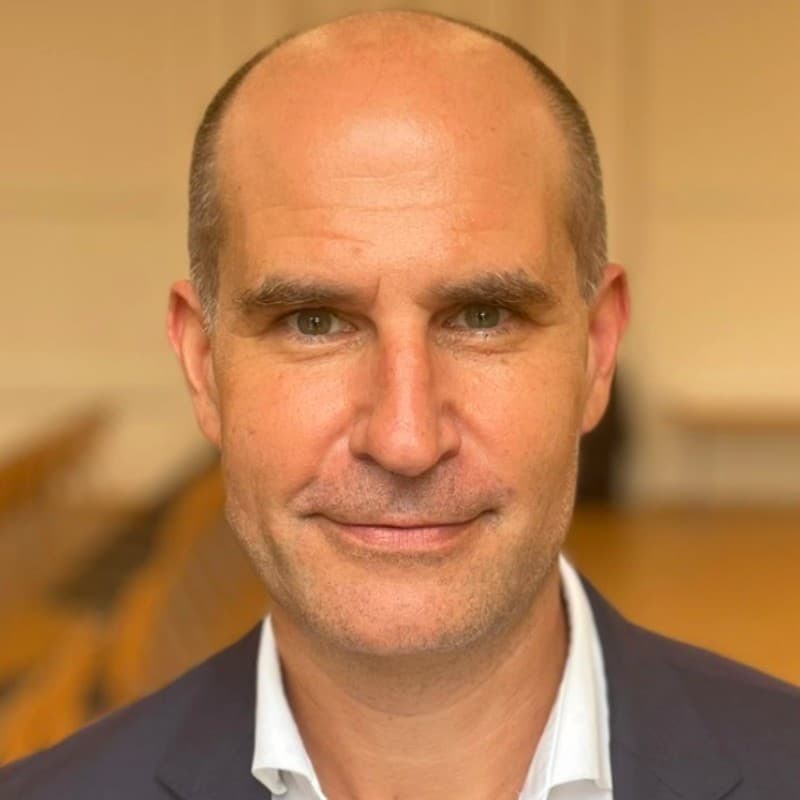
Oliver explains why working capital has moved higher on the agenda for procurement, treasury, and finance leaders. Companies can generate cash through sales, borrowing, inventory efficiency, faster customer collections, or changes to supplier payment terms. With borrowing costs higher and sales growth difficult in many markets, businesses are examining the cash already tied up within their operations.
The difficulty is that procurement teams usually know their own supplier data but lack reliable information about the terms those suppliers accept from other customers. Negotiating without market benchmarks can lead to blunt policies, such as extending every supplier to 90 days.
Oliver warns that indiscriminate extensions can create serious consequences. Smaller suppliers may experience cash flow pressure, increase their prices, reduce service, or direct capacity toward customers offering better terms. The buyer may improve its balance sheet while weakening an important part of its supply chain.
Calculum uses transactional benchmark data to compare existing payment terms with the wider market. According to Oliver, the platform can show how frequently a supplier appears in its dataset, which terms it accepts elsewhere, and the probability that it will agree to a proposed change.
AI and predictive analytics can then help companies concentrate on the suppliers where an adjustment would create the greatest financial impact and carry a higher probability of acceptance. This is particularly useful when an enterprise has tens of thousands of suppliers and procurement teams can only negotiate directly with a small proportion of them.
Oliver says Calculum typically identifies free cash flow opportunities equivalent to approximately 8% to 11% of the spend analyzed. The amount identified does not automatically become realized cash. Procurement teams need targets, internal ownership, supplier conversations, and financing options to turn recommendations into results.
He shares the example of an unnamed Fortune 500 pharmaceutical company that generated $227 million in free cash flow over 16 months. The program combined market-aligned payment terms with Supply Chain Finance, allowing participating suppliers to receive early payment in exchange for a discount based on the buyer's financial strength.
Another UK company with approximately 4,000 suppliers generated €3 million in free cash flow within two months. Oliver attributes the speed partly to knowing which suppliers to approach first rather than attempting a broad, manual campaign.
We also discuss supplier protection. Calculum identifies whether a business is a small or medium-sized enterprise, examines ultimate ownership, and considers financial strength. A financially vulnerable supplier may need early payment support rather than longer terms.
Oliver's wider point is that AI cannot create reliable benchmarks from nothing. Useful predictions require traceable transactional data, clear objectives, and people prepared to act. Could better payment term intelligence improve your cash position while creating fairer, better-informed supplier relationships? Listen to the episode and share your thoughts with me.
Useful Links
[00:00:00] Do you need AI agents that you can trust? Well, with an AI data layer providing real-time connection within your data platforms, you can trust your agents to provide accurate solutions. So, scale your business by trusting your agentic AI accurately getting the work done for you. Trust its capabilities with Denodo. And you can do that by simply visiting denodo.com to learn more.
[00:00:26] What if your company is paying suppliers weeks earlier than your competitors and unknowingly financing their advantage? Well, things like payment terms seldom cause anyone to leap out of bed with excitement. But it is incredibly important. They can influence cash flow, margins, supplier health and the balance sheet.
[00:00:52] So, today I'm welcoming back someone that's been on the podcast many times over the last 10 years that we've been doing this. And he's the co-founder and CEO of a company called Calculum. And in the past, we've talked about blockchain-dominating trade finance discussions. But 10 years later, that focus has now moved towards AI, predictive analytics and working capital intelligence.
[00:01:19] And my guest will explain today how businesses can benchmark supplier payment terms and identify where negotiations are likely to succeed. And then focus procurement resources on the opportunities with the greatest financial impact. And we'll also discuss why aggressive term extensions can damage smaller suppliers.
[00:01:45] And how financing programs can create better outcomes for both parties. So, could better data in your organisation turn payment terms from an admin detail into one of your company's strongest financial tools? Well, we've got some big figures that we're going to drop today. Some massive stats. So, please stay with us as I introduce you to my guest right now. Welcome back to the show, my friend.
[00:02:15] For everyone listening that has not heard our conversations before, can you remind them with a little about who you are and what you do? Yes, I think it has been already 10 years, correct? Since we had the last session like this. So, a lot of things have changed. On my side, what has not changed is still focusing on helping organisations improve their working capital. And still based here in Miami. But a little bit about myself. Yes, so I'm Swiss-French.
[00:02:44] I'm living in Miami. So, the World Cup was pretty funny to have both teams. But unfortunately, they both lost. But, yes, so my background was usually in the past focusing on fintechs. Started with a company in Switzerland called GSCF, which is now part of Blackstone. Then I founded my first company, Swiss Commercial Capital, which we sold to Macquarie Bank. And then also lived in London, working at Sumitomo Bank.
[00:03:14] And then moved to a few fintech companies. As you remember, the first session we had 10 years ago was when I was working at a company called Marco Polo Network. Which was, I would say, ahead of its time, leveraging blockchain in the trade finance space. And now, since six years, I founded Calculum. Again, still helping organisations optimise their working capital.
[00:03:41] But now, not looking at the financing side, but leveraging data as an asset to help companies be more competitive. And again, unlock working capital and generate free cash flow. Yeah. And as you said, we've been speaking, what, 10 years now? So much has changed. So much has changed in the last five years alone. Never mind that long. But, I mean, looking across the industry, working capital has always traditionally been seen as somewhat of a finance function.
[00:04:09] So, tell me more about why it's now becoming a strategic priority for procurement, treasury, and executive leadership. Some big changes here. Yeah, you're right. Look, I've been doing that since now almost 20 years. Working capital. Why I always say there's mainly three goals or targets a company is looking to make it simple. It's sales, profitability, and cash. Correct? Correct?
[00:04:36] And when you look at cash flow, again, there's about three levers how you can improve it. It's either you generate more sales with your profitability, you generate cash. Correct? But I would say in the current market environment for some companies, it's difficult to generate just more sales. The other lever is you go to your bank or you get a financial loan, but then the interest rates are much higher than when we spoke 10 years ago.
[00:05:01] And then the last one is you improve your cash cycle. So you collect your monies faster from your clients or you're more efficient with your inventory or you optimize your payment terms to your suppliers. So naturally, for the purchasing department for procurement, there is ways to see how you can be aligned to the market and improve these terms, which hence unlocks working capital.
[00:05:30] And it's why we see a shift during the last 10-5 years where procurement is 100% aware about what is working capital. Because traditionally, they were always looking at cost savings. But now, because most CPOs, they report directly to the CFO. So they're very much aware about the impact procurement has, not only on the P&L, but also on the balance sheet.
[00:05:57] So working capital, when we speak, we speak every week to so many procurement leadership. They all have on their agenda working capital and they know how to do it. But this has changed. Traditionally, I think many organizations have been almost forced to negotiate payment terms with very limited visibility into what good actually looks like. Over the last three years, we've seen AI enter the scene.
[00:06:24] So how has AI changed the quality of information available before those conversations even begin? So, I mean, I'm sure you speak all the time now to AI companies, correct? And I have a little bit of a different approach. For example, I was just at DPW New York. It stands for Digital Procurement World. It's an event purely focusing on new technologies in procurement.
[00:06:51] And I guess, like in other fintechs conferences, everything's about AI, right? But when you speak to these companies, these new fintechs and startups, like, okay, how do you come to this number? Or how this result was achieved? AI. So everything is AI. Then you say, but tell me how? Oh, yeah, it's a black box. And we have a different approach. So we were always and still focusing on the data.
[00:07:20] So the analytics and the recommendation and all the results which is generated for our clients, it's purely based on data, which you can go back and say, okay, it comes from there. It's real transactional data between a buyer and a supplier. It's not just AI generated.
[00:07:43] So to give you an example, so a large company, like one of our clients, like Campbell Soup or Philips or Bristol-Myers-Squibb, let's say they upload 50,000 of their suppliers worldwide, direct, indirect spend. And our platform will tell them exactly the supplier. We have them on our platform. On average, they accept these type of payment terms. Third quartile, they accept this from other customers. And we have them, let's say, 36 times on the platform.
[00:08:14] And this is the likelihood that they will accept your new terms when you negotiate based on these arguments. So it's not just like AI, we believe this is the benchmark. No, it's like real data. And I think this is the difference. And what AI can change, how we apply it for our clients is analyzing large amounts of data and the predictions based on the feedback loop.
[00:08:41] What we see, how other companies were successful in negotiating to find out which suppliers are more likely to say yes. Where is the biggest ROI? So, you know, when you analyze 50,000 suppliers, you're not picking up the phone and call 50,000 suppliers. So where should you focus your efforts? And this is where AI is very good at, where they can take all these amounts of data, historical data, and can say, okay, you should focus on these 50 suppliers. Because there, we know they will say yes, and they will have the biggest impact on your company.
[00:09:08] And I love how your platform allows them to benchmark payment terms against the market and what you're seeing out there. But for people listening, what kind of hidden opportunities are you seeing organizations typically missing? And why have they been so difficult to identify until now? Is it purely the AI thing being able to unlock those insights in the data? Or is it getting the data ready? Or is it a mixture of all those things?
[00:09:35] So maybe answering the second question first. Look, every company has obviously their own data on their suppliers. Sometimes it's a bit messy, but usually they know. And also, when we speak to procurement, they have their category managers, you know, the people which are specialized in buying, I know, packaging, transportation, ingredients. They have all their specialists. They know the market. They know their suppliers. They have access to their own data.
[00:10:04] What they lack is they don't know what other companies dealing with the same suppliers, what payment terms they have. And this is where our solution comes in. And this is why we created Calculum. Because today, I say, every company which is buying or selling, they always negotiate four things, correct? They need to know the volume they're purchasing, the quality of the goods, the pricing, obviously. And the last thing they always discuss is, when do you pay me? When shall I pay you? The payment terms.
[00:10:33] And when it comes to payment terms, there is really no data available. And I think by having the data, if you know where you are standing with your terms versus your peers, and also including regulations. You know, in the UK, there's now new regulations coming to place when it comes to payment terms and other aspects. Then you are way more successful in unlocking working capital. And you are allocating your resources very efficiently.
[00:11:03] Because, you know, usually companies say yes, or the CFO says, yes, I want to unlock working capital. This is my target. Go ahead. Yes, this is okay. Then you just go blank and you just say, hey, we increase our payment terms to 90 days. What will come back is some suppliers will go out of business, especially important for small and medium-sized enterprises. The price will go up, correct? Because they say, okay, great. You increase my payment terms. I increase my pricing.
[00:11:30] Or you are losing suppliers, sometimes very strategic ones, which would just shift their allocation of their volumes from you to a competitor. So this is why it's very important to have the data available. Now, to answer your first question, how much typically we see, it really depends on the company, correct? And on their data. Yeah.
[00:11:56] But usually, which is interesting across the board, you know, we work with companies in airlines. We are very strong in pharma, like with Bayer, Roche Pharmaceuticals, Bristol-Myers-Quibb, food, packaging, chemicals, any type of industry. Even we are now analyzing financial institutions, their spend, their indirect spend. Typically, we see there about 8% to 11% of free cash flow improvement.
[00:12:26] So basically, for every dollar spent which is analyzed, the platform identifies between 8% and 11% of free cash flow. To make it simpler, so you upload 100 million of free cash flow, the platform will identify about 10 million free cash flow. And this is not just by increasing payment terms. This is by aligning your terms to what the supplier is already accepting from others. And I always say, maybe to close this point, it's not only about your cash flow.
[00:12:55] It's about if I'm paying you, let's say, 20 days earlier than everybody else, that means I'm financing you. And there's a cost of capital, which I need to allocate to act as your bank. I'm giving you free money, right? As a supplier. Our platform identifies and sees that usually the supplier, they say, thank you. You're a nice customer. You pay me earlier.
[00:13:23] But with this additional liquidity they have, because you paid them earlier, they're using this liquidity to be able to accept longer terms from other customers, mainly your competitors. That means me, being a nice customer, I'm not only financing you, but I'm also financing my competitors. So it's not only about cash flow. It's very strategic to be aligned with the market. And AI is, of course, only as valuable as the decisions that it can help people and teams make.
[00:13:51] So just to expand on what we're talking about here, how else have you seen predictive analytics changing the way that finance leaders negotiate with suppliers? Also, as well, most importantly, we might argue, maintain those strong commercial relationships too. Yes. So how we see the biggest push in AI is, again, you cannot create data out of nothing, correct?
[00:14:18] As you mentioned, AI is only as good as what you feed it. The data pool behind the AI. And we are constantly training. For us, it's a little bit more difficult because we have very large clients. But in general, our clients sign with us contracts, which it's very clear, they don't allow us to use the large LLMs. So we're not allowed to use Google, OpenAI, because once the data is out, it's out, correct?
[00:14:47] So we had to develop our own AI model in-house, which we train and we feed. And the biggest opportunity using AI is not the AI, it's not the information piece, or it's more the automation. So we created now agents, you know, where the first step is where I can search for my supplier
[00:15:11] and the agent or the assistant will tell me what argumentation I should use in what order. Or if I get a pushback, if I'm negotiating with you, I can train, I can ask the AI how I can counter argument and to be successful in this negotiation. Or to your point, to have a win-win situation. Like where is the break-even point where you adjust your terms, but you get a benefit,
[00:15:40] and I get a benefit out of it. So where you have a win-win situation. And this is what we have developed. And then the other thing is where we see a big opportunity. Again, you know, when do you analyze 50, 100, we have clients where we have analyzed 200,000 of their suppliers worldwide. Our country managers, usually, they're focusing on their strategic spend, like, you know, 200, the top thousand suppliers. But then there is the whole tail.
[00:16:10] And also here, AI, I think, can help a lot, which we see where our clients, they outsource this negotiation to us, where then we can, in the name of the buyer, the procurement team, we can reach out to the suppliers, negotiate on behalf of the buyer, and the buyer can track everything, all the results. Because it's impossible to do that on a manual basis with procurement. You have to outsource it.
[00:16:36] And AI is a perfect way to be efficient in doing so. It's incredibly important to highlight this stuff, because I think there is a tension, very often, between improving cash flow and also supporting suppliers. So I'm curious, from your vantage point here, how can organizations better optimize working capital without simply pushing that financial pressure further down the supply chain? Is this something you see as well? Yes.
[00:17:06] So look, we are not here to tell people what to do and what is right and wrong, correct? What we do, we give them the insights. And I think one important insight, and we see already a lot of our clients, they take it very seriously, is to identify two things. Which one, and they're connected, which one of your suppliers is a small, medium-sized enterprise? The size.
[00:17:31] And there is now laws in Europe, which asks large organizations, large purchasing organizations, to identify out of all their suppliers, which ones are SMEs. Because you have to protect them, you have to treat them differently. Okay, this is the first. So first, you need to know the size of your suppliers. And this is not so easy, because you need to also know who is the ultimate owner. Because maybe a company looks small, but then when you look at the ultimate owner, it's part of a larger organization.
[00:17:58] The second piece, which is connected, which we do with all the suppliers which we are analyzing, is to identify the financial strengths or the credit rating of each single supplier. Because to your point, if I'm optimizing my payment terms with you, it has a positive effect on my balance sheet, but it has the opposite effect on your balance sheet, correct?
[00:18:22] So if you're a supplier, if you're a company which is strong financially, then the system will calculate what is the impact on your company based on your financial rating. And the system will clearly identify, okay, this is good. The impact is small. The company can absorb that. Again, you're just aligning the payment terms to the market. But if it's a small company which is financially weak, the system will highlight that and say,
[00:18:51] like, hey, maybe in this case, you should support your supplier. You should maybe offer them early payment terms to finance them, maybe with a discount, but not just increased payment terms. So it's very important, again, to have the data elements. And then our clients, they can decide what they want to do. And just to further bring to life what you're talking about here, are you able to share an example where better data and AI-driven insights have helped a customer
[00:19:18] generate measurable financial value or just improve the way that they manage their supplier relationships? You don't have to mention any names, but any stories spring to mind there? Yes. So we just recently, because we are tracking all the improvements of our clients when it comes to suppliers and their payment terms and their cash flow.
[00:19:42] So one of the largest Fortune 500 pharmaceutical companies in 16 months, for example, after we have analyzed their entire supply chain or an entire supplier base, they achieve $227 million free cash flow by aligning their terms to the market. And this was done in conjunction with supply chain finance.
[00:20:07] So at the same time, they offered these suppliers to join a financing program, which allows the supplier to sell the receival. So basically, select early payment terms where they have to give up a small discount. But the discount is based on the strengths, the financial rating of the buyer. So usually, the financing is very attractive for the supplier. They have a benefit and they get paid earlier.
[00:20:35] At the same time, the buyer organization, in this case, the pharmaceutical company, was able to align the payment terms to the market. Now, the key working with us was the speed. So how fast they achieved that and also how efficient they were, because they knew exactly they had a plan which suppliers they should go after, which suppliers are more likely to benefit from joining such a financing program to create this win-win situation.
[00:21:04] Not just increasing payment terms, but finding this balance. The other one, smaller company where we analyzed 4,000 suppliers. So this was the entire supply chain, only 4,000 suppliers. I think they are about a $1.5 billion company. They are based in the UK. They make foam for mattresses and sofas. And in just two months, they achieved 3 million euros in free cash flow.
[00:21:34] Just by telling like, look, go after this supplier first. You will be successful. And your terms are way lower than everybody else. You have to align them, you know? And it works very efficiently. I don't know now. They are with us since two years. I have to check again the numbers. But they should be way higher. Yes. Wow, that is incredible. That's the ROI box ticked right there. I suspect you've set off more than a few light bulb moments. And for any finance leaders listening,
[00:22:03] impressed by figures like that, and they're looking to introduce AI into treasury or procurement, where should they begin to deliver those measurable business outcomes that we're talking about, rather than simply just adding another analytics tool? And what we do, we always do a complementary benchmark. Because again, it's all about the data. At the end, you can only improve what you can benchmark, we always say.
[00:22:28] So we always first do a complementary benchmark or proof of concept where you can upload as much as you want to the platform. And then the platform will tell you exactly where you stand, how much suppliers there is data on. And then you can create a business case. You can see what is achievable. And then you can decide if you want to move forward. Because what you mentioned before, Neil, the ROI, yeah, it's great.
[00:22:55] But at the end, the procurement team or the client, they need to have a goal, target, correct? They need to be motivated. And they need to have the people behind to make it happen. Because we provide the intelligence, also the plan, how you can track the results. But at the end, it's declined the organization who has to take the data and make it actionable.
[00:23:24] So basically negotiating with these suppliers. And if a company is not ready to take the efforts and invest in that, then, or if they don't have a real target, then the data is useless in the AI as well. So what I always say first, if you're interested, you have to benchmark, you have to see what is available. You have to clean maybe first your data.
[00:23:52] And then you have to create a plan and a target and have your team organization aligned to achieve it. Yes. Yes. And I think that is a perfect moment to end on. And for anybody listening that is interested in learning more about how this AI-driven platform you've created is helping organizations benchmark their payment terms against competitors and identify those hidden cash flow opportunities
[00:24:21] and those big numbers that we mentioned today, where can they find out more information and also more information about new announcements as they come throughout the year? Yes. And then maybe just one last thing before I mention that is I'm sure some people in your audience, especially when it comes to finance people, they think about, yes, but what about the receivable side? And obviously all our clients like Newell Brands, they make all the Sharpies, all the pans or Campbell Soup.
[00:24:50] They are a buyer, but they're also supplying to large retailers. I mean, UK, like Tesco, Sainsbury's, and all these companies. So they are getting pushed also on their terms, correct? So what we have now developed and what we are already now seeing a lot of demand is helping suppliers to improve their payment terms with their customers, so both sides of the balance sheet. And yes, if somebody is interested,
[00:25:20] as I said, to see a demo of the platform or do just a free benchmark to see where they are, then the easiest way is to find us on our website. It's calculum.ai. Or on LinkedIn, we are pretty active with newsletters. We're also launching our own podcast, purely focusing on working capital. So that's where we interview a lot of treasury people, CFOs, and procurement people
[00:25:49] to share their best practices. So I learned from you. Well, I love it. It sounds like we're going to need to get you back on later in the year and find out more about where things are heading and promote that podcast that you're creating. But I love chatting with you today about how companies can generate significant free cash flow and improve margins by simply aligning payment terms. And you've brought it to life today with some real-world examples
[00:26:17] of how data-driven decision-making can transform treasury and procurement strategies. And there's such a big focus on ROI of everything right now. And you've delivered on all counts today. So it's a pleasure, as always, to speak with you. And I'd love to get you back on towards the end of the year and continue this 10-year friendship that we've created. But thanks again for sharing your time. Thank you, Neil. It was great to catch up. Thank you. Take care of a good day. Wow. I think Oliver's examples show
[00:26:46] why working capital optimization requires better judgment rather than just a blanket instruction to extend every supplier to 90 days. Because a policy like that could improve one balance sheet while weakening others, increasing prices, or encouraging strategic suppliers to favor a competitor. And market benchmarks can reveal where teams are genuinely out of line, whether it would be supplier size,
[00:27:15] financial strength, credit rating, and available financing should then inform the decision. Because yes, AI can help finance and procurement teams direct attention towards negotiations that are most likely to create value. But people must define the target and act on the recommendation. So my big takeaway here is the starting point is simple. Benchmark the current position,
[00:27:45] clean the data, calculate the available opportunity, and build an accountable plan. Otherwise, just another dashboard would just give everybody fresh numbers that they will continue to ignore. So a big thank you to Oliver for joining me on the podcast again. Remember, you can find out more about Calculum at just calculum.ai and follow the company on LinkedIn. But over to you, how is your business balancing working capital improvement
[00:28:14] with the financial health of its suppliers? techtalksnetwork.com, that's where you'll find more information on me, where you can meet me at tech events, or where you can work with me, or just browse through 4,000 interviews. But that is it for today. Thanks for listening as always. Speak to you tomorrow. Bye for now.