

What must happen before a business can trust AI agents to detect and resolve operational problems without waiting for human intervention?
In this episode of Tech Talks Daily, I speak with Josh Clay, Regional Vice President of Solution Engineering for Dynatrace in the UK, about autonomous operations, AI observability, fragmented telemetry, business outcomes, and the growing pressure to control token and data costs.
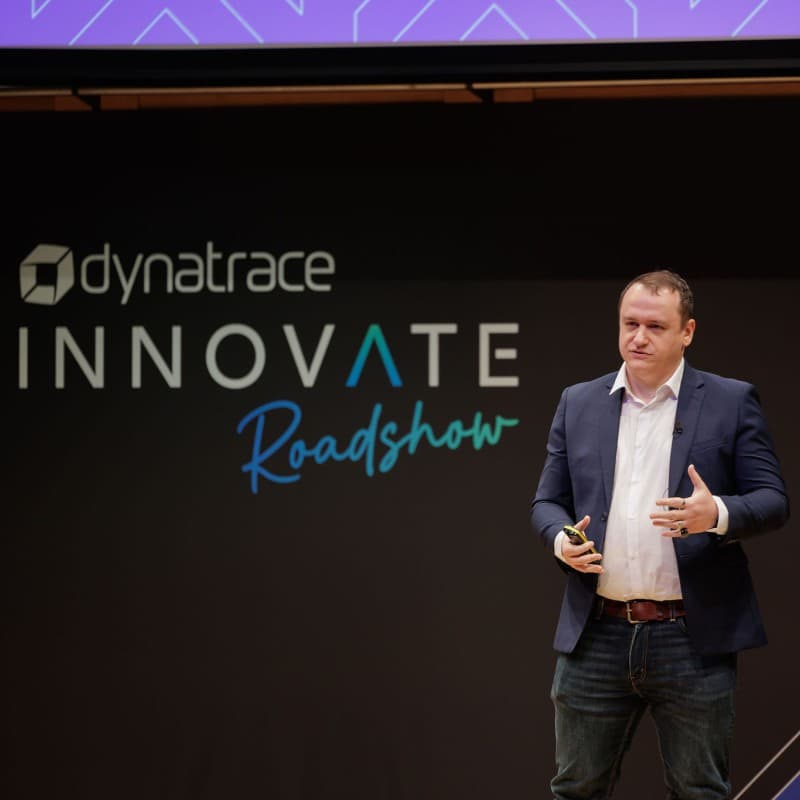
Josh has spent much of his 11 years at Dynatrace discussing the road toward autonomous operations. The earliest version involved reducing the time organizations spent inside IT war rooms. He remembers calls with 30 or 40 people attempting to establish which team was responsible for an incident. He jokingly calls this the "mean time to innocence."
Modern observability reduced many of those investigations from several hours to between 30 and 60 minutes. Agentic AI creates the possibility of going further by identifying a problem, understanding its cause, and resolving it before the customer experience is affected.
That ambition also introduces risk. Josh cites Dynatrace research showing that 52% of respondents view security, privacy, and compliance concerns as barriers to AI adoption. He believes many organizations still lack full observability across their existing technology environments, making autonomous agents harder to supervise.
Josh shares a warning from Alex Hibbert of Storia Group: AI can amplify existing technology problems. If telemetry is fragmented, data quality is poor, or teams cannot see how services depend on one another, adding autonomous agents may increase the speed and scale of the resulting failure.
Trust therefore depends on visibility. Josh describes observability as a control plane for agentic AI because it can show what an agent is doing, why it made a decision, and what happened afterward. Defined guardrails and real time information can give leaders confidence without asking them to surrender control blindly.
The adoption figures show how early this work remains. Josh says 50% of businesses have AI operating in limited production use cases, often performing one isolated task. Only 23% describe their deployments as connected across the wider organization.
We discuss how observability has progressed beyond technical monitoring. An airport can measure whether technology changes improve e-gate availability and passenger processing times. A bank can examine whether application performance affects mortgage completion rates. These connections allow leaders to measure AI through business results rather than relying entirely on response times and infrastructure metrics.
Reliable agents also need suitable data. Dynatrace says AI agents operating with deterministic data can work 12 times more accurately and three times faster while using two and a half times fewer tokens. These remain company findings, but they demonstrate why context and causality can affect cost as well as reliability.
Fragmented telemetry creates another barrier. Logs may sit in one platform, front end monitoring in another, and metrics or traces somewhere else. Attempting to reconstruct every relationship for an AI agent can become expensive and difficult.
Josh recommends bringing observability data into a connected environment where relationships between services, cloud resources, traces, metrics, and logs are already understood. He also warns against collecting information simply because it exists. Data hoarding increases ingestion costs and can introduce personal information into systems without a clear business need.
The conversation then moves toward AI FinOps. Leaders want to know what agents cost, how many tokens they consume, and whether those costs produce a measurable return. Josh describes a Dynatrace proof of concept that identified potential annual savings just below £250,000 within one small environment.
That example reinforces a recurring concern. Organizations are racing to place AI into production, then moving to the next project without reviewing whether the previous environment is appropriately sized or financially efficient.
Josh hopes companies will develop a more pragmatic view of AI as another enterprise tool. That means establishing agreed methods for deployment, monitoring, cost management, incident response, and measuring business results.
Could observability provide the confidence businesses need to move from isolated AI experiments toward autonomous operations? Listen to the episode and share your thoughts with me.
Useful Links
[00:00:04] - [Speaker 0]
What happens when AI agents start running business operations faster than humans can possibly keep watch? The promise of autonomous operations is fewer outages, faster resolution, and technology that can fix problems before customers even notice that there's anything wrong. But on the flip side of this promise, giving AI more autonomy without being able to see what it's doing could be seen as a recipe for making expensive mistakes. So today, I've invited Josh Clay from Dynatrace to join me and explain why observability is actually becoming the control plane for AI and how businesses can measure whether their AI investments are actually delivering value and ultimately understand why AI doesn't just fix weak foundations, but if it not run correctly, it will amplify them. We've got lots of solutions to talk about today, so you're love this one.
[00:01:05] - [Speaker 0]
So rather than listen to me ramble on for a second longer, let me introduce you to my guest right now. So thank you for joining me on the pod podcast today. Can you tell everyone listening a little about who you are and what you do?
[00:01:20] - [Speaker 1]
Alright. Perfect. Thank you, and and thanks for having me. My name is Josh Clay. I'm the RVP of solution engineering for Dynatrace in The UK, which means, you know, we are the technical presales team.
[00:01:30] - [Speaker 1]
So sitting at that intersection really between technology and and business outcomes.
[00:01:36] - [Speaker 0]
Well, it's a pleasure to have you join me. I go to a lot of the Dynatrace events each year in Vegas, etcetera. But this last few weeks, one that I couldn't make was Dynatrace Innovate, which was in London, where I believe you spoke about the road to autonomous ops, which immediately set off my, tech spidey sensors. But for anyone that wasn't in the room, including myself, what does autonomous operations actually look like in practice? Tell me more about that.
[00:02:04] - [Speaker 1]
Yeah. For sure. I think oh, it it's funny, really. I I think I've been talking about autonomous operations in some form or another now for for probably most of them. I've been with Dynatrace eleven years, and I feel like I've been talking about it in some form or another for the bulk of it.
[00:02:17] - [Speaker 1]
But I think, yeah, I think initially, the the move to autonomous ops was this year moving away from the war room scenario. You know, there's eight hours. I used to call it the meantime to innocence. Right? There was that giant bridge with 30 to 40 people on, and and you were trying to get prove your innocence so you could drop off.
[00:02:34] - [Speaker 1]
And, yeah, that has kind of, you know, dropped that, I guess, you know, resolution time, let's say, between, you know, thirty to sixty minutes. And in practice, you know, what we're really trying to do now with autonomous operations is automatically, you know, prevent and trigger your prevention and remediation before the end user customer experience is impacted. And in reality today, I think the nirvana, so to speak, when it comes to autonomous ops, is to be leveraging agentic AI so that when these problems come in, they are, you know, proactively identified and that they are resolved before that customer experience, you know, is really impacted. Right? And which I think just kind of highlights the need really for that kind of causal dataset to be driving, you know, the the agentic AI.
[00:03:20] - [Speaker 1]
Right? They need to know what the root cause of this is, and that they it needs to be based off of factual data, if you see what I mean, and and not inference when it comes to that kind of real time observability.
[00:03:31] - [Speaker 0]
And every tech conference I've been to this year was has always been about Agentic AI. That's what everyone's talking about. And one of the key themes running through our innovate was also helping or I would say, what what made it stand out more to me is it's not just another keynote and another sales pitch. It was actually about helping organizations thrive in the agentic age. And I I love the angle here, but why do you think this is such a a pivotal moment for enterprise technology?
[00:04:00] - [Speaker 0]
It certainly feels that way.
[00:04:03] - [Speaker 1]
Yeah. I think I I I think it's twofold. I think, firstly, the I guess, the amount of, I guess, power, let's say, that AgenTik, you know, AI could provide an organization is, you know, is monumental when it comes to, you know, uptime or to prevent, you know, prevention optimization of, you know, of their environment. And I think it you know, I guess trying to realize and and leverage that capability is really what everybody is really gunning for. Right?
[00:04:30] - [Speaker 1]
That's what everybody is trying to achieve. And, you know, in order for the I guess, know, for them to thrive, they need to be able to kind of accelerate in this direction and embrace AI technology as rapidly as they possibly can. However, you know, I mean, even if in our recent, you know, data and analysis, yeah, we've seen that privacy and compliance issues, I think 52% of those that we reviewed cite that the security, privacy, and compliance concerns is a big, let's say, you know, bottleneck, right, when it comes to the adoption. And then also, you know, the challenges that is you know, that then rises with monitoring this. Right?
[00:05:08] - [Speaker 1]
We still have, I think, many organizations out there that don't really have true observability across their environment today, let alone when they start kind of letting, you know, agentic AI loose within their environments as well, you know, which further kind of compounds that that problem. I think on that, actually, at Innovate, we had Alex Hibbett from from Storia Group really really, I think, put it into the best terms when he said that, you know, AI doesn't you know, what you know, it doesn't necessarily fix foundational problems that you may have. It it amplifies amplifies them. Them. Right?
[00:05:41] - [Speaker 1]
And I think that's probably the best way of encapsulating, I guess, the the importance of having that foundational, you know, observability and and insight before you then start to bring in AI because it will amplify those problems that you have at your core.
[00:05:57] - [Speaker 0]
And we do hear a lot about how AI is becoming more and more autonomous, but I suspect we will have a few business leaders listening that will be understandably cautious. But, equally, they know that sitting on the sidelines isn't an option either. So what have a paradox there? But what needs to happen before organizations are more comfortable letting AI make operational decisions? Because just letting go of that control can feel quite daunting for a lot of people.
[00:06:25] - [Speaker 1]
Yeah. For sure. I I think it's I I and, you know, and and it is daunting if you can't see what's happening, you know, if you see what I mean. You kinda gave the fear of the the unknown, I guess, as part of the of human nature. But at the same time, you know, the yeah.
[00:06:37] - [Speaker 1]
There's this trust gap or this confidence gap, you know, that exists when it comes to to the world of AI and its adoption. And a lot of it, you know, in in technology comes from, you know, having, you know, I guess, strong governance in place, you know, having complete control and and transparency of what's being done. Yeah. So if you are operating is yeah. Sorry.
[00:06:56] - [Speaker 1]
If your AI is operating within, you know, clearly defined guardrails, then, yeah, I guess you're gonna develop a sense of of trust within it at that point. And I think a lot of the yeah. I guess that apprehension, right, or or or that fear stems, you know, from just not being able to see what's going on. And and that's why we often use, you know, I I guess the term of, you know, observability becoming this this kind of control plane, you know, for AgenTic AI. Because once you are able to observe in real time, you know, what is actually happening, what what decisions is, you know, is this making?
[00:07:29] - [Speaker 1]
What's the why is it making these decisions? What is the impact of that? Right? And and for example, if if you an agent execute something, do you know what it did for the organization? Right?
[00:07:39] - [Speaker 1]
Can you tie that back to, you know, ROI of some kind, right, revenue impacting or, you know, availability uptime? Whatever that case is, can you really observe that piece end to end? And I think once you can, you know, observe that, then, you know, the the trust then follows. Right? Which then typically, at least in in my experience, when working with organizations to establish that, their AI adoption then accelerates from that point on.
[00:08:04] - [Speaker 1]
Right? Because because they they then started to get in that trust, if you saw, I mean, that framework with with operating in that space, and and then they can really, you know, hit the ground running, so to speak.
[00:08:15] - [Speaker 0]
And I was also reading how in your session at Innovate, you were talking about taking the next step towards autonomous operations. And I know you said at the very beginning, you've you've been talking about this stuff for years. But when it comes to everyone you were speaking with at Innovate, all the businesses out there, where do you think most organizations are right now on that journey?
[00:08:36] - [Speaker 1]
I would say the the the average organization right now is is probably in the space where they have, you know, some form of agentic AI in production that is, you know, operating it in a in a in a limited capacity. Right? If you see what I mean. There is a particular task that they have, you replaced with an agent and that is operating it within production. It's not going agent to agent as of yet.
[00:09:01] - [Speaker 1]
It's typically, you know, set within its silo and it's performing its task and they're reviewing how it's performing, as well as, obviously, typically, a company wide adoption of LLMs, for example, right, is in play. I would say that's probably where, you know, most of them are. I think at the moment from my dataset, you know, 50% of the businesses that have AI in production for limited use cases. But, you know, I think it's on the other end, it's only 23% describe, yeah, these deployments as being fully integrated across the organization. I think that really highlights where most people have dipped their toes, so to speak, and brought AI into production, but most are probably observing it and then having to troubleshoot and and, you know, notice those foundational cracks I mentioned earlier that they're then having to go back and fill in before they then can further accelerate on on that journey.
[00:09:51] - [Speaker 0]
And I think one of the messages that really came through strongly at Innovate from all the coverage that I saw there was that observability has now become so much more than just monitoring. But how is that role evolving as organizations continue to adopt AI and will continue to do so over the next few years? Anything else you're seeing there?
[00:10:12] - [Speaker 1]
Yeah. For sure. So I think it's it's twofold. I think as I previously mentioned, yeah, observability acting as the confidence layer, you know, that you I guess, trying to solve that trust gap or that confidence gap by functioning as the control plane. I think that is, you know, probably the the biggest evolution that that we are seeing, you know, at the moment in terms of, you know, how observability's role is changing with AI.
[00:10:39] - [Speaker 1]
But I would also say it's it's also highlighted another strong factor, which is business observability. You know, I I think that's, you know, another key driver for observability at the moment, you know, being able to quantify technical impact, right, with direct business outcomes. Right? For example, you know, is this you are you a an airport that is tracking and trying to optimize, you know, your e gate process time? You know, if you if an e gate goes down, right, we've all been scanned at the knee gate and been denied.
[00:11:09] - [Speaker 1]
Right? Gotta go see the gate and then that line queues. Right? We we all hate that process, but, you know, you you wanna be able to, you know, I guess, detect that and resolve it immediately to optimize that customer experience the same way that you want people to be able to apply for a mortgage, right, for a bank. So I think being able to really quantify that actually, if we address this issue, this will improve our eGate uptime, or it will improve our mortgage application rate, or what whatever that case may be.
[00:11:36] - [Speaker 1]
Tying technical impact of business outcomes, I think, is is whilst it isn't, you know, new due to the adopt you know, adoption of AI, I think it's one of those things that's been amplified, you know, to quote Alex again, that if they don't I get if they don't have that dataset, then they can't quantify the impact that AI is having, which is probably one of the biggest, you know, conversations that I'm having at the moment with organizations is how they we can help them with the kind of ROI. You know, we've we've brought this, you know, this AI into production. We wanna quantify its impact. Right? We and it's and business observability, I think, is a really big factor in that.
[00:12:15] - [Speaker 1]
So combined, I would say it's it's, you know, addressing that that trust gap, but also giving them that, you know, businessing outcome insight as well.
[00:12:23] - [Speaker 0]
I love the examples you shared there. They will resonate with everyone, whether it would be waiting on a mortgage application or, in particular, the dreaded e gates at passport control. And anyone that has taken that walk of shame to the the naughty boy scanner at the end there will know all about that feeling. But, I mean, also at Innovate, you showcase so many other platform innovations that are designed to support autonomous operations like some of those examples you've just shared. So without getting too technical, again, for people listening, I think we can really bring this to life here.
[00:12:54] - [Speaker 0]
Are there any other problems that these innovations are really trying to solve for customers?
[00:12:59] - [Speaker 1]
Mhmm. Yeah. I think I think for those organizations that are and you get the recent announcements being focused around Dynatrace Intelligence, they what that is essentially doing is exposing all of the, you know, the the vast contextual and causal datasets that we have. Right? So for example, when you if you if AgenTek AI is gonna bring about an age of autonomous operations, let's say, then those agents need to be reliable.
[00:13:25] - [Speaker 1]
Right? And they need to be able to execute quickly and need to be done, you know, I guess, as cheaply as possible. Right? In in the world of tokenomics, which is a phrase I'm I'm quickly becoming to to to dislike. But in that world, you you need these agents to operate.
[00:13:42] - [Speaker 1]
Right? If you're gonna be for example, right, we see that we're gonna address all of our kind of, you know, reliability problems by bringing in a Genetic AI or, you know, we have a customer support process that we believe that we could replace, you know, with AI or for example, as as one of the biggest IKEA franchises did is, you know, they replaced their support process, if I remember correctly, with AI. And then they made all of that, you know, that the support personnel into, you know, these kind of more bespoke I think it's I wanna say designers, you know, something to that effect. But and they saw a monumental revenue increase as a result of that. Right?
[00:14:19] - [Speaker 1]
So no roles were lost, but they saw that, I guess, that that value increase. And essentially, in order to you know, for for AI to be able to execute reliably, enable to, you know, actually put some trust in them taking over, for example, a full support process or, yeah, the chatbot or whatever the case may be. You know, you really need to be able to to to have these agents running reliably. And the all a lot of our announcements were geared towards, you know, making that contextual data more available to, you to agentic operations and obviously to human operations too. And one of the data key data pieces I spoke to was if you have agents that are relying that are running on noncausal data versus, you know, causal data or deterministic versus nondeterministic, those running on deterministic data, you know, the data we try to provide, is executing 12 times more accurately, three times faster, and two and a half times reduced token consumption.
[00:15:16] - [Speaker 1]
Right? So I think, you know, that is really where a lot of our announcers were centered around. Right? Trying to showcase these huge benefits to to driving your your AI initiatives with this dataset. I think we've all seen those horror stories coming through with the with the tokenomics.
[00:15:32] - [Speaker 1]
And I wanna say, was it OpenAI? I think you spent 500,000 on on Anthropic tokens in a single month. You know, there's there's such a monumental cost there. So I guess, you know, trying to, have an eye towards a cost perspective is, yeah, is a big part of it too.
[00:15:48] - [Speaker 0]
Yeah. I read another horror story recently. I think there was a somebody within the workplace was creating a video game using the Work AI and ended up costing something like a £150,000 or something, and AI is moving incredibly quickly. There are concerns around burning through AI tokens or the entire allotment by q two. But I think right now, many organizations' immediate concern is still struggling with things like fragmented data, increasingly complex IT environments, etcetera.
[00:16:18] - [Speaker 0]
So how do you bridge that gap between the AI ambition and the operational reality? I suspect this is a a question you must get a lot.
[00:16:27] - [Speaker 1]
Yeah. For sure. I think, you know, I think a lot of it comes down to making sure that, you know, that foundation is there. You know? I I think whenever we have, you know, customers that are embarking on, you know, the, you know, their AI journey and, you know, as you can imagine, the the lofty ambition certainly that, you know, shareholders and executives, right, would expect to come out from it.
[00:16:48] - [Speaker 1]
I think a lot of it will kind of you know, the key way to address it that we we've been discussing with our customers is, you know, you need to bring all of the the data really that's fueling this into a central unified platform. You know, that so the fragment, you know, meant to telemetry just isn't going to work. Right? An example, if you have, your log files here that you're you're using on this, you know, particular solution, you've got some front end monitoring within another, you've got some of your, I guess, your key observability data, you know, metrics and traces, for example, within a different environment. You know, having to to try and to stitch that together to to, you know, provide all of that context for AI to to leverage.
[00:17:27] - [Speaker 1]
That's a yeah. Your borderline impossible task. Right? You're having all within a single environment so that you can benefit from the contextual data. So, you know, you know, for example, that this trace came from this particular service, which is sat on this cloud and is writing to this log file.
[00:17:43] - [Speaker 1]
You have all of the context that's already there. So if it's in the, you know, I guess, as a single environment, it's really gonna empower that organization, you know, from a dataset perspective, making sure that they, you know, can execute as quickly as possible. At the moment, we see, I guess, all too much where we have organizations which are, you know, you know, almost data hoarding, right, at this point and and, you know, which is, you know, gonna be costly for for many reasons. Right? I mean, with the bulk of, you know, cloud based costs when it comes to leveraging different vendor solutions and things like that, Ingest is one of the key elements.
[00:18:18] - [Speaker 1]
Right? So the more data that you're you're bringing in, and obviously the age of AI, data is exploding faster than ever, the the the higher your cost is gonna go. So BuyingPlane, you know, our acquisition of BuyingPlane is also part to address this. It really empowers, you know, our end customers in making sure that they can control that data pipeline. You know?
[00:18:40] - [Speaker 1]
So for example, if you're bringing in a I guess, you know, just for argument's sake, right, to make it easy, you're bringing in a terabyte of logs into that environment, but you know you can strip a 100 from dedupe. You can then strip a bunch of data you don't need, and you're gonna bring maybe after fine tuning, you bring it down to, you know, half a terabyte, 600 gig. You know, that's a huge cost saving, you know. And not only that, but it's it's handled in one unified location and you have complete control over where you're sending it, as well as giving you a capability to strip PII data. Right?
[00:19:11] - [Speaker 1]
One of the biggest fears we have that developers have is, oh, wait, they really want log monitoring. So obviously, you start the discussion with them. It's okay, is there any PII data in here? And it's like that kind of awkward pause. There shouldn't be.
[00:19:25] - [Speaker 1]
And, you know, so I think by by empowering them by giving them that power over their data ingestion pipeline and being able to kind of have that central platform to have all the dataset, that is gonna enable them to really accelerate, you know, and and adopt AI quicker than a lot of other organizations are. So it's typically what we I guess the average end user organization is probably embarking on that journey, realizing this pain, and then trying to retro, you know, actively go back and fix it. So we are kind of trying to change the tire whilst you're driving the car, so to speak.
[00:19:58] - [Speaker 0]
Love that. So much gold in your answer. I can hear a lot of light bulb moments going off around the world as people hear that. AI agents are only as strong as the data that they're given. When provided with an outdated dataset, your agents could end up doing more harm than good, but not with Denodo.
[00:20:17] - [Speaker 0]
With an AI data layer built within your platform, your agents are provided with real time data changes. So with Denodo, your agents can finally make the right business decisions. Simply visit denodo.com to learn more. If I'd ask you to to look back at all the conversations you've had with customers and partners during Innovate and everything that you saw and heard there on stage, what were the the biggest concerns or questions that they were talking about AI? Were there any trends in the kind of things people were talking about?
[00:20:50] - [Speaker 1]
Yeah. For sure. I think I think two key ones really is, you know, firstly, is the ROI piece. I mean, we we have there's a lot of companies that, you know, that are bringing in AI, and they they aren't able to quantify what it's given the organization. You know, if you, for example, brought in AgenTek AI to take over a process, you know, what's that before and after look like?
[00:21:11] - [Speaker 1]
And often, you know, the organizations are you know, maybe they're prepared to provide or quantify it technically speaking. You know? Oh, you know, our, yeah, our response times dropped and and things like that. Great. You know, that you that in in in a way, I guess, is is a part showcase.
[00:21:29] - [Speaker 1]
But what was the business outcomes? You know, what you know, was there what money was saved? Or was there a conversion rate increase? You know, there's what is that business impact? And I I think that's probably one of the biggest questions that I got on the day.
[00:21:45] - [Speaker 1]
And second, really, it is you know, sits very very much next to the world of tokenomics is, you know, from from a FinOps perspective, how can they adopt AI? You know, how can they accelerate this? By doing so with an eye on costs. Right? As everybody's been asked to do more with less.
[00:22:03] - [Speaker 1]
Right? And AI is kind of a, you know, that come again, but in a much more intensified manner. You know, so how can we you they drive that and keep an eye on that. That's why a lot of our our customers today, we're working and and discussing with them, you know, FinOps across their entire organization, you know, where can they make these these key cuts. And we're actually working with a prospect at the moment, and it was very interesting running through their environment because FinOps wasn't actually mentioned as part of their requirements for, yeah, for discussing with us.
[00:22:34] - [Speaker 1]
And and and, anyway, we we looked into it anyway. Right? We got the dataset right within a single platform. Why not? And there was just under a £250,000 saving per year from one of the, you know, small environments that, you know, we deploy to, you know, for part of the of the proof of concept.
[00:22:51] - [Speaker 1]
And I think it just goes to show that in in the world where you're being asked to accelerate and you can you know, don't take your foot off the gas, Oftentimes, you know, these best practices around, you know, sizing, optimization, you know, these environment reviews, they're not being done with with the same due diligence they were before. It's kind of where we gotta go fast, if you see what I mean. So they're kind of getting things into production, and then they're moving on to the next thing they've gotta bring into production in this race, you know, to to adopt AI, but they're not going back over their environment, right, with a fine tooth comb, which typically you would see a lot of organizations do. So, yeah, I had many conversations around FinOps on the day as well.
[00:23:28] - [Speaker 0]
And as you said at the very beginning of the podcast, it felt like or it feels like that you've been talking about autonomous ops for years now. But, thankfully, real progress is now being made. And if I was to ask you to fast forward twelve months, if you were sitting here after next year's Innovate Roadshow, what would you hope has changed, and and what will success look like for organizations that are embracing autonomous operations today and everything that we're talking about? What would you like to see of change in twelve months' time?
[00:23:59] - [Speaker 1]
I would say probably one of the one of the biggest things that I I I would like to see, you know, changed really is how organizations are are looking at AI in sense the of, you know, not looking at it like it's this panacea that the cloud was initially marketed as. Right? And they have a much more pragmatic view on it's just another tool in the toolbox. Right? And I I think from my perspective, that would probably be one of the biggest benefits because I think with that, yeah, it it really showcases that, you know, it's not this this cure all right then that a lot of people believe it to be.
[00:24:34] - [Speaker 1]
But, actually, this is another tool in our in our toolbox. Right? And this is how you you monitor, deploy. This is the best practice. This is how you quantify, you know, its ROI that it's brought to the organization.
[00:24:45] - [Speaker 1]
And I would very much like for, you know, that I guess their viewpoint to be much more more akin to that as opposed to this kind of as of yet undefined, yeah, cure all that they're gonna bring into the organization and everything's gonna improve five x. You know? I I I think if we have I think if in a year's time, we have the much more pragmatic view towards our adoption and and use of AI, I think that would have really showcased really just how, you know, how much we would have evolved. And then making sure as well that, you know, that real time observability and its importance for for AI and AgenTic in particular to be adopted because it's you know, otherwise, I think you're probably gonna see a lot of, you know, organizations hit the news, right, as, yeah, as they bring in these agents to take over key processes that they then don't have the capability to watch what they're doing in real time. And and I think you're gonna see many more of those headlines around those, you know, token consumption, downtime, poor customer experience, right, as as organizations look to adopt it.
[00:25:47] - [Speaker 1]
So, yeah, so fingers crossed next year next year at Innovate, we're looking back, and, you know, maybe we'll hear some some fantastic ROI stories, right, when it comes to, you know, AI initiatives. I think that'd be fantastic.
[00:25:58] - [Speaker 0]
And for anybody listening that would like to find out more information about Innovate, where it's heading, and the announcements that could come out throughout the year, where would you like me to point everyone listening that just wanna find out more information on everything we've talked about today?
[00:26:13] - [Speaker 1]
Yes. So on our website, you you you just search Dynatrace Innovate London, that would, you know, put you to to the website and the resources from the recent event, but also all things Dynatrace, you know, are are available on there, as well as, you know, our latest blogs and and things like that. And then also, personally, you can follow on LinkedIn. Obviously, you follow Dynatrace, but also feel free to reach out to me if anybody wants to talk about their journey to autonomous ops. I'm always happy to help.
[00:26:39] - [Speaker 0]
Well, thank you so much for sitting down with me today. We covered a lot there around very technical topics like autonomous ops and token consumption. I think those two themes will be something we keep seeing in our news feeds over the next twelve months. That's for sure. And, also, as we're recording this during the summer holidays, I suspect people may see those e gates a little bit differently after listening to this conversation today.
[00:27:02] - [Speaker 0]
I'll have links to everything that you talked about, and, I I encourage people to check that out. But once again, thanks for joining me today.
[00:27:09] - [Speaker 1]
Perfect. Thank you very much for your time.
[00:27:12] - [Speaker 0]
I think today's episode showed why the road to autonomous operations is about much more than just handing control over to a bunch of AI agents. And I loved how Josh explained that businesses need trusted data, real time visibility, and the ability to connect technical performance with outcomes that leaders can understand and measure. And we also heard today why runaway token costs, fragmented data, and AI agents operating without proper oversight, how these are the things that could be creating some uncomfortable headlines for companies that move too quickly. And I would agree with Josh. Think over the next twelve months, I suspect we will hear a few stories about that very topic.
[00:27:58] - [Speaker 0]
So just remember where you heard the warning first. I love to hear your thoughts. Are you and your business ready to trust AI with autonomous ops? Or are you seeing too many moving ahead without the visibility needed to understand what their agents are actually doing? I'll include links to all things Dynatrace and my guest LinkedIn profile today.
[00:28:21] - [Speaker 0]
So if you wanna get technical, they would be the people you wanna talk with. If you just wanna share your story, let me know over at techtalksnetwork.com. But a big thank you to Josh for bringing all this to life today, and an even bigger thank you to each and every one of you for not only listening, but staying right till the end. I will be back in your podcast feed tomorrow morning with another guest. Speak with you then.
[00:28:47] - [Speaker 0]
Bye for now.