What does an investor actually own when a share becomes a token, and who keeps the official record accurate?
In this episode of Tech Talks Daily, I speak with Dan Kramer, Chief Executive Officer of Equiniti, about the infrastructure behind tokenized securities.
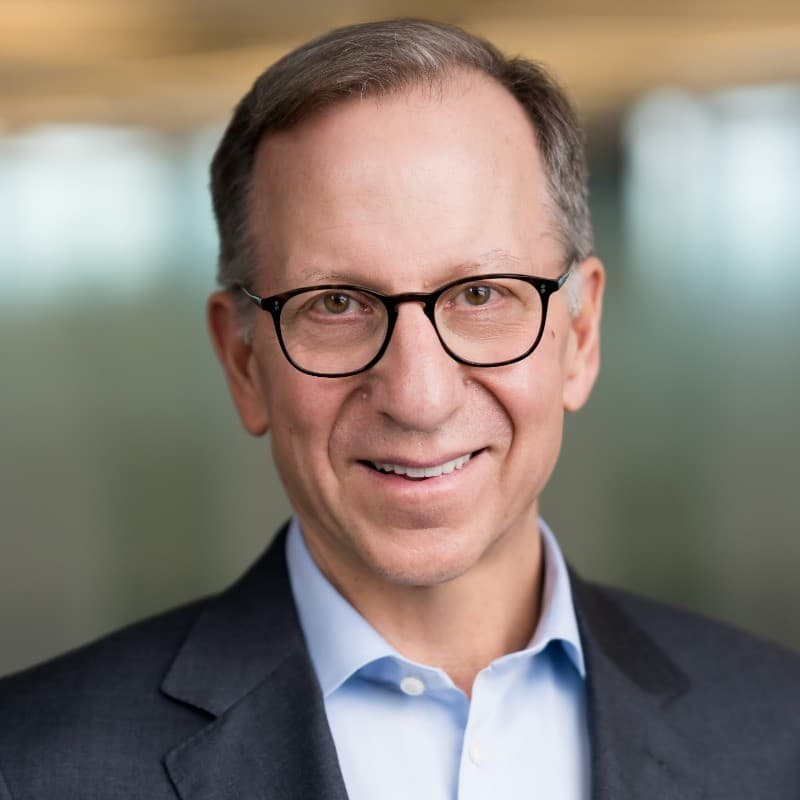
While much of the discussion focuses on trading venues and settlement, Dan brings the conversation back to the record of ownership and the responsibilities of a transfer agent, or registrar in the UK. He explains why issuers want a consistent register rather than separate versions of ownership across different systems.
We discuss the difference between shares issued by a company and tokens created by a third party to represent an interest in an underlying asset. Dan explains why voting rights, information rights and exposure to another organization deserve attention when assessing a tokenized product.
We also consider how existing market infrastructure connects to this work and why the technology itself cannot answer every question about rights and responsibilities.
The conversation then turns to AI in shareholder services. I ask Dan about accountability when software assists with proxy voting, and we discuss the importance of being able to understand how decisions were reached.
He also shares Equiniti's approach to employee training and its ambition to make interactions with its systems available through natural language by the end of 2027. This is a future target, rather than a description of capabilities already available across the business.
Dan also discusses the planned Bullish acquisition and how the companies intend to bring together issuer relationships and blockchain infrastructure.
We close with a practical example of a customer portal moving from a Monday discussion to a Thursday delivery, illustrating his view of how development is changing.
For leaders assessing tokenization, the conversation offers useful questions about ownership, controls and the experience shareholders should receive. Which questions would your organization need answered before considering tokenized shares?
Please share your thoughts with me.
Useful Links
Connect with Dan Kramer

[00:00:00] It's not your fault that your agentic AI systems are acting outside of compliance. There are just too many data sets to guardrail them all. But with Denodo, you can now organize your hundreds of data sources into one layer and govern your agents with a single approach. Try it now with Denodo by visiting denodo.com to learn more.
[00:00:28] What does owning a share actually mean when that share is represented by a token on a blockchain? Well, the technology can change how an asset moves. But investors, they still need to understand what it is they own, which rights come with it, and who maintains that ownership record.
[00:00:49] Now, for companies considering tokenization, those questions belong alongside discussions about settlement speed and new ways to reach investors. And to demystify this complex world, I've asked Dan Kramer, Chief Executive Officer of Equiniti, to join me on the show today and discuss the infrastructure behind that process.
[00:01:14] And we will talk about transfer agents, the difference between company-issued shares and third-party representations, and why issuers want a consistent register across different forms of ownership. And yes, this is a tech podcast. We're going to discuss AI-assisted proxy voting, responsibility from those decisions, employee training, and Equiniti's planned combination with Bullish.
[00:01:40] And for anyone trying to understand tokenization without getting lost in the terminology, I'm hoping that today's conversation will provide you with a very useful starting point. But enough for me. Let's bring Dan onto the podcast now. So thank you for joining me on the show today. Can you tell everyone listening a little about who you are and what you do? Hi, everyone. Neil, thanks for having me on the show today. I am Dan Kramer. I am the CEO of Equiniti.
[00:02:10] Equiniti is a transfer agent or registrar, as you would say, in the UK. And what we do is we hold the record of who owns what in the world's equity markets. We are the largest registrar in the UK. Incredibly cool what you're doing here. And I think when people hear about tokenized securities, they very often focus on exchanges or settlements.
[00:02:34] So why does the transfer agent, why does that still determine whether the ownership record is ultimately legally real? Neil, it's a great question. And it's fundamental to the way the markets work. What we as a registrar do is critical to the operations of a market in that everyone relies on the fact that, Neil, when you buy a share in a company, that somewhere, somehow, the record of that ownership is held.
[00:03:02] And we hold that record as the registrar. So even in a tokenized world, there has to be someone who has responsibility for saying the Neil owns X number of shares, be they tokenized or traditional, that you own those shares. And we've got a record of that, regardless of whether they're tokenized or not. And we're hearing that loud and clear from our issuers. So we hold the record for over 3,000 issuers globally.
[00:03:31] And what we hear from our issuers is that they don't want to have more than one register. They don't want to have a separate register for tokenized shares, for off-chain shares, for certificated shares, for digital shares. They want one register and they look to us to hold the register, regardless of how those shares are issued or held. And so much has changed over the last decade.
[00:03:56] And as you said there, fast forward to present day, nobody wants more than one register. But what is that dual rail ownership problem that was created when blockchain infrastructure arrived and traditional shareholder records and how they're both operating in parallel? Well, the blockchain registers are for what I would call for derivative securities, where they're not really securities issued by the company in question.
[00:04:23] So if a company issues securities, it will be held on our register. There are cases where things like X shares, which you might have heard of. What X shares really is someone has purchased shares in a company, put them into a trust, and then issued tokens on that trust. So those are neither issued by the company nor are they held on the official register.
[00:04:48] One of the things I try and do every day on this podcast is try and demystify areas that some people listening might be afraid to ask about. I find it incredibly intimidating, especially when there's complex technologies involved. So can you walk me through exactly what happens when a tokenized security settles on chain, but the official ownership database is not updated in the same way?
[00:05:10] Well, but that is just fundamentally the official ownership database is updated in the same way, right? So regardless of how the security settles. So if someone, if a company issues tokenized shares, which they're not allowed to do or able to do in the UK yet, but they can do in the US. So if a company issues tokenized shares, Neil C. Hughes purchases those shares, they will settle atomically.
[00:05:39] So against cash immediately on the chain and the record will also be immediately updated. So I guess I have to ask, why is the transfer agent infrastructure? Why does that remain rooted in older database architecture while other parts of capital markets have modernized with the rise of fintech that we've seen over the years? Yeah, I don't think that's quite fair.
[00:06:05] I mean, we have big, broad database platforms which support our business, but we have modernized. What our issuers really care about is how we ingest and distribute data on their behalf. And we do that now in what you might call more modern ways. So through portals, through apps, we do that communication in that way. So the underlying platform may not have changed and is being modernized through tokenization.
[00:06:34] And that's what we're here to talk about through blockchain technology. But what we focused on is what matters to our issuer clients. And in defense of the industry, we are talking about an entirely regulated industry. There's a lot of boxes to tick there. So what would genuine integration with DTC infrastructure, what does that look like? And which operational or indeed, again, regulatory obstacles still stand in the way or slow the process down?
[00:07:02] So at the moment, we are fully integrated with the DTC in the U.S. Our U.S. business is fully integrated with the DTC. We settle with the DTC every day. We reconcile with the DTC every day. We maintain registers on behalf of the DTC. The DTC maintains, holds securities in custody on our behalf.
[00:07:26] And from a tokenized perspective, the DTC recently announced that they are issuing digitally entitled tokens. So if a security is held in DTC and is issued by DTC, an investor can request that they get an entitled token of that security. I know that sounds complex, but that's the way the market works.
[00:07:52] And we are working with the DTC so that they will also issue those entitlements on securities actually issued by the issuer. So issuer-sponsored tokens will be part of the DTC model going forward. And something else I'd love to bring in here, I know we're talking about blockchain and fintech, etc. As AI enters the stage as well and begins influencing things like proxy voting, who should be accountable when an algorithm makes or even recommends a voting decision?
[00:08:22] Yeah, the investment manager or the individual holding the shares is ultimately responsible for the vote and for ensuring that the vote meets all regulatory requirements. AI, there are many good AI tools out there to help investment managers identify and then resolve conflicts. There are tools and capabilities for institutional investors to manage their proxy process.
[00:08:48] But ultimately, it's the beneficial owner of the security, be that an investment advisor or the investor themselves, who are accountable and responsible for their vote. And when it comes to things like audit trails, what's needed? So investors, issuers and regulators, and many of these people could be listening today, what kind of audit trail is required though so they can understand how an AI-assisted vote was actually reached?
[00:09:14] Yeah, that's a great question, you know, because these are processes and votes which have the potential for conflict. And it's critical that investment managers and issuers avoid the actuality or the appearance of conflict. So adding AI agents to the audit trail is important.
[00:09:35] And the auditors, the regulations now require that any AI agent advising someone on their vote needs to be included in that audit chain. And I always try and give people this thing valuable takeaways. And what kind of, I don't know, practical changes do you think many financial institutions should be making now? If they really are serious about tokenization without creating a second conflicting version of ownership,
[00:10:02] you probably have a lot of conversations like that and hear a lot of mistakes. But any advice there? Yeah, absolutely. I think that the critical thing is that the focus is on tokens that are issued by the company themselves, right? The risk is that there are derivative tokens out there which are not the true holding of a company's shares. And as a result, something could happen.
[00:10:30] It's credit risk of the fund issuing the tokens or they won't track the shares of the company or they don't have the same voting or information rights as the underlying security. The critical to the future of the tokenized market is that the focus is on tokens issued by the companies in question. And I was reading before you joined me today, an exciting year for you. I think, was it Bullish?
[00:10:58] It's going to acquire equinity there. Can you tell me more about that story? Because it was massive earlier this year. Yeah, that's big news for us here, believe me. So in early May of this year, we announced that Bullish US stock symbol BLSH will be acquiring us for 4.2 billion of Bullish equity. We're currently owned by private equity firm Cirrus. That deal is scheduled to close sometime later this year or early next year.
[00:11:27] We're just awaiting regulatory approvals, which we don't think will be an issue. The background to that is that, you know, we've spent the last 10 or 15 minutes talking about tokenization in the marketplace. It's clear that it's coming. When we realized this about a year ago, we knew that the transfer agents were going to be in a great position to better serve their issuers. And we were looking at ways that we could provide that service to our issuers. We looked at the usual things.
[00:11:57] Should we build a solution? Should we buy a solution? Should we buy a company that provides a solution? Should we partner with someone? And in those discussions, we met Bullish and Tom Farley, who's the CEO of Bullish, who's the former president of the New York Stock Exchange. He and I met and the partners at Cirrus met. And we realized that the best way to move forward together was to Bullish to actually acquire equity. And that's what we're moving forward with.
[00:12:26] It's really a great partnership. We've already started working together. If you think about what we just talked about, Neil, we bring to the table 3,000 issuer clients with decades of relationships. The average tenor of our customer relationship is 15 years. We've got some clients who we've had who've been working with us for more than 90 years. We bring those relationships, the trust that goes into building those relationships.
[00:12:52] And bullish brings to the table technology in the crypto space, the ability to understand smart contracts, tokenization. They bring that expertise. We bring the trusted long-term relationships. And together, we can help to define what the markets are going to look like. The critical thing to understand with this is, you know, you can tokenize assets, but you cannot tokenize trust. And that's what we've built up over these decades.
[00:13:21] And I'm not sure how much you're going to be able to tell me about this. But if we have anybody listening in the New York City area, I think it's on October the 27th at the New York Stock Exchange. Equinity and bullish, along with other market leaders, you're coming together at an exclusive and executive conference to help issuers leave the change, not react to it. So when we're talking about tokenization, the future of public markets, et cetera, for people listening that might want to head over to this or have seen an invite for it somewhere in their inbox, what can they expect?
[00:13:52] Yeah, sure. So we are hosting on the 27th of October at the New York Stock Exchange with Bullish, an event to talk about the future of markets, specifically around tokenization. And we've got some leaders of the marketplace joining us. Tom Farley, CEO of Bullish, will be speaking. I'll be speaking. And we'll have some other industry leaders there. If anyone is interested in attending, they can go to equinity.com or bullish.com, and the invitations are accessible there.
[00:14:19] Or they could email me directly at dan.kramer at equinity.com. And also a couple of weeks ago, I think it was the Equinity conference, 2026 at the Science Museum. Anything you can share there around the kind of conversations that people were having, what you were speaking about, et cetera? Yeah, it's very interesting, Neil. We, as you know, we are the largest registrar in the UK.
[00:14:45] Every year we have our annual conference, and it's really about, you know, just working with clients to talk about what their future looks like, what they've got planned for the year, and what, more importantly to them, what we have planned to deliver for the year. And we talk about what we're doing, what is changing in the marketplace, and it's, you know, it's pretty standard every year. Here's the requirements of the issuers. Here's what we're going to be delivering, whether it's new technology, new services.
[00:15:14] We run an internship for people coming into the secretariat space, the integration of share plans and secretary, the secretarial space, what's going on in investor relations. Pretty kind of standard stuff. But this year we added a couple of sessions on tokenization, and those were the sessions that got all the attention, right?
[00:15:36] Despite the fact that the regulations in the UK are still evolving, and we're very actively involved in that, most of the interest in the conference was around what's the future of tokenization? What does it mean to us as issuers? What does it mean to our employees and our shareholders as we issue tokenized securities?
[00:15:55] And I'm curious, when you're in the UK or whether in New York there or anywhere in the US, is there any trends in the kind of questions you're being asked at these conferences and on the show floor, etc.? Is everybody talking about the same thing or the different attitudes on each side of the pond? What are you seeing there? No, it's interesting. When we first signed this transaction, there was definitely much more interest in the US.
[00:16:19] There was discussion at that point around the Clarity Act passing, which eventually didn't pass, but the SEC has come forward with some changes to regulation, the innovation exemption, to move that forward. So there was much more talk in the market in the US about tokenization. But over the course of the summer, there's been significant discussion in the UK on this topic. The Bank of England and the FCA put out a call for comment.
[00:16:50] The Treasury Department have appointed a digital markets champion who's looking at tokenization. The report on dematerialization written by Mark Austin came out in July of this summer and talked about tokenization and the equity markets going forward. So there's been a lot of momentum in the UK. And I would say, you know, they're both in both countries.
[00:17:15] Issuers are extremely interested in the advantages that tokenization has. Following the space, I was having a little Google about everything you're talking about, everything you're doing at the moment. I was also reading a big talking point online around the SEC innovation exemption. Anything you can share about that and what that means? Yeah, the innovation exemption came out after the Clarity Act did not pass the US Senate.
[00:17:42] So the SEC came out with the innovation exemption to clarify regulations around tokenization of shares. And it's a five-year, they provide five-year exemptive relief for companies to issue issuer-sponsored tokens.
[00:17:57] And if there are issuers of what I called earlier derivative tokens, where a company buys shares in a company and they issue representations of that on-chain, in those cases, they must give the issuers the opportunity to opt out. So it comes back to what I talked about earlier, the importance and the preeminence of issuer-sponsored tokens in the marketplace.
[00:18:24] And when I was Googling you, I was also reading how you've said that, yes, AI is already making our organizations better, helping people work more efficiently, solving problems faster and focusing on higher value work. We see this all the time and it is so true. But what I found refreshing about what you were saying is looking further ahead, that opportunity to ensure that everyone has the skills and the confidence to take full advantage of those capabilities. This is something that often gets lost in the conversation, isn't it? Yeah, for sure.
[00:18:53] I think that the, you know, I tell our teams that AI, leveraging AI and LLMs and or LLMs is necessary for your career going forward, right? It will just make you more productive. It will allow you to deliver better and it will make your role more enjoyable if you use AI to assist the work that you're doing. We, we've put out to our entire company training programs in AI to get our people up to speed.
[00:19:23] So that they're, you know, there's no one better to tell us how AI can better serve our customers than the people who are doing it every day. And what we've said is that by the end of 27, which is now only 14 months away, we, we want to have all communication both internally and externally with our systems to be in natural language, to be like chat. So you don't need to go into a portal to change information about your account, or you don't need to go to a website somewhere to get information.
[00:19:53] Just like you would, you would do in one of the chat prompts, you could type in a request to do something and it would just get done on your behalf. We will have agents available for our customers and for our people. And I think a big message that people should be taking away from our conversation today is tokenization isn't a future story. It's a boardroom conversation that is happening right now.
[00:20:17] So as capital markets evolve, digital ownership changes, how securities are hold, managed and transferred and issues. Everyone does a real opportunity to shape what comes next. Any advice to people listening around that? Yeah, I think the opportunity is to learn more. The opportunity is that the, the markets are evolving extremely quickly, right? Boardroom, every single board is now discussing, should they be issuing tokenized shares?
[00:20:43] They're looking at as, as they're looking at the opportunity of, you know, expanding their investor base, providing better service to their investors. If you think through, you talked earlier about proxy voting, but if you have the ability as a company to pay a dividend in a stable coin, you get through a lot of the issues that people have for non-US holders of securities to get their dividends paid.
[00:21:07] Or when you're doing a proxy process, if you do that on chain, the voting can be tabulated much quicker and much more accurately. There's, there's opportunities beyond just the tokenization of shares. And I think it's fair to say, we've both seen a great deal of technological change throughout our career, but possibly nothing like the pace we've seen over the last three years, in particular, the last 12 months. I was at tech conferences last year. There was a few hints of agentic AI and agents.
[00:21:36] Now this year, it's all anybody's talking about. I'm curious, when you look back at your career and you look at the opportunities now and the pace of change, what excites you about this space right now? What makes you want to jump out of bed in the morning? Yeah, I think it's, as you said it well, the pace of change, right? The new technologies are allowing us to have an idea and within just a few hours implement it and deliver it on behalf of our clients.
[00:22:01] We worked with one of our customers in the UK on a new portal for share plans for their employees. We had a meeting on a Monday, sketched out, had a conversation about what we need this portal to do. And on Thursday, we delivered it. Historically, that would have taken months. Yeah, absolutely. That's the exciting part. The ability to solve problems very quickly and to continually iterate. It really is.
[00:22:30] And I think that is a powerful moment to end on. But for anybody listening that would like to find out more information about anything that we talked about today, maybe even rub shoulders with you guys at that event on the 27th, I think we mentioned. Where would you like me to point everyone listening? Yeah, everyone could go to equinity.com, which is our website, or they could email me directly, as I said, at dan.kramer at equinity.com. Perfect.
[00:22:55] I will add links to everything you mentioned, along with a few other things that I will uncover as well. So go over to techtalksnetwork.com. There'll be a blog post associated with this episode. I include links there. And I encourage you, if you are listening wherever you are in the world, please carry on this conversation. I think it's such an exciting space. But thank you for bringing it all to life today and doing so in a language that everyone can understand. Really appreciate your time. Thank you very much, Neil.
[00:23:22] I think Dan's comments bring the conversation right back to the questions that any investor or issuer should be able to ask. What does that token represent? Which rights travel with it? And who is responsible for keeping that ownership record accurate? And the opportunities he's described today, I think, include different ways to serve shareholders and connect market infrastructure.
[00:23:47] But those possibilities also require work on controls, accountability, and the systems that support those corporate actions. And I really appreciated hearing about employee training as part of equinity's AI plans. People doing the work are well-placed to identify where these new tools can help. And while responsibility for decisions also needs to remain clear. So a massive thank you to Dan Kramer for joining me today.
[00:24:16] And remember, you can find Equinity Bullish and the resources discussed in the episode notes over at techtalksnetwork.com. Including the event information that we discussed today too. But over to you. What would your organisation need to understand before even considering tokenised shares? Love to hear your thoughts on this. And let's continue this conversation with either myself or Dan. But that's it for today.
[00:24:46] We've taken up far too much of your time. I'll be back again bright and early tomorrow with another guest and another topic to demystify. But as always, thanks for listening. And I'll speak with you again then. Bye for now.