

What does customer experience really mean when every company claims to put the customer first?
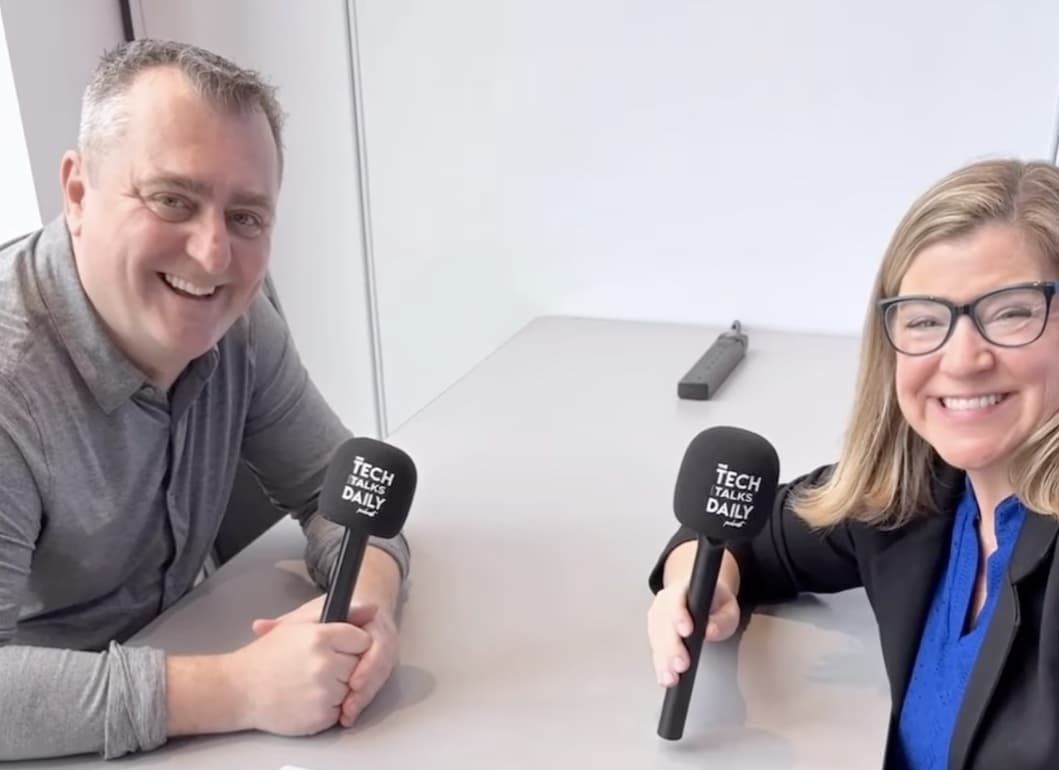
In this episode, I sat down with Jeannie Walters, founder of Experience Investigators, to unpack why so many organizations talk about customer experience yet struggle to turn it into something that drives real business outcomes. With more than two decades of hands-on work across industries, Jeannie brings a perspective that cuts through the noise and focuses on what actually works inside complex organizations.
Our conversation took place at the Qualtrics X4 Summit, where one theme kept resurfacing. While AI dominated headlines, there was a noticeable shift back toward strategy, discipline, and accountability.
Jeannie has been making that case for years. As she explained, customer experience cannot sit on the sidelines as a reporting function or a collection of metrics. It has to become a daily business discipline, one that shapes decisions across leadership, operations, and culture.
We explored the thinking behind her new book, Experience Is Everything, and the patterns she has seen repeated across organizations. Leaders invest in tools, gather feedback, and build dashboards, yet still struggle to connect those efforts to outcomes like retention, revenue, and long-term trust. Jeannie argues that the missing piece is often clarity.
What does customer-centric actually mean for your organization? What are you trying to achieve, and how will you measure success in a way that matters to the business? Without those answers, even the best technology will fall short.
There were also some honest reflections on AI. While it is accelerating everything, it also raises the stakes. Customers are becoming more aware of how their data is used, and trust is becoming harder to earn and easier to lose. That creates both an opportunity and a risk.
Organizations that treat customer experience as a strategic priority can use AI to strengthen relationships, while those that treat it as a cost center may simply scale poor experiences faster.
What stood out most in this conversation was the shift from theory to action. From redefining teams that were stuck reporting on metrics to empowering them to lead business change, Jeannie shared practical examples of how mindset, strategy, and execution come together. It is a reminder that customer experience is not owned by one team. It is something that either shows up in every interaction or not at all.
So as AI continues to reshape how businesses operate, are we using it to deepen trust and deliver better experiences, or are we simply amplifying what already exists? And where does customer experience truly sit inside your organization today?
About my guest:
Jeannie Walters, CCXP, CSP, is a certified customer experience expert, author, CEO, and international keynote speaker who does more than cite examples, she shows you how to implement strategies for real results.
As the Founder of Experience Investigators, she brings more than 20 years of impact across industries—from healthcare and regulated financial services to higher education, software, and hospitality. She has led transformative efforts for brands like JPMorgan Chase, SAP, BASF, PG&E, Orangetheory Fitness, Comcast, and more.
Her upcoming book, Experience Is Everything, reveals how leaders can boost performance and revenue by making customer experience their greatest competitive advantage.
Recognized as a top industry voice, Jeannie has reached more than half a million learners through her LinkedIn Learning courses and created CXI Membership™ to provide practical, guided CX support for busy leaders. Her insights, featured in Forbes, NPR, The Chicago Tribune, and The Wall Street Journal, reflect her mission to help organizations make every moment count.
Useful Links
Experience Investigators (Jeannie's company)
[00:00:04] - [Speaker 0]
A big warm welcome back to the Tech Talks Daily Podcast. I've got a great guest lined up for you today, someone that I've seen at tech conferences for, what, nearly five years now. And she's someone that has also spent more than two decades helping organizations rethink how they show up for their customers, not as just a department or just another metric, but as a daily discipline. One that shapes everything that they do. Her name's Jeanie Walters.
[00:00:36] - [Speaker 0]
She's the founder of Experience Investigators. She's a keynote speaker and one of the most respected voices in customer experience today. Because her work spans industries from financial services and health care to software and hospitality, working with organizations from JPMorgan Chase, SAP, and Comcast, and helping them turn customer experiences into something that actually drives very real tangible results, a measurable difference. And what I love about her approach is that she doesn't just sit at the surface level. She focuses on how you actually implement change inside an organization and how you align teams and how you turn feedback into action, and how you make experience something that everybody owns.
[00:01:31] - [Speaker 0]
And I think very often, the word experience has almost been thought of as a soft metric of sorts. But today, we're gonna dispel a few myths around that and talk about that real value that can be added. And it's also quite a timely conversation. I bumped into her at Qualtrics x four summit in Seattle, and she was telling me all about her new book, Experience Is Everything. And that book offers a practical roadmap for leaders who want to connect customer experience directly to business performance, whether that is revenue growth, retention, or operational efficiency.
[00:02:08] - [Speaker 0]
And I think in a world where everybody's talking about AI and agentic AI, so many different technologies, one of the standout themes at the x four summit was about taking action and getting back to strategy and vision, business performance. Yeah. We're talking about ROI here of those expensive tech projects. This is something that my guest has been talking about for years. So if you've ever felt like customer experience is talked about a lot but rarely executed well, well, my conversation today will hopefully give you a much clearer sense of what it looks like when it's done right.
[00:02:47] - [Speaker 0]
But enough scene setting for me. Let me introduce you to my guest right now. So can you tell everyone listening a little about who you are and what you do?
[00:02:58] - [Speaker 1]
I'm Jeanie Walters. I'm the CEO and founder of Experience Investigators. And the mission of me and my company is to create fewer ruined days for customers. And we do that through consulting, through strategic advising. I do a lot of, workshops and training, and now I've got a new book, I can say I'm an author too.
[00:03:16] - [Speaker 1]
So Experiences Everything is coming out as well.
[00:03:18] - [Speaker 0]
Well, thank you for joining me on the show floor here at the x four summit in Seattle. We've met a few times over the years, but tell me, what's brought you here this year?
[00:03:27] - [Speaker 1]
I think, like, every year, I'm always curious about how our customer experience leaders using the technology, the data, things like that, to further their business strategy. And so that's really what my radar is up for because that's where that's our sweet spot. We love being strategic about how can we make customer experience a winning business strategy. And I think sometimes we hear a lot about that. Some years, we don't.
[00:03:54] - [Speaker 1]
Right? So this year, I think we're hearing more about it, which is exciting.
[00:03:57] - [Speaker 0]
It really is. And the world has changed so much in four, five years that me and you have been coming here. I mean, this year, it's AI, not just AI. It's agentic AI. What what's your takeaway from that and how things are evolving over the last few years?
[00:04:09] - [Speaker 1]
I mean, there's no question that AI has accelerated everything. And I think one of the things that now we're starting to see is that it's not just a piece of the puzzle. It's not just a tool that you can kind of experiment with off to the side. You really do have to integrate it into what are you trying to do with your customers, how are you getting to know them, what are you trying to do with your organization. And I think that I I kind of laugh sometimes because people are like, I don't know about this AI thing.
[00:04:37] - [Speaker 1]
I'm like, well, too bad. It's here. Right? Yeah. It's just here.
[00:04:40] - [Speaker 0]
So that's There has been a lot of talk around ROI on AI projects, but as you said, it is not going anyway. What's your key takeaways from the event? What are you thinking about? What everything you've seen and heard here?
[00:04:52] - [Speaker 1]
I mean, I think the big takeaway is that we are in an age where because it is here, because data is here, and, the way we use data has to be integrated into more of building trust with customers. I think we had a bigger conversation, like, in the last few years about how do you gather the data, and where do you put it, and how do you build the large language model, and things like that. And in the last couple of months, really, customers have gotten a lot savvier about that, and they're kinda, like, raising their hand going, wait a minute. Like, tell me how you're using my data, and how are you protecting my privacy? And so I believe that now we're kinda moving into an era where it is all about trust building.
[00:05:33] - [Speaker 1]
And the ones who get it wrong, like, you can break trust really quickly, and it takes a long time to build it. And so that's why having that strategic vision for what you wanna do is so so important.
[00:05:47] - [Speaker 0]
And I love what you said there, because it is not around the technology. It's that strategic vision. And everything that we've heard and seen here, one of the reasons I wanted to bring you on to talk with me is because you've been talking about this for many, many years now, haven't you? And I know you've you're in the process of writing a book about that. Tell me about the book and the story behind the book.
[00:06:04] - [Speaker 1]
Yeah. No. I would love to. I think I have been talking about this for a long time, and part of it is because, you know, we work with clients in a couple different capacities, and I kept seeing the same thing over and over. And these leaders are smart people.
[00:06:17] - [Speaker 1]
They're putting in a lot of effort. It's not a lack of trying. It's simply that they didn't really have the right goals a lot of times. So what we started doing was really stepping back and saying, okay. First of all, what do you mean when you say let's be customer centric?
[00:06:32] - [Speaker 1]
What do you mean when you say, let's deliver an exceptional customer experience? We have to define that and get explicit about what that means here, and that's really aligning the mindset. And then you move into, okay. Great. What is that going to do for the organization?
[00:06:47] - [Speaker 1]
Because if you just ask customers what they want, they'd be like free products. You know? And so we have to make sure that we're balancing that with what are we trying to do for the organizational results, and what are the right levers to pull in customer experience. There was a great example here at x four. I thought the CFO from TruGreen did a great job really design talking about the fact that they had to zero in on retention as the outcome they were really looking for, and then they had to figure out what drives retention.
[00:07:15] - [Speaker 1]
That's exactly what I'm talking about. We have to put those things together into a real plan, and then we have to be disciplined about this. We have to show up like real business leaders, not just people saying, excuse me, can I tell you about what customers are saying? And that's really what the book is about. It's about aligning the mindset, building a strategy, and then having the discipline to make the right decisions on a daily basis to deliver on those things.
[00:07:39] - [Speaker 0]
And the ROI question, I mean, you mentioned TruGreen. Did I think the retention, it was a $10,000,000 that
[00:07:45] - [Speaker 1]
Yeah. And he made an excellent point because when we talk to our clients, I mean, some some of these businesses, they're huge. Right? So if you talk about a 1% bump in retention, that can mean millions of dollars. What he talked about, which I loved, was the compounding factor of that.
[00:08:03] - [Speaker 1]
So, yes, that means maybe a few million the first year. But if you continue that retention rate over five years, that could mean 10,000,000, 20,000,000. It just keeps going. And so I think that's something that as an industry, we just haven't talked enough about. We haven't really made the case that this is more than just listening and responding to individual issues.
[00:08:25] - [Speaker 1]
This is about a bigger strategy, and if we can align everybody around it, amazing things happen.
[00:08:32] - [Speaker 0]
They really do. And I think over the last two to three years, everybody's been distracted by the shiny AI thing, AI everything. And I do think we're seeing now this return to strategy and vision and all the old traditional methods of business. Is this what you're seeing as well? Are you seeing that appetite return?
[00:08:49] - [Speaker 1]
I I mean, I hope so. I think that part of what has happened is that we are starting to see leaders who are really starting to kind of care about the future in a different way. And part of that is because AI is amplifying everything, and you simply can't stand still and say, well, it's always worked this way. Yeah. And so I think in the past, it was easy for some organizations and leaders to get a little complacent, and nobody can afford to do that anymore.
[00:09:20] - [Speaker 1]
They will be run over in an instant.
[00:09:23] - [Speaker 0]
Yeah. Yeah. Completely agree. So tell tell me about the book. What's the book called, first of all?
[00:09:28] - [Speaker 0]
And and what inspired you to write it, and how hard was it getting all of this out of your head, all those hundreds and thousands of conversations and strategies onto paper?
[00:09:37] - [Speaker 1]
Well, it's an interesting question, Neil, because I have been writing a blog since 2009 pretty consistently, like weekly, at least. And so people would always say, well, all you need to do is to write a book is just write every day. And I'd be like, well, I'm doing that. But, it was hard to kind of get it to the point where, first of all, I was confident it was going to help people. That was really important to me.
[00:10:02] - [Speaker 1]
And I kinda joke. I should have written this book twenty years ago, but I couldn't have. Right? Because I didn't have all this experience. But the book is called Experience Is Everything, Making Every Moment Count in the Age of Customer Expectations.
[00:10:15] - [Speaker 1]
And it really is kind of a guidebook for leaders who want to approach this differently, who want to start with that strategic vision. So we outline in the book, how do you align that mindset? We use something called a customer experience mission statement, and there are templates in the book and things like that. One of my early readers said, I love the Mad Libs because she you can literally just kind of fill it out, play with it, figure out what works for you. Then it's about the strategy.
[00:10:41] - [Speaker 1]
How do you build that? And so we developed something called the CX success blueprint, And that's really flipping the script a little. So instead of starting with, like, what are the customer insights? We start with what are your organizational goals? And then what do your leaders care about?
[00:10:56] - [Speaker 1]
Yeah. Because you do have to make sure you're pleasing your CFO and your CMO and everybody in between. So and then you break down into what can we actually do about that, and how will we measure success. And you have to be realistic because I've seen a lot of organizational goals that are very lofty.
[00:11:16] - [Speaker 0]
And do you tackle technology in there at all, or do you ask readers to let's just park the technology and focus on the strategy and vision, or or do you bring it in at any point? Mhmm.
[00:11:25] - [Speaker 1]
I I mean, right now, we have to bring it in. Right? It has to be part of it. But the approach that we're taking, I always think of this as kind of sitting on top of the technology decisions. So if you have a clear strategy and understand the mindset, then it helps you make better decisions around the technology that you use because, really, it's it's a tool.
[00:11:46] - [Speaker 1]
It's part of the toolkit to build this customer experience that we want and to build, the organizational structure so that we can get those results that we want to. And so AI, I think, is in this incredible moment right now. I was kind of hesitant because when I when I write a blog, I can always update it. I can always, like, say next week, oh, yeah. Now this is happening.
[00:12:07] - [Speaker 1]
But when you write a book and it's printed, so I touch on it as part of the strategy, really, because I want people to think about what are we really trying to do first, and then think about what are the things we could tap into to help us do that, and technology, of course, is a big part of that. In the last part of the book, I talk about the business discipline we need. And I talk about the different ways we we have these tools in our toolkit. And it's everything from customer journey mapping to service blueprinting to these techniques that we've learned in the customer experience world to really deliver on that strategy. And one of the things I love about service blueprinting is you have to think about, okay, what are the people, processes, technology, and tools that will make this happen, that will make that vision happen?
[00:12:55] - [Speaker 1]
And if you skip that part, you can have a big dream. But then, you know, your your CTO says, well, that's all great, but we still have this legacy system that we're gonna have for twenty more years, so deal with it.
[00:13:08] - [Speaker 0]
And we've all known people like that that have been on that exact journey. I'm curious from all the work that you've done, people that maybe followed your blueprint before the book even came out. You have to name many names. Was there any examples of kind of a before and after in the journey that you took people on?
[00:13:23] - [Speaker 1]
I think a great example is both one that shows kind of the the way that the mindset helps center people, and then how to move that into strategy. There was a leader who came to me from a corporate environment, and she asked for coaching, which I do with executives. I started with her, and her title was literally director of the NPS team. And I was like, is that all you guys do? Like, all and essentially, it was.
[00:13:50] - [Speaker 1]
Like, they had spent two to three years implementing the Net Promoter Score system, and that's what they were tasked with doing. So one of the things I noticed right away was that she was getting very frustrated all the time because she would show these beautiful charts to the executive team, and they would kind of say, okay. So what? Because it's hard to change those scores, especially at a large organization like that. And so one of the first things we did was say, okay.
[00:14:16] - [Speaker 1]
Let's rename the team. Right? Like and then we developed a customer experience mission statement. And that really empowered the team and their partners throughout the organization to think differently about what they were doing. They were not just collecting information.
[00:14:34] - [Speaker 1]
They were leading with this. And then we broke that down into, okay, there was a, partner program that was very important to the business, and they really didn't see that as part of the customer experience originally. And I was kind of like, well, if we build a strategy around that, that's where you get more share of wallet from those, customer partners, and you can also see where this would go in a couple of years. We need to start focusing on this, and that means we have to make some trade offs. Yeah.
[00:15:05] - [Speaker 1]
Right? We can't always focus on everything. And it made a dramatic difference in both the way that they were viewed in the organization and the impact they had because they were able to say, we're investing here because we're seeing that this could lead to a lot of ROI.
[00:15:22] - [Speaker 0]
And I'm I'm curious. What kind of feedback have you had from, people that that know you're right in this book? You've probably given it to a few people to read It's probably too early to ask, but what kind of feedback have you had so far?
[00:15:32] - [Speaker 1]
Well, I'm so glad you asked. Because actually, the keynote that I delivered here on Tuesday was about this too. And I had a few people come up to me, and it's very similar, this feedback, because they say, oh my gosh. You understand the pain that we're in. Like, they because a lot of times, customer experience leaders are kind of told, just stay in your lane.
[00:15:53] - [Speaker 1]
Right? Like, and they're they're given a little pat on the head and and told to go off and show me the report next month. And so what I'm really using this book to do is kind of be a rallying cry to show up differently as a leader. And one of the best things I heard from one of my early readers, she said, you know, you're spot on about the need to prioritize, because that causes so much angst and pain for the leaders. Because otherwise, we are reacting to everything, every complaint, every issue, every number dipping, and yet we are not really the ones responsible or accountable for the changes that have to be made.
[00:16:31] - [Speaker 1]
And so it's just a recipe to be the messenger all the time. And I really believe we have a moment right now as customer experience leaders. We can stand up and say, this is what we're doing. This is the strategic vision I have. This is why it's gonna help everybody and why it's a win win.
[00:16:47] - [Speaker 1]
And here's what we're doing, and here's what we're not. And that just frees people to focus on the right things, and that's what I get most excited about.
[00:16:55] - [Speaker 0]
And as you said, Dave, you've delivered a keynote here. You've been speaking with so many different people, back to back interviews as well. What are you gonna be thinking about on the way home? What are you gonna be reflecting about after everything you've seen and heard?
[00:17:06] - [Speaker 1]
Yeah. I I mean, I think that the industry overall has been having similar conversations for a while. And what my hope is, based on what I've seen here at X4 and the conversations I've had, is that we're finally breaking through. We're finally getting beyond just getting excited about feedback, and we're getting excited about really delivering for our customers in ways that they can't even anticipate, and using this amazing technology and AI for good. Right?
[00:17:38] - [Speaker 1]
And all these things. Because one of the things we have to be aware of is that if AI can scale and automate and amplify like it can, if we are treating customer experience like a cost center, like something to control, that's what it will amplify. But if we treat it like a winning business strategy, that's what all of this will amplify, and I get really excited about that future.
[00:18:00] - [Speaker 0]
And I think that is a powerful moment to end on. But before I do let you go for when is the book out? Where can people find it? Where can they find out more information about you? Where would you like me to point everyone?
[00:18:08] - [Speaker 1]
Sure. Yeah. I mean, I'm I'm on LinkedIn. That's a good place to start. My business is experience investigators, so you can find a lot of resources there.
[00:18:18] - [Speaker 1]
The book isexperienceiseverythingbook.com. And if you actually purchase and order the book before April 14, which is the launch day, we have some really fun preorder bonuses. We're doing a special book club where I'm leading that live with, readers for three weeks. So I'm literally going to walk you through the three different sections of the book so you can activate it right away.
[00:18:40] - [Speaker 0]
Awesome. Well, I'll have links to everything you mentioned there. I would encourage anyone listening to get involved and become a part of that journey. And I think there's so much noise around all things AI, but trying to silence yourself from that noise and getting back to strategy and vision, that's where we need to go. So thank you so much for sharing today.
[00:18:57] - [Speaker 1]
Thank you, Neil.
[00:18:58] - [Speaker 0]
One of the things I love most about this conversation is just how practical she made all of this feel. Yep. There's a lot of talk in business about customer experiences, but it often stays at the level of ideas and ambition. But what my guest brought today was put it in a language that turns into something incredibly tangible. Whether it be a mindset, a strategy, or a set of actions that can actually be applied inside very real organizations with real constraints.
[00:19:30] - [Speaker 0]
And I think her work through experience investigators and the thinking behind her book, Experiences Everything, I think these things really focus on helping leaders connect the dots between what customers feel and what businesses actually achieve. And it's that connection where loyalty, trust, and long term value are actually built. So if you're listening to this conversation anywhere in the world, if you're looking for a more structured way to approach the customer experience in a AI and digital world, or if you're just trying to move beyond surveys and into something that drives real change, drives action, I think it's definitely a conversation that is worth revisiting. So I'll be including links to her work, her book, her LinkedIn profile. You'll find all those in the show notes.
[00:20:21] - [Speaker 0]
And as always, I'd love to hear your thoughts. Is customer experience something that's truly embodied inside your organization, or is it still something that sits on the sidelines? Please pop over to techtalksnetwork.com. There are over 4,000 interviews there. You can leave me an audio message, send me a DM, and remember, go to the blog post associated with this podcast episode.
[00:20:47] - [Speaker 0]
There'll be a section called useful links, a transcript of the conversation, and anything else you need, just let me know. But that's it for today, so thank you so much for joining me. I'll be back again tomorrow with another guest. And hopefully, I'll speak with you all again then. Bye for now.