
What happens when AI moves beyond experimentation and becomes part of the creative process itself?
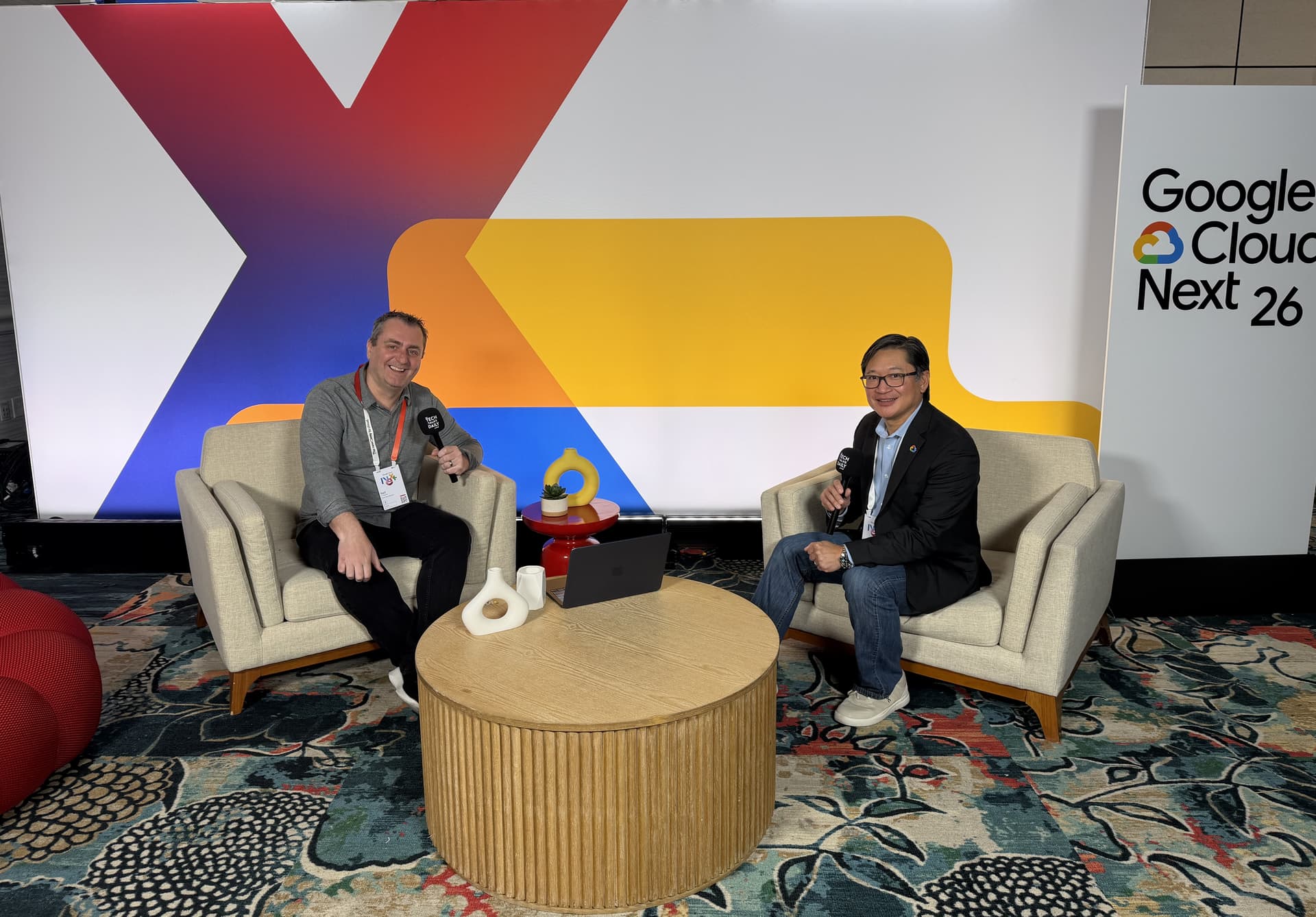
At Google Cloud Next in Las Vegas, I sat down with Albert Lai to explore how AI is transforming the media and entertainment industry from content creation and production to personalization, localization, and audience engagement.
Albert works across Google Cloud, Google, and the wider Alphabet ecosystem to help media organizations rethink how they create and distribute content using cloud infrastructure, multimodal AI, and agentic workflows. And one thing became very clear in this conversation, the industry has moved beyond asking "What if?" and is now firmly focused on production-scale execution and measurable business outcomes.

We discuss why media companies are fighting a growing battle for audience attention, and how AI is helping them create content more efficiently while also unlocking the value hidden inside vast archives of existing material. Albert explains why the conversation has shifted from simply producing more content to maximizing what already exists, and how AI is helping organizations rediscover and reimagine decades of footage, audio, and intellectual property.
The conversation also explores one of the biggest themes emerging at both Google Cloud Next and NAB Show, the rise of agentic AI workflows. Albert shares how media companies are using orchestrated AI systems to streamline complex production processes, support editors and creators inside existing workflows, and improve everything from localization and dubbing to monetization and personalization.
We also dive into real-world examples, including how companies like Avid Technology are integrating Google AI directly into production environments, and how Indonesian media company MTech used Google Cloud AI tools to create and distribute a 26-episode animated series with measurable improvements in production speed, cost efficiency, and audience engagement.
This is not a conversation about replacing creativity. It is about augmenting it.
If you work in media, content, streaming, sports, publishing, or simply want to understand how AI is changing storytelling itself, this episode is packed with practical insight and real-world examples.
How will AI change the stories we create, and the way audiences experience them?
Useful Links
Please check the partners of the Tech Tech Talks Network
Learn more about the NordLayer Browser
[00:00:00] - [Speaker 0]
So a special thank you to Denodo for supporting the Tech Talks Network and helping us keep these conversations going because moving beyond AI pilots all starts with connecting your models to trusted enterprise data. So if you're ready to move beyond AI pilots, Denodo can help you connect your AI models to trusted enterprise data in real time. So you can scale faster and reduce risk. So if you're interested in turning AI into business value, simply visit denodo.com. Reporting live from Google Cloud Next in Las Vegas, where one of the strongest conversations happening this week is not simply about AI, but about what happens when AI moves from experimentation into real production.
[00:00:58] - [Speaker 0]
Now for the media and entertainment industry, this shift matters more than anywhere else because it is an industry fighting for attention every single day, trying to create better content, reach audiences faster, control costs, and make sure great storytelling still cuts through in an increasingly crowded world. Now for the last year, much of the conversation around AI in media has been stuck in the what if phase. What if AI could help editors work faster? What if it could improve content discovery? What if it could help broadcasters rethink production workflows?
[00:01:38] - [Speaker 0]
But what feels different this year is that we're moving past theory and into execution at scale. Because joining me today is Albert Lyne, the global director for telco media and technology at Google. And Albert works across Google Cloud, Google, and the wider Alphabet ecosystem, and helping media organizations transform their business and create new audience experiences using cloud, AI, and machine learning. And with previous leadership roles at Hallmark Channel, Brightcove, and Deep Experience across streaming and OTT platforms, he understands both the technical and the creative side of this transformation. So today, we'll talk about the battle for audience attention, the shift from producing more content to maximizing what already exists, and why media companies are focused on what Albert calls a return on AI rather than just a simple return on investment.
[00:02:39] - [Speaker 0]
And we'll also get into agentic AI, creative collaboration, content archives, localization, and how AI is helping organizations rethink everything from editing workflows to monetization and personalization. So you can expect a conversation full of practical insights, especially if you're working in media, content, streaming, publishing, or just trying to understand where creative work is heading next. A quick thank you to NordLayer for supporting the podcast and helping me make these daily conversations possible. And if you are listening and you're responsible for security or IT, you will know the reality. The reality that most of your risk now sits inside SaaS apps and browser activity.
[00:03:28] - [Speaker 0]
That gap is exactly what NordLayer is addressing with its new business browser. So instead of bolting security on from the outside, it builds it directly into the browser itself. This means you can control access, monitor activity, enforce policies, and reduce shadow IT all from one single place. And most importantly, it does it without adding deployment headaches or complex onboarding. You get things like browser based data loss prevention, SaaS access control, and zero trust browsing, but delivered in a way that your team can actually use.
[00:04:07] - [Speaker 0]
So if you've been trying to simplify your stack while improving visibility, please check it out at nordlayer.com/browser. But enough from me. Let me introduce you to Albert now. So thank you for joining me today on the podcast. Can you tell everyone listening a little about who you are and what you do?
[00:04:28] - [Speaker 0]
My name
[00:04:29] - [Speaker 1]
is Albert Lai. I'm the global director for telco media entertainment and technology at Google Cloud. I'm part of our global strategic industries team. We work across Google Cloud, across Google, and sometimes across broader Alphabet. We're helping to define the media entertainment go to market strategy, that incorporates all parts of Google Cloud.
[00:04:54] - [Speaker 1]
How do we bring the best of Google Cloud and Google and Alphabet to our media and entertainment customers?
[00:05:02] - [Speaker 0]
And here we are recording this at Google Cloud next. Anything excited you so far? You must be having so many different conversations, seeing so many keynotes, and there's a lot of things you're a
[00:05:11] - [Speaker 1]
part of as well. What what is exciting you at the moment? So a little bit of context on that question because it is day two Yep. Of Google Cloud Next twenty twenty six. And our team, we've already gone through days zero, one, two, and three of NAB.
[00:05:31] - [Speaker 1]
So my answer is going to, you know, cover kind of both of these. So what is most exciting? I let me, take this maybe at a at a higher level, and then I'll I'll touch on a on a few, hopefully, diamonds. I think, overall, one of the most exciting things is that if we look at the media and entertainment industry as a whole, the challenges and the trends kind of remain, right? It still is a battle of attention, really fighting for the consumer's attention across many different sources of media and entertainment.
[00:06:04] - [Speaker 1]
How are how are these media companies produce continuing to produce great content, in a way that, is cost effective? How are they engaging audiences, whether it's digital, whether it's broadcast, whether it's in venue. But if we look back in 2025, the use of AI was still in this experimental stage across the entire media supply chain from creation all the way to distribution and personalization. In 2026, what we are truly seeing is the scaled use of AI in production across that entire media supply chain. And it's not just about the technology outcomes, it's also about those business outcomes.
[00:06:48] - [Speaker 1]
I heard somebody mentioned, they said, Look, it's not really about ROI anymore, not, you know, return on investment. They said it's RO AI. And I said, What's that? They said, Return on AI. And that's a shift in how people are thinking about AI because it truly is a capability that can be layered, integrated, and augmented across the entire enterprise and media supply chain.
[00:07:16] - [Speaker 1]
The second exciting area is something that was announced at Google Cloud Next, which is this notion of agentic AI. In the past, we thought about AI and AI agents as these discrete actions that happen throughout, you know, a technology architecture or workflow. With AgenTeq AI, it really is about how do you build, orchestrate, govern and optimize these AI agents, so that you can solve and streamline these very complex multi step workflows with clear intent of the user. And so, when you take that notion of these, you know, agentic AI, those capabilities, you can then think about all the very interesting and impactful use cases across media. Again, whether you're a broadcaster, whether you're a studio or a news publisher, whether you work in sports media, whether you're a streamer, there are great areas of, impact across all of those.
[00:08:26] - [Speaker 1]
The last thing, that I'm excited about is the fact that we were able to showcase, solutions and customer stories of how these media companies are using AI today to help change the creation of content. One of these stories was a technology company, Avid. They have solutions and products that have been helping, you know, media companies for years create content for television, for for film. They've now integrated Google AI into these products so that it can help the editors find, understand, and create new content, again, as part of their existing creative workflow. We had someone call this AI in the loop, meaning you have these existing human creative based workflows, and then you're deliberately deciding where can I place AI so it's most effective for me as a as a creator?
[00:09:30] - [Speaker 0]
Now rather than go for technology first, I always like looking at the problem first. So for any media companies or people from media companies listening, what challenges do media companies face today? Is there really a shift from just producing more content at scale to maximizing what already exists, or is it something else? What are you seeing?
[00:09:47] - [Speaker 1]
Yeah. So going back to that earlier comment, it is fundamentally about this notion of the battle for attention. Now if you look at the different media companies, and we work across all segments at Google Cloud. So when we say media entertainment, for us, this is the broadcasters and studios, it's the social media platforms, It's the audio and video streamers, the news pubs, the sports leagues, media teams, athletes, as well as pay TV operations of larger telcos. So, if we look at all of those segments, it is about creating content in an effective manner, telling those stories, But every one of them have a slightly different kind of twist of what their key objectives are.
[00:10:41] - [Speaker 1]
You know, we are seeing changes throughout the entire global media industry, right? All of us are familiar with the mergers that are happening, the, you know, the acquisitions, the divestitures, companies that are going into, you know, PE models, companies that are going public as well. That is a reflection of the broader consumer challenges of expectation. It's also a reflection, unfortunately, of broader geopolitical and economic trends that have continued, you know, to affect all of us. So, every company is in a different state of progress, both from a technology and a business point of view.
[00:11:25] - [Speaker 1]
And so, for us, it was seemingly a simple idea to say, Well, we have a lot of smart people that are part of our organization, we have a lot of smart and talented partners in, you know, third party services, organizations, and we can define hundreds of use cases. However, the challenge is to say which one of these are most impactful for each customer. We need to meet them where they are in their adoption, not just of AI, but also of cloud technology. And not just from a technology standpoint, but truly from a change management perspective. How do we help them understand the technology?
[00:12:11] - [Speaker 1]
Because it is moving so fast, right? It's evolving so quickly. How do we help them understand the technology, and then start to adopt the technology, and then most importantly, measure its effectiveness, so we can decide, was this implementation successful from a technology and a business point of view, and then let's expand it, let's keep going. So, that is also where we've made, you know, a commitment to our partners, whether they're software vendors, whether they're services partners, we need to enable the entire ecosystem and bring forward these partners that have expertise both in media as an industry and a domain, as well as Google Cloud technology.
[00:12:57] - [Speaker 0]
We look at that entire ecosystem and all the challenges that all these media companies that are having. How are you helping solve them with both cloud and AI? It'd be great
[00:13:05] - [Speaker 1]
to bring to life with the real impact that these technologies are having too. As we speak with these media companies, and I look back the last couple of years, I think we have to look at it kind of on on two facets. One truly is about the technology, right, that has been moving so quickly and evolving, especially with multimodal AI. Multimodal AI started really with the understanding of content across all modalities. There was text, audio, image, video, and then it quickly accelerated into the ability to create that same content across those modalities, if you were writing an article, creating a podcast, creating a television show, or a film.
[00:13:50] - [Speaker 1]
So, there was one aspect where it's just about having them understand the tools, and how to use them appropriately and responsibly within their business of storytelling. The second piece, I would submit, is the more challenging part, which is the cultural change management portion of the, Okay, I understand the tool, I understand what it can do. Then it's the third question, Why should I use this? Why is this helpful, not just for the industry or for my organization, but why is it important for me to use this? And we often see that as one of the areas to focus on, which is helping the individual understand how this helps their day to day work life in telling those, you know, those stories in a more effective manner.
[00:14:53] - [Speaker 1]
The most effective approach to this, in my opinion, it has not been necessarily what we have done directly as Google Cloud. It's actually having our customers share their stories publicly about all the things that they have done to use AI to create articles, and podcasts, and television, and film. Some of this, that's been showcased here in beautiful Las Vegas. What happens in those cases is that, yes, the technology is mentioned on the how, and we love to hear people using Google Cloud technology in this fashion. But they also explain the why.
[00:15:45] - [Speaker 1]
Why did they choose to use it? What were the results that they have seen? And that, to me, really is what Kenny progressed the greater industry as all of us share the information, share the good, the bad, and everything in between. Can learn from it, because we need, as Google Cloud, we need to listen to the industry, to the concerns at a global level, and ensure that we're providing the right technology capabilities.
[00:16:15] - [Speaker 0]
And I'm curious, what other important trends or maybe even recent changes in how media organizations are deploying AI technologies. Is there any other things that we should be aware of or people listening should be aware of from the trends that you're hearing and and talking about here?
[00:16:32] - [Speaker 1]
So there are two areas that I would say are really interesting, and maybe often overlooked. The one that gets the most people talking in the buzz is certainly around all things generative, right? The creation of content that can facilitate storytelling, again, whether it's, you know, audio, text, image, video. The attention is all focused on that from the buzz and the chatter and the water cooler discussion, and that's great. That's been an area, right, that has required a lot of very thoughtful research from a, you know, an AI perspective, and a very thoughtful and deliberate commercialization of that to use it responsibly.
[00:17:14] - [Speaker 1]
But the two areas that I would say often are overlooked, one is localization. For a long time, we have had the ability to create captions and subtitles. That's very standard within industry and has been very important for accessibility. But in the multimodal AI era, not only can we help media companies create captions, create subtitles across, you know, numerous languages, you can then extend that into things like positioning of subtitles and captions against the visual frame because you can now understand, you know, what is important at that moment to optimize for, you know, the audience experience. You can create the audio descriptions.
[00:18:08] - [Speaker 1]
You can enable and facilitate dubbing of content. And all of this leads to not just accessibility, but the ability to expand reach, to take content that may not have been available for people in other countries due to language or other restrictions, and make global content local, and local content global. So, this becomes a way to invest in expanding content libraries across, again, text, you know, audio, and film. The second area is content archives. Many companies that we have talked to, they say that they have so much amazing content in IP that is buried away, or hidden away in tape, LTO, and hard drives.
[00:19:07] - [Speaker 1]
It could be on physical analog media. And all of them say, There are such important stories that could be told if only they understood and they had access to that. And so, what we have seen is this growing trend where people are recognizing the importance of their archives, and they want to digitize it, use AI to understand it, so that it can then be searched and then integrated into their storytelling. Again, it's text, image, audio, or video. And it's understanding not just from a standard, I would say, legacy metadata perspective of person, place, or object.
[00:19:51] - [Speaker 1]
What AI brings is this understanding of context and temporal understanding of actions. We had a partner that said, We were looking for a moment where there was crying in this program. They had the model analyze the content, and what came back surprised them. Of course, they found all the moments when there was crying, and the exact time code. Now, that's great automation that saves the manual labor of doing this.
[00:20:24] - [Speaker 1]
What they didn't realize, or what they didn't expect, was the model came back to say, She is crying because she is happy. And so, that is the sentiment analysis, the contextualization of this is what has changed. And this has now led to media companies saying, If I take all of my content, all of my archival content, what are the questions I can now ask to better understand the content, so I can know how to improve my storytelling, how can that help with better monetization or personalization. And a lot of this content archive work started with a co innovation program with Fox Sports a number of years ago. But now that use case of, you know, understanding vast content archives, this is something that many different media companies across all settings realize this is a way to increase their available content.
[00:21:29] - [Speaker 1]
And we've also seen people say, It's not just about taking the content as is, similar to, you know, what's happening at the sphere. How can I take content and reimagine or adjust it, modify it, respect the original content, but change it for today's audience? And that could be taking content and verticalizing it for the younger generation of social viewers or taking something that was originally shot in 04/03 and using a technology like Outpainting and turning it into '25 for a connected TV living room experience.
[00:22:05] - [Speaker 0]
Wow. So many exciting opportunities there.
[00:22:07] - [Speaker 1]
And for anybody listening in the industry, we're set off these light bulb moments in them now. What what is Google Cloud's strategy in media and entertainment? Anything you can share around that and how you you see this evolving? Our strategy was defined several years ago, and we believe that we should stay true to that strategy. It's accelerating, and it's growing.
[00:22:32] - [Speaker 1]
But that strategy has been to take the best of our cloud and AI capabilities, again, evolving at very rapid place, continue to ensure that those cloud and AI capabilities meet the needs of our media industry. And that comes from this notion of this vertical stack, which has global infrastructure that has been optimized for AI and machine learning, the state of the art models that we have built, but also we incorporate hundreds of other models for customer choice, and then this AI agentic platform to manage agents. All of that is vertically integrated, but most importantly, it's been purpose built to protect content, IP, and data. And we absolutely know that that is critical to media companies, because it's all about the storytelling, it's all about the IP, and we are committed to ensuring that we are protecting their brand and their stories. And we're also acknowledging that we are always listening.
[00:23:48] - [Speaker 1]
We have to ensure that we understand listen to all the things that are affecting media companies, whether it's in The United States, in North America, whether it's in Europe, whether it's in, you know, broader Asia Pacific. Every region may be going through different trends and challenges. We need to listen and then provide the best technology and business options for them, and ensure that we have the right partner ecosystem that can support that. So, that strategy hasn't really changed in the last number of years, but what we have seen is the execution of it has grown in its its it's and accelerated.
[00:24:29] - [Speaker 0]
And at the very beginning of our conversation, you were talking about the power of those stories that you get to hear from customers, and
[00:24:35] - [Speaker 1]
I think it'd be great to finish today by bringing to life some of those stories. Some, you'd be able to share, some you won't. But what are some of the the most recent examples of customer and partner momentum that would really inspire people listening here, you think? So one of the stories that just came out just earlier today is one that we've been waiting on. It's a media company called MTech.
[00:24:59] - [Speaker 1]
They're based in Indonesia. They've worked with Google Cloud technology in the past and a number of different use cases across semantic search, fraud detection, and others. What they announced was really great, because it wasn't about what they will do, it's about something they've already done. And so they already have proven outcomes. They used, Google Cloud AI technology to create effectively, an AI powered, production platform.
[00:25:32] - [Speaker 1]
Their goal was to provide this platform and all the generative capabilities to allow their artists and creators to more quickly create assets as part of a new television series. Like a baking show, it's already done. They created a 26 episode animated series using these capabilities. It's already gone out on both broadcast and, digital, channels. They've measured the effectiveness from a cost and time perspective, and a reduction in both.
[00:26:11] - [Speaker 1]
And they also had very favorable audience engagement numbers. For us, that's a wonderful story, because it's a customer that has embraced the use of AI appropriately and responsibly, given new and enhanced tools to their creative professionals, created a great story that has landed with audiences. And so when you put all of those things together, we hope this inspires other media companies, that they also have access to all of these same tools and technologies, and they can replicate this type of, success themselves.
[00:26:51] - [Speaker 0]
Well, I think that is a powerful, thought provoking moment to end on, and hopefully, it will inspire people listening. And I I will include a link to everything that you just mentioned there as well so people can access that, including your LinkedIn and a few other places. So would urge people listening to go check out my site, techtalksnetwork.com. There'll be a blog post with all the links to everything, but more than anything, just thank you for bringing this to life today.
[00:27:13] - [Speaker 1]
Thank you. This has been great to share, everything, not just about Google Cloud, but about all the wonderful things the media industry is doing today with AI.
[00:27:27] - [Speaker 0]
I loved how Albert clearly framed AI as a creative partner rather than a creative threat there, because there is so much noise around automation replacing jobs, especially in media. But the reality he described is far more interesting. AI works best when it helps people tell better stories and tell them faster and with greater reach. Whether that is helping an editor just find the right footage, localizing content for global audiences, or unlocking decades of forgotten archive material, the value comes from augmentation, not replacement. So his point about the battle for attention, I think, was also incredibly important.
[00:28:12] - [Speaker 0]
Every media company out there, whether it's a broadcaster, a sports league, a streaming platform, or just a publisher, they're all competing for audience time, attention. And this means AI only matters if it improves business outcomes. Stronger engagement, better monetization, lower production costs, and smarter use of existing content. And that example of MTech in Indonesia, I think was a perfect example. A 26 episode animated series created using AI powered production workflows.
[00:28:45] - [Speaker 0]
It wasn't a concept or a future promise. It's proof. That is the difference this year. We've moved from pilots and demos to measurable business outcomes. And so much valuable content is also sitting buried in old systems, inaccessible and understood.
[00:29:01] - [Speaker 0]
So using AI to rediscover, understand and even reimagine that content for modern audiences also felt like one of the smartest opportunities in media right now. So a big thank you to Albert for joining me here at Google Cloud Next and helping me and hopefully you understand where media, entertainment and AI are colliding and heading next. And to everyone listening, especially if you're in the media industry, how is your organisation thinking differently about AI in creative work? Is it still viewed as just a tool for efficiency? Or are you starting to see it as a genuine creative collaborator?
[00:29:39] - [Speaker 0]
Love to hear your thoughts. Please pop over to techtalksnetwork.com. Over 4,000 interviews over there. Many ways of contacting me. I'd love to hear from you and hear your stories, but I've taken up far too much of your time today.
[00:29:52] - [Speaker 0]
So I'm gonna walk off into the sunset now, but I will return again tomorrow with another guest. Hopefully, I'll speak with you then. Bye for now.