

What does it really take to move AI from impressive demos into the hands of the people who keep the world running every day?
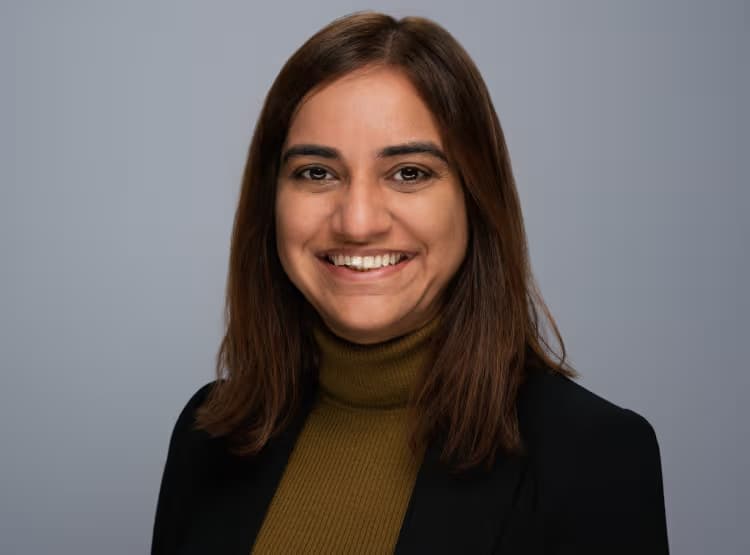
In this episode of Tech Talks Daily, I sat down with Kriti Sharma, CEO of IFS Nexus Black, to explore a side of AI that rarely gets the spotlight. While much of the conversation around artificial intelligence focuses on chatbots and copilots, Kriti is working in environments where failure is not an option. Manufacturing plants, energy grids, airlines, and field service operations all depend on precision, experience, and consistency. What struck me early in our conversation was how she reframes the entire AI debate. The challenge is not building the technology, it is building trust in it.
Kriti's journey into AI began long before it became a boardroom priority. From building her first robot as a teenager to advising global organizations and policymakers, she has always focused on solving real problems rather than chasing trends. That perspective carries through into her work today, where she spends time on factory floors wearing safety gear alongside engineers and technicians.
It is a hands-on approach that reveals something many leaders miss. People do not adopt AI because it is advanced. They adopt it when it solves a problem they recognize in their day-to-day work.
One of the most interesting themes we explored was the widening gap between what AI can do and how quickly organizations are ready to use it. Kriti described how that gap plays out on the ground, especially among deskless workers who make up the majority of the global workforce.
In these environments, the conversation is far less about replacing jobs and far more about preserving knowledge, improving consistency, and helping people perform at their best. When a veteran worker with decades of experience walks out the door, that expertise often leaves with them. AI, when designed well, can help capture and share that knowledge across an entire workforce.
We also discussed how IFS Nexus Black is tackling what many describe as "pilot purgatory," where companies experiment with AI but struggle to deploy it at scale. Kriti shared how building solutions alongside customers, rather than handing over generic tools, leads to faster adoption and measurable results.
Real-world examples brought this to life, including how industrial AI is helping organizations move from reactive firefighting to proactive decision-making, reducing downtime and improving operational performance in ways that directly impact the bottom line.
As our conversation moved toward the future, Kriti offered a clear message for leaders. The best way to prepare for AI is to start using it. Not as a novelty, but as a daily tool that can amplify how work gets done. The organizations that encourage experimentation and share those learnings across teams are the ones most likely to see real impact.
So as AI continues to evolve at pace, the question is no longer whether the technology is ready. It is whether organizations and their people are ready to meet it halfway, and what happens if they are not?
Useful Links
[00:00:04] What happens when the conversation around AI shifts away from chatbots and office productivity and lands squarely on the factory floor, the power grid and the engines that keep aircraft in the sky? Because while much of the AI discussion today focuses on consumer goods and software features, another story is unfolding quietly inside the industries that keep the world running.
[00:00:31] The manufacturing plants, energy networks, airlines and field service teams are all beginning to work alongside intelligent systems that interpret sensor data, analyse images and help diagnose problems before they turn into costly failures. Now my guest today is Kriti Sharma and she sits right at the centre of that shift.
[00:00:54] She is the CEO of IFS Nexus Black, which is an industrial AI innovation accelerator and she works with some of the most demanding sectors in the global economy. Her work has been featured in outlets including Fortune, Financial Times, Harvard Business Review and the BBC. But what stood out to me when preparing for this conversation was her focus on the human side of AI adoption.
[00:01:22] Because the biggest challenge with AI is no longer whether the technology works. In many cases it already does. The real challenge though is trust. How do organisations help workers believe that AI will strengthen their expertise rather than replace it? And how do you introduce new tools into environments where experience, intuition and decades of knowledge
[00:01:49] often live inside people's heads rather than in documentation? And perhaps most importantly, how do you move AI out of experimentation and into real operational use where it delivers measurable value? Well today we're going to explore these questions through real stories from the front line of the industry.
[00:02:10] Including how AI is helping distilleries predict equipment failures, airlines process regulatory directives. All in minutes instead of days. And even utilities responding faster during disasters. Lot to get through today, so buckle up because this episode will take us beyond the hype and into the real world insights of industrial AI. So thank you for joining me on the podcast today.
[00:02:41] Can you tell everyone listening a little about who you are and what you do? Great to be here Neil. I am Kriti. I run IFS Nexus Black as the CEO. I'm a computer scientist by background and now with what's happening in the world of AI I feel like I've gained superpowers by being able to build products really, really quickly. By way of background, IFS Nexus Black builds some of the hardest problem solutions for the industries
[00:03:07] that keep the world turning, like manufacturing, utilities, aerospace, defense, and so on. And we do this by building right alongside our customers. That means most days I am in an orange high-vis jacket and steel-toe boots and a hard hat on building products right next to the technicians, the engineers who do the hard work. I absolutely love that. And we are going to be very forward-looking today talking around AI, how it's helping your customers
[00:03:35] and where things are heading in the future. But before we do that, I always like to dig into my guest's origin story somewhat. When I was doing a little research on you, I was reading that you built your first robot at age just 15 and have since gone on to advise customers, lead AI product teams, companies like Sage and Thompson Reuters, and obviously now at IFS Nexus Black. But I'd love to take you way, way back here. Where did that early curiosity come from?
[00:04:05] And what was your journey that shaped how you think about AI today? I feel like there's got to be a story there too. I was a very nerdy kid. I used to code in 17 programming languages when I was younger, but I barely spoke human. I often joke about it. It's, yeah, I just grew up in an environment where curiosity was encouraged. My mom was a journalist. My dad worked in the civil services. So it was very, they were very interested in always encouraging us to ask questions and break things and make things.
[00:04:35] And that's what I did. And yeah, I built my first computer soon. I said, well, I don't have a computer, so I'll make one. And then the fear goes away of technology. And then I started building robots. It turned out I wasn't very good at it. I was more of a software engineer. So I started building non-hardware things after that. But yeah, it's been quite fun. Well, I always say on this podcast that technology works best when it brings people together.
[00:05:00] And although you are, or you say, you refer to yourself as a nerdy kid there and you love all things technology, software, et cetera. But throughout your career, from your TED talk on AI bias to advising the UN and speaking at Davos, one of the things that really stood out to me when doing a little research on you is you've always focused on the human side of technology. And I think that is more important than ever right now. So what were the experiences that convinced you that the biggest challenge with AI adoption
[00:05:29] was not actually the tech itself, but maybe the trust inside organizations of the culture and the human element there? So the tech has really never been the hardest problem because once it's solved, it's an engineering problem. It's no longer even a science or a discovery problem, right? So the challenge that we often see in organizations is culture or confidence.
[00:05:54] And yeah, just like the way I described my childhood, I was really interested in solving problems and making things and breaking stuff. And I think to a large extent in the business world, it's a similar thing. What are the problems you want to solve? Now, I will say the robot that we talked about, it solved a very important problem. It fetched Snickers, the candy from the snack bar at 3 p.m. every day.
[00:06:20] Now, for a teenager interested in that stuff, it did solve a problem. Was it the best problem to solve? Absolutely not. But I do better things with my life now than automating unhealthy snack-fetching habits. But I do think in the business world, it's really about, and in society, identifying the problems that really, really matter and then use technology as a means to solving it. And that has been my pivot in adulthood. I care more about the problems that need solving.
[00:06:49] And one such example that I'm particularly proud of is the work that I did with AI for Good in the UK, which is a social enterprise we founded with the intent several years ago, in 2017 now, to look at societal challenges and if there's a role for technology to play to solve it. And that really was my firsthand experience of solving or helping solve really, really hard
[00:07:14] societal challenges like domestic violence and mental health-related issues to help make it easier for people to get help. And you said there that you focus on bigger problems now and solving things that really make a difference. But I would imagine as a 13-year-old, that's a game changer, isn't it, there, what you created? Yeah, but when you're a teenage kid, you just build and have fun. I can't remember very much of it other than just building stuff. But yeah, and now the world has changed.
[00:07:44] Now you do not need to be a geek like me to be able to build things. Now we can all experiment and push the boundaries. Yeah, we can all experiment. We can all push the boundaries. But in your work, I was reading how you often talk about the increasing gap between how quickly AI capabilities are advancing opening opportunities for anyone with how slowly organizations are adapting on the flip side there. So from your vantage point, I mean, you're working with industrial companies.
[00:08:13] You've got the ear of so many business leaders around the world. What does that gap look like on the ground for the frontline teams there? What are you seeing? There's a moment of magic that happens when someone can see their problem being solved in a way that they had never imagined as possible. They don't need to know AI did that. They don't need to know any other technology than that. Just need it solved. And I'll share one very vivid example of that.
[00:08:41] We work with a manufacturer in the UK. They're a family business with about 150 years of legacy. They have equipment in the plant that has been maintained by people who work there today, their parents, their father, grandfather. So it's in the family on how to run the plant. And there are people there who can just hear the sound of a bearing fall and they know what's
[00:09:06] wrong with it or why line three runs differently in winter when ambient temperature is below five degrees, right? You give them an AI tool and they're like, what is this? We'll see. Can I do this thing? But what's really powerful is when we deployed the product in their hands, this is resolve. We hear things like, wow, for me, I will not use it, but it brings everyone else up to my level. That's what it means because they're not going around looking for AI.
[00:09:33] They are looking for solutions to the knowledge and expertise transfer or gap problem to create consistency. Now, historically, enterprise software has been focused on creating standard processes and making sure people don't make mistakes and their approval steps and buttons and grade out things and red font and stuff like that.
[00:09:56] Now, with the capabilities we have there, we can use the same technologies to bring everyone up to the highest level, to make everyone exceptional at their job. And that's the power of what I'm seeing on the ground. And I would imagine, I could be wrong here, but I would imagine in sectors like manufacturing, utilities, aerospace, field service, et cetera, that AI will inevitably trigger excitement in
[00:10:25] many teams there, but very real fears in others there. And especially people think they might be being replaced by technology or AI and robotics, et cetera. So how do or how are you seeing leaders bridge that divide and help workers feel that AI is there actually to strengthen their expertise rather than replace it? Because quite a difficult balance sometimes, I think. Yeah. So Neil, just to unpack that a bit, our model at Nexus Black, and it starts from the top with
[00:10:53] me as a CEO being super clear, we don't push AI and we don't sell it. We solve business problems. We solve industry problems. And we are boots on the ground models. So we let it go, build our product next to our customers. And we deploy it in a few days and they start to test. And we don't hand it off to some third party to figure it out. And by doing that, we learn things that you wouldn't learn otherwise.
[00:11:18] For example, a tool that is going to help technicians do their job when they're out in the field, looking at equipment they may have never seen before. Like in Germany, they're going through a huge heat pump transition to change how people get electricity and energy in their homes. Now technicians are having to retrain and they're often alone going out and doing the job. Now in that environment, we give them a tool on their phones to help them do the work.
[00:11:44] If the tool doesn't work, when their gloves are on, they're not going to use it. They're not going to take their gloves off every few seconds. Or if it's down in the basement of a damp utility room and you don't have Wi-Fi, it's going to not use it. I don't see so much fear of technology, but it's more of usability. And that's why we focus so much on giving people the tools they need. It's different to other industries where people work at their desks.
[00:12:13] And that's a whole other ballgame where the concerns about jobs are rather real. But in the industrial environment, it's about giving them the tools for them to be exceptional at their job. And you've also highlighted the power of peer-led validation. This is something that stood out to me as well, where respected operators, they're the ones that demonstrate the value of AI tools to their colleagues.
[00:12:39] So tell me more about that approach, why it works so effectively in industrial environments, and also what other industries might be able to learn from this too. Yeah. So instead of saying, oh, hey, we're here to give you this tool. Here it is. We are modelers who build it with the workers who run the industries, right? And so when they have the sense of agency and being part of the design process and they feel a part of the technology that's been created for them and with them, it changes the game.
[00:13:08] And we often join training days of our customers when we deploy our solutions. We join the existing training days where the workers go and get upskilled for their training days every month or so. And we often find they love the ones who've been part of the process. They want to be the ones who show it to everyone else. And they're like, hey, look at this. This is what it did. And it does exactly what I would have done a week ago. And now the tool knows how to do it.
[00:13:37] That confidence is so, so important because I don't think it's fair to throw technology at people that the buyers or champions have bought. That's how we end up with tech waste. This motion of designing it with the workers who are going to be the ones using it and having them be the voice, give them the agency. So they are in control is the way forward.
[00:14:04] And I love how you mentioned that giving them the voice, giving them the agency. And that's a stat I want to mention today. Because if we scroll down our LinkedIn feed, you would assume that everybody works in a corporate environment or in an office somewhere. We'd say this at tech conferences as well with every new solution. But deskless workers, they represent 80% of the global workforce. That's roughly around 2.7 billion people. Phenomenal stat.
[00:14:29] But that, despite being overwhelmingly the largest part of the global workforce, technology has traditionally almost forgot about these people, right? But you're changing that. We have felt the willingness of this industry from people on the ground for better tools has been amazing. It's just so inspiring to watch them give us the tools to help us be excellent because they're facing some hard challenges, right? I'll give you an example.
[00:14:56] If you look at manufacturing in Europe right now, just as an example, you have... I'll give you a very, very grand, very real scenario, absolutely real. So today, somebody in the UK, somewhere where I'm speaking to you from, is probably going to have their retirement party this evening. They have worked at this plant or in a factory for 30 years. They know exactly how things work. They're about to walk out of the door and they're going to take that knowledge with them.
[00:15:26] Two weeks or so ago, the same manufacturer was hit by yet another wave of tariffs and customers are calling. They are canceling orders. They are changing orders. They are modifying it. They have to respond. At the same time, their supplier from China, somewhere else, is not responding. 12%, 13% of global trade that's passing through a shipping corridor is under seas, under attack right now.
[00:15:53] So supply and lead times are all up in the air. The plants they may have produced last week on how they're going to do production planning, out of date. The quotations they would have sent back to their customers just a few days ago, the margins don't hold true anymore. This is the reality of that industry. And in that moment, if we can help solve the problems, we can create... We can't solve the structural issues. We can control things that are in our hands, right?
[00:16:21] Like giving them tools to be able to prevent that knowledge being walking out of the door for the machines to start to give newer workers more better tools to get up to speed, help with that knowledge transition, or help them optimize their plans better in how they do work, how to reduce inventory waste because we can use machines to do that optimization better. That's the power. It really is. It's something you're very passionate about with your work as well.
[00:16:51] I mean, at IFS Nexus Black, the mission is to accelerate AI from pilot projects and into real production environments, making a real measurable difference there. But what are the biggest barriers that companies face when moving from experimentation to operational deployment? Because we've read over the last few years, a lot of organizations stuck in almost pilot purgatory and struggling to get things out there and get that ROI on those tech projects. What are the barriers causing this from what you've been seeing?
[00:17:21] So our customers move to production very, very quickly. So I can tell you from that perspective what is working. And what we find working is when it's designed, taking into account their existing landscape, data is messy. Systems are fragmented. Nobody has beautifully organized information that AI can just go on top of and start reasoning over and building agents around. And the reality is you can't build deterministic, specific workflows in these environments because
[00:17:50] of just the scenario I described about trade wars, about real geopolitical situation and transitions and so on. So it's all about dynamic changes. If you're building for that environment and you take into account their reality, their business, and holding the bar high of the quality of the output, you absolutely end up in deployment and production land. That's what we see. It's when it's not designed for their world, this generic technology, now have at it, make
[00:18:19] it work in your world. That's where it fails. Your team recently introduced something called Resolve, which was developed with Anthropic, which analyzes images, video and sensor data to predict equipment failures and guide frontline workers. More proactive than reactive. Sounds incredibly cool. But just to bring to life the kind of value that we're talking about here, do you have any examples that show how that type of industrial AI is changing day-to-day operations?
[00:18:49] I don't expect you to name any names, but I think it would really hammer home the value we're talking about here. Let's name names. Love naming names. So Resolve was developed with Anthropic using the models and some of the Cloud SDK capabilities. Of course, we use all models that we need to use to get the work done. The example I want to talk about, one of our first customers are William Grants & Sons. They are the household brand. They make things like Hendrix Gin and Glenfiddich Whisky, you may have heard of.
[00:19:18] And they are using Resolve today to go from this reactive to reactive world of firefighting, of maintenance issues and batch losses and production challenges to an environment where their information and knowledge is organized really well. So that knowledge transfer from people with decades of expertise versus newer ones is institutionalized.
[00:19:43] They're moving from very reactive, proactive emergency repairs to more proactive work in their business environment. In production, in deployment, this is the power of building together. With customers. Now, to explain the difference between AI and AI that works, I'll bring one example to life. In a distillery setting, it really works like a chemical plant, really, because they're processing chemicals, chemistry.
[00:20:13] Systems are connected to each other. This is represented in the form of something called a piping and instrumentation diagram. These things are very hard to read. These are blocks of information, a bit like a CAD drawing, but for a chemical plant. So a lot of complexities there. Our tool, Resolve, deeply understands this kind of representation of information of a physical schematic. So when something breaks here, it knows how it's connected to all the other things and what might be breaking somewhere.
[00:20:43] What's the root cause? It might be somewhere else because it can read how the plant is connected to each other. That stuff, that is industrial AI. That's deep expertise where machines and Resolve learns to read and interpret, understands that world really, really well. And that's how you get to those emotions that I was describing. It brings everyone else to my level. Yes, because it understands your world so deeply like it never did before.
[00:21:13] And we started our conversation today talking about that moment of you creating the robot to get the Snickers snacks there for lunchtime every day. And looking at that compared to the journey you've been on and how you're now helping industries that literally keep the world running from energy, aviation and manufacturing. I'm curious, if you now look to the future, what role do you think industrial AI will play? And what should leaders be doing right now to prepare their workforce for that future?
[00:21:41] Because yes, the technology can create things, but we need the people. We don't want to leave anyone behind. We want to bring the workforce with us. What should leaders be thinking about now? It actually starts with everyone using technology, using AI in their personal lives, in their daily lives. I do that personally. I have at any given time, 10 agents running around, doing work, preparing for meetings, preparing briefs, doing more sophisticated tasks like supervising code, reviewing strategy
[00:22:10] documents, making sure things are progressing on time, coaching people, lifting others up to my level, that sort of work. And we all should be doing it. And I'll give you one example. In my team, we have this principle of you're doing something once with AI. Yeah, you learn to do it really well. You do it one more time. The next time you're doing it, for example, you're preparing to meet to some sort of business
[00:22:36] casing or workshop value discovery, problem solving for customers in manufacturing and chemical process plants, for example. You learn to do it once. You learn to do it the second time. And then the third time, you turn it into a tool that the entire team can use. We make it a concept of skills. And what that means is if I figured out how to do this task really, really well, I can gift
[00:23:05] it as a capability to my entire team and they all can learn to do it really, really well. That's magical. And that comes from the place of people starting from the top and everywhere in the organization, working with these tools and pushing the boundaries. If you're using AI just as a chat GPT, chat interface, or a co-pilot to ask questions, get answers back, remember, there's 99% of the other universe of using AI in very powerful
[00:23:32] ways that's waiting for you to push boundaries with. Love that. I think that's a powerful moment to end on. But before I do let you go, I'm going to have a bit of fun with you now. I always ask my guests, will I pull out a virtual soapbox? And when you're looking on LinkedIn, Ready, or any tech website there and you're following the latest news, you probably encounter a few myths and misconceptions about your area of expertise and everything that you're working on right now.
[00:23:59] So I'd like you to stand on the virtual soapbox and tell me what those myths and conceptions are. Let's lay them to rest once and for all. Maybe even untruths. But the floor is yours. What are they? I think people are worried about hallucinations a lot, even still to this day. It used to be a challenge. Of course, it can still happen. But the more we have become sophisticated at using the technology, the rates have gone down. So I just really want everyone to understand that happens.
[00:24:26] That's really important to not be bogged down by there were hallucinations all the time. Once upon a time, now these systems are getting more and more and more accurate. That's number one. Number two, I kid you not. There are days when I feel like I'm just the hands and legs of an AI model because I've automated so much of my personal work. These tools are like superpowers. Use them as superpowers, not just a Q&A interface or a better Google. I really, really, really mean it.
[00:24:57] Number three, don't expect when you start chatting to an AI solution or using AI tools, the first answer is going to hit the mark every single time. It's the second or the third when the magic happens. Get to that moment. Love it. How better do you feel now that we've laid those to rest once and for all? But before I let you go, for anyone listening, we covered a lot today. Anyone wanting to dig a little bit deeper on all the work that you're doing here, where would you like me to point them?
[00:25:24] They can reach out to us at nexusblack.com. Awesome. Well, I will add links to that and the social channels there. Before I go, I've got to mention a few quick stats here. We're looking at the power and the difference that we're making. Before you join me today, I was reading that William Grant and Sons fault prediction, they cut emergency repairs from 38% and that boost in output saved 8.4 million a year. There's so many stats like that.
[00:25:54] I'm going to include a lot of these in the write-up too this episode. I'll urge people to check this out and start thinking bigger, not just in your organisation, but also in your personal life. Get back to experimenting and having a play rather than doom scrolling on your phone. But more than anything, thank you for bringing all this to life. Great to meet you today, Neil. It was really fun. So after hearing stories today about robots fetching chocolate bars as a teenager and AI
[00:26:19] systems helping distilleries prevent equipment failures decades later, one of the things that stood out to me about this conversation is just how consistent my guest philosophy has remained. Because technology at its best solves problems that matter, whether you are 13 or 33. And throughout today's discussion, we talked about the growing gap between how AI capabilities
[00:26:44] are advancing now and how slowly many organisations are adapting. But as Kriti explained, the gap is rarely technical. It's cultural. It's about trust. And it's about helping people see how these tools fit into their work, the work that they already do every day. And one of the points that was particularly powerful was that idea of peer-led validation.
[00:27:10] When experienced operators test a tool themselves and show their colleagues how it can help them do their job better. That way, adoption spreads naturally, fear fades, and curiosity takes its place. And this approach, I think, highlights something that often gets overlooked in AI conversations. Because many of the workers who stand to benefit the most from these tools are the ones who rarely appear in the tech headlines.
[00:27:40] Yep. Yep. The technicians in hardhats. The engineers maintaining ageing infrastructure. The operators who can hear a machine and instantly know something is wrong. I think giving these professionals tools that help preserve their knowledge, reduce risk, and help new workers learn faster. These are the things that can change entire industries. So these are just a few of the many reasons why I found my conversation with Kriti so refreshing today.
[00:28:09] And perhaps the biggest takeaway from the conversation is that the future of AI is not going to be defined by prompts typed into chat windows. Time to think bigger than that. It will be defined by systems quietly helping people make better decisions in the moments where it matters most. So if AI can truly help bring every worker closer to the level of even the most experienced
[00:28:35] expert in the room, how might that reshape the way that we all think about work and knowledge and human potential over the next decade? And that's why I'm incredibly optimistic about that future. But over to you. What do you think? What are you experiencing out there? TechTalksNetwork.com. There are 4,000 interviews there. There are a number of ways you can contact me, even leave me an audio message. So please let me know and I will meet you back here tomorrow.
[00:29:05] I'll be the guy waiting in your podcast feed once again. Speak to you then. Bye for now.