

What does customer experience look like inside a company most people associate with switches, infrastructure, and engineering rather than surveys, empathy, and brand perception?
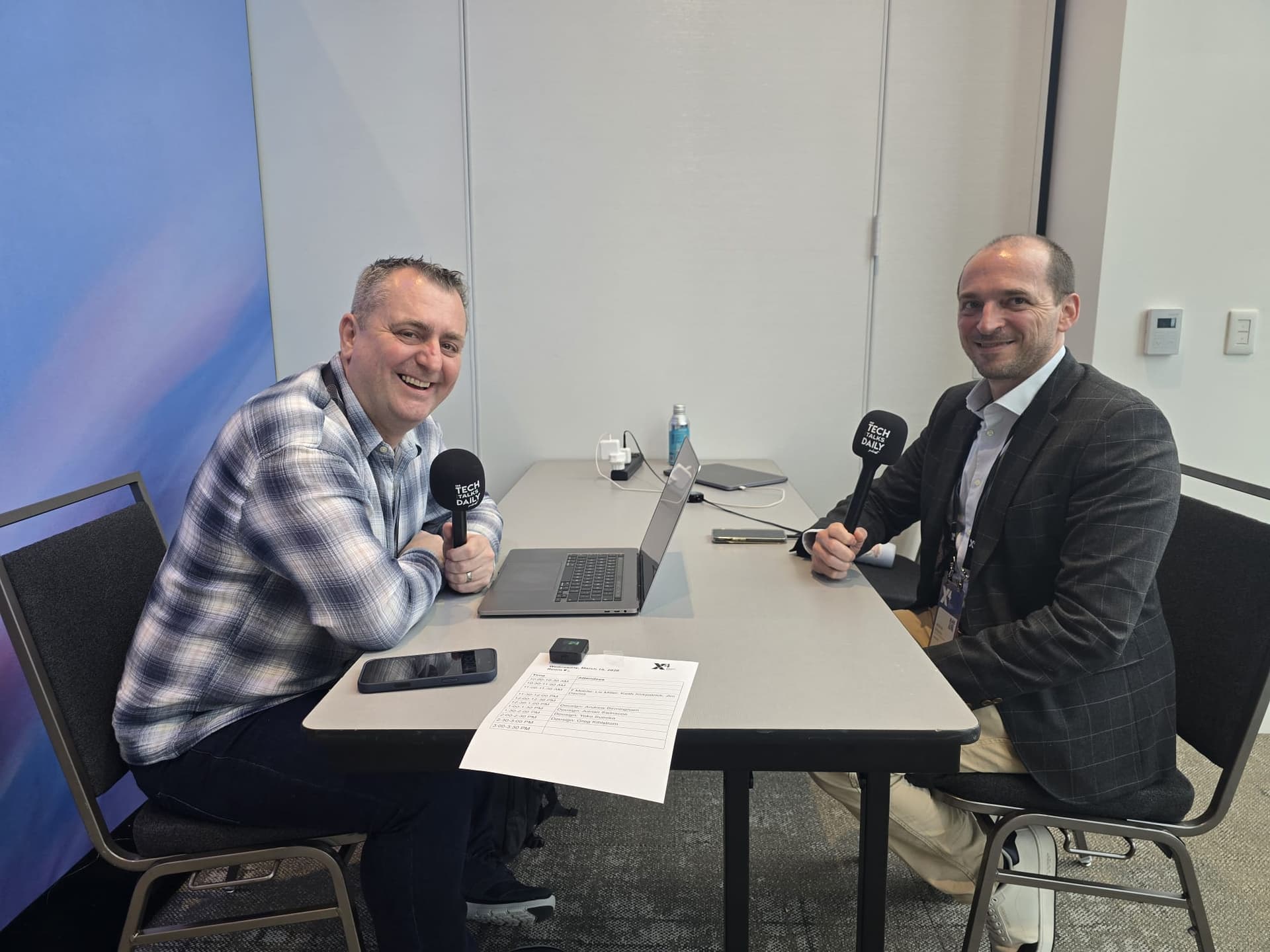
In this episode, recorded at the Qualtrics X4 event in Seattle, I sit down with Jerome Boissou, Head of Global Customer and Brand Experience at Legrand. Jerome has been with the company for 28 years and now leads a customer experience program designed to help Legrand better understand a customer base that is changing fast.
This matters because Legrand is no longer serving only its traditional markets. The company now operates across a huge product portfolio, serves commercial buildings as well as residential markets, and plays a significant role in areas such as data centers and hospitality.
At the heart of our conversation is Legrand's "Best Of Us" program, launched in 2018 and revamped in 2021. Jerome explains that the original focus was on personas and journey mapping, but the company soon realized it needed a more quantitative approach too. What followed was a broader strategy built around three connected pillars: customer satisfaction, customer centricity, and brand equity. Rather than treating customer experience as a dashboard exercise, Legrand is using those pillars to improve business performance, spread customer knowledge internally, and help teams understand what different customer groups really want, expect, and struggle with.
One of the strongest themes in this conversation is that feedback without action creates frustration. Jerome is very clear on that point. He explains how Legrand built a "close the loop" process, then went further with what the company calls a "customer room" process. That means identifying pain points and weak signals, routing them to the right internal teams, tracking them with KPIs, and making sure action follows. He shares that 100 percent of detractors should be handled through that closed-loop approach, and that around 80 percent of pain points can be solved as quick wins. That is a refreshing reminder that customer experience only matters when it changes something.
We also talk about the scale of measuring experience in a global B2B organization. Legrand runs annual relational surveys for both direct and indirect customers, covering around 50 personas, and supplements them with transactional surveys across 17 touchpoints. These include digital interactions, training, product launches, and post-call center feedback.
Jerome explains how Qualtrics became a key part of making that global program work, helping Legrand roll out surveys worldwide and giving teams a way to analyze feedback more easily and consistently.
Of course, this being a tech podcast recorded at X4, we also get into AI. But what stood out to me is that Jerome does not talk about AI as a magic layer dropped on top of everything. He talks about context. In fact, context becomes one of the defining ideas in our conversation. Capturing feedback is useful, but understanding the environment around it is what enables better decisions. For Jerome, that is where AI becomes more useful, especially when it is trained within the reality of Legrand's complex markets rather than operating as a generic tool.
Another part of this episode I found especially interesting is how Legrand brings employees into the customer experience process. Jerome shares an example of sending the same surveys to employees and asking them to answer from the customer's point of view.
By comparing employee perception with actual customer feedback, Legrand can spot gaps, adjust training, and help teams build more empathy. In one case, factory teams thought customers were far less satisfied than they really were, simply because the internal metrics they saw every day focused only on pressure and output.
Reframing that with real customer satisfaction data, including a product quality satisfaction score of around 95 percent, helped restore pride and perspective.
This episode is really about something bigger than surveys or software. It is about how a global company can embed customer thinking into the culture, make people feel part of the process, and use data in a way that stays human. Jerome makes a strong case that customer experience in B2B is not separate from performance. It shapes brand perception, trust, internal alignment, and ultimately business outcomes.
I'd love to hear your thoughts. How is your organization making sure customer feedback leads to action rather than just another report?
Useful Links
[00:00:04] Welcome back to the Tech Talks Daily podcast where I'm recording live here in Seattle for the Qualtrics X-Force Summit 2026. And I had the opportunity today to sit down with a leader who's helping redefine the customer experience inside one of the world's most established industrial infrastructure companies.
[00:00:26] He is the Head of Global Consumer and Brand Experience at Legrand, a business that many people listening might associate with electrical systems and building infrastructure. But as you're about to hear today, there is a much deeper story unfolding behind the scenes. So in our conversation today, you'll learn how this company has built a global customer experience program that goes far beyond surveys and dashboards.
[00:00:56] Because I want to learn more about their Best of Us initiative. How feedback is translated into operational change. And why closing the loop is only a small part of this story. Because we're going to explore how customer satisfaction, centricity and brand perception all come together to influence business performance. And why context has become the most important ideas shaping modern CX strategies.
[00:01:26] So if you've ever wondered how a global B2B organization can turn customer insight into action at scale by leveraging the right technology. And understand what role AI can play in that journey. I'm hoping today's interview will offer you a valuable perspective. But enough for me. Let me beam your ears directly to the show floor here in Seattle, where you can be a part of this conversation too.
[00:01:55] Thank you for joining me here at the conference. Can you tell everyone listening a little about who you are and what you do? Thank you so much for the invitation. So I'm Jérôme Boissoux. I'm leading the customer experience program for the Legrand Group since 2021. And I've been working for Legrand for 28 years. So a long time ago, I have a lot of different positions. I start as a design team.
[00:02:21] And I move a lot in marketing, communication, in countries, in strategy, in a lot of positions. And since 2015, I'm really focused on the worldwide project. And so I know pretty well the group. So it's why it's so important in terms of customer experience also to know people and to really have this network to help thanks to this network to improve the customer experience program.
[00:02:48] Well, I mean, when people think of Legrand, I think many would think of it as operating in a sector that people associate with infrastructure and engineering. Not necessarily customer experience, which I know is not true. So what was it that motivated the company to launch this global initiative? Like I think it was the Best of Us program. And what problems were you setting out to solve from the start? Yeah, it's right that a lot of people know Legrand for infrastructure. And I could say also a lot know for switch and socket.
[00:03:18] Yeah. It's really well known. And it's normal because we have really strong market share everywhere. It's the legacy of the group. But as we operate on digital and electrical infrastructure, we have a lot of works and a lot of landscape to address. Today, the group, it's the portfolio. It's a 300, 400,000 cat number. So it's really huge.
[00:03:44] And we are now in a lot of different markets, such as data center. People don't imagine that we are so strong in data center. We are one of the main players overall that distributes some infrastructure for data center. And you know well that this market is booming a lot. We are also leader in hospitality markets. And so finally, 50, 60% of our turnover, it's on commercial building also, not only in residential.
[00:04:13] And so to come back to your question, finally, what happened during the last decades, it's our markets change a lot. Our customers change a lot. And our ex-com, a few years ago, I've clearly seen this in mind to say, OK, our customer change. And we, of course, we know well our customer, our traditional one, which is contractors, distributors. But we need to understand how they will move.
[00:04:42] And as we address new business, such as data center, who are the players of these markets? And so finally, it was pretty normal to put in place this customer experience program to be sure that we well-known our customer. And secondly, that we spread these skills and knowledge internally to all our colleagues. And it was the program was created in 2018. And just after the COVID arrived.
[00:05:10] And so we decided to revamp the program in 2021. At the beginning, it was really focused on persona and journey map. And finally, after the COVID, we decided also to put in place some quantitative approach of the customer experience. But we will speak about that later, I think. Yes, we will. And many companies, especially people listening, they will traditionally collected customer satisfaction scores. But those surveys, they often sit in dashboards that few people ever get to act on.
[00:05:39] So how does the best of us turn customer feedback into real operational change across the organization? How do you do that? Because it's one of the oldest problems, isn't it? And it's great that we're finally making progress here. And making some survey and customer experience without taking action, it's not a good idea. That creates frustration also on the customer side. So it's clearly why when we start, we decide to have this strong process named the close-the-loop. But more than the close-the-loop.
[00:06:07] So it's great to come back to the customer and ask them why you say this, why you are not agreeing with that, why you are complaining about this. But we also put in place what we name the customer room process, which is a process that captures the pain points, the weak signal, spread it to the good department internally to be sure that we tackle the issue. And we put some KPIs and we track these KPIs.
[00:06:34] And for example, 100% of the detractors need to be put under control with the close-the-loop and their pain points need to be solved on a timeline. Of course, if it's 80% of our pain points, it's quick win. So that can be solved very rapidly. Sometimes we have structural topics that is longer to solve. And finally, thanks to that, that we are clear today that a survey generates feedback of the customer and generates action.
[00:07:03] And clearly, if we are not sure to put in place action, we prefer not to put in place survey or capture the feedback. Yeah. And I was reading on what you've done and how you've approached it. And I also read that you described the program as being built around three pillars, customer satisfaction, customer centricity and brand equity. So can you walk me through how those three pieces connect and why you felt all three of them were necessary rather than focusing on just satisfaction scores alone?
[00:07:31] To be honest, we start, as I said, with the customer centricity approach, thanks to the persona and the journey map. Secondly, we build the second pillar, which is the satisfaction measurement. And a new one, because we only launched last year, it's the brand assessment, which is really important.
[00:07:49] The three pillars are clearly here to improve the business performance, to better understand what is the feeling of our customer, but at the end also to improve our performance for our customer, but also for our results and our business KPIs. So it's really correlate these three pillars, because at the end, I think the first one, it's really the satisfaction measurement.
[00:08:17] Thanks to the satisfaction measurement, we capture a lot of information, information, sorry, that help us to feed the persona and journey map. And this pillar, the centricity is really here to help to spread these skills and knowledge to all our employees. To be sure that everywhere, everybody at Legrand know our customer. They know what they want, what they don't want, what they like, what they dislike, what is their pain point, what is the weak signal.
[00:08:43] So we start with this quantitative approach, and thanks to that, we are capable to define which persona is our risk or which is really strong for us, and we spread it internally. And the last pillars, which is pretty new, but I would say probably it's a top one. It's the brand approach, because the brand, it's image, and that participate also to the feeling of our customer.
[00:09:08] And also, thanks to these pillars, we feed the persona and journey map that, again, help us to be sure that everyone at Legrand know what is the situation in terms of satisfaction and brand awareness. Well, in a former life, I was an IT continuous service improvement manager. And one of the things that I love about listening to you today is everything is about real business improvement, measurement, ROI. We're talking more about this than AI and technology and everything else.
[00:09:37] So if we look at ROI and measurement, how do you actually measure how customers feel when they interact with your company across so many different markets and touch points? Where do you begin measuring? So we start first with a relational survey that we put in place for all our customers. And when I say all, it's, of course, our direct customers, such as distributors, because we are on the B2B market and we go through a distribution channels.
[00:10:03] But we put also in place this relational survey for all our indirect customers, such as contractors, design office, architects, investors, system integrators, and so on and so on. Roughly at Legrand, we have 50 different types of personas. So this relational survey, it's a yearly survey that we send everywhere in the world to capture what is the overall feeling and what is the top priorities.
[00:10:30] And after that, we build some transactional survey on our main touchpoint because we split our journey in 17 touchpoints. And so we put under control the touchpoint where we need to improve the situation or because they are strategic. So we have transactional survey on our digital website, thanks to Digital Intercept. We have a survey post-training, remote training or physical training for customers.
[00:10:58] We have survey for our product when we launch a new ranges, strategic ranges. Of course, we have in place a post-launch survey, which is transactional. That means really when the customer using our products, they give their feedback. So we have this set of relational and transactional. Of course, we try not to put too many pressure to our customer. But honestly, today we have really good feedback and our customers are really happy to share their feedback.
[00:11:26] And I forgot, of course, one transactional survey, which is so important. It's the close case. That means when a customer call our call centers, we send a survey at the end of the when the case is closed. Depending on the countries, they receive a transactional survey to be sure that we make the job. And at the heart of everything we're talking about here, the measurement of feedback and surveys, of course, as soon as you mention surveys, it's Qualtrics. That's what they do and what they excel at.
[00:11:53] Tell me more about your relationship with Qualtrics and how that helps bring it all to life. So as I said, we revamped the program in 2021. And thanks to our partner, we have a customer experience consultant partner named Teresa Monroe, which is a French company. They immediately think that we need to use a worldwide platform. And immediately Qualtrics was on the game. And it was so amazing because I know well this type of solution.
[00:12:21] I worked up during a long time with Salesforce and Microsoft and so on and so forth. So at the beginning, I say, OK, are you sure? And finally, in two months, we put in place our relational survey. And in one year, it was pushed everywhere in the world.
[00:12:40] And really, our colleague really appreciates the dashboard, the way that is really simple to analyze the feedback, to have really analysis thanks to TextIQ and so on and so forth. So really, we have this strong usage of the platform. And after that, we build with Qualtrics and Teresa Monroe, these relations that help us to improve our platform.
[00:13:05] And now we are moving on a new session with the integration of the AI, which is a great thing for the next years. I was going to say you mentioned AI there. It's a tech podcast. We've gone 15 minutes without mentioning AI, but we have to. And AI and agents, et cetera. What excites you about what you're seeing and hearing here this week? We have the chance. And you asked me what is our relation with Qualtrics. I have the chance to participate as a beta tester on the AI feature.
[00:13:32] And it was really great because, of course, at Legrand, we deploy the agent AI. We are really Microsoft-oriented. So we have everything from Microsoft around the AI. But the fact that today on our Qualtrics platform, we have this AI feature really embedded in our customer experience program, customer journey, that learn a lot because it's great to have AI. But it's better to have an AI that understands your customers, understands your environment.
[00:14:01] And it's what we have with the Qualtrics one. We have something that already know how our market is complex because I spoke about the data center, which is not at all the same type of market of retail shop or DIY shop. And we operate on all this type of market. And thanks to tricks, we are capable to make this type of trigger and to have really a deep dive that is really on power thanks to AI.
[00:14:28] And not so much hallucinations that we can have with general AI that are produced by other companies. And I think the one word that I hear repeated here for many people I'm talking about, especially when dealing with AI, is context. It's so important, isn't it? Yes, I take a note this morning. I love this quote because you're totally right. It's a bad figure is deception. It's also a signals. And a signal without context is noise.
[00:14:57] Context comes from experience data. So we understand that it's great to capture feedback, NPS, CSAT. But it's more important to understand the context finally. And the context today, it is a capability to analyze the data and to understand finally from this data what is the context. And on this context, we will understand if it's good news or bad news to have this type of NPS or this type of CSAT.
[00:15:23] So I really love that fact that and I have the feeling that this X4 of the 2026 is really focused on that to give more context. And of course, we have the tools to understand the context and the ability to take the good decision at the end. I love how we've both picked out that word context and straight away you've gone to your phone and wrote it down. And there's so many conversations that you're having with people here and so many different viewpoints and keynotes you're hearing. Anything else that you've picked up?
[00:15:53] Anything else that excites you that you've seen and heard while here? Except the rain in Seattle. Yes, British weather. Welcome, my friend. No, you're right. As I said, our new pillars, it's around brand. And also, I participate to a lot of sessions on brand. And I think that collectively, everybody understands that finally, it's good to have the customer experience, relational survey, transactional survey.
[00:16:20] But probably it's important on top of that to have this brand analysis. And I say brand, but at Legrand, it's brands with an S because we have so many brands. We have around 100 brands. And as we have a lot of acquisition, the number of brands grow a lot. And so it's really important to understand how to manage all these brands. What is the image? What is the awareness?
[00:16:46] What is the impact of these brands on the customer experience? And honestly, I have a few sessions. And I have a feeling that the brands and link to the brands, the emotions are really a big part now of the X4 in 2026. And I would say a big part now of the customer experience job to understand the emotions and the brand situation. And not only in B2C, because a lot of time when we're speaking brands, people have in mind B2C.
[00:17:16] But, you know, it's more complex to address in B2B where the economical chain are with a lot of steps. And I'm glad you mentioned there the importance of human emotions because it's very easy to forget about the human side of it when you're talking about AI and AI agents. And there seems to be another big emphasis here at the conference to include the human aspect and not underestimate that. And I know you discuss tools such as personas and customer journeys.
[00:17:42] So how does all this help employees, your people, understand the people behind the data and make better decisions in their day-to-day work? Because it's humans that's at the heart of this. They're not being replaced, right? Yeah. I want to show you one example that we put in place at Legrand that is for us really important. We have in place what we call the VOC, the Voice of Customer Through Employees, which is a methodology supported by our consultant, Teresa Monroe. And we're doing this thanks to a Qualtrics survey.
[00:18:11] So we are sending at the same time that we send the survey to our customers, we send exactly the same survey to all our employees. And we ask them to put themselves on the shoes of the customer. So they don't answer as a Legrand employee, but they answer as a contractor, as an architect, as a data center players. And they share their feedback and we analyze the feedback. And we compare this feedback with a customer result.
[00:18:37] And what is amazing, it's the curve are totally parallel. It was what our employees said and what the customer said. A little bit below. That means that internally we have the vision that the situation is worse for the customer. And it's pretty good because we want to do better than the reality. But sometimes you can see that the gap is really big. And it's a risk finally, because that means that we have the feeling that it's totally not good for the customer.
[00:19:06] And we can put a lot of resources. But at the end, the customer say, no, I'm pretty okay. And sometimes if you make a trigger by department, you can see that the curve cross the vision of the customer. So that means that internally we have the feeling that everything is good. And so that helps us really to fine tune this empathy, to put in place some training or to support the department,
[00:19:32] to be sure that they are in line with what the customer expects and feel on the field. And I will give you one example. We discover, for example, thanks to this survey, which was the two departments, I would say not the worst vision, but they have a vision that is not the good one. And they have the feeling that the customer are really not happy at all. The first, it's our call center.
[00:19:58] But we can understand when you are here to answer all the day long to customers that are not happy, you could have the feeling that the situation is not good. So okay for this one. But the second one, we discover that on our factories, people have a vision that the situation is not so good. And so we try to understand. So we make some workshop in factories, in France, in Colombia, in Italy and different.
[00:20:24] And what we understand, it's we ask to people on the factories, for you, who are the customer? And they show us, you know, this big screen that you have at the beginning of the factories, where you have only figures and unquality figures, deliveries that is not good. So all the figures are ready to put pressure and to produce more. And so thanks to that, we modify the way that we communicate on the figures to help people on factories to understand,
[00:20:53] no, our customers are really happy. And you know, I can give you an example. We have a satisfaction score around our product quality, which is around 95% of satisfaction score, which is really amazing. That means our customer said you have the best product in the world in our categories. So we need to be proud about that. And we need to share this with our factories.
[00:21:20] So empathy is really, really important to understand what is our situation and are we really empathic and to fine tune, to train, to educate on some department where the empathy could be not aligned with the reality. What I love about what you're doing here is that it's not just about putting the technology in. It's not just about the surveys with the customers. You're actually listening to the people that are talking to the customers. They're right at the coalface. They're having those conversations.
[00:21:49] Do you notice a big difference there that people feel more included? They feel listened to. Have you noticed a difference there? Yeah, yeah. And it's why we really push that people are really included in the program. So, of course, we have a network of customer experience champions that spread the program everywhere in the world. But we ask everybody to be in the program. And we organize such a lot of events. A few weeks ago, we had the CX Awards.
[00:22:18] So everybody at the group can share during the years what they put in place to improve the customer experience. There is different categories in digital, in persona and so on and so forth. And once a year, we give some awards to the best customer experience, best practices. And we start three years ago. And now it's really amazing. Everybody, there is a battle between the countries, between the department.
[00:22:47] This year, our CEO introduced this event. And we have really great best practices. And what is great, it's, of course, there is a gamification. People love to make this game. But that helps us also to identify some best practices that we can share to other countries. For example, two years ago, there is an Algerian team that wins a gold medal with an app for the incentive of distributors.
[00:23:14] And thanks to that, other countries that have the same pain points say, OK, it's a great idea. And so they communicate with the Algerian team. And finally, they use this app in Indonesia, in South America. So that helps us also to say, if you have this type of pain point, probably at the group. In the group, there is somebody that tackles this. And why don't be inspired by that? So you're totally right. It's really human.
[00:23:40] And we help this connection between human and the group at the end for the customer. And after, we have some other nudge approach. That means we have on some, I spoke about the customer room. We have some room where we put the customer on the wall, on the chair. And so that helps everybody to say, OK, the customer is here. So stop to speaking about our problem and speaking about the customer issues.
[00:24:05] And I think that human aspect is such an important part of your tech journey. And finally, as you look at your journey so far, what impact has the Best of Us program already had at your company? And how do you see the customer experience continuing to evolve in the years ahead as expectations continue to rise? It's another challenge there almost, isn't it? No, it's a really big part of the approach.
[00:24:29] And it's so important that our XCOM decide to put this customer experience approach and KPIs in our CSR roadmap. That means that is totally included in our extra financial KPIs. That means audit once a year. So it's not only to be good, it's also to be structural with process. And it's really important.
[00:24:55] And as it is on our CSR, it's really under the high of the top management and pushed by all the staff. So it's really great. And now we clearly want to demonstrate the impact of the business performance. And I discuss with a lot of my colleagues from other companies, we know. And each year at XCOM, there is some session about the RRI.
[00:25:19] And it's complex, especially in B2B, as we are not directly linked to the sales and sales. So we try to analyze this. But, you know, we see already how the customer change in terms of mindset because we take care about them. And, for example, I spoke a few minutes ago about that, about the fatigue survey. And we see that in countries where we make the good close the loop, we solve pain points.
[00:25:48] We don't have at all fatigue survey. We improve the response rate. So that means that clearly customers say, OK, I say something to the ground. They act upon my feedback. So next year, I will again say something. So there is a risk to create a new channel of communication.
[00:26:07] But, again, it's really a demonstration that making, putting in place customer experience, listening to the customer and act upon their feedback have a great impact on their feelings, their image of the brand. And at the end, on the business. So many powerful talking points from listening to you today there, from the measurement, the improvements there, the technology, but also keeping it human and showing everyone throughout the entire organization feels listened to.
[00:26:37] I'd invite everyone listening to check out the useful links at the end of the show notes for this podcast. There'll be links to everything they can contact you and your team, etc. But thank you for bringing it all to life today. Thank you to you for your invitation. It was a great pleasure. What I found particularly interesting in this conversation today is just how disciplined and structured their approach to customer experience really is.
[00:27:03] And I think Jerome made it clear that collecting feedback without acting on it can actually damage trust. And the insight alone has no value unless it leads to meaningful and measurable change. And I think this idea of connecting feedback directly to action and holding teams accountable for resolving pain points, this feels like a shift that many organizations are still working toward.
[00:27:30] But I think most of all, I think there was something incredibly powerful in how the company is bringing employees into the process. Asking teams to try and see the business through the eyes of their customers and then comparing that perception with reality. And I think this created a level of awareness that data alone just cannot deliver.
[00:27:53] And yet, while AI is beginning to play a role here, especially in understanding context and complexity, it's the human element that remains central and right at the heart of every conversation. And it's that balance between technology and empathy that feels like one of the defining themes, not just of this conversation, but the entire event here in Seattle.
[00:28:17] So if you'd like to learn more about Jerome and the work happening at Legrand, I'll include all the links to the show notes so you can explore further and connect with him and the team. Either look in the useful notes section of the show notes in this episode or just come over to Tech Talks Network. You'll find a blog post associated with every single one of the 4,000 plus interviews we've got now. But as always, I'd love to hear your perspective.
[00:28:43] How are you turning customer feedback into meaningful action inside your organisation? And where does that technology genuinely help? Let me know your experiences and insights. And I'll meet you back here, same time, same place, tomorrow. Thanks for listening as always. Speak with you then. Bye for now.