
Have you ever bought a ticket to a show and wondered why the experience still feels strangely disconnected, with one app for ticketing, another for marketing, another for refunds, and a dozen spreadsheets held together by late nights and good intentions?
In this episode of Tech Talks Daily, I'm joined by Ritesh Patel, co-founder of Ticket Fairy, to talk about the technology behind live events and why it has lagged behind other industries in some surprisingly familiar ways. Ritesh makes the case that most organizers are operating more like creative founders than corporate operators, building "mini cities" for a weekend with tiny teams, tight budgets, and very little margin for error. That reality shapes every technology decision, and it explains why fragmented tools and siloed data can become a hidden tax on the business.
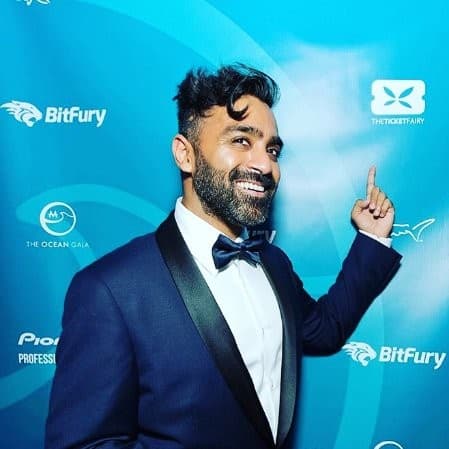
Ritesh walks me through Ticket Fairy's full stack approach, bringing ticketing, marketing, CRM, logistics, and payments into a single system, and why unifying data changes the economics of running an event. We dig into practical examples that go beyond vague AI talk, including how small workflow fixes can speed up entry, improve the on-site experience, and even translate into real revenue uplift once you multiply time savings across thousands of attendees.
We also get into where AI agents and large language models are already finding a foothold in events, particularly around unstructured documents like artist specs, supplier agreements, and operational paperwork that can swallow hundreds of hours. Ritesh shares why "AI-native" should mean more than a writing assistant in a text box, and what it looks like when AI becomes an extension of a lean events team, including a prototype voice agent designed to handle common ticket-holder questions without creating new support bottlenecks.
If you're interested in the real business mechanics of events, and how SaaS, payments, data, and AI can quietly shape everything from entry lines to repeat attendance, this conversation offers a fresh way to think about an industry that touches all of us, even when we don't think of it as a tech story.
And as a bonus, Ritesh leaves a music recommendation that sent me back to an album I had not played in years, Burial's Untrue, with "Archangel" as the track to start with. After listening, tell me this, where do you think unified data and practical AI will make the biggest difference in live experiences over the next couple of years, on the promoter side or the fan side, and why?
Useful Links
[00:00:03] As a huge music and sports fan and someone that goes to the Glastonbury Festival every year, and someone that used to work in the event industry, I'm passionate about all things live events. And I know first hand that live events are so much more than stages, crowds and wristbands. And today's conversation I hope might give you a little glimpse into how the entire industry works. Because my guest today is Ritesh Patel. He's the CEO and co-founder of Ticket Fairy.
[00:00:33] Which is a platform built to rethink how event businesses actually operate behind the scenes. Because while most people see ticketing as just a single transaction, Ritesh and his team looked deeper and asked a more technical question. What happens when ticketing, marketing, CRM, logistics and payments all share the same data foundation? And do that from day one.
[00:01:01] Which brings me to Ticket Fairy, which was built as an AI native platform, not as a collection of bolt-on features. And that design choice matters. Because live events are some of the most resource constrained businesses around. Because event organisers, they're expected to deliver unforgettable experiences while juggling fragmented tools, thin margins and massive operational complexity. And often with very small teams.
[00:01:27] So my guest today will explain how unified data is changing the economics of live events. Where AI is already delivering measurable results. And what event businesses can learn from scalable SaaS and fintech practices. And we'll also talk openly about where AI genuinely helps today, not the hype. We'll talk about the value it can offer, where caution is needed. And why this shift is less about flashy, shiny new technology tools.
[00:01:55] And more about building sustainable, profitable event businesses that work better for both organisers and the fans. But enough from me. Let's get Ritesh onto the podcast now. So a massive warm welcome to the show. Can you tell everyone listening a little about who you are and what you do? Yeah, sure. My name is Ritesh Patel. I'm a co-founder of a company called Ticket Fairy. And we are a tech platform for the live events industry.
[00:02:24] And when we look at the live event space today, I'm curious. What are the biggest tech constraints that are holding organisers back? And why do so many event businesses still struggle with those fragmented tools, disconnected data and an app for just about every single event that I attend in the US as well? But what are you seeing here in the event space right now? So I think most people don't realise how resource constrained events companies are.
[00:02:53] So if you think about the parallels, right? Like a festival organiser, a venue owner, an event producer is more a founder and a creative than they are a seasoned operator, right? Like you learn on the job. Yeah. And it's like running a startup. And so, you know, but the difference is that they don't have access to large amounts of venture capital.
[00:03:21] They, you know, like they really have to do this on like shoestring budgets. And there's no like, hey, we're going to hire 10 people who are executives who we can afford to pay 200 grand a year. Like it's very much like bare bones resources. And so what you end up having is people that are really good at a creative vision. Okay. I've got a festival with an audience or a music genre.
[00:03:49] I want to push or an experiential thing. I want to create, right? It's very, it's, it's, it's, it's very is very creative. And so you kind of spend five years just figuring out how to do stuff. Yeah. Without the budgets to hire the people that would already have that knowledge and you don't have, um, endless pots of capital coming from VCs that are like looking for billion dollar exits because you don't get billion dollar exits in this business.
[00:04:16] So, um, we kind of saw that gap where it was like, well, if you could just build a lot of tech that kind of understands the best way to make money from events and puts it into a product. And over time, like kind of puts all those layers into one system. You're not only making the operational side of an event more or a venue more efficient.
[00:04:43] You're also bringing in kind of like expertise that it might've taken a lot longer to learn. And, um, that's where you actually can unlock revenue. And after spotting this gap, you took this full stack approach with Ticket Fairy, bringing together ticketing, marketing, CRM, logistics and payments and bringing them all together. So I'm curious, how does unifying all that data in one platform change the economics of, of running an event?
[00:05:11] I would imagine it's a big game changer, especially in a world of AI when traditionally all that data has been siloed in so many different areas. But what difference does it make? It's kind of a, you don't know what you don't know thing. Right. So like, yeah, if you don't have access to all of the data and all of the points of failure and points of success, you don't know where things are going wrong and where to double down on things that are going right.
[00:05:35] And usually even just kind of attribution and figuring out like who your loyal customers are and figuring out what repeat attendances and stitching together. Bar spend data and ticketing data so that you can figure out that like, you know, this person that only spent $20 on their early bird ticket.
[00:05:57] Not only did they recommend your event to 20 mates and they all bought VIPs, but on like during the show, there was an aggregate spend of 10 grand on the bar. Yeah. And, you know, that's a very valuable set of people and you should be looking after them. And, you know, these principles are very, very common when it comes to corporates and, um, and even just like tech startups.
[00:06:25] But the, when you have all the layers and you understand that, like, you know, these are your people, these are your conversion optimization points. This is where you've plowed money into something where you just wasted all of that. So you don't do it next time. It makes a big difference.
[00:06:41] And, and like also just areas where, I mean, we, we did, we did something in the early days where very simply we attached visual credential display to ticket scanning for an event. Like that we could see that, you know, like it was taking two minutes to get people into it. Each person to get into the event was taking two minutes because the, there was so many different wristbands based on all the different things they had available for sale that the door staff were really confused.
[00:07:10] And it just took them a really long time. So we, the next time that event happened, we did it so that you could pre-program the physical wristband artwork into the app so that the moment you scan the tickets, it would instantly show that this is the one, two, three wristbands you've got to give to that person. And it's not a simple, it's like, it is a simple thing to do, right? Yeah. But it took two minutes per person down to 30 seconds per person times 10,000 people. Yeah.
[00:07:39] You've not only got those people into a venue like two hours early, but you've probably sold another 10,000 drinks and like just controlling all the layers really allows you to optimize the business. And as this is a tech podcast, I speak to a lot of people around AI and I think AI is often mentioned in somewhat abstract terms, but listening to you here and bringing together ticketing, marketing, CRM, logistics, payments, all together, all that data in one place. It feels like a great opportunity there too.
[00:08:09] So how are things like AI agents, large language models actually being applied inside an event platform today? And where are organizers seeing the most practical gains? Because again, we hear a lot about AI, but ROI and real measurable difference, like you mentioned the 10,000 tickets there and the time saved. There's some real marginal gains to be made here, I would imagine.
[00:08:31] Well, I think the areas where LLMs really shine are where you've got unstructured data that doesn't quite fit a specific coding algorithm, right? But then, I mean, let's just say there's a lot of legal tech AI companies at the moment, right?
[00:08:51] And they're kind of going, okay, well, can you replace the job of a paralegal who can take many, many legal documents that it's been trained on and spit out a new version for a specific client or a specific scenario? And usually, like, it gets a 99% right.
[00:09:13] And when you're looking at events, it's not that, like, a professional event, a festival, for example, has hundreds of documents that are coming in from booking agents and suppliers and, you know, artist specs and things like that. And each artist is, you know, they're coming in from a different booking agency who's used a different law firm, who's used different language, but actually, they're also kind of saying the same thing.
[00:09:39] And so, you know, we've been working on stuff that, like, mass ingests all those documents and really extracts the right upside of things for the organizer of the event and the team. And just that is, like, you know, a thousand hours of work saved. So you can do a lot with this where the grunt work that you would ordinarily have to go through is the perfect use case for an agent or an LLM.
[00:10:06] So I'm just thinking that if you look at, excuse me, and if you think about a festival like Glastonbury, there's over a thousand acts playing over those five days. And you've got all the food and beverage outlets across the site. It's just phenomenal. More than a thousand acts per day. Like, it's crazy. Yeah, it really is. So I'm curious. You might have examples. You might not. But are there any other examples of how AI-driven automation could help event teams grow revenue, improve guest experience,
[00:10:35] without simply adding more people or more operational complexity? Anything else stand out there from what you said? So we built a little prototype internally where we built a voice agent where, as a ticket holder to an event, you could make a phone call. It would detect what your account was. And then you could say, hey, I bought a ticket to a gig in Mexico, but I need to know some information.
[00:11:03] And when I went to the ticket page, it was all in Spanish. And I don't even remember what the event is. Like, can you just tell me how I get there and what the parking is and, you know, what are the venue rules? And we got the agent that was already pre-trained on all of the knowledge base for the event to just answer any ad hoc question that the ticket holder had. And without, like, it was, like, very, very natural language. Like, any specific thing you needed to know, it would be able to tell you.
[00:11:32] It could resend your tickets because you can't find them because your phone doesn't sync back more than a month and you bought the tickets last year. And, like, that is, like, you know, the boring customer service that a team internally would have to usually actually have someone or multiple people on salary for. And if it's, like, a 50,000-person event, then you would need a lot of people for that or people wouldn't get a reply for, like, a week.
[00:11:58] And so, like, those kind of things where you can be very intelligent with an LLM. And obviously, you've got to be careful about hallucinations because if someone says, you know, can I get myself backstage? And the LLM says, sure, you know, like, you're right. You deserve to go backstage. That becomes a problem. Yeah. And one of the things that stood out to me about you guys when I was doing a little research is that you often describe Ticket Fairy as AI native rather than AI.
[00:12:29] So what does that distinction mean for you in practice, especially when it comes to how data flows across the platform? So I think that, I mean, we started as a traditional SaaS platform, right? So, like, we're building in all the layers. And I think it's, like, it's a very different thing when you say, hey, you can write your event description using AI in a text box. And, like, that's like a, oh, or, like, I just made a shortcut. And that's cool.
[00:12:59] Compared to, like, this is going to be baked into the platform to, like, become an extension of your team. Yeah. It is very different. Are there any other kinds of, I don't know, tangible results that event organizers see when they move to a more unified data-first platform, whether this is revenue lift, better audience insights, sort of smoother operations on the ground? Because as you said, there will be event organizers maybe listening to this conversation. They don't know what they don't know.
[00:13:25] But anything that you could win them over with on the kind of experiences that you've seen here? I mean, when we first started, we built the platform not as a ticketing company, but as, like, you know, revenue generation. And the first thing we did was we baked in gamification and referral marketing into the platform. So when you bought a ticket, this is, like, the very first version that we ever released.
[00:13:53] As soon as you bought a ticket to any event, you would get told on the confirmation page that, like, you know, you've spent $100 or, you know, whatever it was. And immediately you could get that $100 back if you could convince your mates to go to the same show. And psychologically, it sounds like a, you know, that's cute type thing. But the way we structured it, it actually gave a 20% revenue uplift to most of the events using the platform.
[00:14:21] And some of them were making, like, $100, $200, $500 grand more in ticket sales just by just that one workflow. Which is, yeah, it's a lot of money. It really is. And then we built in a closed-loop face value resale system to stop scalping. And that meant that some of our early, like, events that were selling out stopped getting resale fraud and they stopped getting tickets being put on secondary markets.
[00:14:49] And it became, like, closed-loop safety for resale. But also now you've got the identity of everyone rather than it going out onto a third-party platform. There's a lot of things. There's a lot of things you can do on the unification side of things, right, that will allow you to have these insights. Like, you might know now that, like, 15% of your tickets are going to get abandoned. And therefore, you know, you can adjust, like, pricing and inventory.
[00:15:16] And you might know that, like, the earlier people buy, the more likely they are to resell. But the earlier people buy, the more likely they are to share with their mates because they're the people that are buying in as early adopters. And there's all these, like, levers you can pull to actually make your event more likely to succeed financially.
[00:15:39] And one of the things I always try and do on this podcast is get people thinking differently around how technology is impacting areas that we don't associate with technology. And I think live events is one of those. And we don't automatically think of a live event as something being at the intersection of SaaS, fintech, and real-world experiences. But what lessons can the event industry learn, do you think, from scalable and secure practices in everything from fintech to enterprise software and emerging technologies? There's so much going on here.
[00:16:09] And, again, a lot of opportunities up for grabs. Well, I mean, I think the key thing is that the events industry traditionally – I mean, I'm not saying this for everyone in the events industry, but it's not as tech-savvy as some other industries. It's because it is very much like a physical thing, right? It's like, you know, I'm putting a thousand people in a room. My biggest thing – my biggest problem is, is the bar going to run smoothly? Is the sound system going to be correct? Are the door processes correct?
[00:16:38] Did I get my permits? You know, like, all these things that you don't have to worry about as a traditional tech-enabled company. Sometimes, like, you know, you're building a mini city from the ground up, right, just for a weekend, and there's a thousand moving parts where everything could be going wrong.
[00:16:55] Tech often is at the back of people's minds, whereas actually it could be a lot – there's a lot you can leverage with it to make sure that your, you know, typically really small core team can work at its best. And if we were to dare to look ahead, beyond the noise around AI features, how do you see live events technology evolving over the next few years?
[00:17:18] And what do you think will matter most to organisers who want to build sustainable, profitable events that also deliver that wow factor? We all see more and more tech coming into events. It's like the Coldplay gigs with the wristbands and everything shining there with 100,000 people. There's so many different aspects of tech in events now, but anything else that you'd see or how you see this evolving over the next few years?
[00:17:41] The biggest thing about events is that each event has an audience that is likely to love it, and it's very, very difficult and expensive to get that event in front of the right people. And there's often – there's always a time constraint, right? Like, if you get your event in front of the right person after it's already taken place, then you've lost that revenue. That fan has lost the ability to attend your show.
[00:18:08] That event might never happen again, but even if it does, it might not happen for another year. So there really needs to be a way to keep improving how you get the right event in front of the right person in a timely manner so that you can actually, A, make that person happy, but B, secure the revenue you need to actually become financially sustainable and grow. I think that's a perfect moment to end on.
[00:18:36] And we've talked a lot around the power of technology today, and you've given me so many great real-world examples and sharing your invaluable insights. But before I let you go, I want you to leave one final gift for everyone listening. We have a bit of a tradition here where I ask my guests to leave either a book that means something to them that we can add to a book wish list or a song that we can add to a Spotify playlist. Guilty pleasures are allowed. Matt, I know for the last 10 years you have been travelling back and forth from San Francisco,
[00:19:05] so you've probably got a good set of noise-cancelling earphones and maybe a few books. But what would you like to leave everyone listening with and why? Can I say an album rather than a song? Yeah, why not? Okay, artist's name is Burial, B-U-R-I-A-L. And the album is, and I'm going to make sure I get this right, is called Untrue. Yes, it is a cracker there. Which, is there a particular track that you would like me to add from that on there?
[00:19:33] There is so many great chilled-out tracks on there. It is a really cracking one. Probably Archangel. Yeah, yeah, that's the one. Well, I will get that added to the Spotify playlist. And anyone listening have not heard of it. I would urge them to check that out. It's great for having on in the background when you're working and stuff. But for anyone listening wanting to find out more about Ticket Fairy, though, where would you like to point everyone there if they want to connect with you or your team? Ticketfairy.com or at Ticket Fairy on socials.
[00:20:02] Or me personally, at RIT LOCUS, R-I-T-L-O-C-U-S. Or my co-founder, this is Jigar, THIS IS JIGAR. But at Ticket Fairy you should find us. Perfect. Well, I'll add a link to that in the show notes. Anyone listening, just head straight to the show notes, wherever you're listening to this, and you'll find a link to the website. And we covered so much there from event technology, AI agents and LLMs, vertical SaaS, full-stack platforms.
[00:20:30] But I just love how you're bringing all this data together. And you've also brought back to life an album that I've not listened to for a few years. So I'm going to be getting on that. But more than anything, thanks for joining me today. Awesome, Neil. Thanks a lot. One of the many things that stood out to me from this conversation today is how quietly technical live events really are when you strip away the lights, the stage, and the crowd. Perspective shows that ticketing is rarely the real problem. The real challenges sit underneath.
[00:20:59] Fragmented data, disconnected systems, and teams trying to make high-stakes decisions without a full picture of what is actually happening with data scattered all over the place. And by building Ticket Fairy as this unified AI native platform, the focus then shifts from managing tools to understanding people, behaviours, and outcomes all in real time. And I think there's a broader lesson here that goes well beyond events.
[00:21:26] Whether you work in SaaS, fintech, retail, or enterprise IT, unifying data changes how your businesses grow, how margins are protected, and how better experiences are delivered without just simply adding more headcount. And AI only becomes useful when the foundations are right. One of the big phrases that I heard at tech conferences last year again and again was, no data, no AI. That's one of the most important foundations.
[00:21:55] So if this episode got you thinking differently about how and where AI and automation create real value, or how vertical platforms quietly outperform feature-heavy stacks, I'd love to hear your take on this. And if live events are part of your world, are your systems helping you learn faster and grow smarter, or are they just helping you sell the next ticket? Time to think bigger, I think. Let me know as always, techtalksnetwork.com. I'd love to hear from you all.
[00:22:25] There'll be links to everything we talked about there as well. But that's it for today. So thank you for listening as always, and I will speak directly into your ears again tomorrow. Bye for now. Bye for now.