

How close are we to the moment when quantum computing moves from scientific curiosity to real-world infrastructure? In today's episode of Tech Talks Daily, I speak with Christian Weedbrook, Founder and CEO of Xanadu, a company pushing the boundaries of what quantum computers might soon achieve.
Xanadu has taken an unconventional route in the race to build practical quantum systems. Instead of relying on electronic approaches used by many others in the field, the company builds quantum computers using photonics, effectively computing with particles of light. Christian explains why this matters and how working with photons could unlock advantages in energy efficiency, scalability, and networking as quantum machines grow into large data center–scale systems.
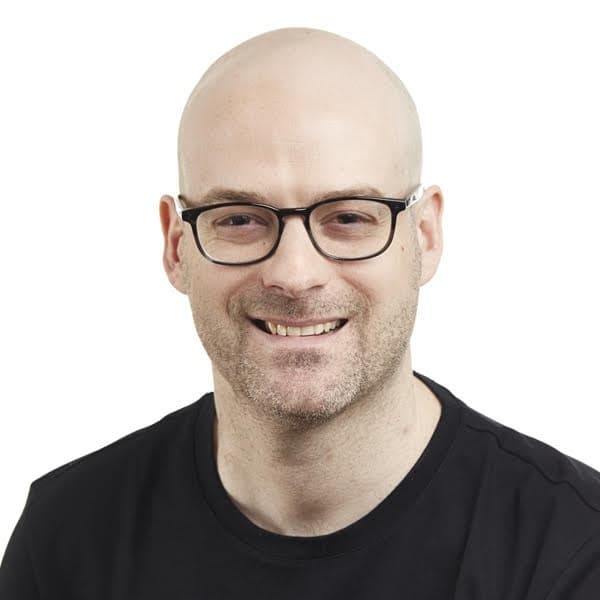
The conversation also arrives at a fascinating moment for the company. Xanadu has announced plans to go public through a SPAC deal that values the company at around $3.1 billion. Christian shares what that milestone means, not only for Xanadu but for the broader quantum ecosystem. According to him, the excitement surrounding quantum computing is no longer limited to research labs. Governments, enterprise partners, and investors are increasingly paying attention as the technology edges closer to commercial relevance.
One of the most engaging parts of our conversation is Christian's own journey into the world of quantum physics. Before earning a PhD in photonic quantum computing, he began as a film student who admits he once dreamed of becoming a filmmaker. That winding path eventually led him into physics and entrepreneurship, where he founded Xanadu in 2016 with a mission to make quantum computers useful and accessible to everyone.
We also discuss PennyLane, the open-source quantum programming framework developed by Xanadu that has quietly become one of the most widely used tools in the quantum developer community. Now taught in universities across more than 30 countries, PennyLane plays an important role in building the next generation of quantum talent.
Christian also shares a realistic timeline for where the industry stands today. Quantum computers already exist, but they remain smaller than what is needed for commercial breakthroughs. Xanadu's roadmap points toward large-scale quantum data centers by the end of the decade, systems capable of tackling problems in drug discovery, materials science, logistics, and finance that traditional computers struggle to simulate.
For enterprise leaders listening today, the message is clear. The quantum future is closer than many people assume, and organizations that begin exploring use cases now will be far better prepared when these systems mature.
So how should businesses prepare for a computing paradigm based on the mathematics of quantum physics rather than traditional software logic? And what lessons can founders learn from a journey that began with filmmaking ambitions and led to building one of the most ambitious quantum companies in the world? Let's find out together.
Useful Links
Learn more about Xanadu
[00:00:05] - [Speaker 0]
Quantum computing is one of those topics that can feel a little intimidating at first. It sits somewhere between science fiction, advanced physics, and the promise of solving problems that would take today's most powerful supercomputers millions of years to solve. But here's the thing. Behind all of that complexity are real people building real machines. Machines that could change the way we approach medicine, logistics, finance, material science, and so much more.
[00:00:38] - [Speaker 0]
And before I go any further, I'm gonna set you all a little challenge here. Yep. You. You sat on the commute to the office today. You walking your dog.
[00:00:49] - [Speaker 0]
Yep. You too. You having a run. Yep. You.
[00:00:53] - [Speaker 0]
Because when I mentioned the company that my guest leads today, I'm gonna guarantee that at least 75% of you will start singing the company name in your head. In fact, I'm gonna say most of that 75% of you will struggle to get the tune out of your head for the rest of the day, and that means you will never forget the company that I'm talking to you about today. Can you guess what it is? Well, if the words Electric Light Orchestra or Olivia Newton John just popped into your mind, you're probably on the right track. Because my guest today is Christian Weedbroek, founder and CEO of Xanadu.
[00:01:33] - [Speaker 0]
Beautiful. I could hear you all singing there. But seriously, they are a company building photonic quantum computers that use light as the foundation for computation. That is the Xanadu that we will be talking about today. And if you now have that song stuck in your head, I promise you, you're not alone.
[00:01:51] - [Speaker 0]
But behind the playful name sits some deeply serious technology. Christian and his team are working towards large scale quantum data centers that could unlock breakthroughs in areas from drug discovery, next generation batteries, and complex optimization problems that push classical computing to its limits. So today, I'm gonna try and do something I always try and do on this podcast. We're gonna take a subject that feels complex and break it down into something approachable, understandable, and maybe have a little fun along the way too. So what exactly is a quantum computer?
[00:02:29] - [Speaker 0]
Why are some researchers using light in instead of electrons to build them? And how close are we really to a world where quantum machines start delivering commercial value and solving real problems? With that seen perfectly sound, let me introduce you to Christian right now. So thank you for joining me on the podcast today. Can you tell everyone listening a little about who you are and what you do?
[00:02:56] - [Speaker 1]
Thank you for having me. My name is Christian Webrook, and I'm the founder and CEO at Sandidoo, and we're building photonic quantum computers.
[00:03:04] - [Speaker 0]
That is so much I've got to ask. First of all, I struggle to say Xanadu without launching into song for obvious reasons. When I was looking at your backstory, I mean, you began your career as a film student before moving into photonic quantum computing, So I think there might be a story there. But what sparked that shift and how has that maybe unconventional background shaped the way that you lead and communicate complex science today?
[00:03:31] - [Speaker 1]
Yeah. Actually, I'm a failed filmmaker. Always love films and still to this day love watching movies and seeing how they're made and understanding that side of things. And you mentioned Xanadu. We're actually named after the song too.
[00:03:45] - [Speaker 1]
So I was hoping you'd burst out into the chorus, but maybe maybe another time there. Really, my whole life has been about just what do I enjoy doing? How can I learn the most on a particular subject? And following that, hopefully being okay at it as well. And it was really a case of love movies, love how movies were made and try to sort of be part of that world.
[00:04:07] - [Speaker 1]
It didn't really work out and decided to go back to university. I failed university for the first two years. I did failed the first year, then I failed the same first year again. I just wasn't turning up and was really by that time had a job at a place in in Brisbane, Australia that made commercials for TVs. So I was getting more into that world, but after that, I I just decided to go back to university, have another shot, but add mathematics and ultimately physics, which was, math at least was okay at it in high school and decided to sort of continue that.
[00:04:39] - [Speaker 1]
And it was a love of learning, a love of adding to my knowledge, and then ultimately got into physics, and then ultimately got into quantum computing from there. So that's kind of the kind of weird progression, I guess.
[00:04:51] - [Speaker 0]
You say weird progression, but it's an inspiring story because Xanadu is currently preparing to go public with a, I think, a SPAC deal at $3,100,000,000 valuation, which is just amazing. So what does this moment represent for the company, and what message do you think it sends out about the maturity of the quantum computing market as well? There's a lot of anticipation and excitement around this space, isn't there?
[00:05:16] - [Speaker 1]
It is. It's you know, I I like to tell the story that we started what would have been our series d race about a year ago and it was going well, but and we would have achieved it, but it was slow going. It would have taken us a while. We were seeing what was happening on the public markets. There was at the time, I think, four quantum companies that were public and they had also gone public through a despac process like we're doing.
[00:05:39] - [Speaker 1]
And they were going very, very well, and we were really excited about how they were doing and thought, let's also do a spec process. And I think it was validated because we're able to raise as part of the pipe part of this of this back deal $275,000,000. We raised that within four weeks. And so I think they're really looking back on it was the right decision. We also before that got four or five or six LOIs from SPAC sponsors.
[00:06:05] - [Speaker 1]
So there's a lot of interest to your point. And ended up raising $275,000,000 for the pipe and 90% of that was actually new money, new investors including AMD and other great investors as well. So, yeah, a lot of excitement. And for us, we're going public through the SPAC process because of, you know, capital needs. Quantum computing will change the world.
[00:06:26] - [Speaker 1]
You need capital for that. We're a hardware company fundamentally, a photonic quantum hardware company. So you need capital so that allows us to raise capital through the pipe and the SPAC trust. And also the ability to think about potentially any acquisitions we may or may not wanna do in the future. This gives us another financial avenue to do that.
[00:06:45] - [Speaker 1]
And also allows us to continue to raise really awesome people through offering different types of compensation now through stock options. So very exciting time. It's exhausting time as I'm sure anyone that knows going through public. You know, someone mentioned, know, SPAC is really about going public, which is a lot of time and effort, but it's also about a reverse merger as well by the nature of the SPAC. So a lot needs to be done.
[00:07:08] - [Speaker 1]
We're on queue to sort of have this done by the end of this quarter, end of this month, and we're all very excited about it.
[00:07:15] - [Speaker 0]
We have been talking around quantum and all things quantum for a few years now, and there will be some people listening who might still see quantum as somewhat theoretical or years away from impact. So where do you believe we genuinely are on that timeline towards practical and commercial use? Where are we now in your view?
[00:07:35] - [Speaker 1]
Well, if the viewers don't know, perhaps they do, but quantum computers already exist today. Xanadu has built them and so do others, but they're smaller. There's smaller version of what they need to be. And it's at the point where they're large enough, which often you hear about as a quantum data center size, so hundreds of server racks that network together. It's at that point you'll see true commercial value and revenue.
[00:07:58] - [Speaker 1]
This is when the world changes. And our roadmap, our timeline is for to achieve this large scale quantum computer, also known as a quantum data center by '29 twenty twenty nine, twenty thirty. And it's at that point really that, you know, customers can start solving problems that otherwise would have taken millions of years to solve with traditional, what we call classical computers. So to answer your question, twenty twenty nine, twenty thirty is our roadmap. And so far, historically, from a hardware point of view, we've hit pretty much all of our hardware milestones and we're confident of getting there by that time frame knowing that we're in the field of deep tech Yeah.
[00:08:35] - [Speaker 1]
And anything can happen, but so far so good.
[00:08:38] - [Speaker 0]
And, Zanadu, you've taken a photonic approach to quantum computing. So just for everyone listening here, make sure we don't leave anyone behind. Can you explain why using light as the foundation offers advantages in areas such as energy efficiency, scalability, and networking, and and where some of the trade offs might be?
[00:08:58] - [Speaker 1]
Yeah. That's a good question. For your viewers, you can really build a quantum computer out of two main sort of ways using either photons or electrons. So either photonics, which is what we're doing or electronics, which we're very all all familiar with. And as long as you can kinda access the quantum properties that that the quantum physics offer like entanglement superposition interference, you can see some dramatic speed ups.
[00:09:20] - [Speaker 1]
For instance, we demonstrated quantum supremacy a few years ago where we chose a well defined math problem that would have taken the world's fastest supercomputer at the at that time seven million years to solve. Our Borealis computer solved it in two minutes. Wow. And so this is why why people are so excited. Now, as I mentioned, it's for a very hard math problem, that's why we need larger quantum computers to solve commercial problems.
[00:09:45] - [Speaker 1]
And so that's why we're excited about quantum computing and our photonic based approach. As you mentioned, it has some really extraordinary benefits. So the end goal for us and pretty much everyone in the industry is to have hundreds of server racks that are networked together. And in each server rack, you have either your photonic approach, which is what we're doing, or you have your electronic based approach. Where and then you you network them together using photons or light.
[00:10:10] - [Speaker 1]
That's really how how you define networking. Now from day one, we knew that for the electronic based approaches, it's very challenging to convert from electrons. So if let's say you have two server acts, you'll have many of them, but two to make it easier. You'll have electrons here, electrons here, and you you connect them using fiber optics. You have to convert the electrons here that you're computing with, convert them to photons, and then convert them back to electrons again.
[00:10:35] - [Speaker 1]
It's very noisy, lossy, and probabilistic, meaning this conversion doesn't always work. But with photons, we decided early on why not keep the computing photonics computing photonics and then the the networking is gonna be photonic. So let's keep everything photonics. So you don't have to worry about this transformational conversion that I mentioned, which inherently has problems. And so that's that comes back to scalability, and that's what the team solved with a a pretty big nature paper about a year ago in our Aurora Quantum computer that showed how to network together four server racks.
[00:11:09] - [Speaker 1]
And, you know, it's we could have done 400 if we wanted or 40, however many we wanted to do, meaning we solved the networking problem. The only company does to have solved that thus far. So we're really excited about that. So networking is a big benefit and also the ability to mass manufacture. So we can use a lot of the preexisting foundries that exist.
[00:11:30] - [Speaker 1]
So we work with UMC in Taiwan, second largest pure play foundry in the world. We work with Global Foundries, NY Creates, Tower. We announced a partnership with them, Applied Materials, and so forth. So these foundries are already there because they're servicing the telecommunication, meaning photonic industry. And so that's a huge benefit.
[00:11:51] - [Speaker 1]
You mentioned that the trade offs, our biggest challenge which we're open about is loss, and we need to reduce loss. Loss basically is a mechanism where the light gets depleted as it goes through chips. So the photons get lost. They get absorbed or scattered. And so basically, the information is encoded on the loss on on the photon.
[00:12:11] - [Speaker 1]
So loss reduces information. There's ways around that. Error correction is the big one because the loss induces or creates errors, so we need to correct for that. And also, you know, continuing to work with the large foundries to improve their chip designs is another key element of that. So we've got that under control, but that's really the source of our errors.
[00:12:31] - [Speaker 0]
Lovely. And something else I wanted to shine a light on today is the fact that Penny Lane, another song there, has become one of the most widely used open source quantum software frameworks. And Why was building an open source ecosystem so important to you? And how do you see developer adoption shaping the maybe the pace of quantum innovation too? Collaboration's a a big part of this, isn't it?
[00:12:57] - [Speaker 1]
Oh, for sure. And that that that's why open source is key there. You know, how do you build as many people using your product? At least initially, keep it open source. Keep it free, freely available.
[00:13:07] - [Speaker 1]
In fact, Penny Lane now you think of Penny Lane as as, you know, it's it's it's the how developers write programs on on on quantum computers. How they it's the operating system. It's a way to sort of build applications. It's a way to access quantum computers. And it's Python based, another way to sort of lower the barrier for entry for developers and open source.
[00:13:29] - [Speaker 1]
But it's also agnostic to the hardware. It works on our hardware, but we've made it available on pretty much everyone else's hardware out there as well. So there's a true love of this product by developers around the world. And in fact, we also use it to sort of train the next generation of the workforce. It's available in over a 150 universities around the world being taught as part of the curriculum in over 30 countries.
[00:13:51] - [Speaker 1]
And getting back to your question, we couldn't have done that. We couldn't have had these stats without making it open source. And so really excited about it. It's one of the longest running software platforms in the quantum industry. It's been around, I believe, for around eight years now and continues to to get even more interest every every day, every month, and and every sort of year.
[00:14:12] - [Speaker 0]
And when we're talking about collaboration here, you have support from organizations such as DARPA, Canada's Quantum Champions prob program alongside customers that are household names. We've got Volkswagen, Mitsubishi Chemical Group, and Rolls Royce to name but a few. And I don't expect you to name any names here, but what kind of real world problems are these partners trying to solve with Quantum today? Because think that'll really help bring to life some of what we're talking about here.
[00:14:39] - [Speaker 1]
Yeah. The reason why us and others are very excited about quantum computing is it can have dramatic impacts in many fields. So for instance, pharmaceuticals, so drug discovery is a good example. Taking drugs from a decade to to less than a year potentially, working on next generation batteries, that would be in the field of quantum chemistry and material design. Defense, that's a big area as well.
[00:15:02] - [Speaker 1]
You mentioned the the QBI DARPA program and the Canadian Champions Quantum program. These are very big programs with a lot of funding and and a lot of potential customers, meaning the governments are interested to see what winners will come out of these programs too. Xanadu made into the second round of the QBI program, and the the champions Canadian champions program is a is a direct so inspired by the the DARPA program as well. Really, you know, trying to keep the Canadian companies like Xanadu here, which is what we definitely wanna do. We wanna build something great in Canada.
[00:15:35] - [Speaker 1]
So defense is a big part. Also logistics, AI, and finance. So these are all the big industries that quantum will really affect in in a really great way. And and all of these industries and problems have have the characteristics that they're very complex systems as the system scales up. And basically, what that means is traditional computers will basically flatline or plateau out after a certain size of the problem.
[00:15:59] - [Speaker 1]
And we see that in drug discovery, you know, it can take, you know, drugs to come to market 10, 1 to 2 billions of dollars, and ninety percent of the candidates fail. And it's because the candidates start initially from computer simulations, which are not really efficient, and they're not solving the problem as accurately as what they can. And so that's where quantum computing will come in and do some remarkable things in the future.
[00:16:24] - [Speaker 0]
And on a personal note for a moment, I mean, scaling from a startup in 2016 to a 240 plus person company, preparing to go public through a SPAC deal at a 3,100,000,000.0 valuation. No small fee. And for anybody listening, maybe a founder at any stage of their journey, what would you say were the biggest, toughest inflection points along the journey? And how do you decide when to push forward versus when to pivot? It's something that I think every founder encounters during that journey, but what would you take away from that period?
[00:16:57] - [Speaker 1]
Yeah. It's been tough. You know, I think what sustained myself and others at Xanadu is is the mission. So we've had a mission very early on and and the mission, you know, is to build quantum computers that are useful and available to people everywhere. And our vision is this large scale quantum data center.
[00:17:14] - [Speaker 1]
So being very clear about the the vision and the mission from very early on is very important because it sustains you. We we have the first 80 to a 100 hires. We're all pretty much PhD students. And so they're naturally curious, hardworking, and love to learn about their particular field, in this case, quantum computing. So you got people that are naturally motivated and hardworking and curious.
[00:17:37] - [Speaker 1]
That helps a lot, particularly in something as, you know, as you mentioned, we started 16 and went to our tenth year now. You need something that can can sustain you. And so I think having something that's becomes people's life purpose is really important for a company and and and we've leveraged that all the time. It's been tough raising money. We've been very successful in the private markets over $250,000,000 from VCs, but that wasn't easy to do.
[00:18:03] - [Speaker 1]
And so persistence and, you know, obsession, these are key things for any entrepreneur, particularly if you wanna get to a certain level. And the pivoting question is always very fascinating because I don't know if there's any hard and fast rule. I think trust in your gut, you know, if if you're really thinking about customers, asking them what they think. You know, with quantum computing, our ultimate product still isn't here yet. This is this quantum data center.
[00:18:27] - [Speaker 1]
So we can't really ask our customers per se. I do think though in the early days, I started another company before Xanadu called, CypherQ, and that was about commercializing quantum security. And I was talking to a lot of investors, and they were far more interested in in quantum computing. You know, it's like, can you do that? If you did that, we'd be more interested in investing in you.
[00:18:48] - [Speaker 1]
So at that point in time, it was kinda weird, but investors were the customers. And and, you know, I listened to them and thought, well, you know, my PhD was on quantum security, but also quantum computing. Let's have a go at that. And so, yeah, that's that's where we've ended up today.
[00:19:04] - [Speaker 0]
I love that though, because I've done what, 4,000 interviews on here, and one of the things that keep coming back is just the that everybody seems to get this little nudge in the right direction from the universe. You mentioned there the Yeah. The investors were just kinda asking you a few probing questions. We kinda set off that light bulb moment, but you still need to be open to those ideas and listen to them, don't you?
[00:19:25] - [Speaker 1]
You do. And then it's tough because as an because you've been struggling the whole time, you know, it's hard to build a company. You have to be dogmatic and persistent, but sometimes you gotta let that those characteristics go and be open to something different. And it's hard because it's not a switch you can just switch on and off because most of the time you gotta be persistent and just keep forging ahead no matter what's in front of you. So knowing sometimes instead of going through the wall going around it, it's tough.
[00:19:53] - [Speaker 1]
But I I think for me, my philosophy is if you just work hard all the time and keep doing it many many years, things will just work out anyways.
[00:20:01] - [Speaker 0]
Yeah. I completely agree. And here you are, 2026, ten years later, looking ahead, got some big milestones ahead. But where do you expect the first commercially meaningful quantum breakthroughs to emerge? And what should enterprise leaders, maybe people listening to this podcast, what should they be doing now to prepare rather than simply watch from the sidelines and then jump on that bandwagon later?
[00:20:24] - [Speaker 0]
What should they be doing, do you think?
[00:20:26] - [Speaker 1]
Yeah. You're right. They need to in our humble opinion, they need to start thinking about, you know, engaging now and understanding how to be prepared today. You know, a large scale quantum computer when customers can truly get value will be in 2029, 2030. That's not too far away now.
[00:20:42] - [Speaker 1]
And a quantum computer isn't something that is really it's such a different paradigm when it comes to computing in general, very different to normal computing. So for instance, if someone went to the future in 2029 and got the latest Intel or NVIDIA chip and brought it back today, you would just roughly speaking plug it in and and what you're doing is much faster. Like, we know how what to expect. The quantum computing is really defined by the mathematics of quantum physics. And so it's not a simple case of plugging in.
[00:21:13] - [Speaker 1]
Like, if we had a large scale quantum computer today instead of 2029, it's not the same as, okay, now let's get started. You have to do a lot of work and that's what we do with our customers and partners today is we understand what their problems are and then match the mathematics of that with the mathematics quantum physics and quantum computing and really understand things. So basically, the take home is you need to start now because you have to understand where quantum computers can help. It can't solve everything, but it can solve a lot of things in a very significant way and, you know, significant speed up in very important industries that I mentioned before. So there's no time like the present.
[00:21:51] - [Speaker 1]
It's very important. And that's why we're seeing a lot of our customers, you know, in the automobile industry. They they know it's gonna be transformational. We work on them with with things such as next generation batteries. How do you create a new battery that's gonna be 10 times faster charge, 10 times or more longer distance and range?
[00:22:08] - [Speaker 1]
And so these are things and and they're they're very forward looking and know that they they need to get started now. Along with, you know, we announced Lockheed Martin last week. We've been working with them. So there's a lot of true believers, and a lot of people are getting on board now, but I think many more can and should be doing that.
[00:22:24] - [Speaker 0]
And one of the things I always try and do on this podcast is give my guests an opportunity to bust a few myths and misconceptions. You've been on here in right in the heart of this space for over ten years now, and you're living and breathing this space, the people you're talking to. But I I would imagine that when you have a quick scroll down a LinkedIn news feed or maybe Reddit or anywhere where you get your where you hang out online, you'll see a lot of myths, misconceptions, maybe even some untruths that frustrate you. So I'm gonna pull out a virtual soapbox here and let you get on there and just bust any myths that we can lay to rest today. What would they be?
[00:22:59] - [Speaker 0]
Anything frustrate you?
[00:23:00] - [Speaker 1]
It can be sometimes for sure. I would say one thing to sort of point out, you know, we we think there'll be a few winners. We don't think there'll be one winner takes all, at least not this decade. We think we you know, Xander will be one of the winners, and so there's many good approaches out there. I would say it's challenging sometimes the the extent to which folks say their room temperature computation.
[00:23:21] - [Speaker 1]
You know, we we truly are room temperature computation. You know, to be fair, everyone needs some form of cooling or it's cryogenics or laser cooling. But we to our knowledge, we need far less than anyone else. And we actually only need the cooling to turn on our computer roughly or or initialize it so to speak. But once that's happened, the qubits themselves and then following the gates and then the measurements, it's all done at room temperature.
[00:23:46] - [Speaker 1]
So no cryogenics, no laser cooling or anything like that. It's done at at 25 degrees Celsius room temperature. And not everyone says that and so I find that frustrating sometimes. But, you know, it is what it is and we always all we can do is just sort of mention, you know, and people, you know, often people ask us how do we prove it and we can send a lot of our our papers including four nature papers to sort of prove that, you know, any sort of statements that we make. So we're always happy to do that, but there's a lot of great approaches out there, we're fans of a lot of a lot of them.
[00:24:18] - [Speaker 0]
Love it. Well, it's all out there now. Maybe we can remove that frustration for you. And another final question I often ask my guests is we have a Spotify playlist where I ask my guests to add a song that means something to them. We've got hundreds of tunes on there.
[00:24:33] - [Speaker 0]
And I've got to ask, are you gonna add Penny Lane, Xanadu, or or something completely different? What would you add to that playlist?
[00:24:40] - [Speaker 1]
I think let's go with Xanadu by Olivia Newton John.
[00:24:44] - [Speaker 0]
I love it. And what's your history with that tune as well and and naming the company? Is there a story there at all?
[00:24:50] - [Speaker 1]
There is. I'll give you the short version. Basically, I'm a huge Beatles fan. Yeah. And I actually thought about calling the company McCartney.
[00:24:58] - [Speaker 1]
That didn't seem like quite right. But then I thought, well, ELO, you know, we're photonic, and ELO were called the sons of Beatles, and it had light in the name, Electric Light Orchestra. And the lead singer and songwriter was Jeff Lynne, and he wrote Xanadu. So that's kind of the roundabout way of how it got there.
[00:25:17] - [Speaker 0]
Wow. What a great story. Love that. I'll be getting that added to the list. And whenever I hear that song, I'm gonna think of you from now on anyway, but I'll get it added to the Spotify playlist.
[00:25:27] - [Speaker 0]
And for anyone listening, they wanna find out more information about Xanadu, the work you're doing, some of the announcements and milestones. Obviously, you're going public as well. Where would you like me to point everyone?
[00:25:38] - [Speaker 1]
If they don't mind, please direct them to xanadu.ai.
[00:25:42] - [Speaker 0]
Xanadu.ai. No problem. I'll add a link to that and your LinkedIn as well. I think you'll be getting a few people wanting to connect with you and and talk about this. But more than anything, just thank you for having a bit of fun with me today.
[00:25:55] - [Speaker 0]
Quantum can be a dry subject, but I think we've talked about it in a language everyone can understand and had a bit of fun along the way. So thank you so much.
[00:26:03] - [Speaker 1]
Great. Thank you for having me.
[00:26:05] - [Speaker 0]
So after hearing our conversation today, I think quantum computing suddenly feels a lot less like science fiction and a little more like an industry quietly moving towards its moment. And quantum computers already exist today, and thank you to Christian for pointing that out. But they are indeed smaller versions of what they ultimately need to become. And it's that real shift that will arrive when these systems scale into what he describes as quantum data centers, hundreds of racks working together to solve problems that traditional machines just can't handle today. And listen to that roadmap that he shared there.
[00:26:42] - [Speaker 0]
That moment might arrive much sooner than many of you expect. And one of the things that stood out, I think, was just how different this new era of computing will be. You cannot simply plug a quantum process into the same workflows that we use today and expect instant results. Organizations that want to benefit from quantum advances, they need to begin exploring the mathematics, the algorithms, and the types of problems where quantum approaches can truly shine. In other words, preparation begins long before the hardware reaches full scale.
[00:27:17] - [Speaker 0]
And I also appreciated hearing about the human side behind the story. A founder who once tried filmmaking, failed a year of university twice, and eventually ended up building a computer valued in the billions that is pushing the frontier of quantum technology. That inspiring journey is a reminder that innovation rarely follows a straight line. And, of course, I cannot end this episode without acknowledging the obvious. If the name Xanadu has been looping around your head since the beginning of this episode, I suspect you're not alone.
[00:27:50] - [Speaker 0]
But I'm curious. Do you see quantum computing as a distant possibility, or do you think it's a a moment that is approaching faster than you and your organization realize? And most importantly, are you ready for when it does arrive? I'll add links to everything that Christian mentioned there. Also, Remy, check me out at techtalksnetwork.com.
[00:28:12] - [Speaker 0]
You can leave me a voice mail. You can leave me a a DM. Connect me on socials. Browse through 4,000 other interviews too. But I'm afraid we're out of time now, so I'm gonna give you one final Easter egg to all of you that listen to the entire podcast.
[00:28:26] - [Speaker 0]
And that's right. I'll sing you out today. Zanadu. Zanadu.