

How do global companies make confident decisions when supply chains are constantly disrupted by tariffs, geopolitical tension, shifting consumer demand, and unpredictable global events?
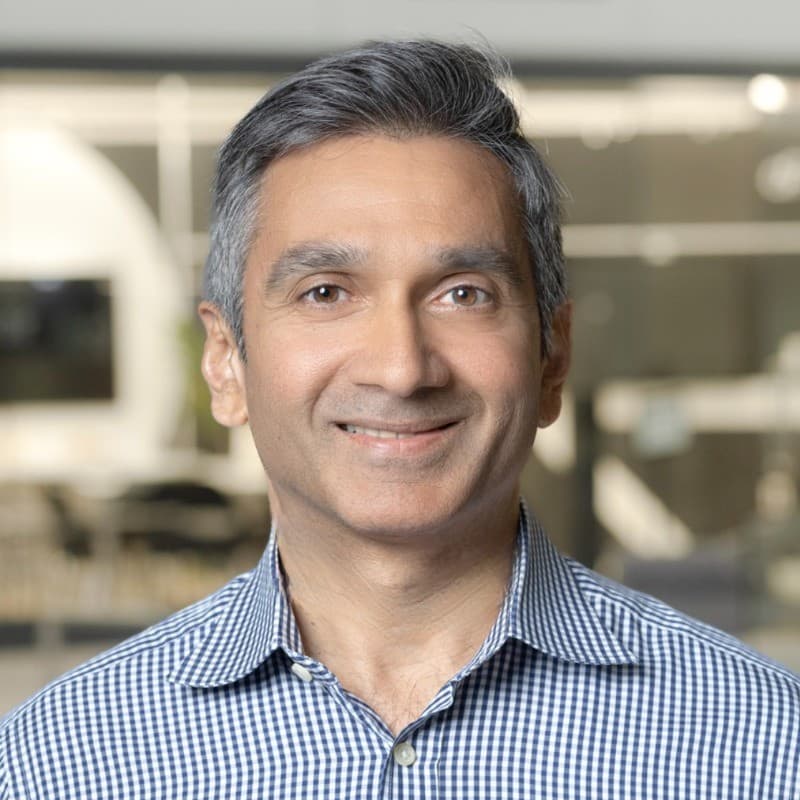
In this episode of Tech Talks Daily, I sat down with Dr. Ashwin Rao, EVP of AI and R&D at o9 Solutions, to talk about how artificial intelligence is changing the way organizations plan, forecast, and respond to uncertainty. Ashwin brings a fascinating mix of experience to the conversation. After earning a PhD in mathematics and computer science, he spent 15 years on Wall Street developing derivatives trading strategies at Goldman Sachs and Morgan Stanley before moving into enterprise technology. Today, he operates at the intersection of business and academia as both a senior AI leader and an adjunct professor at Stanford University.
Our conversation begins with Ashwin's unusual career path and how those early experiences in finance shaped the way he thinks about risk, decision making, and real world AI deployment. The journey from theoretical mathematics to trading floors and eventually into Silicon Valley offers an interesting lens on how analytical thinking can travel across industries and still remain highly relevant.
We then move on to the work at o9 Solutions, where AI is helping organizations make smarter decisions across supply chain planning, demand forecasting, and inventory management. In a world that Ashwin describes using the acronym VUCA, volatility, uncertainty, complexity, and ambiguity, businesses are under pressure to react faster and make better-informed decisions. He explains how enterprise AI platforms can connect fragmented data across departments and create a more complete view of the business.
One example he shares brings the concept down to earth. Even predicting how many bananas a grocery store should stock on any given day requires analyzing internal sales trends alongside external signals such as weather, social media trends, and economic conditions. Machine learning systems can now process those signals in real time and continuously update forecasts so businesses can respond quickly to changes.
We also explore the rise of neuro- and symbolic AI, a concept Ashwin believes represents the next stage in enterprise decision-making. Rather than relying only on large language models, this approach blends the structured reasoning of symbolic systems with the pattern recognition of neural networks. The result, he suggests, feels less like a chatbot and more like having an expert coach embedded inside the decision-making process.
Along the way, we also discuss why many organizations still struggle to embed AI successfully. Technology is only one piece of the puzzle. Ashwin believes the toughest obstacle is organizational change management, bringing teams together, connecting data across silos, and helping leaders guide their organizations through transformation.
If you have ever wondered how AI moves beyond chatbots and into the systems that quietly power global supply chains, this conversation offers a thoughtful and practical perspective.
So, how prepared is your organization to make decisions in a world defined by volatility and uncertainty, and could AI become the trusted partner that helps guide those choices?
Useful Links
[00:00:04] Have you ever wondered what happens when someone moves from abstract mathematics to Wall Street trading floors and then take the leap into the world of enterprise AI? Well, my guest today has lived that very journey. He is the Executive Vice President of AI and R&D at a company called O9 Solutions.
[00:00:26] And they are focused on helping large enterprises make smarter decisions across supply chains, planning and execution. And alongside that role, he also teaches at Stanford University as an adjunct professor in applied mathematics, exploring areas such as reinforcement learning and the deeper mechanics behind modern machine learning.
[00:00:51] And that combination of industry and academia gives my guest a very rare vantage point. Because he is someone that has spent years studying the mathematics behind intelligent systems, while also applying those very ideas in environments where decisions affect real businesses, real supply chains and real customers.
[00:01:14] So whether it be forecasting demand for everyday products to helping global brands respond to disruption. His work sits at the centre of how organizations are trying to turn AI into practical outcomes. So today we'll talk about how AI is changing enterprise decision making, why supply chain forecasting has become such a complex challenge right now,
[00:01:40] and why he believes the future lies in combining neural and symbolic approaches to AI, rather than just relying on one. But enough for me. Let me officially introduce you to my guest right away. So thank you for joining me on the podcast today. Can you tell everyone listening a little about who you are and what you do? Yeah, my name is Ashwin Rao.
[00:02:07] I am the EVP of AI at O9 Solutions. We are an enterprise AI company that helps our customers with their enterprise planning and execution with 15 years of investment in technology and AI. So my role at O9 is specifically to lead all of our technology and AI efforts. I also have a second job. So this O9 is my full-time main job.
[00:02:35] My second job is a part-time job. I am an adjunct professor at Stanford University in applied math. My research and teaching is in a branch of machine learning called reinforcement learning. I love that. And I want to be talking about O9 in a few moments, what you're doing now and indeed what you're doing in the future. But before we do that, I'd love to take you back and learn more about your origin story.
[00:03:02] Because I was reading that you began your career with a PhD in math and computer science, then spent 15 years on Wall Street with Goldman Sachs and Morgan Stanley, before moving into enterprise AI. So tell me more about that journey and how it shaped the way you think about risk, decision-making and a real-world AI deployment today. I've got a feeling there's got to be a bit of a story there. Yeah, it's a long story. I'll try to keep it relatively short.
[00:03:31] Look, I've been in many different places in my life and career, different industries, different cities, continents and so on. I came here as an immigrant from India in the, I guess, early 90s, 93. And then I did my PhD for five years. It was in a very abstract area of math and computer science. So I wasn't quite sure where to get a job and whether the software industry might be interested
[00:03:59] in me because my PhD was very theoretical. Somebody told me take a flight to New York and they like to hire math people there. I had never heard of it. And so I took the flight. I went to talk to Goldman and they kept me there for a week, made me talk to 30 people through the interview process. They made an offer. I had no idea, not heard of Goldman. I joined them and then I quite liked it. And I would say the first few months was very awkward and difficult and confusing.
[00:04:29] So very chaotic environment on the trading floor. But after a while, the job turned out to be very interesting. So I stayed there for 15 years at Goldman Sachs for 10 years, Morgan Stanley for five years. I did something called derivatives trading strategies. These were the sort of the famous or infamous exotic derivatives that came into prominence during the 2008 financial crisis.
[00:04:56] So I was working on those things and it was a great experience for 15 years. So that experience was really useful in understanding risk, really. You correctly pointed out, understanding how decisions are made, how risk is made, although in a very different world. I think that you can sort of transport some of the learnings and experiences further on in your career. So it's very helpful.
[00:05:23] But after 15 years, I wanted to do something a bit different, Neil. I came to Silicon Valley in 2013 and I started my own company. That's when I got into the world of Silicon Valley technology. And then after that, I joined Target, the retail company. So yet another pivot. Target is a very different word. I knew nothing about retail. So I like to do these things.
[00:05:50] I like to go into areas I know nothing about or very little about. But I think every time you bring something from your past and you try to integrate it into your new world, and I think it's very helpful because even though these things on the surface look so different at the heart of it, it's the same type of math. It's the same type of computer science. It's the same type of business thinking and pricing and risk and decisions. It helps to have this variety. So I worked at Target for six years.
[00:06:19] I learned a lot about this new world of supply chain and merchandising and digital personalization. And that journey then took me further on into where I am today, where we are helping enterprises with their decision making, planning, and execution. And a large part of our effort is actually supply chain. So my specialization is today's world is AI for supply chain.
[00:06:48] That's kind of demand forecasting, inventory, logistics, optimization, that type of stuff. Such a great story. And I completely echo everything you said. I think it's so useful to do different things and use your experience to improve on that. And fast forward to present day, you now sit at the intersection of industry and academia as EVP of AI and R&D at O9 Solutions and an adjunct professor at Stanford.
[00:07:18] So again, how do these two worlds influence each other in your work? And what are enterprise leaders missing, do you think, when they think about an AI strategy now? Because you seem to have such a unique vantage point here. Yeah, the worlds are different socially and culturally very different. I think I want to just clarify, I've always been a full-time industry person. Ever since I graduated from school, I've always had a full-time job in the industry.
[00:07:47] So I'm not a professional academic in that sense. But about eight, nine years ago, Stanford asked me to come join their applied math department to lead their program, which is called mathematical finance. So it's sort of the intersection of mathematics, finance, and machine learning. And I'd never been a professor before. And so this is like a part-time professor, adjunct professor.
[00:08:16] And so that's when I got into, and I've been doing it now for all eight years. I've been, and I'll continue to do it. It's part-time. I try to balance it with my full-time job. It's a world of research and teaching. So you dig deep into some of the hard technical problems in the world of mathematics, AI, also applied finance. And I think doing that research and teaching makes you think very deeply about problems.
[00:08:44] It has helped me a lot today in this world of AI, because if I was not doing my Stanford role the last eight years, I really feel, Neil, I would not have understood AI at a level of depth that I have now. So I really appreciate the platform Stanford has given me. See, people, this thing is not about talent, I feel.
[00:09:09] It's about having the time and space to sit at a place and think hard about something you want to learn about. So Stanford gives me that space and time to think. If you're just working in the industry, you wouldn't have that opportunity, because in industry jobs, you're just like very busy running around all the time. You want to dig deep and understand the core reasons for why AI works, but you just are not able to do it. So Stanford, the depth of understanding of AI, I'm able to use it in my day-to-day decisions
[00:09:39] I make at 09. So when we think about, should we use large language models here in this type of problem, I think having a deeper understanding of how these models work, what is the underlying mathematics or the engineering that really makes it successful, that level of depth, I get that from academia. And it shows up in subtle ways in how I make decisions or solve problems in my industry job. So that is going from this way to that way.
[00:10:09] But there's the other way also is very helpful, Neil, because academics are always looking for the right problems to focus on. So even though often we work on theory and new models and algorithms, we're constantly searching for what's a good problem. You want to start with a real-life problem. And then you take that real-life problem, and then you translate it into a mathematical problem statement, and then the math and computer science takes over.
[00:10:36] But I think having a good understanding of the business problem is something academics are typically starved. Like that's always a struggle in academia. And so I've been fortunate that I've been able to kind of create a pipe from industry to my academic world. And it's not just me who's benefiting. All my students are benefiting because in my course, which I'm teaching right now, I do projects for students.
[00:11:03] And these projects, actually, I source some of these problems from my industry experience. And I present these problems to them. And it's great. My students appreciate it. But some of my colleague professors also benefit from some of these problems that are coming from the industry. So I think it's wonderful. I think more people should try to do it to the extent that they have time. The only downside is like, you know, two jobs means your personal life takes a hit.
[00:11:33] You have to shut down a lot of things. But if you can do it, it's really awesome. Love it. You certainly spin a lot of plates there. And as you said, O9 Solutions, that's your main full-time job. And for listeners that might not be familiar or just hearing about them for the first time, how would you describe the platform and its role in the modern supply chain and business planning? Especially as we record this episode, we're in a world of tariffs, geopolitical instability and constant disruption.
[00:12:03] So many things we used to take for granted there. But the world has changed considerably. So tell me more about O9 Solutions. Yeah. O9 Solutions was a company started 15 years ago. It was founded by our CEO, Chakri Gautamukhala. It's a Dallas-based company. The company was started with this vision that enterprises are too fragmented. They're siloed.
[00:12:30] People are making decisions, not taking into account decisions in other silos. So there is slowness, sluggishness, there is disconnectedness, and there is a lack of holistic decision-making and problem-solving in company. The term we typically use is integrated business planning, IBP as it's called, right? So that was the vision of the company.
[00:12:54] And 15 years of investment in technology and listening to customer problems is what has made O9 what it is today. We have a few hundred customers across the world. We cover a whole bunch of verticals. A lot of our sweet spot tends to be in the world of retail, CPG, manufacturing, and supply chain, like things like demand planning, supply planning.
[00:13:24] But we've also been doing a lot of products in the world of commercial planning, revenue and growth management. So that's sort of the nature of our company. Now, coming to the thing you mentioned, all this world of tariffs and geopolitical instabilities and disruptions, there's actually a term for it. So we always present what we do, starting with what is the problem companies are facing today? So the term for it is called VUCA. VUCA.
[00:13:53] VUCA, four things. V for volatility. U for uncertainty. C for complexity. A for ambiguity. So the world is full of VUCA today. It's very difficult for enterprises to operate. You can never know what's going to happen tomorrow. But you have an idea. You sort of build some predictions around what might happen. You keep track of the likelihood of things happening. But it's difficult.
[00:14:23] So you start with the problem statement is VUCA. We're trying to solve that for customers. That's what they're experiencing. Our prescription to overcoming VUCA is what we call the APEX model. So let me just explain this acronym APEX. The last three letters, PEX, is simple. It just stands for planning and execution. But the A, the first letter in APEX, is what is our marquee capability.
[00:14:52] The A in APEX actually stands for three concepts. Agile, adaptive, and autonomous. So agile is about making decisions quickly, of course, as the name suggests. But it's also about connecting the enterprise. So you have all of the data of the enterprise made digital, and they're all interconnected. You build a data model. You create a decision-making model. So agile is about speed as well as connectivity.
[00:15:22] Adaptive, the second A, is about continuous learning and improving and developing new capabilities. Because today we are in an environment where companies need to constantly reinvent and grow and evolve. And that's the adaptive term. And the last one, the autonomous, is, of course, self-explanatory.
[00:15:43] So our implementation of these three A's, agile, adaptive, autonomous, that's based on our proprietary platform, which is called the digital brain, that combines the traditional technology of forecasting, optimization, data structuring, enterprise knowledge graph, all that stuff, good stuff that we have invested in 15 years with our proprietary domain knowledge. Let me call that the traditional technology.
[00:16:12] You combine that, Neil, with the modern AI, this modern world of neural networks and large language models. So we sort of blend these two. It gives us this really nice technology and AI platform, which delivers to our customers the three capabilities that I said, agile, adaptive, autonomous. That's our Apex model. And with that, we solve VUCA for our customers. I love that.
[00:16:38] And I also want to highlight that you work with some major brands, big household names, such as Toyota, Prada, AB InBev, PepsiCo and Acuity brands, to name but a few there. But to bring that to life and everything we're talking about, are you able to share any practical examples of how organizations are using AI to better forecast demand,
[00:17:02] optimize inventory and respond to volatility in this global supply chains, which can be disrupted very easily now? Any examples you can share? I don't expect you to name any names, but anything you can share there to bring that to life? Yeah, no, absolutely. So there's a lot to share here. I'll try to focus on the world of demand forecasting and inventory optimization, because we do a tremendous amount of work there.
[00:17:31] And that is some of our most powerful solutions for customers come there. So as we said, VUCA, Neil, VUCA is a tough problem. And that's where the demand forecasting problem is very complicated. Just to give you an idea, I live here in Palo Alto. I have a store here, Safeway, which is a large department store. And they have all these groceries as well.
[00:17:55] So it's very hard for the store to predict how many people will come to buy bananas today. You know, you can't have too many bananas. You cannot have too little bananas. And just think about what type of models or what type of data you might need to be able to predict the sale of bananas today. And I say today because tomorrow it might rain a lot and it could be very different tomorrow.
[00:18:24] So you really focus on every day because you need to replenish some of these things every day. So you and there is and there is like limited space because you can't have too many or too little bananas. So these are now done with modern machine learning capabilities. So we have made a lot of investments in demand forecasting models that are machine learning models. And we've given these solutions to many, many customers of ours.
[00:18:50] But to build it, we have to take a lot of what I call internal signals as well as external signals. Internal signals are all of your sales data. So you look at how many people were buying bananas for the last two years. But you also pay attention to the past few weeks because you want to pay more attention to the recent trends. You look at daytime purchase, nighttime purchase. You look at weekdays versus weekends.
[00:19:17] So these algorithms look at all these trends, seasonality, but also take into account a lot of external factors, Neil, because weather is a big factor. Macroeconomic conditions are big factors. You know, if the prices of bananas go up, you know, that's going to affect like how many people want to buy it.
[00:19:38] There's also issues of substitutability because if some other fruits become very popular suddenly, for example, a celebrity tweets that, hey, you should eat a lot of oranges. And suddenly now people are buying oranges. So their basket has less bananas. These are very important. The swings in demand can change a lot through some of these external signals. Social media, what are competitors doing? What are some of the political actions happening?
[00:20:06] Traditionally, we couldn't have done this with traditional statistical models. But now these machine learning models, we can build these agents that can go out and scour the earth, look at all of these external signals, combine them with internal signals. And we are able to produce very accurate forecasts that can also update in real time. So I have a forecast this morning, but there is some news event my agent picked up. That news event will propagate. It will update my forecast in real time.
[00:20:34] And that forecast feeds into my inventory ordering system. So immediately you've got to update your forecast in the morning. And you might say, the algorithm might say, I need to order more bananas to come in in the afternoon. Because often for these perishables, you have deliveries that come multiple times a day. So you will say, I want more bananas. So it'll come in. So you've got to get your inventory in time to respond to these real-time events.
[00:21:04] So that should give you some rough idea of how data, algorithms, models, agentic world, everything comes together to do accurate forecasting. But also having the right level of inventory. Inventory cannot be too much, cannot be too little. It cannot come too early because bananas will rot. It cannot come too late.
[00:21:29] Inventory at the right place, at the right time, in the right quantity, in a manner that overcomes all of this global supply chain volatility. So that's our game. And before you join me on the podcast today, I was doing a little research on you. And I was reading how you've spoken about neurosymbolic AI as a more promising path for business decision-making. So for people listening, hearing that phrase for the first time, what is neurosymbolic AI?
[00:21:57] And why does it resemble almost having an expert coach with codified domain expertise rather than just another generic chatbot or agent? Yeah, let me start with neural. So neural AI, symbolic AI. These are two types of AI. They're complementary, Neil. For those of the listeners who have heard of Dan Kahneman's famous book, I think it's called Thinking Fast, Thinking Slow. So there's two types of intelligence we have.
[00:22:27] The thinking fast is this very quick, very intuitive response you have to your surroundings. You listen to something, you look at something, and you immediately are like, I think I know what it is, and I think I know what to do. And the slow thinking is much more thought out. Your reasoning, your planning, your brain is using a lot of other things you've learned in the past. So the neural AI is the fast-thinking brain.
[00:22:50] And the symbolic AI is your very structured, problem-solving, reasoning type of brain. Now, the analogy, interestingly, that you brought up, I actually love to give these sports analogies. It's like, imagine you were trying to learn tennis. There are actually two different approaches. The neural approach, neural AI approach would say, I'm not going to get an expert to teach me.
[00:23:16] I'm not going to have somebody tell me, you need to bend your knee like this, you need to hit the ball like that. That is the symbolic AI way of doing it. Everything is structured. There are rules. You've got to follow the rules. It's exact. I'm not giving you any freedom to just hit the ball whichever way you want. And it works very well. Most of the great tennis athletes, that's how they learn the sport. So that's the traditional symbolic AI world where you build enterprise knowledge graphs.
[00:23:45] You build forecasting models using your domain intelligence. You use optimization capabilities that are mathematical equations. That's an exact science. That's the analogy with sports. Neural AI is a very different approach. And it's kind of funny how it works in sports. You're going to say, I'm not going to get a coach. I'm just going to just hit the way I want. You hit it this way, hit it that way.
[00:24:11] And over time, you learn certain patterns are making you fail. And certain patterns are making you succeed. And you just keep doing that. This is actually my topic of research, reinforcement learning. So if an action is good, you reinforce it. If an action is bad, you negatively reinforce it. Good and bad is very clear in sports because you get points. So that's your reward system coming back to you. So connecting actions to rewards in an experimental manner.
[00:24:41] You just have to keep doing it over and over again. That's the training of neural networks that works. They don't really try to understand, is that technique correct? Did you get it right? It's an empirical sport. It's an approximate sport. And it's a game of trial and error and fitting these neurons. So that's all I'll say in the short amount of time. And I'll point you to more references on it later. But that's kind of what we do at O9.
[00:25:09] They bring the good old-fashioned world of symbolic AI and the modern world of neural AI. And we sort of combine them. And they're very complementary. And these two help each other out. I love that. And I'm curious, from your experience, when you see organizations trying to embed AI into supply chain and planning workflows, where do they typically struggle most? Is it data quality, organizational alignment, model explainability? Or is it something completely different? What are you seeing here?
[00:25:39] Yeah, great question, Neil. I would say the hardest problem, and I'll say in almost three decades of working, is organizational change management. That's definitely the biggest challenge. So that's the responsibility of leaders. I think good leaders in organizations, what they do best is they facilitate change management. They motivate people. They put them in the right seats. They incentivize people. And I think it's very important today,
[00:26:09] as the world is changing to AI, I think the companies that are going to succeed in the future are the ones where leaders will create a better change management. I think having silos in large organizations, because in big companies, your people in different departments, they're often not talking to each other. That's also a big challenge, that there's a lot of latency in decision making. It's not just that people are not talking to each other. The data is also in separate places that's not connected.
[00:26:39] And that's where O9 comes in. We try to break these silos with connected decision making models. So that's the agile capability I talked about at O9. In terms of, you mentioned data quality, that has also been traditionally a big issue, Neil. Data quality has been perennially the bottleneck for organizations. But the good news is that that is now getting solved because of these neurosymbolic agents.
[00:27:06] So what they do is these neurosymbolic agents can go and grab data from a variety of sources. They're very heterogeneous sources. Some of it could be on the cloud. Some of them could be in file systems. Some of them could be in spreadsheets. And some of it is duplicative. It's not clean. They've got all these data problems. But these agents, miraculously, what they're able to do is they're able to blend all of that data together,
[00:27:36] clean that data, transform that data, and organize it so that we can actually effectively use it for decision making. So this was a big painful problem, but now it's getting resolved because of these neurosymbolic agents. Wow. So many big takeaways there. And for anybody listening wanting to find out more information about O9, anything we talked about today, keep up to speed with new announcements, some of the technology, etc.
[00:28:04] Where would you like me to point everyone listening today? I think all the topics I talked about today, Neil, I was in Davos at the World Economic Forum. And when I came back from there, I wrote an article. You know, it's like three or four pages, so not too long. It's a five to 10 minute read. So they can read about it. If you just like search for my name, Ashwin Rao, and the Neurosymbolic AI, you know, you'll see an article. We recently published on this topic, on all the topics we discussed today.
[00:28:34] One version of it is on our website as a blog, but there's also one LinkedIn, but the search results should point you to either of these articles. Fantastic. Well, I will have links to everything that you mentioned there. I would encourage people listening to go check that out. Any questions, we'll connect with you on LinkedIn. Maybe I'll put a link to that too, the website, etc. And also, I invite everyone listening to feedback to me, techtalksnetwork.com. There will be a blog post over there associated with this episode.
[00:29:02] I'll put a lot of things around 09. I'd love to hear your thoughts on everything, but more than anything, just thank you for taking the time to sit down with me today, share your insights. I work so incredibly hard. It's great to see what you're doing, but also your origin story and what put you here. I think it's fantastic. So thank you for talking with me today. Thank you, Neil. My pleasure. So what did you take away from this conversation? For me,
[00:29:31] the biggest lesson is that AI in business is rarely about flashy technology alone. And as Ashwin explained today, the real challenge often lies in connecting data, breaking down silos, and helping organizations rethink how decisions get made across teams and systems. On a personal level, I think his journey also highlighted something refreshing about innovation. Whether he was working on derivatives trading strategies on Wall Street,
[00:30:00] building tech in Silicon Valley, or teaching students at Stanford, the common thread in his outlook here is curiosity, that willingness to move into unfamiliar territory, learn quickly, and then bring insights from one world into another. And that perspective showed up clearly in the way he talked about AI today. And again, I think the future is unlikely to be shaped by one single model or approach. Instead,
[00:30:28] it will come from blending different forms of intelligence, combining the structured reasoning of symbolic systems, with the pattern recognition of neural networks. And in doing so, support better decisions at scale. But hey, this is just me thinking out loud here. If you enjoyed any aspect of today's conversation, you want to continue exploring these ideas, I will put links to everything we mentioned today. And as always, I'd love to hear your perspective too.
[00:30:54] You can find me at techtalksnetwork.com. Let me know what stood out to you from this conversation, and how do you see AI reshaping decision making inside your organisation? Lots for you to sit back and marinate on there. I'll wait for your emails and messages, and I'll be back again tomorrow with another guest. But keep those messages coming in, and I'll speak with you tomorrow. Bye for now. Bye. Bye. Bye. Bye. Bye.