

Can AI really remove emotion from investing, or does human judgment still matter most when money is on the line?
In today's episode, I'm joined by Jack Fu, Founder and CEO of Draco Evolution, a company using AI, quantitative models, and decades of market experience to help investors make smarter and more disciplined decisions.
Jack's journey began during the 2008 financial crisis while working as a financial advisor at Union Bank of California, where watching investors lose life-changing amounts of money completely reshaped how he thought about risk, discipline, and long-term wealth creation. That experience led him to focus on one simple principle: avoiding big losses matters just as much as chasing returns.
From managing assets for family offices and institutional clients to leading major investment operations across the Asia-Pacific region, Jack built his career around protecting capital first and helping investors stay in the market long enough to benefit from long-term growth.
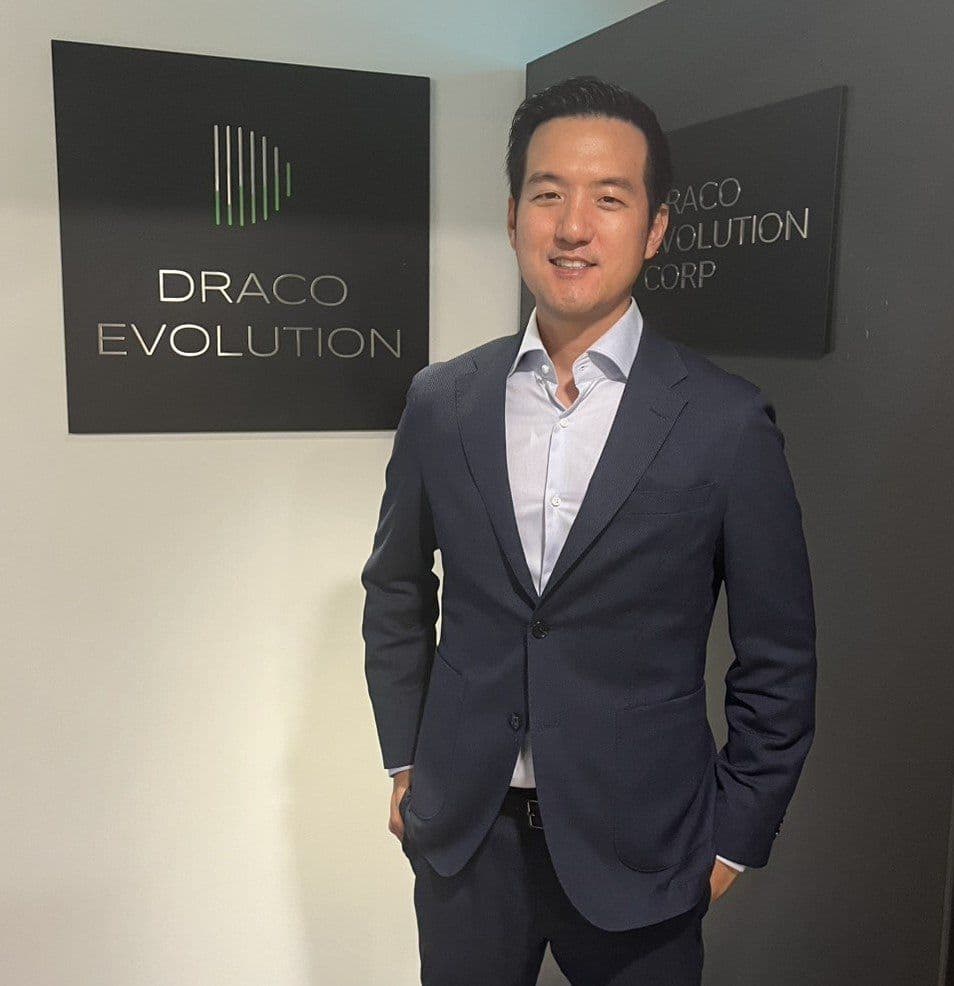
We explore how Draco Evolution is bringing institutional-level investment tools to everyday investors through AI-powered ETFs and a more dynamic approach to portfolio management. Jack explains how ETFs actually work, why they have become such a popular choice for investors, and the important difference between investing in AI companies and using AI itself to manage investment decisions.
We also discuss the future of robo-advisors and why the next generation will move far beyond static questionnaires and occasional portfolio rebalancing. Jack shares why he believes the future lies in systems that adapt continuously to market conditions and investor behavior, creating something far more personal and responsive.
From algorithmic trading and AlphaGo to today's world of agentic AI, Jack offers a practical perspective on how technology is changing finance without replacing human oversight. He also shares why investors should treat AI as an enhancement tool rather than blindly trusting every recommendation.
If you've ever wondered how AI is changing investing, what makes AI-driven ETFs different, or how to stay disciplined in unpredictable markets, this conversation offers plenty of insight. How much would you trust AI to help manage your financial future, and where would you still want a human in the loop?
Useful Links
Connect with Jack Fu, Founder and CEO of Draco Evolution
Learn more about Draco Evolution
Visit the Sponsors of Tech Talks Network and learn more about the NordLayer Browser.
[00:00:00] - [Speaker 0]
So a big thank you to NordLayer for backing the podcast and supporting the kind of real world cybersecurity conversations that we need more of. Because as someone that records 65 plus interviews a month, I've personally seen a huge increase in browser based attacks over the past year, whether that be phishing, malicious extensions, account takeovers, the list is long. And it's all happening where people spend most of their time inside the browser. So NordLayer's new business browser, that's built to address exactly that. It blocks malicious sites before they load.
[00:00:37] - [Speaker 0]
It limits risky behaviors like uncontrolled downloads or data sharing and gives you visibility into how your team interacts with web apps. And it also helps you stay compliant by controlling access and enforcing policies without the need to rely on multiple disconnected tools. So for anyone listening that is thinking seriously about reducing risk in SaaS heavy environments, this feels like a smarter and more focused approach. And you can learn more about it by visiting nordlayer.com/browser. Let me know what you think.
[00:01:12] - [Speaker 0]
But now let me introduce you to today's guest. How is AI changing the way everyday investors access strategies that once felt reserved just for institutions. Well, my guest today brings a fascinating perspective to that conversation. His name's Jack Fu. He is the founder and CEO of Draco Evolution, which is an investment management and tech company focusing on using AI, quantitative models, and disciplined strategies to help investors make smarter decisions.
[00:01:49] - [Speaker 0]
But most importantly of all, if we go if we take a step back from the tech for a moment, he also has a background that spans traditional finance, institutional asset management, and leadership across the Asia Pacific region. And Jack has firsthand experience of how markets behave under pressure and how investors often struggle most when emotion takes over, and we've all been there. Well, in today's episode, we will talk about how AI is reshaping investment strategy, risk management, robo advisors, and the growing interest in AI driven ETFs, and also talk about what these products actually are in a language that everyone can understand, and why they are attracting so much attention right now, and how Jack and his team are trying to make institutional grade investing more accessible. But before we begin, I have to give my guest Jack a a very special shout out because in more than 4,000 podcast interviews, he's going to be the first guest ever in the history of this show, yep, nearly eleven years now, to join me at 1AM local time in Taiwan. 1AM for a podcast recording.
[00:03:11] - [Speaker 0]
I think that level of commitment deserves some serious respect. So, Jack, thank you for going above and beyond to make that conversation happen. So with the scene perfectly set, let's officially bring him onto the show now so we can talk around all this and much more. So thank you for joining me on the podcast today. Can you talk on listening a little about who you are and what you do?
[00:03:37] - [Speaker 1]
Hi, Neil. Thanks for having me. I'm Jack Fu, founder and CEO of Draco Evolution. We're an investment management and technology company focused on helping people invest in a more structured and disciplined way. And at Draco, we use AI, quantitative models, and what we've learned from years of investing to make decisions.
[00:03:57] - [Speaker 1]
We manage capital through our ETF and funds, and we are building a platform that brings institutional level investing to everyday investors. At the end of the day, what we're trying to do is simple. We remove emotion from investing and replace it with structure and discipline.
[00:04:13] - [Speaker 0]
Well, it's a pleasure to have you join me on the podcast today, and we've got so much to talk around. I'm very future looking and a lot of incredible technology out there, but I always like to try and find out a little bit more about my guest's origin story. I mean, looking online, I quickly learned that your career began in traditional finance, managing assets for family offices and institutional clients there. But take me back to the very early part of your journey and explain how all those experiences maybe shaped the way you think about investing today. There's there's gotta be a story there.
[00:04:45] - [Speaker 0]
Right?
[00:04:46] - [Speaker 1]
Yeah. Yeah. Well, early in my career, I actually started as a financial adviser at Union Bank of California. And now, of course, I went through the two thousand and eight financial crisis. I still remember seeing a lot of investors losing most of their money, and that really changed how I think about investing.
[00:05:06] - [Speaker 1]
So that it it made me focus a lot more on risk instead of just, you know, pure purely trying to make money through strategies. So from that point on, I kept one idea in mind, and that's just to not lose big money. Because over time, I realized that's something simple. If you stay in the market long enough, you'll most likely make money, assuming you're buying, like, the right things, like the index, growing with the economy. But what I saw was that a lot of investors didn't have a strategy that really fit them.
[00:05:39] - [Speaker 1]
So every every year or two when the market drops, you know, sometimes 30%, 40 or 50, they just panic and just get out. And a lot of times right after they get out, the market starts to recover, and they never get back in. So what we're trying to do is try to help investors stay, avoid that cycle, stay invested, and still benefit from the long term growth.
[00:06:04] - [Speaker 0]
And then, again, before we go into the tech side of things, you later moved into leadership roles, managing significant assets across the Asia Pacific region. But what lessons did you learn during that period about market behavior, risk management, and the the psychology of investors too?
[00:06:22] - [Speaker 1]
Well, one thing I learned is that it doesn't really matter whether if you're in US or Asia. The way successful investors think is actually very similar. It's not about how big your account is or it's it's actually about more about how you manage risk. The the more disciplined investors focus first on protecting what they have and then growing it over time because they've already made, you know, large sums of money. There's a principle that really stuck with me, like Ray Dalio says, the founder of Bridgewaters.
[00:06:57] - [Speaker 1]
If you lose 50%, you need to make a 100% just to break even. And that really changed my perspective. So instead of focusing only on returns, I focus more much more on avoiding large losses because that's what keeps you in the game long enough to win over time.
[00:07:15] - [Speaker 0]
It really does. And I think it's so important that we we spoke about your origin story there, your insights, the everything that you've learned throughout your career. Because only at that point do you start looking at how you can do things differently and introducing technology, etcetera. And fast forward to present day, you're leading Draco Evolution and focusing on AI driven investment strategies. And what was it that inspired the creation of that, and and what problem were you trying to solve in the investment world?
[00:07:44] - [Speaker 0]
Because as I said, you had a tremendous career here, and you've learned so much in that time. What were you trying to improve?
[00:07:51] - [Speaker 1]
What really inspired the creation of Draco Evolution was actually something very personal. Because over the years I've I've been in the in the industry for over two decades. And over the years, a lot of friends and family would come to me and ask, how should I invest in, you know, today today's market? Which stock should I buy? And I realized that most people didn't have access to a lot of the tools, the data, the framework that we were using.
[00:08:18] - [Speaker 1]
Even when tools are available, a lot of them are just too complicated. Even though they're powerful, they're they're just too difficult to use. So for many investors, it's it still feels confusing and overwhelming. And that's when I started thinking, how do we take what we use inside our hedge fund and make it accessible to everyday investors? How do we take something that's powerful and make it usable for for everyone?
[00:08:44] - [Speaker 1]
And that really that's really how Draco Evolution started. We wanted to build something that's just as powerful but just much easier to use. So whether it's through our ETF or our platform, our goal is the same, is to bring that institutional level tools and strategies to everyday investors. What we're really trying to do is not just build investment products, but make investing more accessible and more usable for everyone.
[00:09:12] - [Speaker 0]
When we look at across the, what, fintech landscape, artificial intelligence has become such a powerful tool in so many different areas in finance. But how are you seeing AI actually changing the way that investment strategies are developed and managed compared with the more traditional approaches where some people listening may be familiar with, might not be familiar with, but what's the big change in investment strategies there?
[00:09:37] - [Speaker 1]
Well, AI is definitely changing the industry in a very big way. It gives us a lot more speed when it comes to analyzing data, testing strategies, and understanding the market. But I see AI more as an enhancement tool, not something that replaces everything right now. One important thing is that AI doesn't just make decisions on its own. It needs to be trained and guided, and that of course, that's our view.
[00:10:04] - [Speaker 1]
In our view, AI works best when it's when it operates within the structure rather than just completely on its own. We we of course, we define this framework, what it can invest in, what it should avoid, and how much risk it should take. And at the same time, there are different approaches out there, and different firms take different views. But our philosophy comes from managing real capital through different market conditions, and we place a strong emphasis on risk and downside protection. So for us, AI is built on top of that experience, not separate from it.
[00:10:42] - [Speaker 0]
And many listeners will be familiar with robo advisors and how they've changed how many people access financial services for people listening all over the world. But from your perspective, with your insights and what you're seeing and hearing, what is what's the next stage of, the evolution for robo advisory platforms and automated investing? It seems like it's a space that's continuously evolving, but what are seeing here?
[00:11:07] - [Speaker 1]
Yes. I think robo advisors were a great starting point. They made investing a lot more accessible at a lower cost, which was really important. But if you look at most robo advisers today, I I believe I I still think they're pretty static. You answer a few questions.
[00:11:29] - [Speaker 1]
They build a portfolio for you and maybe rebalance it once in a while. I think the next step is going to be much more dynamic. So instead of just setting it once, the system should be able to adjust as the market changes. So when things become more volatile or conditions shift, it can actually respond. I also think it becomes more personal over time, not just based on a questionnaire or based on but based on how you behave, how you react, and what actually fits you.
[00:12:03] - [Speaker 1]
So it becomes less of a set it and forget it type of model and more more like something that's continuously helping guiding you along the way.
[00:12:14] - [Speaker 0]
And, of course, the world of technology and indeed finance love a good acronym, and many listeners will hear the term ETF regularly. You've said it before. You said it earlier in our conversation, but I think there will be people out there that still don't fully understand how they work. So just to try and demystify this space for the people listening that do find it a little overwhelming, can you explain exactly what ETFs are and also why they've become so popular with with investors and and also where AI driven ETFs fit into that story too?
[00:12:47] - [Speaker 1]
Well, ETF stands for exchange traded fund. It's essentially a basket of assets that trades like stocks. So within a day, you could purchase the ETF. It it the the the price fluctuates just like a stock. They they've become very popular because they're transparent, relatively low cost, and most ETFs are but most ETFs are the the ones we see out there, the more popular ones before were are passive ones.
[00:13:15] - [Speaker 1]
They track an index like the S and P, NASDAQ, or semiconductor. And but but, you know, what what we're focusing on right now is the actively managed ETF. It's it's it's different, though, the one you mentioned earlier. It's AI driven, and the strategy is met the strategy of the ETF is managed by AI, supported by AI. So it's AI powered or AI driven.
[00:13:41] - [Speaker 1]
So instead of holding onto a fixed allocation like the S and P index ETF, the portfolio can adjust based on changing market conditions. So in a strong market, we may lean more towards growth sectors like semiconductor, small cap, high-tech. But in in, you know, in contrast, in a more, you know, volatile market, when when the market is dropping, we may shift towards assets like, you know, hold bonds and gold. So a so AI is not about investing in AI companies. It's about using AI to make better allocation decisions.
[00:14:19] - [Speaker 0]
Love that. And is there any other, I don't know, myths or misconceptions or things people misunderstand about ETFs and AI driven ETFs? Do do you find yourself having to explain things again and again that people often don't quite understand about this this world?
[00:14:35] - [Speaker 1]
Oh, yeah. There there is a confusion. When it comes to AI driven ETF, a lot of people believe that, oh, you know, maybe this ETF is buying AI companies instead of you know, versus an ETF managed by AI. So AI chooses which which assets to buy. So there's a distinction right there.
[00:14:59] - [Speaker 0]
I love it. And what excites you about this space? Because, obviously, you've been there from the beginning. You've seen everything evolve, and you're seeing it taking a different direction, and the market is rethinking how everything works. What excites you about this space?
[00:15:13] - [Speaker 1]
It's very exciting. We've actually started using well, back then, it wasn't AI. It was, like, back then in 2015, that's when we started using. In the beginning, it was algorithmic trading. So everything was algorithm.
[00:15:26] - [Speaker 1]
You know? If a, then b. Yeah. And then as as time in the beginning, like, not many people believe what we were doing because people believe that, oh, you know, to invest in the market, you you need to have experience. You you know, you need to be in there for five, ten, twenty years.
[00:15:43] - [Speaker 1]
You gotta be a veteran in on Wall Street. That's that's how you succeed in the stock market. It's it's that's when when we started, that was the era of I don't know if you, Neil, if you remember the the the era of AlphaGo when the AI was actually playing chess. Yeah. So so, you know, people believe that, okay.
[00:16:04] - [Speaker 1]
Maybe the AI could play chess, but they can't do investment because, you know, there's just, like, millions of billions of, you know, different scenario on the market, and it's more psychology based. But as, you know, the time evolves to we we get into the big data era when there's just so much information, and then when the once the hardware becomes affordable and everyone's building their own AI. And I think I believe 2023 was when ChatGPT became really popular. That's when people starting to, you know, believe, oh, maybe maybe AI could do something in the in this market. It can help me in the different ways.
[00:16:44] - [Speaker 1]
So it's it's really exciting to see how everything changed, especially in the last two, three years. It's like it's it's like it almost feel like every month, there's, like, you know, a big advancement in, like, AI. Right?
[00:16:58] - [Speaker 0]
Yeah. I completely agree with you. And the AlphaGo example you mentioned there was, what, a decade ago, ten years ago. It's insane how quickly time goes. And this year, everyone's talking about agentic AI and agents, etcetera.
[00:17:11] - [Speaker 0]
They went, where do we go from here? We got quantum waiting on the horizon. So as fast as it moved, right now, the reality is it might never move this slow again. And for people that are new and entering this world for the first time, maybe they're checking your site out, learning more about AI driven ETFs. Any warnings or words of warnings or just to be careful of that you don't get eaten up as the the new guy that enters the space?
[00:17:35] - [Speaker 0]
Any anything you'd ask people to be wary of in this space?
[00:17:39] - [Speaker 1]
I would recommend to test out different large language models like, you know, ChatGPT, Gemini, Claude, and just try try to use use the AI as an enhancement tool. But, you know, always be careful on some of the suggestions, especially when it comes to investment. You know? That as there's a reason why, you know, we we need financial advisers, you know, with licenses to to actually guide you because everyone's situation is just different. And it's it's just to to get used to working or using AI to make you know, help you make better investment decisions.
[00:18:22] - [Speaker 0]
And don't worry. I'm not gonna ask you to give any financial advice here on a podcast. But looking ahead, any advice that you'd give to investors and indeed business leaders? Or just trying to better understand how AI can influence markets, portfolio strategy, and risk management. There's so many big changes gonna happen over the next few years and beyond.
[00:18:42] - [Speaker 0]
Anything that you'd recommend that people listen out for, look out for, study, read up on, anything that you'd recommend there?
[00:18:50] - [Speaker 1]
I believe the hot topic right now is agentic AI in in which, you know, many people are, you know, are building their own agents as an assistant or an as an employee. And it's it's it's it's the I I believe, you know, a couple years ago, was ChatGPT. Now, you know, all of a sudden is everyone's using AgenTeq AI. And, of course, there are you know, right now, it's it's not there there there are its limitations on you know, sometimes, like, when you do things, it's it doesn't work as as you wish when the the agent could, you know, like, for example, delete your files, and and there's no way you can retrieve it. So we're we're we're learning, like, different ways to, like, work with it.
[00:19:35] - [Speaker 1]
So it's it's just to keep, you know, updated on, you know, what's hot out there. Not necessarily, like, try it a 100%, but at at least get a feel of it to to keep yourself just up to date.
[00:19:52] - [Speaker 0]
And as for Draco evolution now, all things Draco evolution, what any, what's your grand vision? What's next? What can we expect from you guys this year and beyond? Anything you probably locked down as to what you can share, but is there anything you can share of of what your vision is?
[00:20:07] - [Speaker 1]
We like I said, I I we we use AI. We use quantitative models in our experience, and we we combine that. We try to build a platform, that actually guides, investors. So ins instead of, trying to figure out yourself, we we provide a platform for for investors to to be on, and then, we we give context. We give for example, there's a there's a market meter that we use, but we we, like, we make it, like, into, like, a more intuitive playful way of, the engagement.
[00:20:45] - [Speaker 1]
So so we display as a market market weather. Right? So so for example, like a rainy day, you know, rainy day, that means it's more you know, market's more bearish, whereas, you know, sunny day, it's it's more bullish. So on a sunny day, that's when you start buying more stocks. And on a rainy day or, you know, on a thunderstorm, that's when you be careful and then be defensive and not leverage or buy any assets that are more volatile.
[00:21:17] - [Speaker 1]
Yeah. So we try to provide the tools for for for investors.
[00:21:21] - [Speaker 0]
I was just gonna say, what about Warren Buffett's advice? That when there's blood on the streets, that's when you buy buy everything up.
[00:21:28] - [Speaker 1]
Interesting enough. Like, you know, the platform that we're building, we're also able to, show, users, what you know, like, Warren Buffett. What what's Warren Buffett buying? Right? What other politicians, what other famous investors they're buying as you know, for for for us to actually dig inside and see what they're buying and and then study some of the stocks that we may not hurt you know, have heard before.
[00:21:54] - [Speaker 0]
I love that. And since its founding, I also wanted to point out that you and your team at Draco Evolution have managed over $220,000,000 in funds, and you've achieved some pretty remarkable investment results along the way. And for people listening, just wanna dig a little bit deeper, learn more about Draco Evolution and find out more about announcements coming out throughout the year. Where would you like me to point everyone listening?
[00:22:18] - [Speaker 1]
Our our website is www.dracoevolution.com, and most of our information will be on there, our platform, our investment app, just all the news. Most updated information will be updated on on the website.
[00:22:36] - [Speaker 0]
Well, I think over the last few years, we've all seen so many different examples of organizations going technology first, AI first, then go looking for a problem. But what I love about your story is you've lived and breathed this world for so long. You know it inside out. You've come across a few problems, a few challenges that tech might be able to improve, and rather than sit around and complaining about it, you've actually built a solution there with Draco Evolution. So kudos to you, my friend.
[00:23:03] - [Speaker 0]
I'll add links to everything that you mentioned. Urge people listening to check that out. But more than anything, thank you for joining me today.
[00:23:10] - [Speaker 1]
Yeah. Thank you, Neil. Thanks for having me.
[00:23:12] - [Speaker 0]
One of the many things I enjoyed about this conversation with Jack today is his focus on discipline. Not just the focus on discipline of speaking to me at 1AM in the morning, but there is so much noise around AI in finance right now and plenty of big promises being made too. But Jack kept bringing it back to something timeless, which is managing risk, staying in the market, and helping people avoid making irrational and emotional decisions. These are the things that can do long term damage. I've also thought his explanation of AI driven ETFs is especially useful too because there's still a lot of confusion in this space, especially between investing in AI companies and using AI to guide investment decisions.
[00:24:00] - [Speaker 0]
Things can get confusing. And I think clarifying that distinction obviously matters, and it's also one of the reasons why nonjudgmental conversations like this are so helpful. I think in many social situations, we feel almost embarrassed to ask some of the questions out there in public. But me, I don't mind at all. I'll do it on your behalf.
[00:24:23] - [Speaker 0]
So finally, gotta give Jack another nod for setting a brand new Tech Talks daily record after more than 4,000 interviews. He's officially the first to leave me at 01:30AM for this podcast. That alone earns a place in the history books, but over to you. If this conversation sparked any thoughts for you, whether around AI robo advisors, ETFs, or the future of investing, or maybe you're listening to the show at 01:30AM in the morning. Whatever it is, please let me know.
[00:24:53] - [Speaker 0]
And you can find me at techtalksnetwork.com. If you wanna learn more about Jack and his work and what they're doing at Draco Evolution, I'll add links over the the blog post associated with this episode at Tech Talks Network too. But let me know your thoughts as always. I'll return again tomorrow with another guest. But thank you for listening as always, and I'll speak with you then.
[00:25:15] - [Speaker 0]
Bye for now.