

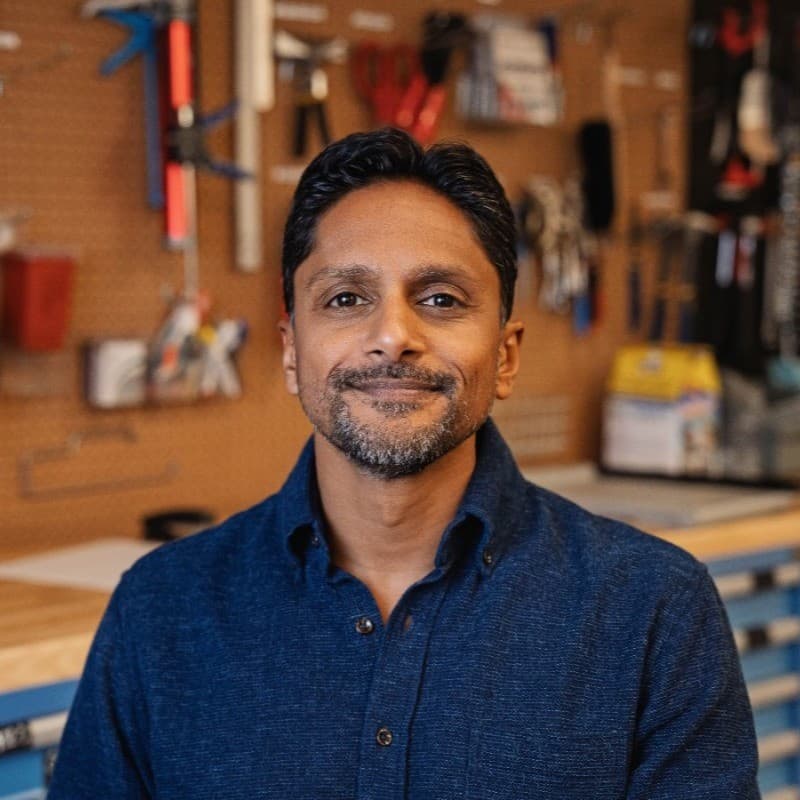
In this episode of Tech Talks Daily, I'm joined by Kiren Sekar, Chief Product Officer at Samsara, to unpack how AI is finally showing up where it matters most, in the frontline operations that keep the global economy moving. From logistics and construction to manufacturing and field services, these industries represent a huge share of global GDP, yet for years they have been left behind by modern software. Kiren explains why that gap existed, and why the timing is finally right to close it.
We talk about Samsara's full-stack approach that blends hardware, software, and AI to turn trillions of real-world data points into decisions people can actually act on. Kiren shares how customers are using this intelligence to prevent accidents, cut fuel waste, digitize paper-based workflows, and scale expert judgment across thousands of vehicles and job sites. The conversation goes deep into real examples, including how large enterprises like Home Depot have dramatically reduced accident rates and improved asset utilization by making safety and efficiency part of everyday operations rather than afterthoughts.
A big part of our discussion focuses on trust. When AI enters physical operations, concerns around monitoring and surveillance surface quickly. Kiren walks through how adoption succeeds only when technology is introduced with care, transparency, and a clear focus on protecting workers. From proving driver innocence during incidents to rewarding positive behavior and using AI as a virtual safety coach, we explore why change management matters just as much as the technology itself.
We also look at the limits of automation and why human judgment still plays a central role. Kiren explains how Samsara's AI acts as a force multiplier for experienced frontline experts, capturing their hard-won knowledge and scaling it across an entire workforce rather than trying to replace it. As AI moves from pilots into daily decision-making at scale, this episode offers a grounded view of what responsible, high-impact deployment actually looks like.
As AI continues to reshape frontline work, making jobs safer, easier, and more engaging, how should product leaders balance innovation with responsibility when their systems start influencing real-world safety and productivity every single day?
Useful Links
[00:00:04] Welcome back to the Tech Talks Daily Podcast. Now my guest today, he's someone that sits at the intersection of product thinking, real world data, and the kinds of physical operations that most people never think about until something goes wrong. He's the Chief Product Officer at Samsara, and they are a company quietly reshaping how fleets, factories, and frontline teams all use data to stay efficient and responsive.
[00:00:34] And not only that, he's had senior roles at Apple, Cisco Meraki, and today he's focused on turning signals from vehicles, equipment, and environments into insights that people can actually act on. And we'll also talk about how AI shows up in the physical world, what responsible product design looks like at scale, and why some of the most interesting innovation is happening far away from office desks, corporate meeting rooms, and dashboards.
[00:01:03] And this is one of the many reasons I record this podcast every day. Hearing real world stories of how technology is transforming areas you don't associate with technology, that's the stuff that really excites me. Before I bring today's guest on, a quick thank you to my friends over at Denodo, who are passionate about logical data management for AI success. Because let's be honest, AI is evolving fast, but the elephant in the room is initiatives are still failing.
[00:01:32] Not because the models aren't good, but because the data foundation isn't ready. That's why organizations are increasingly turning to Denodo and logical data management. Denodo unifies your data across every cloud and every system without the need for massive replication. So you can power trustworthy AI, accelerate lake house optimization, and build data products that make self-service real for every team.
[00:02:02] So CIOs, architects, business leaders each get exactly what they need and when they need it. And Denodo's partners also help you get value even faster. So if you're ready to make AI actually work, visit Denodo.com and put logical data management to work today. But now, let me introduce you to today's guest. So a massive warm welcome to the show. Thanks for joining me today. Can you tell everyone listening a little about who you are and what you do?
[00:02:31] Yeah. So my name is Kieran Saker. I lead our product and engineering teams at Samsara. And my journey into this role actually started a little over 25 years ago when I was an undergraduate student studying computer science. I became friends with Sanjit Biswas, who is now the co-founder and CEO of Samsara. Way back then, we were college students together. We were doing computer science.
[00:02:59] We ended up doing a lot of coursework together, writing code, building systems, and becoming good friends along the way. After graduating, he went off to grad school at MIT. I took a job as a software engineer at Apple. And then our paths reconverged a handful of years later. He had actually started a company based on his research at MIT.
[00:03:23] This was in the early to mid-2000s, kind of the early days of the smartphone and then the iPad. And through his research, he and his lab mate, John Bickett, had built this technology to make it really easy to build and deploy Wi-Fi networks. And, you know, way back then, it was actually very hard for a business to put up Wi-Fi and have it be fast and reliable and secure. And this technology made it really easy. So they started building this company.
[00:03:52] I joined when it was still relatively small. We spent the next several years building and growing the company called Meraki. It ended up becoming acquired by Cisco Systems, the big networking giant. But along the way, you know, we got to build a product that solved real problems for real people. We were able to help thousands of customers and tens of thousands of customers and actually millions of end users. Built a business that was, you know, financially successful for those who took part in it.
[00:04:22] And it was an amazing experience. So, you know, after the company was acquired, still a large product for Cisco today. You go into a Starbucks, an airport, most businesses, good chance you're connecting to a Meraki network many, many years later. But we wanted to build something again.
[00:04:44] We wanted to be on the ground floor building a company and really thinking about what could have even more impact and touch even more customers. And really, what do we want to work on for the next several decades? And that led us to Samsara and where we are now. I love those very human origin stories. It reminds me of that Steve Jobs quote where you can't join up the dots forward, but it's only when you look back that you can.
[00:05:12] And listening to your story there, there was a time where you were going your separate ways. Your lives were taking you in different directions. And through possibly a moment of serendipity, your paths converge again. It's crazy, isn't it? Sometimes it almost feels like the universe gives you that little nudge in the direction, but only at that right time and that you're ready to move forward on to the next thing. You know, there's a lot that comes from hard work, but there's a lot of luck and timing.
[00:05:42] Can't underestimate that. Yeah. Yeah. As you said, you've worked across companies like Apple, Cisco Meraki or Meraki as it was before Cisco acquired it. And then obviously now Samsara. So what did these experiences teach you about building products for the physical world rather than purely digital environments? Because I would imagine there was a few lessons learned along the way there too. Yeah. You know, it's interesting.
[00:06:08] Again, you've only seen this in hindsight, but even at Apple, my work was really around networking and connecting data across disparate. You know, at the time it was computers and then smartphones and devices. And so they've all involved a mix of hardware, of software, of networking. And I think, you know, when you have these systems that have multiple layers in the stack, and we now add AI on top of that as well.
[00:06:38] There are more and more ways that you can you can mess things up for the customer. You actually need the hardware to be reliable and easy to use. You need to actually be able to clean all the data that it's collecting. You need to be able to to get it in the right place at the right time to make sense of it.
[00:07:00] And each each layer in the stack is another opportunity to have quality issues, usability issues, performance issues, you name it. But then when you can actually make them work across that full stack, it is very powerful and very differentiating. So when you can get the right people who have the skill sets to have expertise in those different layers and be able to work across them, you can create some really magical products for end users.
[00:07:29] And it becomes a differentiating factor in the market as well. And fast forward to present day and the work that you're doing here, processing data from vehicles, equipment and facilities at a massive scale. I'm curious, how do you decide which signals actually matter for those frontline teams and which data should stay in the background? I imagine it was quite it's quite challenging. Yeah, it's a great question.
[00:07:56] And to answer it, let's actually rewind and talk a little bit about the customer, the problem that we're trying to solve, because that informs everything and especially what data we're focused on. So we talked about Apple to Meraki to Samsara. The genesis for Samsara was really thinking about where we could have impact, where technology could have impact.
[00:08:21] And in the process of building Meraki, we were selling networks to everyone, hospitals, retail stores, businesses, but also these physical operations industries, these blue collar industries, construction yards and warehouses and food and beverage packaging facilities. They're all putting in networks. But otherwise, their technology was really antiquated.
[00:08:46] Think screens of green text, mainframes, a lot of pen and paper, manual processes. And we said, these are huge industries, 40 percent of global GDP, billions of workers. They have antiquated technology. Amazon knows every product you're looking at when you're shopping. Netflix knows every show you're watching. Your doctor knows all of your lab results, all of your medications. This was back then.
[00:09:14] If you are an operation and you've got a big truck and it weighs, you know, many, many tons, it's consuming huge amounts of diesel. It is driving down the highway at speeds that can be dangerous to people in it and around it. It's got hundreds of thousands of dollars of cargo. Those customers had no idea what was going on. Right. So we said, hey, if we can change that, we can make an impact. So that was the genesis.
[00:09:44] Right. Can we get data and make it useful? Fast forward to today, as you said, we've got trillions of data points coming into the platform and customers are able to use this for really three kind of broad use cases. Reducing their safety risk. These are still some of the most dangerous jobs out there, and they can use the data to actively prevent accidents. They use it to improve their efficiency. So how do you save fuel?
[00:10:13] How do you save time? How do you make better use of these big, expensive assets? And then how do you actually digitize the experience for your frontline teams, for your customers? So it's not green screens anymore. It's great software that you and I get to interact with as consumers. So that is the end goal that we're working backwards from. And if you put it in perspective, think about a customer like the Home Depot, right? Giant retailer.
[00:10:43] They operate massive operations. For example, they operate fleets to move goods and equipment across their network of stores and distribution centers. They have heavy construction equipment that they rent out to their customers. They need to maintain these assets. They need to move them around. They have tens of thousands of big, expensive assets and workers who manage them. They put our devices on all of their vehicles, their assets.
[00:11:12] They're streaming data into our cloud. We use AI to find insights in that data. And they're able to use that to cut their accident rates by as much as 80% in some cases. They're able to make sure that these assets are in the right place at the right time so they can make more profit for them, not have to buy as many. They use it to be able to identify fuel waste, right? So they're not wasting money and also lowering their environmental impact.
[00:11:41] And then they do it all in a way where their team doesn't have to spend all day filling out paper forms. They can take a photo in an app and the AI can figure out what's going on. So that is the type of signal we get from the data and the way that it becomes actually useful for the customers in the front lines. Yeah, I think so many people forget that there are industries where there is still that green text on screens that you mentioned there.
[00:12:09] I know airlines, airports, et cetera, is another area that's still living off old tech and putting new tech on top and on top again. And many industries... Try to change your reservation at the desk and you just hear typing, typing, typing, typing, right? Yeah. Now, if you are actually on the plane, you made it through the low security checks, et cetera, you look over the wing, you're going to see all of this ground service equipment. You're going to see fuel tank trucks. You're going to see baggage carts.
[00:12:38] You're going to see the tugs that are pushing the planes off of the gate. Many of those are now actually using Samsara and they're using it to be able to get planes off the gate faster so they arrive on time. They use it to avoid wasting fuel, burning jet fuel, keeping the cabin systems running. And they actually prevent accidents of all these crews who are operating out on the tarmac. That's very, very cool to see. Oh, that is incredibly cool.
[00:13:08] And as you said, I mean, many industries you serve like logistics, construction, manufacturing. The reality is that they've been underserved by modern software for years. People are not building for this crucial and critical area that we all rely on and take for granted. I've got to ask, why is it taking so long for AI to show up in a way that fits how this work is really done? And why has it been neglected?
[00:13:35] You're one of the few companies I know that are serving these clients. Well, I think part of it is technical. Part of it is cultural. And both of these are actually changing very quickly. So the technical reason is, again, if you rewind 10, 15 years ago, we think about trucks, heavy equipment, frontline workers. You actually couldn't get data from those assets, those operations into software.
[00:14:04] And it was not like a hospital or a bank or a law firm where everyone's sitting at a desk, at a computer that is networked. These were out in the field in remote areas.
[00:14:18] And it's only in the last decade that it's been inexpensive enough and feasible to put sensors on these assets, sensors, cameras, take all this data, connect it over the cellular network, bring it into the cloud, and then put AI on top to make it useful. Right. So I think, you know, 15 years ago, that was simply not possible. Now it's actually working at a very large scale. So we have data.
[00:14:44] And once you have data, you can always find ways to make it useful. Culturally, you know, many of these companies are many, many decades old, sometimes centuries old. I was actually out visiting a customer recently in the rail industry. And in their lobby, they have a framed letter handwritten to them by Abraham Lincoln. Right. So many of these are very longstanding businesses. They've been around forever.
[00:15:15] And they've seen technology come, technology go. And as a result, I think in some cases have become late adopters of technology. It is fascinating. Today, compared to when we started a decade ago, there is so much more innovation, so many new companies building for these industries.
[00:15:38] And there's been a real generational change in the customer base where many of the leaders now are people who grew up digitally native. They have Apple watches. They use smartphones every day and have been for a long time. And they're saying, hey, we have this technology in our personal lives, in other parts of the business. We know how useful it is. When we see things that are useful, we want to go adopt them.
[00:16:05] And if I think about the adoption of AI, if I think about mobile apps, if I think about how customers are integrating data across their systems, it is happening so much faster than it was when we started. And it's really exciting. And there will be some people listening when they hear about AI in areas like dash cams or asset tracking, concerns around trust and even surveillance in some circles often surface.
[00:16:32] So I'm curious, how do you at Samsara think about responsibility, transparency, work acceptance as well when designing these systems? Is this something that you're thinking about in that design process even then? We do think about it a lot. And it helps in a way that one of the biggest applications for AI in our platform is safety. And who doesn't want their team to come home safely?
[00:17:01] What frontline worker doesn't want to come home safely to their families? I think about one of our customers, a company called USIC. They locate, among other things, they will locate underground gas pipelines. So if you are doing construction work, you don't cause a gas leak. To do that, they have thousands of folks driving all over the place, often late at night, early in the morning, late shifts.
[00:17:30] And fatigue and actually falling asleep behind the wheel is a real risk for them and every business like them. And actually driving fatigued is as dangerous as driving drunk. They put in the technology and they were able to actually detect drowsy driving, cut it down by almost three quarters, 75%. That's people coming home safely. So when you're starting from a point of the goal of the technology of AI is to have people come home safely.
[00:17:59] That, I think, alleviates a lot of the concerns. And then I think that, you know, today the idea of having a dash cam in the vehicle, it's no longer new. You know, five, six, seven years ago, there were a lot of people who said, hey, you know, is this big brother? Now, if you get into an Uber, you're going to see a dash camera. If you look at commercial vehicles, many of them have cameras.
[00:18:23] So for the frontline workers, the drivers, if they haven't been in a vehicle that had a company issued dash cam, chances are they know someone who does. And it's just much more accepted. That being said, there's still a way to introduce the technology properly. Right. If you put it in and then on the first day start showing videos of people, you know, doing the wrong thing and shaming them. Right. There's going to be pushback.
[00:18:51] And, you know, we work with customers to actually have really structured change management, where oftentimes we will start with the very best drivers and the management. Say, hey, VP of safety, put it in your vehicle and that's going to show people it's actually, you know, a tool that's there to protect you. And then usually in the first couple of weeks, there will be an accident or a near miss where the driver wasn't at fault. And these are things that used to get blamed on them.
[00:19:19] And you'll actually see them, you know, in the videos pointing to the camera saying, look at the footage, look at the footage. And you start actually sharing those stories. Many of our customers will run safety rewards programs to say, hey, this doesn't just see when you're doing something wrong. It actually keeps track of when you're doing things right. And if you have a safety score over 90 or what have you, we're going to give you a bonus. So all of these behavioral elements are really important along with the technology.
[00:19:47] The technology has got to be rock solid. But also the process of bringing teams along is critical. And so from our perspective, we're a technology company, but we focus just as much on that partnership aspect, especially when you have these large, complex operations, helping them to adopt it effectively. Another thing we should highlight is machine learning can detect patterns and predict risk,
[00:20:16] but real world conditions are often messy and incredibly unpredictable. So where does human judgment, experience, awareness, critical thinking, how do these very human traits still outperform algorithms in physical operations today to ensure that people don't just rely on the technology and still be aware of their own responsibilities too?
[00:20:40] When you go out in the field and visit customers, it is always clear just how much expertise there is amongst their team. I was out visiting a customer recently. They're one of the largest propane gas distributors in the U.S. and Canada. So their job is filling tanks full of this highly flammable gas and then driving through all kinds of conditions
[00:21:05] to fill up tanks for homes, for businesses that they can use to heat their homes or to run their businesses. And it's an inherently high risk job being on the road, but then dealing with hazardous materials. There's so much that they have learned over time about what helps keep people safe. And an example being, if you fill the tank all the way to the top,
[00:21:32] it can actually become a bit top heavy and you have a risk of the vehicle tipping over. It would be very hard for a machine learning algorithm to figure that out. But once they know that, we can actually build intelligence into the product to say, hey, let's go ahead and verify that, right? Let's make sure that these things aren't getting overfilled. And if they are, be able to send an alert to a driver.
[00:21:58] On the road, many customers have professional safety coaches. They will do ride-alongs with drivers where they will basically sit beside them talking about, hey, what are you doing? What are you doing well? What are things you could do to be even safer? However, they can't be with every driver every minute of every day. So a lot of what we do is statistical, right?
[00:22:25] It's data scientists looking at trillions of data points, finding signal with them. But we also spend time with those expert safety coaches and say, what are the things that you look for? And then we say, okay, how do we take that learning and build it into AI such that when you don't have the safety coach in the car, which is 99.9% of the time, the dash camera
[00:22:50] can actually be doing AI that is kind of analogous of what that human expert would do. So it really becomes a kind of a force multiplier for the human experts as opposed to a substitute for them. So in 2025, we heard so many stories of businesses struggling to get out of pilot phase into production, start unlocking measurable difference and value and ROI, et cetera.
[00:23:16] So on this podcast, I've been trying to showcase as many positive examples as I can. And that's one of the reasons I was excited to get you on the podcast today, because at Samsara, your customers, including some global brands operating at huge scale, are enjoying a lot of success. So what changes when AI moves from pilots to projects into daily operation, decision-making across thousands of vehicles or even job sites? What are you seeing here?
[00:23:46] What we see is that our large customers pretty much always start with a pilot. And after about eight weeks, they say, we can't wait. We have to get this technology out because they see just how impactful it is. And you mentioned these large global organizations, whether that's a DHL or an XPO logistics or the largest agricultural retailer in the world. These are very large companies.
[00:24:16] It does take time. But they're saying, hey, how can we get this completely done in a few months across tens of thousands of assets and workers because they just see what an impact it makes to the bottom line and to safety.
[00:24:33] And to put this in perspective, the typical customer who uses the technology, the AI, as well as all the software on top of it to take the insights and actually act on them, they will reduce their accident rate by 73%. So that means almost three out of four accidents that would have happened are eliminated. And these result in damage. They result in downtime.
[00:25:02] At scale, some of them inevitably would be fatal or have major injuries. So with that type of result and seeing that proven across lots of businesses like them, seeing it proven out in their pilot, they're saying, OK, clearly this works. Let's get it out. So then it becomes, hey, how do we partner with them to help make that as easy as possible? And that is just as important as the AI technology itself.
[00:25:30] But it's really exciting when we're seeing a lot of questions around, hey, is there a hype? Where are we in the hype cycle? Is there an AI bubble, et cetera? To just see these clear, measurable outcomes, both in terms of financial outcomes and human lives.
[00:25:50] And from a product leadership point of view, what is hardest about turning raw sensor data into insights that people can act on in real time, especially in safety critical situations? Because, again, quite a difficult balance. There are technology challenges that we have to solve.
[00:26:10] One of them is we need to design the AI such that it can work in, for example, in a dash camera or a relatively low cost hardware device that is affordable enough that customers can deploy them across thousands or tens of thousands of assets.
[00:26:32] You compare that to an autonomous vehicle that has very expensive hardware sensors, it has very expensive computational capabilities, so it can run big, powerful AI models. There's the engineering challenge of saying, how do you make something that is effective and accurate, but shrink it down to where it can work in a relatively
[00:27:01] in a very efficient device. And that's important to actually get it used at scale. If you built something that was very, very expensive, it wouldn't have that reach and wouldn't have that impact. So that technology challenge, how do you do that? How do you have big, fancy, state-of-the-art models that are working in the back end in the cloud on subsets of the data?
[00:27:25] And then how do you have really efficient models that are running at the edge 24-7 across all the data is a big part of actually what makes the product effective and accessible such that you can get widespread adoption. That's one example on the technology side. On the product design side, there is a real challenge that customers have with too much data.
[00:27:55] So we can collect more data, we can find more signals, we can find more insights. If we give them more dashboards, more charts, more things to consume, it's actually overwhelming. And so a big focus there is how do you make it simple? How do you make it as easy as possible to act on? And sometimes that's about being smart around prioritization or summarization. Some of that's about how do you actually automate?
[00:28:23] When you have a signal, can you take care of it on the customer's behalf so they don't have to go understand the details? And there's a lot of complexity there as well. But again, when you get it right, that's how you get to impact. And if you look ahead, I'm curious, how do you see AI further reshaping frontline work over the next few years?
[00:28:45] And what kind of responsibility do you think product leaders carry when these systems start influencing safety, productivity, and day-to-day decision-making at sale? It feels exciting and overwhelming all at the same time. It's probably more exciting to you. But tell me more about that and how you see it all evolving. I think that we're still very much in the early days. There's clear, demonstrated impact that is now at a very wide scale.
[00:29:14] But there's so much more that is still in its infancy. And I think a big element there is around how we're using AI to engage directly with frontline teams, especially in areas outside of safety. What are the things that are tedious about their jobs and how can we help lighten that load? These are really hard jobs. They tend to be very high turnover. And there's always a shortage of qualified workers.
[00:29:43] So anything we can do to save them time and make their jobs easier, it helps the worker. It also helps their business. So I think there's going to be a huge amount in terms of automation, in terms of providing expert guidance and feedback in the work that they're doing, and really being able to turbocharge these frontline teams in the way that AI does for software engineers and other back office knowledge workers.
[00:30:15] I think that's a powerful moment to end on. But before I do let you go, we only scratched the surface in our 30 minutes today, even though we packed so much information in there. For people listening who want to dig a little bit deeper, find out more information, where would you like to point them? Yeah, check out our LinkedIn. There's a bunch of videos to behind-the-scenes technology. If that's your jam, lots of customer stories and customer interviews. If you want to learn more about the end user, it's all on LinkedIn.
[00:30:44] You can find it there. Well, I'll add links to everything. I urge everyone listening to go check that out and find out a little bit more information. Keep up to speed with everything. But one of the things I try and do every day on this podcast is get people thinking about how technology influences areas that we don't automatically associate with technology. And I love how you're using it to help frontline workers make faster, smarter, and safer decisions.
[00:31:09] In industries that have historically been ignored by some of the latest technologies, it's often been ignored. But with 1.5 billion plus in ARR and customers like Home Depot, DHL, and there's so many different ones that you mentioned there, your AI-powered platform is processing trillions of data points from vehicles, equipment, and facilities every day.
[00:31:33] And that alone is so much for listeners to walk away with and have a think about. But I think Washdown, if we come full circle, is your origin story, how you and your friend went separate ways and the universe brought you back together after lots of hard work. So much to take away. But thank you for sharing your story today. Thank you, Neil. It's been a lot of fun. So much I enjoyed from my conversation with the guests there. I think especially that reminder that product decisions don't just live in software.
[00:32:01] They actually show up on roads, job sites, and factory floors. The places where people are making real decisions every day that have traditionally been neglected by technology. So if you're thinking about how AI moves from promise to practice or how product teams earn trust when the stakes are high, there were some big takeaways from this conversation here. And as always, I'll add links to the show notes so you can learn more about them, connect with my guests directly.
[00:32:31] And if this episode sparked a thought or maybe challenged how you see AI in the physical world, I'd love to hear your take. Where do you think technology is still missing the realities of frontline work? Maybe you work on the frontline. Let me know. Techtalksnetwork.com. You can leave me an audio message or send me a DM on socials, just at Neil C. Hughes. But I'm afraid we're out of time once again.
[00:32:58] So I'll return again tomorrow with another guest for your listening pleasure. We'll keep on learning together throughout 2026 and beyond. So thank you for listening as always. Thanks again. Bye for now.