What would persuade you to put an AI product into the hands of employees who have a job to get done and little time to troubleshoot it?
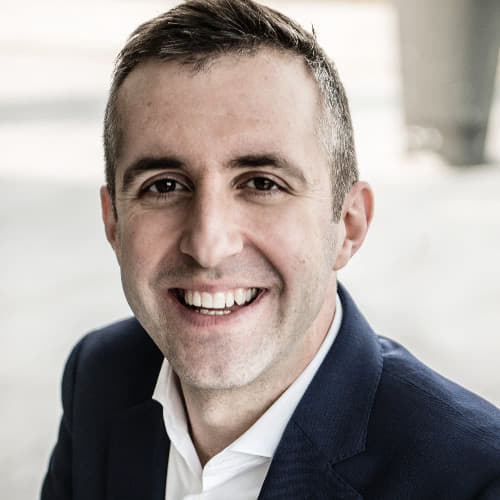
On Tech Talks Daily, I'm joined by François Bitouzet, managing director of VivaTech, to talk about what he saw when founders, investors, and corporate teams came together in Paris. One of my favorite details from the conversation concerned the Executive Arena. François says it was among the stages attendees rated most highly. Its format paired a startup with a business leader who could explain what they had worked on together. For someone trying to make a buying decision, that kind of conversation can answer questions a keynote leaves open.
François puts himself in the buyer's shoes. Will the product improve a business outcome? Will it hold up outside a demonstration? Can the company afford it when it has other ways to solve the same problem? We discuss what those questions mean for founders and why their job often continues after the pilot. The customer may have to change who does the work, how teams hand it over, or what they measure. A founder who understands those constraints has a better chance of getting the product used.
One of the examples François shares comes from shipping. He describes a Danish startup using AI to help plan how containers are stacked on cargo ships and recounts the benefits a logistics operator expected from the partnership. The story is useful because the task is so specific. A buyer can ask about loading capacity, container losses, and the cost of changing the process. Each gives the team something concrete to check before it commits to a wider rollout.
We also talk about Europe's place in the technology industry. François sees strengths in fields such as quantum computing and in software tied to industries where Europe already has established customers. He also sees problems securing later-stage capital and growing across markets with different requirements. Those observations help explain why the ability to build a strong product and the ability to grow a company around it can lead to very different conversations.
Looking toward 2027, François discusses areas he's watching, including AI devices, quantum computing, and energy systems. His interest in those technologies sits alongside his skepticism about some earlier promises. I'd love to hear where you draw that line. Which AI product has earned its place in your team's daily work, and what evidence convinced you? Please share your thoughts.
Useful Links
Connect with François Bitouzet
[00:00:04] What makes an AI demo worth taking back to the office? Well, at VivaTech in Paris, my guest today noticed that some of the most useful conversations actually took place on a very small stage, not the larger ones. And a startup and a business leader would explain what they had tried together and what they had learned, what worked and what didn't.
[00:00:26] And in a conference full of predictions, it's quite refreshing to hear that people actually wanted to hear how the work actually got done. So today we're going to talk about what buyers need before backing a new product, why a good pilot can stall inside a big enterprise and where European startup founders can find customers even when growth capital is even harder to secure.
[00:00:52] So if you're buying, building or funding technology, today's conversation will offer you a way to decide what might deserve a second look. And with that scene perfectly set, let me introduce you to today's guest. So a massive warm welcome to the show. Can you tell everyone listening a little about who you are and what you do?
[00:01:15] Yes. First, thank you for having me today. I'm François Bituze. I'm the managing director of VivaTech. VivaTech, it's the biggest tech startup and business event in Europe. It's something like 200,000 people every year in Paris, just dedicated to innovation, inspiration, a lot of business. And really the idea is to bring at the same table all the stakeholders of innovation.
[00:01:43] So it's absolutely great. Four days in June in Paris, which is, I have to say, a great pleasure for a lot of people in addition of the business and the inspiration. And as managing director, I'm in charge of the vision, of the development and, of course, of the execution of VivaTech. And as I said, I think that the purpose, of course, it's to have a great event altogether.
[00:02:10] But most of all, it's to make sure that innovation is at the forefront of the European agenda at least four days in a year. Love it. Well, it's a real pleasure to have you join me on the show today. And I've got to ask, after seeing thousands of founders, investors and corporate leaders pass through VivaTech, what tells you that an idea has moved beyond just an impressive demo into something that businesses will actually use and deliver real value to?
[00:02:40] I think it's interesting. The day it stopped to be just an impressive, you know, demonstration or something or presentation. And it's true that what we see now, it's two things that are absolutely key for the business when they want to adopt a new innovation.
[00:03:00] And this is something that sometimes start-upers, they are a little bit reluctant to understand because, you know, when a good idea is a good idea, there's like, oh, it's shining in the sky and it's great. But unfortunately, or maybe fortunately, it depends on when you are talking about. For a company, it's completely different. First of all, they want to understand where is the return on investment? What is the true use?
[00:03:26] And this is where you need to stop thinking as an engineer or as a developer, but really put yourself in the mind of an entrepreneur who has a P&L, who wants to get money. So will it help him to get more competitiveness, efficiency, productivity? And this is the first step. The second step, I think, is, is it robust? Because you can have a great demo, a great presentation, etc.
[00:03:56] But as soon as it's in the real life, you know, with a company that needs concrete outcomes, sometimes need to address a huge market. How do you make sure it's robust? Otherwise, it's absolutely useless. And last but not least, and sometimes it's a very important question. Is it affordable for a company? Because sometimes you have a great idea, you have the proof of concept, etc.
[00:04:23] But at the end of the day, when you see the cost, company, they have always alternatives. And if your alternative, which is a new product, is not the best one for the return on investment, robustness and affordability, it doesn't work. So this is the key. Yeah, so many great points there.
[00:04:45] And I think if we look back at the last 12 months, there is a huge focus, and quite rightly too, on return on investment and delivering a measurable impact and really moving the needle there. And there is a lot of hype on our news feed. So I'm curious, if you look back at VivaTech 2026, what were the conversations that best captured that gap between the public AI story that we see out there and what companies are really implementing?
[00:05:10] I think that it was very interesting to see where the interest of the VivaTech attendees went during the four days. Because as you said, there is a public story about AI, the fact that it will change the world, that we will all live in a leisure society, or we will all lose our jobs, etc. Depends if you are optimistic or pessimistic.
[00:05:36] But in fact, the reality for the people at VivaTech, it was not how we will live in 10 years. It was how does it change the way we work, the way we produce, the way we sell, etc., etc., from a very concrete point of view. At VivaTech, we have something like 4,000 partners, exhibitors, and all of them, they represent something like 30 business sectors.
[00:06:04] So you have automotive, banking insurance, etc. And in this 30 business sectors, the question was all the same. AI is great, but from a concrete point of view, what are the outcomes? How does it change the business? We don't need to have a Nobel Prize working in the company. We need to understand how it will help us for competitiveness, efficiency, etc.
[00:06:32] And I will tell you something that was very, very funny. After VivaTech, we have a kind of survey to understand what people liked, what they didn't like, etc., etc. And one of the most liked stages among the seven that we had this year, it's a small stage. It is the executive arena. So it's a small stage. It's something like 120 people. It's not a superstar stage.
[00:06:59] We have a theater where we welcome Jeff Bezos, etc. No, it was this small stage. And we understood because, in fact, on this stage, we didn't have people like keynote speakers, etc. It was just duos, duos of CMOs or CTOs coming with a startup and showcasing a business story, a success story, or a best practice.
[00:07:26] And it was exactly what people were looking for. They were looking for a true story about the business, not about what will change in 10 or 20 years. Wow. And it's so refreshing to hear that. And we will have people listening all around the world. And with every guest, though, I try and hone in on where they are and where they're making a difference and also put that area on the map. So from a European perspective here, where are European startups currently strongest?
[00:07:56] And where do funding, procurement or regulation, where are these areas still slowing them down? What are you seeing here? I think that, you know, at this moment, there is a kind of clash of titans between the US and China. People have often the impression that Europe is completely lost in this race, etc.
[00:08:18] It's not true because if you have a close look at the tech ecosystem in Europe, first of all, it's a great ecosystem, very lively, with a lot of momentum and stamina, etc. And I would say that we are very good at some key sectors, for instance, quantum computing, deep tech. We are also very good from startup point of view to some sectors where Europe is a leader.
[00:08:48] So, for instance, in banking, insurance, health, automotive. We have great startups and also cyber defense. Europe is very, very good. Where we are not good, and I mean, it's not a big secret that I'm telling you. We are not good in infrastructure. You know, for instance, with chipset, we are not in the game. We have some interesting new startup like Visora, but it's so small.
[00:09:18] And I mean, NVIDIA, we will never have a European NVIDIA. It's lost. We are not good in platforms like TikTok, Instagram, etc. But we are very good on the B2B side of tech. And this is because we have business leaders in Europe and they drive a very, very important, a very huge movement of innovation in their old feed.
[00:09:44] But as usual, it's not as sexy as B2C innovation. We are also asking where are the limits? Unfortunately, it's always the same one. It's the possibility for a startup to have the capital, to have the growth, to have the money for its development.
[00:10:06] If you are a startup, up to 200 million euros, you can find investors, finance and founders, etc. But it's quite difficult. You can make it. But when you reach, it's a glass door. And then it doesn't work anymore. The investors in Europe, they are not solid and robust enough. And then you have to go to the US market.
[00:10:34] And as usual, and I mean, it's fair enough. If they give you the money, they also want you to bring your activities. And this is why in Europe, very often we have great tech champions. But there is to a certain level, they switch to the US market. But it's part of the issue that we have because we have, you know, we say that Europe is a single market. So we have invented the single market, but it's not exactly a single market.
[00:11:03] In fact, it's 27 different markets. So it's a nightmare for the entrepreneurs. It's there are new ideas. It's changing. We have EU Inc. But it's true that we still have the same glass door. And this is investment. And there's so much I love about your work and everything that you're seeing here, because we're not talking about startups against the world or David versus Goliath stories.
[00:11:32] We're really talking about collaboration. So you don't have to name any names here, but can you share an example of how a startup and a large company have collaborated and worked together in a way that created measurable value for both sides? Because that seems to be where the real value is here. Yes, exactly. And if you allow me just to give you an insight, this is the DNA of VivaTech. When we created VivaTech in 2016, it was the first edition of VivaTech.
[00:12:01] It was a new idea to say, OK, it will be a place not just for tech people, not just for business people. It will be a place for business people and tech people to meet together. Otherwise, they never talk to each other. And I will tell you something else. They don't speak the same language. But at VivaTech, you have the people with the idea, but who are seeking for money and the people with the money who are seeking for the ideas. And this is what makes VivaTech so special.
[00:12:30] It's this platform. And I will answer your question about one example. There is one that I really love. It's a Danish startup. Their name is Seelitix. And I'm sorry if I don't pronounce it in the right way because I'm with my French accent. But Seelitix is very interesting. They use AI to optimize the way you stack the containers on the cargo ships
[00:12:56] that will travel from a continent to one another through the sea. And it's very interesting because thanks to VivaTech, they managed to have a deal with one of the top five logistic operators in the world. And they work together. The benefit of Seelitix is as they optimize with AI, the way you put the containers together. First of all, you can put more containers in one ship.
[00:13:24] So it allows you to carry more goods, which is great for your business and also for the planet because you reduce the shipment. And second positive impact is as you have optimized everything with AI, if there is a storm, if there is, you know, when you have the waves, etc., usually a ship is always losing some containers.
[00:13:49] You reduce this loss of containers, this waste of containers by 15%, which means at the end of the year, the logistic company, they told me that they think that they save something 1 million euros per boat every year thanks to Seelitix. So I mean, it's great for the startup. It's great for the company.
[00:14:16] It's great also for you and me because it reduces pollution, etc. And at the end of the day, this is also what I like with this idea, the fact that it's AI, but it doesn't take you see the job of anyone. It was something that was not done before. And so it's positive for everyone. Do you need AI agents that you can trust? Well, with an AI data layer providing real-time connection within your data platforms,
[00:14:44] you can trust your agents to provide accurate solutions. So scale your business by trusting your agentic AI accurately getting the work done for you. Trust its capabilities with Denodo. And you can do that by simply visiting denodo.com to learn more. I always try and give people listening a valuable takeaway. If we do have a startup founder listening anywhere in the world, from everything that you're seeing,
[00:15:11] is there anything that they typically might misunderstand about selling innovation into an established organization? Do you see any common mistakes or problems there? Well, there are so many, but I mean, it's business. First of all, and this is what I said a little bit earlier. I think that very often people in a startup, they are fascinated by tech. And they think that, wow, it was a challenge from a developer's point of view, etc.
[00:15:41] So it's great by itself, but it's not the case. So first of the issue, avoid to be fascinated by tech. It's the best way to have a success. And the second question that is very, very absolutely critical is the fact that, as you said, a company, it's an organization. And an organization is always reluctant to change.
[00:16:08] All the companies will tell you, no, we like innovation, we like to change, change its life, etc. This is bullshit. People in companies, they are conservative because this is a way to have success. And when you are a startupper, when you come with a new idea, you have to face the fact that it will be very difficult because people, they are conservative.
[00:16:32] And this is why you have to struggle, you have to take people with you, you have to create a momentum. Because if you just bring a product or a solution or service in itself and you tell the company, now guys, it's you, you have to do the job, it will never work. So, but this is why it's exciting. But an organization, to move an organization, it's, oh my God, it's a lot of work. And this is what people have to keep in mind. And after, it works well.
[00:17:02] Yeah, 100%. And also, fellow startup founders listening, investors, of course, have become more demanding about revenue and defensibility. So, how have you, have you seen this change, the companies and ideas receiving attention? What are you seeing here from an investor standpoint? Yes, I think that the investors, it's interesting because they are, they still have a lot of money to invest.
[00:17:29] So, the question is not the amount of money that can be invested. I think that they are more cautious and also reluctant because they want to make sure that they are not just investing in a startup, but they want to reduce the risk and they want to see if the people who are managing the company are also entrepreneurs.
[00:17:54] Meaning that they understand that a P&L is not just about losing money and hoping that one day you will take the full market, etc. So, they really want to understand from you that you have a vision of a market. The market is accessible. The product is, as I said, robust, ROI-focused and scalable. And so, it's a completely different story.
[00:18:22] And I remember 10 years ago, you know, it was the golden age of startups with people saying, oh, I'm not a CEO. I'm not a managing director. I'm a startupper. I'm a founder. I remember people working in an office without shoes and it was, oh my God, it was such a hype, etc. No, it's different. Now, people, they are in charge. They are more and more challenged on the fact that they should have clients instead of just waiting for people to invest, etc.
[00:18:52] It's a complete chain of mind. I cannot tell you if it's positive or negative, but it's true. It's completely different. And I would imagine, I'm bringing this back to you for a moment, running an event of VivaTech scale must give you quite a unique view of the market. And I'm curious, what themes are gaining substance and which still feel driven mostly by hype? What are you seeing there when you're running this event? Because, as I said, you must have some quite unique insights.
[00:19:19] Tech is made of hype. And this is what I like, the fact that sometimes you have people bringing something completely new and people are like, but I don't understand really what it's for. It's like, no, no, it will be a success. It's going to be great, etc. And this is what we like because at the end of the day, it's a gamble. And sometimes you say it will never work and it's a success. Or sometimes you say it will be a success and it's a complete failure.
[00:19:47] And we all know, I mean, metaverse, this kind of thing, it was a failure. But anyway, I think what we all have is this pleasure of sometimes being like, oh my God, this is new. And we will see what happens. Maybe to answer your question, I think that there is something in the between. It's, you know, the question of the device for AI. And every two or three months, we are something where a startup popping up and telling you,
[00:20:14] I've got the device of the future, the device that will be for AI, what the iPhone has been for the internet, etc. So I think it's in between hype and something concrete. Of course, we still have, you know, sometime Web3, metaverse. For me, it's still hype because the outcomes are still a little bit weak.
[00:20:42] But what is for me very interesting to have a look at, it's quantum computing. Oh my God, I'm fascinated by quantum computing. For me, it's like a brain cathedral. It's absolutely amazing. But I realized that by saying that, it looks like a hype thing. So I have to be careful. I think also all the questions related to energy, you know, how to optimize power grid,
[00:21:10] the way to use, you know, small nuclear plant that you could have in your neighborhood, this kind of thing. I think it's very, very, very interesting. And all the things that are very interesting also, it's all the brain connection, non-invasive brain connection. And it's true that when you think about AI, when you think about robotics,
[00:21:35] and you put them together with a possibility for you to get connected through your brain, I think it's absolutely amazing. And there is, last but not least, there is a question of sovereignty. So it's not, I mean, it's not a tech sector or something, but I think it's a question of governance.
[00:21:58] And more and more, the question of the government, especially for AI, is absolutely, it's a must have. And I would also say one of the biggest buzzwords this year, and also the first thing to circle off the tech buzzword bingo card, is, of course, human in the loop. And when we're talking about the importance of keeping humans in here, in this age of AI,
[00:22:23] what human or organizational costs can be missed when companies race to adopt new technology and focus on delivering the technology without the cultural aspect and the human aspect too? Yeah, I think, but this is something a little bit weird with AI, is the fact that for the first time, we have an innovation that is not like popping up and then we have to invent the cultural background to go with it.
[00:22:50] I mean, with AI, this is something that people are talking about. They have been talking about for decades now. You can think about Isaac Asimov, the robot, think about Arthur C. Clarke and 201, Space Odyssey, etc. And I think that for the first time, we already have some cultural pattern with AI. It was not the case with the iPhone, with the social media, with the cloud.
[00:23:19] You know, it was a blank page. But now we all have these heroes or people that are frightening. I remember, maybe we are the same generation, but Terminator 2. I mean, we all have this in mind. And what is a little bit of shame with AI for this moment, that we have not been able to create a positive narrative to go against this cultural region that is already existing.
[00:23:48] And this is where, and this is your question, this is why we need to keep human in the loop. If we don't keep human in the loop, it's a nonsense. And you were asking me about hype. I think that AJI is very hype. And I can tell you, it will not last longer than one year. And I think that is a thought-provoking moment to end on. But for everybody listening that want to find out more about VivaTech,
[00:24:18] the work that you're doing, connect with you or your team online. Where should they go? It is on LinkedIn. I'm very reactive. And this is the best way to get connected. And I hope I will see you and as many people as possible next June in Paris for VivaTech 2027. Awesome. I know it's a long time away and you can't tell me much at all. But anything you can share about what we can expect next year or those early preparations, anything you can share?
[00:24:47] No, it's still early preparation. But I can tell you, if you want to understand what will happen next, VivaTech is the place, really. Love it. Sounds like you've left me with a teaser there. So we will get you on before the event next year so we can find out more about what to expect. So I'll include links to everything that you mentioned there, including the VivaTech website as well. But more than anything, just thank you for sharing your story today and your insights. Thank you so much. I think the next time I see a convincing demo,
[00:25:17] I'm going to ask who has to make it work on a Monday morning. And my guest today made a good point about what founders hand over when they actually sell their product. There's the software. And then there's the work of getting people to change a routine they already depend on and maybe have been using for over a decade. So if the founder leaves that second job entirely to the customer, even the most useful idea or the best software could actually end up just sitting on the shelf.
[00:25:46] So a big thank you to my guest for showing what he saw at VivaTech. And I will leave links to his LinkedIn as the best way of getting in touch with him. And I've also included VivaTech in the show notes, the website there. I'd love to hear from you. What has persuaded your team to take a piece of technology from a promising trial into everyday use? What did you learn along the way? Let me know. Techtalksnetwork.com. You can leave me an audio message or send me a DM over there.
[00:26:15] I'd love to hear from you. But I have taken up far too much of your time today. So I'll be back again tomorrow with another guest. But thanks for listening as always. Bye for now.