

Why does healthcare keep investing in new technology while so many clinicians feel buried under paperwork and admin work that has nothing to do with patient care?
In this episode of Tech Talks Daily, I'm joined by Dr. Rihan Javid, psychiatrist, former attorney, and co-founder and president of Edge. Our conversation cuts straight into an issue that rarely gets the attention it deserves, the quiet toll that administrative overload takes on doctors, care teams, and ultimately patients. Nearly half of physicians now link burnout to paperwork rather than clinical work, and Rihan explains why this problem keeps slipping past leadership discussions, even as budgets for digital tools continue to rise.
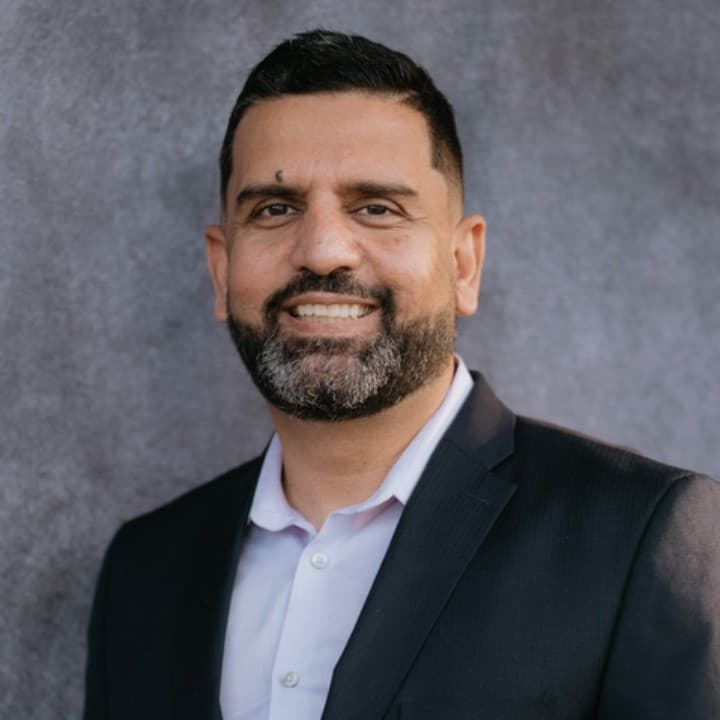
Drawing on his experience inside hospitals and clinics, Rihan shares how operational design shapes outcomes in ways many healthcare leaders underestimate. We talk about why short-term staffing fixes often create new problems down the line, and how practices that invest in stable, well-trained remote administrative teams see real improvements. That includes faster billing cycles, fewer errors, and more time back for clinicians who want to focus on care rather than forms. What stood out for me was his framing of workforce infrastructure as a performance driver rather than a compliance box to tick.
We also dig into how hybrid operations are becoming the default model. Local clinicians working alongside remote admin teams, supported by AI-assisted workflows, are now common across healthcare. Rihan is clear that while automation and AI can remove friction and cost, human oversight still matters deeply in high-compliance environments. Trust, accuracy, and patient confidence depend on knowing where automation fits and where human judgment must stay firmly in place.
Another part of the discussion that stuck with me was Rihan's idea that stability is emerging as a better success signal than raw cost savings. High turnover may look efficient on paper, but it quietly limits a clinic's ability to grow, retain knowledge, and improve patient outcomes. We unpack why consistent administrative support can influence revenue cycles, satisfaction, and long-term resilience in ways traditional metrics often miss.
If you're a healthcare leader, operator, or technologist trying to understand how AI, remote teams, and smarter operations can work together without losing trust or care quality, this conversation offers plenty to reflect on. As healthcare systems rethink how work gets done behind the scenes, what would it look like if stability and clinician well-being were treated as core performance measures rather than afterthoughts, and how might that change the future of care?
Useful Links
Thanks to our sponsors, Alcor, for supporting the show.
[00:00:03] What if the biggest threat to modern healthcare isn't a lack of technology, but the weight of administration that is pulling clinicians away from the people that they're meant to be caring for? Because doctors and nurses are under pressure. And not because they lack skills or compassion, but because of paperwork, admin, billing complexity, operational chaos that continue to stack up.
[00:00:27] And while AI is often framed as a cost-cutting tool, the real question is whether it can actually give clinicians time, time and focus, and stability that they need back in their role. So my guest today is a practicing psychiatrist, chief medical officer, and entrepreneur who has lived the reality of burnout firsthand.
[00:00:49] And he's also the co-founder of Edge Health and Renova AI. And he works with the medical practices across the US. And he's helping to modernize staffing and revenue cycle operations with empathy, discipline, and measurable results right at the heart of everything. It's not just about technology, more about what that technology is delivering. So in the conversation today, we'll talk about why admin overload has become such a blind spot in healthcare leadership,
[00:01:18] how stable remote teams can transform patient outcomes, and where AI genuinely adds value versus where human judgment must always stay firmly in the loop. And you'll also hear why my guest believes stability, not speed or scale alone, is becoming the new marker of success in healthcare operations. So if you care about the future of healthcare, clinician well-being, or how AI can support people rather than sideline them, this episode is for you.
[00:01:48] But before I get my guest on today, I want to give a quick thank you to my friends at Denodo, who are playing a big part in supporting this show. Because one of the questions I hear more and more from listeners on this podcast is, why does AI succeed or why does it fail? Because let's be honest, AI is moving fast, but success is often still elusive. Now, most projects fail not because of the AI, but because the data foundation isn't ready.
[00:02:18] This is why organizations are increasingly turning to Denodo. Denodo delivers trustworthy and AI-ready data without the need to copy it everywhere. Essentially, you can optimize your lake house, accelerate agentic AI, and build data products that finally make self-service real and achievable. So if you're ready to understand why your AI projects fail and how to succeed with AI,
[00:02:47] simply visit denodo.com and take control of your data world. But enough from me. Let's get into today's podcast now, and I will officially introduce you to my guest. So a massive warm welcome to the show. Can you tell everyone listening a little about who you are and what you do? Yeah, my name is Rehan Javed. I'm a psychiatrist by training. Actually, I was a lawyer before that.
[00:03:15] And now I still teach in the medical field. I work with residents. And more recently, over the last three to five years, really focused on the business side of medicine. So which, in our case, includes a couple of different startups. So the first one, a little bit more than a startup nowadays. It's a almost 1,400, 1,500 person remote employee company based in the U.S. But all our people are based in Pakistan, Peru, or Costa Rica.
[00:03:44] And they work in different medical offices and dental offices throughout the United States. And then more recently, over the last probably about eight to 12 months, we've also started a AI revenue cycle company that's really taken off a lot of good demand, a lot of good feedback. And we think a really great product market fit for that, too. Wow. I've got to ask, what made you go into AI and technology?
[00:04:12] Or where did that interest come from? Because you've got a very medical background and psychiatrist, et cetera. I'm curious where the spark for technology came from. Was that always there, too? Yeah. So, you know, living not too far from Silicon Valley, I went to Berkeley. It's a Berkeley scam for pretty much the hubs of Silicon Valley at this point. And I think those two schools ranked one and two for venture capital-funded startups, not just AI, but, like, startups in general.
[00:04:40] And so, you know, always kind of have been in and around this. And it turns out my kid's soccer coach, of all people, PhD in machine learning AI. They fall off trees in Silicon Valley, I guess, right? Yeah. And so, yeah, he did that. And so I know, like, he's a CTO for another company. And really, over the last couple of years, we've really wanted to create something on the AI front and really use his talents for that. But we weren't quite sure what we wanted to do.
[00:05:05] There's other companies that give you products, but they really increase the cost, such as, like, an AI scribe. You pay an extra $300 to $500 a month. But we really wanted to create something that saves you money and saves your practice money. And so that's where we created the AI for the revenue cycle, where currently, I think, most practices are paying somewhere around 5% to 8%, and we're able to bring that down to under 1% for about, not 100% of it, but about 90% of the revenue cycle.
[00:05:31] And I would imagine, as a psychiatrist and co-founder of EDGE, you must see the human cost of admin overload up close and personal. So why do you think admin burnout has become such a blind spot in healthcare leadership conversations, especially when we've got more tools than ever to help manage this? Many of them can be clunky. But what are you seeing here? Yeah, you know, I think that administration, I think, you know, I think they see the
[00:06:00] doctors, they see the nurses. But their priority, a lot of times is, you know, is the bottom line, right? I mean, if you're not getting the numbers done, if you're not seeing enough patients, and, you know, maybe the clinic's going to close down, maybe the bonuses aren't there, and maybe their jobs aren't there, right? So it could be a lot of different factors. And I think they, you know, when they're making decisions, they're looking at the numbers, and they're not necessarily looking at the doctors and nurses and the patients when they're doing that.
[00:06:27] And I think hopefully that answers your question a little bit. Yeah, really does. And nearly half of physicians report burnout linked to paperwork rather than patient care. And that alone is an astounding stat. So from your experience, what changes when clinics treat operations as part of a clinician's well-being rather than just a back office concern?
[00:06:53] You know, I think when they're treating it as a well-being for the doctors and the staff, I think it really comes through as better patient care. I think when the doctor and the other staff, when they're doing better, the patients are doing better. So instead of having a doctor spend two hours on notes or telephone calls or meetings or what have you, they're taking those two hours to actually treat patients. They get out at 5, 5.30, 6 o'clock after work instead of 7, 8 o'clock. And they're happier.
[00:07:22] They're able to see their patients for longer. And they get their work done faster. And I think overall, you'll see a better, not just the medical staff, not just the doctors, but also the nurses. And you'll see MAs do better. And at the end of the day, if everyone's doing better on the health side or the clinic side, the patients will do better themselves. And I think many organizations in any industry, they always look for a quick staffing fix when pressure builds.
[00:07:51] And I'm curious, from what you're doing here, what have you learned about the difference between jumping on those short-term reliefs to building a workforce infrastructure that really improves performance over time? It's very much playing the long game rather than the short game. But what have you seen here? Correct. Yeah. So I think if you're a medical clinic or a hospital and you're like, I'm just going to hire 10 people right away without the proper infrastructure, it's just not going to work. Yeah.
[00:08:19] And you're going to maybe get a little bit of quick fix, maybe like one or two days or a week or two. But even the people you hire, they're not going to be necessarily good fits for your office. Maybe they're not qualified. Maybe they have different skill set than what you need. And that's why it's really important to partner someone with someone who can help you develop that infrastructure, whether it's in-house or externally, so that the people that you do bring on are successful.
[00:08:43] And so we see a lot of different hospitals and medical clinics that we work with. They're like, oh man, we just tried to hire five people. We didn't have a manager. We didn't have the right hiring person. And we ended up hiring the wrong people or wrong fit. They're great people. They're super hardworking, but they say how the skill set and we probably ended up hiring someone who just wasn't a good fit for the role. So we tend to see that a lot. And I think that's where organizations that partner with Edge or similar companies where
[00:09:12] we have a very strong infrastructure. We have managers. We have customer success teams. We have a four or five week training program where people really go through that and realize that this is what they want to do, that they have a skill set and that they can go into these offices running rather than crawling. And when researching here, I was reading how you often talk about workforce design. As a strategic advantage rather than just another compliance exercise, which is so refreshing
[00:09:42] to read. And I'm curious just to bring to life what we're talking about here. Do you have an example you could share where investing in stable remote admin teams led to real measurable gains like faster billing or fewer errors or anything at all? What did you find here? Because we hear a lot around tech investments, tech solutions, but the ROI and measurable impact that you can create that. That's where the magic happens. Do you have any stories you could share there? Yeah, there's a couple of different ones.
[00:10:11] One of my favorites is we have a doctor in Maryland, Dr. Salucia. He has, I think there's about 20 doctors in his practice and he has about 20 people from us who help run his office. And he has about 100 people in house. And before he started working with us in Maryland, it's a little bit different than some other states, but generally it's pretty much the same as the better you take care of your patients,
[00:10:38] the less they're hospitalized, the less they go to urgent cares and they're seeing these tertiary systems. Sometimes the better your reimbursement rates are, the better your numbers look. And so what he really did is he hired one of his first staff members every day would go on, there's a centralized database in Maryland. He would make sure that they weren't visiting urgent cares, that they weren't visiting hospitals. And, but, you know, obviously you got 20 doctors, you got 20,000 patients, that's going to happen. Right.
[00:11:07] And so everyone who would go there that morning, as soon as they got discharged about an hour later, he would have his remote employee contact them, make sure that they picked up their medications. And he would also make sure that they got a follow-up appointment within three days. So I'll let you do a couple of things, right? So obviously if you're picking up your medications, you're going to do better. If you see a follow-up physician within three to two or three or four or five days, whatever it is,
[00:11:35] you know, the doctor is going to be able to make sure that that medication is the correct medication, it's working and that you're improving. And so by doing that, he was able to reduce his re-emission rate on those people who got to the hospital by 71%. Right. So imagine if you had a hundred people going in every month, re-emitting, and you're able to cut down 71 of those from going back a second time, the savings, and then also his Medicare and Medicaid metrics went through the roof.
[00:12:03] And he went from, you know, around average to one of the, I think somewhere between like two to 3% of the top, the top two or 3% of the providers in his area, which was pretty amazing both for his patients, but also for the insurances who really took notice and gave him a higher reimbursement at that point. And hybrid operations are also becoming the norm with local clinicians supported by remote teams and AI assisted workflow.
[00:12:30] So as this is a tech podcast, I've got to ask, where do you see AI adding real value today? And where do you still see human judgment still needing to stay firmly in the loop? It's a bit of a balancing act. Both are required. It's not one or the other, but what do you see here? How do you see this evolving? Yeah, no, it's a, that's a great point. It's not one or the other, and it's, you got to really work together with both the human and the AI to really make sure that you maximize your, your processes.
[00:12:58] I think the, where it works is the, the very simple robotic autonomous tasks that you do over and over the same clicks, you know, minute after minute, hour after hour, day after day. I think those are the ones that we can use AI to do right away, very quickly automate those. And some of the more complex ones, you know, some of those we can do with AI, but a lot of those we still have to use a human for in those, you know, but I think I just mentioned the hospital follow-ups, right?
[00:13:26] So if a patient's discharged from the hospital and you use a phone tree or a phone agent to call them, and it's not a person, you know, at least in my experience, especially if that was me, but also my patients, probably like 70, 80% of the time, they're like, oh, you know, it's, you know, I don't know, it's really helping me. If there's an AI calling me, I'd rather talk to someone else. So that's, that's one thing. But the other thing is, I mean, kind of going on that frame was really the, the human contact.
[00:13:56] If you don't have that human contact with patients, they're most of the time, they're just not going to improve. Obviously we've seen placebo effect is very strong, but just that community, the bond, the talking to somebody that, you know, or that you've talked to before, or that, you know, is human, I think really helps a lot. And so that's kind of where it's a tricky balance, right? You want to try to automate as much as you can, but that can't come at a sacrifice. And we want to really limit that.
[00:14:23] And in the high compliance environments like healthcare, accuracy and trust, they're going to matter more than ever. So how do you help these organizations introduce AI without creating new risks or eroding confidence among staff and patients alike? It must be a question you get a lot, but that, that trust question is so important, isn't it? At the same time. Oh yeah. Every day. I think trust is the, anytime you're dealing with another company, another person, if you lose the trust, it's very easy to,
[00:14:53] it's very hard to gain. It's very easy to lose. And so when we go in and work with these companies, we really want to make sure that when we automate the AI or, you know, use the AI for automation processes or, you know, or the large language models, there's a little bit of difference in those two. You know, we do want to make sure that we start with a very simple stuff first. Uh, so, you know, so maybe that could be like claim submission or that could be a payment posting. Once you have, you know, the insurance company pays you, make sure it's going to the right account. Right. So that's pretty, pretty simple.
[00:15:24] Um, start with those. And then a little bit more complex might be medical coding or checking for eligibility or denial management. you know, step-by-step start with the easy, then the medium, then the hard. And then at that point, you know, you want to see, is this part impacting patient care? Is it impacting my doctors? Is it impacting my nurses or the MAs? And at that point, I think then you have another conversation. You're like, okay, this is going to encroach on this area. This is going to encroach on another area. But I think the,
[00:15:53] the most important thing is start with the easy. Stuff, be honest and really give your, your partner a full scope or a full idea of how it's going to impact stuff and let them really decide with the, with the proper information. This month I'm partnering with Alcor. And if you've ever tried to hire engineers in another country, you probably know just how painful it can be. Different laws, patchy support and partners who don't truly understand engineering roles.
[00:16:21] So Alcor approaches this from a different tech point of view. They specialize in Eastern Europe and Latin America, and they're able to combine EOR capabilities with recruiting. So you get one partner handling everything, and they help you choose the best location for your stack, find developers with the right depth of experience, and run proper assessments so they can onboard people quickly. And they also give you a model that respects both transparency and margin.
[00:16:51] Most of your spend goes directly to your engineers, and the fee will decrease as the team expands. And you can even transition everyone in-house at that time when you're ready, without having to worry about a penalty. And that structure is why a mix of early stage and unicorn stage companies use them as they scale. So if you want to take a look, visit alcor.com slash podcast, or tap on the link in the show notes. But now, on with today's show. Before you came on,
[00:17:21] I was reading that you've said that stability is becoming the new metric for success. I love that. So for any leaders listening that want to measure whether their admin model is truly working, what signals or outcomes should they be paying closer attention to beyond just traditional cost savings? I think it's time to think bigger than that sometimes. What advice would you offer there?
[00:17:45] Yeah, I think both as an AI and as a workplace solution, what we've seen with a lot of companies, especially in the medical field, they have such high turnover. We're working with a psychiatric hospital, and their turnover is 118% a year, which means the average person stayed about nine months, right? And they're like, oh, you know, financially we're actually doing really well. We're not paying our people very much. Our cost savings are very lean, all this stuff. And we want to expand.
[00:18:15] We want to get a second building. We want to get a post-discharge therapy program. We actually want to get two of them, like a short and a longer term version. And they also want to get a residential, but they're like, man, we just don't have the staff that stays with us. You know, we've tried this, but the, you know, since the people are only staying six, nine, 12 months, they don't develop that expertise. And we're not able to expand. And so while maybe your, your metrics for what you're doing now look really great because you're making, you know,
[00:18:44] $5 million a year from this really small or midsize hospital, you're not able to expand from, you know, 30, 40, 50 beds up to a hundred beds because you just don't have that staff. You don't have that continuity and you don't have that institutional knowledge to expand. I think that's an underutilized or under appreciated metric, as you mentioned. And as for yourselves, what are you focusing on this year? Obviously we're calling this at the beginning of 2026. Anyone listening want to find out about Renova AI and,
[00:19:13] and the things you're doing, what can we expect from you this year? What's taking up your time and focus? I think really it's for a lot of people who listen to your podcast and other podcasts in the space. You know, a lot of people are like 2025 is the year of the agents, right? AI agents. And I think, you know, to a large extent, yeah, it's were so complex that we really weren't able to integrate them to any great effect in 2025. There's a lot of companies that use them and, you know, maybe they got to like 30%,
[00:19:43] 40%, 50%. But I think really that's going to continue. And that's going to go from that 30 to 50%, maybe up to 50 to 70%. And you're going to see them pretty much everywhere. You know, living in San Francisco or near, near close to San Francisco driving through, there's these really famous billboards that cost, you know, almost a million dollars a year. There's like 10 of them. It used to be like Yahoo, Google announce, you drive through and it's all AI agents. They're pretty much nine out of 10 or 10 out of 11 of them are that. And I think really that's, what's going to be really emphasized this year is more people are going to
[00:20:13] become familiar with the agents and they'll become more familiar with how the agents can impact their practice, their life, whether it's in the medical field or legal field or what have you. I mean, it doesn't really matter. You can be a window washer, you can be a window company, window replacements, you can be a construction company. I think AI agents are just going to be more and more prevalent and people will become more and more aware of them. Well, for anybody listening, there's some big stats around Renova AI. It's a complete RCM solution,
[00:20:41] automating end-to-end RCM from insurance verification, billing all the way to payment processing, but with 98% accuracy. And you also accelerate claim submissions, reimbursement timelines, and cut RCM costs by up to 90%. And we talk a lot around technology, especially around AI and agentic AI. But I think over the last three years, we've seen a lot of businesses forget about what problem they're solving. What's the measurable impact? What, what problem are we solving?
[00:21:10] So those stats are incredibly powerful. So for anybody listening wanting to find out more about Renova or indeed edge, where can they find out more information, connect with your team, et cetera? Yeah. So I think, um, yeah, two different models, but I think they're very overlapping and a lot of our people, they want to talk to us about both. Uh, so for those, uh, people are interested in remote staffing solutions and really augmenting your current staff, uh, you can reach out to us, uh, via our website. So it's on edge,
[00:21:39] O N E D G E. dot co. Um, there's tons of information about us. There's case studies and there's solutions that could, that work with both small and large practices. And then if you're interested in the AI aspect and really want to streamline your revenue cycle or other aspects of your practice and really bring down costs or revenue cycle by up to 80, 90%, um, you can reach out to us at R I N O V A Rinova dot AI. And the same thing,
[00:22:09] there's a lot of information and there's different case studies. Uh, there's different videos on how this works in the revenue cycle and how it can bring down your costs. And for both, what's both companies we'd love to schedule a demo and be able to walk you through how we can improve your practice and the practice workflow. Well, there's so much I love about what you're doing here. I think we've all seen the headlines on our newsfeed of AI replacing people, but we don't see on those same articles is administrative burnout is a hidden crisis in healthcare.
[00:22:37] Nearly half of physicians are burnt out, not from caring and the work that they're doing, but from paperwork and admin tasks, which is crazy in this day and age. And I love another line you use in the interview, their stability and new metric for success. So improving these things and working alongside healthcare professionals, incredibly cool what you're doing, but just a big thank you for sharing your story today. Now, Neil, thank you very much. Very much appreciated. I think a lot of this stuff is very new to the health field. I think a lot of people are obviously,
[00:23:08] you know, medical field, very reluctant to change and adapt new technologies, but, you know, we're, we're not just someone who produces AI, but we're there to help you. And, you know, not necessarily hold your hand, but, you know, if that's what you need, you know, just reach out to us and we're able to, you know, assess your practice and run any value, but really just to let you know that this is the future and, you know, whether you go with us or somebody else, this is going to come out and let's partner together to make this a better future for everyone involved.
[00:23:37] If there was one theme running through this conversation, I think it was healthcare doesn't need more pressure, needs more breathing room. And what my guest shared today shows how operational design, staffing stability, and thoughtful use of AI can directly improve patient care, not to mention clinician wellbeing and financial performance, all at the same time. So whether it be reducing readmissions to speeding up reimbursement or lowering admin costs, I think the examples he shared today,
[00:24:06] make it clear that the small operational changes like what we've talked about can have far reaching impact when they're built on trust and continuity. You also heard a balanced view today of AI where automation handles some of the repetitive work, but human connection will always remain central. Especially in moments that shape patient outcomes. And that is everything that we're focusing on here in this conversation. Yes, the technology, but how is it shaping those patient outcomes?
[00:24:36] And I think that balance feels more relevant as ever, as AI agents become more common across every industry and including healthcare. So if this episode resonated with you, please share it with someone who's grappling with burnout, staffing challenges, or rising operational complexity in healthcare. And question for you, how are you and your organisation making sure stability, trust, and human care stay at the centre of everything that you build? As always,
[00:25:05] techtalksnetwork.com, you'll find everything you need there. And other than that, I'll be back again tomorrow with another guest. So I will see you all bright and early tomorrow. Bye for now.