
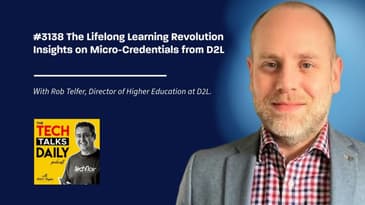
Rob shares insights on how micro-credentials enable universities to tap into the growing lifelong learning market, estimated to reach $800 billion by 2030, while helping learners acquire specific skills quickly and affordably. We discuss the significant impact micro-credentials can have on workforce development, with 72% of employers more likely to hire candidates with these qualifications. Additionally, Rob highlights their potential to foster collaboration between universities, governments, and industry, ensuring programs align with real-world needs and maintain high educational standards.
However, implementing micro-credentials isn’t without challenges. Rob outlines the hurdles institutions face, from securing resources and faculty support to building infrastructure and addressing credibility concerns. Drawing on D2L’s extensive experience in education innovation, he shares practical strategies for universities, including starting with pilot programs, leveraging data-informed approaches, and marketing these programs effectively to students and employers.
We also explore how D2L’s Brightspace platform supports the delivery of micro-credentials and adaptive learning through its scalable, flexible, and AI-enhanced features. Whether you’re an educator, student, or employer, this episode provides valuable insights into how micro-credentials and short courses are reshaping the future of higher education.
What role do you see micro-credentials playing in addressing the skills gap and workforce development? Share your thoughts and join the conversation!