
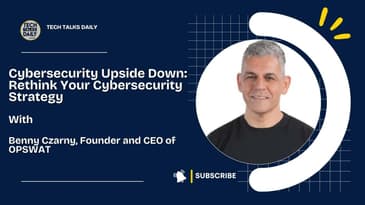
In this episode of Tech Talks Daily, I sat down with Benny Czarny, founder and CEO of OPSWAT, to discuss why he believes the traditional “detect and respond” model is no longer enough in a world where AI is accelerating cyber threats faster than security teams can react.
Benny joined me to discuss his new book, Cybersecurity Upside Down, which combines personal stories from building OPSWAT with a bold argument for rethinking how organizations approach cyber defense altogether. His central belief is simple but provocative: detection-based security has trapped the industry in a losing cycle in which attackers need to succeed only once, while defenders are forced into a constant state of reaction.
During our conversation, Benny explained how his thinking evolved after realizing that even layering dozens of antivirus engines and sandboxing technologies still failed to stop malicious files reliably. That realization ultimately pushed him toward a prevention-first philosophy built around Deep Content Disarm and Reconstruction, or CDR. Rather than trying to determine whether a file is malicious, the approach assumes files may already be dangerous and regenerates clean, safe versions before they ever reach users or systems.
We also explored how generative AI is changing the cybersecurity landscape in ways many organizations still underestimate. Benny shared why AI is dramatically reducing the time required to create malware, weaponize exploits, and scale attacks, effectively giving even inexperienced attackers capabilities once reserved for nation states or advanced cybercriminal groups. He also raised concerns that AI data lakes could become contaminated with malicious content, creating entirely new risks for organizations rushing to deploy large language models without securing the data feeding them.
One of the most fascinating aspects of the discussion was the psychology and culture within cybersecurity teams. Benny argued that the industry often celebrates visible incident response activity while undervaluing quiet prevention. In a world dominated by alerts, dashboards, and SOC metrics, truly preventing attacks can almost appear invisible, despite potentially delivering far greater security outcomes.
We also talked about the sectors Benny believes are most exposed today, including energy, manufacturing, and critical infrastructure operators that still rely heavily on reactive security models while facing growing operational and regulatory complexity. He explained why some industries are advancing faster than others and why compliance mandates could become a major catalyst for broader prevention-first adoption.
Beyond cybersecurity itself, this episode also offered a fascinating look into Benny’s entrepreneurial journey, what he learned building OPSWAT over two decades, how AI helped him research and structure his book, and why he is now even producing a cybersecurity-focused TV series called Into the Breach, designed to make complex security concepts easier for wider audiences to understand.
This conversation challenges many of the assumptions the cybersecurity industry has normalized for years. Whether you work in security, IT leadership, compliance, or want to understand how AI is reshaping digital risk, this episode offers a very different perspective on what modern cyber resilience could look like in practice.