
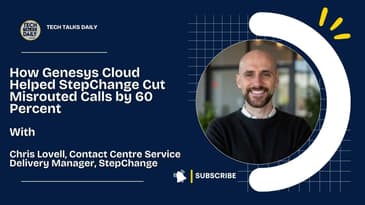
In this episode of Tech Talks Daily, I speak with Chris Lovell, service delivery lead for StepChange Debt Charity’s contact center and product owner for its Genesys Cloud platform.
StepChange supports hundreds of thousands of people facing financial hardship each year. Chris explains that approximately 40% of its clients receive Universal Credit, over 60% rent their homes, and many are dealing with an additional vulnerability alongside debt.
That context makes the first interaction especially important. People may have delayed asking for support while their financial position became harder to manage. A failed call, long queue, unnecessary transfer, or request to repeat their story can increase stress at the moment they need reassurance and practical help.
Before adopting Genesys Cloud, StepChange relied on fragmented contact center technology that experienced regular technical problems and outages. The charity also lacked detailed insight into why clients were making contact at different stages of their journey.
People could enter the wrong queue, wait to speak with an advisor, and then discover they needed another team. The technology also affected employees. Chris says frontline colleagues eventually stopped proposing improvements because they did not believe the existing platform could support them.
StepChange migrated to Genesys Cloud in four weeks through a three-phase delivery. The team began with lower-risk services, increased the size and complexity during the second phase, and moved the core debt advice operation during the third.
Chris says the migration was completed without downtime. The initial objective was to reproduce the existing service on a stable cloud platform before introducing further capabilities. This sequencing gave the team time to correct early issues and adjust training before the largest group of advisors moved across.
We discuss how improved intent capture and routing helped one team reduce misrouted calls by 60%. Clients reached the right advisor sooner, avoided repeated explanations, and could move toward a suitable debt solution faster. Advisors also began conversations in the right place instead of apologizing for delays or correcting the journey.
Chris argues that contact center success cannot be judged through efficiency alone. StepChange examines whether clients understand their options, complete the advice journey, activate a sustainable plan, and continue toward becoming debt free.
The circumstances remain difficult for many clients. Chris says approximately 28% are still in a negative budget after receiving advice, with an average monthly shortfall of around £600. Some conversations require time, empathy, and experienced human support.
Around 85% of StepChange advice journeys now happen online. Digital access can offer privacy and flexibility, while advisors remain available for the emotional and complicated moments where a person needs reassurance.
We also consider future plans for WhatsApp, web messaging, connected journeys, and AI-powered advisor support. Chris advises leaders to begin with genuine customer behavior rather than selecting a technology and searching for somewhere to use it.
How can your contact center remove unnecessary effort while preserving the conversations where people most need to feel heard? Listen to the episode and share your thoughts with me.