
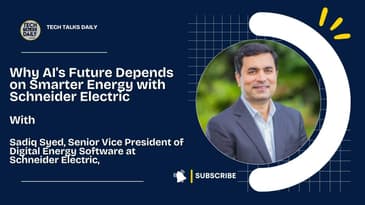
In this episode of Tech Talks Daily, I welcome Sadiq Syed, Senior Vice President of Digital Energy Software at Schneider Electric, to discuss why the future of electrification depends as much on software as it does on hardware. As demand for AI continues to grow at an extraordinary pace, data centers are consuming increasing amounts of electricity, putting pressure on aging grids and exposing the limitations of traditional approaches to energy management.
During our conversation, Sadiq explains why electrification alone cannot deliver global decarbonization goals. Without intelligent software capable of monitoring, predicting, and optimizing energy usage, businesses risk wasting valuable resources while struggling to meet rising demand. We discuss why AI may ultimately become the technology that helps solve the energy challenges it has helped create, using continuous analytics and predictive intelligence to improve efficiency across complex environments.
We also examine the growing regulatory pressure. With more than a thousand energy-related regulations introduced around the world in recent years, compliance has become part of everyday operations rather than an occasional reporting exercise. Sadiq explains why organizations should stop viewing compliance as an administrative burden and instead see it as an opportunity to build trust, strengthen resilience, and improve operational performance.
Another area we explore is digital resilience. Whether supporting hospitals, pharmaceutical manufacturers, or mission-critical data centers, modern infrastructure depends on uninterrupted operations. Sadiq shares why cybersecurity, predictive maintenance, unified operational visibility, and connected digital platforms are becoming central to maintaining uptime while helping organizations make better use of limited energy resources.
The conversation also turns to people. As experienced engineers retire and younger generations enter the workforce with very different expectations, organizations face an urgent challenge: modernizing the tools they provide. We discuss how intuitive digital platforms can reduce complexity, shorten training time, attract the next generation of technical talent, and make daily operations easier to manage.
Throughout our discussion, one message remains consistent. The future of sustainable infrastructure is built on the combination of electrification, automation, and intelligent software. From AI-enabled operational insights to connected energy management platforms, technology is becoming the foundation that allows businesses to balance performance, sustainability, regulatory requirements, and resilience in an increasingly unpredictable world.
Is the biggest challenge facing AI actually an energy challenge? And if software is becoming the foundation for modern electrification, how prepared is your organization for what comes next? I'd love to hear your thoughts after listening.