
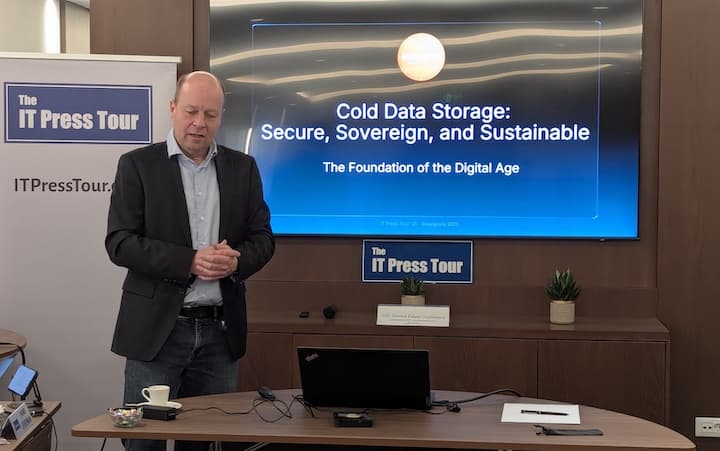
When I met the team from ewigbyte in Athens during the 65th edition of the IT Press Tour, it was clear that they were not seeking to improve existing storage technology incrementally. They question whether the foundations of cold data storage remain valid.
ewigbyte is a young European startup creating cold data infrastructure by writing digital information onto glass. Their ambition: secure the world’s most valuable data for thousands of years, without ongoing energy costs, repeated migrations, or media fragility.
At the heart of their thinking is a recognition that most of the data we store today is cold. It is rarely accessed, but legally, historically, scientifically, or culturally irreplaceable. And yet we continue to store it in technologies designed for rapidly changing, short-lived workloads.
The Problem With How We Store Cold Data Today
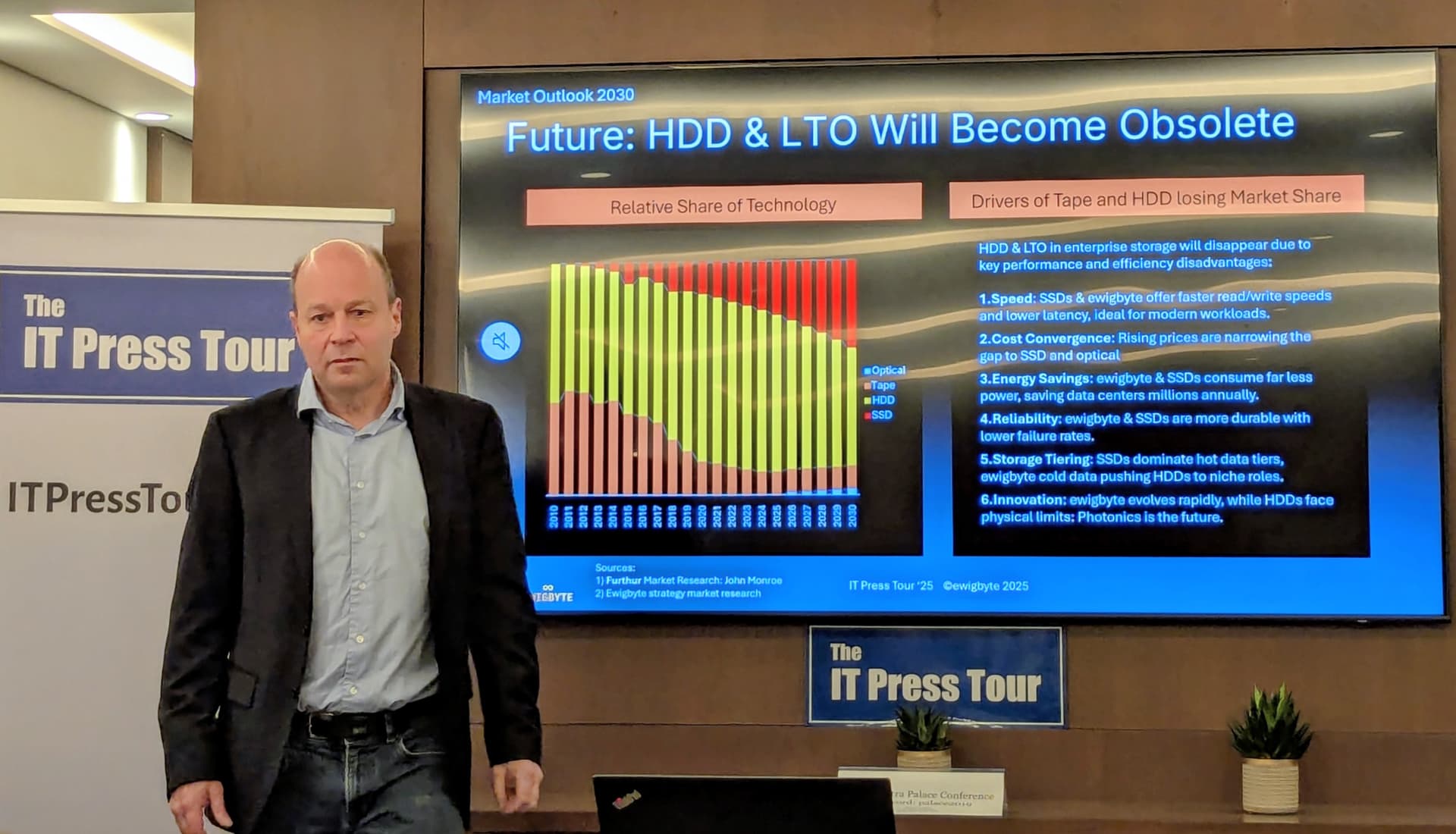
ewigbyte’s founders say storage is at a structural breaking point. Data volumes are growing rapidly, but traditional storage media such as hard disks, SSDs, and tape cannot keep up. Their analysis shows a widening gap that won't be solved by increasing density alone.
There is also a physical reality that rarely gets discussed outside research circles. Magnetic and electronic storage are inherently vulnerable. Bits decay. The media needs refreshing every few years. Entire data centers depend on constant power, cooling, and climate control just to preserve information that may never be read again. Add in ransomware, floods, heat, electromagnetic pulses, and the possibility of deliberate data alteration, and long-term trust becomes increasingly fragile.
From a sustainability perspective, the picture is no better. Cold data storage already consumes a meaningful share of global electricity and water, and generates hundreds of thousands of tons of electronic waste each year. All of that effort exists to preserve data that, in many cases, is meant to remain unchanged for decades or longer.
Writing Data on Glass Instead of Chasing Density
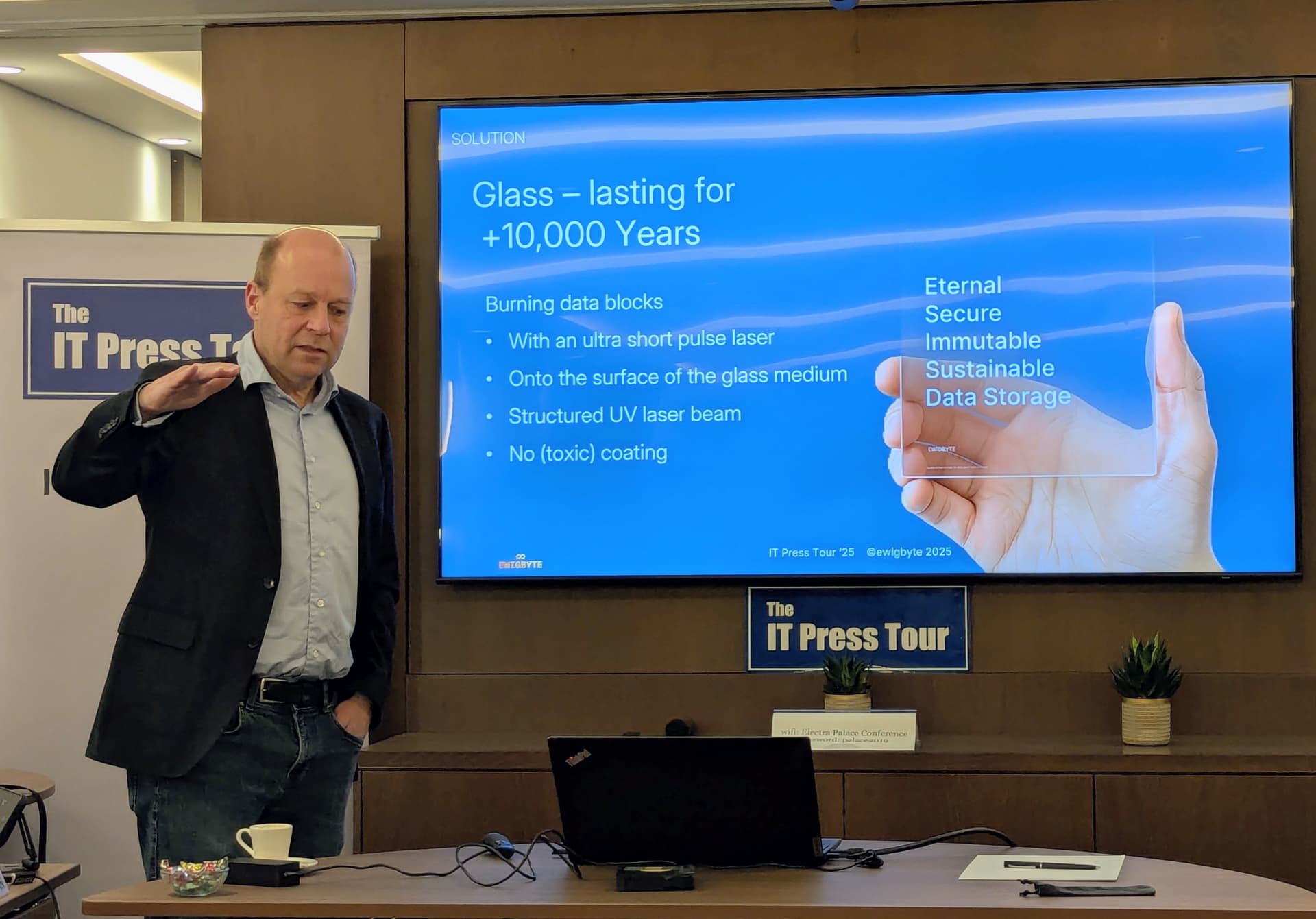
ewigbyte’s answer is to step away from magnetic and electronic media entirely. Their system uses ultra-short-pulse lasers to directly ablate data onto the surface of glass. Each laser pulse physically alters the glass, creating microscopic structures that represent data blocks. Once written, those structures cannot be altered without visibly damaging the medium itself.
This approach upends several assumptions: glass is immune to bit rot, heat, water, radiation, and electromagnetic interference; it requires no power to preserve data; and studies suggest it can remain stable for over 10,000 years.
ewigbyte optimizes for write and read speeds at scale. Their system uses parallel laser beams to write entire data blocks quickly. Physical space is no longer the main constraint, so cold data can be stored in secure warehouses rather than energy-intensive data centers.
Security and Immutability at the Physical Layer
One of the most interesting aspects of ewigbyte’s approach is its security strategy. Instead of layering controls on top of software, they bring immutability down to the physical medium. Once data is written into glass, it cannot be modified in place. Any attempt to change it would break checksums and be immediately detectable.
They plan to embed authentication features in the glass, similar to banknote holograms. This links the data to its physical storage, providing proof of originality and defense against many cyber threats.
A Different Model for Cold Data at Scale
ewigbyte does not plan to sell hardware. Instead, their vision is to offer a data storage service in which customers pay to store their cold data in ewigbyte's purpose-built, highly secure facilities. These facilities are designed specifically for cold data archiving, focusing on automation and physical security rather than cooling and power density. Clients would send their data to ewigbyte, which takes responsibility for durability, access, and security, allowing customers to retrieve their data as needed.
The long-term vision is a clear separation between compute-heavy environments and cold data infrastructure. Hot and warm data stay close to compute. Cold data is moved to locations where it can be stored safely, sustainably, and at lower operational cost, while remaining retrievable at scale when needed.
This is not a short-term play. The team openly acknowledges the technical, financial, and operational challenges ahead. But their argument is that the current trajectory of cold data storage is already unsustainable, and incremental improvements will not close the gap.
Why This Matters Now
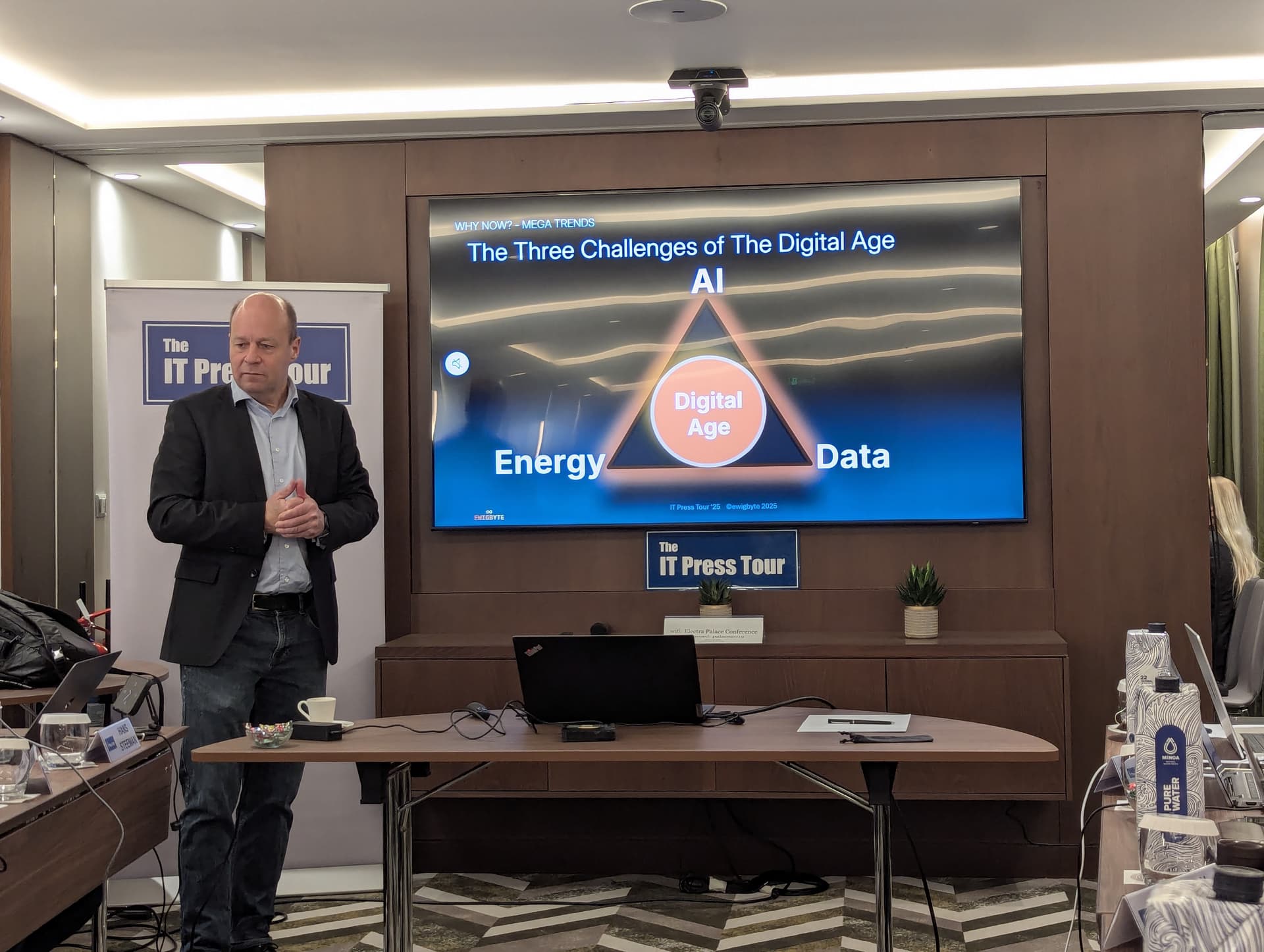
What makes ewigbyte worth paying attention to is not just the technology, but the timing. AI is driving explosive data growth. Geopolitical tensions are raising questions about data sovereignty and long-term control. Sustainability pressures are forcing a rethink of infrastructure across every layer of IT.
Cold data is often treated as an afterthought. ewigbyte is making the case that it deserves its own dedicated infrastructure model, built around permanence rather than convenience.
I will be following their progress closely. If you were in the room with them, what would you want to challenge, clarify, or dig deeper into during a future podcast interview? Let me know and I will ask on your behalf.